A Great Writer from India

2009 Stamp Honoring R. K. Narayan (1906-2001)

The above stamp was issued to honor the 103rd anniversary of the birth of India’s greatest writer of fiction: Rasipuram Krishnaswami Iyer Narayanaswami, better known as R. K. Narayan. Interestingly, he wrote most of his fiction in English. And it was Graham Greene whose influence led to the publication of his first four books.

I have just finished reading his short-story collection entitled Malgudi Days (1942), in which every one of the 30-odd stories competed with all the others for Best in Show. Over the years, I have also read a number of other titles—all of which I loved—including:

  • Swami and Friends (1935) which includes the cricket scene shown on the illustrated stamp above
  • The Bachelor of Arts (1937)
  • The Financial Expert (1952)
  • The Guide (1959)
  • The Vendor of Sweets (1967)
  • A Tiger for Malgudi (1983)
  • Under the Banyan Tree and Other Stories (1985)

Narayan’s fiction is mostly set in a mythical South Indian city called Malgudi. Once you start reading his work, it will seem like home to you.

Travis McGee and Others

Mystery Writer John D. MacDonald (1916-1986)

When the dog days of summer roll around, I like to look for a good mystery novel, especially if the scene of action is in a steamy place like Florida. Ever since I discovered that I could “check out” up to ten books from the L.A. public library to read on my Amazon Kindle, I have been looking for John D. MacDonald titles. In the last few weeks, I have picked out four titles. To date, I have read eleven of his books.

In many ways, MacDonald reminds me of Georges Simenon, another of my favorites. On one hand, Simenon wrote some 75 novels featuring Inspector Jules Maigret, and hundreds of other of what he calls his romans durs, or “hard” novels. You guessed it: The latter group tend to be much more hard-bitten than the Maigret titles.

In the same way, MacDonald has his score of Travis McGee novels set in Florida and featuring the very sympathetic captain of the Busted Flush, the yacht on board of which he lives. Like Raymond Chandler’s Philip Marlowe, he is a knightly presence in the Southern California darkness. MacDonald’s non-Travis-McGee titles also tend to be a bit tougher sledding, with his detective’s humane presence absent.

I am just now starting to read some of MacDonald’s other fiction, such as Border Town Girl.

Crônicas: How To Deal With What One Has

Clarice Lispector (1920-1977)

Clarice. I love her name. I love her high cheekbones and penetrating gaze. And most of all, I love the beauty of her thoughts and writings. She wrote in Portuguese, but she was born Chaya Pinkhasivna Lispector in Chechelnyk, Ukraine. To escape the horrors of the Civil War between the Red and White Russians, her Jewish parents fled with their infant daughter to Recife in northeastern Brazil. At an early age, it was discovered that she could write well enough to be published. And she became one of the great women novelists and short story writers of the 20th century.

I am reading short pieces she wrote for Brazilian publications. They are called Crônicas and were recently published in a volume called Too Much of Life, which I am slowly reading with great pleasure.

This is the first of several posts in which I will present one of her Crônicas. I hope you enjoy them.

HOW TO DEAL WITH WHAT ONE HAS

A being lives inside me as if he were entirely at home, and he is. He is a glossy black horse who, despite being entirely wild—for he has never lived inside anyone else and no one has ever put reins or a saddle on him—despite being entirely wild, he has, for that very reason, the primitive gentleness of one who knows no fear: he sometimes eats from my hand. His muzzle is moist and cool. I kiss his muzzle. When I die, the black horse will be left homeless and will suffer greatly. Unless he chooses another house that is not afraid of him being simultaneously both wild and gentle. I should say that he has no name: you just have to call him and that is his name. Or perhaps not, but summon him in a gently authoritative voice, and he will come. If he senses and feels that a body is vacant, he will trot silently in. I should also warn you not to be afraid of his neighing: we mistakenly think that we are the ones neighing with pleasure or rage.

Epiphanies: Chesterton’s Man Who Was Thursday

I first started listing the books I read in 1972 and continued, with a six month lacuna around 1992, to the present day. Of one thing I am sure: It was Jorge Luis Borges who pointed the way to G. K. Chesterton. Though what I discovered from reading him is slightly different from what Borges discovered.

First of all, there was in Chesterton’s fiction what I call moral landscape, in which the natural environment in the scene takes place is affected by the feeling conveyed by the narrator. Take, for instance, this paragraph from the first chapter of The Man Who Was Thursday:

This particular evening, if it is remembered for nothing else, will be remembered in that place for its strange sunset. It looked like the end of the world. All the heaven seemed covered with a quite vivid and palpable plumage; you could only say that the sky was full of feathers, and of feathers that almost brushed the face. Across the great part of the dome they were grey, with the strangest tints of violet and mauve and an unnatural pink or pale green; but towards the west the whole grew past description, transparent and passionate, and the last red-hot plumes of it covered up the sun like something too good to be seen. The whole was so close about the earth, as to express nothing but a violent secrecy. The very empyrean seemed to be a secret. It expressed that splendid smallness which is the soul of local patriotism. The very sky seemed small.

If I were designing a cover for a new edition of the book, the scene described in this paragraph is what I would attempt to depict.

Thursday was my first Chesterton. There were lines in the novel that affected me strongly. In the same opening chapter, the poet Gabriel Syme is made to say:

“All the same,” replied Syme patiently, “just at present you only see the tree by the light of the lamp. I wonder when you would ever see the lamp by the light of the tree.”

What went through my mind at this point was, “Wow!” That line is forever emblazoned in my memory as the absolute height of imagination. I went on to read all of Chesterton’s fiction, then moved over to his essays and even his religious works. Curiously, although Chesterton is perhaps most famous for his father Brown stories, I did not read those until relatively recently.

But I have read The Man Who Was Thursday four or five times. As a matter of fact, I should re-read it again soon.

Epiphanies: Borges’ Labyrinths

Jorge Luis Borges Story “Tlon, Uqbar, Orbis Tertius”

This is the first of a series of posts about literary works that got ,e started in becoming the person I am today. It all started with a New Yorker article around 1970 which introduced me to Latin American magical realism. I was enthralled, so I hunted up the two Jorge Luis Borges (1899-1986) books it mentioned: Labyrinths and Ficciones.

Borges really got me started on a quest that is still going strong more than half a century later. The first book I read was Labyrinths, and the first story in that collection was “Tlon, Uqbar, Orbis Tertius.” As soon as I read the following, I was on my way:

From the remote depths of the corridor, the mirror spied on us. We discovered (such a discovery is inevitable in the late hours of the night) that mirrors have something monstrous about them. Then [Argentinian writer Adolfo] Bioy Casares recalled that one of the heresiarchs of Uqbar had declared that mirrors and copulation are abominable, because they increase the numbers of men.

It turns out that Bioy Casares was quoting from a strange encyclopedia that the two of them decide to look up, but have difficulty finding, because different editions of the Anglo-American Cyclopedia have different articles.

I now own everything that Borges ever wrote that has been translated into English, and several in the original Spanish. Borges sent me in many directions. The next time, I will talk about how he turned me on to G. K. Chesterton.

Orcs

Halfway through my re-reading of The Lord of the Rings trilogy, I have come to realize that orcs really do exist. They are capable of only one feeling: Rage. And they meekly do the bidding of the Dark Lord, who is squirming in frustration at Mordor-a-Lago as further indictments attempt to break his power forever. They are distributed across the land, but most particularly in what has been referred to as the Red States.

Am I perhaps being too simple-minded? Perhaps. But the peace of Middle-Earth is in danger of being shattered forever. The land in which I was raised is being threatened by dark hordes who, while waving the same flag to which I pay allegiance, are quite satisfied to stomp on and destroy everything it stands for.

Somehow, over the last few decades, we have been nurturing a generation of thugs who have declared unending enmity with the elves and other libtards whom they feel have been sneering at them.

Oh, where is that ring of power now that I want to throw it into a white-hot dumpster fire?

“This Kind of Fire”

This has been a month for re-reads. Today, I finished reading Charles Bukowski’s The Continual Condition, a posthumous collection of his unpublished poetry. I love Buk’s poetic voice. Here is a poem entitled “This Kind of Fire.”

This Kind of Fire

sometimes I think the gods
deliberately keep pushing me
into the fire
just to hear me
yelp
a few good
lines.

they just aren’t going to
let me retire
silk scarf about neck
giving lectures at
Yale.

the gods need me to 
entertain them.

they must be terribly
bored with all
the others

and I am too.

and now my cigarette lighter
has gone dry.
I sit here
hopelessly 
flicking it.

this kind of fire
they can’t give
me.

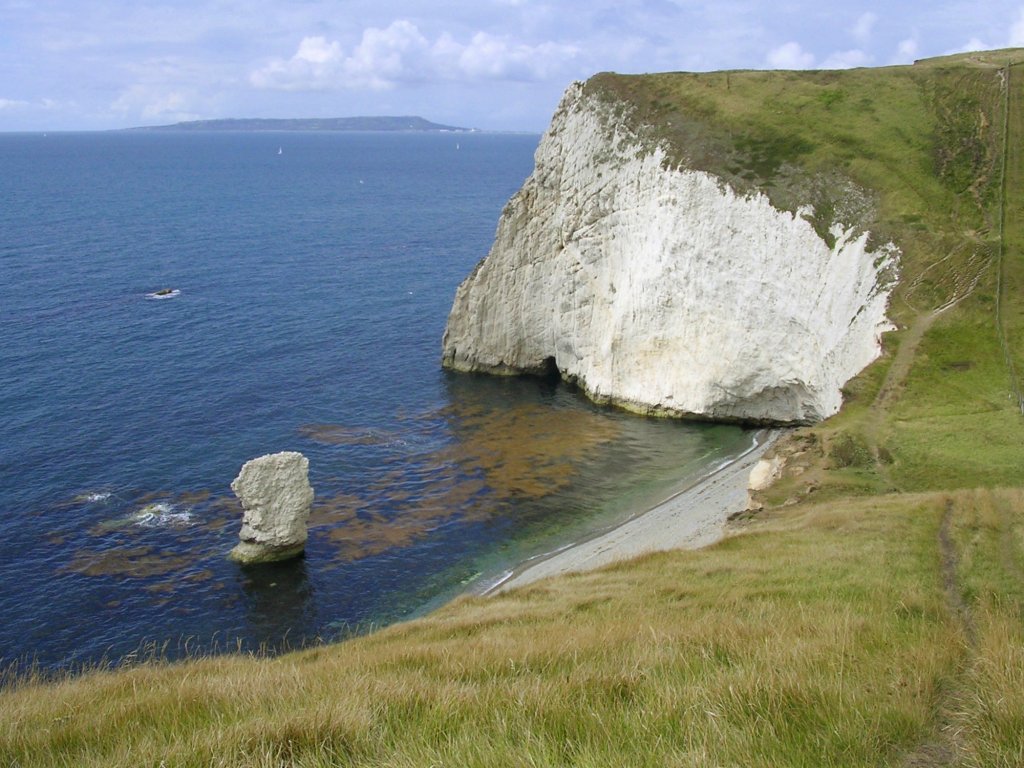
Fuge, late, tace

Big Sur Coastline, Central California

The last two days, I was revisiting one of my favorite authors, Honoré de Balzac. In his novel The Country Doctor (Le Médecin de Campagne), Doctor Benassis visits 5the Grande Chartreuse monastery in the French Alps and finds the following inscription left by one of the monks in an empty cell:

Fuge, late, tace

This is Latin for “Flee, hide, be silent.”

Which reminds me of Stephen Dedalus’s “Silence, exile, and cunning” from James Joyce’s Portrait of the Artist as a Young Man. It also makes me think of Russian poet Joseph Brodsky’s “If one’s fated to be born in Caesar’s empire, let him live aloof, provincial, by the seashore.”

I embrace this advice (except for the part about being silent, of which this post is a clear violation). At my advanced age, I have no hope of—or even desire for—success.

To quote the old antique dealer in Balzac’s The Fatal Skin (Le Peau de Chagrin):

Man depletes himself by two instinctive acts that dry up the sources of his existence. Two words express all the forms taken by these two causes of death: DESIRE and POWER. Between these two poles of human action, there is another principle seized upon by the wise, to which I owe my happiness and my longevity [the speaker is 102 years old]. Desire sets us afire and Power destroys us; but KNOWLEDGE leaves our fragile organism in a state of perpetual calm.

Alas, Balzac wasn’t able to follow his own advice. He burned through his life in 51 years, yearning for years to marry the Polish Countess Evelina Hanska. No sooner did he get his wish and return to Paris with his bride than he took sick and died.

Spending Summer in Middle Earth

The Main Characters from Sir Peter Jackson’s Film Version

I have decided that I will have a J. R. R. Tolkien summer during which I will re-read the Lord of the Rings trilogy and undertake to read The Silmarillion for the first time. And I will see all three films in Sir Peter Jackson’s masterful film version. (I own all three films on DVD). I have already had the same book/film experience last year with The Hobbit.

Less than half an hour ago, I completed my re-reading of The Fellowship of the Ring, probably my favorite novel of the three, because all nine major characters are interacting with one another during much of the length of the story.

It seems that Tolkien’s trilogy never grows old. I cannot but think that it is one of the great literary accomplishments of the Twentieth Century. It is fantasy, but with an eye cocked at the growth of fascism in Europe during the 1930s and its harvest as the Second World War. I wonder if someone even half so good as Tolkien will chronicle our own uneasy times.

One Ring To Rule Them All

Frodo and the Ring from Sir Peter Jackson’s Film

It was inevitable that I would re-read The Lord of the Rings for the third—or is it the fourth?—time. Too much of my memory of the volumes in the trilogy have been replaced by my memory of the masterful Sir Peter Jackson films. And a good thing, too! I was beginning to forget the Old Forest, Tom Bombadil, and the Barrow Wights, which were not represented in the film version of The Fellowship of the Ring (Volume I of The Lord of the Rings).

I first heard about J. R. R. Tolkien’s fantasy masterpiece from an exhibit at Dartmouth College’s Baker Library. A number of professors were asked to exhibit the books which most influenced them, and there, under glass, were first editions of the three volumes. I was enthralled before I ever read a word of it.

Only when I came to Los Angeles in the late 1960s did I find the trilogy being published in paperback. Naturally, I bought all three volumes and read them. I even read a very funny Harvard Lampoon parody called Bored of the Rings. (Do I still have it in my massive library?)

Now I am reading it in the glorious Folio Society hardbound edition, complete with glorious woodcuts and an Anglo-Saxon motif cover. Amazingly, I find myself being drawn into the story yet again, as if I were encountering it for the first time.

What a master story-teller Tolkien was! I must remember to also read The Silmarillion when I have finished re-reading the trilogy.