The Pope and the Politicians

May God Protect You from the Evil Politicians

May God Protect You from the Evil Politicians

The Catholic Church has always had this problem with Papal bureaucrats. Yesterday, Pope Francis lit into them at a Christmas gathering and nailed them on fifteen counts, including the “sickness” of considering themselves immortal, immune, or indispensable as well as “spiritual Alzheimer’s Disease.” These clerical politicians have needed to be taken down a peg—for at least two thousand years or so.

I admire Pope Francis and sincerely hope that he watches lest one of these cassock-wearing baddies slips rat poison into his hot chocolate. They are probably saying to themselves, “Yes, Pope Francis is a saint. And the sooner we send him to heaven, the better!”

During my lifetime, their have been two popes I’ve liked, John XXIII and John Paul II—both of whom have recently been elevated to sainthood. I hope Francis can somehow reform the Vatican bureaucracy while he is still walking among us. I may still have numerous disagreements with the Catholic Church, but spiritual leaders like Francis keep me from severing all connections.

He is a man of the people, whereas his targets are men of power. Kind of like corporation executives.


Serendipity: David Stofsky Talks with God

To Me, This Was the Highlight of John Clellon Holmes’s Go

To Me, This Was the Highlight of John Clellon Holmes’s Go

In the book, David Stofsky is Beat poet Allen Ginsberg. His poet and dope fiend friend Ancke (Herbert Huncke) is staying with him and has just been tucked him for the night. The chapter continues:

But that night he had a dream, without trappings, without symbols; a dream of extraordinary clarity while he dreamt it, but which he could not remember at all clearly when he awoke.

He walked down an inky corridor, which like one of those in [his friend] Waters’ building or in his own, and he was out of breath, as if he had come up many long and tiring flights. The door at the end of that corridor did not surprise him, nor, when he opened it without knocking, did the large and shadowy hall beyond it; a hall such as one can rent for fifteen dollars a night in Harlem brownstones; long, the fancy moldings, and dusty crepe streamers giving it a pathetic and abandoned appearance. Nor was he surprised by the throne at one end of it, a throne that was not surrounded by an ambient light, or even very clean and polished, but still somehow regal and entirely proper to the figure sitting there: an aging man of once powerful physique, now vaguely weary, His untrimmed beard fanned out in white folds upon His chest, His eyes shining with muted brightness as only an old man’s eyes can shine out of the limpid stillness of an old face. God.

Stofsky approached, without fear or excitement, and found himself on his knees, looking up, still conscious of his breathlessness. He paused for an instant, peering at the face, realizing an old, skeptical curiosity concerning it which he somehow knew would be tolerated; noting the wrinkles, the faint pink glow of the cheeks, the expression of weary passivity.

Then he began to tell all that had happened since [he had] the visions, endeavoring to stick close to the facts and keep the report brief and accurate. All the same, it seemed to him to take an inexcusable time to go through it all. Finally, reaching Ancke and mentioning his worry over his future, he came to the end.

“I should have had you here before, I know,” God said with an audible sigh. “But then…” And He looked down at Stofsky with an expression of such sadness and such resignation that Stofsky was actually embarrassed to have been the cause of such a look on God’s face.

“But what am I do do next, Sir?” he managed to say.

At that, he thought that God might lean forward and touch his head with one of those large, veinless hands, so gentle and sorrowful was the light which bathed His Face. But He did not.

“How shall I help them now? You see, I’m so confused and tired—,” forgetting that God must know everything.

“You must go back, and even doubt,” God said after a moment’s pause, ”and remember none of this. There’s an end which you shall discover. It waits there for you. Without you, it cannot happen. And it must.”

“But what shall I do?”, wanting, with childlike earnestness, some sign to guide him, to make acceptance easier.

“Being saved is like being damned,” God said with thoughtful simplicity, as though it was one of the unutterable secrets of the universe given to Stofsky now because he had been patient, because he had come so far.

Then God did lean forward until His beard fell straight down into His lap and Stofsky could see the wet brilliance of His large eyes. “You must go,“ He said, “Go, and love without the help of any Thing on earth.”

For a second, Stofsky seemed to recall the words; then remembered a line like that in [the poems of William] Blake, and thought that perhaps this was not God at all, but Blake himself. But then, looking closer, he knew it was God, and thought it wonderful and just that God should quote Blake, too.

As he was about to rise, however, a question rose in his mind, something almost irreverent and certainly mortal, and even though he suspected that he had no right to ask it, he could not let the opportunity pass somehow.

“Things are so terrible,” he began. “The violence, misery, the hate … war and hopelessness … I wonder,” and he gave one fearful and yet challenging glance into Those Eyes. “Why can’t You help all that? Do You know how human beings suffer? … Can you help them, Sir?” [Ellipses are in the original]

God’s face grew dim and drawn, as though the question gave Him pain He knew there was no sense to feel, but pain He took upon Himself in spite of that. He seemed for that moment a majestic and lonely man in His rented hall, on His dusty throne, who had received too many petitioners, too long, and understood too much to speak anything but the truth, even though it could not help.

“I try,” He replied simply. “I do all I can.”

Then Stofsky woke, and it was still dark.He could remember most of it, as though it had just happened, and felt a kind of heavy peace. But very soon he fell off to sleep again, and dreamt no more, and had forgotten when the morning came.


The Deal

Dancers from Karpatok

Dancers from Karpatok

The deal was made at some point before I was born. Because my father was a Roman Catholic Slovak and my mother was a Protestant adhering to the Calvinist Hungarian Reformed Church, my parents decided that any boys in the family were going to be Catholic and any girls, Protestant. As it happened, there were two boys born to Alex and Sophie Paris, my brother and I.

We were a religiously tolerant family: My father (occasionally) went to Mass, and my mother (occasionally) listened to the Reverend Csutoros’s weekly radio program and his sonorous sermons.

So what am I today? In Peru, I was a Catholic. Here in Los Angeles, I am evenly torn between the Hungarian Reformed Church—in honor of my mother—and the Greek Orthodox Church. Wherever I go, I find God.

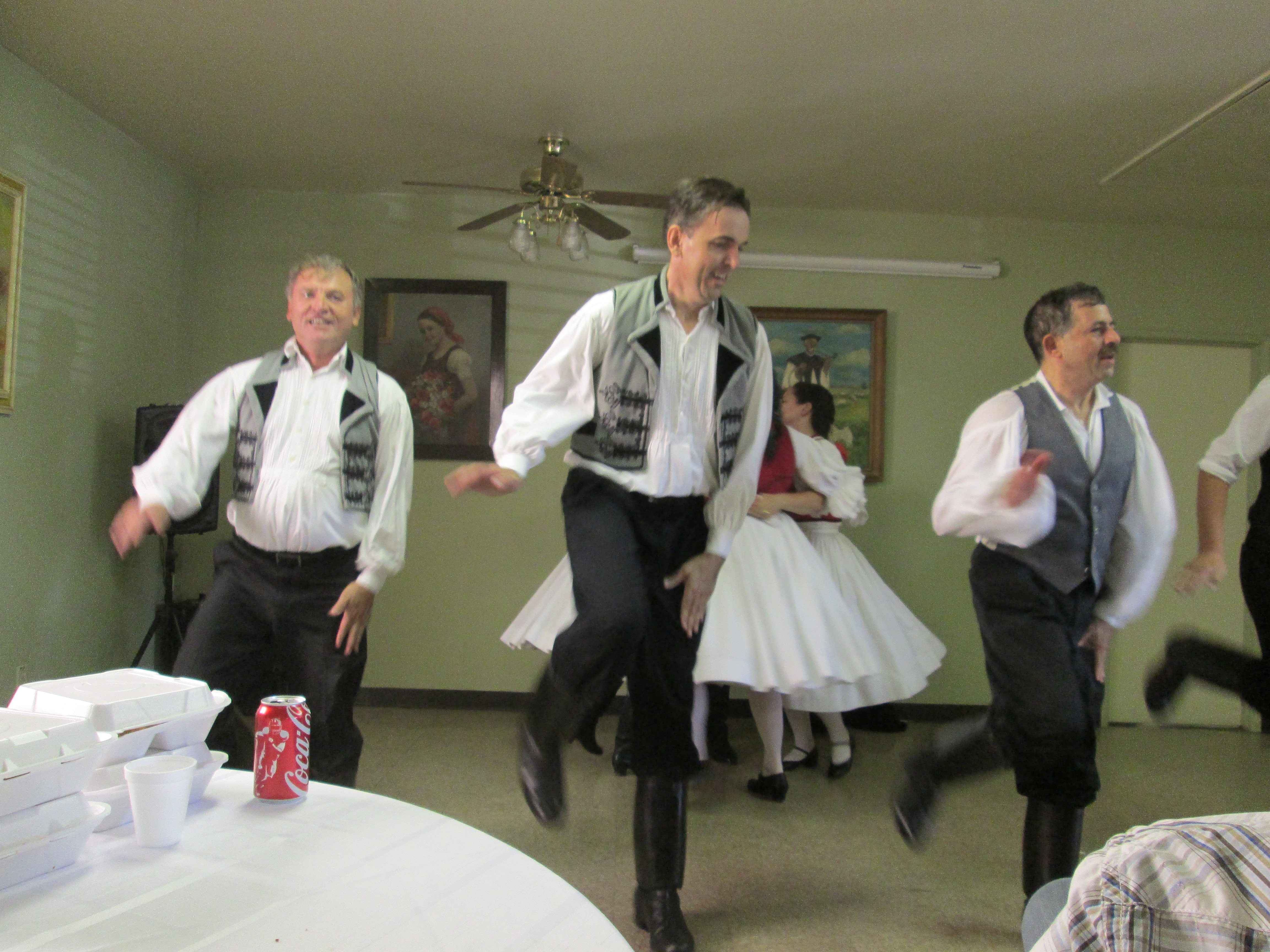
Today, Martine and I attended the church fall bazaar at the First Hungarian Reformed Church of Los Angeles in nearby Hawthorne. We had some good Magyar home cooking, renewed our friendship with several families active in the church, and listened to the usual excellent program of music and dance. Present were members of the Karpatok Hungarian Dance Ensemble (shown above) who put on the usual spirited performance.

It is good to be a Hungarian from time to time, to speak the language of my youth with some good people and share a few hours with them.


The Truth Is Fragmented

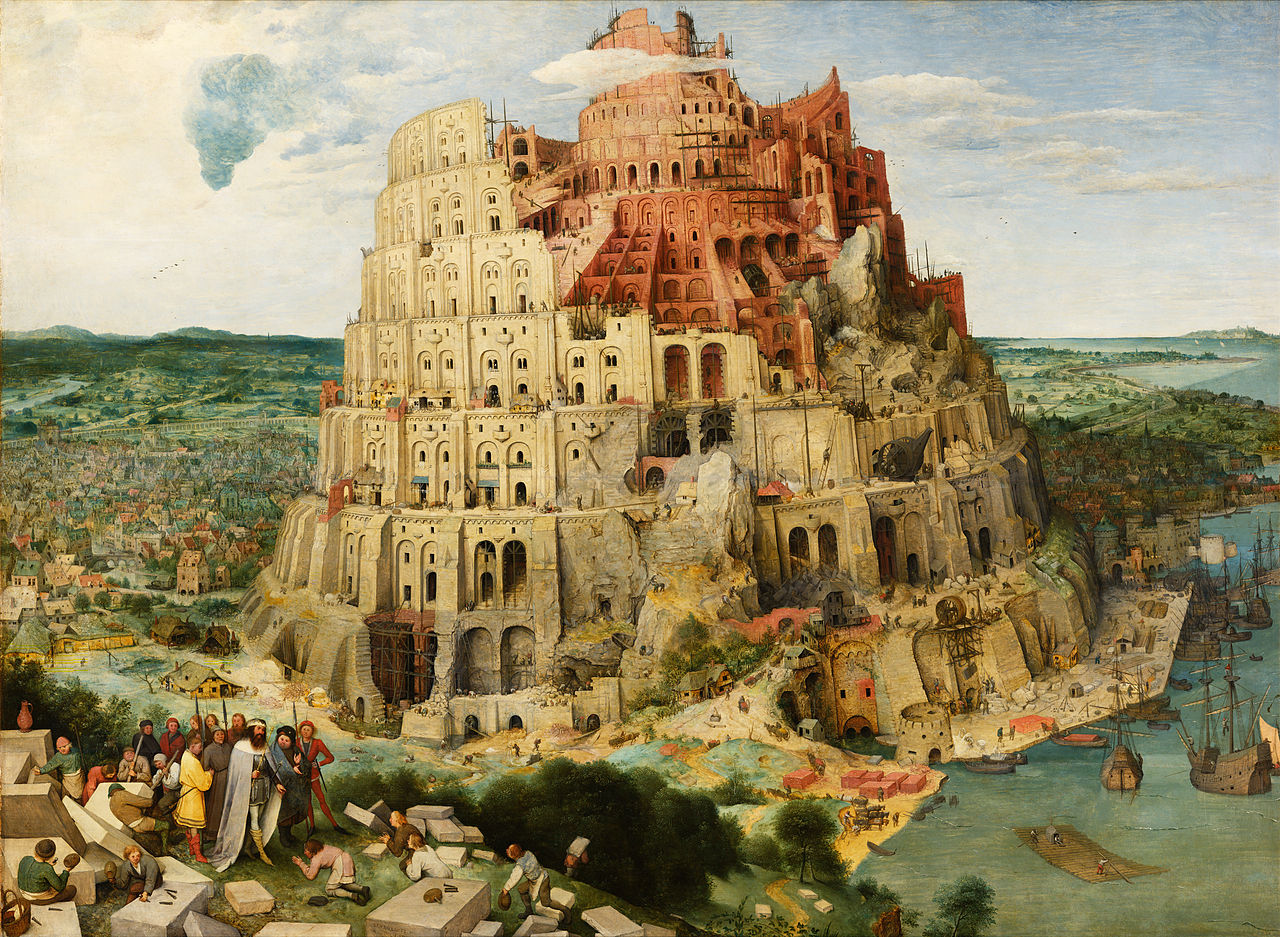
Peter Breughel the Elder’s “The Tower of Babel”

Peter Breughel the Elder’s “The Tower of Babel”

I love the story from Genesis of the Tower of Babel. Here it is from Verses 1-9 of Chapter 11 in the King James Bible:

And the whole earth was of one language, and of one speech.

And it came to pass, as they journeyed from the east, that they found a plain in the land of Shi’nar; and they dwelt there. And they said to one another, Go to, let us make brick, and burn them thoroughly. And they had brick for stone, and slime had they for mortar.

And they said, Go to, let us build us a city and a tower, whose top may reach unto heaven; and let us make us a name, lest we be scattered abroad upon the face of the whole earth.

And the Lord came down to see the city and the tower, which the children of men builded. And the Lord said, Behold, the people is one, and they all have one language: and this they begin to do: and now nothing will be restrained from them, which they have imagined to do.

Go to, let us go down, and there confound their language, that they may not understand one another’s speech. So the Lord scattered them abroad from thence upon the face of all the earth: and they left off to build the city.

Therefore is the name of it be called Babel; because the Lord did there confound the language of all the earth: and from thence did the Lord scatter them abroad upon the face of all the earth.

It is my opinion that language was not the only thing that was confounded at that point: So was religion. Across the face of the earth, there are at least as many religions as there are languages, or even dialects.

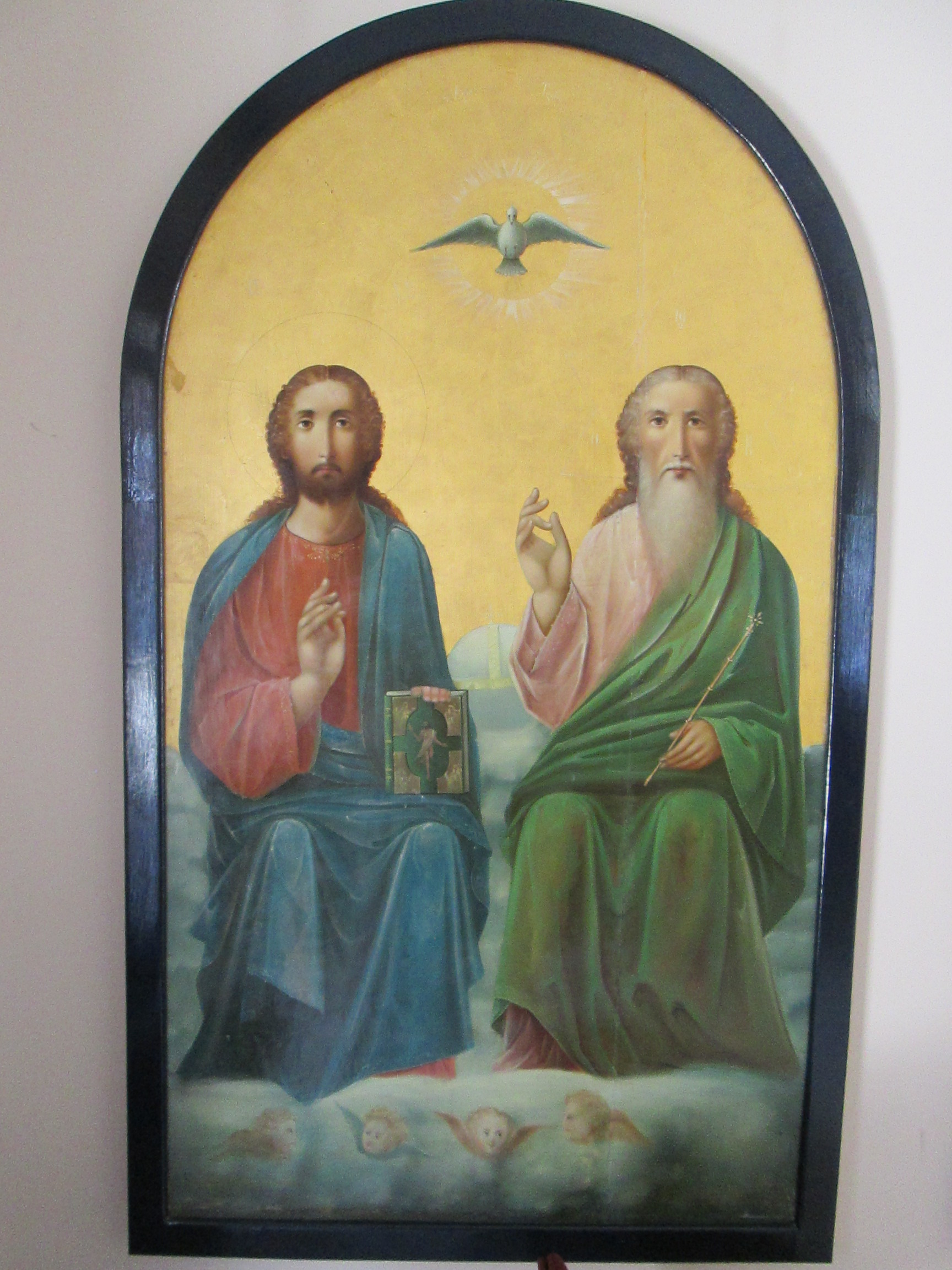
Today Martine and I went to the L.A. Greek Festival at Santa Sophia Cathedral near downtown. Once again we were stunned by the beauty of Saint Sophia, with éclat of all the glittering gold in the icons and decorations. I am curiously drawn toward Eastern Orthodoxy. But then I am also drawn to Roman Catholicism, in which I was raised; Buddhism; Hinduism. Probably to all major religions except the youngest, Islam, which seems to be entering a self-destructive death cult phase.

Depiction of the Trinity in St. Constantine’s Chapel at Saint Sophia

Depiction of the Trinity in St. Constantine’s Chapel at Saint Sophia

I not only believe in God, but in a sense I believe in all of them. I do not currently attend church, but I am thinking of attending services at Saint Sophia when I return from Peru. And while I am in Peru, I will visit scores of Catholic churches built by the Spanish. Also, on the flip side, I will visit the Museum of the Inquisition in Lima.

When the languages of man were all “confounded,” so also was the truth. It was fragmented into thousands of discrete pieces, some of which are beautiful, others of which are damaged, losing whatever truth was originally there.

I believe that, in this life, man must find fragments of the truth and hold on to them, irrespective of their origin. Truth and beauty abound, but also horrors unimaginable. Putting the right pieces together, very like a mosaic, is what life is all about.


Confronting Demons

Confronting Your Fear When It Matters Most

Perhaps the Demons Are Not Real

In The Tibetan Book of the Dead, there is a detailed discussion of how a dying person should be guided past the “wrathful deities” that are images of his fear to the desired annihilation of the self in Nirvana. There is a state between death and either rebirth or liberation from the circle of endless rebirths.

Here is a description of one of these demons, named Heruda:

O, Child of Buddha Nature, listen without distraction. Although the intermediate state of the peaceful deities did previously arise within you, you did not recognize it. So now you have wandered, [through the succession of pathways,] to here. Now, on the eighth day, the assembly of wrathful blood-drinking deities will arise. Recognize them and do not be distracted! O, Child of Buddha Nature, he who is called the Great Glorious Buddha Heruka will [now] arise, vividly manifesting before you from within your own brain. His body, blazing in a mass of light, is dark brown in colour, having three heads, six arms and four legs, which are [firmly] set apart. His right face is white, the left red and the central face dark brown. His nine eyes are fixed in a fearsome wrathful gaze, his eyebrows are quivering like lightning, his fangs are bared and gleaming, and he is laughing loudly, uttering the sounds of Alala and Haha, and Shoo oo—like whistles, in loud piercing cries. The golden-auburn hair of his head blazes and rears upward, sun and moon-discs, black serpents, and dry skulls adorn each of his heads, and black snakes and fresh skulls form a garland around his body. In his six hands he holds, on the right in the first hand, a wheel, in the middle one, an axe, and in the last hand a sword and to the left, in his first hand, he holds a bell, in the middle one, a ploughshare and in the last a skull. The female consort Buddhakrodhesvari is embracing his body, her right hand clasped around his neck and her left offering a skull-cup filled with blood to his mouth. Amidst loud pounding palatal sounds of ‘Thuk-chom’, and an [echoing] roar like the reverberation of thunder, the fire of pristine cognition blazes from the fiery indestructible pores of their bodies, and thus they stand together, [with one leg] extended and [the other] drawn in on a throne supported by garudas.

Do not be afraid! Do not be terrified! And do not be awed! Recognize this to be the buddhabody of your own intrinsic awareness. These are your own meditational deities, so do not be terrified. This, in reality, is the transcendent lord Vairocana and his consort, so do not be afraid. Recognition and liberation will occur simultaneously!

It is difficult for us to recognize what appears to be a wrathful demon as a manifestation of ourselves. By exhibiting fear in this critical Bardo state (as the Tibetans call it) will tie you to this life and the inevitable defeat of rebirth. Perhaps in our culture, we do not see rebirth as a negative: Rather, we typically frighten ourselves with demons and exhibit fear.

Whereas in our culture it is death and the pathways to it that terrify us, the Tibetans see death as a teachable moment—the last chance for non-returning to a world characterized by misery.

As I write this, Martine and I have just returned from a nearby hospice in which a longtime friend is confronting pancreatic cancer and trying to prepare his mind for—what? We don’t know for sure, but we do know that fear on that last approach is an ever-present danger. May we all be spared from this fear as we make our way out of this world and into—what?

Frank Herbert in his book Dune included this Bene Gesserit mantra which I think of often when confronting my own demons:

I must not fear. Fear is the mind-killer. Fear is the little-death that brings total obliteration. I will face my fear. I will permit it to pass over me and through me. And when it has gone past I will turn the inner eye to see its path. Where the fear has gone there will be nothing. Only I will remain.

There is great wisdom in these lines.

Inti Raymi

Inca Warrior

Inca Warrior

Before Francisco Pizarro upset the whole apple cart, Inti Raymi was one of four major Inca festivals celebrated in Cusco. It is still celebrated annually, except the venue has moved to the nearby ruins of Sacsayhuamán—usually pronounced by American tourists as “Sexy Woman.” The following description of the festival’s origin is from Wikipedia:

According to chronicler Garcilaso de la Vega, Sapa Inca Pachacuti created the Inti Raymi to celebrate the new year in the Andes of the Southern Hemisphere. The ceremony was also said to indicate the mythical origin of the Incas. It lasted for nine days and was filled with colorful dances and processions, as well as animal sacrifices to thank Pachamama and to ensure a good cropping season. The last Inti Raymi with the Inca Emperor’s presence was carried out in 1535, after which the Spanish and the Catholic priests banned it.

Since 1944, there has been a re-enactment of the Inti Raymi ceremonies on June 24 of each year. Although this re-enactment is mostly for the benefit of tourists, there are still real Inti Raymi ceremonies held by Quechuan peoples throughout the Andes.

Yes, But …

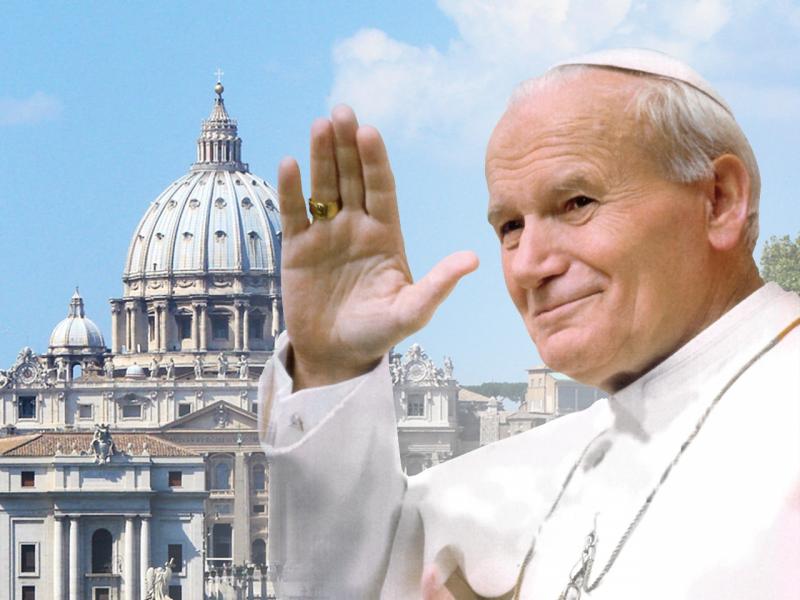
Pope (Soon To Be Saint) John Paul II

Pope (Soon To Be Saint) John Paul II

This week’s upcoming canonization of two Twentieth Century popes has many people hot under the collar. Although he did not succeed in cleaning up the child abuse mess among the Catholic clergy, I think he was an outstanding human being. His forgiveness of Mehmet Ali Agca, who came close to assassinating him on May 13, 1981, shows him to have been a real Christian.

While listening to the radio on the way to work this morning, I heard the usual complaints about his having done nothing to punish Cardinal Roger Mahony for reassigning guilty priest-predators to new parishes. This is an administrative matter, and Mahony; while certainly in the wrong, did not come under papal purview at this level. This is a problem across the entire Catholic world, with entire seminaries devoted to producing gay priests who are likely to molest the children of parishioners. At a time when the number of young people with religious callings is rapidly dwindling, many in Rome are afraid to stage what would amount to a major purge of religious.

Ultimately, the culprit is priestly celibacy. For hundreds of years, priests have not been allowed to marry in the Roman Catholic Church; but it is not forbidden among the Eastern Rites who do allow their clergy to marry. These include the West Syrian (Maronite), Armenian, Byzantine, and East Syrian rites, all of which recognize the authority of the Pope. I have always thought that the Church will ultimately change its mind on this score. Doing so would be attended with problems of its own, such as the right of priestly widows and children to inherit church property, which might put them into conflict with the laws of various countries.

But the Orthodox Churches have managed all these years, so it is not inconceivable that the Catholics will ultimately follow suit.

Looking back at what I have written above, I am somewhat disturbed that I have been criticizing John Paul more for the times in which he lived than in what he could and could not accomplish with the Roman Curia. I’m utterly delighted that the church turned to Communist Poland for its new pontiff, and that John Paul had such a major role in putting an end to the Communist Blight. He was a good man, and anyone who chooses to emulate him could not go wrong.


Dribbling the Bibble

No, Not the Bible Again!

Oh No, Not the Bible Again!

I cannot help but think that people in our society are altogether too quick to accept the Bible as the ultimate authority for, well, just about everything. At the same time, people are not really reading the scriptures with any degree of intelligence. If they were, they would feel someone let down that, in the Book of Job, Jehovah is hanging out with Satan and makes a bet with him that, regardless what He does to the prayerful man, Job will still be in His ball court. So He proceeds to impoverish Job, kill his wife and children, make off with his livestock, and saddle him with three “friends”—Eliphaz, Bildad, and Zofar—who accuse the poor man of deserving whatever befalls him.

Then, too, there is the Books of Leviticus, Deuteronomy, and Numbers, where God is laying down a law to which no one outside a small number of ultra Orthodox Jews pay any attention. Here are just some of the high points from the Book of Leviticus alone:

  • If a man also lie with mankind, as he lieth with a woman, both of them have committed an abomination: they shall surely be put to death; their blood shall be upon them.” (Leviticus 20:13) Oh, well, there goes gay marriage. Are you listening, Justice Scalia?
  • Don’t have a variety of crops in the same field, irrespective of what the U.S. Department of Agriculture urges. (Leviticus 19:19)
  • Neither cut your hair nor shave—ever! (Leviticus 19:27)
  • People with flat noses, or who are blind or lame, cannot approach the altar of God. (Leviticus 21:17-18)

And there are also a few prohibitions regarding heterosexual fornication that are incredibly strict. Most violations seem to call for the death penalty.

So I ask you, why do people accept the Bible as the ultimate authority? Parts of it are several thousand years old. And the most recent part, the Book of Revelation, is so flat-out loony that it might as well be.

People who come to my door attempting to convert me to their oddball evangelical sect are totally flabbergasted when I tell them I do not accept the authority of the Bible. That means they can’t use it to quote at me to substantiate their every argument. It effectively shuts them up and makes them go down the stairs muttering.

Withal, I can still believe in God, but without accepting all this extraneous claptrap. Oh, and I have no intention of seeing the new movie version of Noah, from which the above still is taken.

The Earth Is 6,000 Years Old? Really?

Apparently Old Enough to Have Eaten All of Ken Ham’s Ancestors

Apparently Young Enough to Have Eaten All of Ken Ham’s Ancestors

On February 4, Bill Nye the Science Guy debated a Creationist moron named Ken Ham on the subject of evolution. Of course, Mr. Ham treated the Book of Genesis (and whatever he thought about it) as his primary source. Apparently, according to the Creationist, all of creation is about 6,000 years old. What’s the point of even trying to debate a fundamentalist Christian troglodyte? I believe with Shakespeare in Hamlet (III:1):

Let the doors be shut upon him
That he may play the fool nowhere but in’s own house.

I am referring to Mr. Ham here, not Bill Nye. I mean, even Pat Robertson—no mean troglodyte himself—reproved the half-baked Ham for his beliefs:

There ain’t no way that’s possible….To say that it all came about in 6,000 years is just nonsense and I think it’s time we come off of that stuff and say this isn’t possible. We’ve got to be realistic that the dating of Bishop Ussher [who merely added the ages of the generations in the Bible] just doesn’t comport with anything that’s found in science, and you can’t just totally deny the geological formations that are out there.

“Let’s be real!” he added. “Let’s not make a joke of ourselves.”

Big Surprise!

Big Surprise!

Why do even the more stupid religious fundamentalists believe such arrant nonsense? I think that, if anyone should debate a fool like Ken Ham, it should be a comedian, not a sincere scientific figure like Bill Nye. This was in no way a victory for the Hammites, nor for the followers of scientific evolution. It was just another sad episode of rural stupidity in the former Confederacy.


Either Way Is Okay

Shinto Shrine

Shinto Shrine

It is a series of low buildings among trees. Space in a shrine is horizontal and not, as in a cathedral, vertical. In a church, space is confined. It must struggle upward, having no place else to go. In a shrine, space is spread. There are no high walls, no tight enclosures. The space is a grove and this grove seems so endless that it might be the world itself.

The sky seems low, near. There are long expanses of lawn or grove among the buildings. One is not enclosed, nor is one directed. One is liberated, and almost always alone.

Shrine prayer, as I have said, is not communal prayer. It is solitary prayer. It is not a state—it is a function. It lasts only a minute or so and it is spontaneous. One does not enter, as in churches, or descend, as in mosques. The way to the shrine is through a grove, along a walk, through nature itself, nature intensified. Through these trees, over this moss, one wanders to shrines.

This casual, unremarked acceptance of nature speaks to something very deep within us. It speaks directly to our own nature, more and more buried in this artificial and inhuman century. Shinto speaks to us, to something in us which is deep, and permanent.

Certainly we feel—which is to say, recognize—more here than in smiling Buddhism with its hopeful despair, more than in fierce man-made Islam with its heavenly palaces on earth, more than in the strange and worldly tabernacles of the Hebrews or in the confident, vaunting, expectant Christian churches.

This religion, Shinto, is the only one that neither teaches nor attempts to convert. It simply exists, and if the pious come, that is good, and if they do not, then that too is good, for this is a natural religion and nature is profoundly indifferent.—Donald Richie, The Inland Sea