Down Two Muses

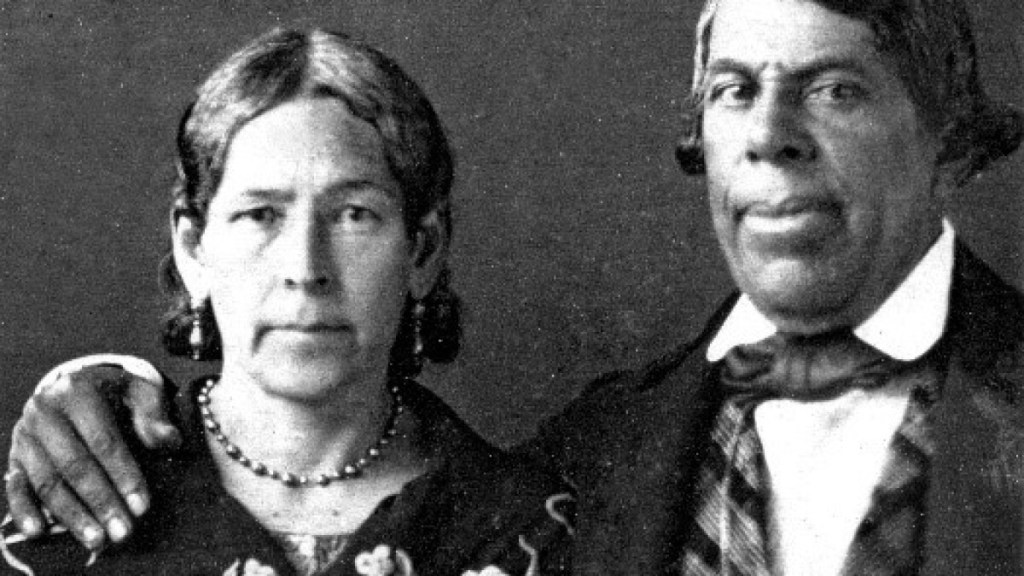
Christmas 2021 was going to see Los Angeles minus two of her muses. We just lost Joan Didion (above) to Parkinson’s disease; and six days ago, we lost Eve Babitz (photo below) to Huntington’s disease. Didion and Babitz were, to my mind, the leading writers about life in Southern California over the last half century or so.

I remember when I was first introduced to Didion by my friend Stephanie Hanna, who recommended back around 1970 that I read her great collection of essays entitled Slouching Toward Bethlehem. Since then, I have read at least eight other volumes of her fiction and nonfiction.

Eve Babitz was a more recent discovery, thanks mainly to the New York Review of Books (NYRB), which brought out most of her work in the last few years. I consider Eve’s Hollywood and Slow Days, Fast Company to be among the best works written about life in Southern California.

Joan Didion died in her 80s, and Eve Babitz at the age of 78. That makes me feel vulnerable, as I am a male who is about to reach his 77th year next month. In many ways, my acceptance of women as a source of outstanding literature about the local scene is due to these two powerful figures.

Now, as I look around me, who is there to take their places? No one that I can recognize at this point. I am just going to have to start looking….

Frozen Assets

When one thinks of Southern California, one does not associate it with cold weather. As it turns out—despite all the global warming—in Los Angeles the mercury has dipped into the thirties and forties (roughly 0° to 10° Celsius) overnight.

And that’s when my apartment heater decided to die … three times, no less! Over the last six weeks, Martine and I have been enduring long spells of teeth-chattering cold.

Matters have been complicated by the fact that, because we are grandfathered in at low rent due to the City of Los Angeles’s rent control ordinance, it is to the advantage of the building owners to kick our frozen carcasses into the street so that they could start charging triple the rent to someone who does not mind living across the street from a homeless encampment.

I have hopes that our 75-year-old heater will continue to work, since the weather forecast for the rest of the month seems to be for cold nights throughout. I am sure that my next gas bill will be outrageous.

This time of year is usually pretty cold, but this year since to be the iciest December in decades. Santa Claus should feel right at home.

Endless Drought

MADERA, CALIFORNIA – MAY 25: In an aerial view, a tractor kicks up dust as it plows a dry field on May 25, 2021 in Madera, California. As California enters an extreme drought emergency, water is starting to become scarce in California’s Central Valley, one of the most productive agricultural regions in the world. Farmers are facing a shortage of water to use on their crops as wells and reservoirs dry up. Some are pulling out water dependent crops, like almonds, or opting to leave acres fallow. (Photo by Justin Sullivan/Getty Images)

In Southern California, we have not seen so much as an inch of rain since last February or March. Oh, we get the occasional “dirty drizzle,” which succeeds only in leaving a layer of dust on our windshields as it dries. Today’s headline in the Los Angeles Times reads “Winter Tale: A ‘No Snow’ State.”

You might not associate California with snow, but the snowpack on the Sierra Nevada Range is the main source of irrigation for California agriculture. If that dries up, large parts of the San Joaquin Valley will no longer be able to reach the 12.8% of U.S. agricultural production that it hitherto enjoyed.

We usually think of water as used primarily for drinking and washing, yet 70% of global fresh water resources is used for irrigation. And also for keeping useless front lawns green.

Something is clearly happening that will make California a less desirable place to live. Late night comics are having a field day talking about our year-round wildfires.

I don’t have any idea what is going to happen. It could be that the rains and snows of yesteryear will return. Or, they may not.

Edge of the Storm

Today, Los Angeles got its first real rain this season. Mind you, it was the far southern edge of a more serious storm that hit Northern California; but still it was enough of a novelty to one who has not seen any real rain for the better part of a year.

If you are not familiar with California, the south is the part that doesn’t get much precipitation. The boundary seems to be at Point Conception in Santa Barbara County. Weather forecasts usually read “from Point Conception to the Mexican Border.”

You will notice that the shore of California north of Point Conception is considerably to the west of the south shore. To go from Los Angeles to Santa Barbara, one travels as much to the west as to the north.

When I first moved to Los Angeles, we had more rainy summers, especially around the early 1980s, when one storm carried away part of the Santa Monica Pier. There would be whole days of heavy rain, one following on the heels of the other. Now it seems to have a few widely spaced rains, usually dumping just a fraction of an inch. If this trend continues, the water shortage will get serious. There is not enough of a snowpack in the Sierras any more, and the Colorado River is drying up. And these are our two main sources of water.

The L.A. Department of Water and Power is planning on re-processing sewage to return to our faucets. The unfortunate moniker for this procedure if “toilet to tap.” It doesn’t sound very appetizing, and I foresee a lot of problems in its implementation.

Tricked Out Caddies

Last Saturday, Martine and I stopped in at the Zimmerman Automobile Driving Museum (newly re-named) to see a show of Cadillacs.on display from private collectors. I am not generally interested in Caddies, but what caught my eye were the cars tricked out with hydraulics and fancy paint jobs.

To me, there was a lot of humor in this, as if the car owners were sharing a joke. I liked them more than the Cadillacs that were, so to speak, mint in box.

I was rather surprised to see so many Caddies on view and so many visitors. I guess they have maintained a level of popularity with aficionados that I never suspected.

A Weekend in Palm Desert

No, I Do Not Plan to Visit Any Golf Courses

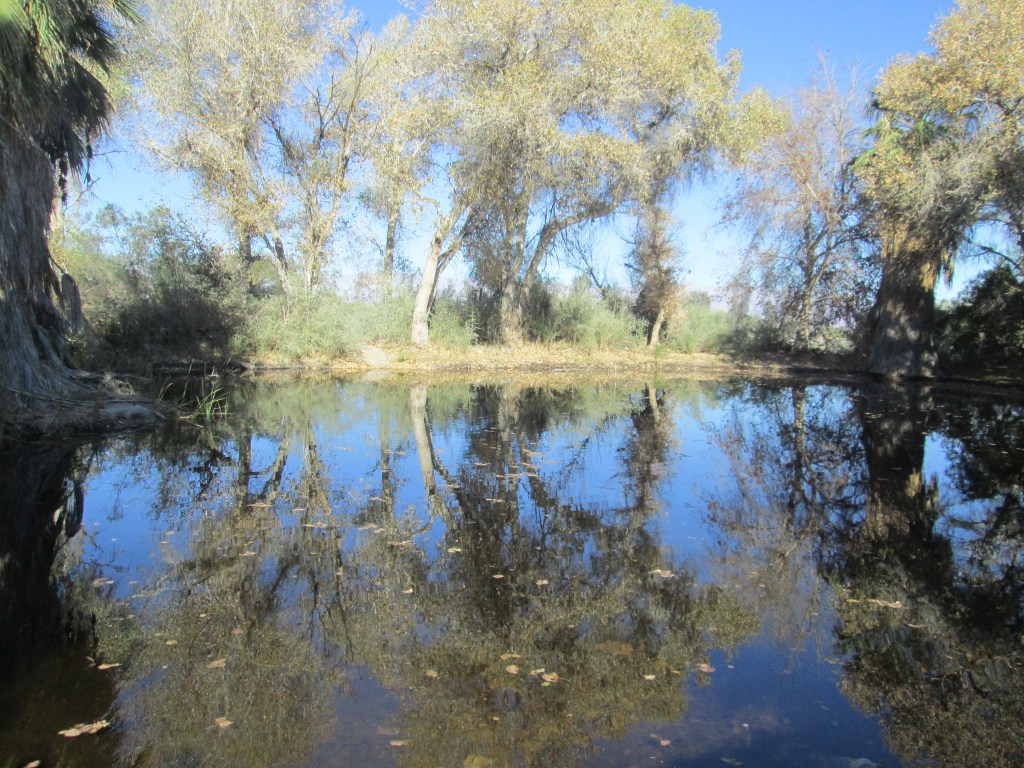
It looks kind of idyllic, doesn’t it? The damned thing is it can be idyllic, or it can be hellacious. Fortunately, the weather in the desert is cooling somewhat, and I don’t have to worry about losing any skin if I touch any of the metal surfaces on my car.

On Saturday, I will drive to Palm Springs for a mini-family-reunion, staying in a cheap motel in the area. I am primarily interested in spending time with my brother and sister-in-law, and I hope to take some pictures of the weekend. Martine will stay behind in L.A., as she is not feeling well.

Monday is Columbus Day. Although it has become something of a bogus holiday, it is still observed by governments, banks, and some school districts; so I will stay on until Tuesday morning, when I drive back to Los Angeles.

I may or may not post on Friday of this week.

Uh! I’ve Been Shot!

Two Vaccinations in Two Days!

Yesterday, I got the Fluzone High-Dose Seasonal Influenza Vaccine at my local Walgreen’s. I would also have gotten the Covid-19 booster shot the same day, but I had to make an appointment on the Internet because their system was down. So today I returned and got a jab in my other arm.

I have a difficult time understanding anti-vaxxers with their silly reasons for not getting their shots. It is a strange time in history when people would rather be dead or kill their friends, neighbors, and acquaintances rather than submit to a simple shot. Perhaps, at bottom they’re cowards about a little pain. And in both cases for me, there was very little pain, and it was short-lived.

East Los

Mural on East Cesar E. Chavez Avenue

Drive East across the bridge over the concrete-walled Los Angeles River and you will find yourself in a reasonable simulacrum of a Mexican city. Boyle Heights used to be the city’s Jewish neighborhood, and there is the massive Breed Street Shul still remaining. If you have a hankering for some tacos muy sabrosos, you are in the right place.

East Cesar E. Chavez Avenue is the heart of “East Los,” short for East Los Angeles. Of course, over time, the Mexican population has scattered all over the county, but there are still some special places around the Avenue. Like La Parrilla, at Chavez and Detroit, probably my favorite Mexican restaurant in Southern California. Like the Anthony Quinn Library (I’ll bet you didn’t know that Quinn was Mexican). Like ELAC, East Los Angeles College, with some 35,000 students.

We tend to treat American Hispanics as if they were a cohesive voting bloc. The 2020 election gave the lie to the Democrat assumption that Hispanic voters were all for Biden. Not so. Their votes were all over the place. I learned that when I fell for a Chilean cutie named Valentina Palacios back in the 1970s, only to find that she was a supporter of tyrannical dictator Augusto Pinochet Ugarte.

And what is a Hispanic anyway? They could include Mexicans, Cubans, Spanish, South Americans, Central Americans, Puerto Ricans, and even some Filipinos. I remember being in an anti-Viet Nam war demonstration back in the 1960s and being attacked by rightist anti-Castro Cuban immigrants. We have to get used to seeing the Hispanic population as a broad spectrum.

And whatever we do, me must stop using terms like LatinX, which leaves a stench in the nostrils of most Hispanics.

Cherrapunji

Photo by Manish Jaishree of the Wettest Place on Earth

Here I am, reading about massive rainstorms in India circa 1990 while living iat the edge of a desert—and one in an increasing cycle of drought. I imagine, someone in Cherrapunji, India, might have dreams of living in a dry country in which, for all intents and purposes, there is no rainfall for six months of the year.

For your information, Cherrapunji is considered the wettest place on earth. It holds the record for the most rainfall in a calendar month and in a year: it received 9,300 millimeters (370 inches; 30.5 feet) in July 1861 and 26,461 millimeters (1,041.8 inches; 86.814 feet) between 1 August 1860 and 31 July 1861. in Alexander Frater’s book Chasing the Monsoon, the author talks of a friend of his father experiencing rainfall for several consecutive days in which between 30 and 40 inches of precipitation fell.

I miss rain. In Los Angeles, we only had one day of persistent rain in the last twelve months. There have been numerous instances of what I call a dirty drizzle, in which the windshield of my car is muddy as the result of an insufficient drizzle. To form a raindrop, there must be a bit of dust in every drop. But when not enough rain falls to operate the windshield wiper, then the dust predominates.

California and the American Southwest looks to be one of the big losers in climate change. The Colorado River is drying up, the Sierra snowpack is insufficient to fill the reservoirs the state needs, and horrible wildfires are destroying our forests.

There is not too much one can do about it except wait it out. Climate change has happened before. Up until the 13th century, Greenland was actually a fairly prosperous place, but then a little ice age set in and the colonists appear to have vanished from the pages of history. The town of Garðar was actually a bishopric, but nothing remains of its past glory.

Actually, I wouldn’t mind another “little ice age,” but who knows what will happen in the years to come?

Cholula

It’s Not a Hill: It’s the World’s Largest Pyramid

Where is the world’s largest pyramid located? You’re looking at it, in this photograph of the pyramid at Cholula near Puebla, Mexico. You can walk up to the pyramid, and it just looks like a hill, on top of which the Spanish built the church of Nuestra Señora de los Remedios. The base is four times the size of the Great Pyramid of Giza in Egypt.

Cholula is just a few minutes west of Puebla and is famous for the number of churches in a city of its size. The legend is that there are 365 churches in the city of approximately 100,000, one for each day of the year. Actually, there are about 37, which is quite enough.

As I recall, there are some very claustrophobia-inducing tunnels that cut through the pyramid, which I decided to skip. They were used by archeologists to determine how many layers of pyramid there were on the inside.