The Lomita Railroad Museum

The Lomita Railroad Museum

One does not expect to see a railroad museum on a residential suburban street, yet there it was. Plus it was not built at the site of an old station or railroad yard. The station building is a built-from-scratch replica of the station in Wakefield, Massachusetts. It was built on 250th Street because that’s where Irene Lewis lived. The Lomita Railroad Museum is her creation, in memory of her late husband Martin, and it is a tribute to the love that the Lewises had for railroading.

Today was a prototypical June gloom day, so Martine paged through our copy of Passport 2 History: Your Guide to 83 Historic Sites in 9 Counties of Central and Southern California, an occasionally revised booklet that has resulted in a number of fun day trips for the two of us.

In addition to the station building with its numerous exhibits, there is a 1902 Southern Pacific steam locomotive with tender and a 1910 Union Pacific caboose. On adjoining properties, there is a Santa Fe caboose, a 1923 Union Oil tank car, and a 1913 outside-braced wood box car.

Martine with Locomotive Exhibit (Notice the Engineer’s Hat)

It’s always fun to see a real labor of love come to life the way the Lomita Railroad Museum has. Los Angeles is full of little corners where some person’s dream has resulted in a fun place to visit and be informed.

Especially now that the Los Angeles to San Francisco High Speed Railroad is in doubt because of funding woes, railroading is becoming more and more a thing of the past. Although they seem to be thriving in Europe and parts of Asia, the railroads in North America have given way to trucks (for freight) and buses (for passengers).

I will never forget the awe I felt as a cub scout waiting for a passenger train to take members of my “den” to distant Ashtabula, Ohio. As the giant steam locomotive pulled up to the station, I felt a frisson of terror at such power as we were enveloped in steam.

 

When You Strip Away the Surface …

Dancers from the Kárpátok Folk Dance Ensemble

… of me, what you will find is a strange sort of Hungarian. Although I have read no studies to this effect, I think that the first language you learn to speak is what determines, at the deepest level, who you are. My first language was an older dialect of the Magyar language from the region just to the southwest of Budapest. Today, when I speak the language—haltingly—Hungarians laugh at my choice of words and horrible grammar. Yet, my ever-so-sophisticated American English is merely an overlay on a base that was set in concrete before I was five. I feel myself to be a kind of Brummagem Hungarian.

Last night, Martine and I attended a Hungarian folk dance program at St. Stephen’s Catholic Church just south of downtown L.A. The dance was put on by the Kárpátok Folk Dance Ensemble, which has just recently celebrated its 50th anniversary. That a city like Los Angeles, which does not have that large a Hungarian population, could support an organization like Kárpátok is an unending surprise to me.

For many of the fifteen-odd dances they performed, I was in tears. There are certain themes in Hungarian music that take me way back to my beginnings. I could not lay my finger on it, but a deep emotional chord is struck deep in my core.

The people in attendance were curious about me. My pronunciation is near perfect, but I might as well be retarded. As for Martine, she doesn’t know a word of Magyar and depended on me for many things I was unable to explain.

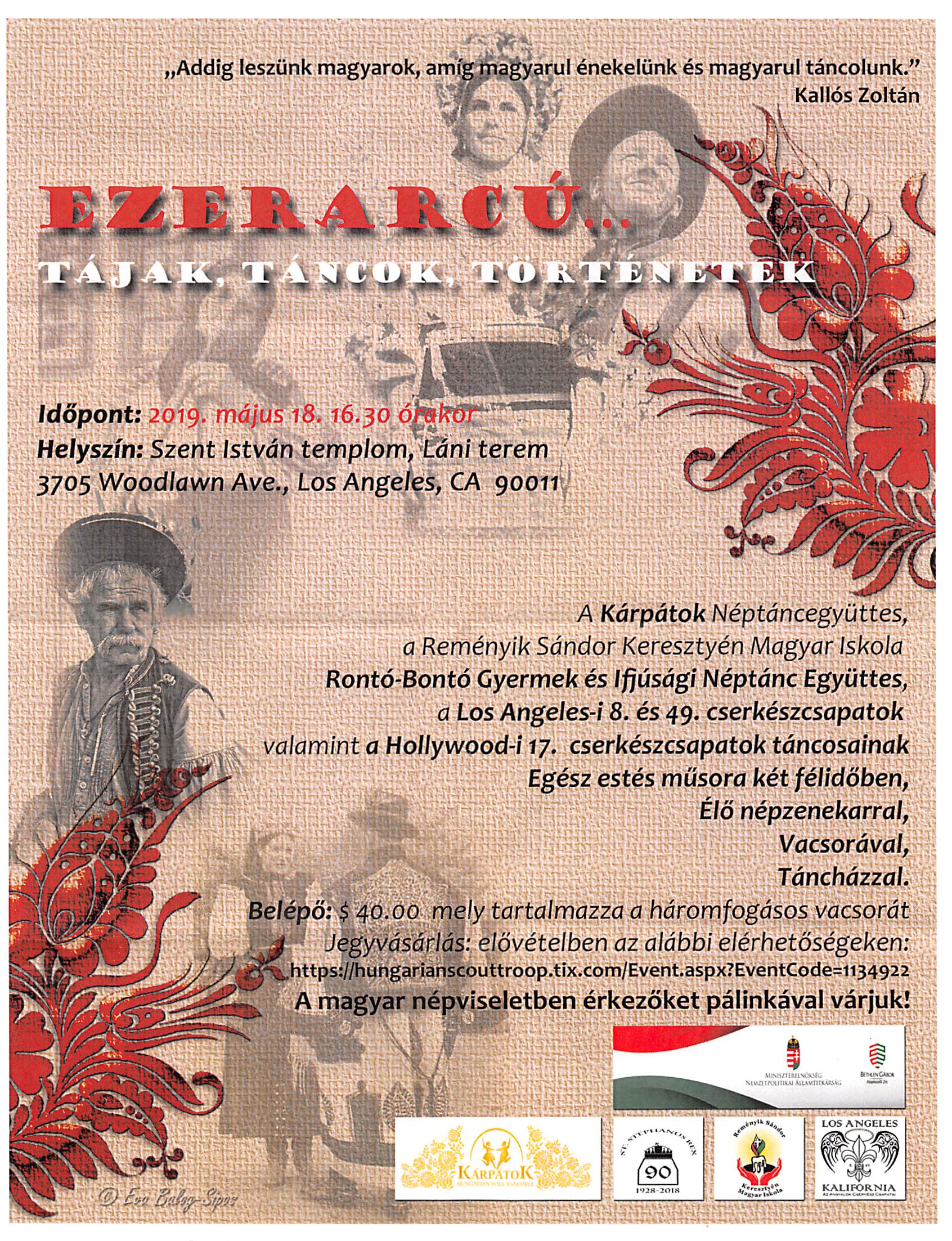
Flyer for the “Thousand Faces” Dance Concert We Attended

That didn’t keep up from enjoying the music and dances—and the Hungarian meal that was served afterwards—even though we were both suffering from nasty colds. She might be French, but Martine enjoys these Hungarian events as much as I do, though in a different way. I do believe she prefers Hungarian food to the great cuisine of France, especially where pastries are involved.


With Martine at the Arboretum

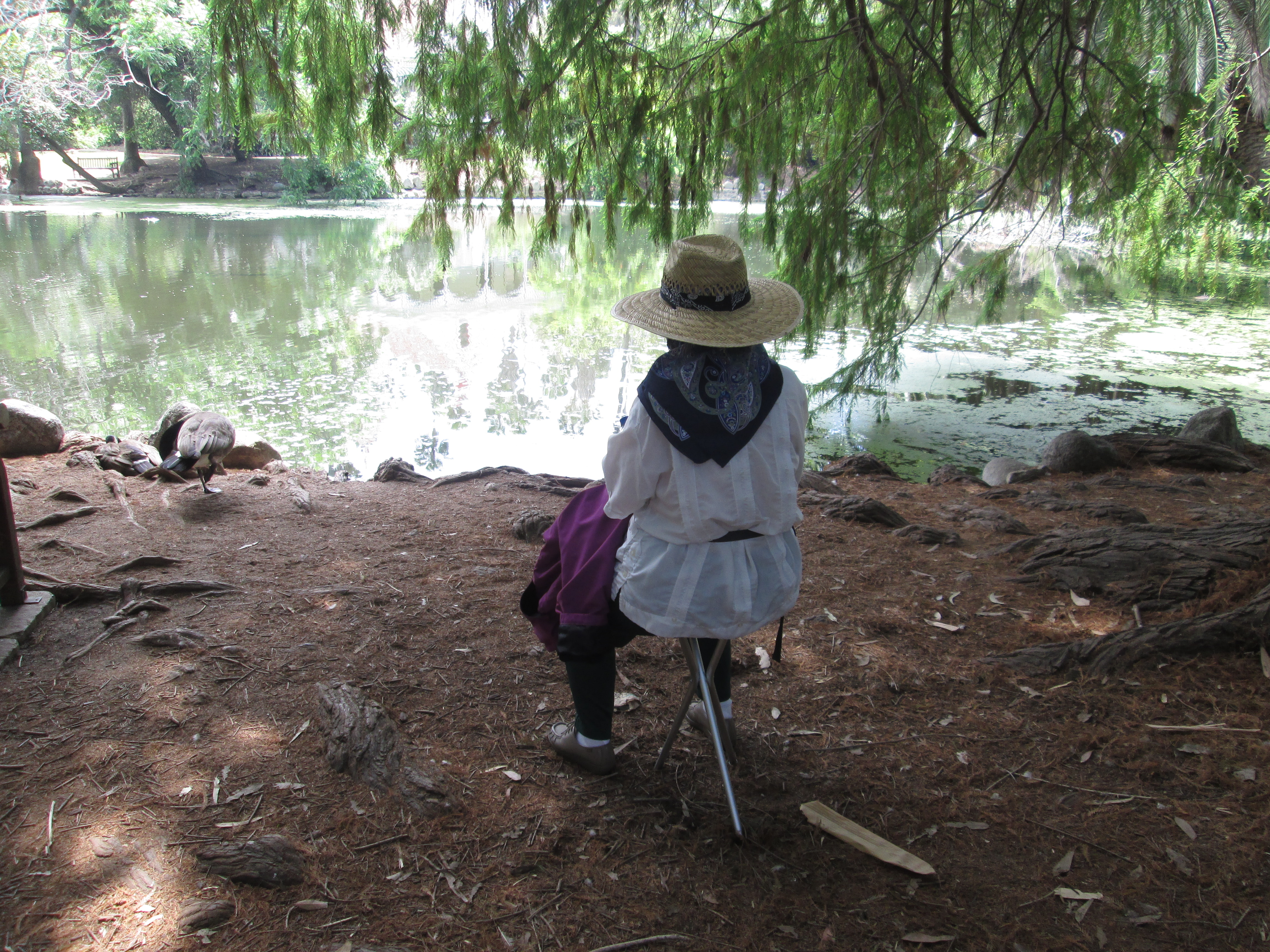
Martine Sitting on the Shore of Baldwin Lake

Yesterday Martine asked me if we could drive to the Los Angeles Arboretum in Arcadia. I was reluctant at first, as it is an hour drive at high speed over several freeways, but I was delighted that Martine actually wanted to go somewhere that was interesting to her. And the botanical gardens of Southern California are favorite destinations for her. She is shown here siting on her tripod cane chair, wearing one of my old guayaberas and a Mexican straw hat, looking at the ducks and geese plying Baldwin Lake.

We would up staying over four hours, much of it with the geese and ducks.

A Mother’s Day Portrait of Mom with Ducklings

Most of the time was spent around the lake and its various inlets. Having seen all the signs about warning not to feed the birds and wild animals, Martine felt she had to explain to the geese why she didn’t bring any food for them. They did not seem to be very put out by the lack of bread crumbs because they were so busy rooting around in the grass for the insects and plants that form much of their diet. Still, it was interesting that she felt so bad about not being able to feed them herself.

The View Across Baldwin Lake at the Queen Anne Cottage

Because we have had a wet winter, Baldwin Lake no longer looked like a large mudhole. It was covered with millions of tiny leaves that had fallen from the surrounding trees (you can see them in the middle photo above).

When she is at a botanical garden, there is no trace of the depression that marred so much of her life in the last year and a half. She no longer wants to escape to another city: She can’t because she has spent her savings on previous abortive trips. Instead, she is taking long walks in our neighborhood, which, probably, is good for her.


Life on the Rancho

Los Encinos State Historical Park Today

People think of Southern California as being bran new. In actuality, the history goes far back—even earlier than the days when the land was occupied by the Gabrielino and Chumash Indians. I was born in Cleveland, which was founded in 1796 by Moses Cleaveland of Connecticut. Los Angeles is a full fifteen years older, having been founded in 1781 as a Spanish pueblo. So many of our place names come from the Spanish and Mexican land grants. One such community is Encino (“Oak” in Spanish), which was part of the 4,251 acre Rancho El Encino.

On Sunday, Martine and I drove to the Los Encinos State Historical Park in (where else?) Encino to visit the reconstructed ranch buildings. I say reconstructed because adobe did not do particularly well in the earthquakes of 1880 and 1994.

We have visited several of these adobe ranch houses from the 19th century and earlier. There was the Centinela Ranch House in Westchester and the Dominguez Rancho in Rancho Dominguez. And there are perhaps as many as a dozen more which I eventually hope to see, just as I would like some day to visit all the California missions built by Father Junipero Serra, recently sanctified by the Vatican.

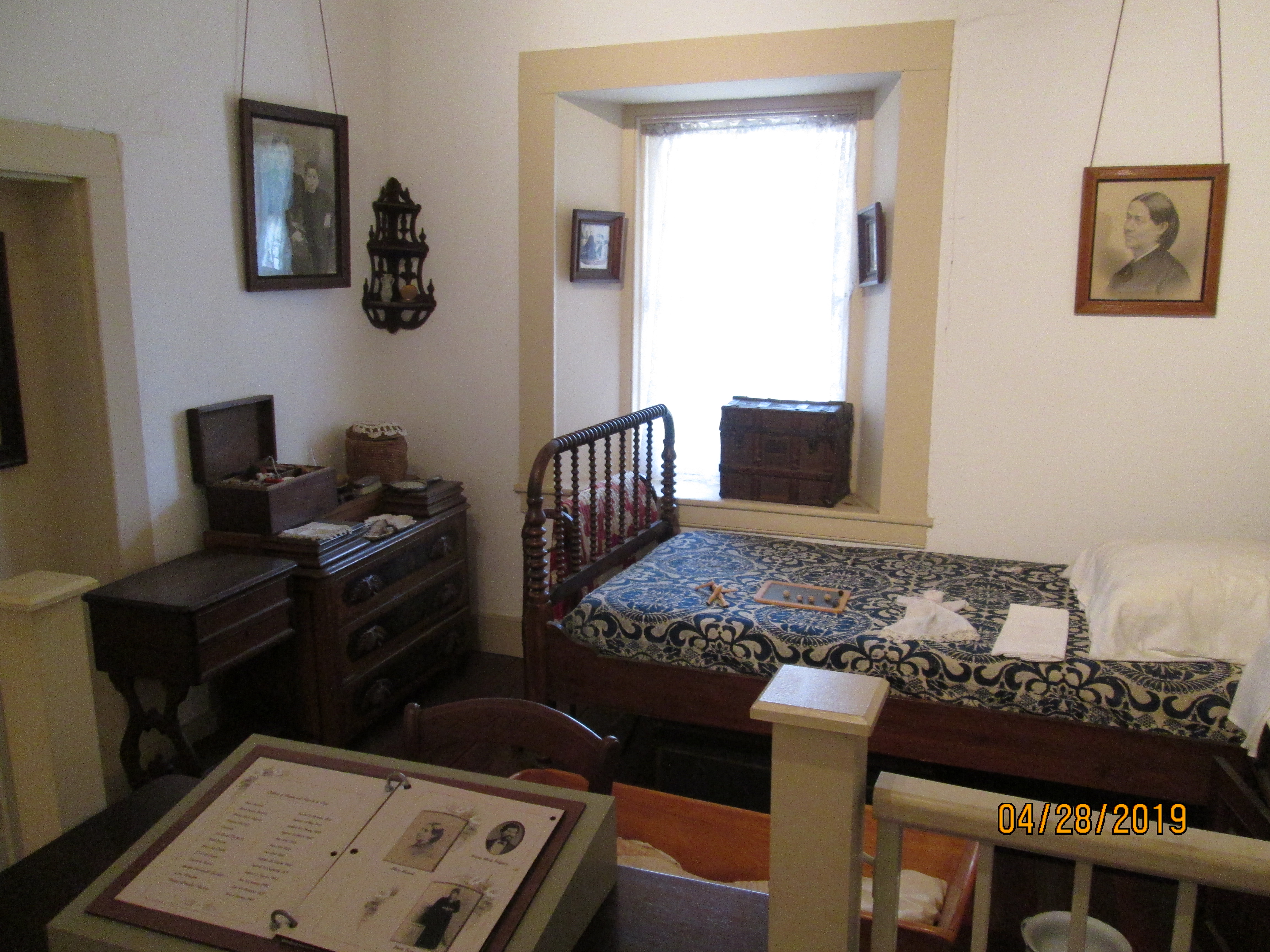
Bedroom in the Ranch House

The Los Encinos State Historical Park does a nice job of bringing together furniture of the period as well as informative displays explaining what life was like on the rancho 150 years ago and more. They even have several stone outbuildings dedicated to food storage and blacksmithing.

Los Angeles has not always been careful of preserving its historical sites. There used to be an old abandoned adobe at the corner of Colorado and 26th Street in Santa Monica, near where I had first real job at System Development Corporation. It was a kind of spooky place, but it is no far. Now it’s a high-rise office building dedicated to entertainment media. No effort was made to move the adobe where it could be restored.


“Tell It Slant”

Poet Marsha de la O

It was my day at the Los Angeles Times Festival of Books. Yesterday, I went with Martine and two friends: All my time was spent in coordinating when and where we should meet, eat, and greet. At such a large, centrifugal event, people tend to separate going to different locations based on their various interests. So today I returned—but this time all by my lonesome. It was an altogether different experience. I bought several books, and for sheer enjoyment attended two poetry readings at the Festival’s Poetry Stage, sponsored by Small World Books on Venice Beach.

My favorite of he two readings I attended was by a Ventura County poet named Marsha de la O. With her husband Phil Taggart, she published a poetry journal called Askew. Under the masthead, she quotes a line from Emily Dickinson, “Tell the Truth But Tell It Slant,” based on the title of the following poem:

Tell all the truth but tell it slant —
Success in Circuit lies
Too bright for our infirm Delight
The Truth’s superb surprise
As Lightning to the Children eased
With explanation kind
The Truth must dazzle gradually
Or every man be blind —

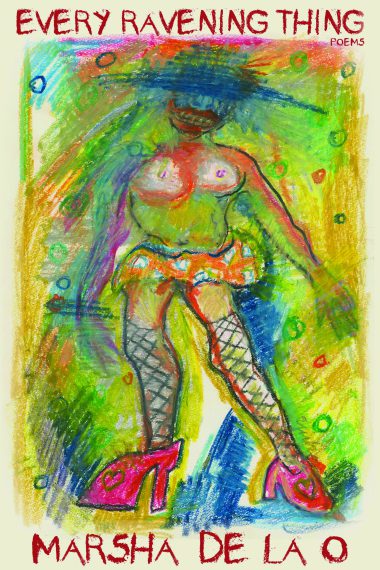
Marsha de la O read from her latest collection, Every Ravening Thing, published by the University of Pittsburgh Press. In the cool of the morning, it was nice hearing powerful verse in the dappled light of the Poetry Stage. The audience wasn’t as big as some of the sessions of more “general interest”: The people who were there were there because they wanted to be, and because they loved feeling those frissons caused by the magic of poetry.

Marsha de la O’s Latest Collection of Poems

Following is one of the four poems de la O read this morning:

Space-time Tsunami

If most of the universe is dark energy,
why should we be any different?

Pick a wave, any wave—it’s just energy in motion,
shock, or plasma, or the wide ocean shrugging
its shoulders when space becomes time
and ‘time is not the root of our problem’.

The good ship Charon’s anchored offshore, laden
with otter pelts—soft gold they call it.
Our tsunami strikes during the Napoleonic wars,
but what’s California to Napoleon
that he should weep for her otters?   Nothing.

I had a friend who raked her fingers through my hair, gathered
a hank in a great knot, Hey, Strange Attractor, she used to say,

my binary star, my pristine, my flammable—how we orbited,
each to each.
I had a friend who convened the dead. When we spoke,
water seemed to leave the beach—the sea scrolling backwards and her,
strolling right out onto newborn land—that reckless.

Hey ferryman, come on over here, ferry, ferry, ferryman …

We now exist as thirteen egrets in the canopy of a tree
so far from water that at first they look like
paper lanterns
to the observer who has no place to stand

and still I walk through the great hall of swallows swirling
like Valkyries, like volute, like alley oop,

we do not speak, I’ll trail after for a hundred years.


The Pacific Red Cars

Martine at the Orange Empire Railroad Museum (2016)

If you have ever seen the movie Who Framed Roger Rabbit (1988), you’ve heard one theory why the best intraurban transportation system in America was destroyed. I think I can assure you that Judge Doom’s hatred of cartoon characters was not the reason why the Pacific Red Cars stopped running around the 1950s. If you’re looking for a reason, you could blame the construction of new freeways, the desire of General Motors to put every American behind the wheel of a Chevrolet, or the aging of the Pacific Electric rolling stock.

My late friend Bob Klein even wrote a novel in which the Red Cars figured—The Road to Mount Lowe—an enjoyable work (if you can get your hands on a copy of it).

The Pacific Red Car Network at Its Height

For whatever reason, the Pacific Red Cars were replaced; and, L.A., which once had a world class public transportation system, wound up with bupkis. When I first came to Southern California, there were the buses of the Rapid Transit District (RTD), which were grossly inconvenient. For instance, going from West Los Angeles to Long Beach took upward of three hours or even more. Then the RTD gave way to the Metropolitan Transit Authority (MTA), and things slowly began to change for the better. First of all, the old Red Car right of way between downtown and Long Beach was rebuilt as the Blue Line. Two subway lines were built: the Red Line, connecting downtown to North Hollywood/Studio City, and the Purple Line, from downtown to Western Avenue. (The latter will eventually extend slightly west of the UCLA campus.) Then there was a Green Line connecting Norwalk to El Segundo. (Why didn’t they run from Norwalk to the airport? Politics?) Finally, the Expo Line now connects downtown L.A. to the beach at Santa Monica.

I am a regular rider of the Expo Line, allowing me to go downtown for thirty-five cents instead of paying twenty plus dollars for parking.

Although the present network is still nowhere as extensive as the original Red Cars, it’s nice to know that the public transportation scene in Southern California is no longer going into eclipse.


Along the San Andreas Fault

The San Andreas Fault Cutting Through the Carrizo Plain

Yesterday, as we were motoring along the Soda Lake Road through the heart of the Carrizo Plain, Bill Korn said something that made me sit up. “Those mountains on the right have nothing to do with the ones on the left.” The truth of that remark hit me between the eyes. The Plain was a boundary between two tectonic plates—the North American Plate on the right, which was moving ever so slowly to the southwest, and the Pacific Plate, containing most of the population of California, was as slowly heading northwest in the direction of Alaska. And Bill was right, the two mountain chains, separated from each other by only a few miles, had no resemblance.

The movement amounts to an average of only a few millimeters a year, but there have been times that the motion has been more catastrophic. In 1857, the Fort Tejon Earthquake created the strange Chinese scenery of the Devil’s Punchbowl on the north slope of the San Gabriels. Then there was the 1906 temblor and fire that leveled San Francisco and the 1989 Loma Prieto quake. There will be more, a lot more, but hopefully spread over many years. I have lived through the 1971 Sylmar Quake and the 1994 Northridge Quake, both of which had me gelid with fear.

A Map of the San Andreas Fault

Perhaps I dwell too much in my blog posts about volcanoes, earthquakes, hundred year floods, and other disasters. That is because I realize how fragile our lives are. Most people would rather not think about such things, even if they are inevitable. So they build unreinforced brick houses on fault lines or live on the banks of rivers that frequently overflow their banks. Then there are those Guatemalan peasants who live on the slopes of volcanoes because the earth there is so conducive to growing coffee beans and other crops.


The Carrizo Plain

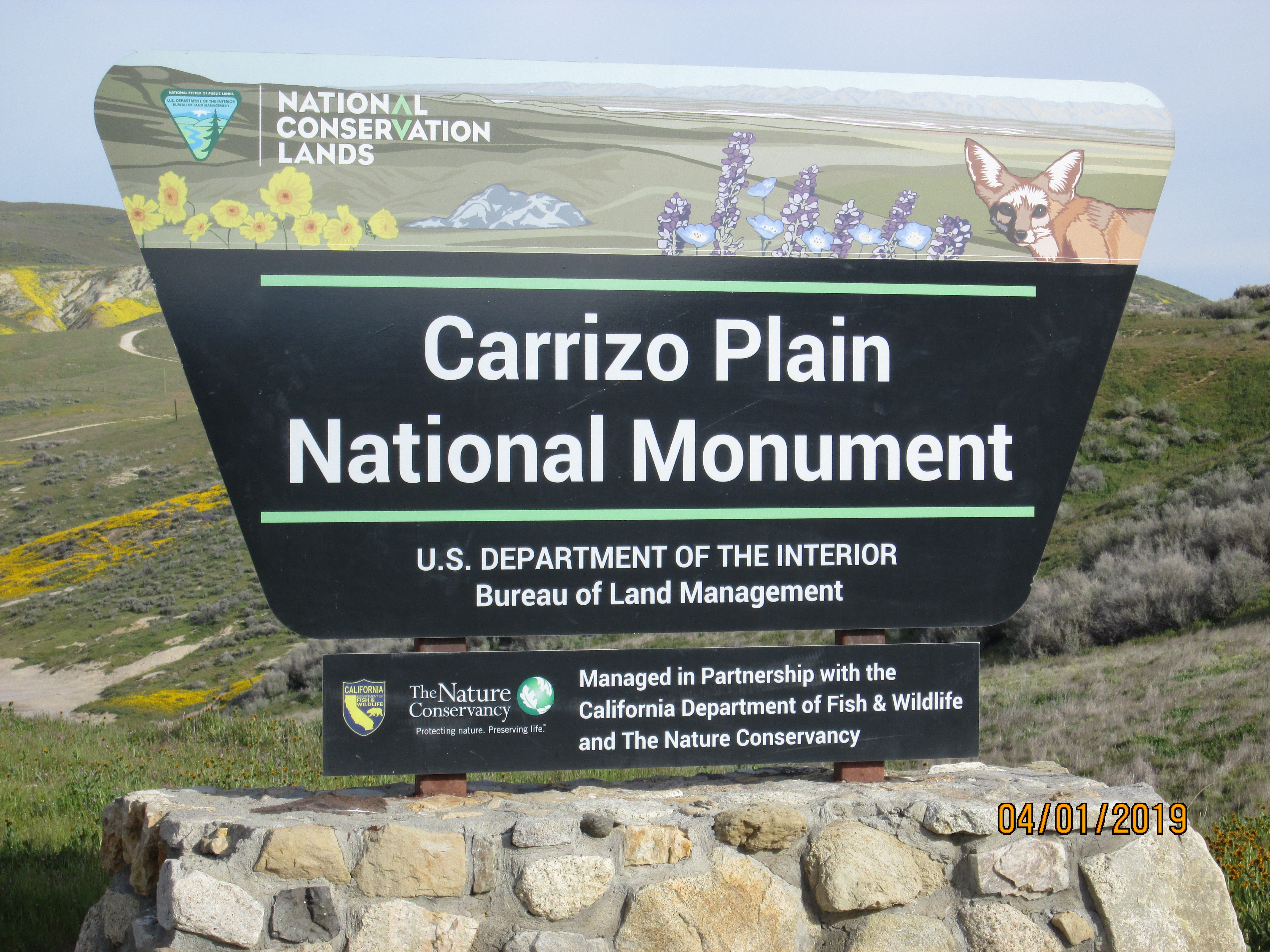
Welcome Sign at the South Entrance

My friend Bill Korn and I have been talking about seeing the wildflower blooms at the Carrizo Plain for several years now. As long as I worked doing taxes, however, I was never able to go before April 15; and by that time, the show was all over. Now, being retired, I jumped at the chance. Bill and I met at a Western Bagel in Valencia—he started his trip in far-off Altadena—and we set out in his Prius.

On the way, we passed through Frazier Park and the high country around Mount Pinos before descending some four thousand feet to the level of the Carrizo Plain.

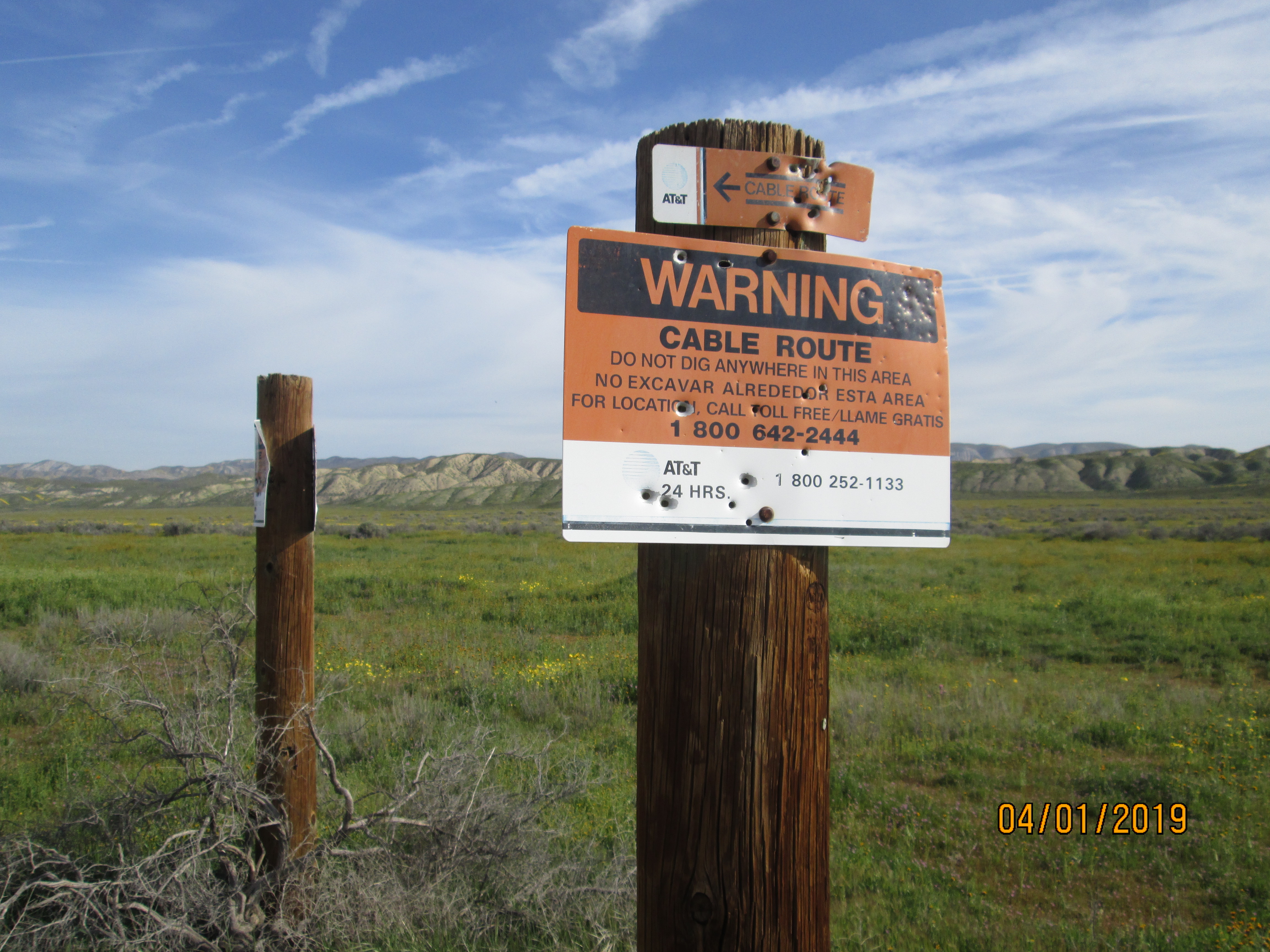
The AT&T Cable Runs Through the Park

The Carrizo Plain National Monument is different from most national parks I have visited. There is no one to collect admission fees at the entrances, and no park rangers were in evidence (though I suspect they exist). Though it was a Monday, there were a lot of cars, particular in the northern part of the park. Most of the action is along the main route called Soda Lake Road that runs the length of the park, paved for approximately half its length, and oiled dirt and gravel for the other half. There were numerous dirt roads that led to subsistence ranches and places that were inaccessible because of deep mud lingering from the heavy rains earlier in the year.

One interesting feature of the park is that Soda Lake Road runs side by side with the San Andreas Fault. I plan to write about this tomorrow if I have the time.

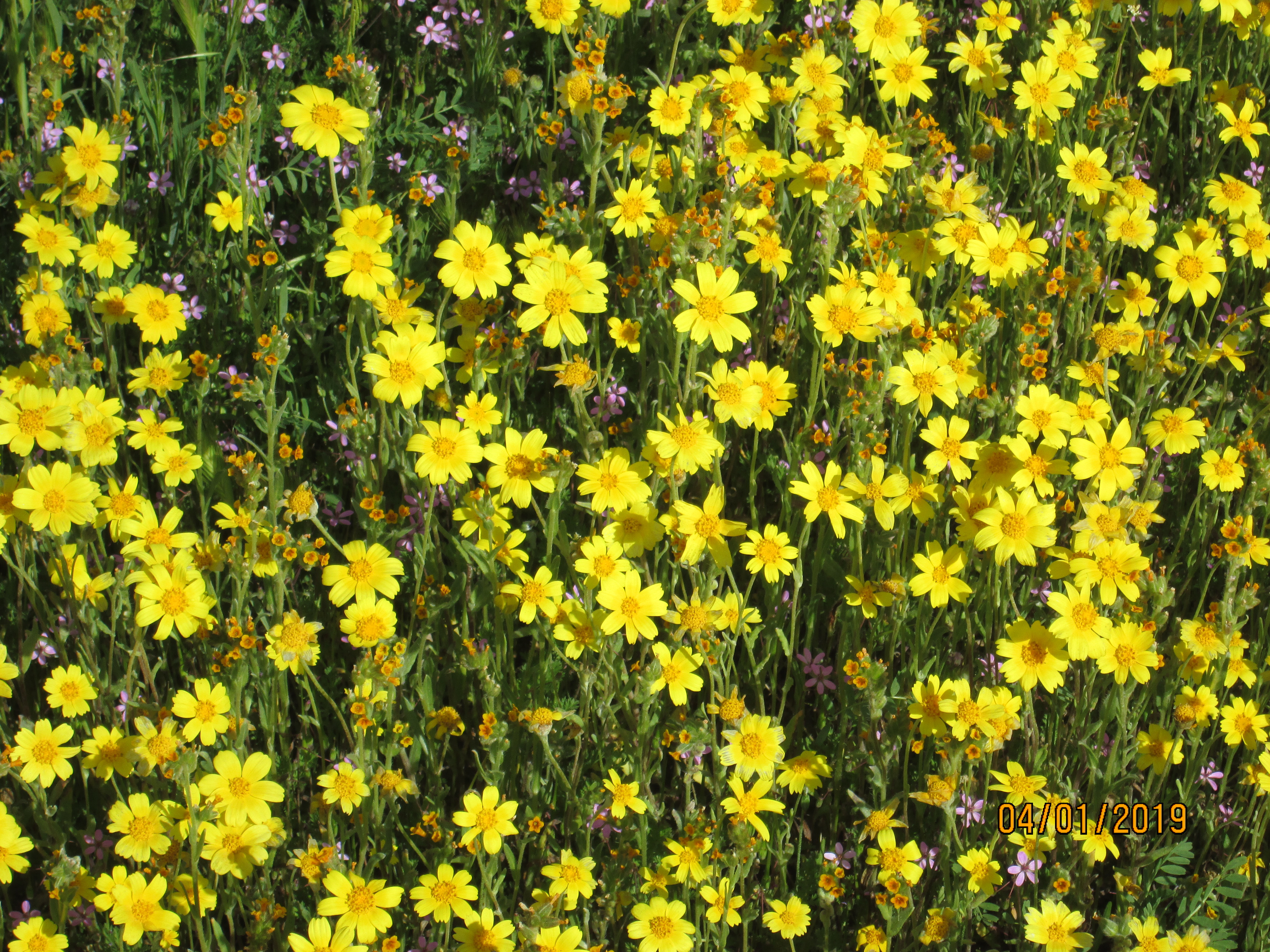
Wildflowers in Great Abundance

This park is probably the largest single section of California grassland that is more or less intact. I didn’t get the feeling that the few ranches we passed made much of a negative impact on the wildness of the place.

Wildflowers Close Up

I will not soon forget the beauty of the Carrizo Plain. I hope I can return some day after another spectacular peak wildflower bloom.


Victorian Los Angeles

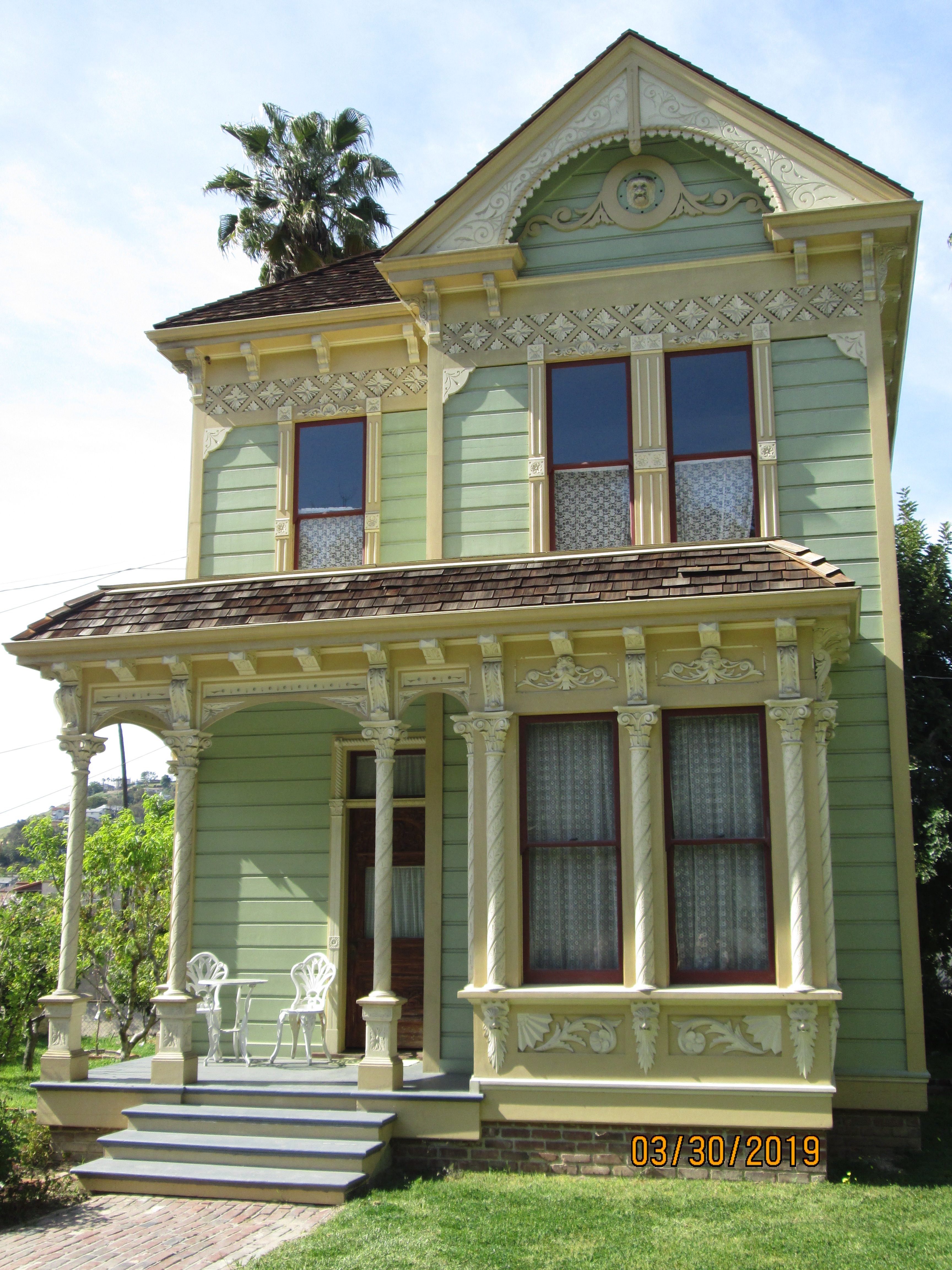
The Ford House at Heritage Square

On Saturday, Martine and I re-visited the Heritage Square Museum in Highland Park. We had been there many years ago, when it was a struggling attraction in the process of coming into being. Most of the old Victorian houses that had been moved to their location just off the Pasadena Freeway were not yet furnished. In the intervening years, we would pass by the site visible from the Freeway. I am glad that Martine suggested we give the place another chance.

We don’t think of Los Angeles as an old city, despite the fact that it was founded as a Spanish pueblo in 1781—some fifteen years before Moses Cleaveland founded the city of my birth. But whereas Cleveland has shrunk into relative obscurity during my lifetime, Los Angeles has become one of the great cities of the world, and the second largest in the United States. One of the reasons we think of it as a new city is that we have made too liberal use of the wrecking ball to clear away old building to replace them with new ones.

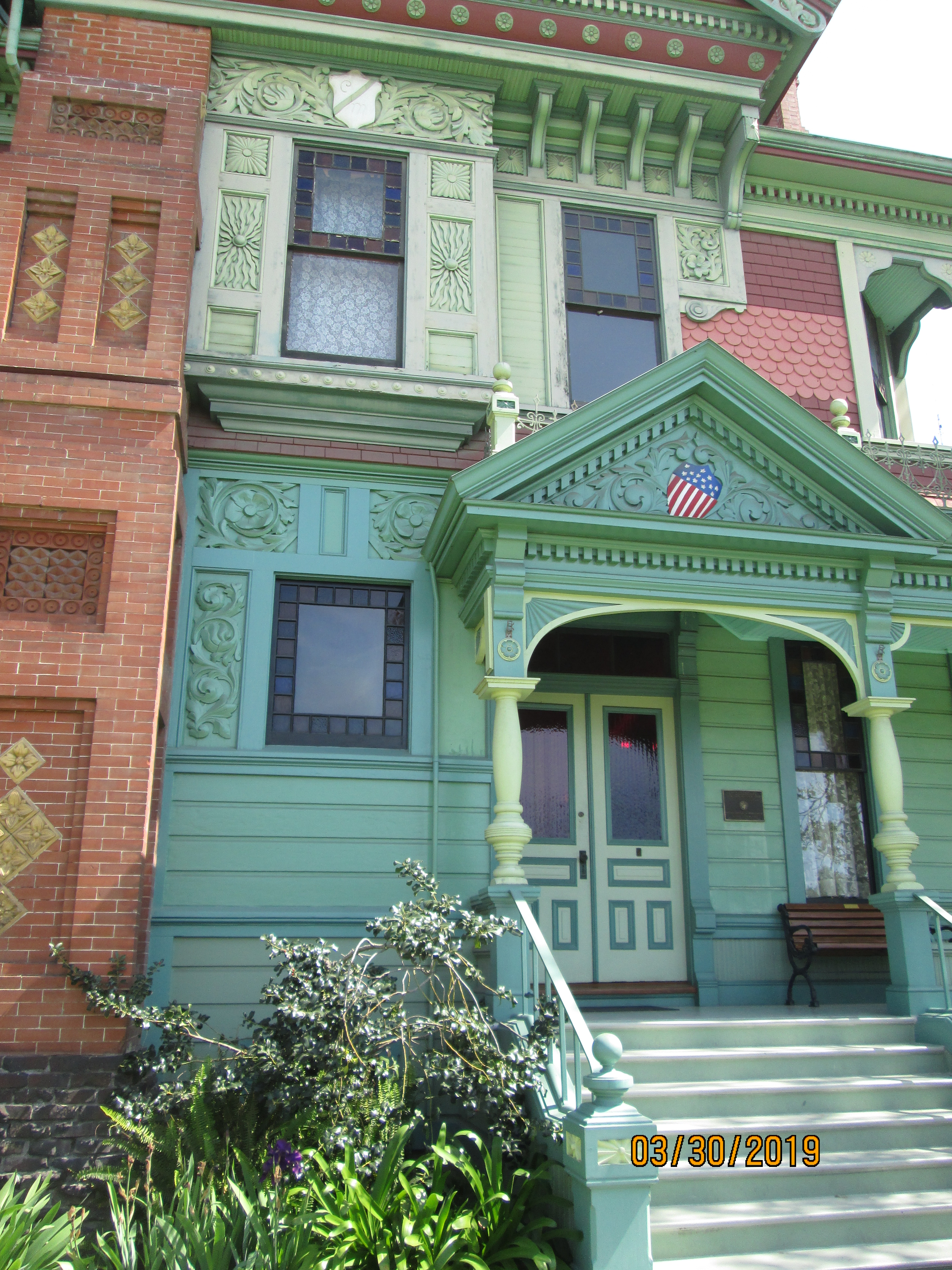
The Main Entrance to the Hale House at Heritage Square

The only real way to visit Heritage Square is to take one of the tours that begin on the hour. The ours themselves last upward of two hours and are quite informative. Our guide explained how, even after they have been moved, two of the houses are subject to paranormal phenomena. Most of the incidents were in the octagonal Longfellow-Hastings house, at which an apparition appeared during one daytime tour. There have also been occurrences of table-tipping; and, one time, a latched door opened by itself just as the tour guide was planning to release the latch. No spirits made a ruckus during our tour yesterday.


When the Desert Blooms

A hill at the California Poppy Preserve in Los Angeles’s Antelope Valley in Spring 2003.
The California Poppy Preserve in the Antelope Valley Spring 2003

In a post I wrote a few days ago, I remember saying that tulips and California poppies are my favorite flowers. This rainy season has been unusually good, with the result that the wildflower bloom this month is utterly spectacular.

That was also the case in March 2003, when Martine and I visited the California Poppy Preserve with its gentle hillsides blooming with millions of orange flowers.

On Monday, my friend Bill Korn and I hope to visit the Carrizo Plain National Monument in rural Santa Barbara County, where there is another spectacular set of blooms. We had hoped to do it in previous years, but so long as I was racing to prepare tax returns in time for the April 15 deadline, that was a virtual impossibility. For the last twenty-odd years of my accounting career, I typically worked seven days a week in March and the beginning of April.

Close-Up of California Poppies 2010

Never having been to the Carrizo Plain, all I know about it is that it is in a remote area and does not even have paved roads throughout. Several of the roads in the park are currently closed due to mud. Its best known physical feature is that the San Andreas earthquake fault runs right through the middle of it.