A Hint of Fall

Could Summer Really Be Over?

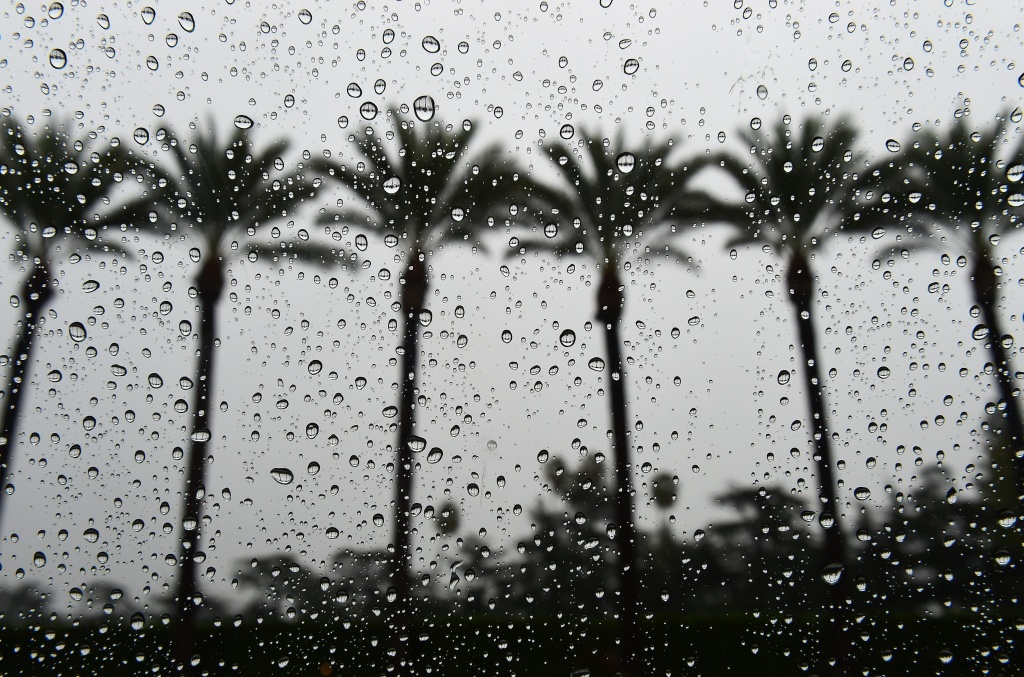
Our seasons in Los Angeles are very different than in other parts of the country. For the last few days, we’ve had a touch of autumn; but that doesn’t mean that there will be any consistency in the weather over the next six weeks or so. We might very well be in for a spell of hot, dry, windy weather—otherwise known as the Santa Ana winds. Or we could actually get some measurable (i.e., more than 1 centimeter) precipitation, though that is unlikely. It will probably get cooler in the evenings, or not.

One thing for sure: My left knee is aching, and I struggle slightly to rise from a sitting position. I’ve just taken some aspirin, which will probably help some. And I will probably get my flu shot sometime this week, because the flu season sets in fast whenever the weather gets cooler.

Although this has not been a particularly hot summer, it has been a humid one. Our humidity usually lasts only through July, but this year it has been virtually non-stop. We even got some slight drizzle yesterday and Friday. It would be nice if we had another wet winter, though the scientists who predict this sort of thing say that California will continue to have terrible droughts. This translates into terrible wildfires. Sigh!


The Philosophy Club

St Peter Chanel High School in Bedford, Ohio

When I was attending high school at St Peter Chanel in Bedford, Ohio, between 1958 and 1962, I started two extracurricular activities. One was a literary magazine called The Phoenix (our school teams were the Firebirds). I am actually a little embarrassed about the quality of our articles and illustrations. But more interestingly, I started a philosophy club which met evenings. Our moderator was a gaunt Marist missionary priest who had spent years attempting to convert the natives of New Guinea to Catholicism.

Imagine his discomfiture when a bunch of high school kids decided to argue about the existence of God. We had a couple of firebrands in the group—Ed Jaskiewicz and Rodger Harper—who set about demolishing two millennia of church dogma.

The “Angelic Doctor,” St Thomas Aquinas

As a good practicing Catholic (at the time), I introduced St. Thomas Aquinas’s five proofs for the existence of God. That didn’t sit too well with Jaskiewicz, who shot them down while Father Barrett, our moderator, turned a vivid shade of fuchsia. For my part, I started to stammer. It just wouldn’t do for Chanel’s star student to foment heresy.

Well, neither the philosophy club nor the literary magazine exist today. In fact, St. Peter Chanel High School is no more. The last I heard, the school was going to be torn down by he Bedford, Ohio, Board of Education. And I’m still a little skittish about philosophy. It’s not because I still believe in Aquinas’s five proofs, which are the bedrock of Catholic doctrine, but because I’ve always found philosophy so difficult. In no other field of endeavor do all the participants so anathemize one another.

I am currently reading Albert Camus’s The Myth of Sisyphus and actually liking his existential philosophy. It’s nice sometimes to undergo change after so many years.


At the Cabrillo Marine Aquarium

Fish Tank at the Cabrillo Marine Aquarium

Yesterday, Martine and I visited the Cabrillo Marine Aquarium in San Pedro. Situated as it is within hailing distance of the Port of Los Angeles, the Aquarium is as much a scientific oceanographic institution as it is an aquarium purely for show. The Aquarium of the Pacific in Long Beach is only a few miles east and is primarily an aquarium for show.

We spent several hours looking at the various tanks and asking questions of the highly educated staff. What impressed me the most was feeding largish sea snails with algae. They seemed to suck in the algae as if they were smoking a joint.

One of the highlights was watching a video produced by the institution about how they went about collecting specimens for research and display.

One of the Features of the Southern California Coastline Are the Vast Kelp Forests

We had visited the Cabrillo some twenty years earlier and were surprised to see how much the institution has grown over the years. I was impressed by the fact that admission was by voluntary donation, and that the beach parking was reasonably priced ($1.00 per hour). Expect a visit to take somewhere between two and three hours.


A Corvair Day

Cadmium Red Chevy Corvair

Martine is more devoted to her distant past than anyone else I know. Because during her childhood, at different times her mother owned two used Corvairs, a 1960 and a 1967, Martine wanted to visit a Corvair show at the Automobile Driving Museum in nearby El Segundo. We stayed the whole five hours of the show, from 10 am to 3 pm, and then we stayed a bit longer while Martine revisited the permanent collection of the museum.

I am not an automobile aficionado the way Martine is, so I was slightly bored. The high point for me was the Mexican street tacos that and aguas frescas that were sold by the Mexican food vendor. Other than that, I spent about an hour or two looking at the Corvairs before finding a bench and reading Jorge Amado’s 1984 Brazilian novel Jubiabá in translation.

Instead of rushing Martine through the show, I rather enjoyed her delight in revisiting the Corvairs of her youth. She was also on the lookout for Tony Dow, a Corvair enthusiast who played Wally Cleaver in the old “Leave It to Beaver” TV show. She thinks she may have seen him there, but he looks really different than he did some sixty years ago.

Martine Behind the Wheel of a 1960-Vintage Cadillac

One interesting thing about the Automobile Driving Museum is that visitors can sit behind the wheel of most cars in the museum’s collection. It was fun seeing Martine relive her childhood fantasies, even at the cost of some slight boredom on my part. So I guess it all balanced out.


Pursuing the Uncool #2

Smart Phones: Bonus or Onus?

This post grew out of a conversation between my brother Dan and me. He noted that I tended to distance myself from anything that smacked of the popular and acceptable. Agreeing with him, I thought I would formulate my somewhat strange philosophy of life. Distilled down to its essence, it is to at all times avoid bragging rights—across the board—and avoid the endless search for prestige, wealth, and everything in their train.  This is the second part in a series.

Smart Phones

They’re everywhere. People are actually surprised when I tell them I don’t have one. All I have is a flip phone which I never answer because most calls I receive on it are robocalls in Mandarin Chinese. So my cell phone is always turned off and used only for emergencies. Being always available to receive phone calls makes me feel more like a slave than someone in control. I would rather be aware of my surroundings than checking my e-mail several hundred times a day. (In fact, more than 90% of the e-mail on my computer is trying to sell me stuff.)

Eating Take-Out All the Time Is Not My Idea of Fun

Food Delivery Services

Not showing up in person is now considered the height of cool. That applies to restaurants, but also to other food delivery services such as those sponsored by supermarket chains and recipe of the week services like Blue Apron. My former neighbors in the apartment below used to receive a Blue Apron box every Tuesday—and for the rest of the week, we smelled the same identical food smells.

At Ralph’s Supermarkets, where I do most of my grocery shopping, there are legions of young people employed in shopping for others. Would I trust a young person who doesn’t know how to cook to select my meat and produce for me? Not on your life! My mother was raised on a Hungarian farm. As the oldest child, I learned at her side how to shop, especially for produce. I know how to tell male from female eggplants, and I’m surprisingly good at picking sweet watermelons with thin rinds.


Visiting L.A. History

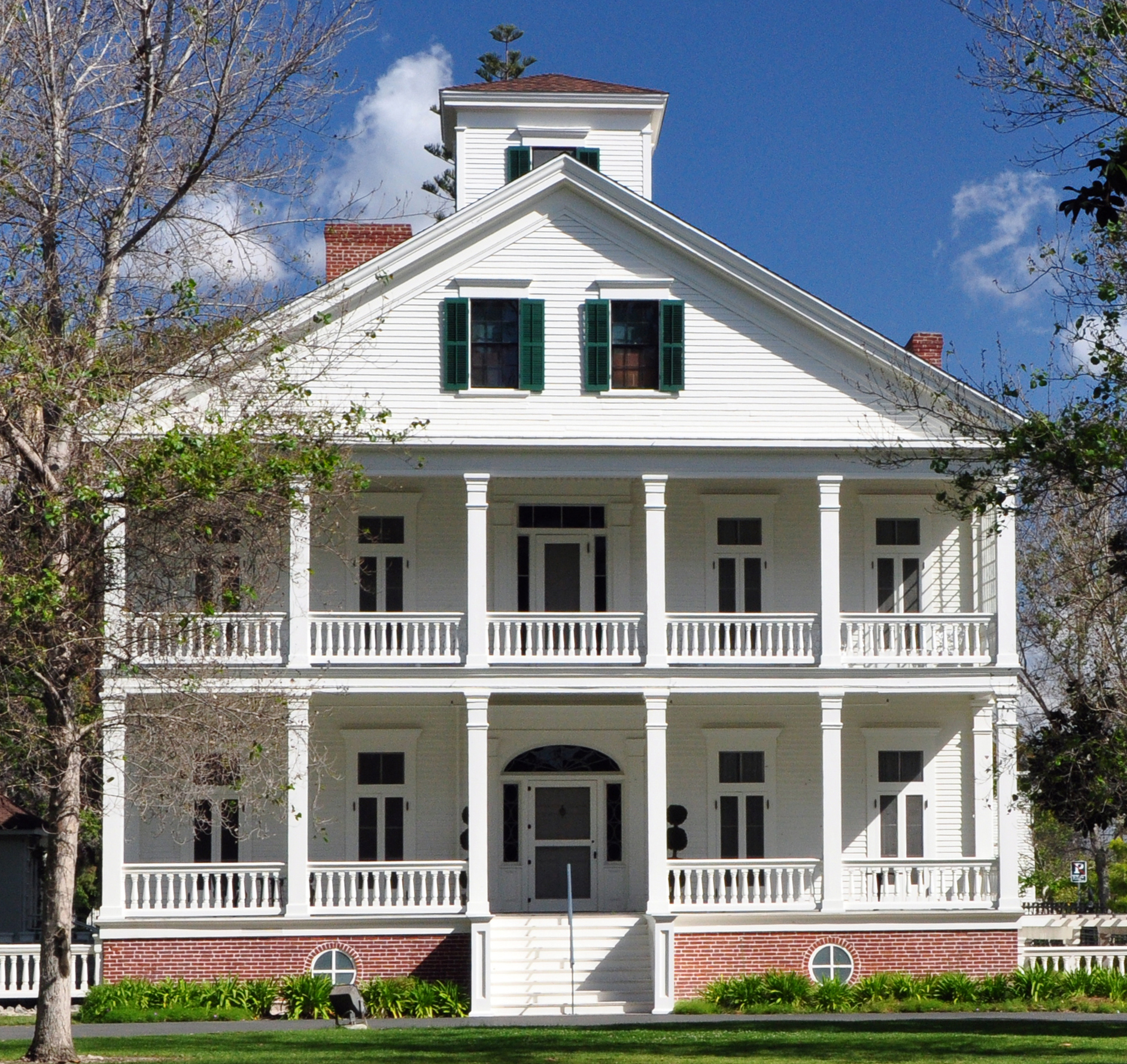
The Ranch House at Rancho Los Alamitos

Over the last year or so, Martine and I have been visiting many of the old adobes that were associated with the Spanish and Mexican land grants into which the arable land of Los Angeles had been subdivided. These have included:

  • Centinela Adobe in Westchester
  • Dominguez Rancho Adobe Museum in Rancho Dominguez
  • Leonis Adobe Museum in Calabasas
  • Los Encinos State Historic Park in Encino
  • Pio Pico State Historic Park in Whittier
  • Rancho Los Alamitos Historic Ranch and Gardens in Long Beach
  • Rancho Los Cerritos Historic Site in Long Beach

Of these, the most spectacular have been the Leonis Adobe and Rancho Los Alamitos, both of which have substantially larger budgets and more well-developed exhibits than the others.

When one has visited a number of these adobes, a pictures emerges of an agrarian life of herding sheep and cattle and of a few widely-separated ranches, mostly far from the Pueblo of Nuestra Señora la Reina de los Angeles de Porciuncula (a.k.a. downtown Los Angeles), which was founded in 1781. In the years that followed, the map of Southern California was broken into large land grants:

Spanish Land Grants in the San Gabriel Valley

Small wonder that there are so many Spanish place names in L.A.! The land that was not part of a Spanish or Mexican land grant was either a town site, mountains, or desert.

Rancho Los Alamitos, which Martine and I visited today was surrounded by lush gardens of carefully chosen trees, flowers, and succulents.On the grounds is a deep artesian well that helped the land stay productive for agriculture for well over a century and a half.

Part of the Los Alamitos Gardens

It is also by far the most liveable of the adobes we have visited. For one thing, the original 19th century adobe structure was substantially added to. Unlike most adobes which are sparsely furnished with miscellaneous items that were never meant to coexist in the same room, at Los Alamitos we have the original furniture, library, kitchen appliances, including some pieces actually crafted by carpenter John Bixby, one of the original inhabitants.

Rancho Los Alamitos is a place of beauty which we will visit again.


A Tale of Two Civilizations

Statue of Leda and Zeus Disguised as a Swan

I tend to like to visit the Getty Villa in Pacific Palisades at regular intervals. It is a museum primarily of Greek and Roman antiquities in a building that is based on Herculaneum’s Villa of the Papyri. For some reason, this visit I became interested in comparing Greek and Roman images to the Maya images I saw in Guatemala and Honduras in January. We know how Greek and Roman civilization contributed to later European civilization, especially from the Renaissance onward. But what about Maya civilization?

Unlike the ancient Greeks and Romans, Maya civilization was never wholly extinguished—although the Spanish under such conquistadores as the Montejos and Alvarado gave it their best shot. It continues to exist, though there are some major differences:

  • Maya civilization consisted, like the ancient Greeks, of city states—except, where the Greek language was widely understood, there are over thirty different major dialects of the Mayan language.
  • The god kings of the Maya polities were typically not worshiped across the entire Maya area.
  • Both civilizations had writing, but among the Maya, it was limited to the priestly scribes and not generally known even among the noble classes.
  • Most of the surviving Maya codices were burned by Catholic priests and monks as being heretical.
  • Today only a handful of Maya works survive dating from the early years of Maya-Spanish interaction, the most prominent of which if The Popol Vuh. In contrast, there are hundreds, if not thousands, of works coming to us from the Greeks and Romans.

Stela A from Copán in Honduras Depicting 18 Rabbit

Look at the figure above from Stela A in the Copán Museum. It depicts god king 18 Rabbit, thirteenth in the succession of Copán rulers, who was beheaded when Copán was defeated in war by the smaller polity of Quiriguá, after which point there wasn’t quite so much point in worshiping him. And this fact was discovered only after a century of research in deciphering Mayan glyphs. Mention 18 Rabbit to a Maya from Yucatán or Palenque, and you will only get a quizzical look. Not in their area, Mon!

Now look at the story of Leda and the Swan, and read W.B. Yeats’s great poem on the subject. In the Western world of today, tens of thousands of people are familiar with the myth, if not more.


The Laws Railroad Museum

Gas Station and Jalopy at Laws Railroad Museum

It was January 2010 when Martine and I last drove through the Eastern Sierras. One of our favorite destinations was an outdoor museum of pioneer life in the hamlet of Laws, CA. Four miles northeast of Bishop, Laws was a station on the Carson & Colorado Railroad, which ran from Mound House, NV to Keeler, CA, site of the Cerro Gordo (“Fat Hill”) mines, which produced high grade silver, lead, and zinc. In 1900, the Carson & Colorado was sold to the Southern Pacific where it operated in various forms until around 1960.

Today, the Laws Museum is one of those outdoor museums to which various old local structures were moved, from railroad buildings and residences to various types of businesses. Martine and I plan to pay another visit next week.

One of the Original 19th Century Boxcars of the Old Carson & Colorado Railway

We love the strange desert landscapes of the areas flanked on one side by the steep eastern flank of the Sierra Nevadas on the left and the Inyo and White Mountains on the right. We expect that the Sierras will still be covered with snow because of the record precipitation this last winter.


Shake Rattle & Roll

Little Lake Just Off Highway 395

After a twenty-year period of calm, we are once again in the throes of a series of earthquakes. Now these quakes are not quite so dangerous in Los Angeles as they are at the epicenter in Ridgecrest, CA, which is 120 miles (193 kms) as the crow flies. With yesterday’s Richter 6.4 temblor, the quake hit us as a rolling motion that lasted about a minute. Today’s Richter 7.1 temblor was a few miles northwest of yesterday’s epicenter, but it came to us as a stronger, more long-lasting rolling motion.

The funny thing is that next Monday, we will be driving by Little Lake (shown above), which is approximately ten miles west of the epicenter. We will continue until we get to Lone Pine, where we will spend the night. At Lone Pine, we will be about 71 air miles north and slightly west of the epicenter.

Today’s quake was the first one that threw a scare into Martine, because of its strength and duration, but even more because she felt two quakes in as many days.


Nostalgie de Banlieu

Recent History from L.A. Northern Suburbs

If you’ve ever seen Roman Polanski’s Chinatown (1974), you have some idea of how the City of Los Angeles annexed most of the San Fernando Valley after William Mulholland’s aqueduct brought water several hundred miles from the Owens Valley to L.A. In the period of the movie, the Valley seemed to be mostly orchards. Today, some two million people live there. Its period of greatest growth was in the immediate postwar period when aerospace was king. Today—well, today much of the gloss has vanished. During the summer, the Valley is almost as hot as the floor of the desert: Today the temp reached 91º Fahrenheit (33º Celsius) as we left in mid afternoon.

The reason we were there was to visit the Valley Relics Museum at Balboa and Stagg in Lake Balboa. The museum pays homage to the Valley’s glory days during the 1950s and 1960s, when it seems everyone was buying property there because it was cheaper than the more liveable parts of L.A. adjoining the Ocean.

Ash Trays from Bygone Restaurants and Clubs

The Valley is still an interesting destination. For one thing, there are many excellent restaurants, both ethnic and American. (Today, for instance, we discovered a great place on Ventura Boulevard at Burbank called Hummus Bar & Grill that we will no doubt be visiting again.) There are several interesting historical sights such as the Leonis Adobe and Los Encinos State Historical Park, plus museums like the Nethercutt Collection. So the Valley is still a target-rich destination, though it is no longer the fashionable locale it used to be when I first moved the Southern California in 1966.

The museum had fight posters featuring Mohammed Ali and Cassius Clay, film stuntmen memorabilia, old restaurant menus with pre-inflation prices, neon signs from clubs and restaurants like the Palomino, and even an interesting selection of working pinball machines—particularly one featuring Elvira, Mistress of the Dark, a former TV horror film hostess.