The one part of Asia that I would like to visit is the island nation of Singapore. To me, it is like China and India rolled into one convenient package, yet not too far from its British colonial heritage to force me to learn a difficult new language.
What particularly earns it a spot on my travel bucket list is the cuisine. I love both Chinese and Indian food, and Singapore is known for both, as well as several adjoining cuisines such as Thai and Malayan.
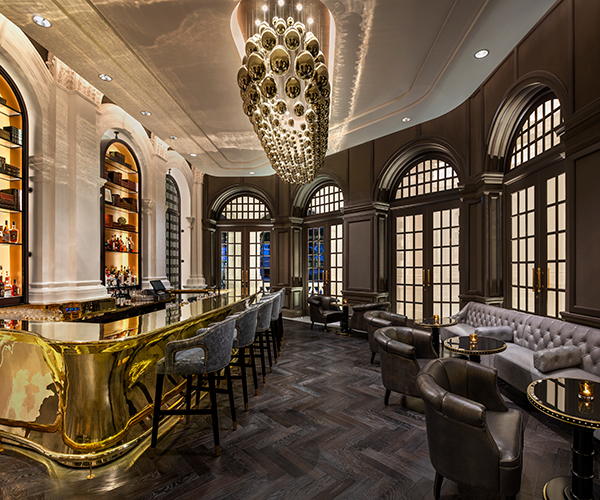
In fact, I cannot imagine myself losing weight during a Singapore visit. And that’s when I’m not drinking cold beers at the Writers’ Bar at the Raffles Hotel—the height of colonial decadence,
Of course I would fly there on Singapore Airlines and hang out a while at Changi Airport, reputed to be the most interesting airport in the world.
I came late to driving. In fact, I did not get my license until I was forty. Starting late as I did, I did not have many youthful bad habits exercising a baneful effect on my driving.
Other than adhering religiously to speed limits, what probably characterizes my driving more than anything else is, whenever possible, knowing what lane I want to be in and sticking to it, unless I feel I absolutely must pass some slow-moving vehicle.
Returning home from the desert, for example, I prefer to take the Pomona Freeway (California 60). I start out in lane 2 and change to lane 1 as I approach Interstate 5. That lane in turn becomes lane 3, giving me several miles to change to lane 2. If I stay on lane 2 as the highway becomes the Santa Monica Freeway (Interstate 10), I can ride it all the way to my exit ramp at Centinela Avenue fifteen miles farther on.
Why change lanes unless you have to? One of my beefs with performance cars is they feel as if they fail to change lanes every hundred feet, Elon Musk or Ferdinand Porsche will come and painfully twist their privates and take away their car keys. I estimate that, on the same trip, frequent lane changers drive 10-15% more miles as a result of traveling sideways.
One of my favorite travel books is Paul Theroux’s The Tao of Travel. When my favorite travel writer writes on the subject of travel literature, the result is nothing less than armchair satori. Take the following quote from his The Old Patagonia Express (1979), my first introduction to South America:
Travel is at its best a solitary enterprise: to see, to examine, to assess, you have to be alone and unencumbered. Other people can mislead you: they crowd your meandering impressions with their own; if they are companionable they obstruct your view, and if they are boring they corrupt the silence with non sequiturs, shattering your concentration with, “Oh, look, it’s raining” and “You see a lot of trees here.
It is hard to see clearly or to think straight in the company of other people. What is required is the lucidity of loneliness to capture that vision which, however banal, seems in your private mood to be special and worthy of interest.
Theroux’s book is full of such gems, such as this one from Mark Twain’s The Innocents Abroad (1869):
Travel is fatal to prejudice, bigotry and narrow-mindedness and many of our people need it sorely on those accounts. Broad, wholesome, charitable views of men and things cannot be acquired by vegetating in one little corner of the earth all one’s lifetime.
Here is a poetic contribution from Rudyard Kipling (“The Winners”:
Down to Gehenna or up to the Throne,
He travels the fastest who travels alone.
In Virginibus Puerisque, Robert Louis Stevenson imparts this wisdom:
Little do ye know your own blessedness; for to travel hopefully is a better thing than to arrive, and the true success is to labor.
As I return to this book, which I do often, I just want to set out for somewhere, anywhere. Well, maybe not Cleveland. Been there, done that!
After our recent trip to Vegas, I am thinking of provoking the Covid-19 demons with another road trip. It’s fun to travel, and my predilection for wanderlust has been seriously subdued by the pandemic.
I don’t think I can get Martine interested in another desert destination—even though she liked the Vegas trip—but there are other less arid possibilities like Catalina, San Diego, Santa Barbara, or the Santa Ynez Valley and Solvang. I’ll just have to put my thinking cap on.
Actually, there is one desert trip that Martine likes, which we have taken twice: Up U.S. 395 along the Eastern Sierras and the Owens Valley. To see what a rich target this is, check out this California Through My Lens website.
What with all my visits to the Maya ruins in Yucatan, Chiapas, Guatemala, and Honduras, you would think I would be getting tired of the endless ruins. Well, not yet! One incredibly dense region of Maya ruins is in the southeast corner of the state of Campeche, known as the Rio Bec region. Included are such archeological sites as:
Calakmul, with Tikal in the Petén region of Guatemala, perhaps one of the largest Maya cities at its height 1,500 years ago
Xpuhil (pronounced shpoo-HEEL)
Balamku
Chicanna
El Hormiguero (“The Anthill”)
Rio Bec
Becán
And these are only the better known ones, and even some of these are difficult to get to because they are at the end of dirt tracks in the jungles of the region.
Maya Ruins at Chicanna
Unlike many of the better known ruins in the state of Yucatán, those of the Rio Bec region are in steaming monkey jungles. The only town of any size is Xpujil near the eponymous ruins, and it’s only a blip on the long road between Francisco Escarcéga and Chetumal. To visit any of these ruins requires reserving a chunk of time, from three days to a week. Public transportation is virtually nonexistent, and the only places to stay (and not a large selection at that) are clustered around Xpujil.
To do the Rio Bec area any justice, I would have to rent a four-wheel-drive vehicle. Still, I would love to go. I would have to pack a lot of insect repellent (like 100% DEET) and be prepared for some really dicey shit. Hey, if it’s on my travel bucket list, you can bet it’s no cakewalk.
Purnululu National Park. Photo by Sean Scott Photography.
This is one of a series of posts about places I would love to visit, but probably never will for lack of time and money. I first heard about the Bungle Bungles from Bill Bryson’s excellent travel book In a Sunburned Country:
The Bungle Bungles are an isolated sandstone massif where eons of harsh, dry winds have carved the landscape into weird shapes—spindly pinnacles, acres of plump domes, wave walls. The whole extends to about a thousand square miles, yet, according to [his source] “were not generally known until the 1980s.”
The area is now within the boundaries of Purnululu National Park in a remote part of Western Australia midway between Broome and Darwin. Bryson wanted to see it, but didn’t have the time, as it would have involved several thousand miles of hard driving on a desert two-lane highway.
Location of the Bungle Bungles
Expedia is currently running a series of TV ads about how we never regret the things we didn’t buy nearly so much as the places we never got to visit. I tend to agree. That’s why I plan to use some of my posts to dream about places that look fascinating. What with Covid-19, advancing age, and the high cost of travel, I will dream in print about visiting certain destinations. You might say it’s my travel bucket list.
This is my last posting until I return from Las Vegas, probably on Thursday. I will leave you with a poem by Brenda McGrath entitled “Little White Chapel”:
Little White Chapel
When my husband and I were in Las Vegas, I had a great suggestion,
To go to the Little White Chapel, and renew our vows in celebration.
I thought it would be such a lark we wouldn’t forget.
Having Elvis perform the ceremony would be the best thing yet!
However we never made it to the chapel, he refused.
To do such a silly thing did not leave him amused.
Maybe that was an indication of what was to come.
Divorce ensued, and sorrow beat its drum.
I want to go to the Little White Chapel with a new man.
We would have so much fun before our life began!
We could play a slot machine on our way out.
Then we would be man and wife with a payout!
One of the places on our upcoming Vegas trip that I am most eager to see is the Mob Museum, more fully known as the National Museum of Organized Crime and Law Enforcement.
Back in the 1970s and 1980s, much of Las Vegas was controlled by “The Outfit,” also known as the Mafia. Probably the best introduction to that history is Michael Scorsese’s film Casino (1995), starring Robert De Niro, Joe Pesci, and Sharon Stone. It in turn was based on Nicholas Pileggi’s Casino: Love and Honor in Las Vegas, which I read with pleasure. There is also an excellent work of reportage by Dennis N. Griffin which goes over the same territory, but with more of a law enforcement point of view. The book that I read was titles The Battle for Las Vegas: The Law vs. the Mob.
All three sources follow the story of Lefty Rosenthal (called Ace Rothstein in the Scorsese film) and Tony “The Ant” Spilotro (Nicky Santoro in the movie). It took years to bring down the mob. In 1986, Tony Spilotro and his brother Michael were murdered by the mob bosses, who were tired of all the attention that was being focused on them, and buried in a Midwestern cornfield. According to some sources, they were first beaten and buried alive.
Since the mob days, Vegas has been Disneyfied. Big time real estate developers moved in and made it into a family destination—though there are still pockets of naughtiness around the edges.
In 2014, I was within a mile of the ferry from Puerto Montt, Chile, to Ancud on the island of Chiloé. Chiloé is one of two places in South America that lay claim to the first cultivation of potatoes, the other being Peru. Why didn’t I go? Because of a 1963 documentary by Joris Ivens entitled À Valparaíso, I was dead set on spending several days in the port of Valparaíso before returning to Los Angeles via Santiago. You can see this documentary by clicking here. Even though it has a French soundtrack with Spanish subtitles, you can see why I wanted to see the city.
And so, Chiloé is one of those places I almost but not quite visited. The island is famous for its palafitos, brightly colored buildings clinging to the shore on wooden stilts, and also for its wooden churches, built without benefit of nails and frequently covered with wooden shingles. The climate is a humid, cool temperate climate; and the island is covered with rare temperate rain forests.
Church of San Francisco in Castro
Back in 2000, the wooden churches of Chiloé were collectively named as a UNESCO World Heritage Site.
Chilotes have a unique stew called curanto, which includes seafood, meat, potatoes, and vegetables. The dish is buried in a deep hole filled with hot coals and covered with stones.
I would love to spend a week in Chiloé sometime, “Had we but world enough and time.”
On the road to Las Vegas, straight through the heart of the Mojave Desert, are strange turnoffs leading to even stranger places. Just before Baker is Exit 239, Zzyzx (pronounced ZYE-zix) Road, which supposedly leads to a former clinic run by a sharpster named Curtis Howe Springer. Then there’s Kelbaker Road, which runs south from the I-15 to Kelso, where there is an old Union Pacific railroad station and railway workers’ dormitory, near the Kelso Dunes. It continues south to Amboy, one of the most hellacious towns in the California desert.
Another route from Baker takes you 100 miles north to Death Valley on Highway 127, past Death Valley Junction with its Amargosa Opera House, where Marta Becker used to give regular performances.
In that vast agglomeration of dry lakes, mountains, Joshua Trees, and creosote bushes there are strange little gems waiting to be discovered. I wish I could live long enough to take the time and discover them.
You must be logged in to post a comment.