Viva Las Vegas

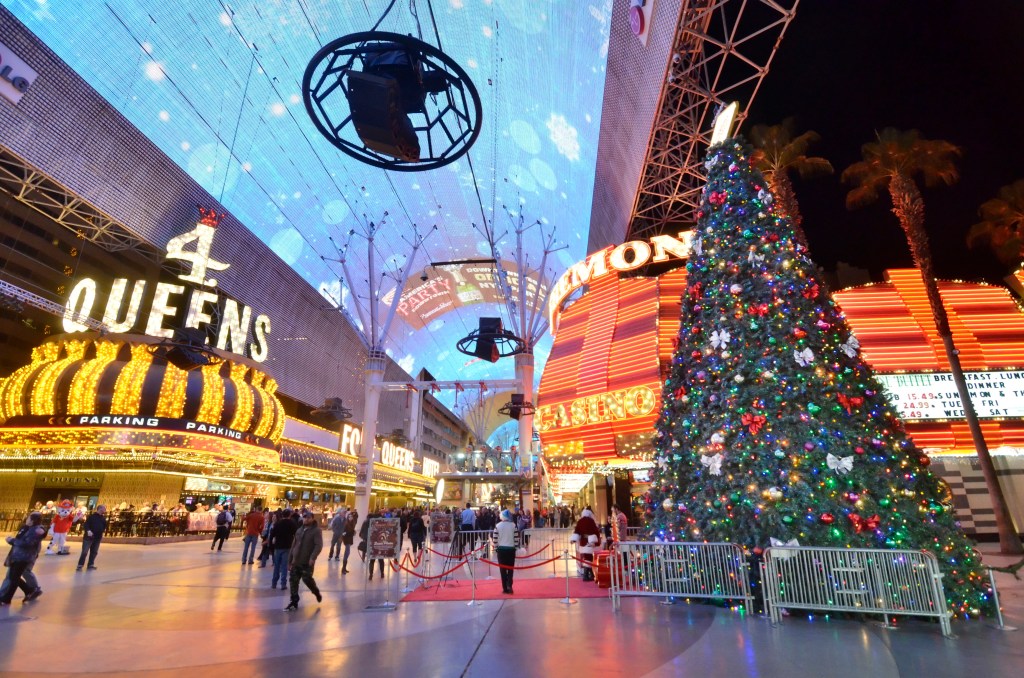
A Christmas tree is shown on Fremont Street in downtown Las Vegas on Dec. 12, 2017. CREDIT: Bill Hughes/Las Vegas News Bureau

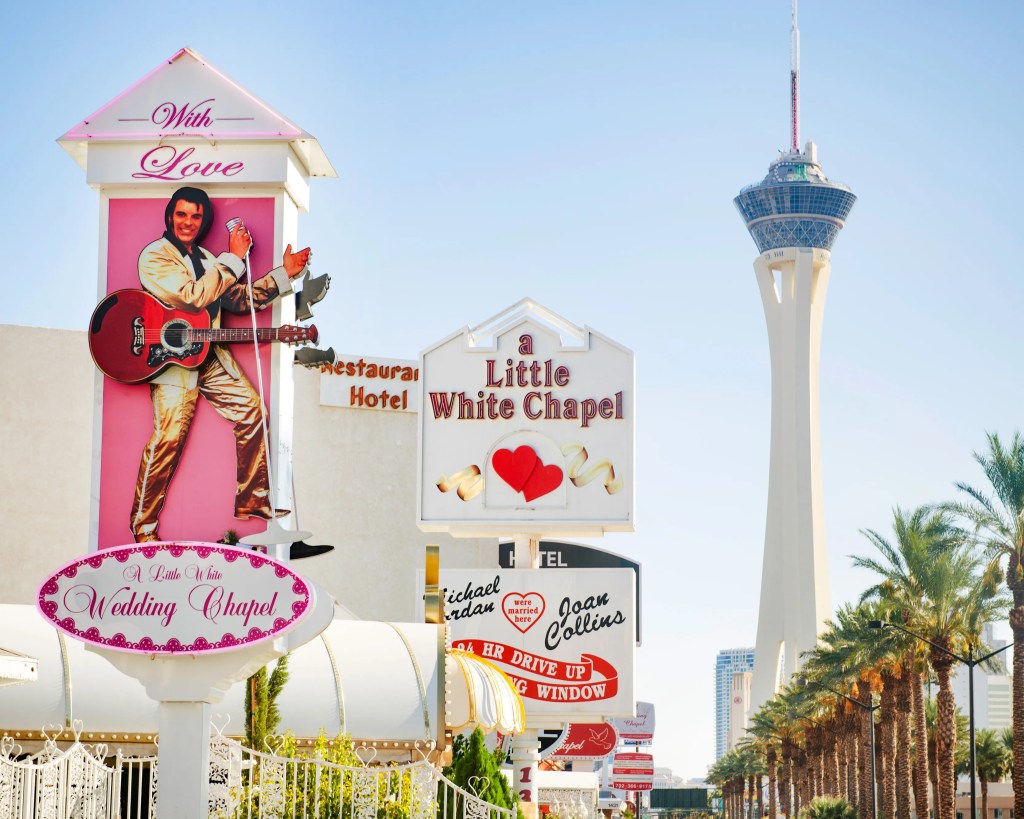
In a little more than a week, Martine and I are going to Las Vegas for a few days. We have no intention of gambling, as we both feel that is tantamount to throwing money down the drain. For me, what Las Vegas stands for is a kind of Petri dish of American Culture, emphasizing what Americans find pleasurable. In fact, I see it as the American equivalent of Pleasure Island from Pinocchio, where little boys go to be turned into jackasses.

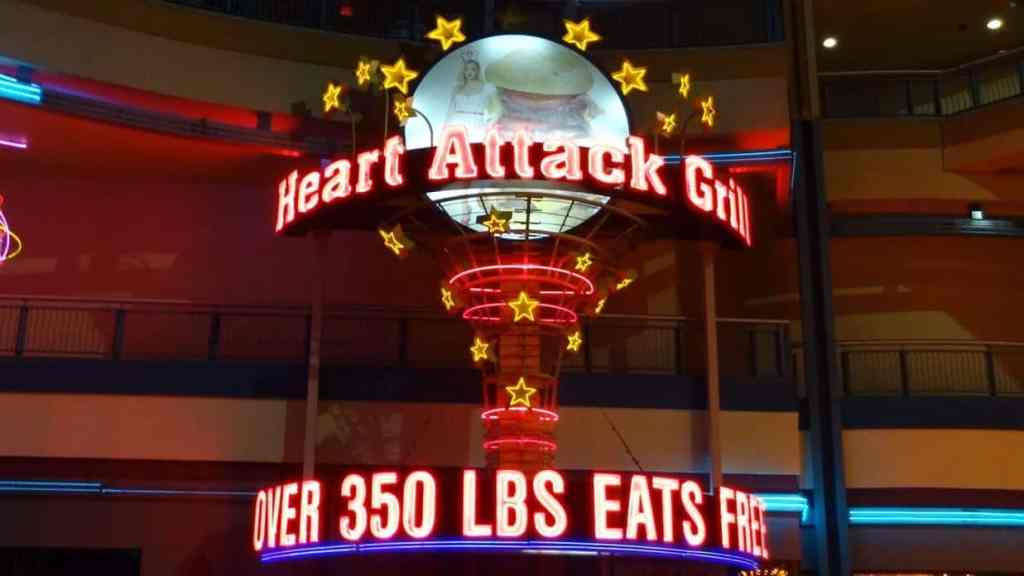
Think about it: food, gambling, sex, sports, lavish entertainment—all the things that float the boats of typical Americans. It is probably one of the best places in this country for people watching. Just take the Heart Attack Grill, for example:

The Heart Attack Grill on Fremont Street in Downtown Las Vegas is a truly unique restaurant, where gluttony and obesity reigns supreme. Where else can you go to eat a 9,982 calorie burger, served by a buxom waitress dressed as a nurse, listen to karaoke, and wash it back with a shot of liquor served in a prescription bottle?

As the sign says, diners weighing in over 350 pounds (159 kilograms) eat for free.

I doubt that even Imperial Rome had nothing that could compare with that. I can see myself looking for an unobtrusive place to sit down and wait for things to happen so that I can photograph them.

On previous visits, Martine and I confined ourselves to the Strip on Las Vegas Boulevard. This time, we’ll be in downtown Las Vegas, near the center of the action on Fremont Street. Needless to say, I’m looking forward to the trip.

Halászbástya

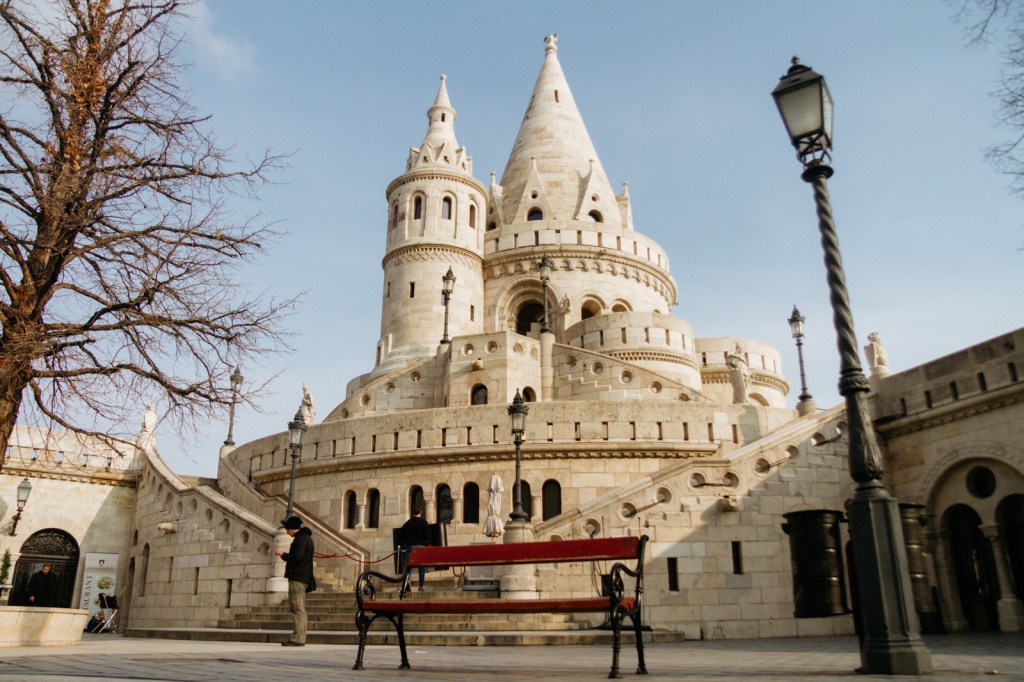
It looks as impressive as all get-out, but the Fisherman’s Bastion (Halászbástya) on Budapest’s Buda bank was actually built between 1895 and 1902 to serve as a viewpoint over the Danube. The myth behind it is that during the Middle Ages, it was the role of the Fishermen’s (Halász) Guild, located in the general vicinity, to protect that reach of the river from invaders.

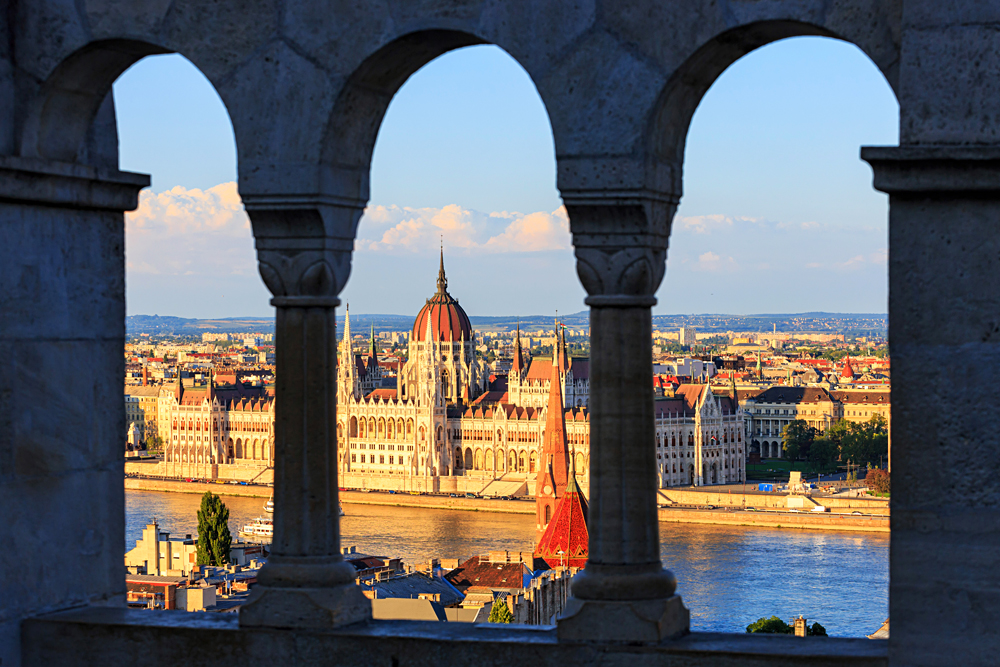
Sitting across the Danube from the Bastion is the Hungarian Parliament, built around the same time. There was a lot of construction in Budapest around that time because 1896 was the thousandth anniversary of the settlement of the Magyar peoples under Arpad in the plain that was to become Hungary.

And here is the view of Parliament from the arches of the Bastion.

I was in Hungary and Czechoslovakia with my parents in 1977 and saw the sights with my cousin Vörös Ilona, who worked for the Hungarian State Railways (MÁV). It was an interesting trip. In addition to Budapest, we hung out at Lake Balaton, visited a huge opera festival in Szeged (where, to stay in a railway workers’ hostel, I had to pretend to be a Hungarian railway worker), and travel to where my father was born in the present day Slovak Republic.

Like Poland, Hungary was on one of the main invasion paths into Europe. Its history was a tragic one, fighting off (not always successfully) the Mongols, the Austrians, the Germans, and the Russians. Now it’s ruled by a rightist dictator named Viktor Orbán, who is smarter than Donald J. Trump, but in the same political ballpark.

To the Hebrides

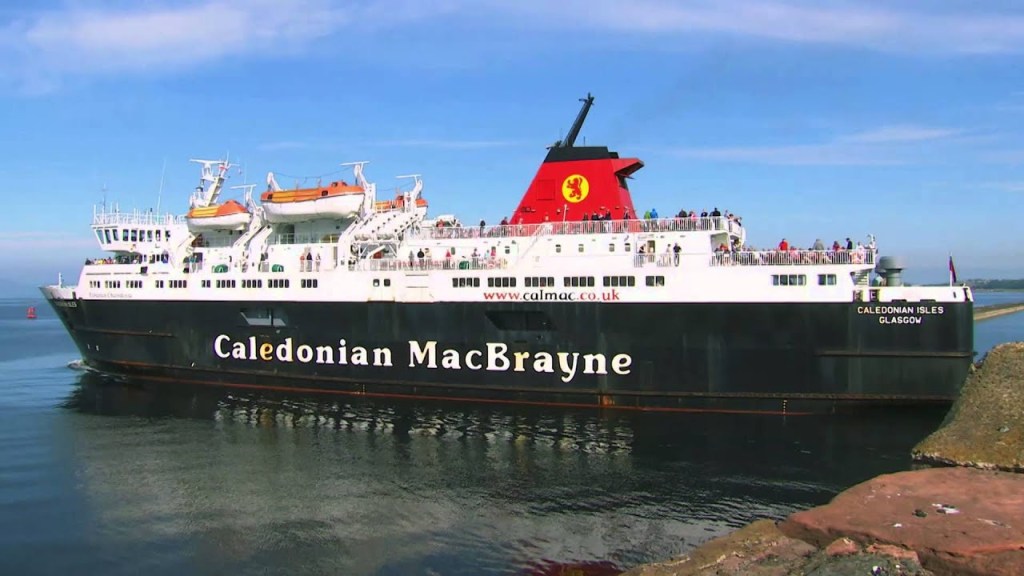
If you go to Scotland, the best thing to see are the islands. The concession for RORO (Roll On Roll Off) car ferries to the Hebrides is run by Caledonian MacBrayne. They include longer trips to Stornoway in the Outer Hebrides, as well as a 5-minute sail between Mull and the Sacred Isle of Iona, where the ancient kings of Scotland are buried.

Martine and I have ridden the Caledonian MacBrayne ferries to Mull, Iona, and Islay. In the Middle Ages, the Hebrides were ruled from Islay by the Lord of the Isles, the best known of whom was Somerled (1113-1164). At their height the Lords of the Isles were the greatest landowners and most powerful lords after the Kings of England and Scotland. Today, the Lord of the Isles is Charles, Prince of Wales—though the title is now purely ceremonial.

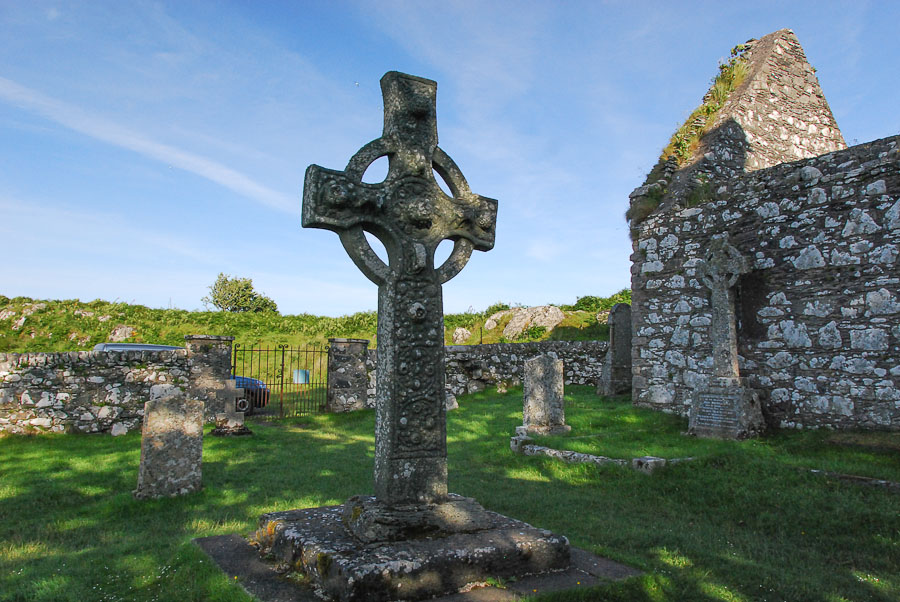
Above is Kildalton Cross on Islay, where my favorite Scotches are distilled: Laphraoig, Bowmore, Ardbeg, Lagavulin, Bruichladdich, Bunnahabhain, and Caol Ila. They are known for their peat smoke aroma.

When it is safe to travel again, and if I had the money, I would love to go to Scotland and hop aboard Caledonian MacBrayne, going from island to island.

If you are ever interested in seeing a classic British film set in the Hebrides, I highly recommend Alexander Mackendrick’s Whisky Galore! (1949), based on Compton Mackenzie’s novel of the same name. It’s a classic.

Lost in the Mayle

Pick a place, imply that it is a paradise, write several best-selling books about it, maybe invest in real estate there for the inevitable onrush of rich twits—and you could be said to have wrecked the place for good. I am referring here to Peter Mayle’s A Year in Provence and its 10,000 sequels.

Some thirty years before Mayle started in on his demolition quest, M F K Fischer spent some time with her two daughters in Aix-en-Provence and wrote a far better (though not so well-known) a book with her Map of Another Town: A Memoir of Provence (1964). Fisher obviously loved Provence, but she (M F K stands for Mary Frances Kennedy) was not afraid of presenting it warts and all.

When she first visited Aix, France was still suffering from the war. The town was full of misshapen beggars, many of whom were from Poland and other places that suffered the brunt of Nazi invasion. She tells one story of a French pianist whose house quartered several German officers. Her expensive piano was not to be touched by the pianist, but she was expected to appreciate the musical efforts of her tenants.

I have always loved books about travel, but I have always preferred books which were honest. There are thousands of puff pieces about the four corners of the earth, but they pall rather quickly. To give one example, Jonathan Raban’s excellent Passage to Juneau: A Sea and Its Meanings was not only about travel, but about its author’s life coming apart in the process. The following quote from a review in The Guardian explains it all:

“Journeys,” says Raban, somewhere towards the end of Passage to Juneau, “hardly ever disclose their true meaning until after – and sometimes years after – they’re over.” This book was conceived of as a piece of work, but the professional project is, in the end, wholly subsumed by a floodtide of personal crises that leave the author gasping for air. Did he contemplate keeping them off stage and sticking to the route he’d blithely plotted, back in his Seattle study? Perhaps – but like any good captain, Raban elects in the end to go down with his ship. Passage to Juneau is not the book Raban set out to write. It’s richer, rawer and far, far more rewarding than that.

For this reason, I’ll take M F K Fischer over Peter Mayle any day of the week. I highly recommend her book.

Things To Do in Iceland

I’ve been to Iceland twice—in 2001 and 2013—and I hope to go again. People don’t have any concept of what the country is like. One hears the old chestnut that “Iceland should be called Greenland and vice versa.” With global warming, I suspect that both countries will in future be free of most ice. Below are a few highlights if you are thinking of visiting my favorite country in Europe:

  • Fish is always the cheapest and most interesting thing on the menu, and you’re never far from the ship that brought it to port.
  • If You Don’t Like Fish, don’t worry. Icelanders eat tons of hamburgers, hot dogs (which they call pylsur), and pizza.
  • The Interior of the Country is a picturesque and mostly uninhabited wasteland.
  • Icelandic Sagas from the 12-13th centuries A.D. are the best things to read, followed by the novels of 1955 Nobel prizewinner Halldor Laxness.
  • Islands off the coast of Iceland make great destinations, particularly Heimaey and Flatey. The first had a famous volcanic eruption in the 1970s, and the second was the site of a medieval monastery.
  • English is the Second Language of most Icelanders under the age of 70, so communication is no problem.
  • Iceland Is Expensive, particularly if you want to rent a car. Not to worry, there’s good long distance buses.
  • Waterfalls and Rainbows are everywhere, making it the most scenic country in Europe—if it can be said to be part of Europe.
  • Volcanoes are all over the place, and many of them are active. Don’t be surprised if you see one erupting during your trip.
  • Reykjavík contains half the population of Iceland, yet it’s small and quite walkable (if the weather isn’t foul).
  • The Westfjords are a bit out of the way, but shouldn’t be missed. Great hiking and incredible coastline views.
  • Northern Lights can be seen in the winter, but you can’t be 100% sure of a sighting.

Acedia

If the term is unfamiliar to you, you can substitute the word boredom for it. When I first came to Southern California st the age of twenty-one, I was frequently bored. For one thing, I didn’t drive until a couple decades later. I didn’t even have a television set. I certainly didn’t have a smart phone, as they were not invented yet—for which I am eternally grateful.

If the coronavirus quarantine were to happen in the late 1960s, I would have been in deep trouble. I would have been all alone and sunk deep into acedia, not to mention depression. As it turned out, in 2020 I had a three-part solution to the quarantine:

  1. Do a ton of reading, say something around 15-16 books a month.
  2. View a lot of classic films, mostly on Turner Classic Movies (TCM).
  3. Expand my cooking skills, including more complicated Hungarian dishes.

As a result, the last two years have not been a waste for me. My only regret was that, since the quarantine was global, I could not travel without some risk.

For me, travel is an opportunity for sustained research, including books about my destination and some exposure to the films and music. Not to worry, I am reading at least two travel books a month for when the world opens up to safe travel.

A Sack of Cobwebs

Robert Bontine Cunninghame Graham (1852-1936) was a world traveler par excellence, a splendid horseman, a controversial member of Parliament for North West Lanarkshire, and one of a handful of super-great travel writers. I am currently reading his Mogreb-el-Acksa about a trip to the forbidden city of Tarudant in Southern Morocco. He never made it to his destination, but his descriptions of his attempt are world-class literature. The following single long sentence is taken from his Preface to the book.

So I apologise for lack of analysis, neglect to dive into the supposititious motives which influence but ill-attested acts, and mostly for myself for having come before the public with the history of a failure to accomplish what I tried; and having brought together a sack of cobwebs, a pack of gossamers, a bale of thistle-down, dragon-flies’ wings, of Oriental gossip as to byegone facts, of old-world recollections, of new-world practices half understood; lore about horses’ colours, of tales of men who never bother much to think, but chiefly act, carving their lives out, where still space is left in which to carve, and acting thus so inconsiderately whilst there still remain so many stones unbroken, social problems to be solved, and the unpuncturable pneumatic tyre not yet found out.

Museo Larco

This is the scanned image of my ticket to the Museo Larco in Lima, Peru. It was the first tourist sight I visited in Lima back in 2015—and it was an eye-opener. Founded in 1926, it was dedicated to the northern coastal cultures of Peru, of which there were many. We tend to think, “Peru … Yeah, that’s the Incas.” Except that the Incas were 15th century latecomers, and some of the earlier cultures were more advanced than they were.

Besides the Incas, there were the Moche, the Wari, the Chimu, the Chavin, the Paracas, the Nazca, the Chachapoyas, and many others.

There were scores of these Moche heads at the museum. Like the famous terra cotta warriors at Xian in China, all had distinctive facial features as if they were based on particular individuals.

In addition there were elaborate textiles dating back centuries and still in excellent condition. There were even a few quipus, collections of knotted cords that were used for accounting purposes. None of these peoples appear to have had a written language like the Maya or Aztecs.

In common with many of the early Mexican cultures, the Moche had cute pottery fashioned in the shape of animals, such as the above dog.

One great thing about many museums in Latin America is that they frequently had adjoining cafés with excellent meals. The Museo Larco was no exception.

If you should find your way to Peru after they horrible Covid infestation, remember that there are a whole lot more to see than just the ruins of Machu Picchu. I could have spent several weeks in Lima without exhausting the list of places I wanted to see, such as the Police Museum in Callao.

Second Class

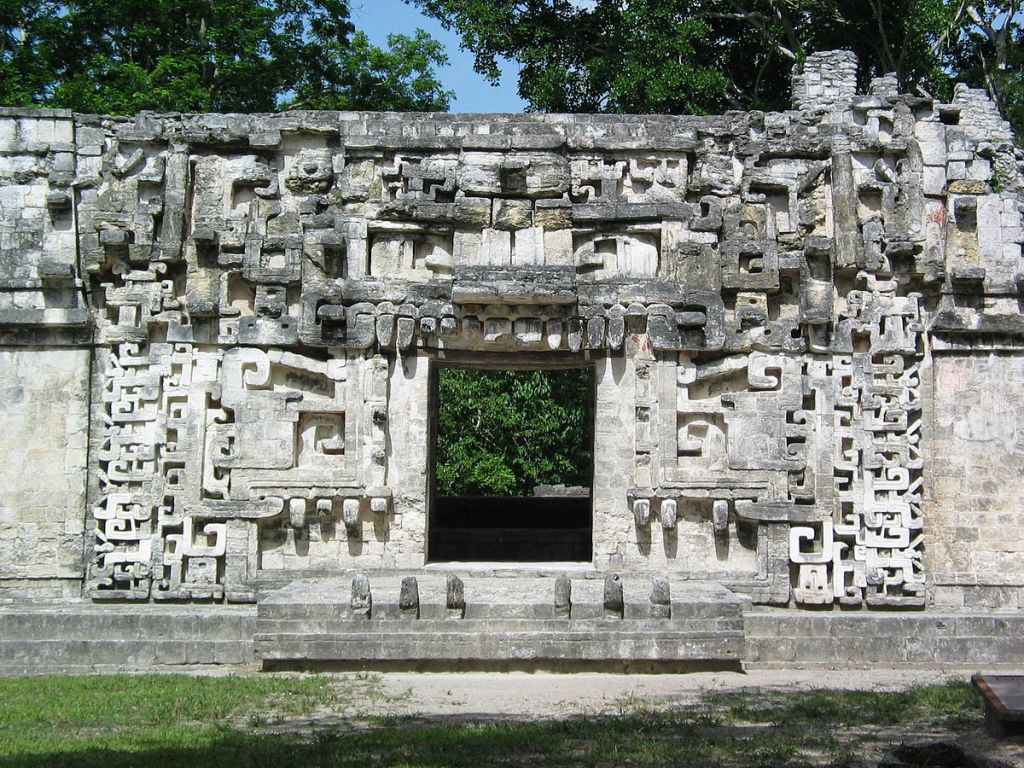
When I went to Yucatán in 2020, I had not been to Mexico for many years. I was pleasantly surprised that even the second class buses were air-conditioned and relatively new. Back in the early 1980s, I remember the old Unión de Camioneros de Yucatán buses with their broken windows and busted seats. Now there were a whole spate of new companies, such as Oriente (shown above). This was the bus I took from Izamal to Mérida.

In all, I took six trips using second class buses:

  • Izamal to Mérida
  • Mérida to Uxmal
  • Uxmal to Campeche
  • Chichén Itzá to Valladolid
  • Mérida to Progreso
  • Progreso to Merida

The first four were on comfortable new Oriente buses. The last two were on a shabbier line that just ran every few minutes between Mérida’s Autoprogreso Station some twenty miles to the port of Progreso.

Above is the first class bus ticket I used to get from Campeche to Merida. The second class route took some 5-6 hours stopping at numerous small inland towns. The ADO (Autobuses de Oriente) line pretty much owns first class routes in Yucatán. From Campeche to Mérida, it took the coastal toll road, which took only about 2 hours.

What’s the difference between first class and second class buses in Mexico? The first class routes are theoretically point to point, not making any pickups or drop-offs along the way. I say “theoretically” because drivers are not above going out of their way for friends. On a second class route, anyone can stop a bus anywhere. When I was going from Chichén Itzá to Valladolid. I stood in the bushes across the street from the Dolores Alba motel and waved down the Valladolid bus. Piece of cake.

Neolithic Orkney

The Standing Stones of Stenness

If you are interested in the ancient Britons, I suppose you can go to Stonehenge and sidle up to the fence which keeps you from going anywhere near the ruins, in addition to putting the kibosh on your travel photography. But there are parts of Britain where you can go right up to the stones and even hug them without drawing the ire of the local sheriffs. I am thinking specifically of the Orkney Mainland (actually an island) off the northern tip of Scotland.

Above is a view of the Standing Stones of Stenness, which is within walking distance of the Ring of Brodgar, another stone circle. And not a fence in sight! And no ticket-takers either (at least when I was there).

There are two major points of interest in the chambered cairn at Maes Howe. It was constructed in 2500 BC. About 3,600 years later, Vikings broke in and covered the walls with graffiti in the form of Futharc runes. The graffiti was like today’s graffiti: If you want to be amused, click on this website.

The Passage into the Tomb

I haven’t even mentioned a whole neolithic village uncovered when the sands which protected Skara Brae blew away in a major windstorm, exposing houses, streets, even stone furniture. Check out some of these images.

These are just some of the reasons why the “Heart of Neolithic Orkney” is considered a UNESCO World Heritage Site. Yet it gets relatively few visitors. One could fly to Kirkwall from Aberdeen, with a short stopover in Wick. Or one could take the train (if it still runs) to Thurso, taxi to Scrabster, and take the St. Ola ferry to Stromness.

I don’t guarantee the weather will be terrific: It rarely is in these parts. But I do guarantee you will be amazed at the sights. Also, the capital of Kirkwall has a 12th century Viking Cathedral, St. Magnus, whose first bishops were canonized as saints. In fact, the Orkneys were Viking before they became part of Scotland in 1472, and the culture is a Scottish/Scandinavian mix.

The islands even have a great poet: George Mackay Brown (1921-1996), whom I met in 1976. Read up on him if you’re interested in visiting this fascinating part of Scotland.