Museo Larco

This is the scanned image of my ticket to the Museo Larco in Lima, Peru. It was the first tourist sight I visited in Lima back in 2015—and it was an eye-opener. Founded in 1926, it was dedicated to the northern coastal cultures of Peru, of which there were many. We tend to think, “Peru … Yeah, that’s the Incas.” Except that the Incas were 15th century latecomers, and some of the earlier cultures were more advanced than they were.

Besides the Incas, there were the Moche, the Wari, the Chimu, the Chavin, the Paracas, the Nazca, the Chachapoyas, and many others.

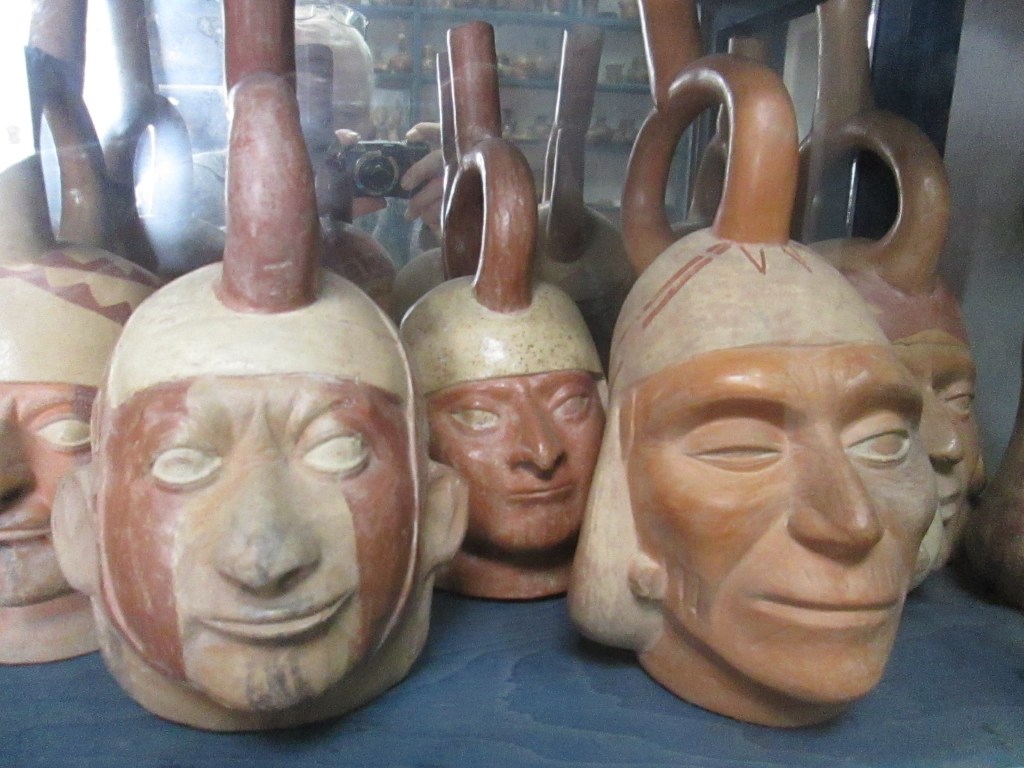
There were scores of these Moche heads at the museum. Like the famous terra cotta warriors at Xian in China, all had distinctive facial features as if they were based on particular individuals.

In addition there were elaborate textiles dating back centuries and still in excellent condition. There were even a few quipus, collections of knotted cords that were used for accounting purposes. None of these peoples appear to have had a written language like the Maya or Aztecs.

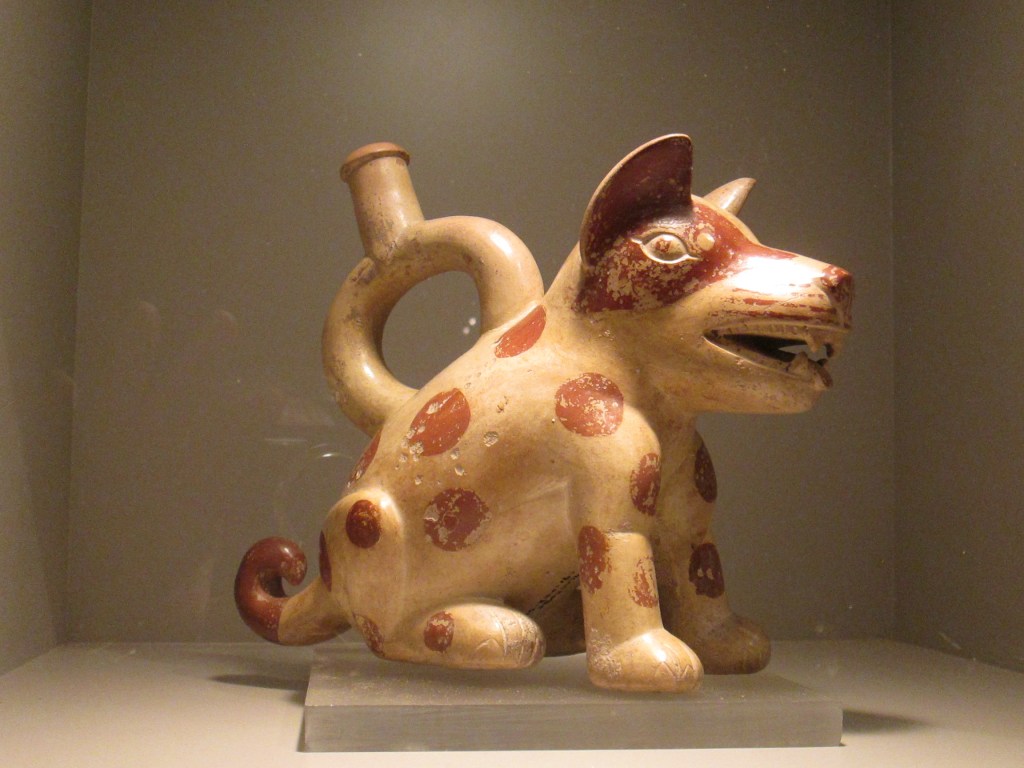
In common with many of the early Mexican cultures, the Moche had cute pottery fashioned in the shape of animals, such as the above dog.

One great thing about many museums in Latin America is that they frequently had adjoining cafés with excellent meals. The Museo Larco was no exception.

If you should find your way to Peru after they horrible Covid infestation, remember that there are a whole lot more to see than just the ruins of Machu Picchu. I could have spent several weeks in Lima without exhausting the list of places I wanted to see, such as the Police Museum in Callao.

Second Class

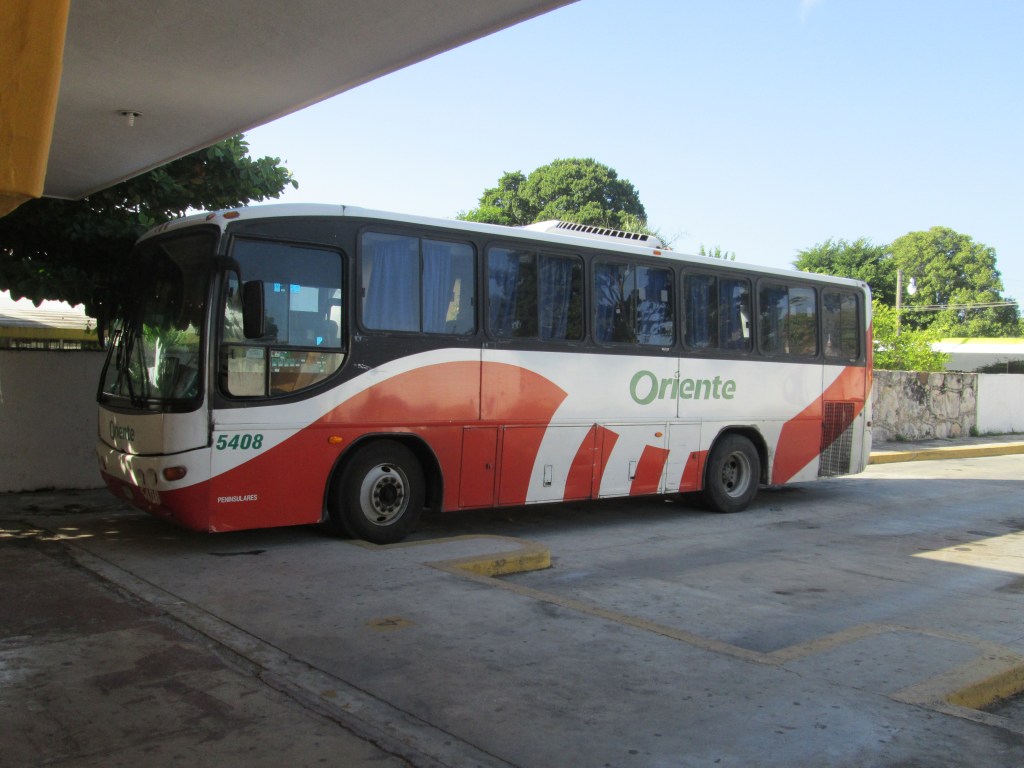
When I went to Yucatán in 2020, I had not been to Mexico for many years. I was pleasantly surprised that even the second class buses were air-conditioned and relatively new. Back in the early 1980s, I remember the old Unión de Camioneros de Yucatán buses with their broken windows and busted seats. Now there were a whole spate of new companies, such as Oriente (shown above). This was the bus I took from Izamal to Mérida.

In all, I took six trips using second class buses:

  • Izamal to Mérida
  • Mérida to Uxmal
  • Uxmal to Campeche
  • Chichén Itzá to Valladolid
  • Mérida to Progreso
  • Progreso to Merida

The first four were on comfortable new Oriente buses. The last two were on a shabbier line that just ran every few minutes between Mérida’s Autoprogreso Station some twenty miles to the port of Progreso.

Above is the first class bus ticket I used to get from Campeche to Merida. The second class route took some 5-6 hours stopping at numerous small inland towns. The ADO (Autobuses de Oriente) line pretty much owns first class routes in Yucatán. From Campeche to Mérida, it took the coastal toll road, which took only about 2 hours.

What’s the difference between first class and second class buses in Mexico? The first class routes are theoretically point to point, not making any pickups or drop-offs along the way. I say “theoretically” because drivers are not above going out of their way for friends. On a second class route, anyone can stop a bus anywhere. When I was going from Chichén Itzá to Valladolid. I stood in the bushes across the street from the Dolores Alba motel and waved down the Valladolid bus. Piece of cake.

Neolithic Orkney

The Standing Stones of Stenness

If you are interested in the ancient Britons, I suppose you can go to Stonehenge and sidle up to the fence which keeps you from going anywhere near the ruins, in addition to putting the kibosh on your travel photography. But there are parts of Britain where you can go right up to the stones and even hug them without drawing the ire of the local sheriffs. I am thinking specifically of the Orkney Mainland (actually an island) off the northern tip of Scotland.

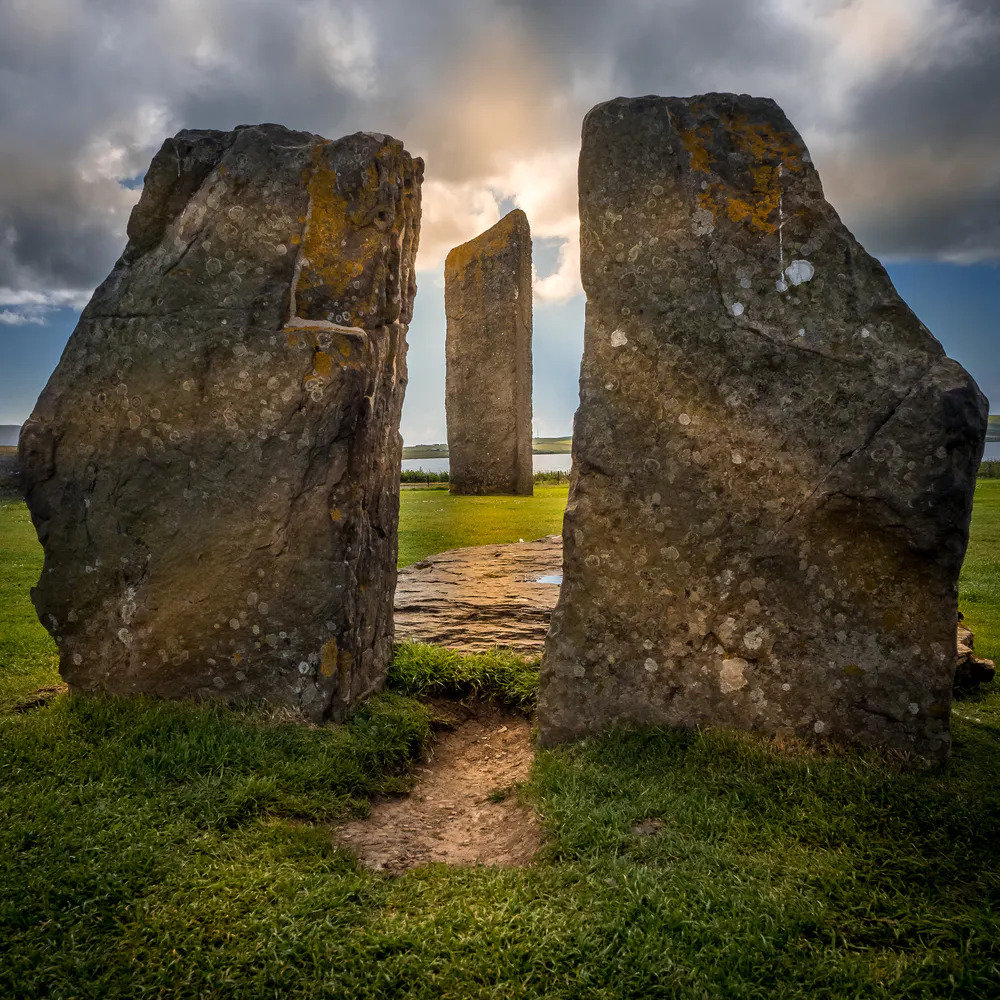
Above is a view of the Standing Stones of Stenness, which is within walking distance of the Ring of Brodgar, another stone circle. And not a fence in sight! And no ticket-takers either (at least when I was there).

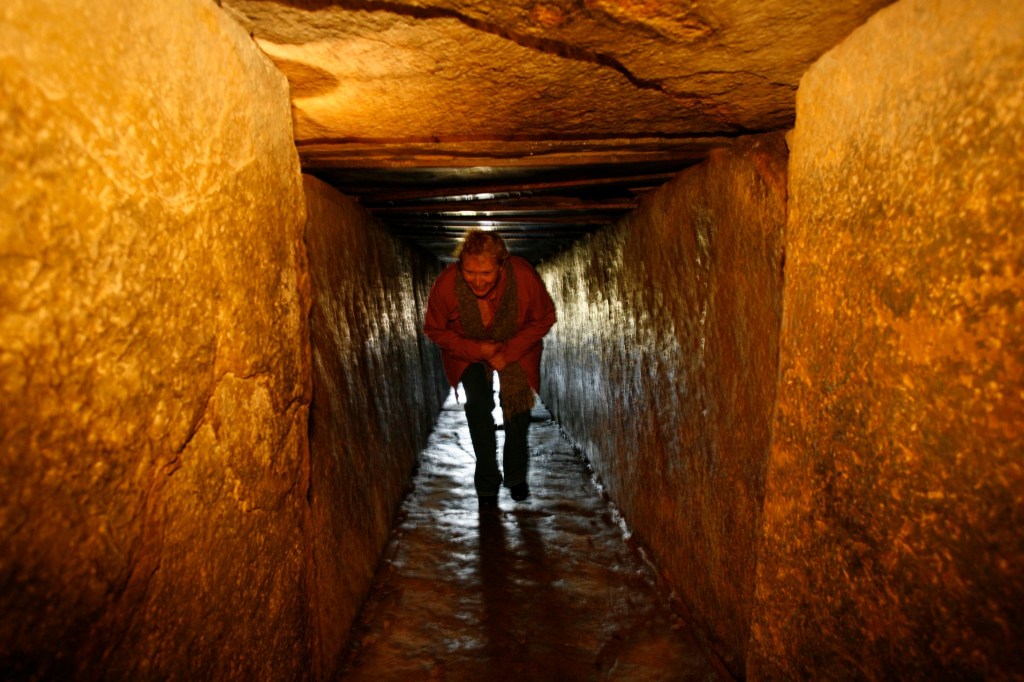
There are two major points of interest in the chambered cairn at Maes Howe. It was constructed in 2500 BC. About 3,600 years later, Vikings broke in and covered the walls with graffiti in the form of Futharc runes. The graffiti was like today’s graffiti: If you want to be amused, click on this website.

The Passage into the Tomb

I haven’t even mentioned a whole neolithic village uncovered when the sands which protected Skara Brae blew away in a major windstorm, exposing houses, streets, even stone furniture. Check out some of these images.

These are just some of the reasons why the “Heart of Neolithic Orkney” is considered a UNESCO World Heritage Site. Yet it gets relatively few visitors. One could fly to Kirkwall from Aberdeen, with a short stopover in Wick. Or one could take the train (if it still runs) to Thurso, taxi to Scrabster, and take the St. Ola ferry to Stromness.

I don’t guarantee the weather will be terrific: It rarely is in these parts. But I do guarantee you will be amazed at the sights. Also, the capital of Kirkwall has a 12th century Viking Cathedral, St. Magnus, whose first bishops were canonized as saints. In fact, the Orkneys were Viking before they became part of Scotland in 1472, and the culture is a Scottish/Scandinavian mix.

The islands even have a great poet: George Mackay Brown (1921-1996), whom I met in 1976. Read up on him if you’re interested in visiting this fascinating part of Scotland.

Jökulsárlón

A Hypnotic Glacial Lagoon in Southeast Iceland

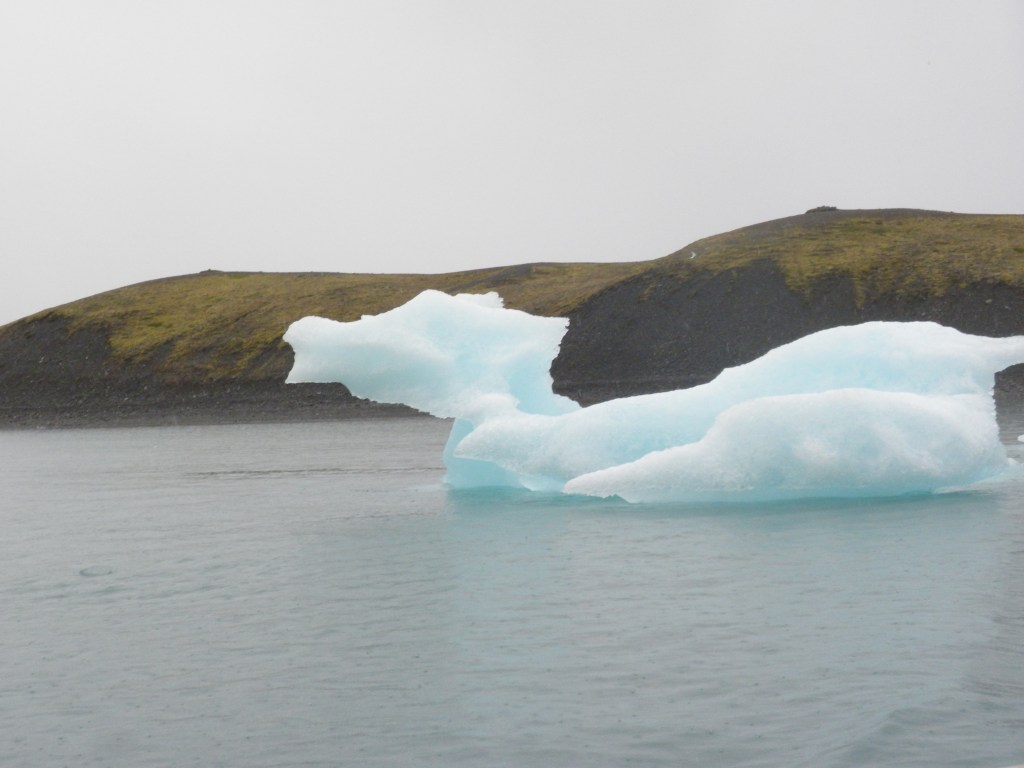
On both of my trips to Iceland (in 2001 and 2013), I stopped by the glacial lagoon at Jökulárlón to see the strangely-shaped and colored little icebergs. The second time, I even took a boat ride around the lagoon.

The lagoon is a must-see on the road between Höfn and Kirkjubæjarklaustur, neither of which could be correctly pronounced by visiting tourists. It is an outlet to the biggest glacier in Europe, Vatnajókull, which occupies approximately 8% of the total land area of Iceland.

Fanciful Shapes Abound, Like This Duck

Never mind that the sun doesn’t seem to shine much at Jökulárlón, the sight of all those odd ice shapes tinted electric blue catches and holds your attention. All the buses in South Iceland make a point of stopping there for a half hour on their way either east or west.

I even had a taste of glacial ice from our guide, who fractured a pane of ice and passed it around among the tourists. It was delicious, having been frozen for millennia.

Although the Vatnajókull glacier is, like most glaciers, receding, it still occupies a large chunk of real estate. While I was staying at Hófn, I even played around on the glacier’s surface on a Ski-Doo snowmobile.

Atop the Glacier

I have been atop two glaciers in my lifetime, Vatnajókull and the Athabasca Glacier in Canada’s Jasper National Park. Something tells me that this is an activity that future generations will not be able to enjoy.

Cherrapunji

Photo by Manish Jaishree of the Wettest Place on Earth

Here I am, reading about massive rainstorms in India circa 1990 while living iat the edge of a desert—and one in an increasing cycle of drought. I imagine, someone in Cherrapunji, India, might have dreams of living in a dry country in which, for all intents and purposes, there is no rainfall for six months of the year.

For your information, Cherrapunji is considered the wettest place on earth. It holds the record for the most rainfall in a calendar month and in a year: it received 9,300 millimeters (370 inches; 30.5 feet) in July 1861 and 26,461 millimeters (1,041.8 inches; 86.814 feet) between 1 August 1860 and 31 July 1861. in Alexander Frater’s book Chasing the Monsoon, the author talks of a friend of his father experiencing rainfall for several consecutive days in which between 30 and 40 inches of precipitation fell.

I miss rain. In Los Angeles, we only had one day of persistent rain in the last twelve months. There have been numerous instances of what I call a dirty drizzle, in which the windshield of my car is muddy as the result of an insufficient drizzle. To form a raindrop, there must be a bit of dust in every drop. But when not enough rain falls to operate the windshield wiper, then the dust predominates.

California and the American Southwest looks to be one of the big losers in climate change. The Colorado River is drying up, the Sierra snowpack is insufficient to fill the reservoirs the state needs, and horrible wildfires are destroying our forests.

There is not too much one can do about it except wait it out. Climate change has happened before. Up until the 13th century, Greenland was actually a fairly prosperous place, but then a little ice age set in and the colonists appear to have vanished from the pages of history. The town of Garðar was actually a bishopric, but nothing remains of its past glory.

Actually, I wouldn’t mind another “little ice age,” but who knows what will happen in the years to come?

Cholula

It’s Not a Hill: It’s the World’s Largest Pyramid

Where is the world’s largest pyramid located? You’re looking at it, in this photograph of the pyramid at Cholula near Puebla, Mexico. You can walk up to the pyramid, and it just looks like a hill, on top of which the Spanish built the church of Nuestra Señora de los Remedios. The base is four times the size of the Great Pyramid of Giza in Egypt.

Cholula is just a few minutes west of Puebla and is famous for the number of churches in a city of its size. The legend is that there are 365 churches in the city of approximately 100,000, one for each day of the year. Actually, there are about 37, which is quite enough.

As I recall, there are some very claustrophobia-inducing tunnels that cut through the pyramid, which I decided to skip. They were used by archeologists to determine how many layers of pyramid there were on the inside.

Chullpas

Funerary Tower (Chullpa) on the Shores of Peru’s Lake Umayo

In the lands around Lake Titicaca in Peru and Bolivia, the native cultures believed in building funerary towers called chullpas to house their dead. Even under Incan rule, the Aymara-speaking Colla people continued this practice.

In 2015, I visited Sillustani, which contained the most impressive collections of chullpas situated on a nearby hill. Unfortunately, one cannot always guarantee good weather on a vacation outing, and the weather at Sillustani was vile that day. Consequently, I not only took no pictures but decided not to climb the hill in the rain (and at 12,000 feet or 3,700 meters altitude). So I took none of the pictures shown on this page.

Funerary Towers at Sillustani

I paid dearly for my trip to Sillustani, which included sampling some quinoa soup at a local resident’s kitchen. The next day, I was struck with a horrible need to go to the bathroom while on a lancha plying Lake Titicaca. I must have looked green in the face as I soldiered on in search of some toilet somewhere. Finally, on Isla Taquile, I found one; though I can’t say I got much from that day’s journey other than incredible discomfort.

Some days just are like that.

The Palm Springs Air Museum

“Mitch the Witch II” with Two Confirmed Japanese Warship Victims

The Coachella Valley means a lot more to me than giant rock concerts. There’s Mount San Jacinto brooding over the valley, the Living Desert Zoo and gardens in Palm Desert, delicious Deglet Noor dates, and, of course, the Palm Springs Air Museum.

Apparently, a lot of WW2 pilots found their way to the Coachella Valley and contributed their efforts to making the Palm Springs Air Museum one of the best in the United States. While they are still walking the earth, these are the best and most learned docents on the subject that you can find anywhere.

“Bunny”—Is She African-American?

The Museum is located on Gene Autry Trail on the east side of the Palm Springs Airport. As you see the exhibits parked outside, you can watch passenger jets take off and land just a few hundred feet away.

You can even climb up on one of the WW2 bombers and walk through it, marveling at how lightweight and flimsy it appears to be.

“King of the Cats”

I find I can spend hours wandering among the hundred or so aircraft, stores inside and out, and dreaming what it must have been like to fight two enemies on opposite sides of the globe.

Roswell

The UFO Museum in Roswell, New Mexico

Wherever your beliefs may lie on the subject, I recommend you visit the UFO Museum in Roswell, New Mexico. First of all, it is entertaining in its depiction of widespread beliefs of space alien visits. Secondly, it’s not so earnest that it doesn’t have a bit of fun with its visitors. It’s all here, both the deadpan reportage of sightings and references to sci-fi classic films.

Oh, and thirdly, the souvenir shop is not to be missed. As I write this post, I am wearing my Roswell UFO Museum T-Shirt.

Klatu Berada Nikto

Roswell is not really on the way to anywhere, unless you count Carlsbad Canyons National Park. And from there to Interstate 40 is a long and relatively featureless drive. The only other nearby tourist attractions are the town of Lincoln (of Billy the Kid fame), Fort Stanton, and Fort Sumner (where Billy the Kid is buried).

If you’re looking for a road trip to the Southwest this fall (but please, wait for the heat of summer to die down), Roswell is a fun stop and clearly worth two or three hours of your time.

Two Englishmen in 1930s Mexico

Mexican Family ca 1930

Two writers who influenced my travels in Mexico are Aldous Huxley, who wrote Beyond the Mexique Bay in 1934, and Graham Greene, who wrote The Lawless Roads in 1939. Both writers were there during a rough time. The Mexican Revolution was theoretically over in 1920, but there were not only widespread disturbances, but there were not, as there are today, a safe system of intercity roads. Plus Huxley spent most of his book on his travels in Guatemala and Honduras.

Greene’s book was my guide to a trip my brother and I took to Mexico in 1979. We flew to Mexico City and transferred to a flight to Villahermosa, which at the time impressed me as the armpit of the republic. Greene then then made his way to the Maya ruins at Palenque. From there to San Cristóbal de las Casas was lengthy journey over the Sierra Madre on muleback. For Dan and me, it was an all-day journey by second class bus during which we passed a bus from the same company (Lacandonia) that had run off the road and encountered an army inspection just outside of Ocosingo. From there we visited Oaxaca and rode an all-night bus back to the Mexico City airport.

Old Penguin Cover for The Lawless Roads

Greene had considerably worse experiences during his trip over forty years earlier. In the middle of his journey, he broke his glasses:

Just short of our destination a sudden blast of wind caught my helmet and the noise of cracking cardboard as I saved it scared the mule. It took fright and in the short furious gallop which followed I lost my only glasses. I mention this because strained eyes may have been one cause for my growing depression, the almost pathological hatred I began to feel for Mexico. Indeed, when I try to think back to those days, they lie under the entrancing light of chance encounters, small endurances, unfamiliarity, and I cannot remember why at the time they seemed so grim and hopeless.

Why the author went to Mexico with a single pair of glasses is a mystery to me. Fortunately, I never felt any pathological hatred for Mexico, based on the many subsequent journeys I took there.

The Edition of Huxley’s Book That I Own

I have also been to most of the places that Aldous Huxley described in Beyond the Mexique Bay during my trip to Guatemala and Honduras in 2019. Unlike Greene who saw only the Maya ruins at Palenque, Huxley traveled to Copán in Honduras and Quirigua in Guatemala.

Like Greene, Huxley also had a problem with the people of Central America. At one point, he lets it all hang out: “Frankly, try how I may, I cannot very much like primitive people. They make me feel uncomfortable. ‘La bêtise n’est pas mon fort.’” The French expression could be translated thus: Stupidity isn’t my strong point.

These two civilized and (perhaps) sticky Englishmen did manage to write interesting books which engaged my interest through multiple readings over a period of more than four decades.

Now why would you want to read books written almost a century ago when there are more current books on the subject? My answer is a simple one: The best recent books were written with a knowledge of what went before. And when it comes to Mexico, one could easily go back to the books of John Lloyd Stephens written in the 1840s. (In fact, I will do just that in a follow-up post.)