The Copán Ruling Dynasty


Altar L with God/Kings of Copán

When I first began traveling in Maya lands, the Maya did not appear to have a history. Now that so many of their glyphs have been translated, we see that—particularly in the Classic Period between AD 600 and and some point in the 9th century AD, most of the major archeological sites not only had a history, but a rich one as well.

The first event recorded at Copán in Honduras was in 321 BC on Altar I. There was a founder of a dynasty called K’inich Yax K’uk’ Mo’ who ruled between 416 and 437 AD. Then there were two unnamed rulers before K’altuun Hix dedicated a carved step inside the Papagaya Structure around 480 AD. There were two more unnamed rulers before Balam Nehn (524-532 AD) and Wil Ohl K’inich (532-551 AD).  After an unnamed Ruler 9, we have a filled-chronology that takes us all the way to 822 AD:

  • Moon Jaguar (553-578)
  • K’ak’ Chan Yopaat (578-628)
  • Smoke Imix (628-695)
  • Waxaklajuun Ub’aah K’awiil, better known as 18 Rabbit (695-738)
  • K’ak’ Joplaj Chan K’awiil, better known as Smoke Monkey (738-749)
  • K’ak Yipyaj Chan K’awiil better known as Smoke Shell (749-763)
  • Yax Pasaj Chan Yopaat, better known as Yax Pac (763-820)
  • Ukit Took’ (began reign in 822 AD)

It was Ukit Took’, the last known ruler of Copán, who dedicated Altar L, shown above, identifying his predecessors. There are no known dates at Copán after 822 AD.

What happened in 822? The kingship failed for various reasons, as it did around then through most of the adjacent area, for environmental reasons (probably drought), overpopulation, and a change in the form of governance.

As alien as the dynastic names above may seem, the chronology is surer than that of many European dynasties of the period. The calendar was sacred to the Maya, so they were sure to note the exact date that events occurred—and that didn’t even happen in most European countries of the Dark Ages.


Hondurans Invade American Space

Honduran Invader Armed to the Teeth

Even as thousands of Hondurans are making a bid to upset the American government, I am planning to invade Honduras. On Friday, I went to the Bretton Woods Foreign Currency Exchange in Brentwood and bought $140 worth of Honduran lempiras. (That’s not a food: It’s what their currency is called.) I checked to see f they had any Guatemalan quetzales, but they were dead out. I’ll just hope to get those at La Aurora International Airport in Guatemala City.

My Honduran destination is only a few miles shy of the Guatemalan border: The Maya ruins at Copán. It will be the first Maya archeological site for my upcoming trip. The others are Quirigua and Tikal, both in the Petén region of Guatemala.

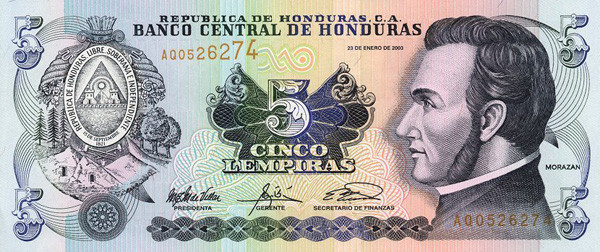
Five Lempira Note

The Five Lempira note illustrated above has a portrait of Francisco Morazán, the only figure in Honduran history I have ever heard of before. He figures in John Lloyd Stephens’s Incidents of Travel in Central America, Chiapas, and Yucatán as the generalissimo of the Central American Republic, which existed briefly before splitting up into its component parts.

I hope the Hondurans manage to find some place in the world of the Norte after they succeed in overthrowing the Trumpf Dictatorship.


Contretemps

Aaaauuugh! I Lost My Passport!

As my Guatemala vacation approaches, I find that I have misplaced my passport. I applied for a new one to be rushed to me, but now it appears that our Ogre President is considering shutting down the government because no one likes him or his moronic policies. At this point, I am not sure that the U.S. State Department is scheduled to close its doors; and there is a chance that I will get my replacement passport before the Friday witching hour of midnight.

If that Marmalade-Headed Horror screws up my vacation, I will do my best to wreak revenge on everything he holds dear, like selling Ivanka to a notorious white-slaver or feeding Don Jr to one of his African hunting trophies.

I will attempt to be patient while visions of revenge rule my thoughts.


Midnight in Reykjavík

The Guesthouse Óðinn in Reykjavík—At Midnight Around the Summer Solstice

The first time I visited Iceland, in 2001, I went in June. In 2013, I went again—this time in June so that I could see “The Land of the Midnight Sun” for myself. My first day back in Reykjavík, I deliberately stayed up late. I believe it turned out to be a 32-hour day, as the whole country is on Greenwich Mean Time (GMT). It turned out to be a day and evening crowded with sights:

  • I took a harbor tour to see the puffins
  • Twice, I stopped in at Bæjarins Bestu for their famous pylsur (that’s hot dogs in Icelandic)
  • I discovered pear-flavored skyr (like yogurt) at a market on Austurvöllur
  • I had a delicious and leisurely fish dinner at the Fish Company on Vesturgata
  • As a lover of Icelandic Sagas, I visited the Culture House on Hverfisgata to see the original manuscripts
  • I toured the Settlement Exhibition, which is an archeological dig of one of the first settlements in the city dated around AD 871
  • Finally, I took a ghost walking tour of Reykjavík, including the cemetery on Suðurgata

After the walking tour, I was good and tired, but I knew that I didn’t want to hit the sack until after midnight local time to minimize the jet lag. (That actually worked.) Secondly, I wanted to see when it started to get dark. I wasn’t about to stay up until 3 am local time, but I did snap a picture of my bed & breakfast right around midnight. Fortunately, the guesthouse had good blackout curtains, so I was able to drift off within minutes of hitting the pillow.


Kaibiles

Guatemalan Army Elite Kaibil Troops

Usually translated as “Tigers,” the kaibiles are elite counterinsurgency troops of the Guatemalan army. According to Ronald Wright’s Time Among the Maya: Travels in Belize, Guatemala, and Mexico, the Mayan word actually implies a “double” or something of double the normal strength. Wright describes meeting a kaibil detachment as he enters Guatemala from Belize:

The pole across the road is lifted, and we are waved through, between a wooden watchtower and a sandbagged machine-gun nest. Not far beyond the tower there’s a billboard with a naive painting pf a Guatemalan soldier in camouflage fatigues. The soldier is shouting, “If I advance, follow me; if I delay, hurry me; if I retreat, kill me!” An inscription below him boasts: ¡AQUI SE FORJAN LOS MEJORES COMBATIENTES DE AMERICA!—HERE ARE FORGED THE BEST FIGHTERS IN AMERICA! I have just begun to wonder whether this is intended for Belizean visitors or rebellious citizens when I see the back of the sign, which direcs its message to those coming from the Guatemalan interior. It shows a gorilla head in the King Kong tradition, or maybe Planet of the Apes. Maniacal eyes burn ferociously, the gaping mouth is dripping with blood and armed with sharp fangs; and lest anyone fail to get the pun … the creature wears a Che Guevara cap. Above it is the single word ¡ATREVETE!—roughly, MAKE MY DAY.

Wright goes on to describe kaibil hazing rituals which include cannibalism and drinking human blood.

His book, which was originally written in 1989, is (fortunately) now a little dated. Most of the depredations on the Maya population by the Guatemalan army have ceased since a peace that was signed in 1996. Still, when I go to Guatemala in January, I plan to steer clear of the army. Many of the army posts Wright describes no longer exist. I hope.


I Finally Commit

The Airline I Will Be Taking on My Vacation

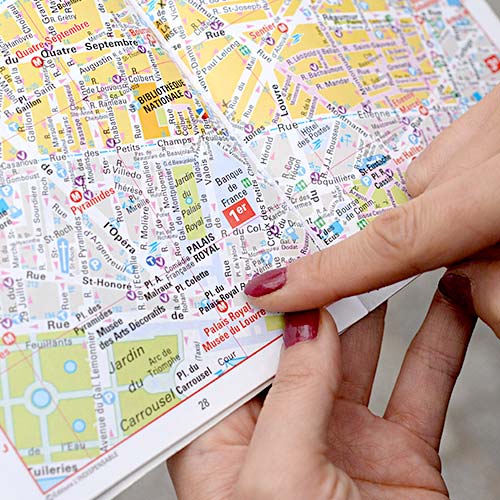
I have been talking long enough about my upcoming trip to Guatemala, but I finally took steps to reserve my flight to Guatemala City and back and reserve accommodations for the first part of my trip in the highlands. These include the Antigua and Santiago Atitlán. Within the next few days, I will also reserve single-night stays in Panajachel and Chichicastenango.

The second part of the trip—to visit the Mayan ruins of Tikal, Copan, and Quirigua—will remain fluid because of lingering transportation concerns. Right now, the plans for the second half of the trip appear to be a bit complicated:

  • Take a shuttle bus from Antigua or Guatemala City to Copan, just over the border into Honduras
  • Take “chicken buses” from Copan to Rio Dulce in Guatemala via El Florido and Chiquimula
  • Hire a car and driver to take to from Rio Dulce to Quirigua and back
  • Take a first-class bus from Rio Dulce to Flores and then to El Remate
  • Take a minibus from El Remate to Tikal
  • Return via bus to Flores
  • Fly back to Guatemala City, or take a 12-hour first class bus back if I haven’t burned up too many days by the above

My airline of choice for this trip is Colombian-based Avianca. If you are not familiar with the airline, it is the oldest commercial carrier in the Western Hemisphere—older than any of the U.S. carriers with their money-grubbing extra fees. The plane may have Taca or Lacsa livery, because Avianca purchased these two Central American airlines a few years back. The only airline in the world that is older is KLM in the Netherlands.

I’ve mentioned this before, I think, but I am prejudiced against U.S. carriers. The last time I flew to South America, I had to take American to São Paolo, Brazil. I ordered a cup of hot tea. They gave me coffee instead. I spit it out (being the coffee-hater that I am) and complained bitterly to the stewardess, who insisted it was tea. Until she tasted it. Oh! So sorry! (And so typical.) On Avianca, they know the difference between coffee and tea.

A Nostalgia for Evil Empires?

Ruins at Mayapan in Yucatán

You can see the prejudice even in the naming of the archeological periods of Maya civilization. There is Preclassic, Classic, and Postclassic. The Classic Period ended around AD 800, while the English were struggling with Viking invaders, and while Charlemagne ruled in France. The Classic period was when most of  the big pyramids and temples were built—some 700 years before Cortés and the Spanish decided to muscle in on the action.

When we travel in Yucatán or the jungles of Petén, what we marvel at are the Classic ruins of places like Tikal, Copan, Calakmul, Uxmal, and Chichen Itza. In our simple way of admiring the wrong things. The Classic period was great for the divine kings who wasted their subjects in massive construction projects and endless wars.

After the Classic period, the Maya actually improved their lot: In place of pharaonic dictates to abject slaves and massive tragedies when one of their divine kings bit the dust, the new emphasis was on trade and multiple sources of power. Of course, there were no more huge pyramids, but the Maya could spend more time on agriculture, trade, and a slightly less domineering religion.

When the Grijalvas and Alvarados began attacking the Maya, the Maya resisted. The Aztecs lasted only a couple of years under the onslaught of the Conquistadores, whereas the Maya held out until 1697, some 175 years after the Aztecs fell. Today, there are about a million speakers of Nahuatl, which was the language of the Aztecs. The Maya today number about six million in Mexico, Belize, Guatemala, Honduras, and El Salvador—and they speak some 28 dialects of the Mayan language! While the Aztecs went down in flames, the Maya survived in greater strength despite multiple attempts to curtail their numbers and their power.


Historic Schoenbrunn Village

My First Trip

Heck, I was just a kid at the time; so I didn’t know any better. All the other family trips were decided on by my parents—and we didn’t travel much even then. Up until the mid 1960s, the farthest I ever went with them was Detroit and Pontiac, Michigan, to the west and Niagara Falls to the east. Then, one day they listened to me. I suggested that we visit Schoenbrunn Village near New Philadelphia, Ohio. We had just learned in school that it was the first white settlement in Ohio, founded in 1772 by Moravian missionaries intending to convert the Delaware Indians.

What we found was a Disneyfied patch of log cabins that looked so badly chinked that they probably had to plug the leaks every year. There was the obligatory souvenir stand on the premises and (although I do not specifically remember it) a snack bar. Of the souvenir stand I am sure, because my folks bought a rubber-tipped spear for my little brother. The return trip was hard on him so he detonated by the time we neared Akron.

It was not particularly a fun trip. Once the fact settled in that it was the first settlement in Ohio, the rest was primarily just visiting all the cabins and nodding sagely. Interestingly, Los Angeles was first settled nine years later than Schoenbrunn Village, and some of the original buildings are still around, such as the Avila Adobe on Olvera Street and scattered Spanish missions and adobes scattered around town. I guess log cabins of that design don’t last long.

Fortunately, all my subsequent trips were much better than that ill-fated day trip some 60 plus years ago.


Two Ships: The Lady Rose and the Modesta Victoria

Aboard the MV Lady Rose in 2004

I have always liked Canada. While we were losing our minds and preparing for a second Civil War, Canada remained itself—calm, reasonable, sane. One of the highlights of my 20014 trip to British Columbia was an all-day cruise from Port Alberni to Bamfield and back. The Alberni Inlet and Barkley Sound extends for many miles of isolated houses and logging camps, many of which were supplied by the packet freighter MV Lady Rose. I understand the ship is no longer being used for that purpose. On the plus side, she is at Tofino awaiting restoration at Jamie’s Whaling Station.

There is something about small ships that intrigues me. In Argentina, I took the Modesta Victoria on Lago Nahuel Huapi to Los Arrayanes National Park. The Modesta Victoria was built around the same time as the MV Lady Rose, though in the Netherlands rather than Glasgow. The Modesta victoria has recently celebrated 75 years of navigation on Lago Nahuel Huapi, which sits in the foothills of the Andes in Argentinian Patagonia.

The Modesta Victoria at Anchor

My day cruises aboard both ships were among the highlights of both vacations. The Alberni Inlet was lovely, abounding in bears and other wildlife. And the Modesta Victoria’s cruise to Los Arrayanes was spectacular. It is said (though probably this is a myth) that the orange trunks of the Arrayanes trees were the inspiration for the forest in Walt Disney’s Bambi.

Because It’s There!

A Tree in the Center of the Road? Yes, This Is Paraguay!

My mind keeps returning to Paraguay, and this without having done my Guatemala trip yet. There is something attractive to me about a country with such a screwed-up history. And yet, at the same time, the country fascinated Graham Greene and kept appearing, albeit peripherally, in his books, such as Travels with My Aunt (1969), A Sort of Life (1971), and The Honorary Consul (1973). It is also the country which gave birth to one of South America’s greatest (and most unsung) authors, Augusto Roa Bastos, who wrote The Son of Man (1960).

I want to go to Asunción, learn how to speak Guaraní, and drink endless glasses of iced tereré infused with herbs. I will read more about the sad history of the place and enjoy myself thoroughly. It will give me great pleasure to hear people ask me, “Why Paraguay?” I will, of course, answer them by saying, “Because it’s there!”

Palo Borracho Trees by Filadelfia in the Gran Chaco

Or, if I were someone other than who I am, I could take a gigantic passenger ship to some Caribbean isles where the sun will scorch the skin off my back and my fellow passengers will bore me into catatonic rage.