To BZ or Not To BZ

Beach Scene at Caye Caulker, Belize

Normally, I am not really a beach person. As my planned vacation to Yucatán takes place, I am thinking of also including Caye Caulker in Belize as a little side trip, a sort of vacation from my vacation so to speak. Why on earth would I be interested in knocking around on a Caribbean island? Especially when there’s nothing of any archeological import to be found there. I don’t particularly like to swim, snorkel, or dive: Hell, I don’t even like wearing shorts.

The answer goes back to my last trip. Throughout Eastern Guatemala, there was one condiment that was de rigeur on every restaurant table. It was a bottle of Marie Sharp’s Hot Habanero Pepper Sauce. Now I have always been partial to habañero (aka Scotch Bonnet) chiles, ever since my 1975 trip to Yucatán. Until I encountered those Marie Sharp’s sauces, with their motto “Proud Products of Belize,” I was contented with the El Yucateco Salsas de Chile Habañero, which came on hot and fierce, and maybe a little raw. What fascinated me about the Marie Sharp’s product was that it had the heat, but also the sweetness of carrots. How did she do it?

The Product in Question

Mind you, I still like El Yucateco, but Marie has won me over.

Now, how does that translate me wanting to spend a few days on an island off the coast of Belize? When I went to Guatemala, I was intrigued by the cultural mix at the port of Livingston: Maya, Garifuna, etc. I thought it would be fun after tromping through miles of Maya ruins in the jungle to sit under a palapa with a cool drink (perhaps a Belikin beer) and a good book. And available to me would be the best of Maya and Caribbean cooking. That sounds like a culinarily and culturally interesting diversion.

Marie Sharp’s manufacturing complex is actually by Stann’s Creek near Dangriga in Southern Belize, but that’s a tad too jungly for me.

From Chetumal in Mexico, I could take a quick boat ride to Caye (that’s pronounced KEY in Belize) Caulker and pass through customs at Ambergris Caye. So I might very well BZ happy there.


Flamingo Road

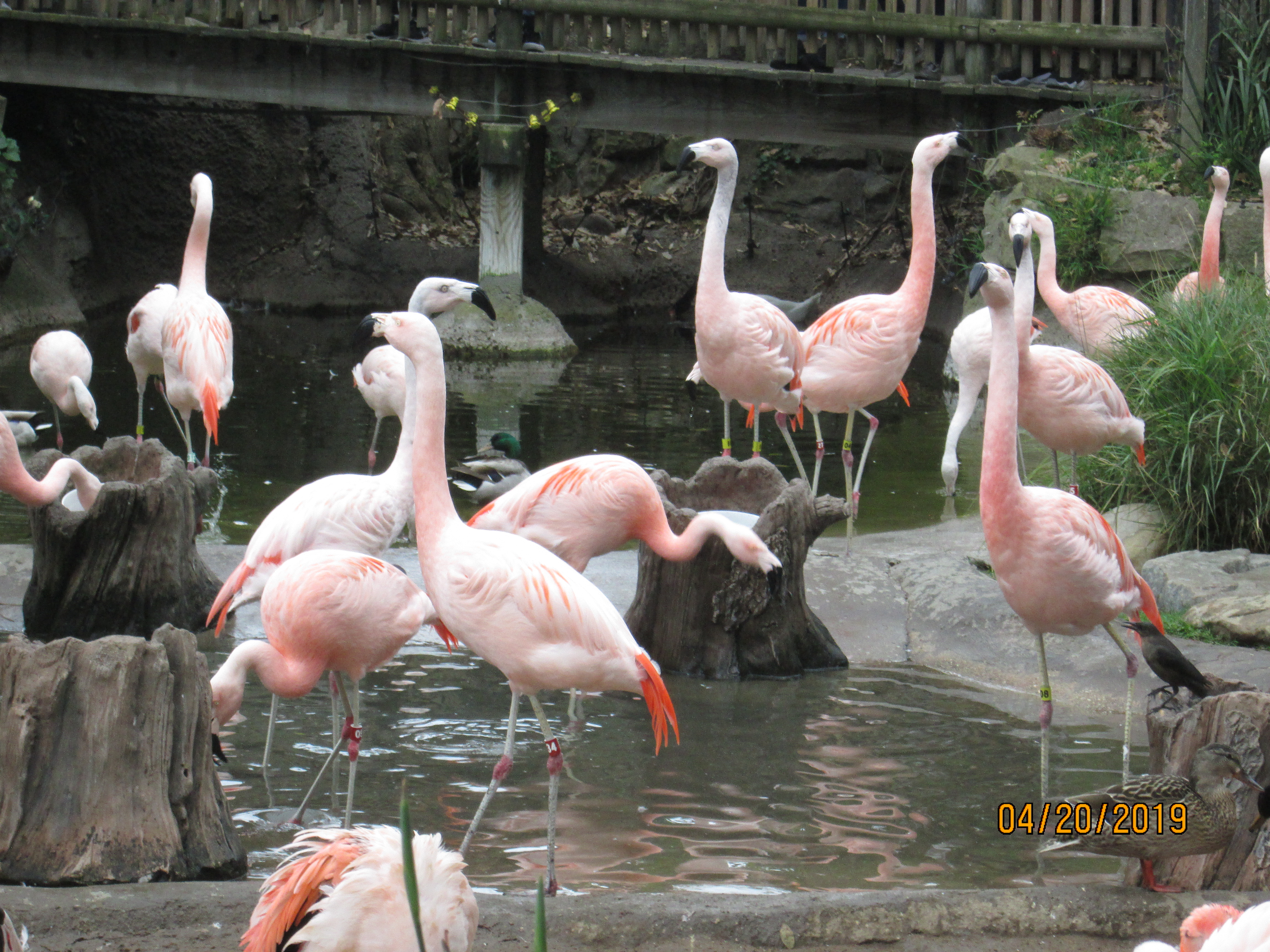
Chilean Flamingos at the Santa Barbara Zoo

On Saturday, Martine and I drove to Santa Barbara for a fish and chips lunch at the Harbor and a visit to the local zoo. Los Angeles has a bigger zoo, but it’s too big, too crowded—and it’s difficult to get buy without multiple stroller collision injuries. They’re always doing construction and forcing large numbers of visitors down narrow pathways, ending up with massive foot traffic jams.

As I mentioned in yesterday’s post, there are two smaller museums that I love: The Living Desert in the Coachella Valley and the Santa Barbara Zoo.

Like all zoos, it is impossible to see all the animals because:

  • Some of them have been withdrawn for various reasons
  • Others prefer to be in hiding, escaping the prying eyes of the gawkers

No matter, I got an eyeful of what I wanted to see, especially Chadwick the African lion, who is usually in the latter category, except that he is visible from the little train ride that circles the 32 acres of the zoo. Plus we saw the elephants, the gibbons, the Humboldt penguins, the giraffes (who have a much harder time of it if they wanted to hide). Oh yes, we also saw (and smelled) the Chilean Flamingos.

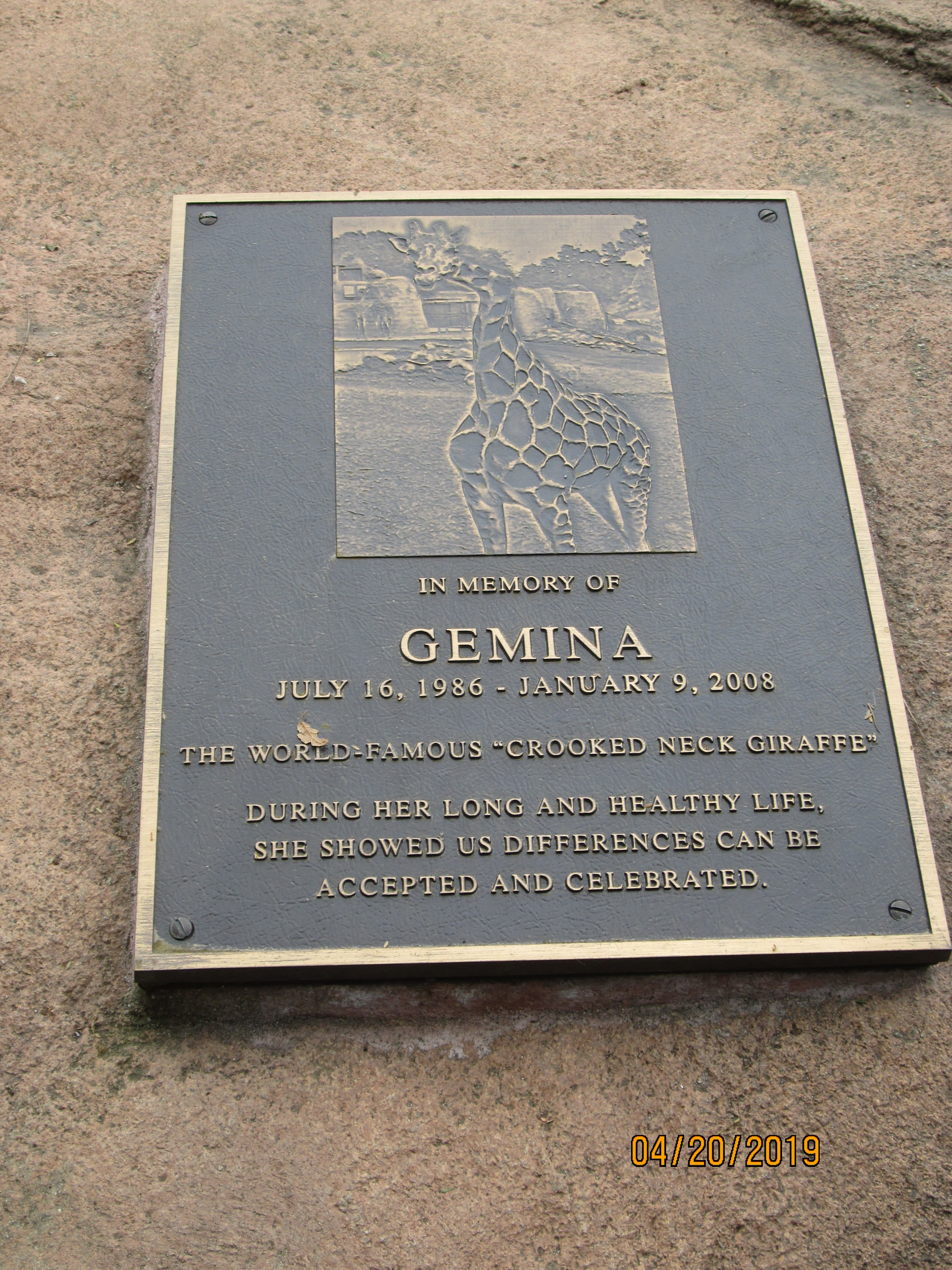
Bronze Plaque Honoring Gemina the Crooked Neck Giraffe

There is even a nice bronze plaque commemorating Gemina, the zoo’s late “crooked neck giraffe,” who died in 2008. I remember seeing her, with her neck that took off at a 90 degree angle midway up. It looked incredibly painful; but Gemina had a longer than normal life and was attractive enough to at least one male giraffe who made her a successful mother with healthy issue. One of these days, I’ll try to find one of my pictures of Gemina. I know I took several on former trips to the zoo.


Did Balzac Ever Go to Java?

Cover of a French Edition of the Voyage

Well, not exactly. But he is known to have drunk approximately fifty cups of Java each day. No doubt that helped inspire him to write this hilarious spoof of voyages to exotic locales. It is not until the last couple of pages that Honoré de Balzac writes:

In truth, soon I will be losing no time in taking the stagecoach once again, travelling back to Paris across the fields of Touraine and Poitou that I thought I should never see again. During my first days back in Paris I had a lot of trouble persuading myself that I had not indeed been to Java, so much had that traveller [M. Grand-Besançon] struck my imagination with his tales.

So in the end it is a delightful hoax. Balzac tells a series of tall tales redolent of earlier (unsubstantiatable) journeys full of tall tales about the flora, fauna, and women of the Far East. Not all of it consists of tall tales, such as this realistic warning to travelers to be alert at all times:

Go inside a shop selling precious cloths; bargain, buy some cashmere or a length of tamava … if you turn your back for a moment while the merchant is rolling up your purchase on the counter, wrapping it and tying it with string, the package flies to the back of the shop and is replaced by another containing inferior goods, that an apprentice has been preparing in the corner of the shop to look exactly like the one you were buying. With no explanation for this miraculous metamorphosis, you return to the shop furious at having been duped by the Chinese everybody had warned you about; but his only response is to laugh at you.

I have read virtually all of Balzac as translated into English, but this is by far the funniest of his works. An English edition entitled My Journey from Paris to Java (Singapore: Editions Didier Millet, 2010) is available.


Fastest or Farthest

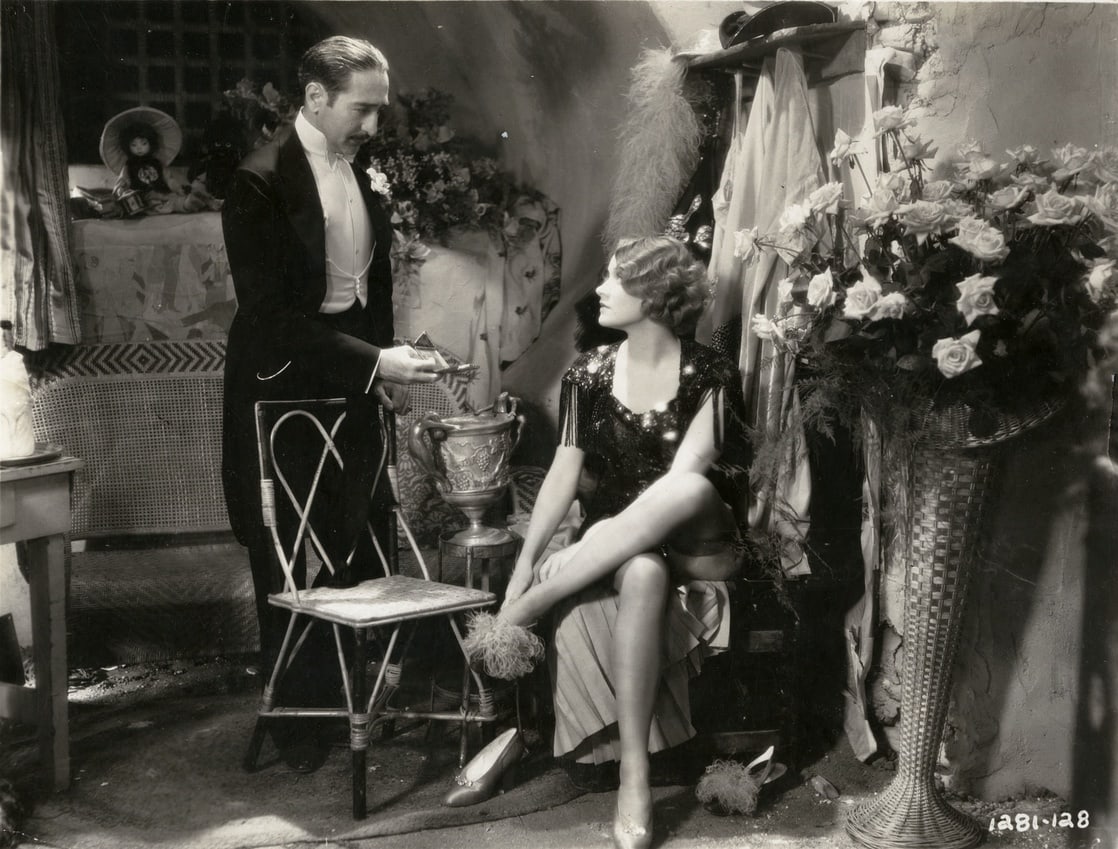
Adolphe Menjou and Marlene Dietrich in Von Sternberg’s Morocco (1930)

I wonder if I misremember the scene: Marlene Dietrich writes with her lipstick on her vanity mirror, these lines from Rudyard Kipling’s poem “Winning”:

Down to Gehenna or up to the Throne
He travels the fastest who travels alone.

When I searched for the still of the scene, I only came up with a mirror on which was written, again in lipstick, “I changed my mind.” I would obviously have to see the film again to refresh my memory. I know the words are in the film somewhere, and the quote has stuck with me—though sometimes I remembered it as “He travels the farthest who travels alone.”

I like to travel alone, but I think I would much rather travel with Martine or my brother Dan or one of my friends. Unfortunately, Martine thinks I’m much to adventurous in my trips. She claims that anti-malarial medications like Chloroquine or Aralen do not agree with her. Otherwise, she is an ideal travel partner who is genuinely interested in the places I like to visit. The highlight of our travels together was our trip to Argentina and Uruguay in 2011.

My brother is also an excellent travel partner: We tend to agree in advance on the places he wants to see and the places I want to see. Thus far, we have gone on only two trips together: Mexico in 1979 and Ecuador in 2016.

My friends are more problematical in that none of them would dare to visit a Third World country whose language they don’t speak. I always imagine introducing them to Maya ruins or South American volcanoes or Icelandic fjords. But I imagine them as being versions of myself before I started on my travels—all eager to travel to exotic destinations and devil take the risks! Alas, they are not like me. They are irrepressibly themselves. And that’s why they’re my friends.

So I suspect that most of my future travels will be by myself.

Unfinished Business with the Maya

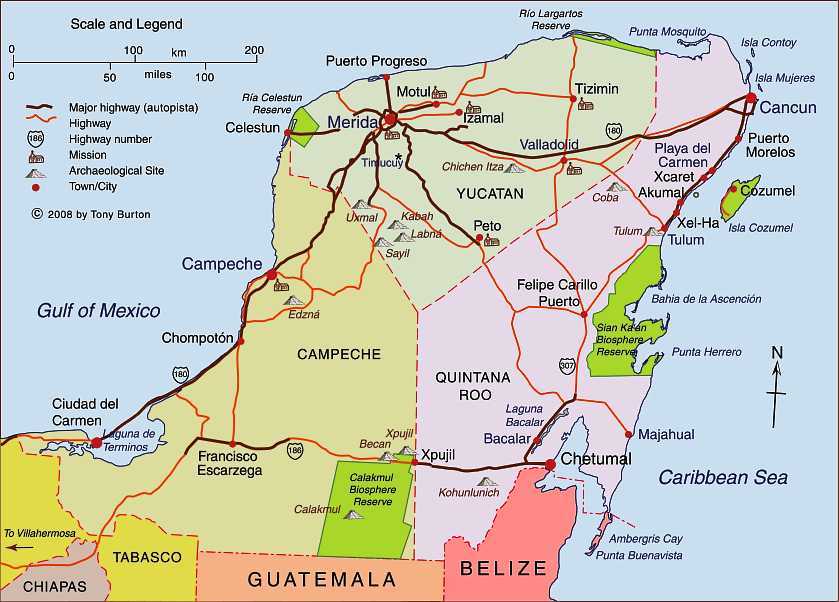
The Three States on the Yucatán Peninsula

I have not been to the Maya parts of Mexico since 1992, when I traveled to the Yucatán Peninsula with Martine and several co-workers at Urban Decision Systems. Now I am thinking of going again. My January trip to Guatemala only whet my appetite for more.

On past trips, I have seen the ruins at Chichén Itzá, Uxmal, Dzibilchaltun, Acanceh, Mayapan, Palenque, Tulum, Kabah, Labna, Sayil, and Xlapak. I would not mind seeing Chichén, Uxmal, and Palenque again, and perhaps even spending a little time at Valladolid and Izamal, which I have not seen. New destinations would include several Maya ruins in the State of Campeche, most notably Calakmul and Edzná, and Bonampak and Yaxchilán in the State Of Chiapas. The latter two can be seen on a tour from Palenque.

The most problematical destination is Calakmul, which may possibly have been the largest Maya city at one time—perhaps even bigger than Tikal in Guatemala. The problem is that the southeastern edge of the State of Campeche has not yet been sufficiently developed for tourism by the Mexican government. I can possibly get a tour from either the city of Campeche or of Chetumal in Quintana Roo.

Maya Structures at Calakmul

There is also the possibility of Cobá in Quintana Roo. I might visit it if I have to go to Chetumal to set up a tour for Calakmul. Otherwise, I would be reluctant to run into the passenger ship mobs that dock at Cancun and the Maya Riviera.

Two cities I would love to re-visit are Mérida in Yucatán and Campeche in the state of the same name. Both are delightful places that positively reek of contemporary Maya culture, with hints of the Mexican mestizo culture and—oddly—an admixture of Lebanese and Syrian, due to the merchant classes that set up there in the 19th Century.


Lake Louise

Lake Louise with the Fairmont Chateau Hotel in the Distance

Some of the most incredible views in North America can be had in the Canadian National Barks, particularly Banff and Jasper. The jewel in the crown is Lake Louise in Banff National Park. Martine and I spent three weeks in 2010 visiting both parks, as well as Glacier National Park in Montana and Yellowstone and Grand Teton National Parks in Wyoming.

Although the day was overcast when we visited Lake Louise, it didn’t seem to detract from the splendor of the setting. In the background are views of several snow-capped peaks including Mount Temple at 3,543 meters, Mount Whyte (2,983 meters), and Mount Niblock (2,976 meters).

Snow-Capped Mountains Rising Above the Lake

One characteristic of the glacial lakes of the Northern Rockies is their vivid green color caused by a phenomenon known as rock flour, which (according to Wikipedia) “consists of fine-grained, silt-sized particles of rock, generated by mechanical grinding of bedrock by glacial erosion or by artificial grinding to a similar size. Because the material is very small, it becomes suspended in meltwater making the water appear cloudy, which is sometimes known as glacial milk.”

At the Western Shore of the Lake

That trip some nine years ago was perhaps the most scenic in our lives. I wouldn’t mind spending some more time in the Canadian Rockies.


Geographies: Real

A More Recent Edition of This Invaluable City Atlas Than Mine

This is one of two posts by an inveterate map freak. I will start with real geographies that inspired some of my more fantastic fictional ones. I have read two novels this month which inspired me to dig up my copy of Paris Pratique Par Arrondissement Édition 2005. The first was Cara Black’s Murder in Clichy; and the second, Georges Simenon’s masterful Maigret and the Bum.

Ever since I was a grade school boy, I loved maps and atlases. It became even more pronounced when, at the same time, I collected stamps from such strange corners of the world as Tannu Touva, Bechuanaland, Liechtenstein, and Nejd. Naturally, I had to know where these geographic entities were, their principal cities, and some knowledge of their economies (if any).

No, I Don’t Wear Nail Polish

The best city street atlas I have ever seen is the abovementioned Paris Pratique Par Arrondissement. Each of the twenty arrondissements (districts) of the city gets either two facing pages, or, if required, two sets of two facing pages. In addition, there are maps of the metro, the RER (suburban rail routes), major bus lines, the Bois de Boulogne, the Bois de Vincennes, and La Défense. Throughout, it is organized so logically that I cannot imagine using any other map to follow the action in novels set in the City of Lights.

Absent from this handy atlas are the suburban banlieus which tourists are not likely to visit unless they are in the market for recreational drugs or a bit of the old ultra-violence. Unlike American cities, which tend to be hollowed-out at their core and liveable only in the outlying suburbs, Paris reserves the center for historical buildings and the wealthy, while the areas beyond the peripheral highway are strictly for slumming.


An Incredible Richness

Altar in the Archbishop’s Palace in Lima, Peru

It was not until I visited Peru five years ago that I realized that the Inca were not the only game in town. In fact, I found the old Catholic churches with their ornate ornamentation was equally interesting. After all, the Inca had no written language and left no books until the Spanish taught them how to write. And yet the Catholic church in Peru was incredibly powerful. A visit to the great old churches of Lima led me to think that the Church in Peru was the recipient of as much gold and silver as the King of Spain.

In the south of Peru was San Luis Potosí, where there was an entire mountain of silver called to this day the Cerro Rico, the “Rich Hill.” The silver was sent to Lima, from where it was transshipped to Panama, where the conquistadores marched it across the isthmus to Colón, where it was loaded onto Spanish treasure ships and sent to Spain.

Altar at Lima’s Cathedral

Of course, much of these Peruvian riches never made it to Spain, thanks to the ravages of pirates and storms at sea. Whatever was given to the church, however, went into the churches of Lima and the rest of the Hispano-America. I cannot count the number of times I would walk into a church and be struck by all the gold used in the altars and in gilding the statues and frames of the paintings on display. Look, for instance, at the picture below of the Company of Jesus Church in Quito, Ecuador:

PICQuitoCompanyOfJesus

The Main Altar of the Company of Jesus (Jesuit) Church in Quito, Ecuador

It was nice to see the Inca ruins, but the remnants of a once-triumphal Catholicism were far more impressive. Granted that the Inca were perhaps the world’s greatest stonemasons, but the Spanish civilization is far richer.

Ten Years Ago

The Sunken Garden at Victoria, BC’s Butchart Gardens

I have over twenty thousand photographs stored in the cloud at Yahoo Flickr. Sometimes, when I don’t know what to write about, I just scan through some of my older pictures. This time I decided to look back ten years. My vacation that year was to Seattle and British Columbia. The pictures of me at that time showed me to be much heavier, probably close to 230-240 pounds. Now, thanks to diabetes, I am closing in on 200 pounds.

The pictures of Martine show her to be much happier. Ever since 2013, when she started complaining of back pain, she has been less willing to travel. The last good trip we took together had been in 2011, when we spent three weeks in Argentina and Uruguay. There was a period of several years recently when she has been depressed and made several attempts to live elsewhere on her own. Lately, she has been less depressed and even laughed on occasion. Still, she has let her passport expire and shows no interest in traveling abroad any more.

Probably Canada has been her favorite foreign destination, to Victoria, Vancouver, Ottawa, Montreal, Quebec, and particularly New Brunswick and Nova Scotia.

My favorite destination in the trip we took ten years ago was Butchart Gardens just north of Victoria. Both Martine and I love botanical gardens, and Butchart is a world-class place for people like us. My favorite part is the Sunken Garden, which used to be a quarry. It took nine years to convert the five acres of disused quarry into a faerie-like collection of beautiful flowers, trees, and shrubs. And, because we are much farther north, the nature of the plants is so different from what we have in Southern California’s Mediterranean climate.


An Unforeseen Difficulty

A Protest Around La Unión Hold Up My Trip

As I have written before, the biggest transportation problem on my trip was getting from Copán, Honduras to Rio Dulce, Guatemala. In the end, I was right. There had at one time been shuttle buses that made the trip, but either they had been canceled or occurred only during certain times. In the end, I cut a deal with a Honduran travel agency called Baseline Tours out of the Café ViaVia to hire a car and driver to:

  1. Drive me to Rio Dulce
  2. Allow for a one- or two-hour stopover at the Maya ruins of Quiriguá on the way

I wound up paying 1,700 Guatemalan quetzales (about $217) for a car and driver to take me there. I could have taken public transportation for much cheaper, but it would have thrown a monkey wrench into my schedule. I would have had to take a collectívo to the Guatemalan border at El Florido, a Litegua bus to Chiquimula, and an (unspecified) second class bus to Quirigua, where I would have had to spend the night. And then, I would have had to face the chore of a bus from Quiriguá to Morales, and from Morales to Rio Dulce. So I spent the money and adhered to my schedule.

Except there was one little unforeseen difficulty. Midway between El Florido and Chiquimula, the highway was closed in both directions because the residents of La Unión were protesting en masse some government dictate or malfeasance. For an hour and a half, I sat in the car reading my Kindle when—quite suddenly—the local police (shown above) started letting traffic through.

It is not unusual to find whole towns in Latin America shutting down access to and from their towns while they make their point to the government. Bolivia is particularly notorious for this type of action.

In the end, I got to Quiriguá and Rio Dulce with time to spare. It was not an accident that I left early, around 8 AM, to allow for this sort of hindrance.