Pre-Columbian Writing

Detail from the Dresden Codex

At the time the Spanish landed in he New World, there was only one Pre-Columbian culture that had a written alphabet, and that was the Maya. Now I have heard that in earlier centuries, the Zapotecs and Mixtecs of Northern Mexico had a written alphabet, but stopped using it after a certain point. Curiously, the Aztecs and Inca did not have their own alphabet, however advanced they may have been in other respects.

Right now, the only instances we have of writing in Mayan are glyphs at various Maya ruins and four surviving codices that escaped the religious zeal of the Spanish missionaries in destroying what they perceived to be heretical. And since the subject matter related to Maya religion, it was heretical insofar as Christianity was concerned.

The most famous destroyer of Mayan codices was Diego de Landa, the Franciscan Bishop of Yucatán in the 16th century. In a famed book burning conducted in 1562, de Landa had 27 codices burned at Mani. He described the Maya as being disconsolate at the destruction of so much of their culture at one time. Curiously, it was the same de Landa who wrote the Relación de Las Cosas de Yucatán, which preserved an astonishing amount of the culture and language, such that it is still studied by Maya scholars. It is still available in a Dover Publications paperback.

Do you see the dots and dashes in the above detail from the Dresden Codex just above the four seated figures? They are, in order, the numbers 16, 4, 9, 13, zero (yes, the Maya had discovered zero), 5, 12, 2, and 1. As you can probably surmise from this, the dashes represented the number five or a multiple of fives; and a dot, a one or multiple of ones up to four. It was a vigesimal system, meaning to the base 20 rather than base 10 like ours. Very likely, the numbers in the illustration represent a “long count” calendar date fixing a particular event in time. You can read more about Maya mathematics here.

The other interesting thing about the Mayan alphabet is that some symbols were hieroglyphic and stood for an entire word and others phonetic, standing for syllables. This confused scholars for years.

At the time I started visiting the Maya world, only the calendrical symbols had been decoded (mostly thanks to the selfsame good/bad Diego de Landa). In the last forty years, we have discovered that the Maya have a history. We have learned names of rulers and translated descriptions of events commemorated by Maya rulers.


The Narrow Road to the Deep North

Matsuo Bashō by Hokusai

Several times over the last thirty years, I have returned to the 17th century haiku and commentaries by Matsuo Bashō on the subject of travel:

Amid mountains of high summer,
I bowed respectfully before
The tall clogs of a statue,
Asking a blessing on my journey.

There is a quality to Bashō’s writing that makes me want to hit the road. As he wends his way through Shogunate Japan, stopping at temples along the way, I see him as the ideal traveling companion.

This grassy hermitage,
Hardly any more
Than five feet square,
I would gladly quit
But for the rain.

I think of his poem about a ruined castle:

A thicket of summer grass
Is all that remains
Of the dreams and ambitions
Of ancient warriors.

Bashō’s prose, too, has a certain quality that is worth remembering:

Go to the pine if you want to learn about the pine, or to the bamboo if you want to learn about the bamboo. And in doing so, you must leave your subjective preoccupation with yourself. Otherwise you impose yourself on the object and do not learn. Your poetry issues of its own accord when you and the object have become one—when you have plunged deep enough into the object to see something like a hidden glimmering there. However well phrased your poetry may be, if your feeling is not natural—if the object and yourself are separate—then your poetry is not true poetry but merely your subjective counterfeit.

How marvelous! This is what I seek from my travels—not that I write poetry—a “hidden glimmering” that makes itself manifest when I confront it with my entire being.

The name of this post, and of Bashō’s poetic journal, was also used by Australian novelist Thomas Kavanagh in his novel The Narrow Road to the Deep North, which tells of its physician hero’s imprisonment in World War Two Burma building the bridge on the River Kwai made famous by David Lean’s movie.


Quiriguá

Zoomorph at Quiriguá

Now that Martine has returned for the time being, I can turn my attention to other things, like that dream of Guatemala that is taking shape in my mind. One of the Maya ruins that I hope to visit is Quiriguá, which is nestled close to the border with Honduras. As the crow flies, it is not far from the even more spectacular ruins at Copán just over the line into Honduras.

In the 1840s, John Lloyd Stephens and his artist Frederick Catherwood paid visits to Copán, Quiriguá, and Palenque. Below is one of the many stelae at Quiriguá as drawn by Catherwood:

Stela at Quiriguá

Quiriguá is actually a small ruin that can be seen within a couple of hours. The trick is getting there in the first place. As I have mentioned in an earlier post, I have been informed that some shuttles that go to Copán also pay a visit to Quiriguá as part of the return trip to Guatemala City or Antigua. But as I look at the map of Guatemala, I see that the road network is nowhere near the routing of flying crows. It would probably add a couple of hours to the return trip. So I remain skeptical until I can get some information from someone on the ground in Guatemala.

My Flirtation with India

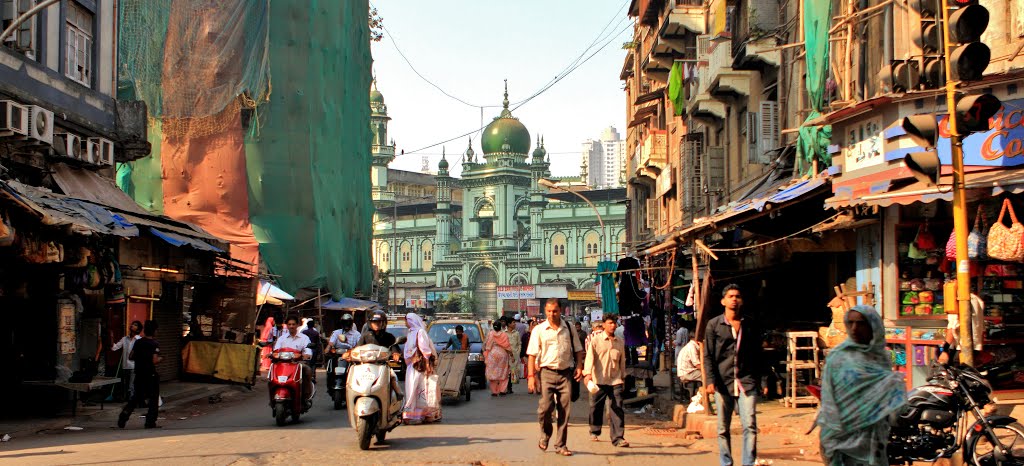
Mumbai Street Scene

For years, I have been fascinated with India in a way I have not been with any other Asian locale. Is it possible that I would ever go there on a vacation? There are a number of factors pro and con:

PRO

  • I have a good friend—Mohan—in Chennai (formerly known as Madras).
  • I love reading about India. One of my favorite authors is the Tamil R. K. Narayan who wrotre a series of novels about a mythical town called Malgudi. Also, I have just finished Paul Theroux’s The Elephanta Suite, which I enjoyed.
  • English would probably take me further in India than in any other Asian destination.
  • Indian curries, especially vegetarian curries, are one of my favorite cuisines.

CON

  • What frightens me about India is the same thing I hate in Los Angeles: Unrelenting heat. I would have to time my visit carefully so I’m not stuck there just before the monsoons arrive.
  • I would probably not enjoy spending much time in India’s large, crowded cities, such as Mumbai, Kolkata, or Chennai.
  • One of my friends from Dartmouth College, also, like me, from Cleveland, died in India a few years after graduation of some gastric disturbance. Because of the state of my health, I would be afraid of contracting food poisoning.

There you have it: A few random observations of what goes through my mind when I consider going to India.

Portrait of a Sucker

Scene in the Crafts Market, Otavalo, Ecuador

There is nothing quite like the crafts market of a Latin American city like Chichicastenano, Guatemala; Otavalo, Ecuador; or Cusco, Peru. One wonders down narrow ways awash with color and aglitter with native ingenuity. There are times when I felt bad for not buying far more handicrafts than I could reasonably be expected to carry—especially the textiles. What I do buy is usually small enough to fit into the single bag with which I travel.

I remember the first time I felt this way. I was in San Cristóbal de las Casas in Chiapas, Mexico. It was December 1979, and I was fascinated by the Highland Maya textiles. It was then that a little Chamula girl, no older than eight or nine, sold me a little doll in native costume that she had made herself (or so she said). As she was describing it in her Highland Mayan dialect of which I knew not a single word, and stroking it as if it were something rare and magical, my heart melted and I bought the doll. I still have it on one of my bookshelves, resting against the Latin American literature section.

At some point, I’ll take a picture of it so that you can all see what I sucker I am. I suppose it is better than being heartless.

San Pedro La Laguna

San Pedro La Laguna on the Shore of Lago de Atitlán

When I visit Lago de Atitlán in Guatemala, I plan to stay at San Pedro La Laguna rather than Santiago Atitlán. There is more to see and do in San Pedro, and I can always take a lancha (covered motorboat) across an inlet of the lake to Santiago Atitlán. It would make a nice day trip from San Pedro. While there, I can visit the Maya god Maximón and make an offering to him for a safe trip, and I could visit the weaving cooperative.

Why San Pedro? It seems there are more places to stay. The town has something of a reputation as a party town for backpackers—and that aspect of the town is one I wish to avoid at all cost. When I travel, I like to sit down and read my Kindle—not listen to an international crowd of juveniles who have had too much aguardiente to drink. In fact, I generally prefer to avoid places where backpackers congregate. I guess this is all part of the “will you rotten kids get off my lawn” aspect of aging.


Old Man …

… Who Doesn’t Realize He’s Getting Old

Unless one has children of one’s own, and if one is in reasonable health, one doesn’t really know one is getting old. Yesterday, my friend Bill Korn told me his own interpretation of my posting from a couple days ago, I Don’t Feel at Home Here, Either. The young, when they acknowledge my existence at all, seem surprised to see such a spry oldster doing approved things. Several weeks ago, I was about to enter a Trader Joe’s market when a younger woman flashed a delighted look at me, as if here was a decrepit old man doing the right thing. What was my reaction? I gave her the stink-eye, at maximum volume. She looked infuriated, as if I had stomped on her Yorkie or slipped her smart phone into a sewer grating.

What my reaction was saying was: “Don’t patronize me, you stupid beeyotch! I do not require your approval.”

But then, that’s me all over. I don’t cotton to strangers. When I am traveling in a foreign country and am approached by American tourists, I answer back in Hungarian. I think I’m taking after my Great Grandmother Lidia Toth (born in 1876), who could make a longshoreman blush with her swearing. She was one of those, “Who’re you looking at, Punk?” type of people, except her language was ever so much more colorful.

As a result, I am not likely to initiate contacts with strangers—with several exceptions. When I travel, I try hard to communicate with the locals and generally get good responses. I do not … ever … make … friends …. with …. American … tourists. Does that mean that I am anti-American? Not really, I just find it’s a waste of time. I even go out of my way to help foreign tourists who are obviously stuck in Los Angeles, which is not the easiest place in the world to get around in.


Five Epiphanies

Ushuaia from the Air

It was James Joyce who, in Stephen Hero and The Portrait of the Artist as a Young Man, coined the term epiphanies to refer to moments of clarity and sudden recognition of another perspective. There were several points in my life in which I had a shock of recognition and that I looked back on as pivotal points in my development as a person. In this post, I recognize five such epiphanies that occurred in my life:

Dartmouth College 1962

It was a bad year. It looked as if my parents were headed for divorce, and rare was the day when there were no mutual recriminations. I was delighted that I was accepted at Dartmouth. When, during the summer, my future roommate’s parents drove me up to the campus, I fell in love with the place, deciding that here was a place I could heal.

Cleveland 1966

I was released from Fairview General Hospital after brain surgery to remove a pituitary tumor. As I was sitting as a passenger in our family automobile, I saw the people in the street almost as angelic beings. It was only after the operation that I was told how serious the operation was; and that my life was despaired of. I thought momentarily of Miranda’s lines in Shakespeare’s The Tempest:

Oh, wonder!
How many goodly creatures are there here!
How beauteous mankind is! O brave new world,
That has such people in ’t!
Uxmal 1975
On my first trip outside the United States, I arranged with Turistica Yucateca to have a driver take me to the Maya ruins at Uxmal in the Puuc Hills. As his car pulled up to the magnificent Templo del Adivino, he made a sign of the cross. I felt that I was on holy ground.
Death Valley 1979
It was my first camping trip and my first real introduction to the desert. We were at Furnace Creek, with desolation all around us. Just after sunrise, birds of every variety flocked to the campground and woke us up.
Ushuaia 2006
It was my first trip to South America. As our plane descended to Ushuaia, the southernmost city in the world, only 600 miles from Antarctica, I felt a shiver of excitement. Never mind that I was to break my shoulder in a blizzard within a few days, Ushuaia has always stood for a kind of subarctic wilderness. I returned in 2011 with Martine and would gladly return again.


The Travel Cure

Nariz del Diablo Train in Sibambe, Ecuador

I have a simple plan to cure the ignorance of most Americans who think themselves to be proud because they have lived in the same shithole all their lives. The idea came to me from reading Mark Twain, who wrote in The Innocents Abroad (1868):

Travel is fatal to prejudice, bigotry and narrow-mindedness and many of our people need it sorely on those accounts. Broad, wholesome, charitable views of men and things cannot be acquired by vegetating in one little corner of the earth all one’s lifetime.

Lest we all become too place-proud, we need to send our people to travel in the so-called Third World. And I don’t mean First Class seating on jet aircraft and staying at luxury hotels and ordering room service. I mean forcing them to take buses and trains, struggle with the language, and eat what the ordinary people eat. In every way, such an experience will open their eyes and, when they return to East Jesus, Arkansas, they will be better people for it.

And no, it isn’t an ordeal—not by a long shot! When I first started to travel, I had experience of only four places: Cleveland, Ohio (most of my life to that point); Hanover, New Hampshire (my 4 years at Dartmouth); Los Angeles (eight years at UCLA and after); and Lake Worth Florida (just a few weeks, not counting my infancy). Growing up in the Midwest, we never went anywhere for any length of time. My first whiff of Yucatán not only opened my eyes, my nasal passages, and my taste buds, but I felt I was at the beginning of a more wondrous existence.

Work kept me from traveling as much as I wanted to, but I traveled enough to have many happy memories.


Antigua Guatemala

Arco de Santa Catalina and Agua Volcano in Background

If asked what is the capital of Guatemala, it is best to turn your answer into another question: At what point in history? Today, Guatemala City is the capital of Guatemala. In 1524, Pedro de Alvarado founded the Ciudad de Santiago de los Caballeros de Goathemalon [sic], near the present town of Iximche. After a Kaqchikel Maya uprising in 1527, the capital was moved to Ciudad Vieja and retained the same name as the original. In 1541, that city was destroyed by a gigantic mudflow from the Volcano de Agua (illustrated above). Two years later, the capital was moved five miles to the Panchoy Valley to the present city of Antigua Guatemala.

In the 18th century, earthquakes and volcanic eruptions caused one final move, to the capital’s present location. That does not mean that the city of Antigua Guatemala, despite all the ruined churches, is not one of the most popular tourist destinations in the country. In fact, when I go to Guatemala for my vacation, I will take a shuttle directly from the airport to Antigua, about 45 minutes away.

Guatemala City has a reputation of being a big, ugly city with a couple of good museums, but otherwise devoid of major tourist attractions. So, I will base myself in Antigua.

Intact Façade of Nuestra Señora de Merced, Otherwise in Ruins

With Antigua serving as a kind of tourist ghetto, there are a multitude of private shuttles to major tourist destinations—all originating in Antigua. One can treat the town as if it were the capital except for one thing: The airport is in Guatemala City. As Guate, as it is called, is the largest city in Central America, I think it would be more restful to base myself in a well-connected town with a population of only about 50,000.