For Your Next Vacation …

Book Your Interstellar Trip Now!

Book Your Interstellar Trip Now!

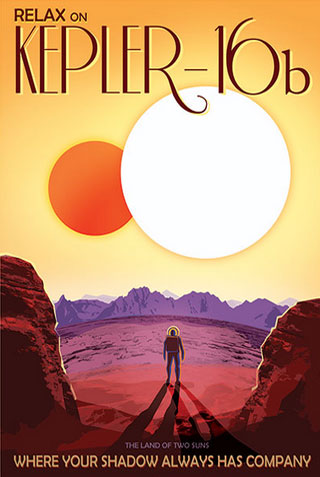
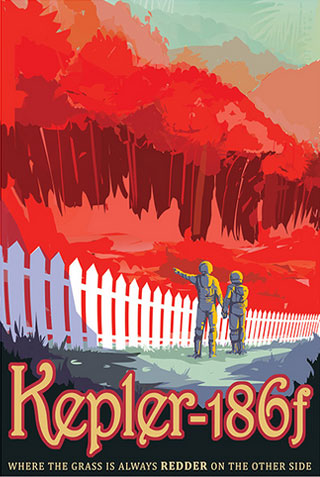
The Jet Propulsion Laboratory (JPL) has released travel posters for earth and other interplanetary and even interstellar destinations. Kepler-186f excels with its red grass … and I rather like that white picket fence. Then, too, there’s Kepler-16b, “where your shadow always has company.”

Then, Too, There’s Kepler-16b

Then, Too, There’s Kepler-16b

I think it’s probably premature to sell tickets for space travel to other solar systems and galaxies, but it might be a good destination for Republicans and other disaffected Americans, one way of course.

Costa, Sierra y Selva II

Physical Map of Ecuador

Physical Map of Ecuador

This is a kind of continuation of a blog I wrote a couple of years ago about Peru. In so many ways, Ecuador is a continuation of Peru—in terms of physical geography. Even a cursory glance at the above map shows that there are three distinctive zones vertically dividing the country:

  • Costa. This is the Pacific coast. While in Peru, much of the coast is a rainless desert, much of the Ecuadorian equivalent is a mangrove forest (I suspect perhaps mangrove swamp is a more appropriate term.). Guayaquil, the country’s largest city, is on the coast.
  • Sierra. The brown and purple zone occupying the center are the mountains and volcanoes of the Andes. This is where my brother and I will travel. The altitude ranges from 8,000 to 15,000 feet. The capital, Quito, is in this zone.
  • Selva. The pale green zone to the right of the Andes consists of jungle and a number of tributaries feeding the Amazon. Thanks the the mosquito population and the prevalence of Zika, I have no intention of seeing the Oriente region, as it is frequently called.

When I was in Peru, I spent a good part of the trip along or near the coast—especially since I fell in love with the raffish charms of Lima and the beauty of Arequipa and its volcanoes.


Not Quite Inca, Yet Very Inca-Like

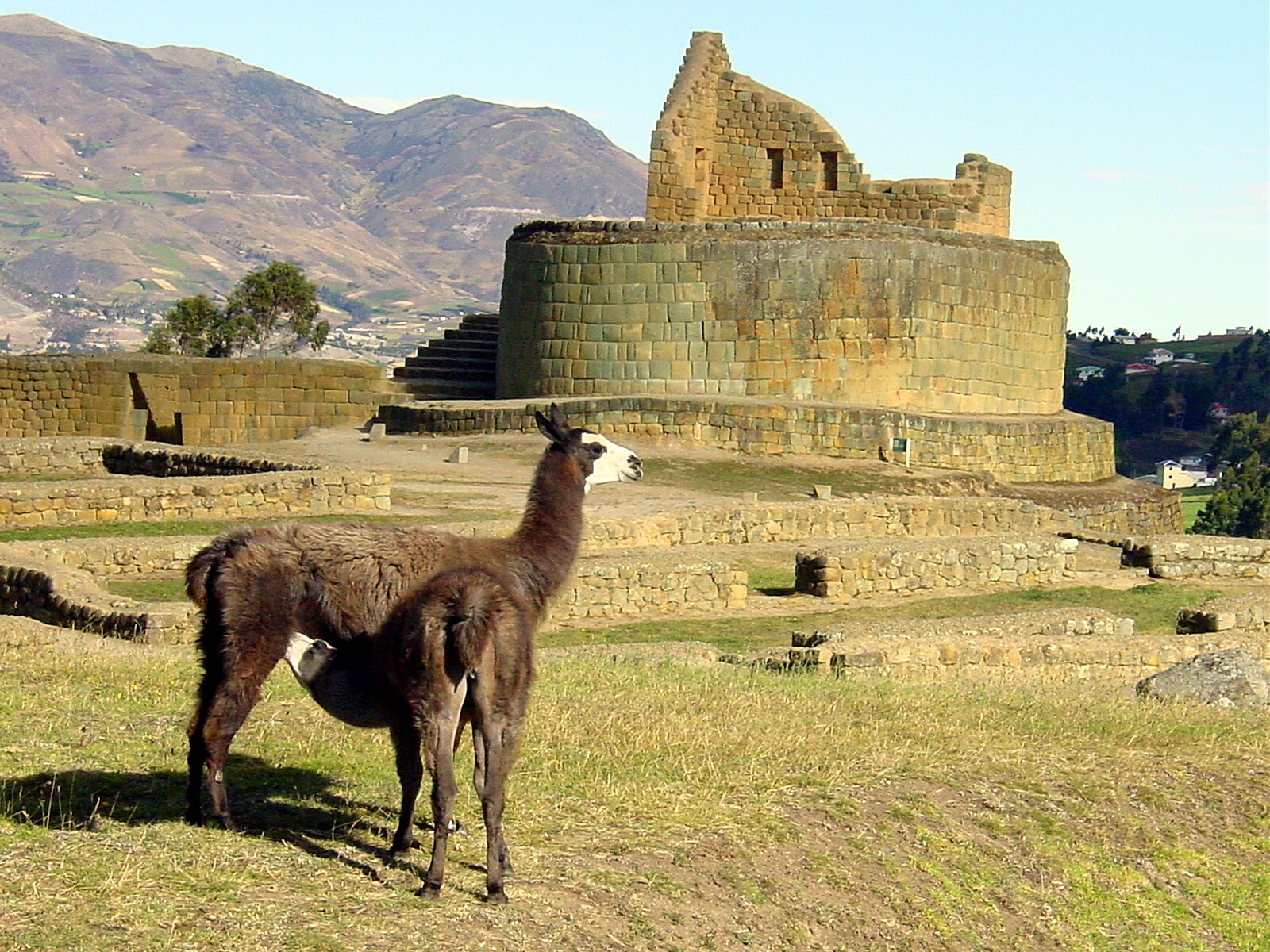
Inca Ruins at Ingapirca, Ecuador

Inca Ruins at Ingapirca, Ecuador

Are the indigenous peoples of Ecuador Incas? Well, yes and no.

Although the tale of Juan Pizarro’s conquest of the Incas is set partly in Ecuador—Atahualpa, “the” Inca ruled from Quito and was engaged in a civil war with Huáscar, his half brother in Cusco—the peoples of Ecuador were mostly conquered by the Incas.

According to historian and ethnologist Frank Salomon, the non-Inca peoples suffered a fate similar to the Incas, whereby they lost much of their identity:

From the Cañari side, the attack on Cañari ancestors [by way of grave robbing] may have set into motion a process that the Inca state would not have allowed even if Cañaris had desired it, namely, the retrospective grafting of Cañari genealogy onto Inca descent. In order to understand how it occurred, one must remember that in Quechua [the common linguistic group of both peoples] thinking a dead person is considered to be present and active so long as he or she has physical existence. When the Cañari dead were taken from their tombs and exposed, broken and impoverished, they ceased to be rich, honored, and potent ancestors, and became dishonored, defeated, and disinherited ones. Neglected pre-Columbian ancestor mummies (gentiles) today form a class of hungry ghosts who pervasively haunt Quechua folklore in various regions. When the Spanish vandalized the Cañari dead and disposed of their bodies as garbage, they created a new common condition for Inca and non-Inca peoples alike, that of descendants of destroyed persons.

So the Cañari and some other conquered Ecuadorian people share a common fate with their Inca conquerors. Both are descended from “discarded” ancestors, so they feel a bond of sympathy with the Incas, who were primarily Peruvian.

Pining for the Andes

There Is No Place Like the Andes

There Is No Place Quite Like the Andes

In less than a month’s time, my brother Dan and I will be landing in Quito, Ecuador. After a few days in the capital, we will rent a car and take to the Pan-American Highway north to Otavalo and south to Cuenca. The photo above is from my 2014 trip to Peru and taken in the town of Chivay, near Colca Canyon.

Unlike most of my solo trips, I am not planning all accommodations in advance. For one thing, we will have a car. For another, Dan always thinks I am the opposite of spontaneous. That’s all right with me, because there are compensations being with my brother. Anyhow, he will leave after two weeks, and I have a whole week to be unspontaneous in my own inimitable way.

I see Ecuador as being very similar to Peru, except not quite as high up and therefore not quite so cold. At Chivay and Patapampa, I was close to 15,000 feet (4,600 meters). When I got out of the van, I felt like pitching forward and planting my face on the rocky ground. Fortunately, our guide Luis grabbed me by the shoulder and urged me to remain vertical.

Currently, I am reading Cañar: A Year in the Highlands of Ecuador by Judy Blankenship. Tomorrow, at the L.A. Central Library, I will be looking for an Ecuadoran novel called Huasipungo by Jorge Icaza Coronel. As the departure day approaches, I get more excited.


Do You Ever Want to Live There?

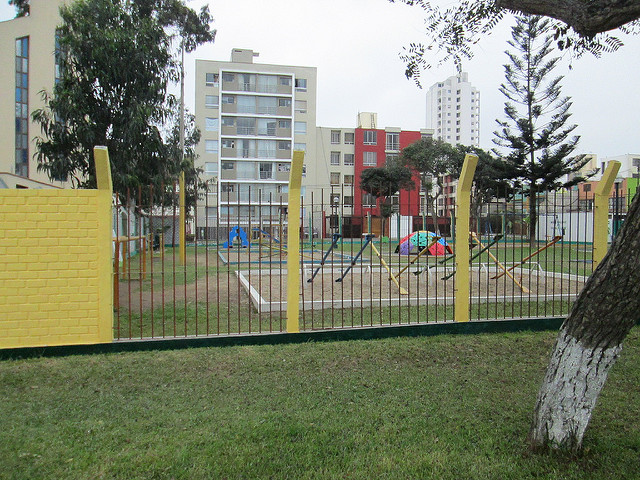
Parque El Carmen in Lima’s Pueblo Libre Municipalidad

Parque El Carmen in Lima’s Pueblo Libre Municipalidad

If you’ve read my blog for any length of time, you know that I love to travel. The question that many people have asked me is, “Yes, but wouldn’t you like to live there?”

The answer is very simply no. It’s not because I have any great hopes for the United States, but because I know that many of the places I love to visit have or have had insurmountable difficulties which make me think twice.

For instance, I love Iceland; but I dread the idea of six dark months out of every year in which the weak sun comes up for only a few minutes in the middle of the afternoon. And even though virtually everyone speaks English, I would probably have difficulties getting my kennitala (registration number), because officialdom likes to do its business in Icelandic.

Of all the countries I have visited, I would probably like Argentina the best. Even though my Spanish is adequate for travel, however, it would not fare too well dealing with the authorities in matters relating to housing and taxation. Also, all the South American countries I like (including Peru, Uruguay, and Chile) have had problems in the not too distant past with rightist dictators and left wing insurgencies.

We’re not quite there in the U.S.—yet!

As for Hungary, Slovakia, France, England, Scotland, Belgium, and the Netherlands—they’re nice, but I have a feeling they are just at the point of entering a bad time, what with the hoards invading from the Middle East and Africa. I just don’t see a good path around the problems they are just beginning to face.

There’s always Canada, I suppose, and I really like the Canadian people, even the Québecois, but I think I’ll stick it out in the U. S. of A. for the time being.


Ecuador in Los Angeles

Flag at 18th Annual Taste of Ecuador Food festival

Flag at 18th Annual Taste of Ecuador Food Festival

I noticed that there was going to be an 18th Annual Taste of Ecuador Food Festival downtown today, so after I walked uphill on the treadmill for an hour at the gym, I grabbed the Santa Monica #10 Freeway Flyer Bus to Union Station. I had attended one of these events two or three years ago, so I knew pretty much what was going to be there.

According to the organizers, there are some 5,000 Ecuadorians in Los Angeles.

I ate a sanguche de chango (pork sandwich on a bolillo roll) that tasted pretty good, and washed it down with a licuada de sandía (watermelon drink).

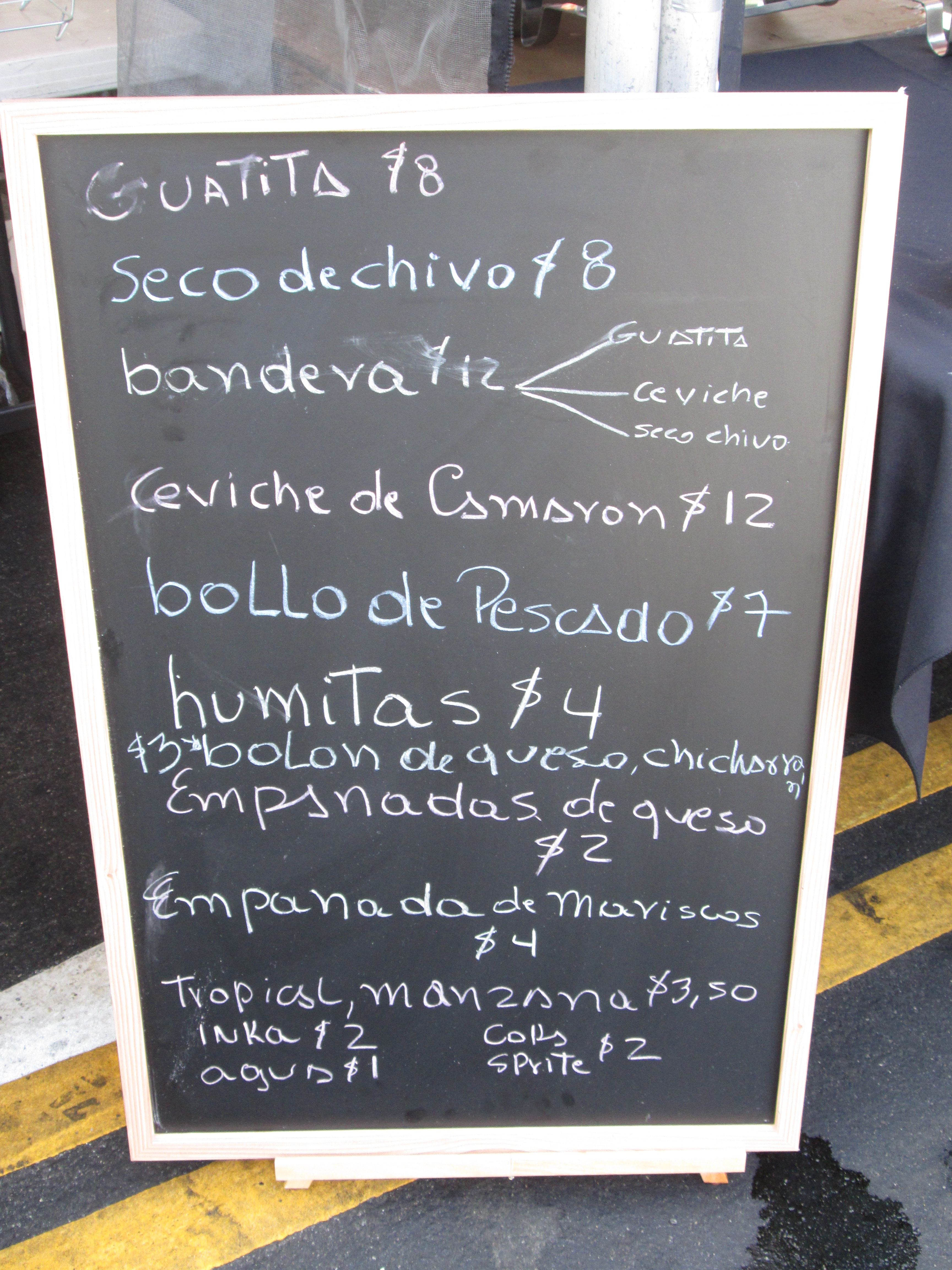
Below is a typical menu from one of the stands:


Ecuadorian Menu at Food Stall

Ecuadorian Menu at Food Stall

Notice the reference to Inka Cola at the bottom of the menu. It is the most popular soda pop of Peru and Ecuador, though it tastes sort of like Mountain Dew on steroids.

On sale at a couple stands were Ecuadorian soccer football jerseys with the national colors.

It wasn’t much, but it’s a reminder that Dan and I are heading down to El Mitad del Mundo in a couple of months.

I Am Disappoint

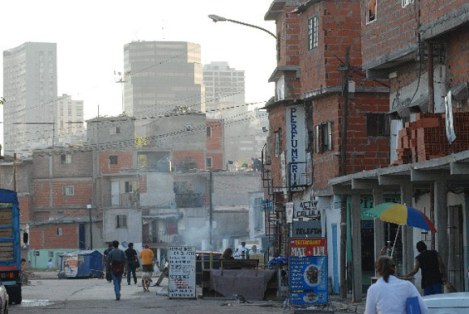
Poverty Certainly Abounds in Buenos Aires’s Villa 31

Poverty Certainly Abounds in Buenos Aires’s Villa 31

Yesterday, I did a little bit of research on travel in Ecuador on Lonely Planet’s Thorn Tree website. There I encountered the following complaint from a user called nemo_dat:

I’m a month into a two-month stint in Ecuador (enjoying a nice break between assignments). It’s my first time in South America and unfortunately I’ve been disappointed so far. I need to decide whether to stick it out in EC [Ecuador], go elsewhere in South or Central America, or perhaps cut the trip short and return home.

I’m having a hard time dealing with the air pollution, poverty, and sprawl. I’ve spent the past month in Quito and Cuenca. I left Quito because of the air pollution. I’m happier in Cuenca but was really looking forward to taking a scenic drive through the countryside today to see some unspoiled wilderness and breath fresh air. The scenery was nice in parts but my clothes reek of exhaust after spending the day driving. And while I saw some nice scenery I also saw some truly horrid buildings amidst the countryside.

I’ve been to several less-wealthy areas of the developed world, and while those places can be rough around the edges, I was easily able to find scenery and architecture to more than compensate. I just haven’t had the same “wow factor” in Ecuador.

I chose the Andes of Ecuador because I like mountain scenery and I’m not a fan of heat or humidity (not a beach person). But this isn’t working out. Are there places in Ecuador or elsewhere in C or S [Central or South] America I should consider?

I feel like an ass for saying it, but I think somewhere more “European” might be more in line with my preferences (I know that probably brings to mind Argentina).

Any advice on how to proceed is greatly appreciated.

Actually, I am rather sympathetic with nemo_dat: The fact of the matter is that some people are not cut out for travel in developing or undeveloped countries. Their curiosity is trumped by the discomfort factor, which can at times be considerable.

I had the misfortune to visit Yucatán in the early 1980s during a major heat wave and came down with some kind of tropical illness. I went to the front desk of the Hotel Cayre and asked them to send a recommended doctor, which they did—and promptly. He gave me an injection and wrote out a prescription, which I had filled out at a local farmacia. It did lead me to change my plans. I grabbed a flight to Tuxtla Gutiérrez in the State of Chiapas, high up in the Sierra Madres, and took a bus to San Cristóbal de las Casas, where it was reasonably cool at some 5,000 feet of altitude.

The complaint of nemo_dat is more about pollution and  a certain ratty quality prevalent in many if not most Latin American cities. Martine, for instance, complains bitterly about the broken sidewalks in Argentina and Mexico, which forced her to watch her step at all times. (In 1979, while watching for a break in the traffic at Insurgentes and the Reforma in Mexico City, I fell into a 10-foot ditch; so I can understand her.)

If that sort of thing is a problem, I suggest sticking to the mountains of the First World, like the U.S. or Canadian Rockies, the Swiss or Tyrolean Alps, or perhaps Australia. You’ll find a more “paradise-like” (translated: Disneyfied) environment there.

What you won’t run into there is the poor Aymara woman I met in Puno, Peru—now there’s a ratty city!—who was dragging around her home made knitwear. It was an icy morning at 12,500 feet altitude and I badly needed a scarf; so I bought one from her. She was so grateful that tears came to her eyes, and she stroked my arms as if I were a favorite family member.

 

On Guidebooks

Occasionally Useful, But Not as a Crutch

Occasionally Useful, But Not as a Crutch

In my forty years of travel, I have run the gamut from slavish reliance on the accommodation and restaurant information in guidebooks to merely supplemental use. When I first went to Yucatán in 1975 and Britain in 1976, I was frankly afraid to go to a place that was not blessed by the footsteps of thousands of tourists before me. Then, little by little, I began to take chances. When I discovered that taking pot luck was no worse than strict adherence—which, in any case, was impossible in those early pre-Internet days when one took one’s chances. Also, I found myself meeting more interesting people.

Now, when I go to South America, I’ll take a Lonely Planet guidebook such as the one illustrated above with me—but mostly for the maps. One cannot always get to the tourist office in time for their freebie maps, and sometimes those freebie maps are not very good.

For accommodations, I now use TripAdvisor.Com more frequently (and I review for them as well). Even the reviews in TripAdvisor have to be taken with a grain of salt, as the world is full of whiners and kvetchers. As for restaurants, I have a number of rules of thumb that have never let me down:

  • Don’t go where all the tourists go, especially if they are backpackers
  • Better restaurants are usually on side streets a bit off the main beaten path
  • If the menu is not in the language of the country you’re in, walk out
  • The best restaurants are usually fairly crowded
  • Eschew all signs of snobbery

I suppose if I were just starting out on my travels, I would probably clutch my guidebook as if it were a life preserver in a storm. But I now know that it’s best to travel by what I call Mexican Rules: Be alert, be willing to switch gears at a moment’s notice, be skeptical.

When my brother and I went to Villahermosa in 1979, we couldn’t find any decent places to stay, because they were all block-booked by oil executives and workers. So we stayed in a miserable little Casa de Hospedaje (which my brother pronounced as “Casa de Hopes-You-Die”). Then we spent hours looking for the bus station, which was not where the guidebook said it was. Finally, we just called a taxi and had it drive us to the brand new bus station on the outskirts of time. Finally, the dinner we had was wretched: My brother’s shrimp had tar on it.

Dan and I enjoyed that trip anyhow: We had a lot of war stories associated with it.


Serendipity: The Solitary Traveler

London’s Vauxhall Gardens in the 18th Century

London’s Vauxhall Gardens in the 18th Century

Here, straight from the 17th Century, is what I feel like during my travel. The source is Sir Richard Steele’s essay “A Ramble from Richmond to London”:

It is an inexpressible pleasure to know a little of the world and be of no character or significance in it.

To be ever unconcerned, and ever looking on new objects with an endless curiosity, is a delight known only to those who are turned for speculation: nay, they who enjoy it must value things only as they are the objects of speculation, without drawing any worldly advantage to themselves from them, but just as they are what contribute to their amusement, or the improvement of the mind.

Reykjavík

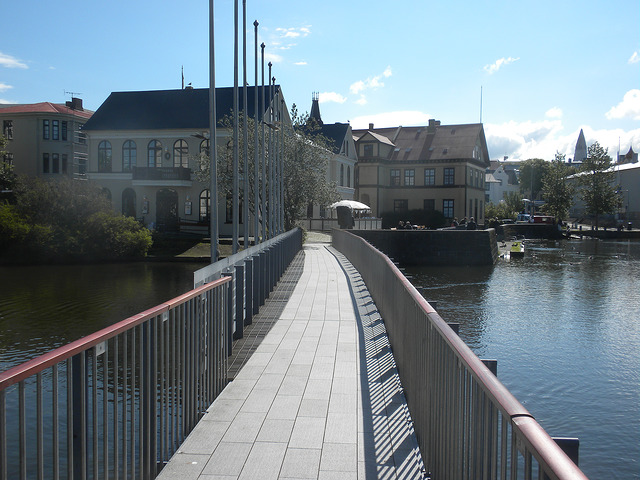
“Downtown” Reykjavík Scene

“Downtown” Reykjavík Scene

As I write this, my friends Bob Alonzi and Suzanne Holland are spending a few days touring in Iceland. And, as for me, I cannot think about Iceland without wishing to return—and soon. There is something about a brave little country, whose total population is some 330,000, which has had such an outsize influence on world history:

  • An Icelander, Leif Ericsson, landed in and colonized the New World some 500 years before Columbus.
  • The Icelandic sagas were probably the greatest European literature of the time, with the exception of the Italian Dante Alighieri.
  • The “Cod Wars” against Britain in the 1970s led to Iceland winning, without a single bullet fired. Subsequently, most countries joined Iceland in declaring a 200-mile coastal sovereignty limit.
  • The Iceland soccer football team defeated powerful England 2-1 (before losing honorably to France).

One of the things that keeps me going is my love for so many lesser-known parts of the world, parts that are wild and fascinating, as Iceland surely is.