Ecuador in Los Angeles

Flag at 18th Annual Taste of Ecuador Food festival

Flag at 18th Annual Taste of Ecuador Food Festival

I noticed that there was going to be an 18th Annual Taste of Ecuador Food Festival downtown today, so after I walked uphill on the treadmill for an hour at the gym, I grabbed the Santa Monica #10 Freeway Flyer Bus to Union Station. I had attended one of these events two or three years ago, so I knew pretty much what was going to be there.

According to the organizers, there are some 5,000 Ecuadorians in Los Angeles.

I ate a sanguche de chango (pork sandwich on a bolillo roll) that tasted pretty good, and washed it down with a licuada de sandía (watermelon drink).

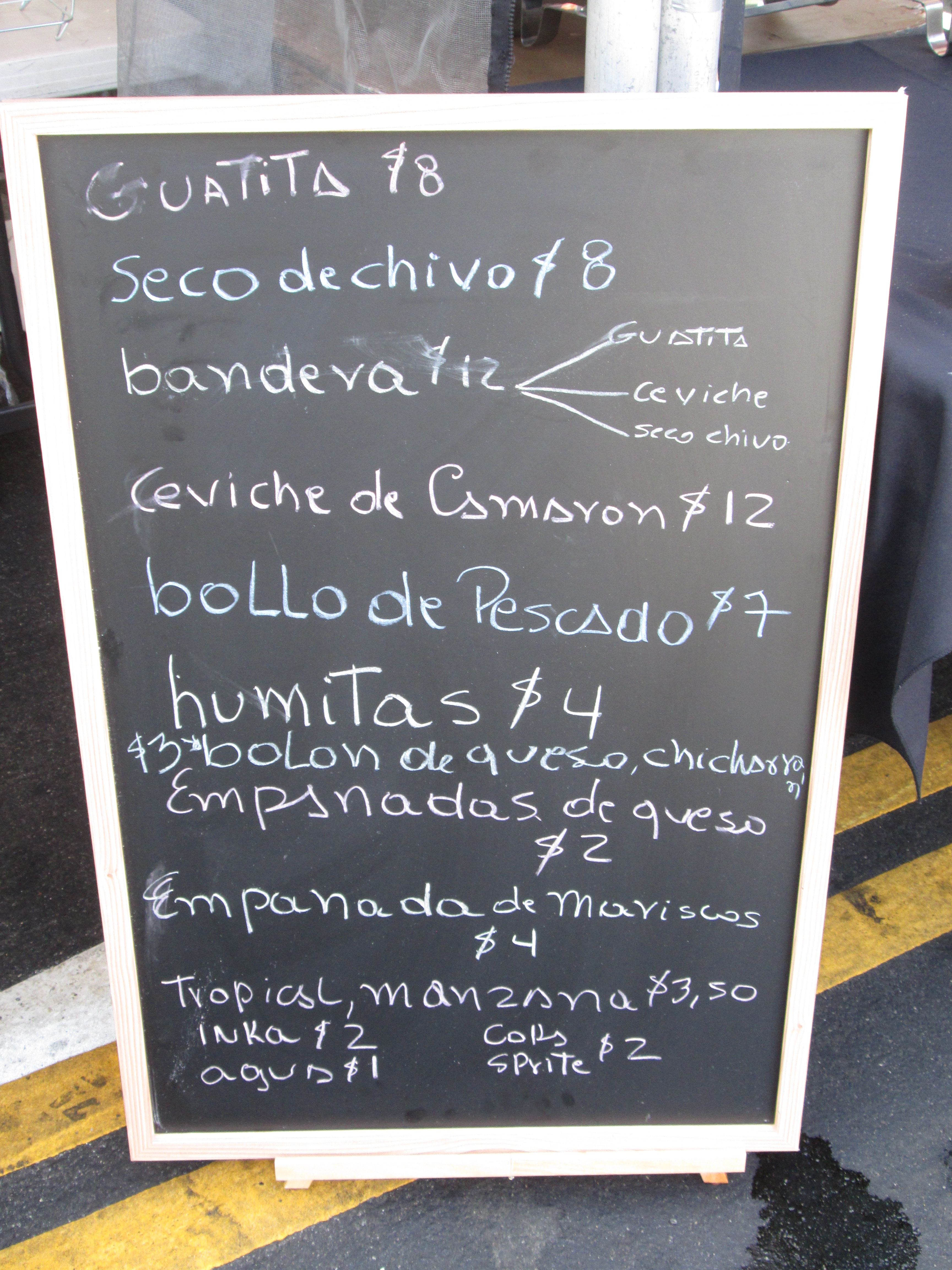
Below is a typical menu from one of the stands:


Ecuadorian Menu at Food Stall

Ecuadorian Menu at Food Stall

Notice the reference to Inka Cola at the bottom of the menu. It is the most popular soda pop of Peru and Ecuador, though it tastes sort of like Mountain Dew on steroids.

On sale at a couple stands were Ecuadorian soccer football jerseys with the national colors.

It wasn’t much, but it’s a reminder that Dan and I are heading down to El Mitad del Mundo in a couple of months.

I Am Disappoint

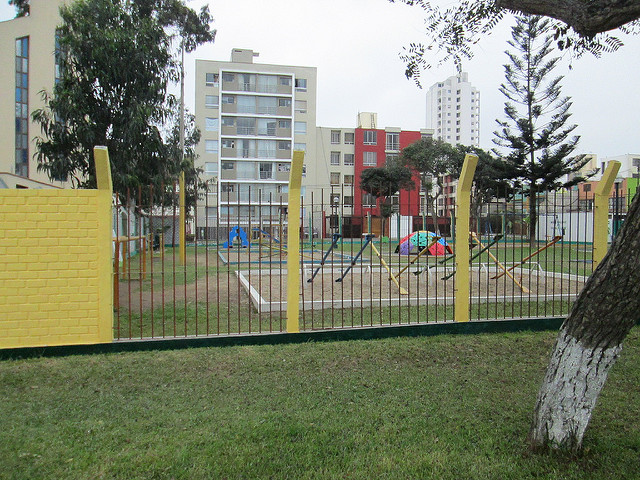
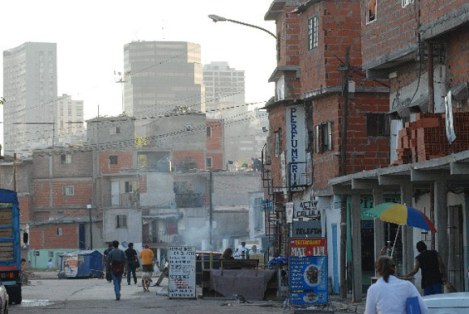
Poverty Certainly Abounds in Buenos Aires’s Villa 31

Poverty Certainly Abounds in Buenos Aires’s Villa 31

Yesterday, I did a little bit of research on travel in Ecuador on Lonely Planet’s Thorn Tree website. There I encountered the following complaint from a user called nemo_dat:

I’m a month into a two-month stint in Ecuador (enjoying a nice break between assignments). It’s my first time in South America and unfortunately I’ve been disappointed so far. I need to decide whether to stick it out in EC [Ecuador], go elsewhere in South or Central America, or perhaps cut the trip short and return home.

I’m having a hard time dealing with the air pollution, poverty, and sprawl. I’ve spent the past month in Quito and Cuenca. I left Quito because of the air pollution. I’m happier in Cuenca but was really looking forward to taking a scenic drive through the countryside today to see some unspoiled wilderness and breath fresh air. The scenery was nice in parts but my clothes reek of exhaust after spending the day driving. And while I saw some nice scenery I also saw some truly horrid buildings amidst the countryside.

I’ve been to several less-wealthy areas of the developed world, and while those places can be rough around the edges, I was easily able to find scenery and architecture to more than compensate. I just haven’t had the same “wow factor” in Ecuador.

I chose the Andes of Ecuador because I like mountain scenery and I’m not a fan of heat or humidity (not a beach person). But this isn’t working out. Are there places in Ecuador or elsewhere in C or S [Central or South] America I should consider?

I feel like an ass for saying it, but I think somewhere more “European” might be more in line with my preferences (I know that probably brings to mind Argentina).

Any advice on how to proceed is greatly appreciated.

Actually, I am rather sympathetic with nemo_dat: The fact of the matter is that some people are not cut out for travel in developing or undeveloped countries. Their curiosity is trumped by the discomfort factor, which can at times be considerable.

I had the misfortune to visit Yucatán in the early 1980s during a major heat wave and came down with some kind of tropical illness. I went to the front desk of the Hotel Cayre and asked them to send a recommended doctor, which they did—and promptly. He gave me an injection and wrote out a prescription, which I had filled out at a local farmacia. It did lead me to change my plans. I grabbed a flight to Tuxtla Gutiérrez in the State of Chiapas, high up in the Sierra Madres, and took a bus to San Cristóbal de las Casas, where it was reasonably cool at some 5,000 feet of altitude.

The complaint of nemo_dat is more about pollution and  a certain ratty quality prevalent in many if not most Latin American cities. Martine, for instance, complains bitterly about the broken sidewalks in Argentina and Mexico, which forced her to watch her step at all times. (In 1979, while watching for a break in the traffic at Insurgentes and the Reforma in Mexico City, I fell into a 10-foot ditch; so I can understand her.)

If that sort of thing is a problem, I suggest sticking to the mountains of the First World, like the U.S. or Canadian Rockies, the Swiss or Tyrolean Alps, or perhaps Australia. You’ll find a more “paradise-like” (translated: Disneyfied) environment there.

What you won’t run into there is the poor Aymara woman I met in Puno, Peru—now there’s a ratty city!—who was dragging around her home made knitwear. It was an icy morning at 12,500 feet altitude and I badly needed a scarf; so I bought one from her. She was so grateful that tears came to her eyes, and she stroked my arms as if I were a favorite family member.

 

On Guidebooks

Occasionally Useful, But Not as a Crutch

Occasionally Useful, But Not as a Crutch

In my forty years of travel, I have run the gamut from slavish reliance on the accommodation and restaurant information in guidebooks to merely supplemental use. When I first went to Yucatán in 1975 and Britain in 1976, I was frankly afraid to go to a place that was not blessed by the footsteps of thousands of tourists before me. Then, little by little, I began to take chances. When I discovered that taking pot luck was no worse than strict adherence—which, in any case, was impossible in those early pre-Internet days when one took one’s chances. Also, I found myself meeting more interesting people.

Now, when I go to South America, I’ll take a Lonely Planet guidebook such as the one illustrated above with me—but mostly for the maps. One cannot always get to the tourist office in time for their freebie maps, and sometimes those freebie maps are not very good.

For accommodations, I now use TripAdvisor.Com more frequently (and I review for them as well). Even the reviews in TripAdvisor have to be taken with a grain of salt, as the world is full of whiners and kvetchers. As for restaurants, I have a number of rules of thumb that have never let me down:

  • Don’t go where all the tourists go, especially if they are backpackers
  • Better restaurants are usually on side streets a bit off the main beaten path
  • If the menu is not in the language of the country you’re in, walk out
  • The best restaurants are usually fairly crowded
  • Eschew all signs of snobbery

I suppose if I were just starting out on my travels, I would probably clutch my guidebook as if it were a life preserver in a storm. But I now know that it’s best to travel by what I call Mexican Rules: Be alert, be willing to switch gears at a moment’s notice, be skeptical.

When my brother and I went to Villahermosa in 1979, we couldn’t find any decent places to stay, because they were all block-booked by oil executives and workers. So we stayed in a miserable little Casa de Hospedaje (which my brother pronounced as “Casa de Hopes-You-Die”). Then we spent hours looking for the bus station, which was not where the guidebook said it was. Finally, we just called a taxi and had it drive us to the brand new bus station on the outskirts of time. Finally, the dinner we had was wretched: My brother’s shrimp had tar on it.

Dan and I enjoyed that trip anyhow: We had a lot of war stories associated with it.


Serendipity: The Solitary Traveler

London’s Vauxhall Gardens in the 18th Century

London’s Vauxhall Gardens in the 18th Century

Here, straight from the 17th Century, is what I feel like during my travel. The source is Sir Richard Steele’s essay “A Ramble from Richmond to London”:

It is an inexpressible pleasure to know a little of the world and be of no character or significance in it.

To be ever unconcerned, and ever looking on new objects with an endless curiosity, is a delight known only to those who are turned for speculation: nay, they who enjoy it must value things only as they are the objects of speculation, without drawing any worldly advantage to themselves from them, but just as they are what contribute to their amusement, or the improvement of the mind.

Reykjavík

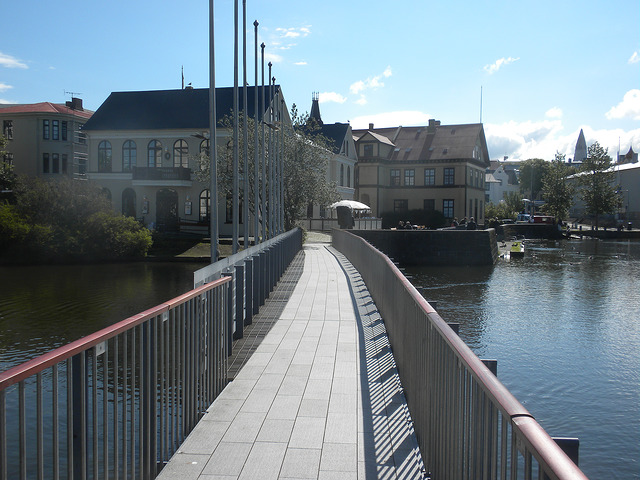
“Downtown” Reykjavík Scene

“Downtown” Reykjavík Scene

As I write this, my friends Bob Alonzi and Suzanne Holland are spending a few days touring in Iceland. And, as for me, I cannot think about Iceland without wishing to return—and soon. There is something about a brave little country, whose total population is some 330,000, which has had such an outsize influence on world history:

  • An Icelander, Leif Ericsson, landed in and colonized the New World some 500 years before Columbus.
  • The Icelandic sagas were probably the greatest European literature of the time, with the exception of the Italian Dante Alighieri.
  • The “Cod Wars” against Britain in the 1970s led to Iceland winning, without a single bullet fired. Subsequently, most countries joined Iceland in declaring a 200-mile coastal sovereignty limit.
  • The Iceland soccer football team defeated powerful England 2-1 (before losing honorably to France).

One of the things that keeps me going is my love for so many lesser-known parts of the world, parts that are wild and fascinating, as Iceland surely is.

Travelers, Wild and Tame

Freya Stark (1893-1993)

Freya Stark (1893-1993)

For over forty years (except for a brief interlude when she was married), Freya Stark spent some 40 years traveling by herself in the Middle East. I have just finished reading her first book, Baghdad Sketches (1932), consisting of columns written for the Baghdad Times plus some 8 pieces added later for the British edition.

I am amazed that she was able to not only survive traveling in a difficult part of the world roughly between 1928 and 1970, but she lived to the age of 100.

She is not the first to do so. Gertrude Bell (who died in Baghdad just a couple years before Freya arrived there), also covered much of the same ground. Still, I cannot imagine in this period of violent jihad and xenophobia that their travels could be duplicated without a military escort.

Freya had interesting attitudes about solitude and travel. On the former, she wrote that “solitude is the one deep necessity of the human spirit to which adequate recognition is never given in our codes. It is looked upon as a discipline or penance, but almost never as the indispensable, pleasant ingredient it is to ordinary life.” For the modern traveler, she felt with distaste that its purpose “is to give people a glimpse of the exotic places without the least bit of inconvenience to themselves.”

In Baghdad Sketches, she gives a picture of a much more diverse population than exists now in the era of ISIS/ISIL/Daesh. Stark frequently visited among the Kurds, Yezidis, Shi’as, and Eastern Christians living in Iraq during the 1930s.

Among her books that I have read with pleasure, in addition to Baghdad Sketches, are:

  • The Valleys of the Assassins and Other Persian Travels (1934)
  • The Southern Gates of Arabia: A Journey to the Hadhramaut (1938)
  • Alexander’s Path: From Caria to Cilicia (1958)—about Turkey

Many of her books are still in print.


I’m Not Finished with Argentina!

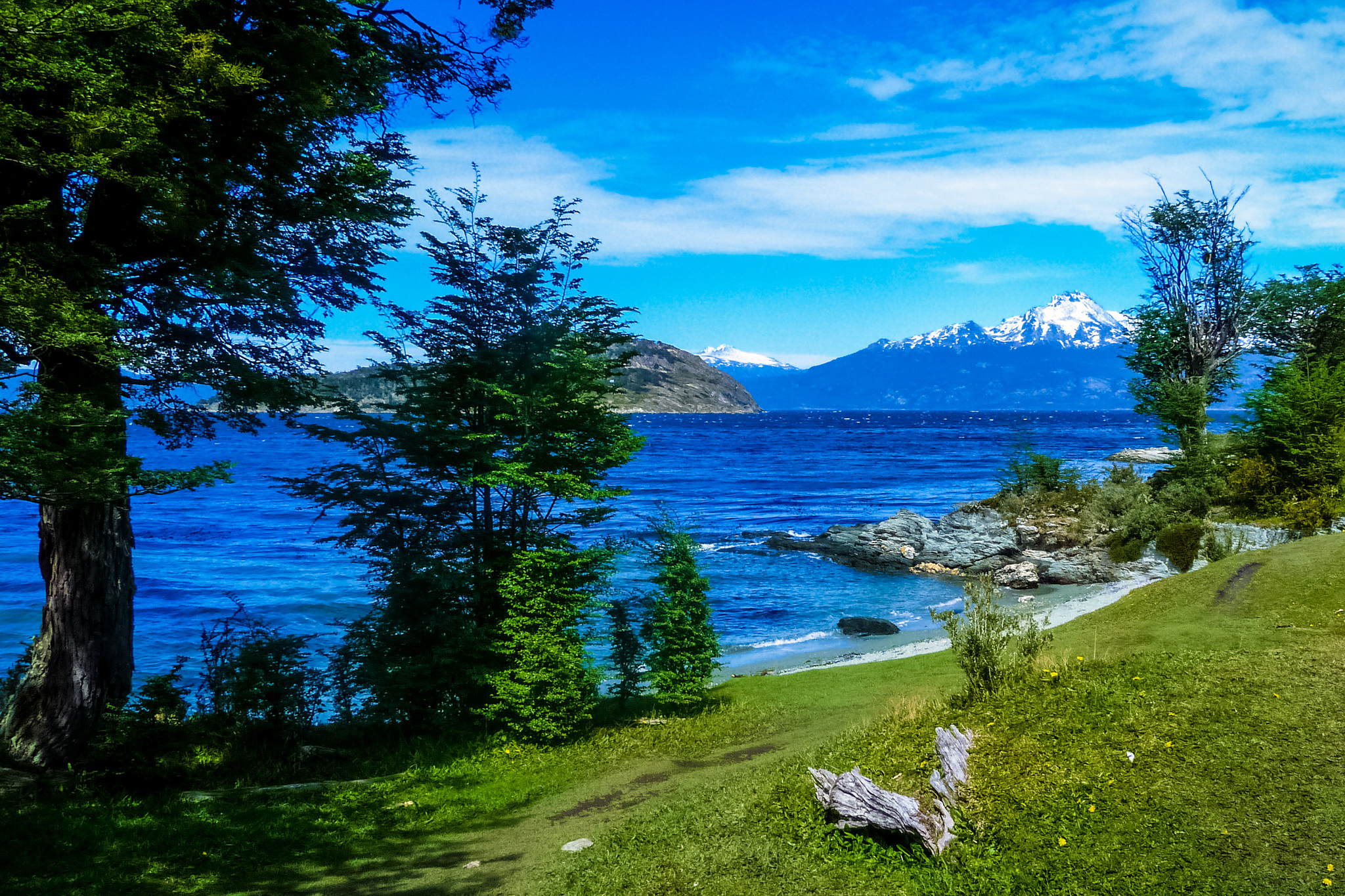
The South Atlantic Near Ushuaia

The South Atlantic Near Ushuaia

Even while I am planning my Ecuador trip, I am hinking of returning to Argentina. It is almost like another home to me, after three visits. This time, I am interested in traveling down RN 3 along the South Atlantic from Buenos Aires all the way down to Tierra del Fuego and Ushuaia (in Argentina) and Punta Arenas (in Chile). That is slightly over 3,000 kilometers. I may even fly to Puerto Williams in Chile, the absolute southernmost inhabited town in the world. Then I would fly back to Buenos Aires.

Along the way there would be the following stops:

  • Bahia Blanca with its famous Museo del Puerto de Ingeniero White.
  • The twin cities of Carmen de Patagones and Viedma, separated by the Rio Negro.
  • Puerto Madryn, which I visited with Martine in 2011 and perhaps some of the Welsh colonies around Trelew and Gaiman.
  • Comodoro Rivadavia, the industrial port from which Argentina launched the 1982 Falklands (Malvinas) war.
  • Puerto Deseado, visited by Magellan and Charles Darwin, called by naturalist Francisco Perito Moreno “the most picturesque place on the eastern Patagonian coast.”
  • Puerto San Julian, where both Magellan and Sir Francis Drake suppressed mutinies by executing the ringleaders.
  • Rio Gallegos, a key southern transportation hub and an old wool and petroleum shipment center. From here I can go to Punta Arenas (Chile) and see the Torres del Paine and the Fitzroy Massif. And from there, I could fly to Puerto Williams (a bit pricey, but comes with great bragging rights).
  • Ushuaia, the southernmost city in the world, where I’ve been twice and which I love. I’ll even stay at the same place, the Posada del Fin del Mundo owned by my friend Ana Bermudez.
The South Atlantic Is Not for Swimmers

The South Atlantic Is Not for Swimmers

Now that I’ve come to understand the long distance buses in Argentina, I know I’ll be able to travel in comfort and at a relatively low price. The longest stretches would be between Rio Gallegos and Ushuaia and between Buenos Aires and Bahia Blanca.

Except for Buenos Aires, Puerto Madryn, and Ushuaia, most of the above cities are off the tourist route. I could live with that.

“Fixed Points”

Avenue Rachel, 18th Arrondissement

Avenue Rachel, 18th Arrondissement

There are two parts of Paris that I know fairly well from having stayed there for a few days in May 1997 and again a few years later. I couldn’t say exactly when because, for some reason, our arrival at and departure from Charles De Gaulle were inexplicably missing from my passport of that period.

During the first visit, Martine and I stayed at the Citadines ApartHotel on Avenue Rachel between Montmartre and the place de Clichy. Avenue Rachel is a one-block street that dead ends (how appropriate is that expression!)  at the main entrance to the Montmartre Cemetery. Opened in 1825 at the site of an old gypsum quarry, it was originally called the Cimetière des Grandes Carrières (Cemetery of the Grand Quarries). Buried therein were such notables as Hector Berlioz, Henri-Georges Clouzot, Edgar Degas, Theophile Gautier, Edmond and Jules de Goncourt, and many other luminaries.

Something brough the Avenue Rachel to mind this week: It was Patrick Modiano’s somber and brilliant novelette entitled In the Café of Lost Youth: “I had forgotten the silence and calm of avenue Rachel, which leads to the cemetery, slthough you never think of the cemetery, you tell yourself that at its end it must let out into the countryside, or even, with a bit of luck, onto a seaside promenade.”

I, on the other hand, was very aware of the street ending in a cemetery. From my hotel window on an upper floor, I would stare at the funerary statuary. I also got to know the immediate area pretty well, from the massive Lycée Jules Ferry, the Rue Caulaincourt with its bridge arcing over the necropolis, Place Blanche, and the nearby Moulin Rouge—all of which figure in Modiano’s story as locales where the heroine, if she could indeed be called one, was raised.

In a futile search for a patisserie, I tromped up and down the streets of the neighborhood. It was not a particularly picturesque area, known primarily for nude dancers and sleazy bars.

It was interesting to be reminded of the place. Such a short street. And yet so memorable!

What’s That Again?

Did Anyone Hear That Announcement?

Did Anyone Hear That Announcement?

Like all inventions, it was well intentioned—originally. Then, like most inventions, things got out of hand. I am referring to public address systems, which work well enough in certain controlled environments, such as schools, but are all but useless in crowded situations such as airports and railway stations.

Yesterday, for example, I took the new Expo light rail from Santa Monica to Downtown L.A. and back again. Admittedly, it was only the fourth day of operation of the extended Expo line, but all was confusion at the 7th Street Metro Station. A train had pulled in whose destination was Willowbrook on the Blue Line. There was a scratchy P.A. announcement saying something or other in which the words “Santa Monica” were mentioned, after which half the people in the train got off. Thereupon, the train was marked “Not in Service” and left the station with several hundred people bound for either Willowbrook or Santa Monica or the rail maintenance yard.

This is a typical occurrence. Most public address announcements are innately confusing. There could be technical reasons for this, or the announcer could have a voice that is not appropriate for the medium.

At airports, I have gotten used to ignoring all announcements and looking carefully at the status board. That’s what I wound up doing at the 7th Street Metro Station yesterday: I just waited for a train whose destination was clearly marked as Santa Monica.

In 1979, my brother and I were flying to Villahermosa by way of Mexico City. We were told by announcement that our flight was canceled. That’s when my term “flying by Mexican rules” was born. Dan and I hunkered down and kept our eyes and ears open. Sure enough, there was a scratchy announcement that mentioned Villahermosa, and we found that the plane was in fact being boarded. Only at the last minute did that status appear on the electronic signage.

Ghost Train to Anywhere

Paul Theroux on One of His Mythical Train Rides

Paul Theroux on One of His Mythical Train Rides

For almost forty years, I have been traveling around the world with Paul Theroux—starting with his train ride books The Great Railway Bazaar (1975) and The Old Patagonian Express (1979) to whatever I could get my hands on. Even when I said to myself, “This guy is altogether too snarky,” I followed his adventures with an interest bordering on zeal.

Only now do I realize he is one of the great influences on my life. It was not until November 1975 that I began my own travels (other than back and forth between Los Angeles and Cleveland). My visit to Yucatán opened my eyes and was followed by trips to Britain, Hungary, Czechoslovakia, and a lot more of Mexico. It was as if the floodgates were open, and my eyes were focussed on the world at large, and not just at whatever place I was living at the time.

I have glorious memories of my trips, even the first one to Argentina, when I broke my right shoulder in a blizzard in Tierra del Fuego. I was hooked, and have been ever since.

Yeah, I Second the Motion!

Yeah, I Second the Motion!

A few days ago, I finished reading Theroux’s Ghost Train to the Eastern Star (2008) in which I found the following quotes which resonated with me:

Often on a trip, I seem to be alive in a hallucinatory vision of difference, the highly colored unreality of foreignness, where I am vividly aware (as in most dreams) that I don’t belong; yet I am floating, an idle anonymous visitor among busy people, an utter stranger. When you’re strange, as the song goes, no one remembers your name.

Also, it doesn’t matter any more who’s topping the charts. Taylor Swift doesn’t mean anything to me; and if Kim Kardashian’s ass were offered to me on a silver platter, I would not too politely refuse. I have climbed the Mayan pyramids at Uxmal and Chichén Itzá. I have taken a fall at Magallanes and Rivadavia in Ushuaiah and injured myself. I have visited two Communist Eastern European countries before 1989. I have seen things most people have not seen, and it has changed me forever.

It seemed to me that this was the whole point of traveling—to arrive alone, like a specter, in a strange country at nightfall, not in the brightly lit capital but by the back door, i9n the wooded countryside, hundreds of miles from the metropolis where typically people didn’t see many strangers and were hospitable and did not instantly think of me as money on two legs.

Being a traveler is being something of a loner. I am certainly that. But I wouldn’t have it any other way. I will travel as long as I can.