Travelers, Wild and Tame

Freya Stark (1893-1993)

Freya Stark (1893-1993)

For over forty years (except for a brief interlude when she was married), Freya Stark spent some 40 years traveling by herself in the Middle East. I have just finished reading her first book, Baghdad Sketches (1932), consisting of columns written for the Baghdad Times plus some 8 pieces added later for the British edition.

I am amazed that she was able to not only survive traveling in a difficult part of the world roughly between 1928 and 1970, but she lived to the age of 100.

She is not the first to do so. Gertrude Bell (who died in Baghdad just a couple years before Freya arrived there), also covered much of the same ground. Still, I cannot imagine in this period of violent jihad and xenophobia that their travels could be duplicated without a military escort.

Freya had interesting attitudes about solitude and travel. On the former, she wrote that “solitude is the one deep necessity of the human spirit to which adequate recognition is never given in our codes. It is looked upon as a discipline or penance, but almost never as the indispensable, pleasant ingredient it is to ordinary life.” For the modern traveler, she felt with distaste that its purpose “is to give people a glimpse of the exotic places without the least bit of inconvenience to themselves.”

In Baghdad Sketches, she gives a picture of a much more diverse population than exists now in the era of ISIS/ISIL/Daesh. Stark frequently visited among the Kurds, Yezidis, Shi’as, and Eastern Christians living in Iraq during the 1930s.

Among her books that I have read with pleasure, in addition to Baghdad Sketches, are:

  • The Valleys of the Assassins and Other Persian Travels (1934)
  • The Southern Gates of Arabia: A Journey to the Hadhramaut (1938)
  • Alexander’s Path: From Caria to Cilicia (1958)—about Turkey

Many of her books are still in print.


I’m Not Finished with Argentina!

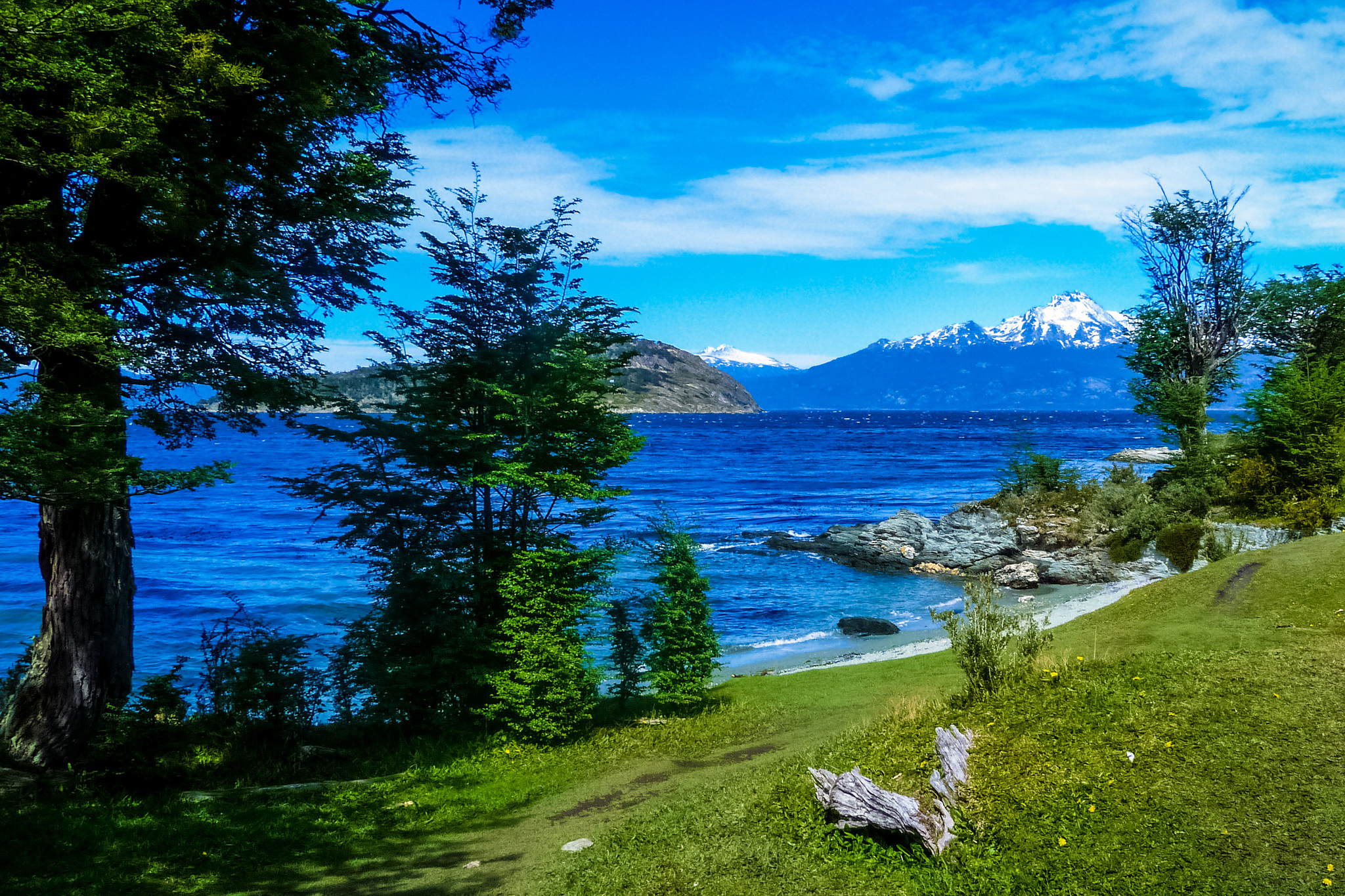
The South Atlantic Near Ushuaia

The South Atlantic Near Ushuaia

Even while I am planning my Ecuador trip, I am hinking of returning to Argentina. It is almost like another home to me, after three visits. This time, I am interested in traveling down RN 3 along the South Atlantic from Buenos Aires all the way down to Tierra del Fuego and Ushuaia (in Argentina) and Punta Arenas (in Chile). That is slightly over 3,000 kilometers. I may even fly to Puerto Williams in Chile, the absolute southernmost inhabited town in the world. Then I would fly back to Buenos Aires.

Along the way there would be the following stops:

  • Bahia Blanca with its famous Museo del Puerto de Ingeniero White.
  • The twin cities of Carmen de Patagones and Viedma, separated by the Rio Negro.
  • Puerto Madryn, which I visited with Martine in 2011 and perhaps some of the Welsh colonies around Trelew and Gaiman.
  • Comodoro Rivadavia, the industrial port from which Argentina launched the 1982 Falklands (Malvinas) war.
  • Puerto Deseado, visited by Magellan and Charles Darwin, called by naturalist Francisco Perito Moreno “the most picturesque place on the eastern Patagonian coast.”
  • Puerto San Julian, where both Magellan and Sir Francis Drake suppressed mutinies by executing the ringleaders.
  • Rio Gallegos, a key southern transportation hub and an old wool and petroleum shipment center. From here I can go to Punta Arenas (Chile) and see the Torres del Paine and the Fitzroy Massif. And from there, I could fly to Puerto Williams (a bit pricey, but comes with great bragging rights).
  • Ushuaia, the southernmost city in the world, where I’ve been twice and which I love. I’ll even stay at the same place, the Posada del Fin del Mundo owned by my friend Ana Bermudez.
The South Atlantic Is Not for Swimmers

The South Atlantic Is Not for Swimmers

Now that I’ve come to understand the long distance buses in Argentina, I know I’ll be able to travel in comfort and at a relatively low price. The longest stretches would be between Rio Gallegos and Ushuaia and between Buenos Aires and Bahia Blanca.

Except for Buenos Aires, Puerto Madryn, and Ushuaia, most of the above cities are off the tourist route. I could live with that.

“Fixed Points”

Avenue Rachel, 18th Arrondissement

Avenue Rachel, 18th Arrondissement

There are two parts of Paris that I know fairly well from having stayed there for a few days in May 1997 and again a few years later. I couldn’t say exactly when because, for some reason, our arrival at and departure from Charles De Gaulle were inexplicably missing from my passport of that period.

During the first visit, Martine and I stayed at the Citadines ApartHotel on Avenue Rachel between Montmartre and the place de Clichy. Avenue Rachel is a one-block street that dead ends (how appropriate is that expression!)  at the main entrance to the Montmartre Cemetery. Opened in 1825 at the site of an old gypsum quarry, it was originally called the Cimetière des Grandes Carrières (Cemetery of the Grand Quarries). Buried therein were such notables as Hector Berlioz, Henri-Georges Clouzot, Edgar Degas, Theophile Gautier, Edmond and Jules de Goncourt, and many other luminaries.

Something brough the Avenue Rachel to mind this week: It was Patrick Modiano’s somber and brilliant novelette entitled In the Café of Lost Youth: “I had forgotten the silence and calm of avenue Rachel, which leads to the cemetery, slthough you never think of the cemetery, you tell yourself that at its end it must let out into the countryside, or even, with a bit of luck, onto a seaside promenade.”

I, on the other hand, was very aware of the street ending in a cemetery. From my hotel window on an upper floor, I would stare at the funerary statuary. I also got to know the immediate area pretty well, from the massive Lycée Jules Ferry, the Rue Caulaincourt with its bridge arcing over the necropolis, Place Blanche, and the nearby Moulin Rouge—all of which figure in Modiano’s story as locales where the heroine, if she could indeed be called one, was raised.

In a futile search for a patisserie, I tromped up and down the streets of the neighborhood. It was not a particularly picturesque area, known primarily for nude dancers and sleazy bars.

It was interesting to be reminded of the place. Such a short street. And yet so memorable!

What’s That Again?

Did Anyone Hear That Announcement?

Did Anyone Hear That Announcement?

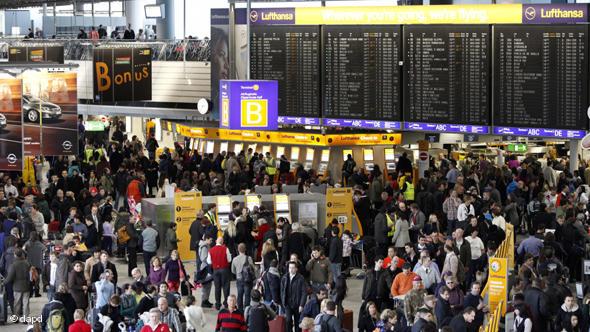
Like all inventions, it was well intentioned—originally. Then, like most inventions, things got out of hand. I am referring to public address systems, which work well enough in certain controlled environments, such as schools, but are all but useless in crowded situations such as airports and railway stations.

Yesterday, for example, I took the new Expo light rail from Santa Monica to Downtown L.A. and back again. Admittedly, it was only the fourth day of operation of the extended Expo line, but all was confusion at the 7th Street Metro Station. A train had pulled in whose destination was Willowbrook on the Blue Line. There was a scratchy P.A. announcement saying something or other in which the words “Santa Monica” were mentioned, after which half the people in the train got off. Thereupon, the train was marked “Not in Service” and left the station with several hundred people bound for either Willowbrook or Santa Monica or the rail maintenance yard.

This is a typical occurrence. Most public address announcements are innately confusing. There could be technical reasons for this, or the announcer could have a voice that is not appropriate for the medium.

At airports, I have gotten used to ignoring all announcements and looking carefully at the status board. That’s what I wound up doing at the 7th Street Metro Station yesterday: I just waited for a train whose destination was clearly marked as Santa Monica.

In 1979, my brother and I were flying to Villahermosa by way of Mexico City. We were told by announcement that our flight was canceled. That’s when my term “flying by Mexican rules” was born. Dan and I hunkered down and kept our eyes and ears open. Sure enough, there was a scratchy announcement that mentioned Villahermosa, and we found that the plane was in fact being boarded. Only at the last minute did that status appear on the electronic signage.

Ghost Train to Anywhere

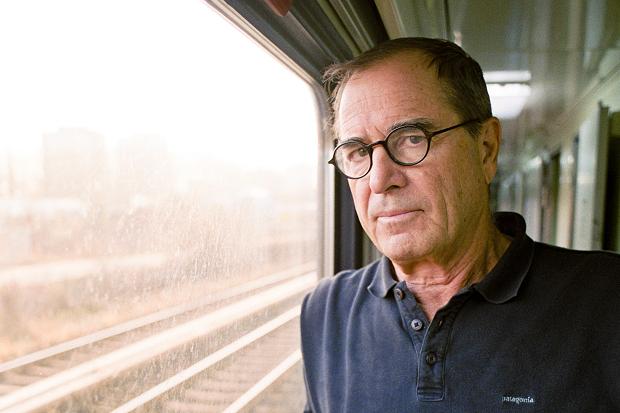
Paul Theroux on One of His Mythical Train Rides

Paul Theroux on One of His Mythical Train Rides

For almost forty years, I have been traveling around the world with Paul Theroux—starting with his train ride books The Great Railway Bazaar (1975) and The Old Patagonian Express (1979) to whatever I could get my hands on. Even when I said to myself, “This guy is altogether too snarky,” I followed his adventures with an interest bordering on zeal.

Only now do I realize he is one of the great influences on my life. It was not until November 1975 that I began my own travels (other than back and forth between Los Angeles and Cleveland). My visit to Yucatán opened my eyes and was followed by trips to Britain, Hungary, Czechoslovakia, and a lot more of Mexico. It was as if the floodgates were open, and my eyes were focussed on the world at large, and not just at whatever place I was living at the time.

I have glorious memories of my trips, even the first one to Argentina, when I broke my right shoulder in a blizzard in Tierra del Fuego. I was hooked, and have been ever since.

Yeah, I Second the Motion!

Yeah, I Second the Motion!

A few days ago, I finished reading Theroux’s Ghost Train to the Eastern Star (2008) in which I found the following quotes which resonated with me:

Often on a trip, I seem to be alive in a hallucinatory vision of difference, the highly colored unreality of foreignness, where I am vividly aware (as in most dreams) that I don’t belong; yet I am floating, an idle anonymous visitor among busy people, an utter stranger. When you’re strange, as the song goes, no one remembers your name.

Also, it doesn’t matter any more who’s topping the charts. Taylor Swift doesn’t mean anything to me; and if Kim Kardashian’s ass were offered to me on a silver platter, I would not too politely refuse. I have climbed the Mayan pyramids at Uxmal and Chichén Itzá. I have taken a fall at Magallanes and Rivadavia in Ushuaiah and injured myself. I have visited two Communist Eastern European countries before 1989. I have seen things most people have not seen, and it has changed me forever.

It seemed to me that this was the whole point of traveling—to arrive alone, like a specter, in a strange country at nightfall, not in the brightly lit capital but by the back door, i9n the wooded countryside, hundreds of miles from the metropolis where typically people didn’t see many strangers and were hospitable and did not instantly think of me as money on two legs.

Being a traveler is being something of a loner. I am certainly that. But I wouldn’t have it any other way. I will travel as long as I can.


Viejo Cuba

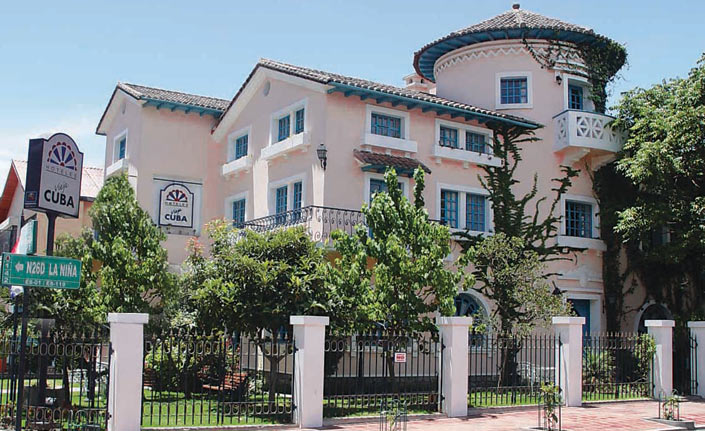
Our Boutique Hotel in Quito

Our Boutique Hotel in Quito: El Viejo Cuba

For almost forever, I have been in charge of planning the vacations for Martine and myself. My brother Dan knew that, so I thought I’d let him have the upper hand. As we tend to think alike on most issues, that will be no problem.

We will be in Ecuador together for two weeks, then he will return to L.A. by himself because of business obligations. I will have an additional week in Southern Ecuador all alone. For those last seven days, I will do all my own planning as before. I think that’s a good compromise.

One thing that will be different is that Dan wants to rent a car and drive. That gives us a much broader choice of places to stay and allows us a lot of flexibility. I keep thinking of the three all-night bus rides I took in Argentina and Chile. Although I rather enjoyed them, I don’t think that Dan would quite so much.

That puts me in the role of navigator, which is a role I enjoy. Whenever, as a child, I went anywhere with our family, I was the one hunched over a map and dictating directions.

Our first stop in Ecuador will be the Hotel Viejo Cuba (illustrated above).  It’s a few blocks north of the popular Mariscal Sucré neighborhood, named after Bolivar’s favorite general.

This trip will be different, but I like the way it’s shaping up.

How To Explain a Disaster

Why Can’t Our News Media Do Such a Good Job?

Why Can’t Our News Media Do Such a Good Job?

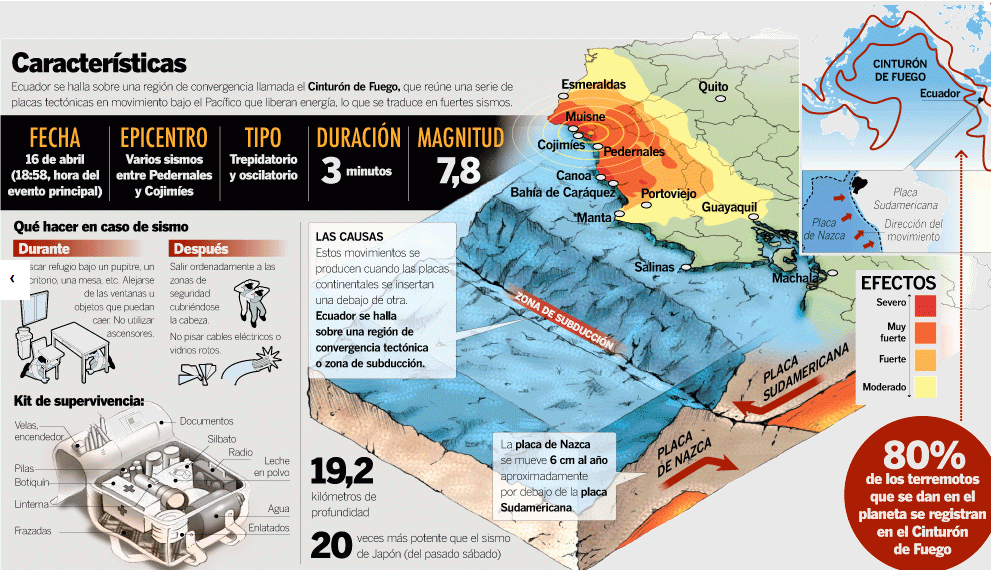
At regular intervals I read the Ecuador Times website for news of my next vacation destination. Their English is execrable (“Weekly addresses will continue to be broadcast despite President Correa’s offering”), but they have access to some graphic genius who can, in a small space, explain something as complicated as the 7.8 earthquake that hit the Manabi region of that country.

Even though the above illustration is in Spanish, it is 99% clear to me. It even describes a family earthquake kit and what measures to take when the earth begins to shake.

I could only wish the Los Angeles Times would hire their graphic artist so that maybe I will be able to understand why people would vote for Donald Trump and why the culprits of the 2008 Recession are not in prison.

The Highest Peak in the World

No, It’s Not Mount Everest

No, It’s Not Mount Everest

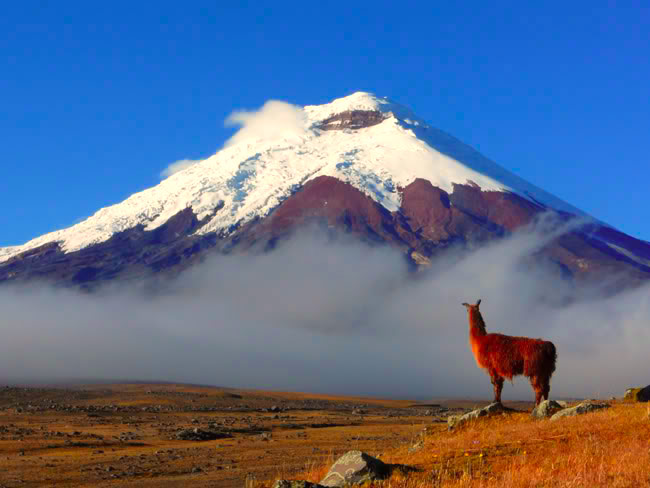
There are some thirty-six mountain peaks in the Andes alone whose altitude is greater than Ecuador’s Mount Chimborazo. Yet, Chimborazo is demonstrably the highest peak in the world. It all depends on how you measure it.

If the earth were perfectly round, there is no question that Mount Everest takes the prize. But the earth, far from being perfectly round, is an oblate ellipsoid.  Around the equator, there is a bulge that is significant enough that—if you measure altitude from the center of the earth rather than sea level—Chimborazo is taller.

According to Ken Jennings of Condé-Nast Traveler:

This bulge isn’t huge—a deviation of about one part in 300 from a perfect sphere—but it’s enough to mess with cartography. Chimborazo tops out at 20,702 feet, almost two miles lower than Everest. But that’s only compared to sea level. If we take the equatorial bulge into account—in other words, if we measure what peak is farthest from the center of the Earth—Chimborazo sticks more than 7,000 feet farther into space than any of the Himalayas do, since they’re located thousands of miles north of the Equator. So, to quote Obi-Wan Kenobi, “what I told you was true—from a certain point of view.”

So if you climbed to the top of Chimborazo, you would be standing a mile and a half farther into space than the poor souls who brave the Himalayan peaks.

No, I have to plans to climb any mountain peaks. I will stand and stare in silent awe from the base of the peak, which is visible from the port of Guayaquil, ninety miles to the west.


In Search of the Panama Hat

It Looks Incredibly Cool, Doesn’t It?

It Looks Incredibly Cool, Doesn’t It?

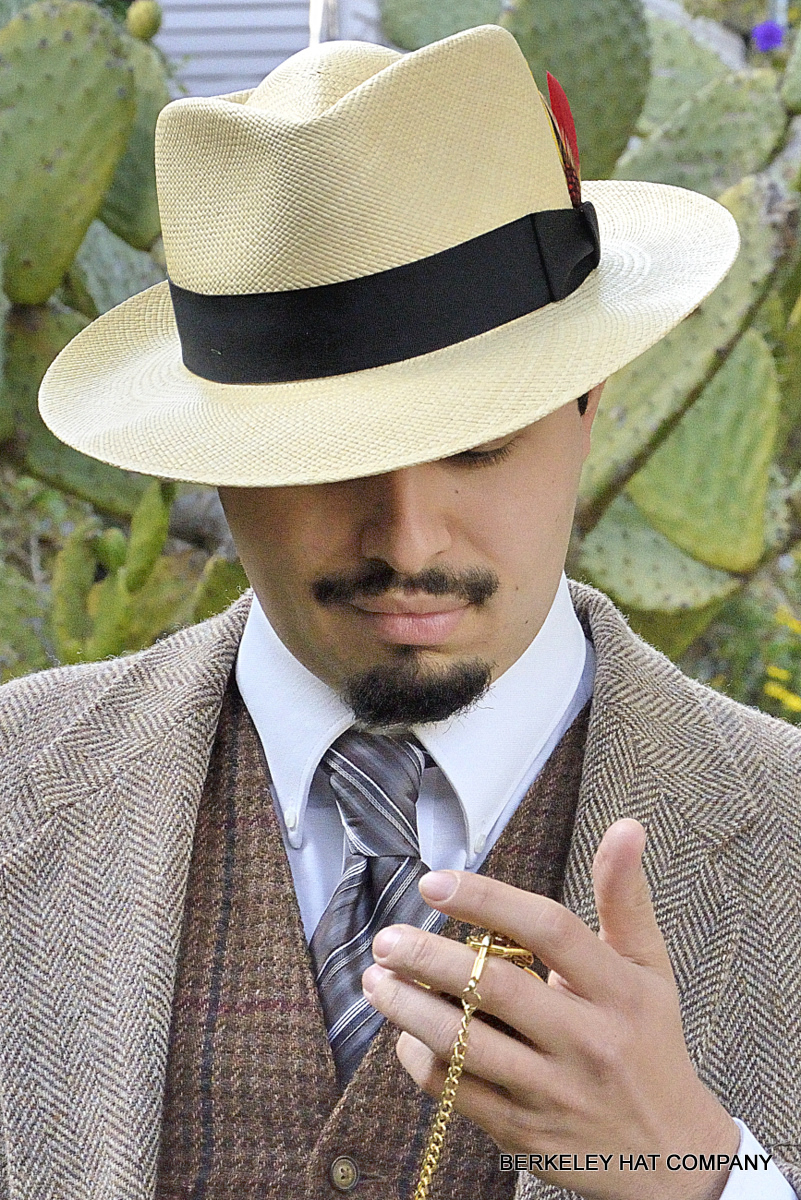
When I first traveled to Yucatán in 1975, I read in the guidebooks that the peninsula was the home of the famed panama straw hat. In fact, I bought one at the municipal market in Mérida. It was okay, but it didn’t make me look like a sex object such as the guy in the above picture.

The straw hats in Yucatán were called jipijapas. That is very curious because Jipijapa is one of the two towns in Ecuador that is the source of the paja toquilla from which Panamas are manufactured around Cuenca, which is also in Ecuador. (The other town, better known, is Montecristi.) The straw hats of Yucatán are nice, but they are made in Becal in the State of Campeche; and they don’t compare with the expensive productions of the master Ecuadorian hatmakers.

Fortunately, the Ecuadorians are no longer getting the short end of the stick—at least insofar as straw hats are concerned. The hats were called Panamas because the construction workers on the Panama Canal insisted on wearing them for their protection against the tropical sun.

You can find the whole story in Tom Miller’s excellent book, The Panama Hat Trail. He manages the not inconsiderable feat of studying an entire culture from one not particularly major export. In addition to the areas involved in the manufacture of the hats, he takes us to Quito and the Oriente (near the Amazon) so that he doesn’t leave us with a too fragmented picture of the South American nation.

Will I buy a Panama hat when I go to Ecuador? Maybe, but I know it will just make me look like Sydney Greenstreet.

Un Hueco en el Cielo


It Means “An Opening Into Heaven”

It Means “An Opening Into Heaven”

I have been reading Tom Miller’s The Panama Hat Trail, about the author’s search for where Panama hats are made. (Hint: It’s not Panama.)

In the first chapter, he quotes the residents of Quito, Ecuador, as saying that their city is un hueco en el cielo, an opening into heaven:

“What does un hueco en el cielo mean to you?” an Indian from Ambato asked me. Well, I replied, that here you are so close to God, physically and spiritually, you can virtually peak into heaven. She smiled. “That’s what most North Americans and Europeans say. To the Indians it means that God could look down upon us.”

That is an interesting point of view in this most Catholic of countries. It enables God to look down and see His creation more clearly.

Miller continues:

At ninety-three hundred feet, Quito’s air is so rarefied that the sun’s rays beat down with deceptive strength. A brisk midday walk in the equatorial Andes leaves you sweating profusely. Near dusk, garúa—intesne fog—rolls through the city, limiting vision to an arm’s length. “The man who doesn’t like clouds has no business coming to Ecuador,” wrote the Belgian Henri Michaux in 1928. “They’re the faithful dogs of the mountains.” Clouds go through gymnastics at this altitude, first low hugging the ground, then high embracing Mount Cayambe or Pichincha, then settling briefly in the Chillos or Tumbaco valleys before finally returning again to ground level.

Compared to Argentina, Chile, or Peru relatively little has been written about Ecuador. Between now and our departure date this fall, I plan to read everything I can find. Since tax season is over, I’ll have no trouble finding the time.