I am reading a great travel classic written in the 1950s about two Swiss who drove a ratty old Fiat from Yugoslavia to the Khyber Pass on the Afghanistan/Pakistan border. Nicolas Bouvier’s The Way of the World describes Persian politics in Tabriz in 1953, when Muhammad Musaddeq’s government was overthrown by a Royalist coup. Wonderful stuff!BTW, is this where we’re headed?
The Musaddeq trial, which had just opened in Tehran, led to fears of skirmishes in Tabriz. They didn’t take place because that very morning the Governor demonstrated to the town that he was in full control: five armoured cars, several mortars and twenty trucks, carrying troops whose numbers had been increased for the occasion.
The Governor was a wily old man, a cruel jester, oddly esteemed even by opponents of the government he represented. He was forgiven much because everyone knew he had no political convictions and had entirely devoted his rule to building up his personal fortune, with a skill that had won him many admirers. Tabriz had always been a recalcitrant town, but it recognized ‘fair play’, and well-aimed shots. That unexpected parade, for example, which had the town by the scruff of the neck when it woke up, was absolutely in the style of the man to whom the town referred familiarly by his first name. A despot, of course, whose disappearance would have been welcomed with relief, and who was intently watched in case he should slip up. Meanwhile, informed, bland, pitiless and efficient, he was impressive. The town, familiar with despotism, granted his talent.
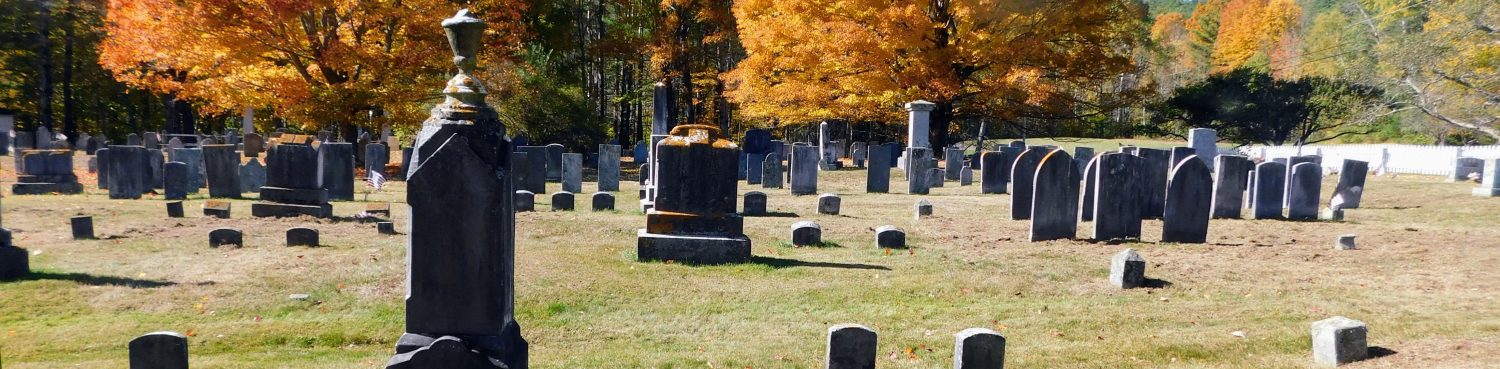
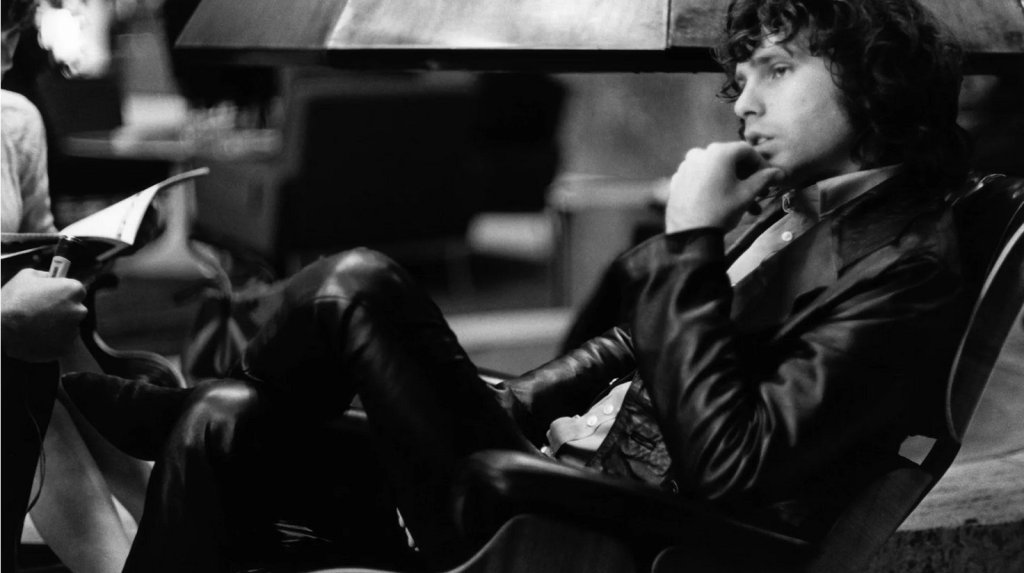
We know him from The Doors, but he was also a decent poet. He had to be, particularly considering his original songs, particularly in his group’s initial album, The Doors (1967). I am not that much into rock music, but I did take the trouble to visit Jim Morrison’s grave at Père Lachaise cemetery in Paris after he died of a drug overdose.
Here is one of my favorites among his poems:
The Celebration of the Lizard
Lions in the street & roaming Dogs in heat, rabid, foaming A beast caged in the heart of a city
The body of his mother Rotting in the summer ground. He fled the town.
He went down South And crossed the border Left the chaos & disorder Back there Over his shoulder.
One morning he awoke in a green hotel W/a strange creature groaning beside him. Sweat oozed from its shiny skin.
Is everybody in? The ceremony is about to begin.
Wake up! You can’t remember where it was. Had this dream stopped? The snake was pale gold glazed & shrunken. We were afraid to touch it. The sheets were hot dead prisons. And she was beside me, old, She’s, no; young. Her dark red hair. The white soft skin. Now, run to the mirror in the bathroom, Look! She’s coming in here. I can’t live thru each slow century of her moving. I let my cheek slide down The cool smooth tile Feel the good cold stinging blood. The smooth hissing snakes of rain…
Once I had a little game
I liked to crawl back in my brain
I think you know the game I mean
I mean the game called “Go Insane”

Now you should try this little game
Just close your eyes forget your name
forget the world, forget the people
and we'll erect a different steeple.

This little game is fun to do.
Just close your eyes, no way to lose
And I'm right here, I'm going too
Release control, we're breaking through
Way back deep into the brain Way back past the realm of pain Back where there’s never any rain
And the rain falls gently on the town And over the heads of all of us
And in the labyrinth of streams beneath Quiet unearthly presence of Nervous hill dwellers in the gentle hills around Reptiles abounding Fossils, caves, cool air heights
Each house repeats a mold Windows rolled A beast car locked in against morning All now sleeping Rugs silent, mirrors vacant Dust blind under the beds of lawful couples Wound in sheets And daughters, smug with semen Eyes in their nipples
Wait! There’s been a slaughter here
Don’t stop to speak or look around Your gloves and fan are on the ground We’re getting out of town We’re going on the run And you’re the one I want to come!
Not to touch the earth, not to see the sun
Nothing left to do but run, run, run
Let's run, let's run

House upon the hill, moon is lying still
Shadows of the trees witnessing the wild breeze
Come on, baby, run with me
Let's run

Run with me, run with me, run with me
Let's run

The mansion is warm at the top of the hill
Rich are the rooms and the comforts there
Red are the arms of luxuriant chairs
And you won't know a thing till you get inside

Dead president's corpse in the driver's car
The engine runs on glue and tar
Come on along, not going very far
To the east to meet the Czar

Run with me, run with me, run with me
Let's run

Some outlaws live by the side of a lake
The minister's daughter's in love with the snake
Who lives in a well by the side of the road
Wake up, girl! We're almost home

Sun, sun, sun
Burn, burn, burn
Moon, moon, moon
I will get you soon...soon...soon!

I am the Lizard King
I can do anything
We came down the rivers and highways We came down from forests and falls We came down from Carson and Springfield We came down from Phoenix enthralled
And I can tell you the names of the kingdom I can tell you the things that you know Listening for a fistful of silence Climbing valleys into the shade ~~~
For seven years I dwelt in the loose palace of exile Playing strange games with the girls of the island Now I have come again to the land of the fair And the strong and the wise
Brothers and sisters of the pale forest Children of night Who among you will run with the hunt?
Now night arrives with her purple legion Retire now to your tents and to your dreams Tomorrow we enter the town of my birth I want to be ready
The 1950 Census has been unsealed and is now available for searching. Above is the page of the census (look starting with line 6). At the time, we lived at 2814 East 120th Street in the Buckeye Road Hungarian neighborhood of Cleveland, Ohio. In our household were:
My father Alex, born in what at the time of his birth was the Austro-Hungarian Empire, but in 1950 was part of Czechoslovakia.
My mother Sophie, born in the U.S. but raised in Hungary.
Me—but not my brother, who was to come along the next year.
My great-grandmother Lidia Toth (correct spelling: the enumerator goofed). Since both parents worked, she served as a live-in caregiver to me. She was born in Felcsut, Hungary, and spoke no English.
Note that my father was listed as a machinist. He was then employed by Lees-Bradner and Company, which manufactured gear-hobbing machines.
If you are curious about your own family, you can search the 1950 Census for yourself by clicking here. Please confine your search to the head of the household, as things get a little scattered when it comes to wives, children, and other live-in family members.
My Martine is as sweet as sweet can be, but her heart can be steel-plated when it comes to street hooligans. On most days, she takes a long walk in the neighborhood, keeping a weather eye out for what she calls “tiny treasures.” Sometimes these are foreign coins or interesting lanyards or any number of things.
Lately, however, some of her discoveries have been on the alarming side:
Two baseball bats, near a bus stop ad that had been vandalized
A bolt cutter
A large sledgehammer
In each case, she walked the item to the Santa Monica Police Station and handed it to the officer on duty. I cannot help but think that the local police are wondering what she will bring in next. Will it be an AK-47? An RPG (that’s rocket propelled grenade)? A box of land mines?
The streets of West L.A. and Santa Monica are getting rougher each year, and that’s reflected in what she finds.
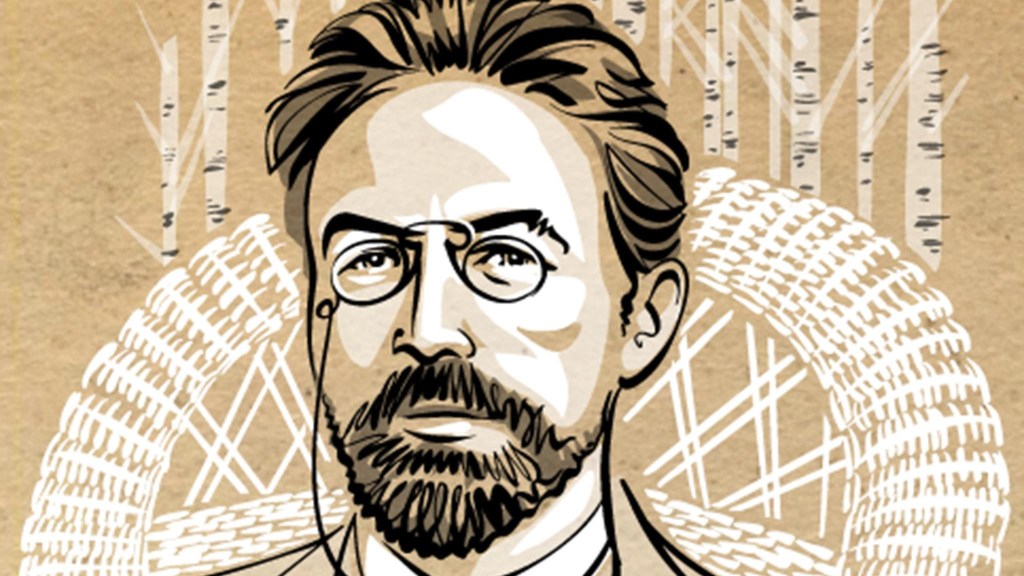
I have just finished a collection of short stories by Anton Chekhov (1860-1904) entitled The Wife and Other Stories which has been, by far, the best book I have read so far this year. Even though her translations are being increasingly considered as clunky and slightly archaic, I really enjoyed Constance Garnett. The following discussion on happiness vs. unhappiness is from a story entitled “Gooseberries.”
I saw a happy man whose cherished dream was so obviously fulfilled, who had attained his object in life, who had gained what he wanted, who was satisfied with his fate and himself. There is always, for some reason, an element of sadness mingled with my thoughts of human happiness, and, on this occasion, at the sight of a happy man I was overcome by an oppressive feeling that was close upon despair. It was particularly oppressive at night. A bed was made up for me in the room next to my brother’s bedroom, and I could hear that he was awake, and that he kept getting up and going to the plate of gooseberries and taking one. I reflected how many satisfied, happy people there really are! What a suffocating force it is! You look at life: the insolence and idleness of the strong, the ignorance and brutishness of the weak, incredible poverty all about us, overcrowding, degeneration, drunkenness, hypocrisy, lying…. Yet all is calm and stillness in the houses and in the streets; of the fifty thousand living in a town, there is not one who would cry out, who would give vent to his indignation aloud. We see the people going to market for provisions, eating by day, sleeping by night, talking their silly nonsense, getting married, growing old, serenely escorting their dead to the cemetery; but we do not see and we do not hear those who suffer, and what is terrible in life goes on somewhere behind the scenes…. Everything is quiet and peaceful, and nothing protests but mute statistics: so many people gone out of their minds, so many gallons of vodka drunk, so many children dead from malnutrition…. And this order of things is evidently necessary; evidently the happy man only feels at ease because the unhappy bear their burdens in silence, and without that silence happiness would be impossible. It’s a case of general hypnotism. There ought to be behind the door of every happy, contented man some one standing with a hammer continually reminding him with a tap that there are unhappy people; that however happy he may be, life will show him her laws sooner or later, trouble will come for him—disease, poverty, losses, and no one will see or hear, just as now he neither sees nor hears others. But there is no man with a hammer; the happy man lives at his ease, and trivial daily cares faintly agitate him like the wind in the aspen-tree—and all goes well.
And mixed with these were splashes of California poppies. These too are of a burning color—not orange, not gold, but if pure gold were liquid and could raise a cream, that golden cream might be like the color of poppies.
As I mentioned in yesterday’s post, my favorite flowers are tulips and California poppies.
Some people say that it is illegal to pick a California poppy. The truth is actually a little more complicated. According to the CBS News site for San Francisco:
Now here is the interesting part: as a native Californian, I grew up believing it is illegal to PICK a California Poppy. As that turns out, it’s not entirely true! You can pick, bend, eat or smoke a Poppy as long it is not on state property. However, if a Poppy or any other flower is on School, Park, a median or even outside a courthouse, DO NOT pick or hurt the flower. Harming the flower or plant life could be considered a misdemeanor offense, and you can be fined up to $1000 and as many as six months in jail. That’s real Flower Power!
I wouldn’t pick a California poppy for different reasons: They are so beautiful that they should be left alone so that they can continue to bring joy to passers-by.
If you were to ask me what my favorite flowers are, I would unhesitatingly answer, “Tulips!” (In a close second would be California Poppies.) Yesterday, Martine and I braved the springtime crowds at Descanso Gardens to see the springtime flowers. Our first interest were the tulips, which we were the first thing we visited when we got there, and then again the last thing we saw before closing time.
What I love most about tulips are the gorgeous colors. Unfortunately, they last such a short time and are not seen anywhere for most of the year. They originally came from the Middle East in the 11th century AD, and were taken up by the Dutch only around the 1500s.
The world’s first speculative bubble was not in stocks or currency, but in Dutch tulip bulbs. The bubble lasted from 1634 to 1637, and saw numerous fortunes made and lost. In 1850, Alexandre Dumas Père, of The Three Musketeers and The Count of Monte Cristo fame, published a novel called The Black Tulip, which is well worth reading. It contains the following syllogism:
To despise flowers is to offend God The more beautiful the flower is, the more does one offend God in despising it The tulip is the most beautiful of all flowers Therefore, he who despises the tulip offends God beyond measure
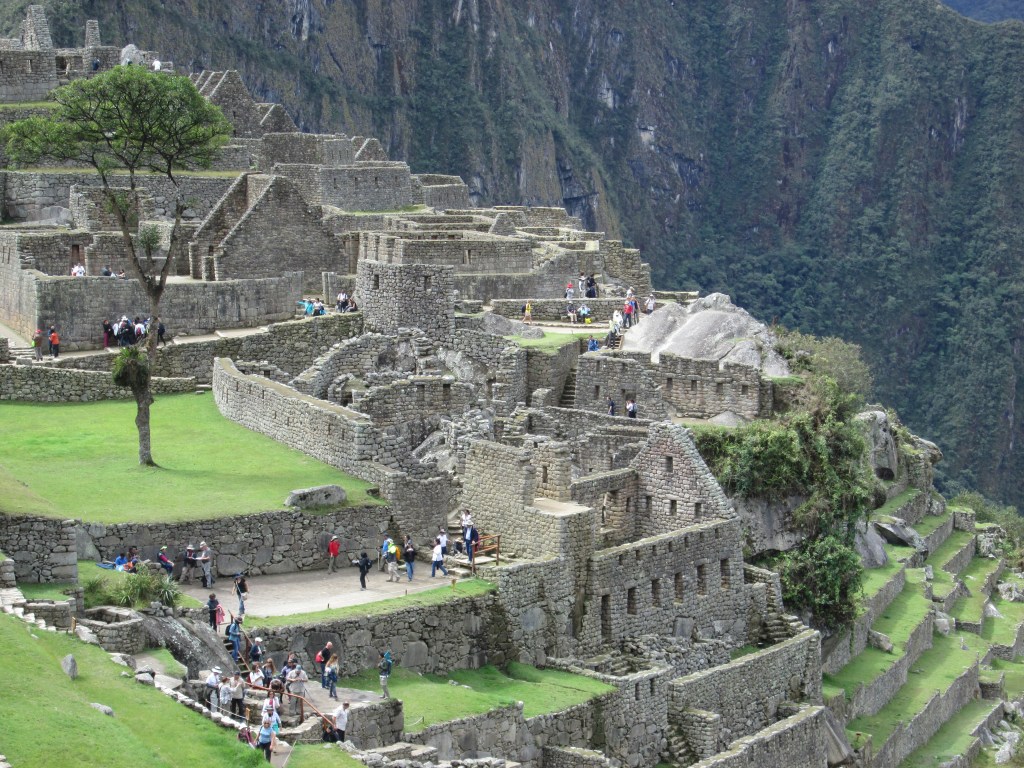
I was surprised to find out that, according to a professor of anthropology, Machu Picchu should be called Huayna Picchu instead. The reason I was surprised is that the Incas never had a written language like the Maya and the Aztecs. They were great engineers and stonemasons, but left no writings or even hieroglyphs. The only “communication” of any sorts we have from the Incas are in the form of quipu, knotted cords that were used to quantify taxes or inventories.
Quipu at the Museo Larco in Lima, Peru
You can read the story here at CNN Travel. It doesn’t much matter what the “official” name of the Inca ruins was. After all, most Meso-American ruins are probably misnamed. Either the Conquistadores or the archeologists just assigned a name for convenience. And, for good or ill, it stuck.
The war in Ukraine just escalated. Two Ukrainian helicopter gunships flew 25 miles (40 km) into Russia and blew up a Russian fuel dump. It was yet another embarrassing moment for the Russian military, which neither detected nor prevented the incursion.
I only hope that none of the helicopters were of American manufacture, which would give Putin the opportunity he needed to say that the Ukrainians were just acting as a proxy for NATO. Of course, he could say that even if the helicopter attack had never happened. It’s one of those irksome imponderables involving the thinking processes of Vladimir Putin.
Ukrainian President Volodymyr Zelensky keeps saying that, if peace negotiations with Russia do not take place, it will be the beginning of World War Three. It is a sobering thought: If that happens, millions will die, myself included. I happen to live in one of the prime nuclear target areas, namely, Los Angeles.
Pundits keep referring to the search for an “offramp” from the war. Given Putin’s stubbornness and bloody-mindedness, I cannot see how the war would end. Or rather, all the options I see are rather grim.
I’m not going to get involved in the Will Smith/Chris Rock imbroglio at the Oscars, except to say that there is a time and place for everything. Perhaps the Academy should send Will Smith to Moscow to slap the Bejeezus out of Vladimir Putin for his savage war against the people of Ukraine.
Drag Queen RuPaul
Perhaps it would be even better to send RuPaul to slap Putin, given Putin’s aversion to any sort of gender bending.
Anyhow, somebody’s got to get to that man before he makes the world unlivable.










You must be logged in to post a comment.