Things To Do in Iceland

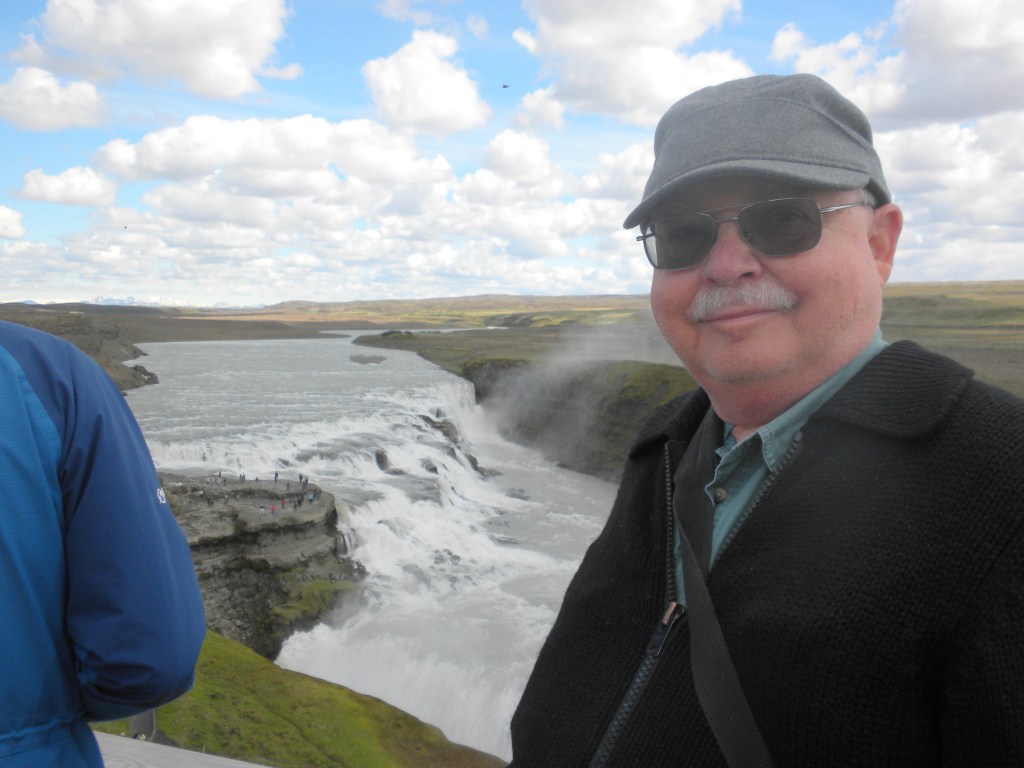
I’ve been to Iceland twice—in 2001 and 2013—and I hope to go again. People don’t have any concept of what the country is like. One hears the old chestnut that “Iceland should be called Greenland and vice versa.” With global warming, I suspect that both countries will in future be free of most ice. Below are a few highlights if you are thinking of visiting my favorite country in Europe:

  • Fish is always the cheapest and most interesting thing on the menu, and you’re never far from the ship that brought it to port.
  • If You Don’t Like Fish, don’t worry. Icelanders eat tons of hamburgers, hot dogs (which they call pylsur), and pizza.
  • The Interior of the Country is a picturesque and mostly uninhabited wasteland.
  • Icelandic Sagas from the 12-13th centuries A.D. are the best things to read, followed by the novels of 1955 Nobel prizewinner Halldor Laxness.
  • Islands off the coast of Iceland make great destinations, particularly Heimaey and Flatey. The first had a famous volcanic eruption in the 1970s, and the second was the site of a medieval monastery.
  • English is the Second Language of most Icelanders under the age of 70, so communication is no problem.
  • Iceland Is Expensive, particularly if you want to rent a car. Not to worry, there’s good long distance buses.
  • Waterfalls and Rainbows are everywhere, making it the most scenic country in Europe—if it can be said to be part of Europe.
  • Volcanoes are all over the place, and many of them are active. Don’t be surprised if you see one erupting during your trip.
  • Reykjavík contains half the population of Iceland, yet it’s small and quite walkable (if the weather isn’t foul).
  • The Westfjords are a bit out of the way, but shouldn’t be missed. Great hiking and incredible coastline views.
  • Northern Lights can be seen in the winter, but you can’t be 100% sure of a sighting.
How (Not) to Celebrate New Years

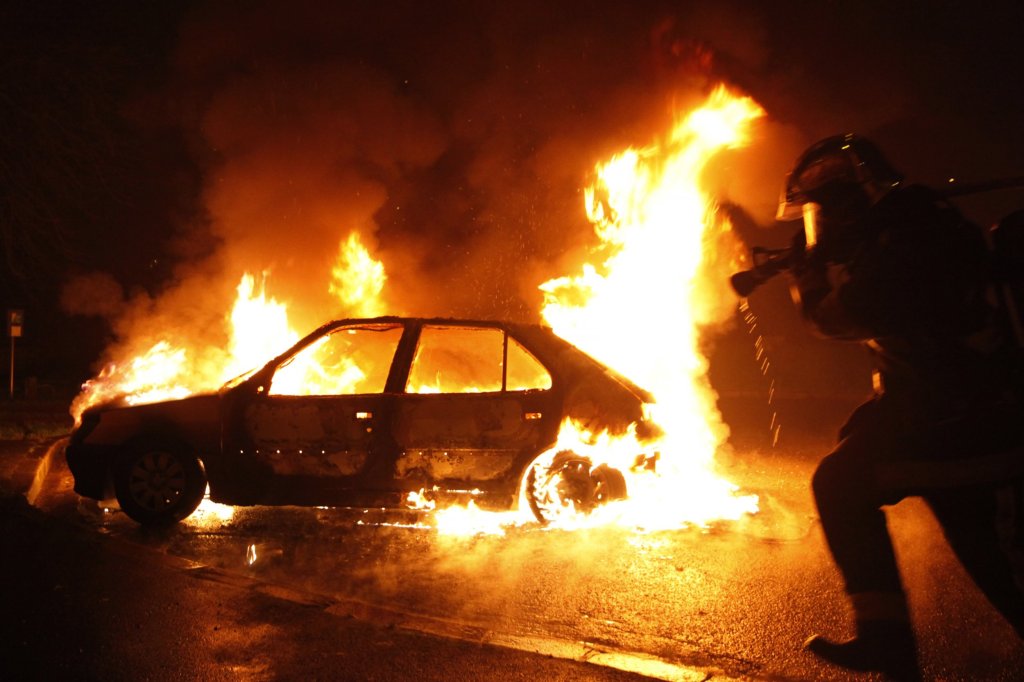
A traditional way of celebrating New Years Eve in France is by setting cars alight. According to the BBC, as of some 12 hours ago, a total of 874 cars have been set on fire. I’m sure that’s kind of like a firecracker, but multiplied out, that’s got to be about 10 million dollars in damages.

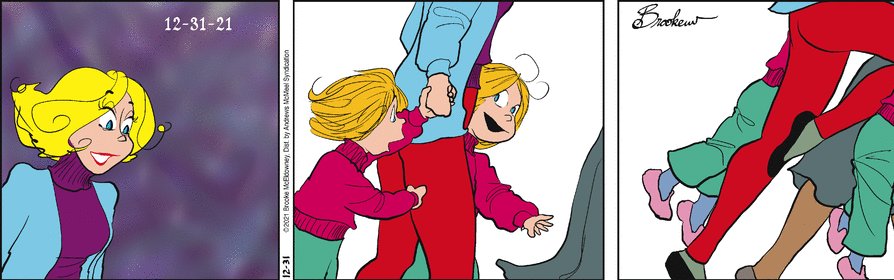
Far better is a series of two cartoons from Brooke McEldowney in his “9 Chickweed Lane” series. The first cartoon ran on December 31 and was a bit confusing:

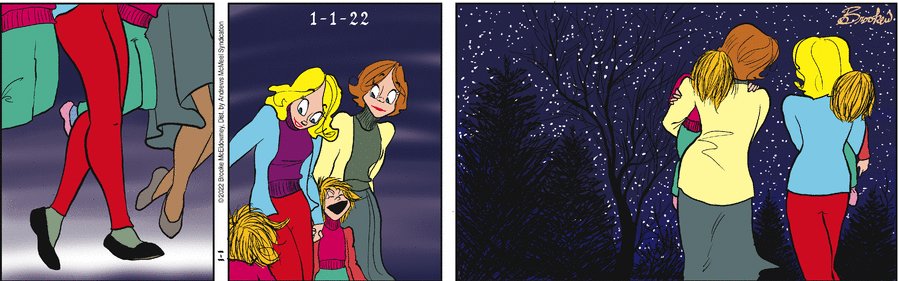
It all came clear with today’s cartoon:

I loved this set of images. We make a jump from one reality to another. Actually, it’s the same reality: Just a different template overlaying it. BTW, the look on the little girl’s face is priceless.

So let’s take that leap without incinerating any automobiles, if you please.

Biggest Goops of 2021

Nicki Minaj: This Dingbat Takes the Cake

After coming out against Year-in-Review news stories, I thought I’d contradict myself by highlighting the stupidest people of the past year. Think of it as Stupidity-in-Review, which is not quite the same thing.

NICKI MINAJ pops right up to the top of my list. During a global pandemic, she refuses to get vaccinated because of the (unnamed) cousin’s friend in Trinidad whose testicles became swollen and became impotent as a result. Well, that goes smack against the experience of my grand nephew’s proctologist’s accountant’s client who had no problems whatsoever—except for the painful anal probe when he was kidnapped by a UFO.

JANUARY 6 INSURRECTIONISTS run a close second. If most were tried for treason and executed, there would be a lot of rental units in the basement apartments of their mothers that would suddenly become available in Red States.

GWYNETH PALTROW. Speaking of Goops, there’s this actress who is actually trying to own the term without quite understanding what it means. With her belong many nabobs in the WELLNESS COMMUNITY who don’t understand that their belief systems do not deter potentially fatal viruses.

DONALD J. TRUMP who still thinks there are 70 million idiots just waiting to do his bidding. Hey, America knows how to forget losers.

QANON, yesterday’s favorite conspiracy source, has been outed thanks to an HBO documentary series, and is now running out of steam fast. (Reminds me, I need to go to the basement of the pizzeria to munch on some fresh babies.)

On the Bewitched Staircase

If you want to see a happy post, don’t catch me between Christmas and New Year. It is no accident that all my posts this week are unusually dark. My lone adherence to the Maya religion is my belief in the Uayeb, the unlucky five days that follow the 360 day Haab calendar to bring the total up to 365. According to an interesting website about the Uayeb:

Despite the fact that these days share the calendar with 18 other periods lasting 20 days each, the Uayeb had a bad reputation among the Maya people. According to writings found during the colonial period, these days were considered black periods in which the universe had released dark forces and therefore they didn’t share in the blessings of time.

In the Songs of Dzibalche, a codex found in 1942, a series of allusions to the Uayeb were discovered. These expressed the discomfort the days caused the Maya people:

The days of weeping, the days of evil/ The devil is loose, hell is open/ There is no goodness, only evil… the month of nameless days has come/ Days of pain, days of evil, the black days.

Several theories describe how the Maya passed through such dark times. Some specialists maintain that during these periods they stayed in their homes and washed their hair. Others claim they undertook great processions in thanks for what they’d experienced during the year. One thing that’s certain is that the word Uayeb could be translated as “bewitched staircase.”

So let’s just say I am having a bad Uayeb.

The Year in Review? Why?

Every year around this time, the press and the broadcast media like to run stories in which they remind us of the many infamies of the year that is to expire. I say let it expire in peace, without unnecessary commemoration.

It is good that we now have vaccines. If only we had people who were caring enough to take advantage of them. Today, I saw on Santa Monica Boulevard a pickup truck plastered with signs attacking the vaccine as a nefarious government plot to impugn our purity of essence, or some other likely rot. The vaccine would have been a triumph, but not in a nation teeming with ignorant mofos.

It’s equally to difficult to look back at the disasters wrought by climate change: California wildfires, tornadoes, floods, hurricanes, and a steadily rising mercury level.

While the economy hasn’t altogether collapsed yet, it gives dangerous signs of doing so.

So please forgive me if I neglect to celebrate the passing year. Only a fool celebrates the passing of time.

Return from Ecuador

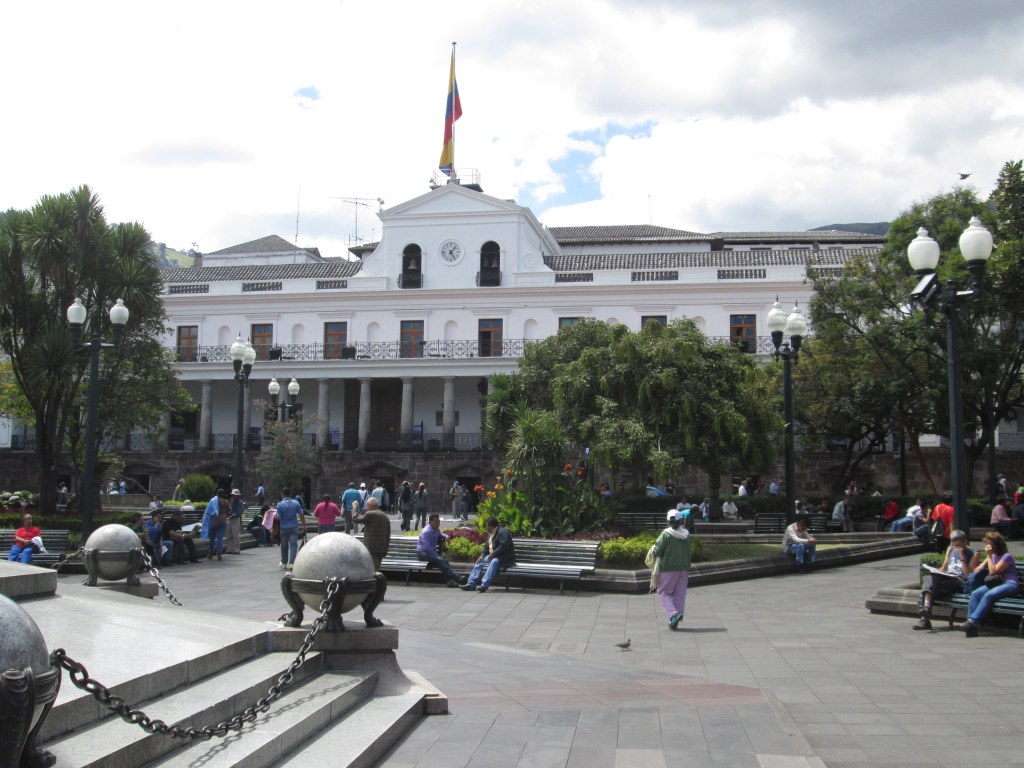
La Plaza Grande in Quito, Ecuador

I returned from my last vacation in South America under a dark cloud. It was November 9, 2016. I had spent a sleepless night at the Viejo Cuba Hotel on La Niña in Mariscal watching the election returns on CNN. I could not believe my eyes. Twenty times I would shut off the television and try to drift off to sleep; and twenty times I sprang awake and turned it back on because I could not believe my eyes.

Despite my dislike for Hillary Clinton, I had gone to considerable trouble to vote for her before flying off to Ecuador. I had to drive all the way to Norwalk on the I-105 in a heinous traffic jam. And now I would have to return to the United States to see my country attempt to survive the next four years under a malicious buffoon.

I managed to compose myself enough to take a taxi to Mariscal Sucré International Airport and catch my return flight on Copa Airlines to Los Angeles via Panama City.

When I landed at LAX, though, I was conscious of being in a different country than the one I had left three weeks before. Quite suddenly, all kinds of disreputable figures emerged from their hidey-holes into the broad daylight. And now, even though the Lardfather is no longer president, I feel the ground has shifted beneath my feet. The look on my face is of a skeptical vigilance.

Wild Geese and Eagles

The following passage appears in the Res Gestae (The Later Roman Empire A.D. 354-378) of the 4th century Roman historian Ammianus Marcellinus. This appears in a chapter about the Emperor Constantius’s attempts to head off a powerful Persian invasion. I cannot help but think that eagles don’t exactly key on their prey’s screams of fear.

When wild geese, in their migration from east to west [?] to escape the heat, approach the Taurus mountains, where eagles are common, their fear of these formidable birds leads them to stop up their beaks with small stones, to prevent a cry from escaping them, however hard-pressed But when they have passed over these hills in rapid flight they let the stones fall, and so pursue their way free from fear.

A Merry Xmas to All

During my entire adult life, I have been of two minds about Christmas. On the plus side, it is a pious celebration of God becoming Man in order to save the human race from the shame of Adam and Eve. Though I can’t help wondering that God, being God, could have accomplished the same result any number of ways.

On the negative side, Christmas time has become a two-months-long stress fest in which families immolate their finances and valuable time buying gifts that the recipients do not necessarily want or need. I am happy that the holiday is now over, because I will be able to drive without encountering quite so many highway kamikazes out on endless errands.

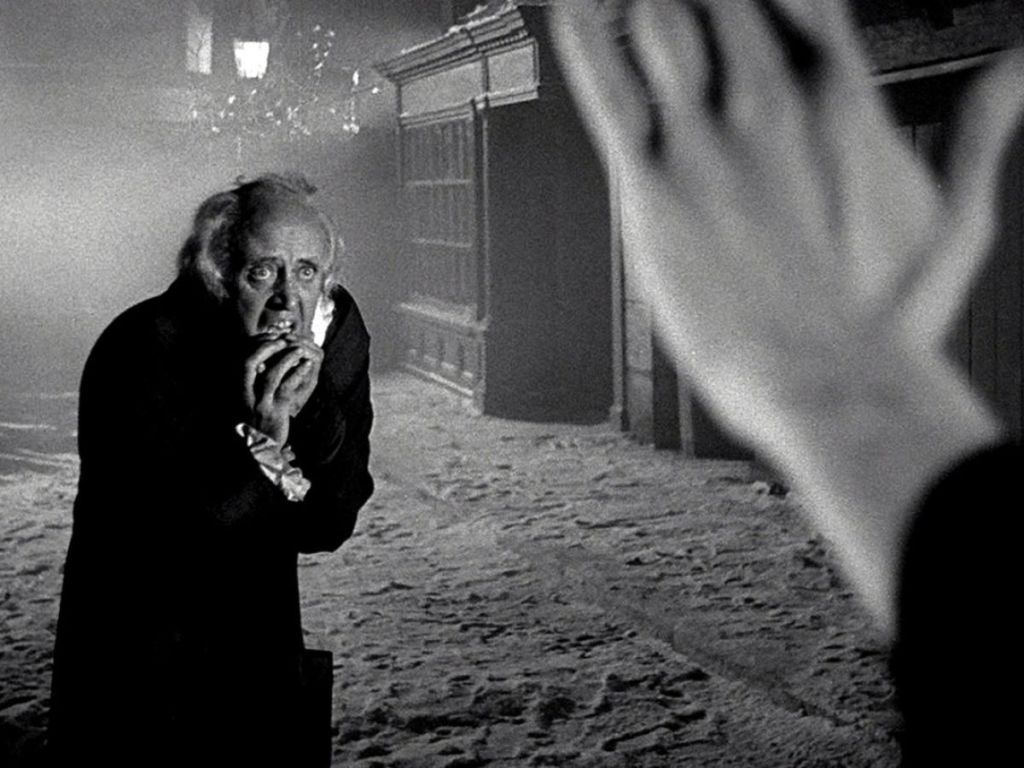
It was nice to see the two classical movie versions of Charles Dickens’s A Christmas Carol (1938 with Reginald Owen and 1951 with Alastair Sim, pictured above). In his story, Dickens doesn’t even mention the Deity, but he makes a case for generosity and good will toward men.

I also saw Bob Clark’s marvelous recreation of a 1950 Christmas in his 1983 A Christmas Story. In a way, the quest of Ralphie (Peter Billingley) for a BB gun is not nearly as acceptable a journey as Scrooge’s, but it was a reminder of my own Christmases in Cleveland. The picture showed such old Cleveland landmarks as the Terminal Tower, the Soldiers’ and Sailors’ Monument, and Higbee’s Department Store. I never got much in the way of presents except clothing that I didn’t like—except that my uncle gave me a $20 bill every Christmas, which was like a rare treasure for me, even though I couldn’t spend it on what I wanted.

At least I didn’t have an Aunt Clara who would make me a pink rabbit suit that made me look like a deranged Easter Bunny.

Down Two Muses

Christmas 2021 was going to see Los Angeles minus two of her muses. We just lost Joan Didion (above) to Parkinson’s disease; and six days ago, we lost Eve Babitz (photo below) to Huntington’s disease. Didion and Babitz were, to my mind, the leading writers about life in Southern California over the last half century or so.

I remember when I was first introduced to Didion by my friend Stephanie Hanna, who recommended back around 1970 that I read her great collection of essays entitled Slouching Toward Bethlehem. Since then, I have read at least eight other volumes of her fiction and nonfiction.

Eve Babitz was a more recent discovery, thanks mainly to the New York Review of Books (NYRB), which brought out most of her work in the last few years. I consider Eve’s Hollywood and Slow Days, Fast Company to be among the best works written about life in Southern California.

Joan Didion died in her 80s, and Eve Babitz at the age of 78. That makes me feel vulnerable, as I am a male who is about to reach his 77th year next month. In many ways, my acceptance of women as a source of outstanding literature about the local scene is due to these two powerful figures.

Now, as I look around me, who is there to take their places? No one that I can recognize at this point. I am just going to have to start looking….

Two Polar Voyages

December has seen a record-breaking cold snap in Los Angeles. So what do I do? I read two books about polar voyages, one an actual voyage, and the other a fanciful Jules Verne story.

Farthest North by the Norwegian Fridtjof Nansen (1861-1930) is the real thing. Nansen was a bona fide arctic explorer who was the first man to travel by sledge across Greenland and who got closer to the North Pole than anyone else before his 1893-96 voyage north of Siberia. he was not only a great explorer, but a humanitarian as well who won the Nobel Peace Prize in 1922 for his work protecting displaced victims of the First World War.

On his famous voyage, he lost no members of his expedition and came back with his ship intact.

This is in contrast to Jules Verne’s The Adventures of Captain Hatteras, which was published the year that Nansen was born. The godlike Captain Hatteras loses his ship to a mutiny, which ship, the Forward (curiously the same name as Nansen’s ship), is blown up by the mutineers. He also loses his mind, though he makes it to the Pole through some fanciful geography invented by Verne. Did you know there is an active volcano right at the North Pole? and that the ice floes do not exist above a certain latitude?

I don’t think I would like to have been under the command of Captain Hatteras. Give me Fridtjof Nansen any time!