Three Tigers

Wild Bengal Tiger (India)

Nobody does poems about tigers better than Jorge Luis Borges—with the sole exception of William Blake. Here is a poem translated by Alastair Reid entitled “The Other Tiger”:

The Other Tiger

And the craft createth a semblance.
—Morris, Sigurd the Volsung (1876).

I think of a tiger. The half-light enhances
the vast and painstaking library
and seems to set the bookshelves at a distance;
strong, innocent, new-made, bloodstained,
it will move through its jungle and its morning,
and leave its track across the muddy
edge of a river, unknown, nameless
(in its world, there are no names, nor past, nor future
only the sureness of the passing moment)
and it will cross the wilderness of distance
and sniff out in the woven labyrinth
of smells the smell peculiar to morning
and the scent of deer, delectable.
Among the slivers of bamboo, I notice
its stripes, and I have an inkling of the skeleton
under the magnificence of the skin, which quivers.
In vain, the convex oceans and the deserts
spread themselves across the earth between us;
from this one house in a remote lost seaport
in South America, I dream you, follow you,
oh tiger on the fringes of the Ganges.

Afternoon creeps in my spirit and I keep thinking
that the tiger I am conjuring in my poem
is a tiger made of symbols and of shadows,
a sequence of prosodic measures,
scraps remembered from encyclopedias,
and not the deadly tiger, the luckless jewel
which in the sun or the deceptive moonlight
follows its paths, in Bengal or Sumatra,
pf love, of indolence, of dying.
Against the symbolic tiger I have planted
the real one, it whose blood runs hotly,
and today, 1959, the third of August,
a slow shadow spreads across the prairie,
but still, the act of nameing it, of guessing
what is its nature and its circumstances
creates a fiction, not a living creature,
not one of those who wander on the earth.

Let us look for a third tiger. This one
will be a form in my dream like all the others,
a system and arrangement of human language,
and not the tiger of the vertebrae
which, out of reach of all mythology,
paces the earth. I know all this, but something
drives me to this ancient and vague adventure,
unreasonable, and I still keep on looking
throughout the afternoon for the other tiger,
the other tiger which is not in this poem.

Plague Diary #22: The Shrunken Universe

In My Life, the Maya Stand for the Universe at Large

The first time I traveled outside the United States, it was to Yucatán in 1975, when I was thirty years old. The last time I traveled outside the United States, it was the same—just as I reached the age of seventy-five. Almost immediately after my return to California, the Universe shrank suddenly. There was my apartment with its books and DVDs (and, yes, VHS tapes); there were the grocery stores and pharmacies and doctors’ offices. and precious little else.

Now, as the coronavirus is pulling out with the tide, the Universe is slowly growing larger. There are changes: people are wearing face masks (or not), and the rate of growth is incremental, with promise of sudden expansion after Independence Day. I have this sudden urge to travel, even if it is to the nearby desert, which is starting to heat up as summer nears. I would be content to travel somewhere in the United States with Martine. Currently, she is uninterested in visiting any foreign country except perhaps Canada.

On my kitchen table is a small pile of Lonely Planet guidebooks which I look into from time to time to remind myself that my present reality is just a small subset of what exists. I would not mind returning to Yucatán to visit the Maya sites that have so far eluded me: Cobá, Chacchoben, Dzibanche, Kinichna, Oxtankah, Calakmul and the Rio Bec sites, Yaxchilan, and Bonampak. Then, too, there are the Maya ruins in adjacent Belize—a new border to cross.

In fact, every time I look, there are more Maya sites to see. Most of them are in jungle terrain, which would mean protecting myself from mosquitoes, garrapatas, and other baddies referred to in Mexico as bichos. I rather like the fact that there is always more to see, to know, to absorb. To quote the Tao Teh Ching, “From wonder into wonder existence opens.”


Lone Wolf and Cub

Former Executioner Ogami Itto with Son Daigoro

I have always loved Japanese samurai films. Now, during my quarantine, I have been checking out some of the more marginal samurai series. As of today, I have seen all six of the Lone Wolf and Cub films starring Tomisaburo Wakayama and produced by the Toho studio in the early 1970s. These films include:

  • Lone Wolf and Cub: Sword of Vengeance (1972), dir: Kenji Misumi
  • Lone Wolf and Cub: Baby Cart at the River Styx (1972), dir: Kenji Misumi
  • Lone Wolf and Cub: Baby Cart to Hades (1972), dir: Kenji Misumi
  • Lone Wolf and Cub: Baby Cart in Peril (1972), dir: Buichi Saito
  • Lone Wolf and Cub: Baby Cart in the Land of Demons (1973), dir: Kenji Misumi
  • Lone Wolf and Cub: White Heaven in Hell (1974), dir: Yoshiyuki Kuroda

In all six films, Ogami Itto is pushing a wooden baby carriage which comes complete with an impressive series of armaments, including an early precursor of the Gatling Gun (?!). In White Heaven in Hell, it even turns into a toboggan, enabling Ogami to escape hundreds of attacking members of the Ura-Yagyu clan mounted on skis.

The body count in all six films easily exceeds a thousand, as the combination of Ogami’s swordsmanship and the rapid-fire machine gun built into the baby carriage wreaks havoc on his enemies.

Film Poster for Lone Wolf: Baby Cart in Peril

Obviously the source for the films comes from Japanese comic books known as manga. Below is a panel from one of the comics:

A Feeling for the Manga Source of the Films

Although there is no real dedication to realism or even plausibility in either the films or the comic books, the films are all well-crafted Toho Studio productions and immensely entertaining. There is some minor nudity in the films and a great deal of violence.


Rights vs “Rats”

End Quarantine Protest in Huntington Beach

They are both the same word, but “rats” (R1) is the Southern Confederate drawl version of “rights” (R2). They do not, however, refer to the same thing. R1 people are likely to insist that this is a free country, meaning they are free to do anything they want, even if it causes harm, like shouting “Fire!” precipitating a riot in a crowded theater. They are free to think that whatever they believe is true, such as that Covid-19 is a lie.

Myself, I consider myself to be an R2 person. I have certain inalienable rights, but these stop short when they cause harm. If I fire an AR-15 automatic rifle into a crowd, the possibility of killing multiple people puts a limit on my “rats.” Likewise, going to a crowded bar, getting coronavirus, and passing the disease on to my friends and relatives, possibly killing several of them, is to my mind a criminal act.

Confederate Prisoners Fighting for Their “Rats”

I first stumbled onto the difference in a scene from the 1993 Ted Turner film Gettysburg, when C. Thomas Howell, playing the part of Lieutenant Thomas Chamberlain, comes across a group of Confederate prisoners and asks them what they were fighting for. He doesn’t quite understand their answer, that it wasn’t for slavery that they were fighting, but for their “rats,” making him wonder why they were talking about vermin. It’s interesting to me that one person’s rights could be seen as another person’s crimes.

I see Trump in a difficult position. The disease is a serious one, and at the same time the economy is in dire straits. On one hand, his return-to-work policy could result in tens of thousands of deaths, especially of those misguided people who believe in him. On the other, it could lose him his presidency if his followers get so an inkling of what is really happening.


“Who Is Kafka? Who Is Anyone?”

Kafka’s Metamorphosis

I came across a wonderful poem by Asher Reich about Franz Kafka on the website of Haaretz, the Israel News. It is called

Who Is Kafka? Who Is Anyone?

Every time I looked at his picture I saw a different person.
The man waiting at the gate
is not Kafka, though his name begins with K.

The surveyor is not Kafka, nor is the lord of the castle
who is pretending to be the lord of the castle.
Is the cockroach Kafka, or vice versa? The cockroach
is playing itself, not the man Kafka. The man

whose picture is printed in the newspaper was born in Prague
and looks like Kafka, but he isn’t Kafka. He’s an insurance
agent called Josef K. who is sure he is
Kafka. The judge who glories in the rare name Kafka
is an actor in the play “The Trial” adapted

from Kafka’s book. Who is the hunger artist?
Did Kafka submit the report to the academy, or vice versa?
Was Kafka the jailer at the penal colony, or
vice versa: a wretched prisoner?! The police say
they have arrested Kafka for conspiring to burn his writings
and there are two witnesses who confirm his identity.

But it’s not Kafka. It’s his friend Max, who didn’t burn them,
because he pursued one-eyed justice. Was Kafka’s
vegetarianism only anti-meat or did his asceticism
imprison his life, which was one long suicide?
So who and what is this Kafka whose identity has faded?
The man who was against life, an exile in his own body,
succumbing to the sweet taste of sickness, or vice versa?

Autographed Still from Orson Welles’s Film of The Trial

The Max referred to in the poem was Kafka’s friend Max Brod, who decided not to destroy Kafka’s writings as his friend made him promise to do.

Translated by Vivian Eden. The Hebrew poem will be included in Reich’s “Selected Poems,” forthcoming at Mossad Bialik.


A Christian Sugar Coating

Landscape from Medieval Illuminated Manuscript

This is my first post since I promised to read several Arthurian manuscripts from the 11th and 12th centuries A.D. and report on my conclusions. The main conclusion is that we have been conditioned by later re-tellings of the legend to regard the tales as primarily Christian. That’s because the whole Matter of Britain including Arthur, the Holy Grail, Lancelot, and Camelot have been hijacked—first by Christian monks and then by Victorians such as Howard Pyle.

I am currently reading a work by the 12th century poet and troubadour Chrétien de Troyes entitled Lancelot, the Knight of the Cart (Lancelot, le Chevalier de la Charette). It contains what might be the earliest mention of Lancelot of the Lake, whose name is not even mentioned until halfway through the work. (Since there are so many unnamed knights in the work, it is difficult at times to follow the action.)

Lancelot Having Sex with Guinevere or Some Unnamed Damsel

In no other early Christian work does one find such unabashed indulgence in sex as one does in some of the earlier Arthurian romances. This seems to me somewhat contrary to Christian mores of the time, though probably not in actual practice. In Chrétien’s telling, several damsels want to give themselves to Lancelot, but he holds back because of his desire to rescue Guinevere from King Bademagu and his nasty son Meleagant, who kidnapped her. After Lancelot’s fight with Maleagant, the married Guinevere readily gives herself to the French knight:

Now Lancelot possesses all he wants, when the Queen voluntarily seeks his company and love, and when he holds her in his arms, and she holds him in hers. Their sport is so agreeable and sweet, as they kiss and fondle each other, that in truth such a marvellous joy comes over them as was never heard or known. But their joy will not be revealed by me, for in a story it has no place.

Lancelot Slaying Enemy Knights

The adulterous love is only one element borrowed from earlier pagan myths. There is something rather suspicious about medieval knighthood. It seems to derive from Celtic and Germanic sources of powerful warriors, but glazed over with a Christian sugar-coating.


Plague Diary 21: Open With Restrictions

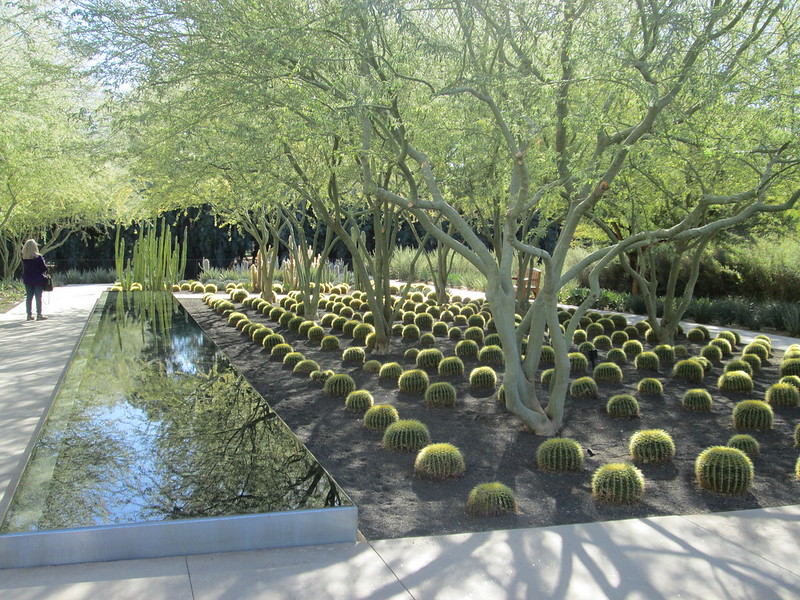
The Los Angeles Arboretum in 2017

Little by little, selected trip destinations are opening up s-l-o-w-l-y and with multiple restrictions. I can now visit the beach, but only if I am actively swimming, walking, or running. If I lie down and try to get a tan, or picnic, or even bring a cooler with me, the police would roust me. And of course, the water fountains are closed, together with the snack bars. Also the parking lots along the beach will be closed.

At the Los Angeles Arboretum, one can only walk on the paved paths in a park where half the paths are unpaved. And, of course, the benches are off limits, water and food are not available. I assume that if you sit down on one of the capacious lawns, you will be asked to move on.

Descanso Gardens is not closing down any of their unpaved paths, but again no benches or food, though water will be available.

The next time we get a heat wave, I will probably take a bus down to the beach and take a walk. I would like to lie on the beach, but I suppose a walk would be good for me.

I have this funny feeling that it will be many months before anything resembling normalcy will be restored to us.


Plague Diary 20: The Virus Mutates

As the Virus Mutates, the Symptoms Change

In a way, I hate writing about Covid-19. It seems that over 80% of the news on any given day is about the virus. One result is that most of us stay-at-homes are itching to get on with our lives. The pressure to do away with social distancing is growing from the top down, thanks to the current occupant of the White House. Suddenly, reasonable measures to contain the virus are being treated by protestors as violations of the constitution of of our God-given rights. (That last word, given a Southern drawl should come out pronounced as “rats”)

According to a CNN article released today, it seems the virus is mutating before our eyes and exhibiting a different array of symptoms, including:

  1. Aortic occlusions causing blood clots in the body’s main artery.
  2. Multi-system organ failure, when all the patient’s organs shut down at once.
  3. Pediatric multi-system inflammatory syndrome in which a child suffers “persistent fever, inflammation, poor function in one or more organs, and other symptoms that resemble shock.”
  4. “Covid toes,” in which red or purple lesions appear on the bottom side of the toes.

Based on conversations I have had with people, most think a vaccine is on the point of being developed that will allow all of us to return to work shortly. Please note, however, that the fastest a vaccine has ever been developed to fight a particular disease is four years, I suspect that if the coronavirus is mutating, it will probably take longer.

My prediction: As a result of social distancing, coronavirus will die down and then return in sudden outbreaks when the controls have been lifted. The people who are supporters of the President will, upon relaxing social constraints, be particularly likely to catch the disease in one of its new, more troubling configurations.


“Heroes” and “Warriors”

Comrades Brezhnev and Nixon: За здоровье!

Under the rule of Hero of the White Race Donald Jehoshaphat Trump, it is suspiciously reminiscent of the bad old days of the Leonid Brezhnev’s Soviet Union. Both rulers are mentally decrepit, yet outwardly pugnacious. To come up to the Brezhnev standard, our Presidente is now using battlefield language. According to a story in the Los Angeles Times:

Donald Trump has described himself as a “wartime president” during the coronavirus crisis, and now he seems to have found his army as he pushes the country to reopen despite the risks.

In recent days, he’s begun describing citizens as “warriors” in the battle against the pandemic and suggested some of those fighters might have to die if that will help boost the economy.

“Will some people be affected? Yes,” he said on a trip to Arizona this week, his first outside of the Washington area in nearly two months. “Will some people be affected badly? Yes. But we have to get our country open, and we have to get it open soon.”

Notice the two medals that Brezhnev is sporting. One of them signifies that he is a Hero of the Soviet Union:

Hero of the Soviet Union Medal

Perhaps Trump needs to send us—in addition to those putative $1,200 checks—a medal signifying that we are Heroes of the Chinese Virus War.

I for one do not wish to be a “hero” or “warrior” as Trump defines it. That could only mean in Trumpspeak that we are losers. It is preferable to the Donald that all the “heroes” and “warriors” die nobly so that he could look good at our collective obsequies.


Liberté

French Poet Paul Éluard (1895-1952)

There are many ways of discovering a great poet. In the case of Paul Éluard, I was introduced to his work from seeing films of French film director Jean-Luc Godard, particularly Alphaville (1966).

Liberté

On my school notebooks
On my desk and on the trees
On the sands of snow
I write your name

On the pages I have read
On all the white pages
Stone, blood, paper or ash
I write your name

On the images of gold
On the weapons of the warriors
On the crown of the king
I write your name

On the jungle and the desert
On the nest and on the brier
On the echo of my childhood
I write your name

On all my scarves of blue
On the moist sunlit swamps
On the living lake of moonlight
I write your name

On the fields, on the horizon
On the birds’ wings
And on the mill of shadows
I write your name

On each whiff of daybreak
On the sea, on the boats
On the demented mountaintop
I write your name

On the froth of the cloud
On the sweat of the storm
On the dense rain and the flat
I write your name

On the flickering figures
On the bells of colors
On the natural truth
I write your name

On the high paths
On the deployed routes
On the crowd-thronged square
I write your name

On the lamp which is lit
On the lamp which isn’t
On my reunited thoughts
I write your name

On a fruit cut in two
Of my mirror and my chamber
On my bed, an empty shell
I write your name

On my dog, greathearted and greedy
On his pricked-up ears
On his blundering paws
I write your name

On the latch of my door
On those familiar objects
On the torrents of a good fire
I write your name

On the harmony of the flesh
On the faces of my friends
On each outstretched hand
I write your name

On the window of surprises
On a pair of expectant lips
In a state far deeper than silence
I write your name

On my crumbled hiding-places
On my sunken lighthouses
On my walls and my ennui
I write your name

On abstraction without desire
On naked solitude
On the marches of death
I write your name

And for the want of a word
I renew my life
For I was born to know you
To name you

Liberty.