The Market at Otavalo

The Crafts Market at Otavalo in Northern Ecuador

The Crafts Market at Otavalo in Northern Ecuador

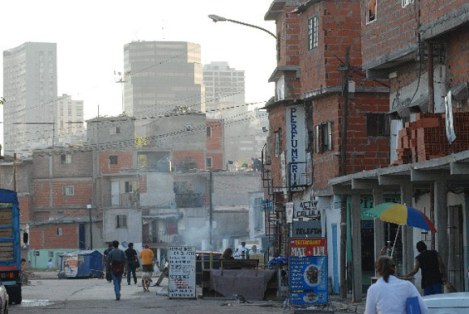
Two hours north of Quito is the town of Otavalo, famed for its textile crafts market. This and some of the surrounding areas look like great destinations. Consider, for example, a hike around the Lagunas de Mojanda, just south of town (see below).

Photo from Marco Vargas Photography

Photo from Marco Vargas Photography

Right now, as my eyes haze over from doing tax returns, is where my mind is. I am back in the Andes, with my brother, and dreaming of Quito and the surrounding countryside—such as the high altitude cloud forests which features dozens of species of wildly multicolored hummingbirds.

Dream on, Jim!

It’s a Crime!

LA’s Men in Blue

LA’s Men in Blue

Let’s face it: Los Angeles is known around the world for two things. One is Hollywood, though we’re by no means a major film production center any more. And the other is crime. Not, mind you, because we are a particularly dangerous place; but the books and movies have painted Southern California as a place where bad things can happen.

I guess it all started with Raymond Chandler, James M. Cain, David Goodis, Cornell Woolrich, and Dashiell Hammett, whose novels painted this sunbright place as a pit of darkness. That was quickly echoed in the films, especially with the film noir classics such as The Big Sleep, Double Indemnity, Mildred Pierce, The Blue Gardenia, and The Big Heat.

Even now, excellent crime novels are being written by the likes of James Ellroy, Joseph Wambaugh, and Michael Connelly. I am currently reading Connelly’s Trunk Music, a police procedural featuring his homicide detective hero Harry (short for Hieronymus) Bosch. A small-time Hollywood producer is found dead in the trunk of his Rolls Royce, and Bosch ranges from the Hollywood Hills to Park Center (“The Glass House,” LAPD headquarters) to the Las Vegas Strip to find the killer while fighting off his own enemies.


To South America … Again

View of Quito’s Old Town

View of Quito’s Old Town

Once again, Martine does not want to travel with me. Her continuing problems with back pain when sleeping in soft beds and almost continuous irritable bowel syndrome makes her want to stay close to home. This year, I will go to Ecuador, especially to the Andes region.

The good news is that I will not be traveling alone: My brother Dan expressed interest in joining me. The last time we traveled together was in 1979, when we did the circuit Mexico City-Villahermosa-Palenque-San Cristobal de las Casas-Oaxaca-Mexico City. It was the same circuit described by Graham Greene in his book The Lawless Roads (1939). We traveled by air to Villahermosa (not a high point in any sense of the term) and by bus the rest of the way back to Mexico D.F.

Dan and I are, I think, good traveling companions. He’s not very interested in ruins (there aren’t that many in Ecuador), and he is very interested in native crafts (as am I). He has already been to Guayaquil and the Galapagos and said that travel to the latter was much too regimented. I was hoping he didn’t want to go there again because (1) when we’re going is the wrong time of the year (October/November) and (2) Zika.

At this point I’ll tell you a couple of anecdotes about traveling with my brother. We were in Palenque at the time of the Christmas Posadas, and Dan loved the coffee served in the area—it was grown locally. When we were in a café one evening, a shoeshine boy came up to us and asked if we wanted a shine. Dad slipped his foot out of his sandals and set it on the stand. The trouble is: As far as anyone could see, he was wearing only bright red socks. All the locals burst out laughing. No matter, I was wearing leather boots and gave him my business.

Another Palenque incident fortunately turned out the right way. Dan ducked out frequently in the evening to satisfy his coffee cravings while I remained behind reading a book. I heard a commotion in the street, and Dan came up shortly after. Apparently, a police informer tried to sell him “magic mushrooms” (psilocybin), and Dan guessed his intent at once. No sale.

There are some other stories from that trip that I’ll write about some other time.

“The Stars Are Not Wanted Now”

Wystan Hugh Auden, by Bill Potter, bromide print, 1972

Wystan Hugh Auden, by Bill Potter, bromide print, 1972

This poem by W. H. Auden, variously called “Funeral Blues” and “Stop All the Clocks, Cut Off the Telephone,” is the second part of “Two Songs for Hedli Anderson.” Antoinette Millicent Hedley Anderson (1907-1990) was an English singer and actor who was a good friend of the poet. As she outlived Auden by some twenty years, it appears the song was written for her to sing in a performance.

Stop all the clocks, cut off the telephone,
Prevent the dog from barking with a juicy bone,
Silence the pianos and with muffled drum
Bring out the coffin, let the mourners come.

Let aeroplanes circle moaning overhead
Scribbling on the sky the message He Is Dead,
Put crêpe bows round the white necks of the public
doves,
Let the traffic policemen wear black cotton gloves.

He was my North, my South, my East and West,
My working week and my Sunday rest,
My noon, my midnight, my talk, my song;
I thought that love would last for ever: I was wrong.

The stars are not wanted now: put out every one;
Pack up the moon and dismantle the sun;
Pour away the ocean and sweep up the wood.
For nothing now can ever come to any good.

Bad Alumnus

Omigosh, Is It Time for My 50th Reunion Already?

Omigosh, Is It Time for My 50th Reunion Already?

On June 3, 1966, I graduated with an A.B. from Dartmouth College. What’s an A.B, you may ask? Well, as my diploma is entirely in Latin, it stands for Artium Baccalaurei, or Bachelor of Arts.

Although I am besieged with mail from the college, asking for money, participation in local and national alumni events (such as my 50th Reunion), and deluxe trips around the world with other alums. Will I participate? Uh, no. That despite the fact that I was awarded a four-year alumni scholarship, for which I am grateful—but not in any material way.

What bothers me is that none of the people I knew and liked at Dartmouth are active with the alumni. Instead, it’s all the same gladhander crew that was active in the fraternity system (which I loathed), student government (for which I was not popular enough), and/or sports (for which I didn’t qualify). I went through four years of Dartmouth with a brain tumor, which was not operated on until September 1966. Until then, I looked like an extraordinarily pale and sickly middle school or high school student.

It’s not that I didn’t make friends easily. My oldest friend was one of my classmates who now lives only 25 miles from me in San Pedro. There are others, but they were all like me in one way or another—and none saw fit to become active with the alums.

Somehow I managed to survive the college years, and even enjoyed them despite a level of pain that would sink me into my grave today. Those frontal headaches were almost constant, the result of a pituitary tumor pressing against my optic nerve. Today I am a different person altogether.

The one debt I feel I owe Dartmouth is actually to the Catholic Student Center there. When I was lying near death at Fairview General Hospital in Cleveland, my parents were shocked to find that my student insurance had just expired. They told Monsignor William Nolan of the Center to pray for me, which he did—and more. He went to bat for me and bullyragged the insurance company into covering me. Imagine that happening today!

Monsignor Nolan has since gone to join his ancestors, but I still owe him. And he gets paid in full before anyone else at Dartmouth gets dime one from me.

Not the Worst of Men

Hugo Chavez, the late President of Venezuela

Hugo Chavez, the late President of Venezuela

Not all dictators are uniformly bad. Okay, there were Hitler, Stalin, Pol Pot, and Mao—not to mention the horrendous Kim dynasty of North Korea. But think for a second: Would the world be in this ISIS/ISIL/Daesh mess if Saddam Hussein were still alive? We hanged him for being a bad dude, but worse dudes were to follow.

If there is any country in the Western Hemisphere that is an abysmal basket case, that country would be Haiti. After the 2010 earthquake that leveled half the country, all the NGOs moved in with their shiny SUVs and their air of moral superiority. One country, however, donated money to Haiti—admittedly much of which went into the wrong hands—but the recipients did not have to grovel for it. That was Venezuela, which at the time was basking in oil wealth. Through its Petrocaribe alliance with several other states, Hugo Chavez gave millions to the devastated country.

Now Venezuela is in dire straits and Hugo Chavez is dead of cancer. As much as his regime bad-mouthed the U.S., I salute Chavez for having a heart that was often in the right place.

Living With Bad Paper

A Ticket to Homelessness?

A Ticket to Homelessness?

Joining the military could be a kind of solution for young men and women who do not have great job prospects upon leaving high school. But what if the desire for “street cred” overrides good judgment, and the GI finds himself or herself with a discharge that is considered to be Other Than Honorable, or simply OTH? Another name for such a discharge is “Bad Paper.”

For over a million former soldiers, sailors, and airmen, Bad Paper is a ticket to homelessness without the possibilities of veterans’ benefits such as education, homelessness prevention, and disability or health care. That’s not even to mention the turned-down job applications and the loss of esteem that follows.

For those who leave the military with a trail of Bad Paper, it would have been better if they were merely felons in the civilian world: The military world is unforgiving and sometimes unduly punitive. When questioned about this, General Martin Dempsey replied:

I wouldn’t suggest that we should in any way reconsider the way we characterize discharges at the time of occurrence…. It is a complex issue and we all make choices in life that then we live with for the rest of our lives and I think we have to understand that as well.

Not much help there.

Ideally, there would be some kind of civilian post-discharge review that could rectify the vagaries of military justice, which varies widely from service to service and from one unit to another.


Stubby Fingers Speaks

Vote for Me or I’ll Sue You

Vote for Me or I’ll Sue You

I want to be President of the United States because I know I can make it as great as I am. And how great am I? I’m not only extremely smart and good-looking, but richer than you can imagine. How many planes and helicopters do you own that have your name all over them? And look at my fingers: They’re not short and stubby; and as for the other thing, once I wrap a couple of hundred dollar bills around it, it’s big enough for any purpose! Even my beautiful daughter would go out on a date with me.

This persecution of my followers has to stop at once! As the Bible says in my favorite book, the Gospel of St. John the Baptist: “If you live by the sword, you’ll die in bad company, where there is the weeping and gnashing of teeth!” That’s Holy Scripture, you know, almost as holy as The Art of the Deal.

One of My Courteous, Alert Followers

One of My Courteous, Alert Followers

So this is what I’m here to tell you today: If you don’t want to make America great again, if you don’t vote for me, I’m going to take you to court. How will I know who you voted for? I’ll know! I know everything because of how smart I am. So watch yourself, or you’ll wind up even more miserable than you already are.

You know that Mexicans and Muslims and dark people are no good for America. I’m beginning to think that Canadians are a bit iffy too, so we’ll have to build a wall across our borders with Canada as well as Mexico. And I’ll make the Canucks pay for it.

In the meantime, come and have some of my special Trump burgers and Trump beer! Don’t crowd, just make sure none of those protesters get their hands on any of it. Huh? … What’s it made of? … You can bet it’s the best meat that the highways of America have to offer.


The New Petersen

The Redesigned Petersen Automotive Museum

The Redesigned Petersen Automotive Museum

The new look takes some getting used to, but it seems to be an astonishing success. Martine and I have visited the Petersen Automotive Museum about once every year. Never did we see such a crowd as we saw today. We had to park on the second floor of the parking structure, for the first time ever.

I always liked the old Petersen, but it had grown a bit tatty over the years. Now both the inside and outside are all new. One starts with the historical exhibits on the third floor, comes down to see the industry exhibits on the second floor, and finally returns to the ground floor to see exhibits of the classic automobile as a fine art form, including cars painted by David Hockney and Alexander Calder.

Insofar as I know, Southern California now has three world class auto museums:

  • The Petersen Automotive Museum on Wilshire Boulevard’s Museum Row
  • The Nethercutt Collection in Sylmar in the San Fernando Valley, a free museum that charges no admission and is easily as extensive as the Petersen
  • The Murphy Auto Museum in Oxnard, which Martine and I have not visited yet (but hope to see next monh after tax season)

Since L.A. is a city made possible by the automobile, it makes sense to study the phenomenon here.

Where the old Petersen thematically separated their vehicles in mutually exclusive areas, the new layout intermixes such items as famous cars used in movies, old horseless carriages, motorcycles, and one-of-a-kind fantasy cars so that one doesn’t just skip around. It is possible to see the same technological and design ideas cross-fertilizing the different kinds of vehicles on the road.

It is quite evident that the Petersen got a large influx of money (some $90 million I understand). The new chairman, Peter Mullin, has run his own auto museum in Oxnard, which may have merged with the Petersen.


Hidden in the Credits

Production Designer Sir Ken Adam

Production Designer Sir Ken Adam

Above all, we tend to give credit to the actors in a movie. Those who know a little more about how films will tend to credit the director. But it doesn’t stop there. What about producers like Val Lewton and Henry Blanke, cinematographers like Gregg Toland and Gabriel Figueroa, editors like Slavko Vorkapich, and—more to the point here—production designers like Sir Ken Adam?

I remember having a Dartmouth Film Society dinner with Hollywood producer Max Youngstein in the mid 1960s. He had just produced Fail-Safe (1964). When I asked him if the production had been designed by Ken Adam, he positively beamed at me. He prided himself for having found someone else who gave the film a Ken Adam touch.

Why? Ken Adam was responsible for film designs which will forever be associated in our minds with the best of the 1960s, such as Doctor No (1962) and Doctor Strangelove (1964).

Doctor No’s “Reception Room” in the Film of the Same Name

Doctor No’s “Reception Room” in the Film of the Same Name

In addition there was the War Room in Doctor Strangelove, or How I Learned to Stop Worrying and Love the Bomb (1964):


Kubrick’s War Room in Doctor Strangelove

Model for Kubrick’s War Room in Doctor Strangelove

As one who lived through that anxious time, I will always remember Ken Adam’s sets for these and other films. Perhaps he is unknown to the general film-going public, but now that we lost him, his vision will be missed.