Text: Pope Francis Speaks Out

Pope Francis

Pope Francis

In this context, some people continue to defend trickle-down theories which assume that economic growth, encouraged by a free market, will inevitably succeed in bringing about greater justice and inclusiveness in the world. This opinion, which has never been confirmed by the facts, expresses a crude and naïve trust in the goodness of those wielding economic power and in the sacralized workings of the prevailing economic system. Meanwhile, the excluded are still waiting. To sustain a lifestyle which excludes others, or to sustain enthusiasm for that selfish ideal, a globalization of indifference has developed. Almost without being aware of it, we end up being incapable of feeling compassion at the outcry of the poor, weeping for other people’s pain, and feeling a need to help them, as though all this were someone else’s responsibility and not our own. The culture of prosperity deadens us; we are thrilled if the market offers us something new to purchase; and in the meantime all those lives stunted for lack of opportunity seem a mere spectacle; they fail to move us.—Pope Francis, Evangelii Gaudium

Where on Earth Is Frisland?

It Looks As If It Is South of Iceland

It Looks As If It Is South of Iceland

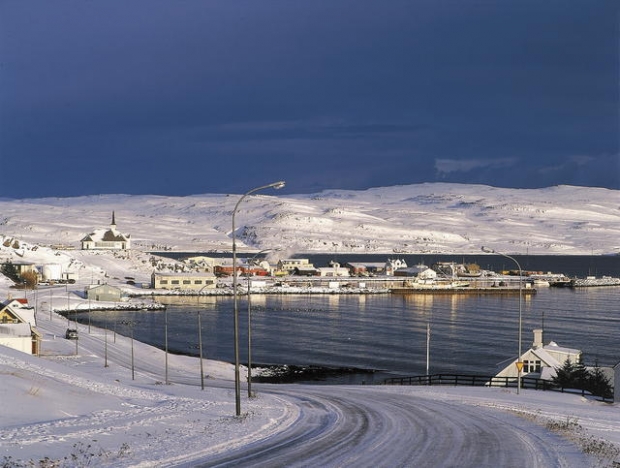
Until late in the Sixteenth Century, maps of Europe had a largish island called Frisland (also called Frischlant, Friesland, Frislandia, or Fixland) situated south of Iceland. It is thought that an Italian mapmaker named Nicolo Zeno was first responsible for the placement of the imaginary island on his charts in 1558. Then, in 1573, the Fleming Abraham Ortelius picked it up for his maps, followed by Gerard Mercator (he of the projection) of Duisburg. In 1576, Martin Frobischer thought he was in Frisland when, actually, he had overshot it and found himself in Greenland.

I am indebted to Benedikt Jóhannesson of the Iceland Review for turning me on to this existence of this cartographic canard. I remember standing on the farthest southern point of the Westmann Islands in Iceland and looking south. I saw quite a few small, rather volcanic rocks to the south—but nothing as large as Frisland is represented to be. Perhaps it’s the original Fantasy Island.

Curiously, this part of the ocean lies along the Mid-Atlantic Ridge. There have been volcanic islands that arose from the bottom of the sea, only to subside or be eroded away after the eruption that created them spent its fury. Perhaps someone reported some such island—though no way that large—and some mapmakers picked it up and embellished it a bit. A good example of such an island is Ferdinandea, between Sicily and Tunisia, which appeared and disappeared several times. It lasted long enough for several countries in the Nineteenth Century to dispute its ownership.

Heisenberg at Dealey Plaza

The Elusive Umbrella Man

The Elusive Umbrella Man

After the rain of the day before, November 22, 1963 dawned bright with nary a cloud in the sky. It was a fateful day for America, as John F. Kennedy was about to take a bullet in the neck from a known or perhaps an unknown assassin. In the footage of the event, not only from Zapruder but from a whole pack of bystanders, there is a single man in the crowd holding aloft an umbrella. The so-called “Umbrella Man” has become one of the mysteries of that day. So mysterious that documentary filmmaker Errol Morris made a fascinating six-minute film on the subject which you can see by clicking below:

It is worth seeing this video, because, in my opinion, it is about one of the great mysteries of life. Author John Updike foresaw this when the wrote the following lines in The New Yorker in December 1967:

We wonder whether a genuine mystery is being concealed here or whether any similar scrutiny of a minute section of time and space would yield similar strangenesses—gaps, inconsistencies, warps, and bubbles in the surface of circumstance. Perhaps, as with the elements of matter, investigation passes a threshold of common sense and enters a sub-atomic realm where laws are mocked, where persons have the life-span of beta particles and the transparency of neutrinos, and where a rough kind of averaging out must substitute for absolute truth. The truth about those seconds in Dallas is especially elusive; the search for it seems to demonstrate how perilously empiricism verges on magic.

Errol Morris and his interviewee, Josiah “Tink” Thompson, understood this implicitly when they made the film. They even found the mysterious umbrella man and talked to him. It turns out his umbrella was a silent protest against John F. Kennedy’s father, Joseph, who was U.S. Ambassador at the Court of St. James in England. It seems the umbrella man thought him a Nazi appeaser. But that didn’t keep the rumor mills from spinning on.

Today there are a number of assertions believed by a great number of people that Barack Obama was a Muslim born in Kenya and who attended a madrassa in Indonesia, that the Second Amendment allows Americans to carry high powered military rifles, that Jesus taught us that people of the LGBT persuasion should be persecuted, and that abortion-mad Chinese feast on human fetuses.

Even when proofs and evidence are produced, people will still hold on to their beliefs. They have been told these things by people whom they trust, and who are you to shake their world?

Text: “A Human Being by Definition Only”

Walker Evans Photo

Walker Evans Photo

A civilization which for any reason puts a human life at a disadvantage; or a civilization which can exist only by putting human life at a disadvantage; is worthy neither of the name nor of continuance. And a human being whose life is nurtured in an advantage which has accrued from the disadvantage of other human beings, and who prefers that this should remain as it is, is a human being by definition only, having much more in common with the bedbug, the tapeworm, the cancer, and the scavengers of the deep sea.—James Agee, Cotton Tenants: Three Families

Ginza West

Christmas Tree at Japanese Village Shopping Center

Christmas Tree at Japanese Village Plaza

Before ascending the foothills to visit my friend Bill Korn in his Altadena mountain fastness, Martine and I stopped in Little Tokyo for lunch. As usual, we ate at the Suehiro Cafe on First Street. Both of us had bento box lunches (the Okonomi Plate) with miso soup and a choice of optional mains and sides as shown on the menu. Then we walked over to the Kinokuniya Bookstore on Weller Court where—miraculously—I didn’t buy any books or samurai films on DVD. Then, we went over to the Yamazaki Bakery at the Japanese Village Plaza. As a diabetic, I was only able to watch as Martine bought some tiramisu for herself and strawberry cream puffs for Bill and Kathy Korn.

Had we the time and inclination, we could also have visited several other adjacent Japanese shopping centers, two Buddhist temples, dozens of gift shops and food stores, and the Japanese-American National Museum. There is also the Japanese American Cultural & Community Center, where one delirious day I once saw four consecutive Raizo Ichikawa films, including one of the now hard-to-see Kyoshiro Nemuri samurai films directed by Kazuho Ikehiro.

Immersing ourselves in another culture is one of the most fun things to do in Los Angeles. My interest in the Southern California Japanese began early, in 1967, when I lived in a little Japanese neighborhood off Sawtelle Boulevard in West Los Angeles. Around the same time, I started going by bus to the Toho La Brea Theater to see Hiroshi Inagaki’s Samurai trilogy and all the latest films from Akira Kurosawa. As I made more friends in the film department at UCLA, I discovered four other Japanese cinemas in the area: the Kokusai and Sho Tokyo (both running films exclusively from Daiei Studios), the Kabuki (Shochiku Studios), and the Linda Lea (Tohei). We used to eat at the old Ichiban Cafe at the corner of First Street and San Pedro Street.

Japanese Magazines at the Kinokuniya Bookstore

Japanese Magazines at the Kinokuniya Bookstore

There are a number of other ethnic neighborhood concentrations in Southern California. The largest are probably the Mexican neighborhood in “East Los” (East Los Angeles) and Boyle Heights; the sprawling Koreatown along Olympic Boulevard as it approaches downtown; and Little Saigon in Orange County. Then there are the Central Americans in Pico-Union, the Armenians in Glendale, and the Russians in Hollywood and West Hollywood. And those are just the ones I’ve visited!

For Love of a Tree

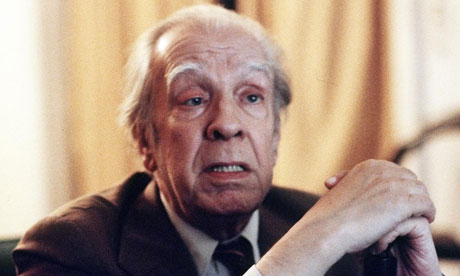
Fanning Her Insomnia with Dreams

Fanning Her Insomnia with Dreams

Poems written in other languages have a difficult passage to get to English. In the end, what we see is a mere simulacrum of the original. Still, the greatness of a poem will out. If a poem was originally written in French, Spanish, or Hungarian, I can get more of a feeling for the original; but what of the poems of the great Anna Akhmatova (1889-1966), which were written in Russian? I have approached several of her translated works and loved them, or else loved the pale reflections they cast in English, such as this one:

Willow

In the young century’s cool nursery,
In its checkered silence, I was born.
Sweet to me was not the voice of man,
But the wind’s voice was understood by me.
The burdocks and the nettles fed my soul,
But I loved the silver willow best of all.
And, grateful for my love, it lived
All its life with me, and with its weeping
Branches fanned my insomnia with dreams. But
—Surprisingly enough!—I have outlived
It. Now, a stump’s out there. Under these skies,
Under these skies of ours, are other
Willows, and their alien voices rise.
And I am silent … As though I’d lost a brother.

(Translated by D. M. Thomas)

The poem becomes clearer when you understand what its author endured through her long life. I quote one paragraph from the Wikipedia entry on her:

Primary sources of information about Akhmatova’s life are relatively scant, as war, revolution and the totalitarian regime caused much of the written record to be destroyed. For long periods she was in official disfavour and many of those who were close to her died in the aftermath of the revolution. Akhmatova’s first husband, Nikolai Gumilev was executed by the Soviet secret police, and her son Lev Gumilev and her common-law husband Nikolay Punin spent many years in the Gulag, where Punin died.

Perhaps if an ogre like Stalin could take everyone you ever loved away from you, then perhaps your soul will be fed by “the burdocks and the nettles.”


False Certitudes

Norman Rockwell’s Homecoming of a U.S. Marine

Norman Rockwell’s Homecoming of a U.S. Marine

Let me begin by saying right off the bat that there is nothing wrong with the illustrations of Norman Rockwell. It’s just that he spoke for a different America, an America that was predominately small-town or even rural. His work belongs with the Judge Billy Priest stories of Irvin S. Cobb, silent films like King Vidor’s Tol’able David (1921), and the paintings of Thomas Hart Benton. Just about everybody you would be likely to meet on Main Street was White, Anglo-Saxon, and Protestant.

Then the Second World War happened, and people started to move around—a whole lot. African-Americans moved up to the industrial cities of the Northern U.S. Mexican farmers started streaming across the border to help bring in the crops.

And people like me started to pop up. When my kindergarten teacher, Mrs. Idell, first saw me in 1950 at Harvey Rice School in Cleveland, it was probably like a portent of the Apocalypse. My friend András and I didn’t speak a work of English. And although she taught at a public school in the heart of the largest Hungarian community outside the Peoples’ Republic of Hungary, she didn’t know a word of Magyar, nor did she feel she had to. When András and I started kicking her in the ankles, I am sure she felt like Joan of Arc among the Barbarian Hordes.

It was just the beginning. In addition to all the black and brown people who were showing up, including a large Puerto Rican neighborhood by Lorain, there were other strange people who came because we chose to fight wars all over the map in places where we had no more inkling of their culture than Mrs. Idell had of mine. I work in Tehrangeles, in a city that has a Thai Town, a Little Seoul, a Little Tokyo, and, of course, “East Los,” a.k.a. East Los Angeles. There are thousands of Armenians, Ethiopians, Hmong, Vietnamese, Arabs, and Chinese—to name just a few. Then, too, there was a whole new type of minority: gays, lesbians, trans-gender individuals.

For many Americans, the odd admixture of cultures leads to a terrible uncertainty. Many people who have been left behind in the “Heartland” feel that America doesn’t belong to them any more. Well it does, and it also belongs to the newcomers. They are or soon will be just as American as any of us. They may be slow to speak our lingo, but their kids’ll pick up on it quickly.

Of one thing I am sure: There is no point in trying to return to the America of Norman Rockwell.

There’s nothing wrong with uncertainty. There is, however, quite a bit wrong with false certitudes. Whatever happens, Norman Rockwell describes an America that is, for the most part, gone. Any attempt to force the Americans of today into a White, Anglo-Saxon, Protestant mold will fail, after causing a lot of hard feelings. Even I get pretty sick and tired of Evangelical posturing and the whole Anglo thing which is 0% of my own heritage. If I keep my mouth shut, I might be mistaken for a WASP; but I have no desire to parade around as one. I have no particular respect for WASPs. Their moment has come and gone. There are a whole lot of different people now.

I can live with that. In fact, I rather like it.

Loss

Norm at a Cinecon Show in Hollywood

Norm at a Cinecon Show in Hollywood

I knew that I was reaching the endgame, but not until today did I realize the suddenness and the finality with which a life can be snuffed out. Norman Witty has been a friend of mine for almost half a century, ever since he picked me up while I was hitchhiking on Wilshire Boulevard. He was a couple of years older than me, a chain smoker of unfiltered Camels, and—like me—a film freak. At the time I was a grad student in the UCLA film department, and Norm—well, he just watched a lot of movies. I had the feeling he had a trust fund or some other family income source that obviated the need for a job.

After a while, we parted ways for a while. I dropped out of the Masters degree program at UCLA because of faculty politics and went into the computer industry so that I could make a living. Norm, on the other hand, moved back East (he was originally from Massachusetts) and opened a comic book and film poster store in Northampton, Mass.

We re-established our friendship when he started coming out to Los Angeles for the Cinecon shows around Labor Day Weekend. By this time, Norm was fast approaching the point of total deafness. He offered Martine some money to help him interact with potential clients in the Cinecon dealer rooms. Martine and Norm communicated by way of a notepad, and Martine usually took the helm when Norm took a smoking break. This worked out well for both, and for me because I got to see a lot of free old movies at the Egyptian Theater down the street. We would go out to dinner together and have one of our annual food fights: Like many people who know nothing about preparing food, Norm had some curious requirements. He hated the ethnic restaurants I would “drag” him to, and Martine and I hated the white tablecloth joints with mediocre Euro food that he patronized.

This Labor Day, Norm did not come out for Cinecon. I have been in touch with him only by e-mail, and through a joint friend who visited him at his New York cooperative apartment on West 57th Street. Several New Yorkers whom we knew in common were concerned about Norm not seeing any of his friends and acquaintances any more.

Then the bombshell hit when I received an e-mail from Norman’s sister announcing that he had died early this morning of an aortic aneurism. Fortunately, she had been visiting with him and, in fact, was with him when he fell ill last night. He was able to get fast access to the medical care he needed, but his luck had run out.

I’ve written about Norm before, though not by name. You can see my blog from September 4, 2012 entitled “A Prickly Individual,” in which I expressed growing concern about his health.

In truth, Norm was prickly, but he was also generous and funny. He also had a store of knowledge about films which only began to wane as his hearing disappeared. At that point, he switched to silent movies and would buy and sell at the silent film festival in Pordenone, Italy.

Texts: A Boyhood in Algeria

Albert Camus

Albert Camus

This night inside him, yes these tangled hidden roots that bound him to this magnificent and frightening land, as much to its scorching days as to its heartbreakingly rapid twilights, and that was like a second life, truer perhaps than the everyday surface of his outward life; its history would be told as a series of obscure yearnings and powerful indescribable sensations, the odor of the schools, of the neighborhood stables, of laundry on his mother’s hands, of jasmine and honeysuckle in the upper neighborhoods, of the pages of the dictionary and the books he devoured, and the sour smell of the toilets at home and at the hardware store, the smell of the big cold classrooms where he would sometimes go alone before or after class, the warmth of his favorite classmates, the odor of warm wool and feces that Didier carried around with him, of the cologne big Marconi’s mother doused him with so profusely that Jacques, sitting on the bench in class, wanted to move still closer to his friend … the longing, yes, to live, to live still more, to immerse himself in the greatest warmth this earth could give him, which is what he without knowing it hoped for from his mother.—Albert Camus, The First Man

Lost in the Twitterverse

Johannes Gutenberg

Johannes Gutenberg (1399-1468)

It being the fiftieth anniversary of The New York Review of Books, I read a great article by Timothy Garton Ash entitled “From the Lighthouse: The World and the NYR After Fifty Years.” There is no one I would trust more to write such an article, as Garton Ash is the author of History of the Present: Essays, Sketches, and Dispatches from Europe in the 1990s. Shortly after the collapse of Russian Communism, he traveled across the continent interviewing all the major players and trying (rather successfully, I thought) to put it all into perspective.

Probably what I remember most from the NYR article is his term “Post-Gutenberg.” That hit me right between the eyes and brought a whole lot of images into mind. I was sitting down at Bibigo in Westwood  drinking a cup of hot barley tea when a young co-ed asked me a question. I was so startled that I couldn’t hear a word she said. She inhabited a different universe than I did, a universe defined by smart phones, Twitter, and various other digital accoutrements. I couldn’t imagine a person young enough to be my granddaughter even addressing me directly in the first place, unless she held a clipboard and was soliciting long-term donations for some charity. (Part of the problem was a combination of the restaurant’s noise level and partial hearing loss caused by Ménières Disease.)

Getting back to that term “Post-Gutenberg.” If anyone is a Gutenbergian, I am one. Even though I have read three books on a Kindle e-reader this month alone, I do most of my reading in print form. In the morning, I scan through the Los Angeles Times. During lunch, I read either The New Yorker or The New York Review of Books, with resulting damage to my shirtfronts as various sauces attach themselves to me. During the working day, I visit various news websites, such as those of CNN, NBC, The Raw Story, Salon.Com, and Truthdig.Com. Home from work, I cook or warm up our dinner; and, while Martine watches television, I read a good deep-dish book.

In other words, a rather substantial portion of my day is concerned with the written word: usually in print, but occasionally in digital format. I thought  briefly of signing up for Twitter, but then I realized that my congenital verborrhea prevents me from limiting myself to 140 characters. And, being the dinosaur that I am, I prefer to use complete sentences and unabbreviated terms. Hell, I’m even a nut about the exact diacritical marks when quoting foreign words and names. (Like Ménières Disease in the first paragraph.)

So here I am, a Gutenbergian in a Post-Gutenberg universe—a Twitterverse, as it were. You know what? I am not only a Gutenbergian, but an unregenerate one at that. If you want to change me, you’ll have to send me to a cultural re-education camp where I will be forced to finger-f*ck with a smartphone all my waking hours—like everybody else.