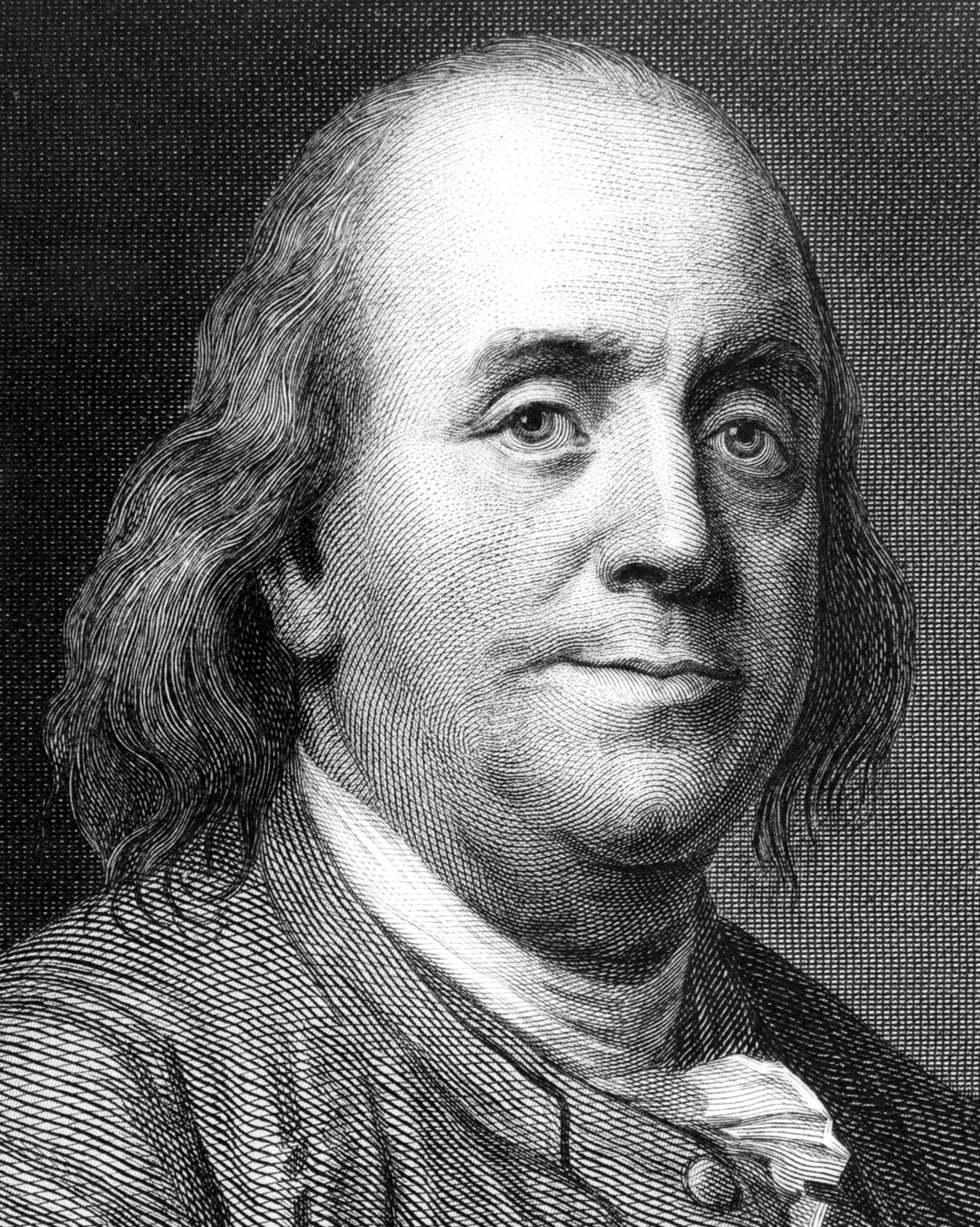

“Vive Boulanger! Vive la France!”

General Georges Boulanger, “The man on Horseback”

General Georges Boulanger, “The Man on Horseback”

The period between the Revolution and the First World War in France is virtually unknown to the Anglo-American world.I am currently reading Frederick Brown’s For the Soul of France: Culture Wars in the Age of Dreyfus. It is an excellent book that has helped me to “connect the dots” from French literature and films. For instance, I knew about France’s humiliation at the hands of the German army in the Franco-Prussian War of 1870, in which it lost the provinces of Alsace and Lorraine. I knew about the Commune and its destruction at the hands of Adolph Thiers’s government at Versailles. What I did not know was that France was left a deeply divided country. On one hand stood Paris and the larger cities; on the other, La France Profonde, what we in America would refer to as “The Heartland” or “Flyover Country.”

It was a period reminiscent of 21st century America, with its war between religion and liberalism—except in France, religion meant the Catholic Church. Liberalism was associated with those Commie Communards who were shot to death by the French army at the Mur des Fédérés at Paris’s Père Lachaise Cemetery. As the 1870s shaded into the 1880s, Paris was not unlike present-day Washington in its seemingly irreconcilable divisions.

At this time, there arose a would-be Messiah, General Georges Boulanger, “The Man on Horseback,” beyond whom many of the irreconcilables were mysteriously reconciled. As Maurice Barrès said, “The important thing about popular heroes is not so much their own intentions but the picture of them that people create in their own minds.”

It is not that Boulanger had an undistinguished military career. He fought successfully in Algeria, Tunisia, Viet Nam, and Italy. He was wounded (and addicted to the morphine used to relieve him from the pain). And he enjoyed the adulation of crowds. As Frederick Brown writes:

While Boulanger marked time, Boulangism marched forward and continued to raise alarms. Jules Ferry, who understood the revolutionary impetu of revanchism in what was becoming a widespread movement, deplored its brutish character. “For some time we have been witnessing the development of a species of patriotism hitherto unknown in France,“ Ferry declared. “It is a noisy despicable creed that seeks not to unify and appease but to set citizens against one another…. If one believes its spokesmen, love of country belongs to one party alone, or to one sect within that party, and all who do not think as they do, who would not wish to substitute … the impulse of irresponsible crowds for the free and reflective action of public powers, all who do not worship their idols and trot alongside behind the the chariot … are all held indiscriminately to be partisans of the foreigner!”

How like our own time! We may not have a “Man on Horseback” to support, but the prevalent disgust at the divisions between left and right are, I feel, ripe for exploitation.

What ever happened to Boulanger? Although he seemed to be the coming thing, he was outmaneuvered politically by a nobody named Ernest Constans and forced to flee to Belgium. The charge was “plotting to subvert the legally constituted government.” From Belgium, Boulanger exiled himself to Saint-Hélier on the Isle of Jersey. When his wife Marguerite sickened and died, Boulanger blew his brains out in front of the headstone of her grave at Ixelles Cemetery in Brussels.

As one of his former adherents proclaimed, “General Boulanger didn’t deceive us. It was we who deceived ourselves. Boulangism is failed Bonapartism. To succeed, it needs a Bonaparte, and Boulanger as Bonaparte was a figment of our imagination.”

Isn’t that the way it always is?

HallowThanksMas

Don’t Let Retailers Set Your Agenda

Don’t Let Retailers Set Your Agenda

We are currently on that Snakes & Ladders descent from Halloween through Thanksgiving and Christmas and New Years to Super Bowl Sunday. That’s a goodly chunk of the year being anxious as to whether one has satisfied all one’s loved ones. Because we watch television so many wasted hours each day, we are very conscious of what all the brick-and-mortar retailers want us to do. They endlessly supply us with suggestions as to what to buy for whom. And if the TV isn’t bad enough, there are also the radio, newspapers, e-mail, and FaceBook to remind us.

Because I am in the accounting profession (for the time being), I see this time of year primarily as the run-up to tax season. It means printing and sending out tax organizers, frequent installation of new versions of the tax software, constant re-indexing of the tax database, printing Form 1096 and 1099 for our clients (as needed), and dozens of other tasks. The worst part is the entry and processing of the actual tax returns, which builds up in a slow crescendo to the frantic last weeks before the April 15 deadline. In accounting, one doesn’t look at the Holidays so much as one looks past them.

Enough Already!

Enough Already!

As a result, I don’t go in for holiday decorations. I skip Halloween altogether—there’s never any Trick-or-Treaters who come to our door any more. We get together with our friends for Thanksgiving. We go to a couple of Christmas events, usually a concert of holiday music, and then we visit friends and family. On New Year’s, we stay in to avoid the drunk and drugged motorists. And Super Bowl Sunday? A great time to visit an otherwise crowded museum. Instead of joining the throngs at a shopping center on Black Friday (the day after Thanksgiving), I am thinking of suggesting Martine that we go instead to the Getty Villa to enjoy the serenity of ancient Greek and Roman art.

In fact, serenity is the key. If you don’t feel this serenity during the holiday season, I think you are probably doing something wrong. There’s little that we can do in the way of material goods to show our love. The batteries will run down, the gizmos will fail to work—but the love behind them still runs strong. At least, it should!

Yesterday, I saw my best friends and learned a lesson. Last year, I bought their youngest son a subscription to The New York Review of Books, which wound up being enjoyed primarily by the father. When I asked the son what should I get him, he told me not to worry about it. I don’t have any children of my own, so the children of my friends are particularly important to me. I won’t worry about it, but I will find something nice for him.


Hire This Man!

Matt Bramble

Matt Bramble

‘Suppose I was inclined to take you into my service (said he) what are your qualifications? what are you good for?’ ‘An please your honour (answered this original) I can read and write, and do the business of the stable indifferent well — I can dress a horse, and shoe him, and bleed and rowel him; and, as for the practice of sow-gelding, I won’t turn my back on e’er a he in the county of Wilts — Then I can make hog’s puddings and hob-nails, mend kettles and tin sauce-pans.’ — Here uncle burst out a-laughing; and inquired what other accomplishments he was master of — ‘I know something of single-stick, and psalmody (proceeded Clinker); I can play upon the Jew’s-harp, sing Black-ey’d Susan, Arthur-o’Bradley, and divers other songs; I can dance a Welsh jig, and Nancy Dawson; wrestle a fall with any lad of my inches, when I’m in heart; and, under correction, I can find a hare when your honour wants a bit of game.’—Tobias Smollett, The Expedition of Humphry Clinker

The Curse of the Cat People

Simone Simon and Anne Carter in Curse of the Cat People (1944)

Simone Simon and Ann Carter in The Curse of the Cat People (1944)

All the ingredients for horror are there: Tarrytown, New York, with its legend of the headless horseman; a seemingly haunted house; a woman come back from the dead; and a lonely little girl who will do anything for a friend. Except that this is a Val Lewton film. The horrors are all there in the background, waiting to pounce. That they never do makes the film more profound in a way, as if all the darkness we imagine in life were really just the result of looking at things the wrong way.

The headless horseman never shows up, although at one point we think we will. The haunted house isn’t really haunted: It’s inhabited by an unhappy mother who doesn’t acknowledge the daughter who loves her. The woman come back from the dead (above) is a loving and friendly ghost who wants nothing but good for Amy, the lonely little girl who keeps getting in trouble for being lost in her dreams.

Lobby Card for Curse of the Cat People

Lobby Card for Curse of the Cat People

Oh, and by the way, there is no menacing black cat as shown on the lobby card above. There is a black cat who appears on a tree branch briefly at the beginning, but jumps away to avoid a mischievous boy.

There is one beautiful little French Christmas carol sung by the ghost Irena, played by Simone Simon, that runs through the film—a song without menace of any kind. Here is a link to the carol—“Il Est Né le Divin Enfant”—as sung by Edith Piaf:

So, The Curse of the Cat People is either a total failure, or it’s not quite what it’s advertised to be. My vote is for the latter.

That is so typical of Val Lewton, who produced a series of films in the 1940s that are still being seen and loved. Thousands have been seduced by the prospect of horror that never quite emerges. It is suggested, but is rarely what it seems. There is a death in The Leopard Man, but it happens off screen. There is plague on The Isle of the Dead; grave-robbing in The Body Snatcher; devil worship in The 7th Victim; a real zombie (though not the brain-eating variety) in I Walked with a Zombie; and a menacing panther at a swimming pool in The Cat People. We are brought close to the edge of our seats, but in the end are protected from any direct contact with anything vile: Instead what at first promised to have a terrifying dimension winds up with more of a psychological dimension.

One interesting fact about Lewton is that he never directed any of these films: He produced them. Yet his stamp on these pictures—which are directed by excellent directors such as Jacques Tourneur, Mark Robson, and Robert Wise—is as decisive as the stamp of an Alfred Hitchcock or a John Ford.

I had purchased a collection of Val Lewton films on DVD from Turner Classic Movies (TCM). It arrived yesterday, so I decided to watch The Curse of the Cat People this afternoon. I look forward to re-acquainting myself with the other eight titles in the series as well.

Pundits for the Feeble-Minded

“Ditto-Head”—Another Term for the Brainless?

“Ditto-Head”—Another Term for the Brainless?

I am weary of expending my energy reacting to people who say stupid things in public for the purpose of self-aggrandizement, either in the form of fame or money. This has become an age of talking heads who flood the media in order to appeal to the feeble-minded, the left behind, the village idiots. Here, in alphabetical order by last name, are sixteen chronic offenders:

  • Michele Bachmann, Congressman (R-Minnesota). If you can stand to look at her gorgon eyes without turning to stone, you are a better man than I am, Gunga Din.
  • Glenn Beck, Pundit. The rodeo clown of the right wing.
  • Patrick Buchanan, Pundit. Occasionally lucid, usually not.
  • Dick Cheney, Former Vice President. Mean and scary. One of the Beasts of the Apocalypse.
  • Ann Coulter, Pundit. So vicious that she gets in the way of her own message. May be a transsexual.
  • Ted Cruz (and his father Rafael Cruz), Senator (R-Texas). Deceptively smooth rightist ideologue.
  • Newt Gingrich, Former Speaker of the House (R-Georgia). Smart enough to know better, but wants the right wing to win to protect his own shaky legacy.
  • Louis Gohmert, Congressman (R-Texas). His crazy quotes liven many press stories.
  • Sean Hannity, Fox News Pundit. Smarmy and fascistic.
  • Wayne La Pierre, NRA Spokesman. Wants to arm everybody. A shill for the arms industry.
  • Rush Limbaugh, Pundit. If you do the opposite of what he advocates, you’ll probably be okay.
  • Bill O’Reilly, Fox News Pundit. Showers with falafel.
  • Sarah Palin, Ex-Governor (R-Alaska) and Pundit. The only pundit I know who may be more stupid than her followers.
  • Rand Paul, Senator (R-Kentucky). What happens when you mate a libertarian with a Brillo Pad ®?
  • Pat Robertson, Televangelist. Probably can be forgiven for his advanced age, during which he has surprisingly not been struck by lightning once for his pronouncements.
  • Antonin Scalia, Associate Justice U.S. Supreme Court. If there’s something evil that a judge can say, it’ll be Scalia saying it.

Let me quote Shakespeare’s Hamlet: “Let the doors be shut upon him that he may play the fool nowhere but in’s own house.”

Birthday of an Island

The Island of Surtsey as It Is Today

The Island of Surtsey as It Is Today

Fifty years ago today, the Island of Surtsey was born as the result of an undersea volcanic eruption in Iceland’s Westmann (Vestmannæyjar) Islands. Named after Surtr, one of the giants of Norse mythology, the island was at one time one square mile, but as a result of erosion has over the last fifty years been whittled down to a little more than half that size.

Did I visit Surtsey on my trip to Iceland this summer? I would have if it weren’t forbidden. Only scientists can visit the island, and only under restrictive conditions. For instance, they must not carry seeds to the island. One time, tomato plants started to grow as a result of a tomato seeds being in one of the researchers’ excreta. All biota on the island must have come there naturally as a result of wind or transport by birds. There are few places on earth which are unaffected by human habitation: The intent is to see what happens when we humans don’t have our thumbs resting on the scales.

The photo above is from Páll Stefánsson of The Iceland Review.

Judging a Book by Its Cover

In 1960, This Looked Ultra-Cool

In 1960, This Looked Ultra-Cool

It is always a good idea to re-examine from time to time a book or movie that had particularly impressed you. I decided yesterday to re-read A. E. Van Vogt’s Empire of the Atom (1957), which I first read around 1960, and twice subsequently. Its hero, Lord Clane is a mutant as a result of exposure to radioactivity. The time is at some remote point in the future, presumably after a nuclear war. All of Earth is under control of the House of Linn, which rules the planet as if it were the Roman Empire.

So very much, in fact, like the Roman Empire that the first half of the book was cribbed from Robert Graves’s 1934 classic I, Claudius. There is a one-to-one correspondence between Van Vogt’s characters and Graves’s Romans: Clane is Claudius; Creg, Germanicus; the Lord Leader, Augustus; Lydia, Augustus’s wife Livia; and Lord Tews, Livia’s son Tiberius. Only about 60% into the story does Van Vogt escape from his slavish borrowing. At least he doesn’t try to muddy his story by introducing an equivalent to Caligula. It bothers me that I did not notice all this when I re-read the book in 1990, years after I had read the Graves books and seen the BBC I, Claudius TV series.

Still, even with the plagiarism, there are numerous incongruities. The Linns have spaceships with which they conduct wars on Venus and Mars; yet their main weapons are bows and arrows, lances, and swords. They use nuclear energy, but regard it as a “gift from the gods.” Their gods, in fact, are Uranium, Plutonium, Radium, and Ecks (“X”?).

Well, then, what was it that drew me to this book? Pure and simple, I loved the cover (shown above). As a teen, I was a rather sickly individual with frequent headaches—by this time I already was suffering from the pituitary tumor (chromophobe adenoma) that was to reach a climax six years later. Clane was actually a handsome man provided he wore the flowing temple robes that hid his deformities:

After re-reading the message, [Clane] walked slowly to the full-length mirror in the adjoining bathroom, and stared at his image.

He was dressed in the fairly presentable reading gown of a temple scientist. Like all his temple clothing, the cloth folds of this concealed the “differences” from casual view. An observer would have to be very acute to see how carefully the cloak was drawn around his neck, and how tightly the arm ends were tied together at his wrists.

Whoever was responsible for the book’s dust jacket was a genius. Man, I wouldn’t have minded being a mutant if I had a face like that! But, like many teens, especially short, chubby ones, I used fantasy to escape the realities of my situation. Now, half a century and more onward, it doesn’t seem to matter as much any more. I am what I am, and I do not look unkindly on what and who I have become.

“Worse Than Worthless”?

Tattooed Boy

Tattooed Boy

I tried to point out some of the cultural meanings of the vogue for tattooing. First, it was aesthetically worse than worthless. Tattoos were always kitsch, implying not only the absence of taste but the presence of dishonest emotion.

Second, the vogue represented a desperate (and rather sad) attempt on a mass scale to achieve individuality and character by means of mere adornment, which implied both intellectual vacuity and unhealthy self-absorption.

And third, it represented mass downward cultural and social aspiration, since everyone understood that tattooing had a traditional association with low social class and, above all, with aggression and criminality. It was, in effect, a visible symbol of the greatest, though totally ersatz, virtue of our time: an inclusive unwillingness to make judgments of morality or value.—Theodore Dalrymple

Looking Out for Number Two

Elegance and—Yes!—Squalor

Elegance and—Yes!—Squalor

The galleries of 17th and 18th Century French furniture at the Getty Center are our favorite parts of their permanent collection. For one thing, they’re not as crowded as the galleries with paintings; for another, they let you take photographs. An elegant table or chair or cabinet can be just as much a work of art as a sculpture or an oil painting. It’s just that we are conditioned by our culture to regard fine art as something in oils on a canvas or wood backing. In fact, some of the furniture in the Getty incorporate small paintings on some of their panels.

Which brings me, by a commodius vicus of recirculation, to the Palace of Versailles in France. Imagine several miles of corridors with furniture such as pictured above, gorgeous drapes, halls with mirrors, paintings, gilded moldings, and in general the finest workmanship in all the fittings.

There was, however, one glaring exception: There were no bathrooms. Oh, the king, queen, and selected nobles had their own chaises percées which they could summon with a hand signal to one of their entourage. Anyone who was properly dressed (that meant a sword for you gentlemen, which could be rented from the palace concierge upon entry) would walk into the palace, wander into the King’s bedroom and watch him snuggle with his consort from behind a gold railing, and stroll through the grounds at his leisure.

But, being a mammal, there was always the chance that he or she would get “caught short.” When asking for the nearest restroom would get you nothing but disrespectful sniggers. According to one Internet source:

It’s difficult to believe today when gazing at the gleaming golden palace, but life at Versailles was actually quite dirty. There were no bathrooms as we would know them. Courtiers and royalty used decorative commodes in each room, while commoners simply relieved themselves in the hallways or stairwells. No one bothered to house-train the royal dogs, and servants did not consider cleaning up after them to be part of their job description. The constantly-altered chimneys did not draw well, so everything inside was covered with soot. The filth and disorder at Versailles during the ancient regime were noted in many records of the time.

So, imagine, if you will, what it was like to tour the palace being careful not to slip on another person’s bodily effluvia. Because it was considered beneath the monarch to concern himself with such trivial matters, it was not until 1715 that he ordered a weekly cleanup of the corridors by his servants. Imagine what it must have been like by then. Even today it’s a problem for tourists, according to one TripAdvisor report.

What a contrast between elegance and squalor!

Never the Twain Shall Meet

Cincinnati? Isn’t That Part of the Confederacy?

Cincinnati? Isn’t That Part of the Confederacy?

I was born in Cleveland, Ohio, and spent the first seventeen years of my life there. During that whole time, and even since then, I have never known a Clevelander who has been to Cincinnati. By air, the two cities are a mere 217 miles (or 349 km) apart. That really isn’t very far, considering that there is a good deal greater distance between Los Angeles and San Francisco. And yet Angelenos travel to San Francisco, Portland, Seattle, and Vancouver (and vice versa) a good deal more than Clevelanders travel to Cincinnati.

Why do you suppose that is? I thought about it for a while and came to the conclusion that Ohio is somewhat like Iraq or Syria, where two or more cultures co-exist (when they are not killing one another). Northeastern Ohio, where Cleveland lies, is pretty much a blue state kind of area, heavily into unions and the Democratic Party; whereas Southern Ohio is solidly Republican.

For instance, Ohio’s 8th Congressional District, currently represented by John Boehner, has not sent a Democrat to Congress since 1937.

Yesterday, while Martine and I were eating lunch at Jerry’s Deli in Marina Del Rey, the TV monitors were televising a game between the Cincinnati Bengals and the Baltimore Ravens. I’d be willing to bet there are more Bengal fans in Los Angeles than there are in Cleveland. It’s almost as if the inhabitants of “The Mistake on the Lake” (as Cleveland is known to those who, ulp, love her) think they are part of the Confederate States of America. And, in a way, they are….