Gone Forever: The Cafe Richmond

One of the World’s Great Literary Cafés

One of the World’s Great Literary Cafés

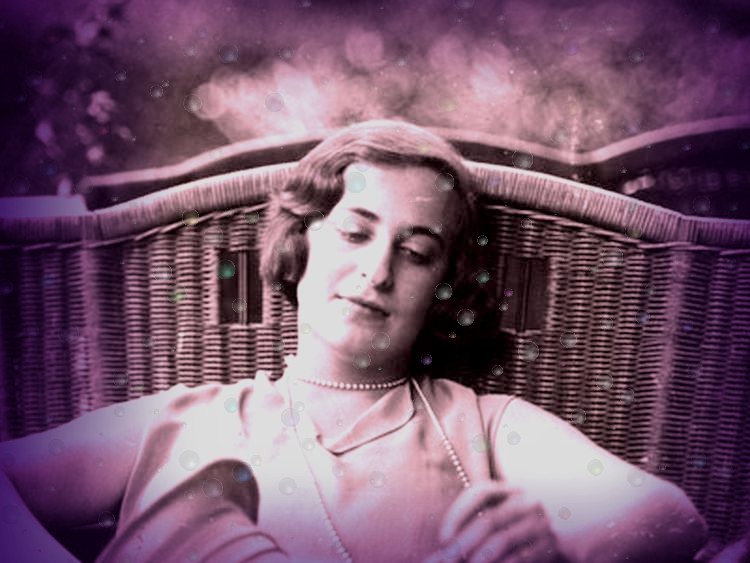
Just before Martine and I flew to Buenos Aires in 2011, one of the world’s greatest literary cafés was turned overnight into a Nike sportswear shop. Where once Jorge Luis Borges sat and wrote his stories, and where Graham Greene hung out (and commemorated) while he was writing The Honorary Consul, and where Antoine de Saint-Exupéry ate near his “charming little apartment” on Calle Florida, you can now buy shoes and other clothing items that are also available in a thousand other nearby outlets.

If I make it to Argentina later this year, I plan to photograph the damage, while urging you to boycott Nike. As far as I’m concerned, they can go and swoosh themselves into oblivion.

There is a charming article in the Argentina Independent about Calle Florida, where the Richmond was located at #468 (near the intersection with Lavalle). You can read more about the Cafe Richmond in The Guardian and The Independent.

Fortunately, Buenos Aires is a city with many great cafés; but, sometimes, when a great one closes, the ripples are felt around the world.

Gabriela Kogan has written a great little book which Martine and I used called The Authentic Bars, Cafés, and Restaurants of Buenos Aires which is available from The Little Bookroom.

A Matched Set

Yechhhh! I Did It Again!

Yechhhh! I Did It Again!

I went halfway around the world in 2006 to break my right shoulder by slipping on the ice in Ushuaia in Argentina’s Tierra Del Fuego. Last night, I did it again—this time to my left shoulder—right across the street from where I live in West Los Angeles. Last week, the city had scraped off the surface asphalt from the street in order to lay down a fresh layer, eventually. Unfortunately, the street surface was wildly uneven, and it was dark. While returning from a Persian restaurant across the street with my friends Bob and Suzanne, I stepped off the curb all right but missed the second step-down. My body twisted and I fell down hard on the street.

Fortunately, my head did not make contact either with the street or a nearby parked car, but my left knee and right hand got bruised. Suzanne, who is a nurse, immediately suggested I go to emergency; and they kindly drove me to the ER at Santa Monica UCLA Hospital.

Tomorrow morning, I will have to make an appointment with an orthopedist. Although my left shoulder is disrupted in several different directions and I may require surgery, the pain level is tolerable. I won’t be able to drive for a few weeks. Actually, my bruised knee bothers me more than the shoulder; and I’ll have to have that looked at as well. (In the ER, as Suzanne explained it, my shoulder trauma prevented my knee pain from throbbing .)

So it goes.


Vacation Planning Around Disasters

Wildfires in Argentina’s State of Chubut

Wildfires in Argentina’s State of Chubut

Whenever one is traveling anywhere in the world, one must keep up with the news. When Martine and I went to Argentina in 2011, for example, there was a major Chilean volcanic eruption that spewed ash all over the State of Rio Negro, forcing us to remove San Carlos Bariloche from our itinerary and replace it with El Calafate. This time, there is a huge wildfire near Los Alerces National Park and the town of Cholila. While the eruption of the Puyahue/Cordón Caulle volcano in 2011 lasted for months, I am confident that the Chubut fires will be doused well before November, especially as there will be an intervening rainy season.

Among the Chubut locales I hope to visit are El Maitén, Esquel, and Trevelin.

The Area Around Cholila Before the Fire

The Area Around Cholila Before the Fire


Silvina Ocampo and Our Other Selves

Another Great Argentinean Writer for Your Consideration

Another Great Argentinean Writer for Your Consideration

She is incredibly well connected insofar as Argentinian literature is concerned. Her husband was Adolfo Bioy Casares, who was a frequent collaborator with Jorge Luis Borges. Her sister, Victoria Ocampo, published the literary magazine Sur, for which both Bioy Casares and Borges wrote. In her own right, Silvina Ocampo is a superb writer of short stories. (Thus Were Their Faces is an excellent collection published by New York Review Books, which I have just finished reading.) Together with Borges and Bioy Casares, she edited a book of fantasy and horror stories called The Book of Fantasy which was published in 1990.

I like the following poem because it seems to have been influenced by Borges. Or was it she influenced Borges?

In Every Direction

We go leaving ourselves in every direction,
in beds, in rooms, in fields, in seas, in cities,
and each one of those fragments
that has ceased to be us, continues being
as always us, making us
jealous and hostile.
“What will it do that I would like to do?”
we think. “Who will it see that I would like to see?”
We often receive chance news
of that creature . . .
We enter its dreams
when it dreams of us,
loving it
like those whom we love most;
we knock at its doors
with burning hands,
we think it will return in the illusion of belonging to us
mistaken as before
but it will keep being treacherous and unreachable.
As with our rivals we would kill it. We will only be able
to glimpse it in photographs. It must survive us.

New York Review Books has also published a volume of her poetry translated into English that I will probably be ordering soon. The above poem is from that edition.

La Trochita

One of the Two Remaining Stretches of Patagonia’s Classic Narrow-Gauge Railway

One of the Two Remaining Segments of Patagonia’s Classic Narrow-Gauge Railway

In the mid-1970s, Paul Theroux wrote the book that first got me interested in South America, The Old Patagonian Express. He traveled by rail starting in Boston and as far south as he could go in the Americas using more or less connected rail routes.That sort of fell apart in Central America, where there is no reliable way to cross Panama’s Darien Gap by rail—or road for that matter. But from Bolivia to Esquel in Argentina’s Northern Patagonia, the rails were still in use.

Now, some forty years later, Argentina has no train between the Bolivian border and Tucumán, between Bahia Blanca and Viedma, and between Ingeniero Jacobacci and Esquel. And the segment from Tucumán to Buenos Aires will probably close soon.

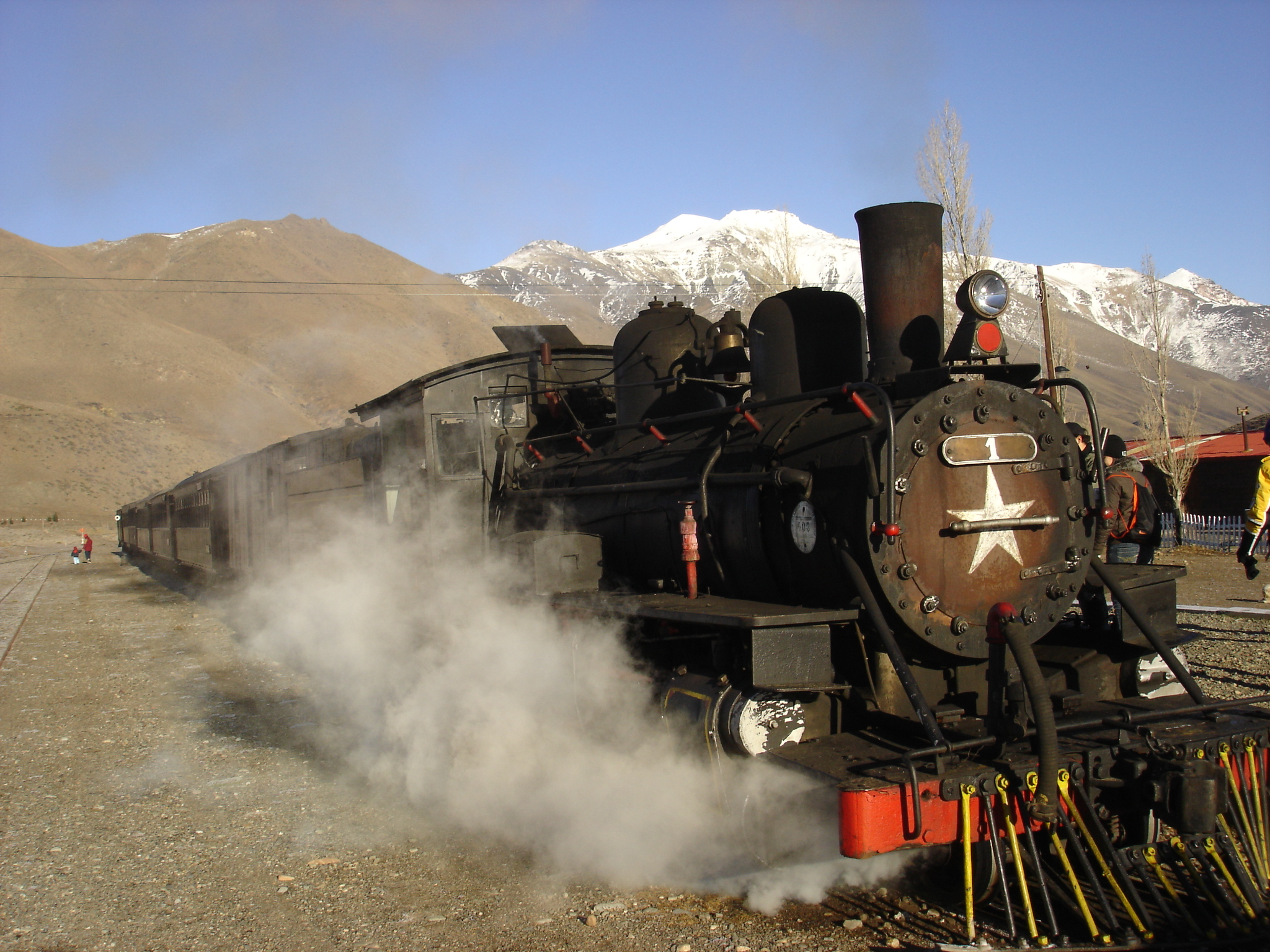
The stretch that interested me most was the one between Ingeniero Jacobacci and Esquel using a narrow-gauge route referred to today as La Trochita (“The Little Narrow Gauge”) or El Trencito (“The Little Train”). Shortly after Theroux wrote his most memorable chapter about the last leg of his trip, La Trochita was no more …

… except in the fond memories of Argentinians who decided to keep a couple of stretches of the steam train active for tourists. One is between El Maitén and Thomae and between Esquel and Nahuel Pan. Being an unregenerate railroad buff, I plan to take both segments. That is to say, if I can schedule it right.

Where Theroux in his typically snarky way wrote about Patagonia that “Nowhere is a place,” I, who am really from Nowhere (Cleveland, Ohio, which was destroyed by Maynard G. Krebs’s mythical The Monster That Devoured Cleveland), think that the eastern range of the Andes in Patagonia is truly beautiful. But then, Theroux was never an aficionado of fine scenery or especially of anything that threatened his comfort. (Hey, I still love his travel books!)

Probably about half or more of my next trip to Argentina will be exploring the town between Bariloche and Trevelin along the eastern slope of the Andes. I might even hop across to the border to Futaleufu in Chile, which is accessible only through Trevelin in Argentina.

The last time I saw a real steam locomotive in use was in 1977 when I was traveling by rail from Budapest to Košice in what was then Czechoslovakia. Near Miskolc in Hungary, the railroad yard was full of steam locomotives shuttling freight cars back and forth.


Roadside Saints

Argentinians Have Made Up Some of Their Own Saints

Argentinians Have Made Up Some of Their Own Saints

This comes from a post on Multiply.Com which I wrote on August 18, 2011. Some changes have been made:

Oh, oh! I’ve been thinking about Argentina again, and that means you’re going to hear about some more really obscure (but, IMHO fascinating) stuff.

To begin with, Argentina is such a Catholic country that it had to create additional saints native to its own soil. Let’s begin with La Difunta Correa, which means, literally, the Dead Correa:

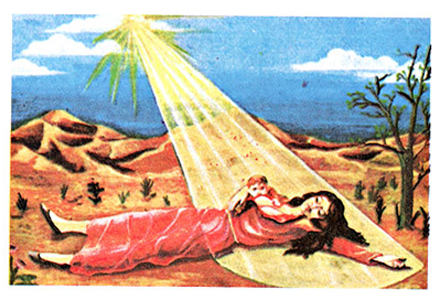
According to popular legend, Deolinda Correa was a woman whose husband was forcibly recruited around the year 1840, during the Argentine civil wars. Becoming sick, he was then abandoned by the Montoneros [partisans]. In an attempt to reach her sick husband, Deolinda took her baby child and followed the tracks of the Montoneros through the desert of San Juan Province. When her supplies ran out, she died. Her body was found days later by gauchos that were driving cattle through, and to their astonishment found the baby still alive, feeding from the deceased woman’s “miraculously” ever-full breast. The men buried the body in present-day Vallecito, and took the baby with them. [from Wikipedia]

All over the country, there are roadside shrines to La Difunta Correa, many surrounded by gifts left by truck drivers and travelers in a hope for a safe journey to their destination. Remember that Argentina is the eighth largest country on earth, and that distances can be farther than one imagines, especially on unpaved ripio roads.

There are two other popular saints with shrines all across the nation: Gauchito Gil (“Little Gaucho Gil”) and El Ángelito Milagroso (“The Little Miraculous Angel”), a.k.a. Miguel Ángel Gaitán.

Gauchito Gil hails from the state of La Rioja near the Bolivian border. A farmworker, Gil was seduced by a wealthy widow. When the police chief, who also had a thing for the widow, and her brothers came after Gil, he joined the army in the War of the Triple Alliance against Paraguay (perhaps the bloodiest war ever fought in the Americas, with the exception of our own Civil War). When he returned home, the Army came after him to join in one of Argentina’s many civil wars. Not to put too fine a point on it, the Gauchito deserted. He was discovered by the police, who wanted to execute him. Whereupon Gil prophesied to the head of the police detail that if he were merciful, the officer’s child, who was gravely ill, would get better. Instead of being shown mercy, Gil was executed.

When he returned home, the police officer found that his son was indeed very ill. So he prayed to Gauchito Gil, and his son got better. It was this police officer who returned to the scene of the execution, gave Gil a proper burial, and built a shrine in his memory. Today there are hundreds of such shrines scattered throughout the country.

By the way, the Gauchito is not the only deserter hero in Argentina’s past. Perhaps the national epic is Martin Fierro by José Hernández, about a gaucho who deserts from the so-called “Conquest of the Desert”—really a war of genocide against the native tribes of the Pampas—and is pursued by the police militia.

The Nineteenth Century in Argentina was unusually bloody, what with civil war, wars against the native peoples, and wars against other countries such as Paraguay and Brazil. So it is not unusual to find deserters as heroes, which is unthinkable in Europe and North America.

Finally, there is another La Rioja “saint” named Miguel Ángel Gaitán, El Ángelito Milagroso, who died at the tender age of one in 1967. When his body didn’t rot, the locals thought that meant it was supposed to be exposed for veneration—and so it was.

Everybody Who Is Anybody

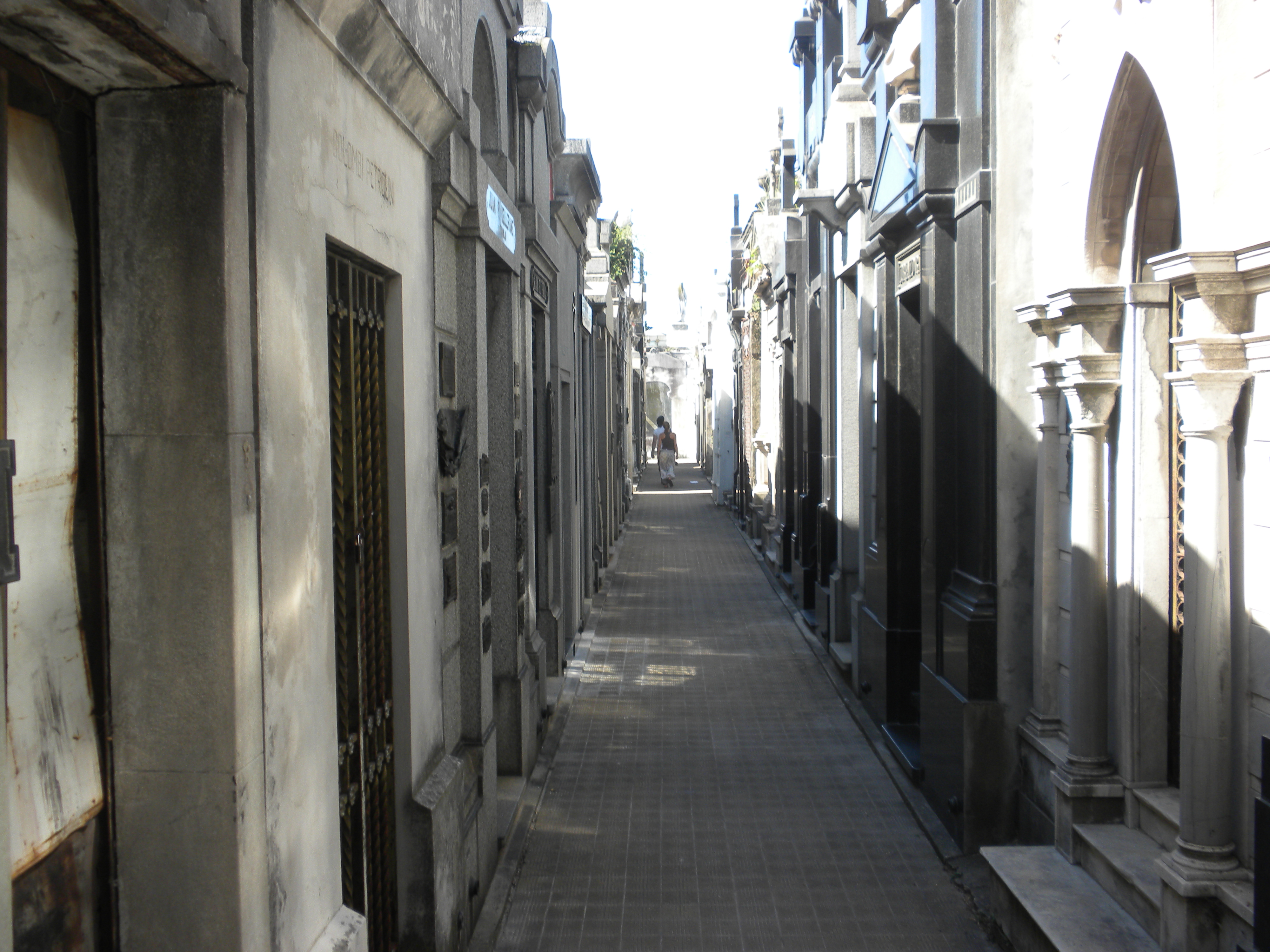
A Lane in Buenos Aires’ Recoleta Cemetery

A Lane in Buenos Aires’ Recoleta Cemetery

In the United States, there is no single cemetery where everybody who is anybody is interred. France has its Père Lachaise and Pantheon, and Argentina has La Recoleta.

There you will find the tombs of Argentina’s presidents, including Bartolomé Mitre, Carlos Pellegrini, Domingo Faustino Sarmiento, Hypólito Yrigoyen, Julio Argentino Roca, Marcelo Torcuato de Alvear, Pedro Eugenio Aramburu, and Raúl Alfonsin. Perhaps its most famous inhabitant is Evita Perón, who is buried here under her maiden name of Duarte. Not here is the only Argentinean president most people are likely to know: Juan Perón. He was buried at Chacarita Cemetery, then moved to a mausoleum some 35 miles outside of Buenos Aires.

Although Jorge Luis Borges—Argentina’s most famous writer—is buried in Europe, here you will find Silvina and Victoria Ocampo and Borges’s collaborator Adolfo Bioy Casares.

Walking through the labyrinthine passageways between the crowded crypts, one finds fabulous wealth (such as that of the Bullriches) side by side with neglected tombs with broken glass and crumbling plaster.

And yet, to pass eternity in this place has a high entrance requirement. Many of the tiny crypt spaces are more expensive than mansions in the more elegant parts of the city. These are the most exclusive fourteen acres in all of South America.

If you find yourself in Argentina, a visit to Recoleta is a must.


Back to the Andes

In 2011, Everything Was Covered with Volcanic Ash

In 2011, Everything Was Covered with Volcanic Ash

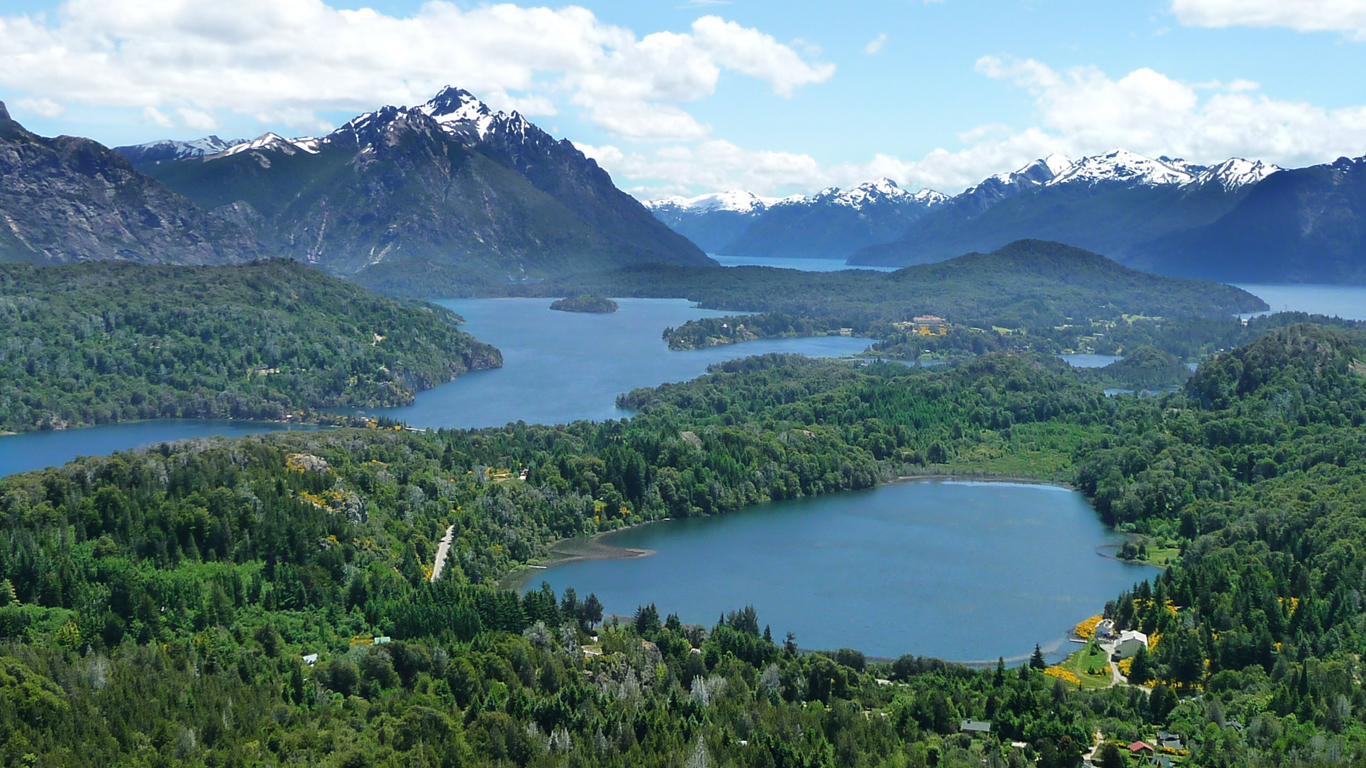
When Martine and I went to Argentina in November 2011, we bypassed San Carlos de Bariloche because it was a disaster zone due to the eruption of Puyehue/Cordón Caulle in neighboring Chile. The Tren Patagonico between Viedma and Bariloche was shut down, and the whole State of Rio Negro was essentially shoveling volcanic ash. Instead, we went to El Calafate to see some spectacular glaciers such as Perito Moreno. It was worth it, but I want to see Bariloche, and not only Bariloche, but take the Lakes Crossing over into Chile and perhaps spend some time on the Chiloé Archipelago off Puerto Montt.

It would involve a crossing of the Andes by a combination of bus and boat (!), The Lake Districts of Argentina and Chile have some beautiful waterways, and the two-day Lakes Crossing looks interesting. I can always take a bus back without spending quite so many pesos.


Back to Argentina?

Third Time’s a Charm!

Third Time’s a Charm!

As tax season pressures come to bear on me once again, I look frantically for some escape. As Martine is still unable to travel with any degree of comfort, I will travel alone for the third year in a row. And I’ve decided that I am far from finished with Argentina. When I traveled there in 2006 and 2011, it was the country of Jorge Luis Borges, of his “Funes the Memorious” and “Death and the Compass.” It still is, but new names have been added, particularly César Aira and Juan José Saer, from Coronel Pringles and Santa Fé respectively.

And there are places I have always wanted to see: San Carlos de Bariloche in the Patagonian Andes and Iguazu Falls where Argentina, Brazil, and Paraguay meet. Also I want to spend more time in Buenos Aires—a city that I love. In 2006, I stayed in the Microcentro; in 2011, Martine and I stayed in Palermo; this time, I think I’ll stay either in Recoleta (not the cemetery, pictured above) or Barrio Norte.

Because I will be traveling alone, I will probably take more long-distance buses, especially as Aerolíneas Argentinas is so dismal. To get to Argentina, by preference I will fly on LAN, probably by way of Lima, perhaps even stopping for a few days in Lima.

I wish Martine could come with me, but with her aches and pains, she would turn into a zombie from lack of sleep—which is in effect what happened during our Cabo San Lucas trip last month, which was a test of sorts.

Tarnmoor’s ABCs: Patagonia and Penguins

Killing Two Birds with One Stone

Killing Two Birds With One Stone, So To Speak

I was so very impressed by Czeslaw Milosz’s book Milosz’s ABC’s. There, in the form of a brief and alphabetically-ordered personal encyclopedia, was the story of the life of a Nobel Prize winning poet, of the people, places, and things that meant the most to him. Because his origins were so far away (Lithuania and Poland) and so long ago (1920s and 1930s), there were relatively few entries that resonated personally with me. Except it was sad to see so many fascinating people who, unknown today, died during the war under unknown circumstances.

My own ABCs consist of places I have loved (Iceland), things I feared (Earthquakes), writers I have admired (Chesterton, Balzac, Proust, and Borges); things associated with my past life (Cleveland and Dartmouth College), people who have influenced me (John F. Kennedy), foods I love (Olives), and things I love to do (Automobiles and Books). This blog entry is my own humble attempt to imitate a writer whom I have read on and off for thirty years without having sated my curiosity. Consequently, over the months to come, you will see a number of postings under the heading “Tarnmoor’s ABCs” that will attempt to do for my life what Milosz accomplished for his. To see my other entries under this category, hit the tag below marked “ABCs”. I don’t guarantee that I will use up all 26 letters of the alphabet, but I’ll do my best. Today the letter is “P” for both Patagonia and Penguins, which kind of go together in my mind.

Above is a photo I snapped on Isla Martillo, which lies on the Beagle Channel in Argentina’s Tierra Del Fuego. I had always wanted to go to Patagonia, ever since I read Paul Theroux’s The Old Patagonian Express and, even more, Bruce Chatwin’s In Patagonia. It was one of those places at the end of the earth. About six hundred miles south of Isla Martillo lies the Antarctic Peninsula. Even farther north lies Buenos Aires and the heavily populated temperate territories of Argentina.

Martine and I have always loved penguins. There was something helpless and cute about them, even though their fishy smell made them somewhat less than huggable. I think I was only able to get Martine to come with me to Patagonia if I could take her to places where she could walk among penguins in the wild. Although past “expeditionary” vacations in search of puffins and moose turned up a blank, I was able to deliver on the penguins—in spades. Isla Martillo was a small penguin rookery that was fascinating, and Punta Tombo in the State of Chubut was even more spectacular. We were there right around the time, to the day, that the Magellanic penguins were hatching. Our trip there was one of the happiest experiences of my life.

Do I want to go back to Patagonia? Absolutely. I’ve been there twice: The first time, on my own, I broke my shoulder by slipping on the ice in Ushuaia … but the second time was a charm.

Life always seems brighter when you could go to far places that you love.