The Blue House on Galos

I’m Starting to Book My Vacation...

I’m Starting to Book My Vacation…

I’ve already begun booking my vacation, even though it is still months in the future. There are still a few question marks. Now that Calbuco has gone to orange alert, I suspect I won’t have any major volcano troubles.The biggest question right now is how I will get a reservation on the November 13 Tren Patagonico between Viedma and San Carlos Bariloche. I suspect what I’ll do is contact an English-speaking tour agency in Buenos Aires, one like Say Hueque, which is geared to more independent travelers like me.

According to the international rail travel website The Man in Seat 61:

Viedma is across the river by small ferry from Carmen de Patagones, but no same day connection is possible so you need a night in a hotel. The Trén Patagonico from Viedma to C. de Bariloche is tremendous fun and thoroughly recommended!  Comfy secure sleeping cars (solo travellers are given a compartment to themselves and a key to lock it), excellent dining car serves steaks and wine, good company and wonderful Patagonian scenery in the morning. Excellent value, and you can buy the tickets in advance in Buenos Aires at Gallerias Rio Negro on Reconquista.

I’m afraid that by the time I get to Gallerias Rio Negro on November 4, the train will be all sold out.

In the meantime, I booked a ideally situated hotel overlooking the Recoleta Cemetery on Azcuénaga in Buenos Aires, and a nice boutique hotel near the river in Puerto Iguazu. For Valparaíso, I’ll be at the La Nona B&B on Galos (Wales) Street atop Cerro Alegre. It’s in the blue building on the left in the above photo.

Yes, it’s beginning to take shape!

Bad Day at La Bombonera

Fans Climbing Over High Security Barriers

Fans Climbing Over High Security Barriers

Among the lowest of the low among the male animal is the rabid sports fan. I keep thinking of one San Francisco Giants fan, Bryan Stow, who was beaten within an inch of his life by Dodgers fans while attending a game here in Los Angeles.

No one beats soccer fans, however, for grotesque violence, of which the Brits are among the worst—to the extent of being banned from some international events. There was even a war caused by dissatisfied fans when the results of a Honduras-El Salvador match did not go according to their desires. (Polish journalist Ryszard Kapuscinski wrote an excellent book on the subject called The Soccer War.)

As much as I like Argentina, I find the recent violence between Boca Juniors fans and Rio Plate players to be truly despicable. After a timeout in a 0-0 tie, Rio Plate players were shot in the eyes with a homemade pepper spray that disabled them. The Argentinean sports federation called the game and endangered Boca’s chances in league play. According to an article in the Toronto Sun:

The rivalry between the two Buenos Aires sides is one of the most heated in the world. It pits Boca, a traditionally working class side from the port area of the city against their more up-town rivals known as the “Millionaires.”

Boca’s Bombonera stadium was a cauldron of drums and the chants of the club’s passionate supporters, who sat just inches from the touchline separated by high wire fences. Few players relish the visit with away supporters barred from attending Argentine matches in a bid to curb violence.

I have been by La Bombonera, “The Chocolate Box,” as Estadio Alberto J. Armando is known, on my last visit to Argentina. Martine and I could have toured the museum, but we knew in advance that La Bombonera is in a tough neighborhood. There is one main tourist street than runs diagonally to the Riachuelo called El Caminito. Every step away from the Caminito raises your chances of being mugged; and the street itself has a huge police presence.

Perhaps rabid attention to sports is something to live for when you have nothing else to live for. But that doesn’t mean I would ever like to attend a major soccer football match anywhere in the world.

Hua Hum? Ho Hum!

One of the Border Crossings from Argentina into Chile That I Was Researching

One of the Border Crossings from Argentina into Chile That I Was Researching

As of yesterday, the 20 km danger zone around the Chilean volcano Calbuco has been lifted, restoring normal traffic between San Carlos Bariloche and Puerto Varas. Although the volcano is still listed as red for a potential eruption, in terms of actual danger, it has been downgraded to orange.

In a way, I am disappointed. I had been researching the other crossings over the Andes and discovered a little-known one at Paso Hua Hum near San Martin de los Andes. By way of a lake crossing, it takes me to Puerto Fuy, from which I can go to Valparaíso by way of Temuco or Valdivia. From pictures I’ve seen, it is every bit as scenic as the famous Lakes Crossing from Bariloche; and it is well off the normal tourist circuit.

This kind of research is part of the fun connected with my vacations. There is always a “problem” to be solved. For Eastern Canada, it was how to find a place to sleep close to Québec City while avoiding the traffic problems. For Iceland, it was how to see the bird cliffs at Latrabjárg in the Westfjords. For Peru, it was how to avoid coming down with acute mountain sickness. All these problems were successfully solved, which made for no small part of the satisfaction I felt from the vacation as a whole.

Don’t Cry for Me, Argentina!

Evita Perón Speaking into a Microphone

Evita Perón Speaking into a Microphone

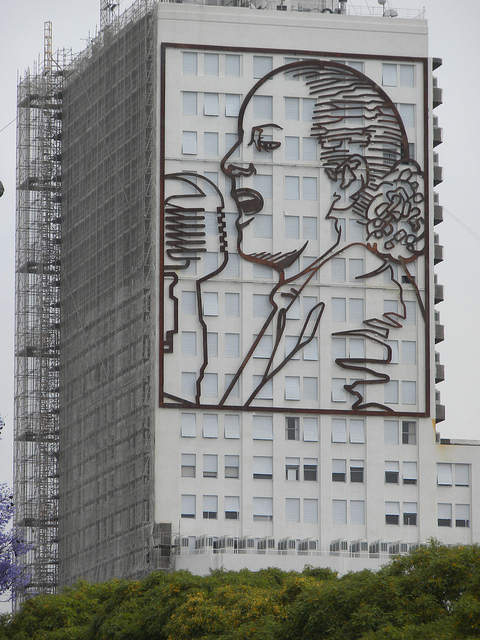
When I first saw the above building in 2011, I thought it was decorated with Evita’s image while her widowed husband Juan was still alive. I was surprised to find that Cristina Fernández Kirchner, the current president of Argentina, put it up on the side of the Ministry of Health headquarters around the time of my visit. The building is on Avenida 9 de Julio, the giant fourteen-lane highway that runs north/south from Retiro to Constitucion Station.

As President Kirchner said when she unveiled the image: “She was the most hated but the most loved, the most offended, insulted and discounted but the most venerated – the most humiliated but today eternally victorious…. She taught us that to confront the powerful carries a high price.”

By the time I find myself in Argentina next, Kirchner will have been termed out of office. I wonder how she will be seen by future generations. Evita’s reputation is safe: she died of cancer at the age of 33 at the height of her popularity. She was just about to request sharing power with her husband when the illness struck. Cristina, on the other hand, has ruled Argentina alone, and with her late husband Nestor, since 2003.


Cristina’s Bulldog

You Know When You’ve Been Dissed by Aníbal!

You Know When You’ve Been Dissed by Aníbal!

Aníbal Domingo Fernández fills a useful slot in the Argentinian Government. Officially, he is Chief of the Cabinet of Ministers of Argentina. Unofficially, whenever the government of President Cristina Fernández de Kirchner (no relation) comes under attack, Aníbal is there gesticulating and coining subtly deprecatory phrases that makes the opposition wonder whether and how much they were just dissed.

Could you imagine someone on Obama’s staff who is there to counterattack whenever Ted Cruz or Rush Limbaugh or Louis Gohmert lets loose one of their smellies, and not only counterattack but make the perpetrator uncomfortably check to see whether his zipper is in the approved upright position.

When there was a scandal regarding infant malnutrition in the city of Tucumán, he is known to have said the problem was caused by “a sick society and a ruling class that are sons of bitches, all of them.” Imagine what Aníbal would say about Fox News when he called Buenos Aires TV host Mirtha Legrand “uneducated, rude, ignorant” and claimed that she “says stupid things.”

In January 2019, he called economist Martin Redrado a “fool” and “freak” who “thinks he is the center of the world and fails to show respect for Argentinians.”

Yes, I think Obama should hire him.

Cabulco, Calbuco—Let’s Call the Whole Thing Off!

Okay, So I Misspelled It!

Okay, So I Misspelled It!

It appears that I have been applying alternate spellings to the name of the Chilean volcano which is threatening the itinerary for my next vacation. No sooner did I decide to cross over the Andes between Bariloche, Argentina, and Puerto Varas, Chile, than the volcano Calbuco, which hadn’t erupted for decades, decided to erupt three times.

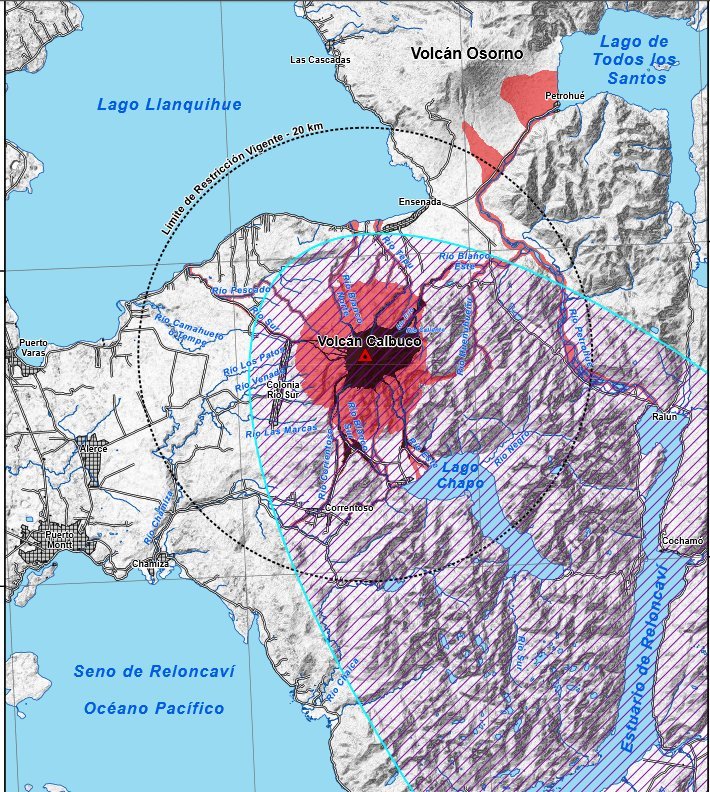
Above is a map from Chile’s Servicio Nacional de Geología y Minería (Sernageomin) showing the zone affected by Calbuco as of yesterday. The diagonally striped red lines show the dispersion of ash. The solid black area right around the rim of the volcano shows evidence of being changed by the eruptions, and the solid red areas are considered danger zones for any future eruptions.

I plan to go by bus from Petrohué to Puerto Varas (at the left edge of the map).

My hope is that the volcanic activity abates, allowing me to sneak by without getting caught up in the mess. Keep your fingers crossed!


Oh, No! Not Again!

Chile’s Calbuco Volcano in Eruption

Chile’s Calbuco Volcano in Eruption

It’s getting to be downright monotonous. Four years ago, when Martine and I were planning our trip to Argentina, we had originally decided to included San Carlos Bariloche on the eastern slope of the Andes on our itinerary. But then, a Chilean volcano decided to trash the whole area. Here’s what I wrote at that time:

It looks like some sort of ghastly aviation accident, doesn’t it? But no, what you are seeing above [actually below, in this posting] is a grounded aircraft in San Carlos de Bariloche covered in volcanic ash from the eruption of the Puyehue-Cordon Caulle volcanic complex in neighboring Chile. Not only was the airport at Bariloche closed for lack of visibility, but the ash drifted eastward over the South Atlantic by Trelew and Puerto Madryn.

I have just named three of my main destinations for our upcoming trip to Argentina five months from now. No doubt the eruptions will cease soon, if they have not already done so.

One thing we can expect is that there will be a lot more blowing dust and ash given the prevailing winds in Patagonia and the huge amount of ash generated by the eruption.

Our plan is to go to Bariloche via one of the few remaining long-haul passenger railways in Argentina, the Tren Patagonico connecting Viedma with Bariloche. Viedma is five hours north of Puerto Madryn by bus, so we’ll have the opportunity of seeing more of the Atlantic coast between the two cities.

Plane Covered with Ash at Bariloche’s Airport

Plane Covered with Ash at Bariloche’s Airport

Well, the eruptions from Cordon Caulle kept going until several states along the Eastern Andes were declared a disaster zone. So we skipped Bariloche and went to El Calafate instead, which did not disappoint.

Now the Chileans are doing it again to me, with Calbuco in eruption. And, of course, I am planning once again to visit Bariloche in November. I can only hope that this particular event does not last as long as the one four years ago. So far, the only area in Argentina that has been affected is around Neuquén, several hours to the north of where I’ll be.

I just noticed that the ash has already made its way to Buenos Aires, closing all international flights from Ezeiza airport.

The Buenos Aires Herald has included a great video shot by a Chilean tourist at the moment Calbuco blew its top. You can find it by clicking here.

Land of Dinosaurs

Exhibit at Trelew’s Museo Paleontológico Egidio Feruglio

Exhibit at Trelew’s Museo Paleontológico Egidio Feruglio

The first book I ever read about Patagonia was George Gaylord Simpson’s Attending Marvels: A Patagonian Journal, about the paleontologist’s search for dinosaur bones in that windy desert that forms most of Argentina’s South. A sparsely populated country (less than one person per square mile), Patagonia preserves its paleontological heritage better than most populated places.

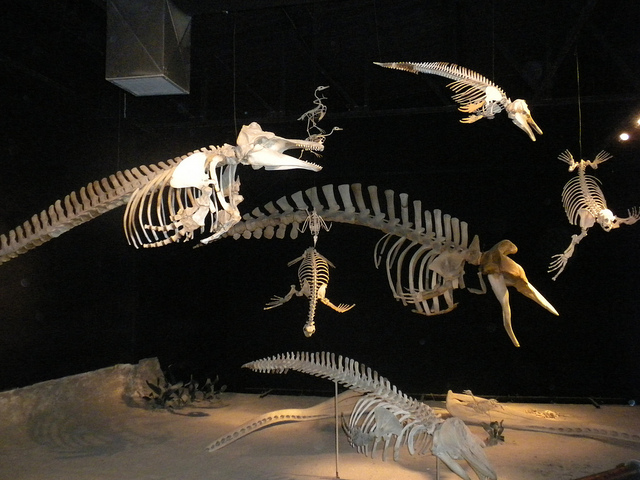
Near Nequén, there are three active digs that a tourist can visit. In Trelew, there is the attractive Museo Paleontológico Egidio Feruglio. Even the airport at Trelew has dinosaur bones on display.

Last September, CBS announced the discovery of substantial dinosaur remains for Dreadnoughtus schrani, which lived 77 million years ago, measured 85 feet long, and weighed in at 65 tons—heavier than a Boeing 737. (I wonder whether it was a vegetarian.)

I probably will not spend much time digging for fossils on my next trip to Argentina, but it’s always fun to see what others have dug up in that desolate land.


A Visit to the Holy Land

Argentina’s Own Biblical Theme Park: Tierra Santa

Argentina’s Own Biblical Theme Park: Tierra Santa

Both times I have visited Argentina, I stopped in at Buenos Aires’s Tierra Santa, a theme park dedicated to the Bible, particularly the New Testament. It’s relatively easy to get to: Take the commuter train a mere stop or two from Retiro Station to Estación Raúl Scalabrini Ortiz and walk to the northern exit, which takes you almost a mile past a water park along the Rio de la Plata to Argentina’s occasionally tacky and very Catholic version of the Holy Land.

One can easily spend two or three hours seeing the Disneyfied exhibits of the Creation, the Last Supper, and the Sermon on the Mount. There are several Middle Eastern type restaurants, gift shops, and hundreds of full size plaster statues representing figures from the Bible. Above is the Crucifixion, atop a sun-drenched Golgotha you can climb to be in the middle of the action.

It can’t be all that bad, because according to the park’s website, Pope Francis visited it.

If you are really famished after your visit, there was a branch of Siga la Vaca (“Follow the Cow”), an all-you-can-eat parrillada right next door.

Ghosts on the Pampas

Mapuche Indian Women

Mapuche Indian Women

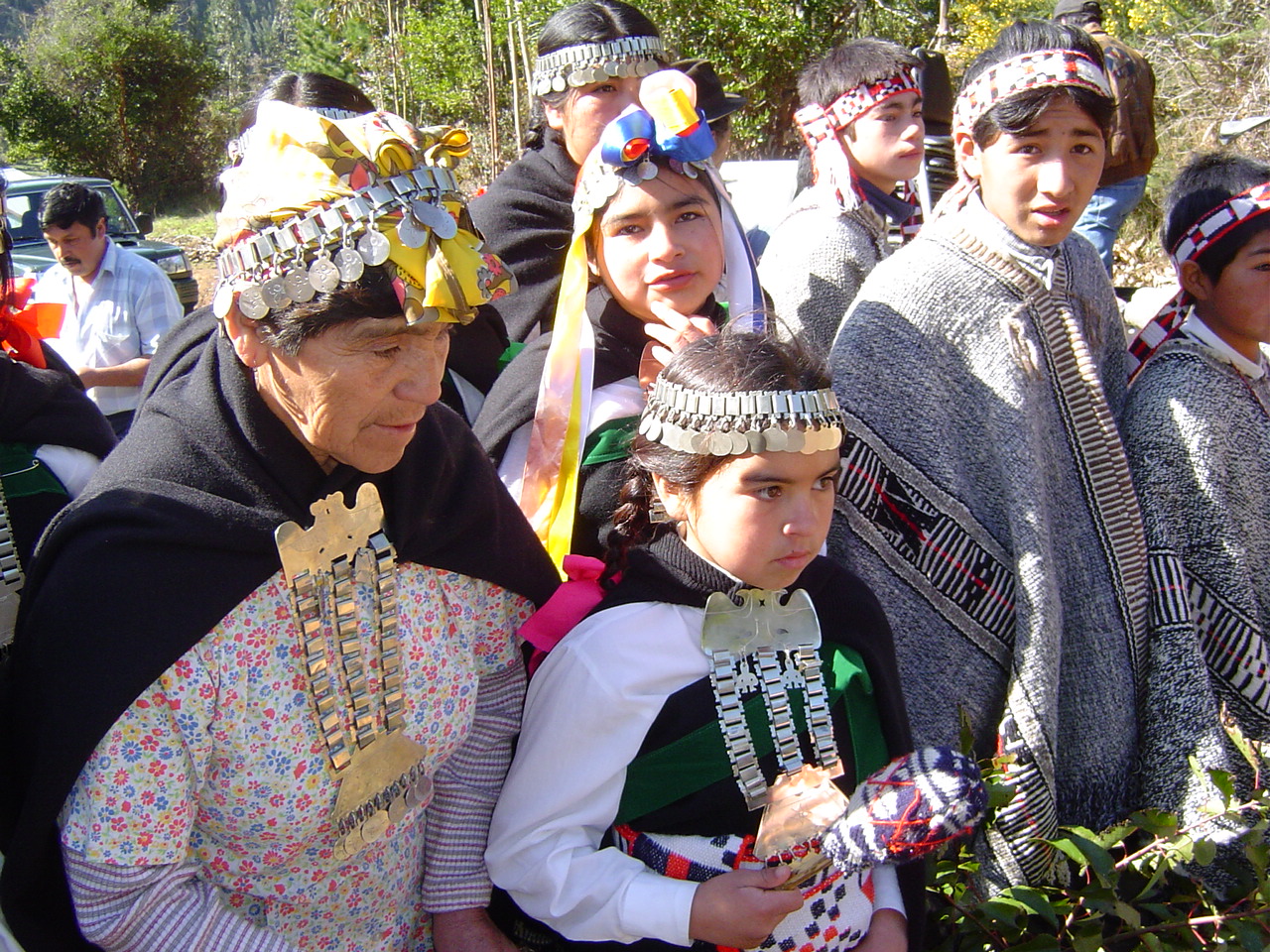
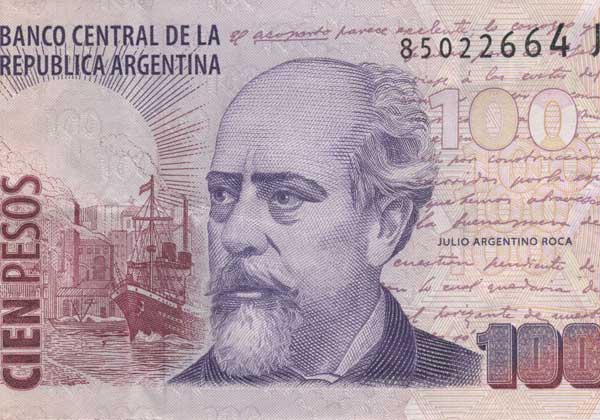
One doesn’t hear much about the aboriginal population of Argentina. That is because, for the most part, the Indians of Argentina were done away with. Those who didn’t die of the white man’s diseases were rounded up and either executed or imprisoned during the 1870s under the “Conquest of the Desert” fomented by President Julio Argentino Roca (pictured below on the Argentinian 100 peso note).

Two Argentinian writers, however, did a fair job resuscitating the original peoples of the land. In The Witness, Juan José Saer writes of the fictional Colastiné who inhabited La Litoral along the Rio Paraná. A Spanish cabin boy is one of several prisoners from his 16th century landing party. His mates are all cooked and eaten in a cannibal feast. Yet there is a strange beauty to them:

For the Indians everything seems and nothing is. And the appearance of things is situated above all in the field of non-existence. The open beach, the transparent day, the cool green of the trees in spring, the otters with their smooth, rippling skin, the yellow sand, the golden-scaled fish, the moon, the sun, the air and the stars, the tools they skilfully and patiently fashioned from recalcitrant materials, in short everything that presented itself clearly to the senses was for them formless, and had a vague and sticky underside against which the darkness beat.

Saer’s Colastiné are true primitives, whereas César Aira’s Mapuche in The Hare are subtly ironic. Fortunately for them, the Mapuche survive today on the Chilean side of the Andes. (Unlike the Argentineans, the Chileans frequently intermarried with their tribal peoples.)

Argentine 100-Peso Note

Argentine 100-Peso Note

In The Hare, the narrator, Clarke, is an Englishman in search of the legendary Legibrerian Hare, which can not only run and leap, but fly when necessary. The Mapuche chief Calfucurá tells Clarke:

We have a word for “government” which signifies, in addition to a whole range of other things, a “path,” but not just an ordinary path—the path that certain animals take when they leap in a zigzag fashion, if you follow me; although at the same time we ignore their deviations to the right and left, which due to a secondary effect of the trajectory end up of course not being deviations at all, but a particular kind of straight line.

Both Saer and Aira are superb writers, and both capture in their own ways the peoples who came before them.