Better Than Ever

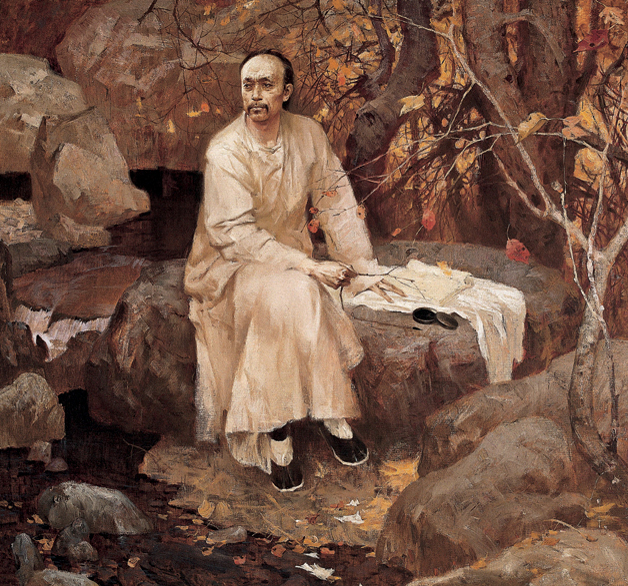
Monaco Stamp Commemorating Honoré de Balzac

It has been over six years since I opened a book by one of my favorite authors, Honoré de Balzac (1799-1850). Sometimes when I revisit a favorite author after a long absence, I find that my ardor has cooled somewhat. Not so with Balzac!

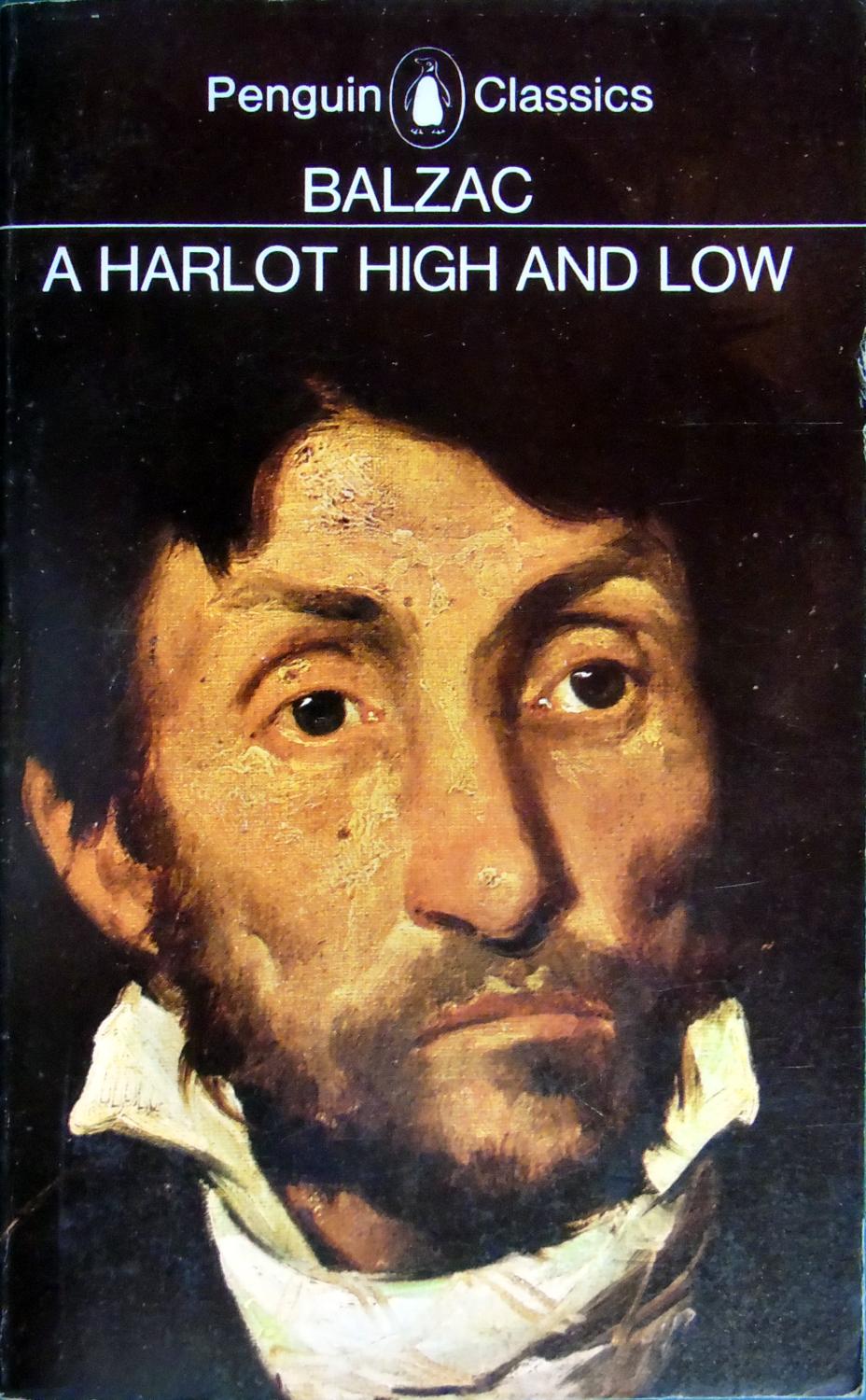
In the Yahoo French Literature Reading Group, I recommended that we select A Harlot High and Low, a.k.a. Splendeurs et misères des courtisanes (1838-1847) for our July read. It didn’t take too many pages before I was as entranced as ever. It was almost half a century ago that I first undertook to read Père Goriot (1835), still my favorite among his works. Interestingly, two of the characters from the earlier book—Eugène de Rastignac and Vautrin—appear in the work I am re-reading.

The period of the author’s life somehow tied together the French Revolution (1789-1799), the reign of Napoleon Bonaparte, the Bourbon Restoration, the reign of Louis-Philippe “The Citizen King,” and the Revolutions of 1848. No other writer on the Continent was able to bridge these critical periods as Balzac did with his Comédie Humaine series of stories and novels, although Charles Dickens at times came close.

Balzac was the first writer to share characters between stories. As one reads his works, one gains a deeper understanding not only of the characters, but the times and milieus in which they lived.

The Work I’m Re-Reading Now

As I re-read A Harlot High and Low, I see myself returning to my favorites among his works:

  • The Wild Ass’s Skin (Le Peau de Chagrin), 1831
  • Eugénie Grandet, 1833
  • Old Goriot (Le Père Goriot), 1835—probably the best place to start if you want to read Balzac
  • César Birotteau, 1837
  • Lost Illusions (Illusions Perdues),  1837-1842
  • Cousin Bette (La Cousine Bette), 1846
  • Cousin Pons (Le Cousin Pons), 1847
  • A Harlot High and Low (Splendeurs et Misères des Courtisanes), 1838-1847

Over the years, I have actually read all 50-odd novels and all 20-odd short stories that have been translated into English, some more than once. And it appears that I’m not finished yet.


Hard-Boiled

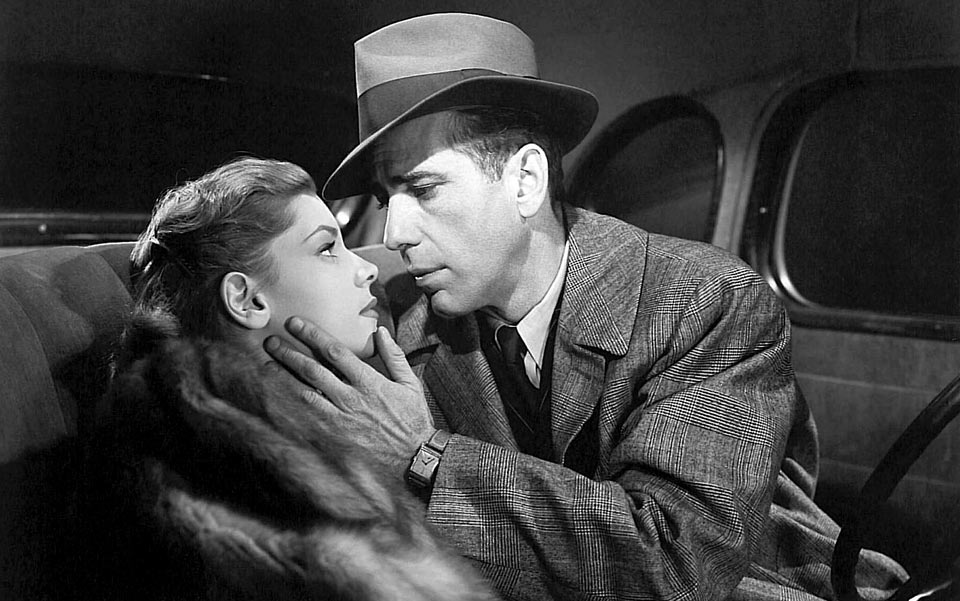
Lauren Bacall and Humphrey Bogart in Howard Hawks’s Masterpiece The Big Sleep (1946)

I’ve written before about American film noir, which includes many of my favorite films, such as The Big Sleep, High Sierra (1941), Double Indemnity (1944), and The Big Heat (1953)—not to mention several hundred other likely prospects.

Today I would like to say a few words about the literary genre that spawned these films. Although it was not until 1945 that the French publishing house Gallimard introduced its Serie Noir editions that gave birth the the genre’s name, noir novels had been written for years. There was even an early noir film by D. W. Griffith entitled The Musketeers of Pig Alley (1913).

What is it about the United States that produced this genre of hard-boiled urban crime fiction? It probably has something to do with our fascination with hard-boiled dicks, cigarettes, hard-luck losers, cheap booze, hot floozies, and guns. Here are just a few mileposts in the genre, alphabetically ordered:

  • W. R. Burnett: High Sierra (1941)
  • James M. Cain: The Postman Always Rings Twice (1934)
  • Raymond Chandler: The Long Goodbye (1953), probably my favorite of all the noir writers.
  • James Ellroy: L.A. Confidential (1990)
  • Kenneth Fearing: The Big Clock (1946)
  • David Goodis: The Moon in the Gutter (1953), which I’m reading now.
  • William Lindsay Gresham: Nightmare Alley (1946)
  • Dashiell Hammett: The Maltese Falcon (1930)
  • Patricia Highsmith: Strangers on a Train (1950)
  • Chester Himes: The Real Cool Killers (1959)
  • Dorothy B. Hughes: In a Lonely Place (1947)
  • Jim Thompson: The Killer Inside Me (1952)
  • Cornell Woolrich: Night Has a Thousand Eyes (1945)

I think I’ll stop at thirteen writers—a most appropriate number for this list. Not coincidentally, all have been made into classic films, both in the U.S. and France. Without straining my mind too much, I could probably double the size of the list. What’s interesting is that this list includes women (Highsmith and Hughes) and one African-American (Himes).

While none of the above names fit in with Beckett, Joyce, Faulkner, and the other literary heavyweights of the last hundred years, I would not be surprised if their works could be found on their night-stands.

My Best of 2017

German Author W. G. Sebald (1944-2001)

Below is a list of my favorite books from 2017. Most are fiction, with some occupying the in-between zone, and only two are outright non-fiction. The only name which is repeated from 2016 is that of Patrick Modiano, about whom I posted yesterday. The 14 books listed below are in alphabetic order by the names of their authors. This year, I have also included the country of origin.

  • Rudolfo Anaya, Bless Me, Ultima (US). I was tempted to also include The Milagro Beanfield War by John Nichols, but of the two New Mexico novels, I think Anaya’s is the better.
  • Teju Cole, Open City (US). Cole’s Nigerian-American viewpoint is incredible. I am keeping my eye on this writer.
  • Ry Cooder, Los Angeles Stories (US). Granted, Cooder is a great musician; but he’s also got the makings of a great writer. I would love to see more from him.
  • Antonio di Benedetto, Zama (Argentina). This New York Review title introduces a writer unknown to Americans, but well known to South Americans. A Spanish government official in Paraguay finds his ambition is constantly being thwarted.
  • Joan Didion, South and West, From a Notebook (US). This is an old title that is just now being released. Didion’s 40-year-old observations of Dixie are still relevant.
  • David Goodis, Dark Passage (US). A noir masterpiece, far better even than the Bogart movie based on it.
  • Indriðason, Arnaldur, Reykjavík Nights (Iceland). Indriðason is a world-class mystery writer, and he seems to be getting better and better.
  • Patrick Modiano, After the Circus (France). A young man falls for an older woman he first sees at a police interrogation.
  • Natsume Soseki, The Gate (Japan). A real find: This quiet writer is a deep one. Even if he died early in the 20th century, his books read as if they were written yesterday. (This writer is not outside of alphabetic order: Natsume is his family name)
  • Raymond Queneau, The Last Days (France). A coming-of-age story with seven characters set in the 1920s.
  • Jonathan Raban, Passage to Juneau: A Sea and Its Meanings (US). Ostensibly a travel book, but a great one. Real life intervenes twice in the author’s solo sailing voyage up Alaska’s Inside Passage.
  • W G Sebald, The Emigrants (Germany). A book about people who have for various reasons emigrated from their home countries (like Sebald himself), and find themselves in a strange in-between place.
  • Marina Tsvetaeva, Selected Poems (Russia). By far the best poems I have read last year.
  • John Williams, Stoner (US). No, nothing to do with drugs. Professor Stoner is an English instructor at a Midwestern college, and we see how his life plays out.


NYRB

Currently My Favorite Publisher

I have always played favorites with particular publishers. When I was in high school and hung around at Schroeder’s Books on Public Square in Cleveland, I was enthralled by the New Directions paperbacks. As I went to college and for years afterwards, I was particularly interested in Penguin Books (though I have been disappointed in how poorly they age). Then, for a while I collected the pocket sized hardback Oxford World Classics. Now, I find myself quite addicted to New York Review Books.

In fact, I recently counted how many NYRB titles I read in 2017. The total came to fifteen titles! They included, in the order I read them:

  • Teffi’s Tolstoy, Rasputin, Others, and Me: The Best of Teffi
  • Antonio di Benedetto’s Zama
  • Natsume Soseki’s Mon [The Gate]
  • John Williams’s Stoner
  • Robert Bresson’s Notes on the Cinematograph
  • Georges Simenon’s Tropic Moon
  • Georges Simenon’s Mr Hire’s Engagement
  • Kingsley Amis’s Girl, 20
  • Kingsley Amis’s One Fat Englishman
  • Patrick Modiano’s Young Once
  • Kingsley Amis’s Ending Up
  • Norman Mailer’s Miami and the Siege of Chicago
  • Kingsley Amis’s Take a Girl Like You
  • Raymond Quenaeau’s Zazie in the Metro
  • Henry Green’s Loving

Looking back over this list, there wasn’t a single clinker in the bunch. And my plans for 2018 call for me continuing to plow through the NYRB list.

A Forty-Year Labor of Love

The Eleven Volumes of the Durants’ The Story of Civilization

If you’ve walked into a used bookstore within the last half century, you’ve no doubt seen the volumes of Will and Ariel Durant’s The Story of Civilization. Many have bought the complete set, only to use it to weight their bookshelves to keep them from blowing away in the wind. I myself own just seven of the volumes, and by the end of the month, I will have finished reading three of them:

  • The Life of Greece, Volume II (1939)
  • The Reformation, Volume VI (1957)—I am currently two-thirds of the way to completion
  • The Age of Napoleon, Volume XI (1975)

Instead of berating the authors for having produced a coffee-table set that is large enough to crush many coffee tables, I am amazed to find that the volumes I have read are superb introductions to the periods they cover. They cover not only the events, but the leading characters, changes in the culture of the mostly European countries, and the main art and literary trends.

When reading history books, we usually settle on a small slice of a place and time and trust that we will catch up on the general trends. The Durants go particularly deep into the period between 1500 and 1815, which accounts for six of the volumes. I can vouch for the fact that The Life of Greece covers in one volume hundreds of years of Greek history, from Homeric times to the Roman takeover.

Will and Ariel Durant

The Durants provide detailed bibliographies, footnotes, and alphabetic indexes in all the volumes, which make them excellent references for delving into sources and further details.

It is sometimes too easy to pooh-pooh books that have been honored by such organizations as The Book of the Month Club. Fortunately, they weren’t always far off the mark. Certainly not in the case of the Durants. Do not make the mistake of ignoring these splendid books.


The Bookseller

Michael R. Weinstein, Bookseller, in His Torrance Store

Booksellers are a hardy breed. Even as the cost of commercial rentals is going up, the unit sales price for most books seems to be holding steady. Five years ago, I stopped at Alpine Village Market in Torrance near the intersection of Torrance Boulevard and Vermont, probably to buy some of their high quality meats and groceries. A few doors down from the market was a used bookstore signed only as Collectible Books. I was pleasantly surprised to see that it was a used book store with a fairly large stock.

The genial owner, Michael R. Weinstein knows his business and has an interesting selection of literature, history, genre fiction, and miscellaneous non-fiction in his labyrinthine store. I cannot pay him a visit without making some sort of find.

I remember when Los Angeles had dozens of used book stores, including three within walking distance of my apartment. No more. I used to go as far afield as Glendale to visit Brand Books, but it is gone. Sam Johnson Books in Mar Vista is still there, but its co-owner, my friend Bob Klein, passed away a couple years ago.

So, Michael, eat a healthy diet, get plenty of sleep and exercise, because I need good booksellers like you to supply me with what I need to make it through the day.


Nouvelle Vague

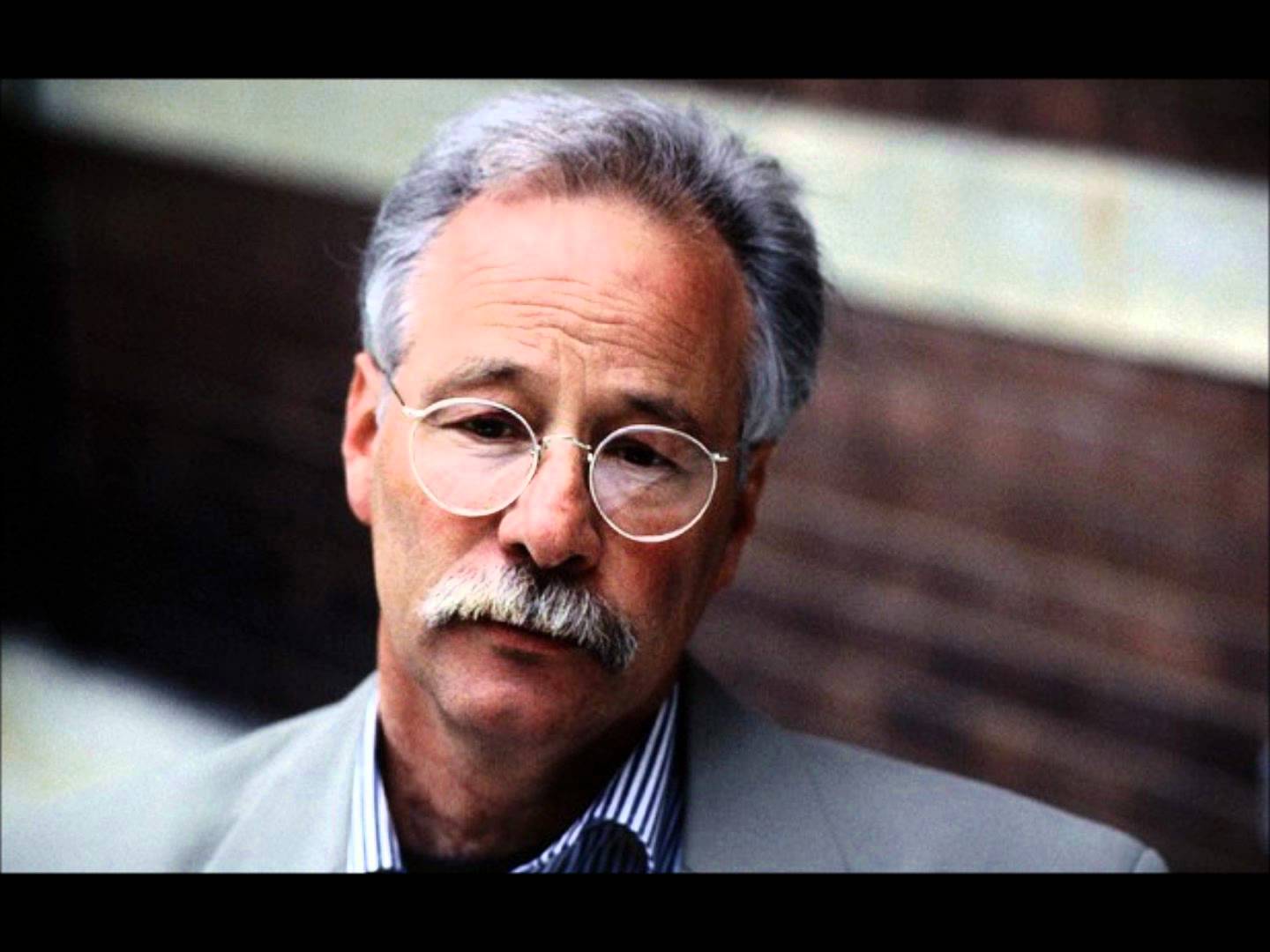
Patrick Modiano, Winner of the 2014 Nobel Prize for Literature

To date, I have read five of Patrick Modiano’s novels and loved all of them. In order of publication, they are:

  • Missing Person (1980)
  • Young Once (1981)
  • After the Circus (1992)
  • Out of the Dark (1998)
  • In the Café of Lost Youth (2007)

With each of them, I felt I was back in the 1960s, in the world of the French New Wave (Nouvelle Vague), the Paris of Jean-Paul Belmondo in Breathless and Giani Esposito in Paris Nous Appartient. Relationships are quickly entered into, but turn into quicksand. In After the Circus, we are not altogether sure of the main characters’ names. Describing his roommate, “Lucien” writes:

He had something in common with my father: they both wore suits, ties, and shoes like everyone else. They spoke unaccented French, smoked cigarettes, drank espresso, and ate oysters. But when in their company, you were seized by doubt and you felt like touching them, the way you rub cloth between your fingers, to make sure they really existed.

Earlier, he writes, “But topographical details have a strange effect on me: instead of clarifying and sharpening images from the past, they give me a harrowing sensation of emptiness and severed relationships.” That’s a good summary of the feeling of the novel: emptiness and severed relationships. “Lucien” is never sure when he parts from his girlfriend “Gisèle” that she will not just disappear forever into the warren of streets without a word of warning.

Fortunately, Modiano is a prolific writer, and many if not most of his works have been translated into English. Of the five novels I have read, I prefer the three most recent ones.

Reading at the Farmers Market

The Book Is Open to Sir Arthur Quiller Couch’s Cambridge Lectures

Today started with a visit to the dentist. Apparently, my teeth are continuing to be ground to powder by the action of my jaws. Within the next year, I will need three crown replacements, beginning next month, with one of my right bottom molars about to be crushed to smithereens. So it goes. After the appointment, I took the 720 bus to Wilshire and Fairfax and walked up to the “Original” Farmers Market at 3rd and Fairfax.

There, I finished reading Saul Bellow’s Ravelstein, which I loved, and dipped into the Cambridge Lectures of Sir Arthur Quiller Couch. I’ll probably give the latter another chance, butit’s not looking good. Too many untranslated quotations in Greek. I can usually tolerate Latin, but Greek, well, it’s Greek to me.

In a Cool Shady Corner of the Market

One of the things I love about the Farmers Market is that I could sit and read for hours without anyone bothering me. So what if all the chairs are of the folding variety. If I need variety, I can always get a nice cup of English Breakfast tea or a tasty Po’ Boy sandwich, which is what I had today. The variety of eateries at the Farmers Market is almost endless: American, Israeli, Chinese, Seafood, Malaysian, Louisiana Creole, Japanese, Mexican, Brazilian, Italian—you name it! And much of the food on offer is high quality.

The Farmers Market is full of European and Asian tourists on a typical day. This morning, a whole busload of French trooped past me while I was drinking a lemonade.

I like the idea that this place is not what the tourists expect when they think of Los Angeles. My guess is that their picture of my city is half a century or more old. The only stars in Hollywood today are on the sidewalks along Hollywood Boulevard.

W. H. Auden’s “Good Angel”

Hannay, Lynton; Professor W. P. Ker (1855-1923)

Extending from the reign of Queen Victoria to the aftermath of World War II, Britain produced a bumper crop of great literary scholars and essayists. I have already written about F. L. Lucas (1894-1967). I am currently exploring the work of W. P. Ker, short for William Paton Ker. It was poet W. H. Auden who, in The Dyer’s Hand, penned this tribute to the Scottish scholar:

[w]hat good angel lured me into Blackwell’s [Oxford Bookstore] one afternoon and, from such a wilderness of volumes, picked out for me the essays of W. P. Ker? No other critic whom I have subsequently read could have granted me the same vision of a kind of literary All Souls Night in which the dead, the living and the unborn writers of every age and tongue were seen as engaged upon a common, noble and civilizing task. No other could have so instantaneously aroused in me a fascination with prosody, which I have never lost.

I have been reading Volume I Ker’s Collected Essays, which one of the literature librarians at the Los Angeles Central Library entrusted me to take out, though it belongs to the Reference Collection. I read with interest until, suddenly, beginning with Page 109, I hate pay dirt. No doubt the name of Horace Walpole probably doesn’t mean much to most people, unless they suffered through the gothic The Castle of Otranto in college English. Instead, Ker concentrates on Walpole’s letters. Here he describes the country around Chamonix in the Alpes in a letter to his friend Paget Toynbee on September 18, 1739:

But the road, West, the road! winding round a prodigious mountain, and surrounded with others, all shagged with hanging woods, obscured with pines, or lost in clouds. Below, a torrent breaking through cliffs, and tumbling through fragments of rocks! Sheets of cascades forcing their silver speed down channeled precipices, and hastening into the roughened river at the bottom. Now and then and old footbridge, with a broken rail, a leaning cross, a cottage or the ruin of an hermitage. This sounds too bombastic and too romantic to one who has not seen it, too cold for one that has. If I could send you my letter post between two lovely tempests that echoed each other’s wrath, you might have some idea of this noble roaring scene, as you were reading it.

There are almost no collections of literary letters being written now, because there are no letters. There are scads of e-mails, tweets, text messages—few of which will be (or deserve to be) saved. Ker himself explains why such letters are valuable:

There is an interest in reading a series of letters like this which is not found even in personal memoirs. It may be a childish idea, but somehow in reading letters one seems to be nearer to the reality than in reading any other history. The phantoms of the past rise there less pale and shadowy than in common history, they come nearer to us, the colours deepen, the voices are more distinct. Letters like those of Cicero are not a record of the time; they are the life itself, the very accents of the time. He does not write any more to Atticus or to his brother: he writes to us: he tells us how Caesar came to stay with him, how they talked at dinner, how they spoke, Caesar spoke.

I wasted no time in buying Volume I of Horace Walpole’s collected letters (only 99 cents on Kindle). And I will, of course, finish reading Ker’s Collected Essays.

Ker’s Excellent The Dark Ages (1904)

This is not the first work of Ker’s that I have read. I own an old Mentor paperback edition of his The Dark Ages, and I have read portions of his Epic and Romance (1908), which is still available through Dover Publications.

Unutterably Alien

Arkady (1925-1991) and Boris (1933-2012) Strugatsky, the World’s Greatest Sci-Fi Writers

There is something about these two Russian brothers: They wrote the simply most incredible science fiction novels. I am thinking particularly of Roadside Picnic (Пикник на обочине), writen in 1972. At some time in the past, parts of Earth were visited by one or more bands of interstellar travelers. They left their mark on the places they have stayed—in strange, unaccountable ways. Nowhere is there a description of the visitors: no one alive has ever seen them. But the laws of matter and energy don’t seem to work there any more.

The novel was turned into a film by fellow Russian Andrei Tarkovsky in 1979. The film was called Stalker, and it was one of the greatest films produced anywhere in that decade. The film so influenced Geoff Dyer that he wrote a book in 2012 called Zona about his memories of the movie.

Scene from Tarkovsky’s Stalker

This is some powerful stuff. Those two brothers had some freaky visions that could so influence so many follow-on works. I am currently reading one of their earlier works, Space Apprentice (Стажеры) (1962). It’s not quite the level of Roadside Picnic, but it is fascinating.

While we’re on the subject of Eastern European sci-fi writers, I thought I’d put in a word for Poland’s Stanisław Lem , author of Eden (1959). In that novel, the earthling explorers go to a strange new world, where they are ignored. The protagonists can make nothing whatsoever of the local inhabitants.