
Cleveland 1957-58

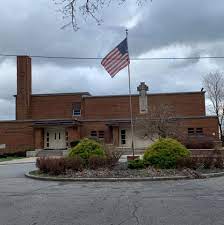
Saint Henry Church and School Around 1957

I’m trying to recover some memories of the 12-year-old Jim Paris when he was in the 7th and 8th grade at Saint Henry School around 1957-58.

I was living at 3989 East 176th Street in the Lee-Harvard area of Cleveland, just west of Warrensville. Over the previous five years or so, I managed to pick up the English language and get over the whole class clown stage of my life when I was poised halfway between Hungarian and English. Television definitely helped, even though the language spoken at home was still Magyar.

Beginning in the 5th grade, I was one of the smartest kids in class—although Marianne Boguski always had the top grades. One day, I sneaked a peak at the teacher’s desk and found that my IQ was the highest in the class: 132. By the way, Marianne went to the University of Dayton where she majored in chemistry. Here she is, sitting in the first row left of the university’s chemistry club:
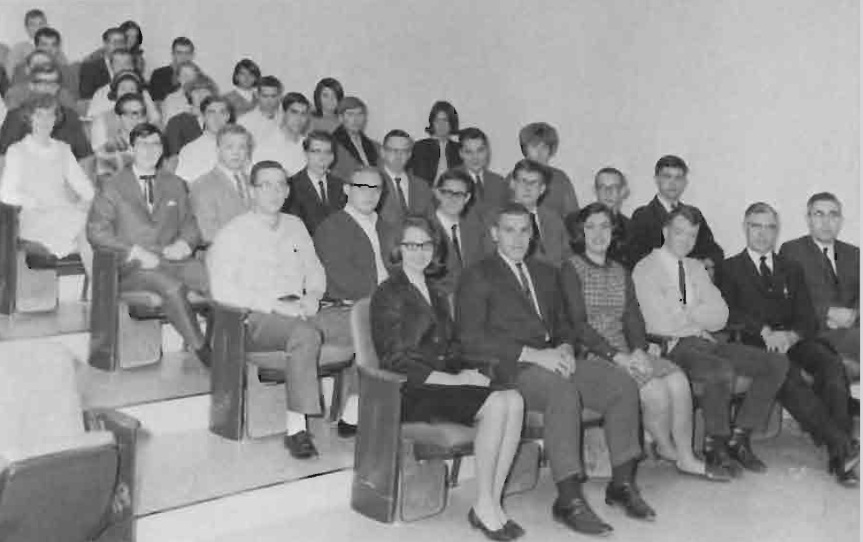
Marianne Boguski in 1966 at the University of Dayton

In this picture, she is not nearly as geeky as she looked when we were both at St. Henry. In fact, she looks a whole lot more presentable than I did at that age.

The word was out that there was a new Catholic high school in nearby Bedford. When I was in 8th grade, Chanel High School only had a class of freshman 9th graders. The only other Catholic high schools in the area were St. Stanislas, St. Edward, and St. Ignatius—all of which were geographically undesirable to a resident of Lee.Harvard.

Fortunately my grades and test scores were good enough to get me a full year scholarship, so my parents did not have to pay tuition.

In 7th grade, my teacher at St. Henry was Sister Beatrice OP, who was in her eighties but will still sharp as a tack. The next year, I had Sister Rose Thomas OP. The OP indicates that the sisters were members of the Dominican order. The OP stood for Order of Preachers.

Many of my friends who has Catholic educations had issues being taught by clergy or sisters. I did not. My teachers at both St. Henry and Chanel were dedicated, smart, and tough. No regrets there.

(Not) In Praise of Education

My Classes Were Better Managed Than This

My Classes Were Better Managed Than This

From today’s Futility Closet posting comes this attack on education in the form of four quotes, three from England and one from Poland. I mention this because nothing I experienced was anywhere near as negative, despite the fact that I began my schooling speaking only Hungarian. Of course, everything I’ve read about an English Public School (really, Private School) education sounded rather like Dotheboys Hall in Dickens’s Nicholas Nickleby, with the possible addition of homosexual rape.

Anyway, here are the quotes:

“There is, on the whole, nothing on earth intended for innocent people so horrible as a school.” — George Bernard Shaw

“I sometimes think it would be better to drown children than to lock them up in present-day schools.” — Marie Curie

“Nearly 12 years of school … form not only the least agreeable, but the only barren and unhappy period of my life. … It was an unending spell of worries that did not then seem petty, of toil uncheered by fruition; a time of discomfort, restriction and purposeless monotony. … I would far rather have been apprenticed as a bricklayer’s mate, or run errands as a messenger boy, or helped my father to dress the front windows of a grocer’s shop. It would have been real; it would have been natural; it would have taught me more; and I should have done it much better.” — Winston Churchill

“Not one of you sitting round this table could run a fish-and-chip shop.” — Howard Florey, 1945 Nobel laureate in medicine, to the governing body of Queen’s College, Oxford, of which he was provost

Still a Good Investment?

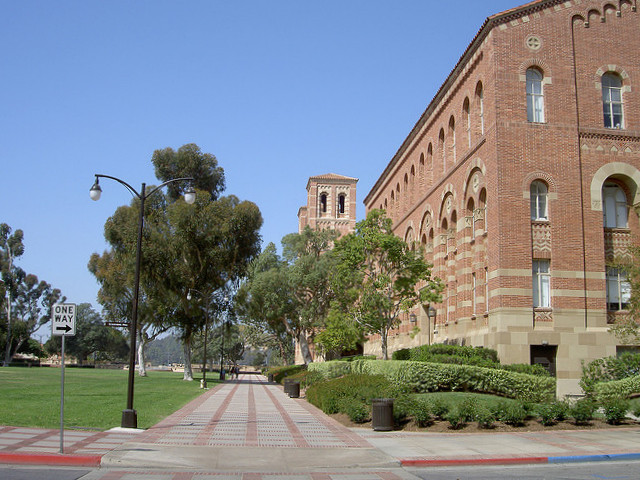
University Buildings at UCLA

University Buildings at UCLA

Over the years since I graduated from college, I’ve seen the cost of a university education climb to stratospheric levels. At the same time, I’ve seen massive unemployment among college graduates, sometimes even those with a postgraduate education. It forces me to think what I would do different if I had a couple of teenaged children to put through school (though in fact I have no children). Would I still at this date recommend that children go to college to improve their chances for the future?

Part of the problem is symbolized by that “One Way” sign in the above photo. It used to be that the object was to get everyone into college: It was a bargain back then. Even if the kids washed out within the first quarter or two, the thinking was that they were given the opportunity.

I went to an Ivy League college for four years—Dartmouth College in Hanover, New Hampshire—whose tuition back in the years 1962-66 was only $1,500 a year. With the dollar as it is today, that would be somewhere between $9,000 (using the CPI) to $27,200 (using the relative share of GDP) in 2012, the most recent year for which this calculation is available. For the academic year 2013-2014, Dartmouth’s tuition is now $45,445. The question I ask is this: Is a Dartmouth education worth twice as much as when I went to school? I think not. It’s still very good, but not at two to five times the cost.

Other related costs have also been skyrocketing. I am particularly incensed by textbooks that run to several hundreds of dollars each. I remember paying something under a hundred dollars for all the textbooks for an entire quarter. Admittedly, textbooks can be gorgeously produced with nice bindings and four-color illustrations, but is that always necessary? I can see where these expensive productions will eventually be replaced by software programs, but even then the temptation will be to charge more than they are worth, even after the production costs for multiple copies have plummeted.

So, what to do? There isn’t much chance that youth between the ages of eighteen and twenty-one will find jobs that at the same time do not require a college education, yet provide a reasonable opportunity for advancement. How does one advance after a job flipping hamburgers or selling tee shirts? A college degree will help, even though it has been devalued over the years. It costs twice as much in real dollars, yet probably isn’t as good as it was when my generation was on campus.

I still urge kids whose intellects are sharp to go to college whenever they can. It doesn’t have to be the best college, but it should be a decent one (and I don’t mean something like the University of Phoenix and its imitators). To get a good job after graduation, some thought has to be put into a good choice of a major. Perhaps it would help to have some kind of certification in certain subjects attesting to a student’s proficiency in, say, writing or mathematics. If instituted, it may even replace the whole notion of a major; and it may help grads with multiple certifications to have different options to choose from when looking for a job.

In 1966, I graduated with a major in English. Then I went on for two years at UCLA in motion picture history and criticism, stopping short of getting my M.A. for mostly political reasons. (The instructor I hated most got himself appointed to head up my thesis committee, upon which I switched over into computer software.) It was a good thing that I had taught myself how to become conversant with computers at Dartmouth, where every student was allowed free time on the Dartmouth Time-Sharing System, the nation’s first. That kind of flexibility to switch among career alternatives is becoming more important than ever.