The Decline and Fall of the American Meal

Last night, Martine and I had dinner at a restaurant in Glendale that we have loved for twenty-five years. As soon as we walked in, we noticed some ominous signs. The waitstaff were all young, they were wearing bright new T-shirts imprinted with the name of the restaurant, and there was a brand new illuminated sign. Most seriously, the old owner was not there.

For the first time ever, both Martine and I left the restaurant feeling slightly ill. I almost didn’t make it back to my parked car. And it was lucky that there was a large Mobil gas station at the corner of Brand and Chevy Chase in Glendale, where I was able to dispose of some of the intestinal irritants.

Mind you, I can understand why restaurants are dropping like flies. It is no fun to own or work at a restaurant, especially after the Covid-19 lockdowns. And increasingly, there is more microwaving than cooking taking place in the kitchen—by people who don’t know much about food safety.

Not only in restaurants, but across the board the quality of the American meal has declined precipitously. Even supermarkets are moving away from serving customers who do their own cooking. Recently, I have had problems finding basic food items such as barley or peanut oil. What there is no lack of are frozen meals that taste like cardboard and various “helper” mixes for people afraid to make anything from scratch.

Increasingly, the foods that people eat at home or in restaurants are deficient in nutrition and flavor.

One thing that particularly bothers me is the disappearance of ethnic restaurants as the next generation takes charge. When I first came to Los Angeles, there were loads of great Italian, French, Hungarian, Greek, and other ethnic restaurants. And there were even good cheeseburgers that didn’t look like a 300-pound guy named Rufus sat on them.

The Book

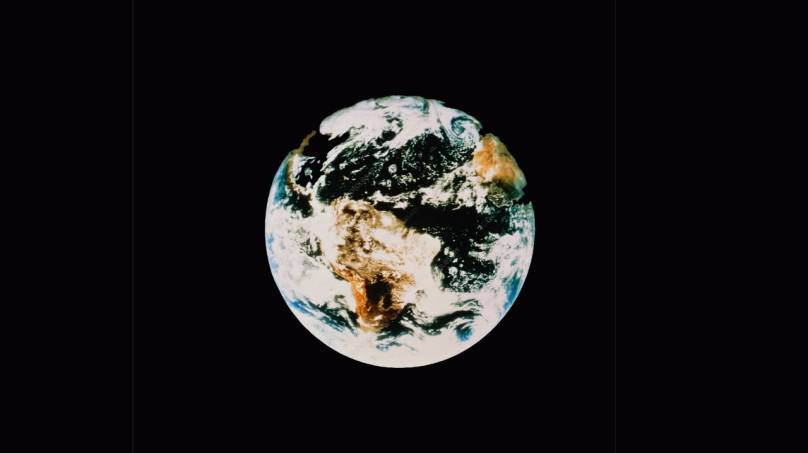
NASA Image of the Earth from Space

For over twenty years, I considered Stewart Brand’s Whole Earth Catalog as one of the major influences of my life. This evening, I unearthed the most recent edition I had, entitled The Next Whole Earth Catalog and published in October 1981.

In the original issue dated 1969, the following appeared on the opening page:

Function

The WHOLE EARTH CATALOG functions as an evaluation and access device. With it, the user should know better what is worth getting and where and how to do the getting.

An item is listed in the CATALOG if it is deemed:

  1. Useful as a tool,
  2. Relevant to independent education,
  3. High quality or low cost,
  4. Not already common knowledge,
  5. Easily available by mail.

CATALOG listings are continually revised according to the experience and suggestions of CATALOG users and staff.Purpose

We are as gods and might as well get good at it. So far, remotely done power and glory—as via government, big business, formal education, church—has succeeded to the point where gross defects obscure actual gains. In response to this dilemma and to these gains a realm of intimate, personal power is developing—power of the individual to conduct his own education, find his own inspiration, shape his own environment, and share his adventure with whoever is interested. Tools that aid this process are sought and promoted by the WHOLE EARTH CATALOG.

The items in the original catalog are grouped under seven main sections:

  • Understanding Whole Systems
  • Shelter and Land Use
  • Industry and Craft
  • Communications
  • Community
  • Nomadics
  • Learning

It would seem that I’m not really that self-sufficient, not even like my brother Dan, who builds homes of logs (and other materials). I am by nature a bookworm, but I would have to admit that the WEC has contributed hugely to my well being.

For years I used to order my loose tea from Murchie’s in Vancouver, British Columbia. That’s how I discovered the Darjeeling, Ceylon, and Assam teas with which I start just about every day. (Since then, I have discovered Ahmad of London teas, which are readily available at local Middle Eastern and Indian food stores.)

The WEC also pointed the way to that encyclopedic American cookbook, The Joy of Cooking by Irma S. Rombauer and Marion Rombauer Becker. I still use my 1980s edition.

The Nomadics section is largely responsible for the travel bug that has infected me since my first trip abroad in 1975. Much of my information came from Carl Franz’s The People’s Guide to Mexico. As WEC says, “Reading the book is almost like being there and going through the problems and frustrations, pleasures and wonders of dealing with a new environment, new people and new ways of doing things.”

I was not yet ready for South and Central America, but the WEC Nomadics advice influenced me. Two decades before I flew to Argentina, I religiously read editions of The South American Handbook published in America by RandMcNally.

In the coming weeks, I hope to share some of the nuggets from WEC that have influenced me.

Stewart Brand is still around, but perhaps the Internet has probably replaced WEC. The problem with the Internet, however, is that you will find great advice and terrible advice in the same session. And how are we Americans at making good decisions? Pretty crappy, I think.

Blazing Hot Sun

Hot! Hot !! Hot!!!

It had to happen eventually: the wind suddenly started coming from the east and blowing the hot air of the desert all through Southern California, even by the coast where we are usually protected by the Marine Layer. Well, now there is no Marine Layer. Only the beginnings of a nasty Santa Ana Wind that makes L.A. about as comfortable as the Mohave Desert.

Because I live in an apartment building that was built around the time I was born, before there was the slightest hint of global warming, we have no insulation in the walls and ceiling. That means the apartment gets super hot and stays that way until the wee hours of the morning.

Today I have gone through three trays of ice cubes fixing iced water and iced tea for me. I was going to cook Spanish Rice for dinner, but then I thought, “To hell with it! No way am I going to make the kitchen hotter than it already is.” Instead, Martine and I scrounged around for what we had lying around in the pantry and in the refrigerator.

As is usual with these Santa Ana Winds, they always last longer than predicted. To give you a feeling for what life is like under these conditions, just read the opening of Raymond Chandler’s story “Red Wind”:

There was a desert wind blowing that night. It was one of those hot dry Santa Anas that come down through the mountain passes and curl your hair and make your nerves jump and your skin itch. On nights like that every booze party ends in a fight. Meek little wives feel the edge of the carving knife and study their husband’s necks. Anything can happen. You can even get a full glass of beer at a cocktail lounge..

Bad Food

Want to Live a Short Life?

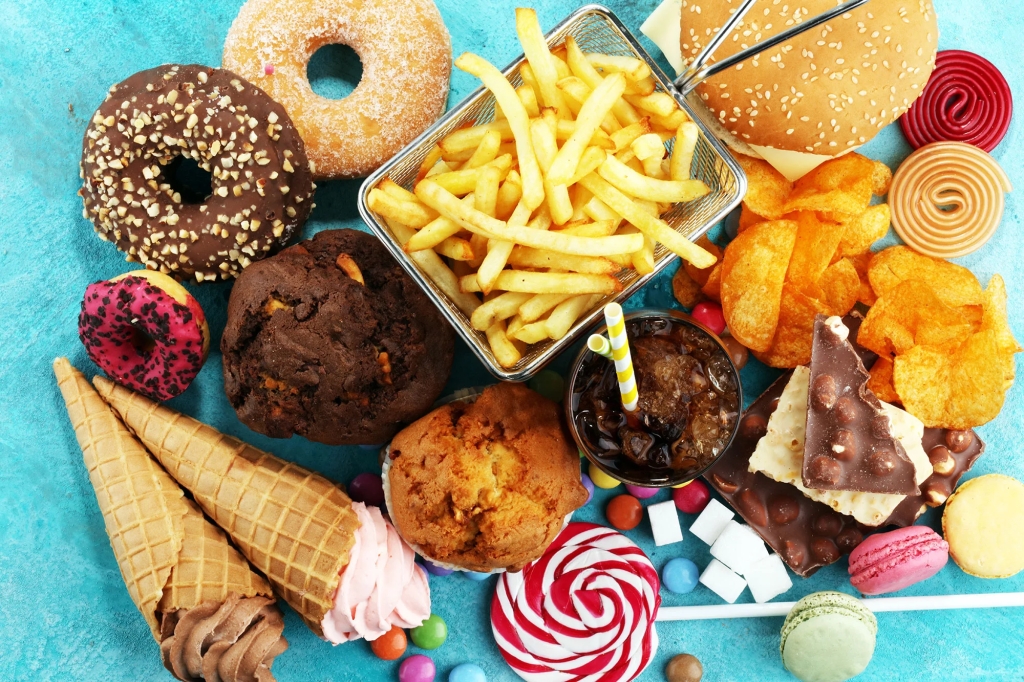
If one looks at what Americans eat, it’s easy to be pessimistic about their health. Scads of fatty fast foods kept on the edge of acceptability by strange petrochemicals, gallons of super-sweet brightly colored beverages, loads of sugar and salt in everything—it’s not a happy prospect.

On Memorial Day weekend, Martine and I went to a Greek festival in the San Fernando Valley. We were shocked to find that, within a short few years, the ability of the church kitchen volunteers to produce good Greek food has declined precipitately. I’ve always loved fried calamari, but what I got was super thin slices of calamari with heavy, slightly burnt breading.

Go to the supermarket, and you will find whole aisles of what purports to be food and is all to frequently of low or no nutritional value. And that is what tends to predominate in the shopping carts of the people in line in front of me. It appears that more and more people are buying prepared food and not bothering to put ingredients together in the kitchen and cook them.

I think that the Covid epidemic is partly responsible. Curiously, it had the opposite effect on me. I started cooking more—and enjoying it more! The only unfortunate thing is that Martine and I are heading in different directions insofar as food is concerned. No matter, I think it’s important to compromise so that, in the long haul, we both get what we want.

Off to Hide Out in the Desert

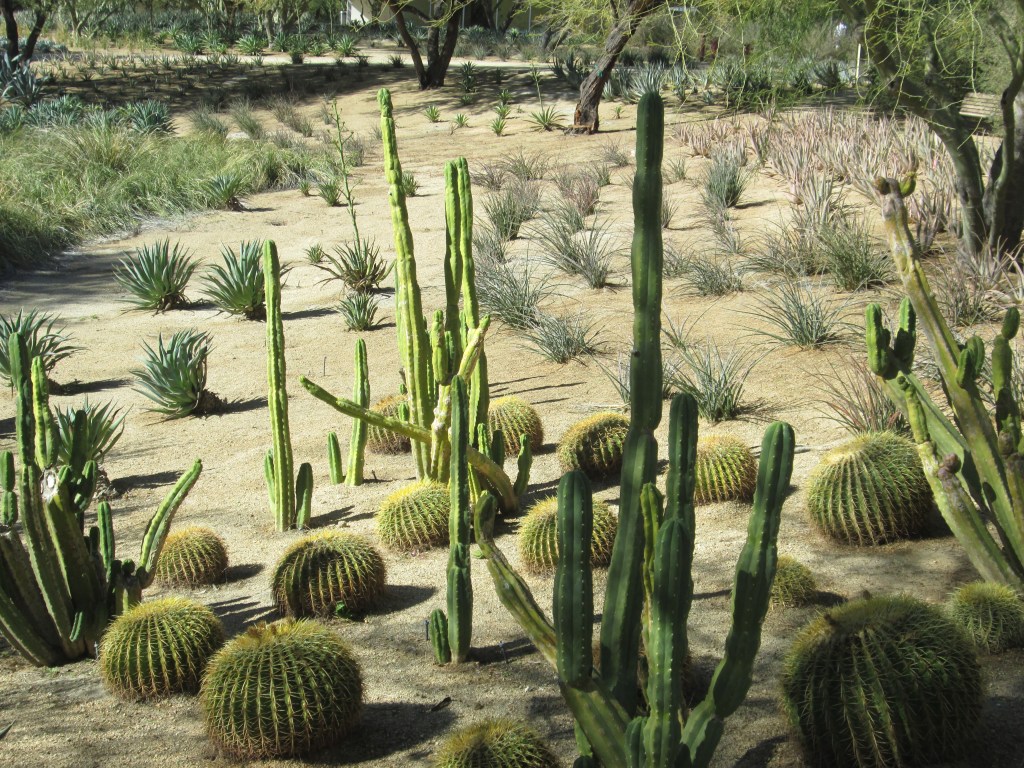
The Cactus Garden at Sunnylands in Rancho Mirage

I will not be posting any blogs this weekend as I will be out of town visiting my brother in the Coachella Valley. My next post will likely be on Monday or Tuesday of next week.

Unfortunately, the temperature is expected to be in excess of 100° Fahrenheit (37° Celsius) for the four days I will be there, but I will not likely be doing a lot of outdoor exercise, unless it involves a cooling dip in the pool. More than likely, I will be watching some of the NBA playoff games, especially the ones in which the Lakers are playing.

I will also be reading Robert M. Utley’s The Indian Frontier of the American West 1846-1890. That will be in addition to eating some of my brother’s excellent cooking, watching films with him and my sister-in-law, and talking up a storm.

At the Supermarket

Infinite Variety: With/Without Sugar, Salt, Glucose, Etc.

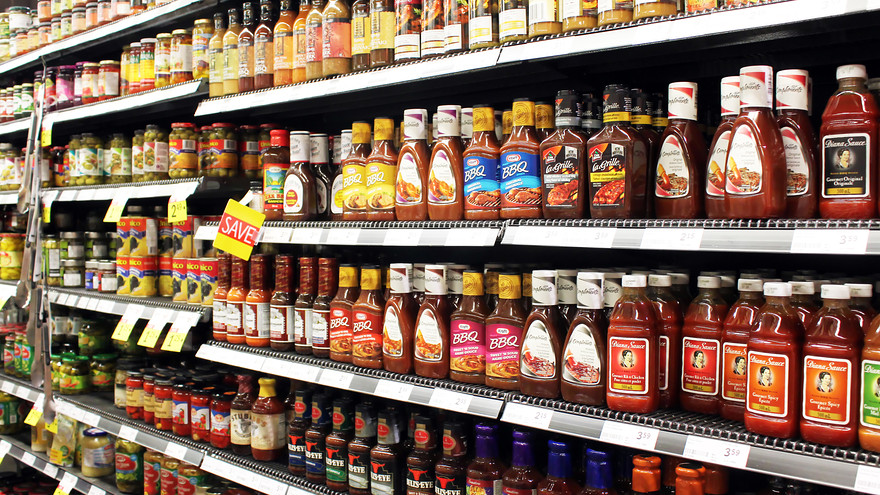
There is nothing like a visit to the supermarket to demonstrate that not all is well with the Republic. It seems that one could buy tomato juice with or without salt or hot chile peppers. Of course, one could buy plain tomato juice, add the salt oneself and even add a few drops of my favorite Marie Sharp’s Chile Habanero sauce. And don’t get me started on milk. If you’re lactose intolerant, you could drink milk made from almonds, oats, soybeans, and (probably) kale. There is so much variety on the supermarket shelves that one is often hard pressed to find what one is looking for.

In case you didn’t know, there are firms which arrange the products on the shelf. Manufacturers pay to be at eye level. If you’re a cheapster selling a basic product, you will be stuck on the lowest shelf, which you cannot examine safely without getting a shopping cart up your backside.

Today, I was looking for a product rarely purchased by most Americans: whole granulation kasha, or buckwheat groats. I like preparing it with egg, onions, and bow-tie noodles as kasha varnishkes, a Jewish dish that Martine and I like. But there were zero varieties of kasha on the shelves, and probably several hundred varieties of rice, mostly not deserving of the shelf space they got.

So, instead, I got a can of clams and some linguine, with which I prepared today and (hopefully) tomorrow. Martine has told me, in no uncertain terms, that she doesn’t want linguine with clams; so she will shift for herself tomorrow. (Today, she finished off he Indian kima dish I prepared on Monday.) That is her prerogative: I remember my youth, when I was the pickiest kid in Cleveland.

Acedia

If the term is unfamiliar to you, you can substitute the word boredom for it. When I first came to Southern California st the age of twenty-one, I was frequently bored. For one thing, I didn’t drive until a couple decades later. I didn’t even have a television set. I certainly didn’t have a smart phone, as they were not invented yet—for which I am eternally grateful.

If the coronavirus quarantine were to happen in the late 1960s, I would have been in deep trouble. I would have been all alone and sunk deep into acedia, not to mention depression. As it turned out, in 2020 I had a three-part solution to the quarantine:

  1. Do a ton of reading, say something around 15-16 books a month.
  2. View a lot of classic films, mostly on Turner Classic Movies (TCM).
  3. Expand my cooking skills, including more complicated Hungarian dishes.

As a result, the last two years have not been a waste for me. My only regret was that, since the quarantine was global, I could not travel without some risk.

For me, travel is an opportunity for sustained research, including books about my destination and some exposure to the films and music. Not to worry, I am reading at least two travel books a month for when the world opens up to safe travel.

The FODMAP Follies

Big No-Nos on the FODMAP Regimen

With the very best intentions in mind, I tried to prepare a beef and vegetable stir-fry for Martine as a first attempt at creating a FODMAP-free dish. It consisted of shredded beef, eggplant, zucchini, tomatoes, and a yam. But no onions, garlic, or chiles to give it flavor.

Never before had I cooked a dish that I didn’t want to taste. For myself, I just had buttered corn on the cob, while Martine bravely confronted the tasteless muck I prepared for her. I called it FODMAP Stew. I will never make it again.

I realize now that seasonings are important in a dish with multiple ingredients, and that the best seasonings are expressly forbidden.

I think that in future, when Martine needs to adhere to this regimen, she should have a piece of meat (most are OK) plus a steamed vegetable, such as carrots, squash, and some rare Himalayan herb that can only be found on the northern slope of Mount Everest.

If you haven’t read yesterday’s post, which explains what this is all about, I urge you to click here.

A Day in Quarantine

How to Maintain One’s Sanity During Hard Times

To begin with, I have no problem about getting from 9 to 9½ hours of sleep. In fact, during the last year I have slept better than at any other time in my life. I wake at 9 or 9:30 am, stumble out into the living room to say good morning to Martine, who always wakes up before me, and take my pills, give myself a shot of insulin, and perform a finger-prick test for my sugar level. Only then am I ready for breakfast.

Almost all mornings, I make a pot of hot tea, the current choice being Ahmad of London’s Darjeeling. It is usually accompanied by scrambled eggs with chiles, oatmeal, toast, a fried egg sandwich on a muffin, or grits and sausage. While I breakfast, I always read the Los Angeles Times, devoting particular attention to the KenKen and Sudoku puzzles and the comics page.

By the time I am finished, it is close to noon; so I futz around on the computer for a while, either playing chess with the computer at Chess.Com or one of the free games on Arkadium.Com.

Lunch is not usually a big meal for me, so I delay it into the early afternoon, after which I either see a movie on TCM’s website or Amazon Prime Videos, or I read a book. My current read is Paul Theroux’s Sir Vidia’s Shadow: A Friendship Across Five Continents, which is about the author’s long friendship with V. S. Naipaul (1932-2018). Both are among my favorite authors.

At supper, we usually have a hot home-cooked meal. Today, it was turkey burgers with steamed carrots. Tomorrow, I’ll have to shop for and prepare another meal, about which I must first consult with Martine. She’s the one with the trick digestive system. Last week, we have baked ziti with Italian sausage—one of my better efforts.

After we’ve eaten, Martine washes the dishes while I repair to my library with my current book, where I both read and talk to friends on the phone until about 9 pm. That’s the hour when I write my book reviews for Goodreads.Com and my blogs for WordPress.Com.

By the time I am done, I watch TV until shortly before midnight, concentrating on such shows as Carol Burnett (MeTV), Bill Maher and John Oliver (HBO), Trevor Noah’s “The Daily Social Distancing Show” on Comedy Central, and the opening monologue on Steven Colbert (CBS).

Martine has a much more difficult time of it than I do. She either takes long walks or sleeps while playing an AM talk radio station. She goes to bed for the night much later than I do and wakes up earlier, as she is bedevilled by a bad case of nerves. As I always tell her, nerves are a bad business; so I don’t have any.

Weekend in the Desert

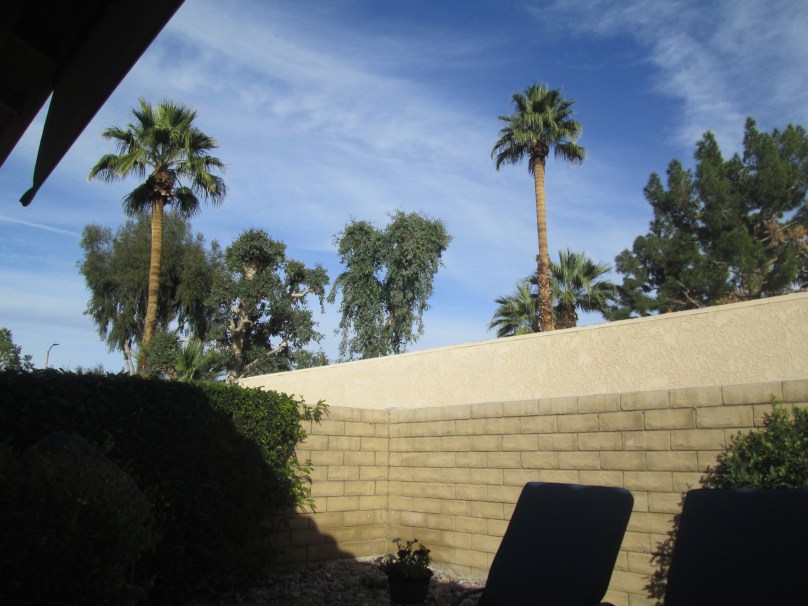
Looking Up from the Book I Was Reading, This Was the View

It was good to see my brother again after four months of quarantining alone with Martine. Because she hates the desert (having lived and work for two years in Twentynine Palms), Martine stayed behind in L.A. and engaged in several cleaning projects which would have been difficult with me tromping about the place.

Dan and my sister-in-law Lori were, as usual, excellent hosts. Dan went out of his way to cook several gourmet meals including a vegetarian lasagna with eggplant and spinach as well as corned beef and cabbage with potatoes and carrots. We didn’t visit many places, because the Coachella Valley is still under a Covid-19 lockdown. But I did manage to read two whole books sitting in Dan’s back yard. The weather was perfect, an even 70° Fahrenheit (21° Celsius) with an occasional cool breeze.

The photo above was taken from the chair in which I was reading Hilaire Belloc’s Selected Essays and Jon Krakauer’s Classic Krakauer: Essays on Wilderness and Risk. (I love reading essays, as I consider myself to be something of an essay writer, but in a small way.)

My Brother Dan at the Moorten Cactus Garden in Palm Springs

Because Dan lives in the lower desert of California, I would not venture to visit him during the blazingly hot summer months. I hope that he can make it to L.A., or I will have to wait until the fall to drive out again.