Battlefield Director

Tsutomo Yamazaki (Left) in Kurosawa’s High and Low (1963)

This is an unusual thing to say, but if I were to look at all the great film directors with a point of view of selecting the one that would make the best general on the battlefield, my choice would be Japan’s Akira Kurosawa (1910-1998).

Yesterday evening I did not post here because I was watching Kurosawa’s great noir film High and Low for the third time. The tale follows Toshiro Mifune as a shoe manufacturer whose son is kidnapped and held for ransom. Except it turns out that it is actually his live-in chauffeur’s son who is taken. In paying the ransom anyhow, Mifune impoverishes himself, losing his business, his house, and even his furniture.

Why do I feel that Kurosawa would make an able general? In no other film (except one, that I shall mention later) is there so much intelligently conveyed detail that enables a viewer to follow the police investigation in all its aspects during its 143 minute length without feeling lost. And the film gallops along like a 73 minuter Poverty Row quickie.

During its course, Kurosawa takes us into such a realistic picture of heroine addiction that, even today, would be too much for Hollywood to handle.

The only other film that so capably marshals s vast amount of detail is the same director’s Seven Samurai (1954). This is actually a film about a 16th century military campaign in which seven masterless samurai help farmers fight back an invasion of forty mounted bandits who are after their crops. Throughout the film’s 207 minute length, we are aware of what is happening in every part of the battlefield as the samurai and farmers battle the bandits. As with High and Low, the film zips along at a fast pace despite a vast amount of detail without losing its audience.

Compare these with the average current Hollywood production in which 120 minutes seems like a lifetime and the audience is slogging through a swamp shortly after the opening credits.
Heyday Is Over

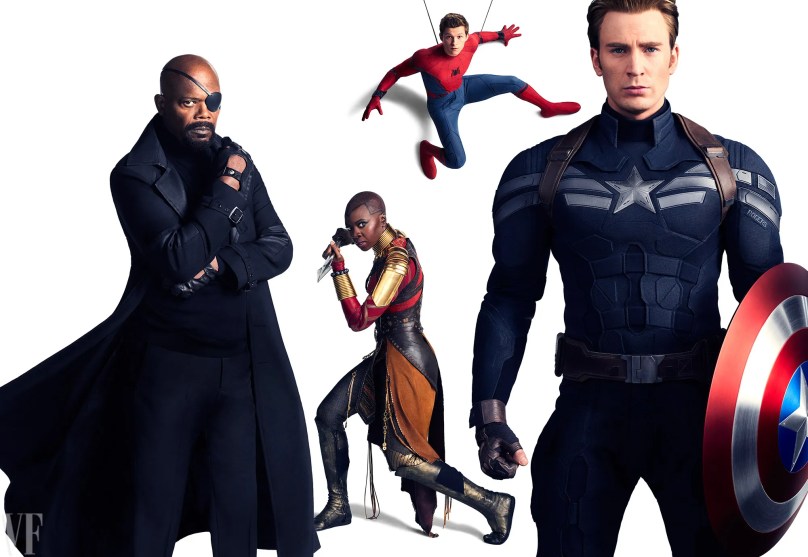
The Unmarvelous Marvel Universe

When I first came to Los Angeles at the tail end of 1966, it was the beginning of a Golden Era for people like me who loved the cinema and saw it as an art form that would prevail well into the next century.

Only, it didn’t. The great Hollywood directors sputtered out with films that were pale copies of their best work. There was John Ford’s 7 Women (1966) and Howard Hawks’s Rio Lobo (1970). On the plus side, there were the French cinéastes of the Nouvelle Vague, including Jean-Luc Godard, François Truffaut, Jacques Rivette, Claude Chabrol, and Agnes Varda. And, across the Pacific, the Japanese were making great films which I have never tired of watching.

It was in 1968 that Andrew Sarris published The American Cinema:Directors and Directions, 1929-1968. It was a revision and expansion of an issue of Film Culture that came out several years earlier which I had photocopied while I was at Dartmouth College and which I always kept at my side.

But other things were happening. Hollywood was sputtering out like a volcano in its final throes. The film distribution companies were run by yahoos who insisted that people of my frame of mind were out-of-touch elitists and what the filmgoing public really wanted was Thoroughly Modern Millie and the Marvel Universe.

In the course of several decades, there was a dribble of good films from Hollywood and abroad, but mostly an avalanche of mediocrity. At the same time, it was getting harder to see the films I loved. I recorded hundreds of films on VHS videotape—but then videotape died. I switched to DVD, but now I am beginning to encounter “laser rot.”

I have in my library a number of volumes that are over a hundred years old. Unless they are destroyed, they will be readable for at least another hundred years. Such is not the case with films. The media on which they are stored has to be changed every few years because of the rate of change in the digital world.

So I have concluded that it will be difficult to be a film lover. Yet I almost never see current Hollywood film products in theaters. Sometimes on HBO or Showtime, but never at a cinema.

Fortunately, my books are still quite readable; and I am diving into them voraciously.

The Hollywood Sign

The Famous Hollywood Sign on Mount Lee

Originally, the sign was spelled “Hollywoodland,” named after a housing development that was being advertised around 1923. The developers lauded it as a “superb environment without excessive cost on the Hollywood side of the hills.” In 1932, a wannabe actress named Peg Entwistle committed suicide by jumping off the top of the “H.” This was commemorated in a 1972 song by Dory Previn which she called “Mary C. Brown and the Hollywood Sign.” Here is a video of it:

Eventually the sign started looking ratty and falling apart. By the 1940s, it was an eyesore. It was around then that the “land” in “Hollywoodland” was removed and the city took responsibility for it.

There was a major campaign in 1978 to bring the sign up to date, as it had become part of the myth of Hollywood. The campaign was led by none other than Hugh Hefner of Playboy fame. Other donors included Gene Autry, Alice Cooper, Andy Williams, and Warner Brothers Records.

It’s interesting that the sign, which has come to be a major tourist draw, was originally an advertisement. Curiously, you can’t walk up to the sign: There is no convenient trail up Mount Lee, and local residents have done their best to make it difficult to see the sign from up close.

“That Terrible Dusty Brilliance”

I have been reading a fascinating book of stories by Gavin Lambert about Hollywood as it was in the 1960s. The book is called The Slide Area, after the crumbling cliffs overlooking the ocean from Santa Monica north to Pacific Palisades. It is some of the best writing about Los Angeles as it was then. Lambert, by the way, was also the author of Inside Daisy Clover, which was made into a Robert Mulligan film starring Natalie Wood. Oh, and Lambert also wrote a biography of Natalie.

Following is an excerpt from near the beginning of The Slide Area:

It is only a few miles’ drive to the ocean, but before reaching it I shall be nowhere. Hard to describe the impression of unreality, because it is intangible; almost supernatural; something in the air. (The air … Last night on the weather telecast the commentator, mentioning electric storms near Palm Springs and heavy smog in Los Angeles, described the behaviour of the air as ‘neurotic’. Of course. Like everything else the air must be imported and displaced, like the water driven along huge aqueducts from distant reservoirs, like the palm trees tilting above mortuary signs and laundromats along Sunset Boulevard.) Nothing belongs. Nothing belongs except the desert soil and the gruff eroded-looking mountains to the north. Because the earth is desert, its surface always has that terrible dusty brilliance. Sometimes it looks like the Riviera with a film of neglect over villas and gardens, a veil of fine invisible sand drawn across tropical colours. It is hard to be reminded of any single thing for long. The houses are real because they exist and people use them for eating and sleeping and making love, but they have no style of their own and look as if they had been imported from half a dozen different countries. They are imitation ‘French Provincial’ or ‘new’ Regency or Tudor or Spanish hacienda or Cape Cod, and except for a few crazy mansions seem to have sprung up overnight….

Los Angeles is not a city, but a series of suburban approaches to a city that never materializes.

They Have It In For us

Let’s face it: New York City has it in for us. They have a strange vision of the city that includes only the crescent-shaped area linking downtown, Hollywood, Beverly Hills, Westwood, and Santa Monica. That’s only a tiny slice of LA. The whole country has a population just over ten million people, most of whom do not surf, eat granola, work in the film industry, or belong to a cult.

Over the years, we’ve taken quite a beating. It was William Faulkner who said:

Everything in Los Angeles is too large, too loud and usually banal in concept… The plastic asshole of the world.

Of course, that didn’t stop him from writing screenplays over a period of two decades. In the Wikipedia article on him, it says:

As Stefan Solomon observes, Faulkner was highly critical of what he found in Hollywood, and he wrote letters that were “scathing in tone, painting a miserable portrait of a literary artist imprisoned in a cultural Babylon.” Many scholars have brought attention to the dilemma he experienced and that the predicament had caused him serious unhappiness. In Hollywood he worked with director Howard Hawks, with whom he quickly developed a friendship, as they both enjoyed drinking and hunting. Howard Hawks’ brother, William Hawkes, became Faulkner’s Hollywood agent. Faulkner would continue to find reliable work as a screenwriter from the 1930s to the 1950s.

Although Faulkner did not particularly like Hollywood, he participated in the production of some great films which bear his screen writing credit: Air Force (1943), To Have and Have Not (1944), and The Big Sleep (1946). Not coincidentally, they were all directed by Howard Hawks.

If you see Los Angeles as essentially Hollywood, you will be unhappy here. I was for many years until I saw beyond all the la-la-land rubbish. This is a particularly difficult city for New Yorkers to wrap their heads around. Perhaps it’s because they cannot find egg creams here, whatever those are.

Pre-Code Hollywood

Man and Woman in Same Bed: Verboten After 1934 (Madam Satan)

Hollywood films released after July 1, 1934 were heavily censored by the Breen Office of the MPAA for adherence to community morality standards, especially with regard to S-E-X. That is partly because between the onset of the Great Depression and that date, Hollywood released numerous pictures that violated the prevailing morality.

Pictures like Cecil B. DeMille’s Madam Satan (1930) for MGM with its Art Deco orgy aboard a Zeppelin. Or Warner Brothers’ Baby Face (1933) with a social-climbing Barbara Stanwyck intent on avenging past slights on the entire male gender. According to film scholar Eddie Muller, the straw that broke the camel’s back was Paramount’s The Story of Temple Drake (1933), starring Miriam Hopkins based on a lurid William Faulkner novel in which her character murders her rapist.

I recall a scene excised from many prints of Josef Von Sternberg’s Morocco (1930) of a bare-breasted native girl smiling at the camera as a column of French Foreign Legionnaires marches past. (In all honesty, however, there are numerous glimpses of breast in many of the silent Jesus pix of the period. Thank you, Mr. DeMille.)

This Film Was Dynamite with Its Immoral Heroine

Several weeks ago, Turner Classic Movies (TCM) showed a program of four pre-code Warner Brothers films that are a good place to start if you want to see what the era was all about:

  • Two Seconds (1932) with Edward G. Robinson
  • Employees’ Entrance (1933) with Warren William and a hot Loretta Young
  • Blessed Event (1932) with Lee Tracy and Mary Brian
  • Baby Face (1933) with Barbara Stanwyck

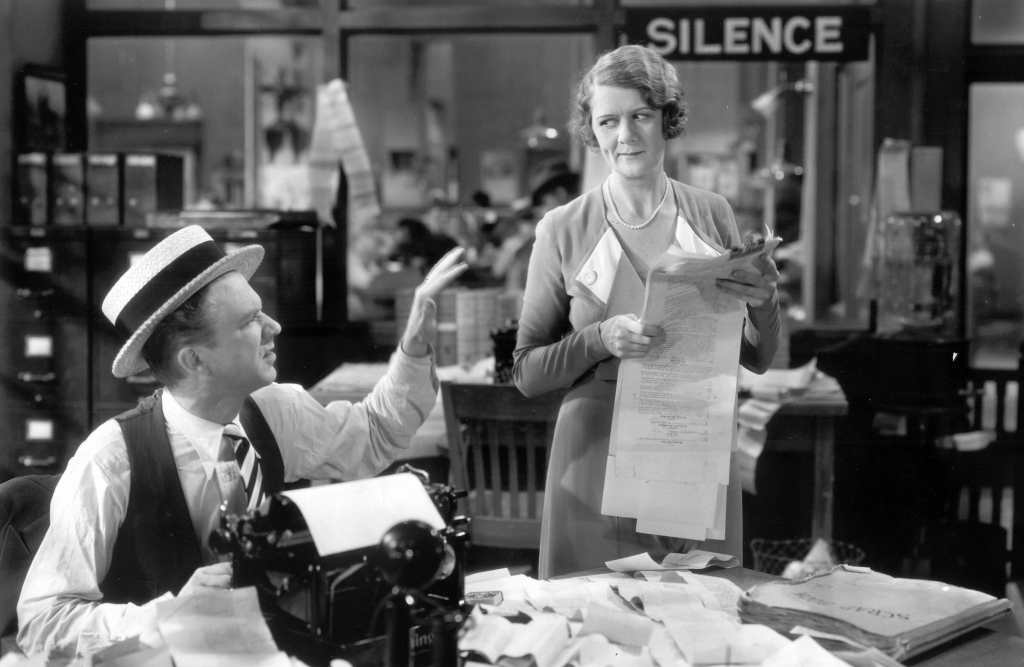
Lee Tracy and Ruth Donnelly in Blessed Event

The prints that TCM showed looked pristine. That is because the originals were stored at the Library of Congress, which took good care of them.

Pre-code stars included, in addition to the above mentioned, actors like Clark Gable, Ruth Chatterton, James Cagney, Mae West, Jean Harlowe, Joan Blondell, Paul Muni, and Mae Clarke.

I regard the Hollywood films of the early 1930s as a happy hunting ground for interesting films that dared to do what no film until the modern day did. In this era of free porn on demand, that might not seem like much, but it does provide a more realistic glimpse of an interesting era in America.

Phillip Marlowe in Hollywood

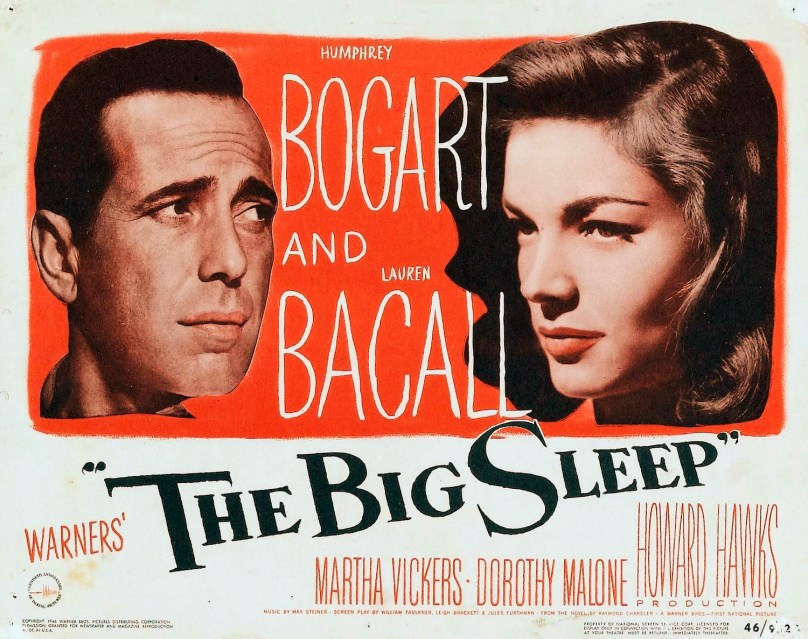
Lobby Card for The Big Sleep: Best of the Chandler Adaptations

To date, I have seen most of the Hollywood films based on Raymond Chandler’s Phillip Marlowe private investigator novels; and I suspect that these are the best of the bunch. Several of them I have seen multiple times. They are listed below in alphabetical order:

  1. The Big Sleep (1946) from Warner Brothers, starring Humphrey Bogart as Marlowe. Directed by Howard Hawks based on the novel of the same name. ***
  2. The Brasher Doubloon (1947) from 20th Century Fox, starring George Montgomery as Marlowe. Directed by John Brahm based on The High Window.
  3. Lady in the Lake (1947) from 20th Century Fox, starring Robert Montgomery as Marlowe. Directed by Robert Montgomery (who played Marlowe) based on the novel of the same name. *
  4. The Long Goodbye (1973) from United Artists, starring Elliott Gould as Marlowe. Directed by Robert Altman based on the novel of the same name.
  5. Marlowe (1969) from MGM, starring James Garner as Marlowe. Directed by Paul Bogart based on The Little Sister.
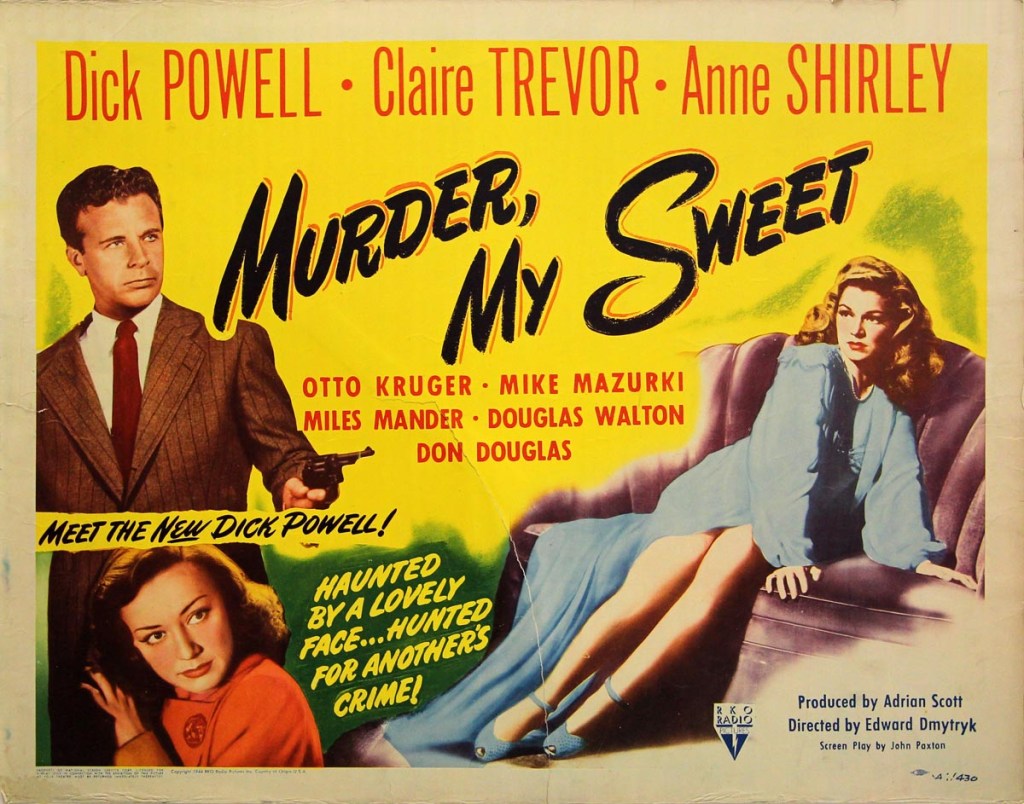
  6. Murder, My Sweet (1944) from RKO, starring Dick Powell as Marlowe. Directed by Edward Dmytryk based on Farewell, My Lovely.

There are several other films, including two starring Robert Mitchum as Marlowe; but they are of more recent vintage and directed by nonentities. I hope to see them anyway.

Lobby Card for Lady in the Lake, with Robert Montgomery and Audrey Totter

The asterisks denote my favorites: The Big Sleep; Murder, My Sweet; and Lady in the Lake. I also liked The Brasher Doubloon. Essentially, my favorites were all made in the 1940s. By the 1960s, I think that we were too far away from the atmosphere of the original novels.

Lobby Card for Murder, My Sweet with Former Crooner Dick Powell as a Convincing Marlowe

Who was my favorite Marlowe? I guess I would have to go with Humphrey Bogart. My other favorites—Dick Powell, George Montgomery, and Robert Montgomery—also turned in creditable performances. Lady in the Lake was a particularly bravura performance by Robert Montgomery, who also directed. In fact, the camera was in most scenes shot from the point of view of Marlowe—with the exception of some mirror shots and a brief prologue and epilogue.

Phooey on the Oscars

I Continue My Decades-Long Boycott of the Oscars

Hollywood used to make great films. Sometimes they received awards from the Academy of Motion Picture Arts and Sciences. More frequently, they didn’t. The awards probably represented more than anything else the current state of film industry politics.

Every February, the Turner Classic Movies (TCM) channel presents its “31 Days of Oscar” series. Curiously, I find that TCM movies during this period are not as good or interesting as the usual offerings at other times. In fact, I am downright angry that the “Noir Alley” series hosted by Eddie Muller will not return until after the 31-day Oscar orgy takes place.

I am not even talking about the smarmy annual show where the awards are presented. Neither Martine nor I watch the show, which is understandable inasmuch as we do not bother to see the majority of films in contention.

So once again, we are on the outs as far as popular culture is concerned. No problem there!


Hollywood’s Own Muse

Eve Babitz, Author of Black Swans

Perhaps the saddest thing about Southern California is that so much that has been written about the area comes from clueless East Coast authors who whose work is characterized by a kind of extreme cultural tone-deafness. If you want a true picture of Los Angeles, you have to read Eve Babitz who, alone, seems to understand what the city in which I live is all about. In her story “Self-Enchanted City” in her story collection Black Swan, she writes:

When people would first arrive from New York, they’d say stuff like “This place is full of fruits and nuts and you have no seasons.” So I knew they saw through the cheap thrills of shallow sunshine and were principled easterners determined to be unimpressed. But after a few weeks, even they would show up at Barney’s Beanery driving a brown Porsche, and they’d move into one of those Snow White wishing-well houses where all they could hear were birdies in the trees and all they could see were hollyhocks, roses, and lemon blossoms. And then they’d undergo a kind of molecular transformation, losing all their winter fat, their bad teeth, and their attitude that life was about artists being screwed by “the establishment.” And if they were fast enough on their feet, they’d soon become the establishment themselves. Or, at the very least, they’d wind up writing screenplays about Marxist good guys disguised as cat burglars.

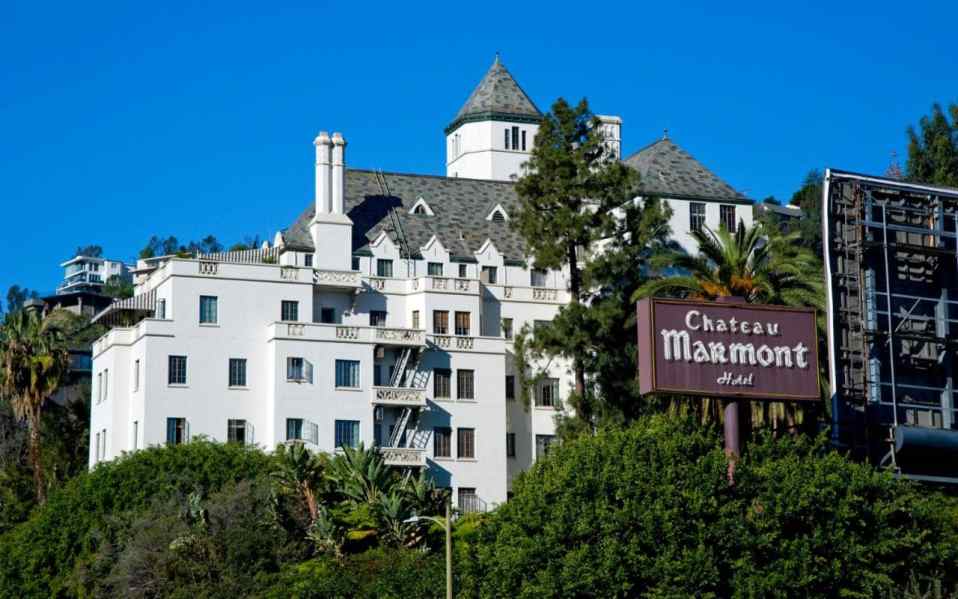
The Chateau Marmont, Archetypal Hollywood Hotel on the Sunset Strip

Eve neglects to mention that they still kept one foot in the East by wearing a New York Times baseball cap. Earlier, she describes what has happened to Hollywood:

But for anything to age gracefully, eternal vigilance is necessary, and Hollywood has not been carefully tended. It has been knocked down flights of stairs, abandoned, left for dead, and sold into slavery. Still, if you ask me, some parts are just as beautiful as my dream version—even more beautiful if you subscribe to the Tennessee Williams decadence-as-poetry theory that ravaged radiance is even better than earnest maintenance.

I am only about a third of the way into Black Swan, but am continuing to make further discoveries every page.


California Dreaming

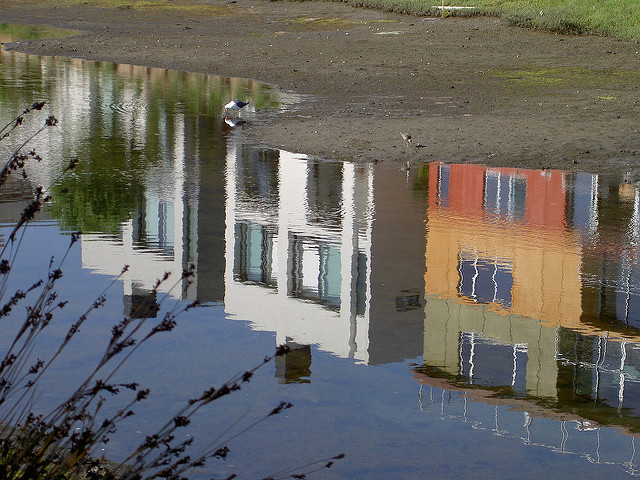
Condos Reflected on Venice’s Grand Canal

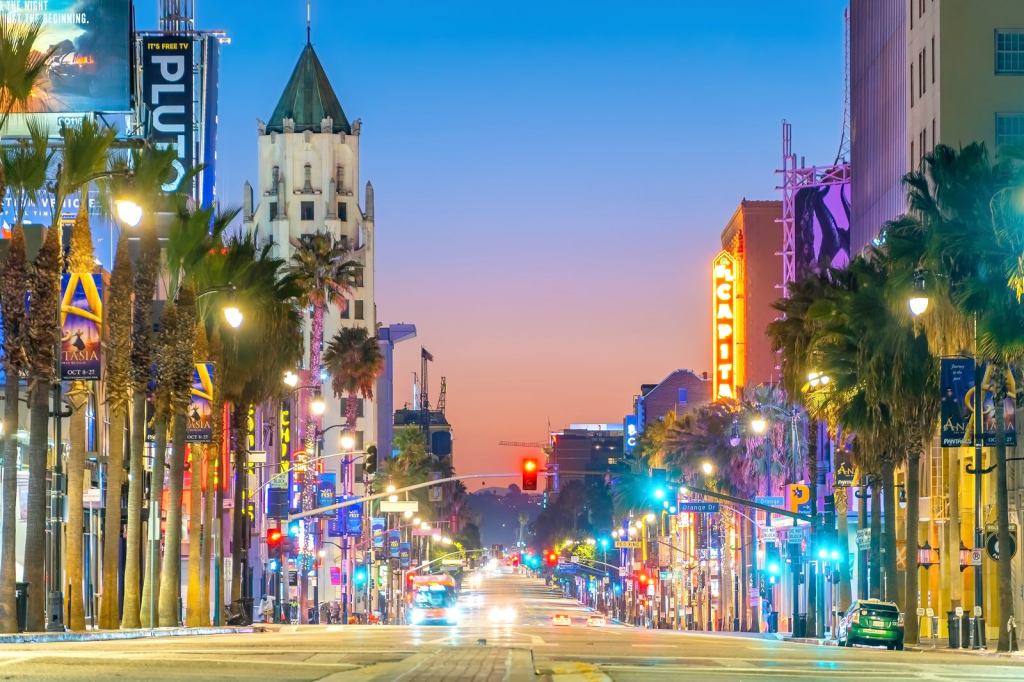
Today, as I was driving to a history discussion group, I saw huge crowds of tourists lurking around Beverly Hills and perched on countless tourist buses. It is interesting to see that so many young people from elsewhere are interested in Los Angeles. Even if what they are interested in is mostly garbage: The shops on Rodeo Drive and the Hollywood Walk of Fame.

But there is something about this place. Believe it or not, it’s the light. But you have to be receptive to visual nuances, something not quite as crass as a Gucci Bag or a star honoring the career of Rod La Rocque. And you have to be up early in the morning, or be around at dusk. Noon is just plain achingly bright.

The funny thing is that you don’t see much of what L.A. is about by visiting Universal City or Disneyland or even the La Brea Tar Pits. You can get something of a feel for it when you see the Getty Center or the Arboretum or Descanso Gardens or the Huntington Gardens and Art Museum. But you have to be still and let the light play over you. The more frenzied your touring is, the less you’ll get out of it.

Hell, it took me years before I could even see this place as it should be seen.