Whenever things go blooey here in Sunny California, as they are wont to do from time to time, I remind myself that I am at the center of my being an Eastern European. I may have been born in Cleveland, Ohio, but the language that spoke most intimately to my emotions was Magyar (Hungarian).
My life has been a series of shifts from east to west and back again. That has prevented me from being depressed at setbacks that have occurred. We Eastern Europeans are used to suffering. But we have our own insane pride that prevents us from falling apart.
Consequently, I love reading literature that has been translated from Hungarian, Czech, Polish, Serbian, Romanian, Ukrainian, and Russian. And whatever my politics are—and they are certainly not on the side of Vladimir Putin—I see the stories, novels, dramas, and poems the product of a people, not a political system. The people are all right, however the politics might suck.
I have always dreamed of riding from Moscow to Vladivostok on the Trans-Siberian Railroad. To see a vast country unrolling before my eyes on the long trip to the Sea of Japan. I also see myself as reading long Russian novels during that trip. Alas, I think I am now too old for such an adventurous journey.
Currently, I am reading Eugene Vodolazkin’s The Aviator, which makes me feel these things more intensely.
Porcelain Tiles Decorate the Outer Wall of a Hungarian Building
In 1853, a Hungarian businessman named Miklós Zsolnay founded the Zsolnay (ZHOAL-nah-ee) Porcelánmanufaktúra Zrt (Zsolnay Porcelain Manufactory Private Limited) in the town of Pécs near the border with what is now Croatia.
Before long, the products of his factory started turning up in the most interesting places, such as the roof of the Matthias Church in Budapest’s Castle District:
Not to mention interestingly designed and wildly colored porcelain vases and figurines:
In a way, one can’t go to Hungary without encountering the works of the Zsolnay Manufactory. Their work has become one of the most characteristic looks in Hungarian architecture, furnishings, and knickknacks.
This is the first of several posts I will write about famous Hungarian painters. IO begin with Mihály Munkácsy (1844-1900), known primarily for his genre paintings and Biblical scenes. Although of Bavarian origin, he changed his name to reflect the town of his birth: Munkács. He traveled extensively in Europe and worked with a number of well-known artists of the time.
According to Andrienn Szentesi, writing in The Essential Guide to Being Hungarian, edited by István Bori:
Mihály Munkácsy’s first masterpiece was Siralomház (Cell of the Condemned). Fifteen human figures can be seen in this painting, people to whom, it is safe to presume, something terrible has just happened. Dark hues, not least various shades of brown and black, have the run of this painting, too; and of course this serves to reinforce the work’s depressing theme. Also discernible, however, is just ba bit of white and red; for example, a little girl calls attention to herself as she stands in a corner in a red skirt. What has she just been through? What fate awaits her?
Mihály Munkácsy’s “Paris Interior”
Somewhat lighter is Munkácsy’s Paris Interior (above). A young woman sits reading while a small child plays on the floor behind her.
Mihály Munkácsy’s “Christ Before Pilate” (1882)
Above is one of three Biblical subjects painted in a series that also included Golgotha and Ecce Homo.
Munkácsy dies in a Bonn mental hospital in 1900. As the Wikipedia article on him says, “Neither 19th century visual art nor the historical developments of Hungarian art can be discussed without considering Munkácsy’s contributions. His works are considered the apogee of national painting. He was a standard-setter, an oeuvre of reference value.”
In the summer of 1977, I joined my parents in Budapest for a visit to locations in Hungary and Czechoslovakia (as it was called then). They flew to Budapest from Hungary, while I flew first to London and bought an Austrian Airlines ticket to Budapest by way of Vienna.
After a few days in Budapest, we decided to take a train to meet my relatives in Prešov in what is now Slovakia. We made our way to the Keleti Pályudvar from where trains went to Košice, where we would be met with our cousin Miroslav driving his trusty Škoda.
This was during the days of Communist rule, when things were a bit disorganized at times. As our train was pulling into the station, we jumped into a first class compartment for six and took our seats. In a few minutes, as the train was departing, another man jumped into our compartment. As it turn out, the man was Romany, a gypsy, or in Hungarian, a cigány.
Central and Eastern Europe are strongholds for many types of racism. So it is not surprising that my father’s first instinct was to grab the interloper by the collar and throw him off the slow-moving train, all the while calling him a büdös cigány (stinking Gypsy).
I sat there shocked not quite knowing how to react. Obviously things were different in this part of the world. This was confirmed for me when we went through a border inspection as we crossed into Czechoslovakia at Čaňa and my father bribed an inspector with a pack of Marlboro cigarettes.
That was an interesting trip. It involved my pretending to be a Hungarian railway worker so that we could use a MÁV (Hungarian State Railways) hostel in Szeged. (My cousin Ilona worked for MÁV in Budapest.) Apparently I was able to carry off the impersonation by grunting whenever spoken to.
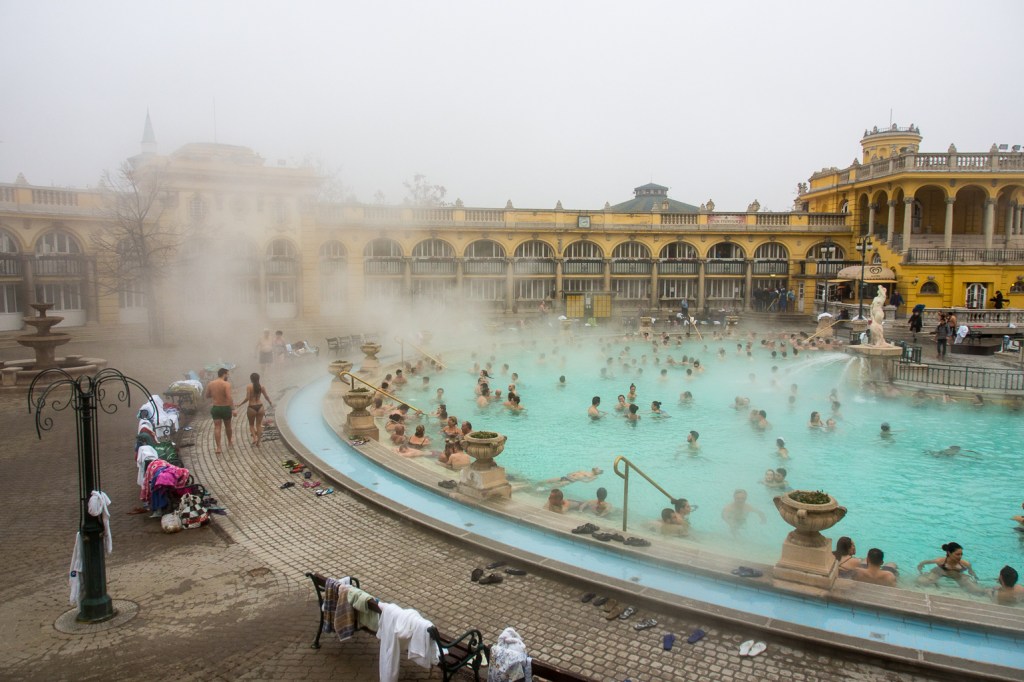
I’ve only been to Hungary once, back in 1977. One of my happiest times alone with my father was the two of us visiting Budapest’s Széchenyi (SAY-chen-yee) baths and chatting for hours in the thermal pools. Of course, an opportunity gained can also be an opportunity lost. During that time, my mother went back to Felcsut in the Fehérmegye countryside, where she was raised as a young girl on a farm by her grandparents. I never did get to see Felcsut.
Although I spent so little time in Hungary, I am proud to say that I still somehow bear inside of me the seed of the Magyar culture and language. When I was a little boy in Cleveland, television was just coming in; so, living in a Hungarian neighborhood, I was blissfully unaware that the English language even existed. Until I showed up for kindergarten classes at Harvey Rice Elementary School.
That set off a whole chain of events, from moving to the suburbs, even though my father always yearned to be back in the old Buckeye Road neighborhood, to my majoring in English at an Ivy League school. But that is another story.
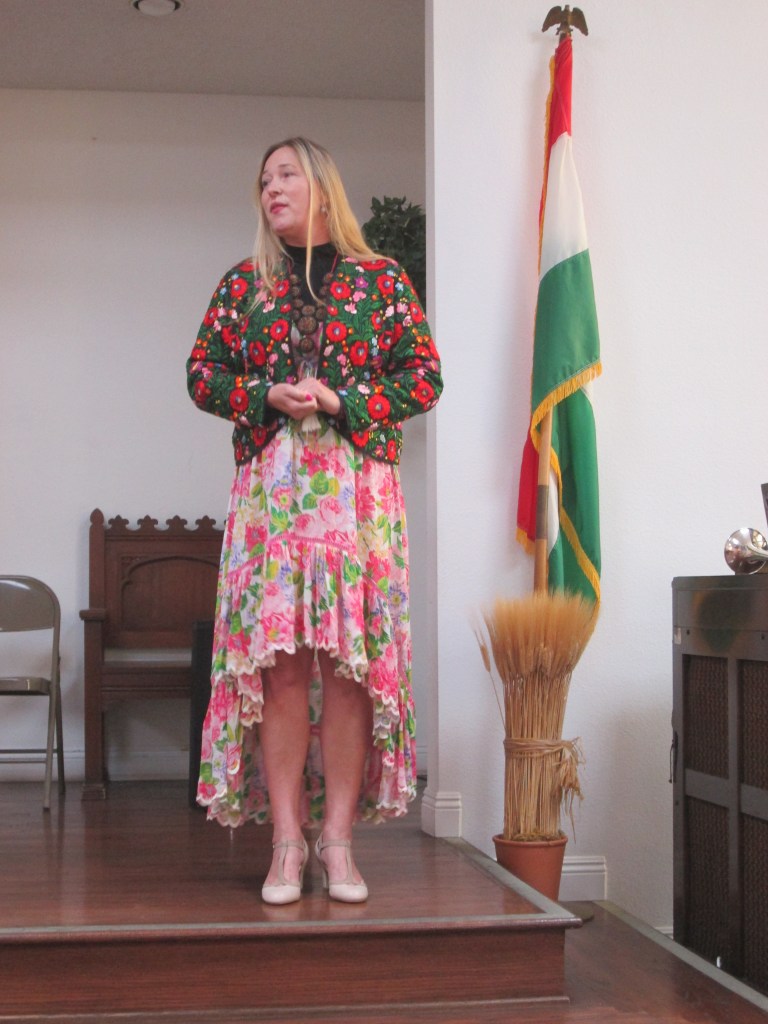
Today was another Hungarian festival, this time it was the Tavaszköszöntő at the First Hungarian Reformed Church of Los Angeles. Although I can speak Hungarian (ungrammatically), I have a difficult time understanding the language when all the long agglutinative words are strung together in paragraph lengths.
Still, just letting the language wash over me, while understanding only bits and pieces, sends me back to my roots. As a child born in the Hungarian neighborhood of Buckeye Road in Cleveland, Ohio, I did not even know that English existed as the language of my home and neighborhood was strictly Magyar. Listening to spoken Hungarian makes me feel as if I were being washed by the gentle waves of the Danube as it flows through Budapest.
This is the 100th anniversary of the Treaty of Trianon, which resulted in millions of Hungarians being assigned to Czechoslovakia, Romania, the Soviet Union, and Yugoslavia. One cannot go to a Hungarian gathering without seeing a map of the pre-Trianon borders of Hungary. It has led to a mythology of the lost cause, which is perfectly enshrined in the Himnusz, the Hungarian national anthem. Here is a YouTube video of the Himnusz:
Here are the lyrics in all the stanzas of the Himnusz:
Verse 1 O God, bless the nation of Hungary With your grace and bounty Extend over it your guarding arm During strife with its enemies Long torn by ill fate Bring upon it a time of relief This nation has suffered for all sins Of the past and of the future!
Verse 2 You brought our ancestors up Over the Carpathians’ holy peaks By You was won a beautiful homeland For Bendeguz’s sons And wherever flow the rivers of The Tisza and the Danube Árpád our hero’s descendants Will root and bloom.
Verse 3 For us on the plains of the Kuns You ripened the wheat In the grape fields of Tokaj You dripped sweet nectar Our flag you often planted On the wild Turk’s earthworks And under Mátyás’ grave army whimpered Vienna’s “proud fort.”
Verse 4 Ah, but for our sins Anger gathered in Your bosom And You struck with Your lightning From Your thundering clouds Now the plundering Mongols’ arrows You swarmed over us Then the Turks’ slave yoke We took upon our shoulders.
Verse 5 How often came from the mouths Of Osman’s barbarian nation Over the corpses of our defeated army A victory song! How often did your own son aggress My homeland, upon your breast, And you became because of your own sons Your own sons’ funeral urn!
Verse 6 The fugitive hid, and towards him The sword reached into his cave Looking everywhere he could not find His home in his homeland Climbs the mountain, descends the valley Sadness and despair his companions Sea of blood beneath his feet Ocean of flame above.
Verse 7 Castle stood, now a heap of stones Happiness and joy fluttered, Groans of death, weeping Now sound in their place. And Ah! Freedom does not bloom From the blood of the dead, Torturous slavery’s tears fall From the burning eyes of the orphans!
Verse 8 Pity, O Lord, the Hungarians Who are tossed by waves of danger Extend over it your guarding arm On the sea of its misery Long torn by ill fate Bring upon it a time of relief They who have suffered for all sins Of the past and of the future!
It is a powerful anthem. Hearing it sung at the festival today, I felt like taking my sword and riding to the border to stop the Turkish invader in his tracks. It is such a powerful hymn that it is forbidden to be sung at international sporting events—which just adds to the Hungarian sense of grievance.
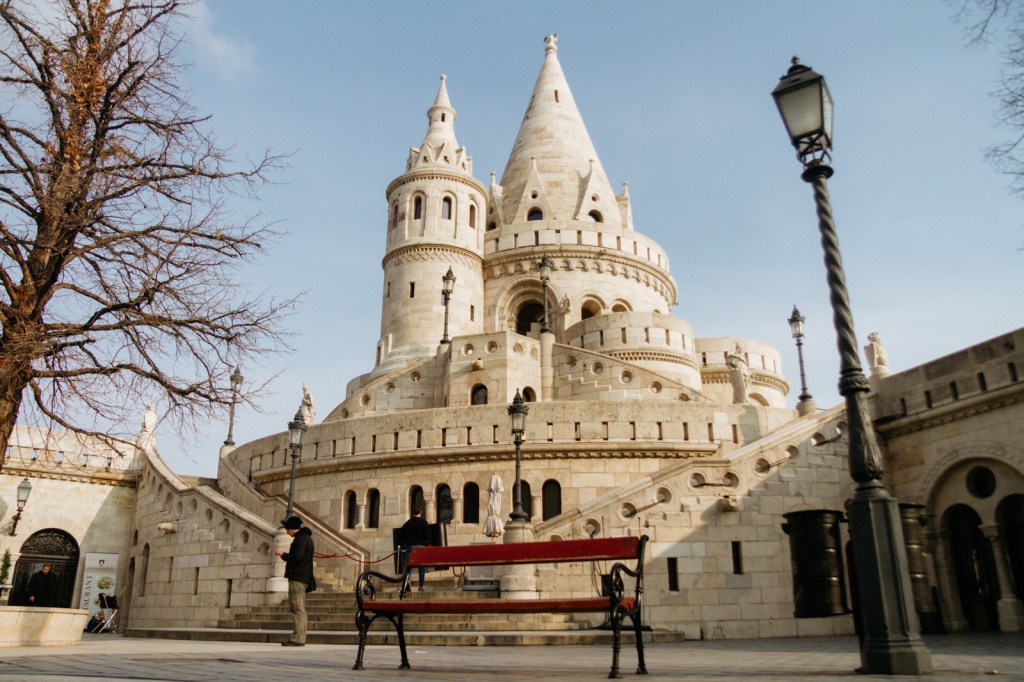
It looks as impressive as all get-out, but the Fisherman’s Bastion (Halászbástya) on Budapest’s Buda bank was actually built between 1895 and 1902 to serve as a viewpoint over the Danube. The myth behind it is that during the Middle Ages, it was the role of the Fishermen’s (Halász) Guild, located in the general vicinity, to protect that reach of the river from invaders.
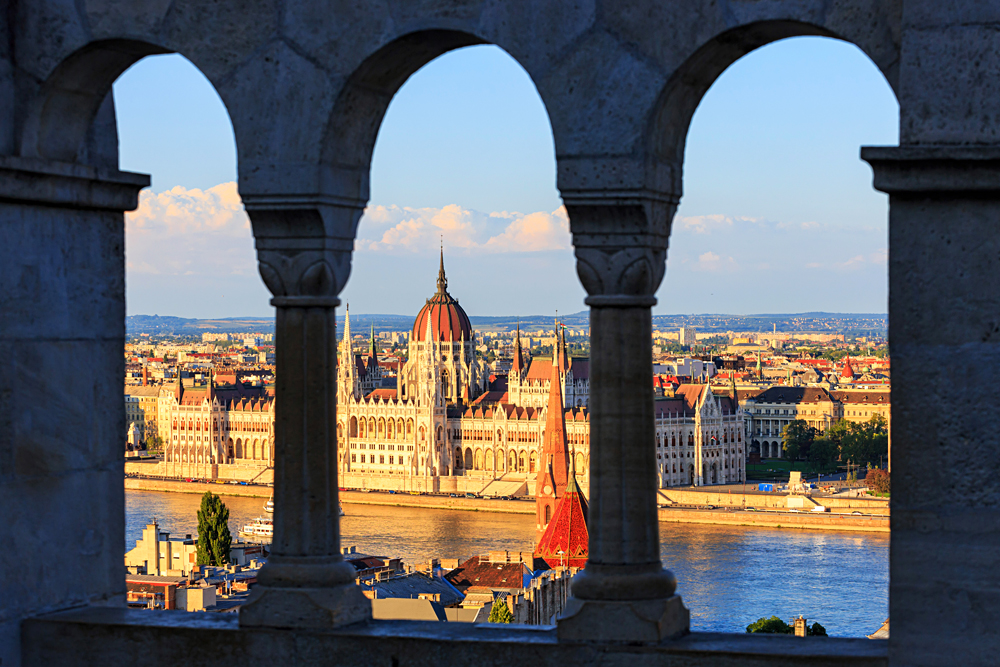
Sitting across the Danube from the Bastion is the Hungarian Parliament, built around the same time. There was a lot of construction in Budapest around that time because 1896 was the thousandth anniversary of the settlement of the Magyar peoples under Arpad in the plain that was to become Hungary.
And here is the view of Parliament from the arches of the Bastion.
I was in Hungary and Czechoslovakia with my parents in 1977 and saw the sights with my cousin Vörös Ilona, who worked for the Hungarian State Railways (MÁV). It was an interesting trip. In addition to Budapest, we hung out at Lake Balaton, visited a huge opera festival in Szeged (where, to stay in a railway workers’ hostel, I had to pretend to be a Hungarian railway worker), and travel to where my father was born in the present day Slovak Republic.
Like Poland, Hungary was on one of the main invasion paths into Europe. Its history was a tragic one, fighting off (not always successfully) the Mongols, the Austrians, the Germans, and the Russians. Now it’s ruled by a rightist dictator named Viktor Orbán, who is smarter than Donald J. Trump, but in the same political ballpark.
I was just having a conversation with a friend of mine about dentistry. Depending on where you are, dentistry can take your household finances and turn them into mulch.
For their dental care, my Mother and Father actually ripped off the Peoples’ Republic of Hungary (that’s Magyar Népköztársaság for you fellow Hunkies) by having the Communists pay for their false teeth. I doubt they flashed their American passports, but they got thousands of dollars worth of dental care for bupkis.
One could cross the border into Mexico for inexpensive dental work, but there is no good way of holding the dentist accountable if something happens.
My Aunt Margit moved to Florence SC in the 1970s. When she died in 1977, my parents were in Budapest and couldn’t get back in time for the funeral; so my brother and I went instead. One of the things I discovered while there is that Florence was a major dental center, with some clinics doing dental procedures 24/7.
I don’t know if that’s still the case, but there are scads of dental clinics still in operation—many of which have no problem with giving you a price list in advance of need. I suspect that since dentistry is so competitive in Florence, there must be some good dentists to be found there. Even if they voted for Trump and Lindsey Graham.
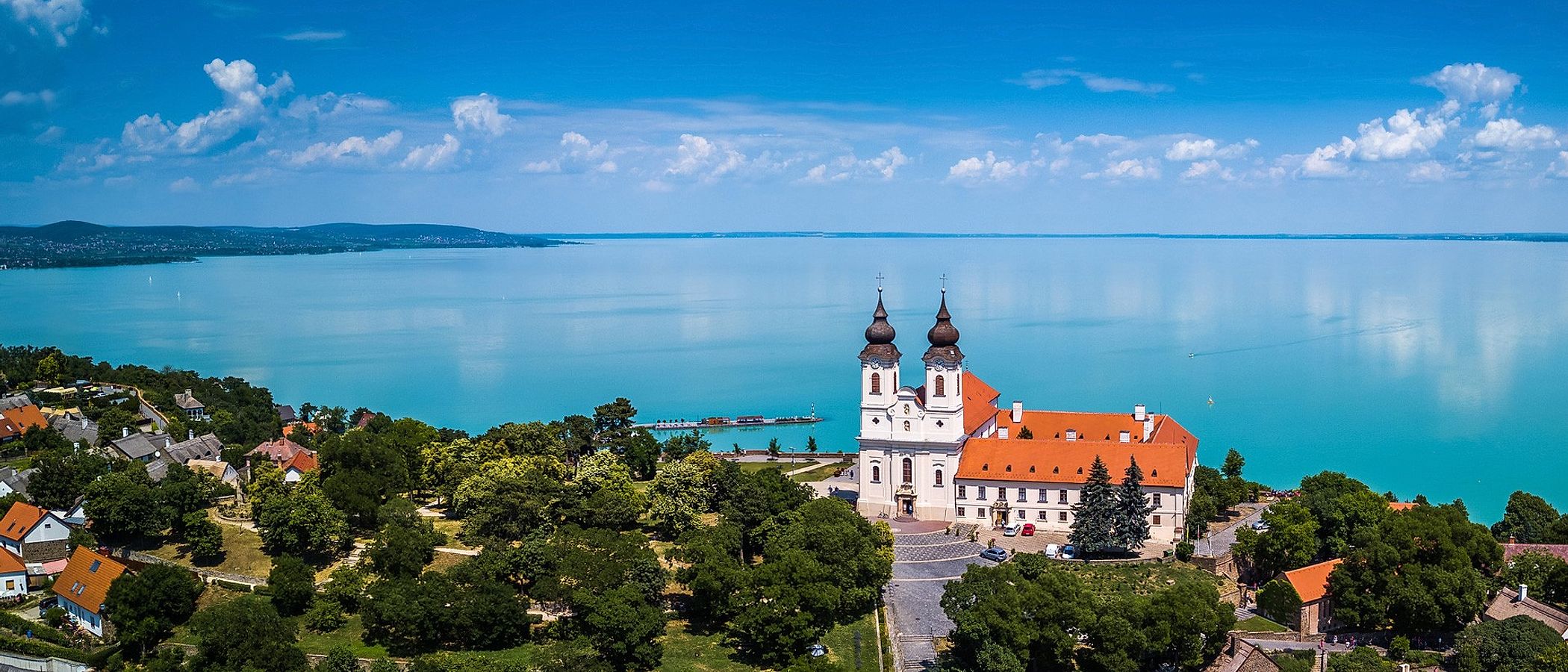
Lake Balatón with Tihany Abbey, Burial Place of Magyar Kings
In 1977, I went to Hungary and Czechoslovakia (before it was split into two countries) with my mother and father. We spent a couple of days in a hostel on the shores of Lake Balatón, one of the largest in Europe. I remember it as a large but shallow lake in which one could walk out a half mile before getting in over your head. The average depth of the lake is only about 3 meters. The cafés around the lake served a kind of carp called, in Hungarian, ponty (that’s only a single syllable, which can be pronounced only by Hungarians).
I was delighted to find this poem by the Chilean novelist and poet Roberto Bolaño, which mentions the lake:
Resurrection
Poetry slips into dreams
like a diver in a lake.
Poetry, braver than anyone,
slips in and sinks
like lead
through a lake infinite as Loch Ness
or tragic and turbid as Lake Balatón.
Consider it from below:
a diver
innocent
covered in feathers
of will.
Poetry slips into dreams
like a diver who’s dead
in the eyes of God.
Those last few lines pack a punch, which I am still trying to figure out. Maybe the original Spanish will help:
un buzo
inocente
envuelto en las plumas
de la voluntad.
La poesía entra en el sueño
como un buzo muerto
en el ojo de Dios.
Or maybe it won’t help. But that’s what poetry is all about. Coming back to it again and again until everything seems to click into place.
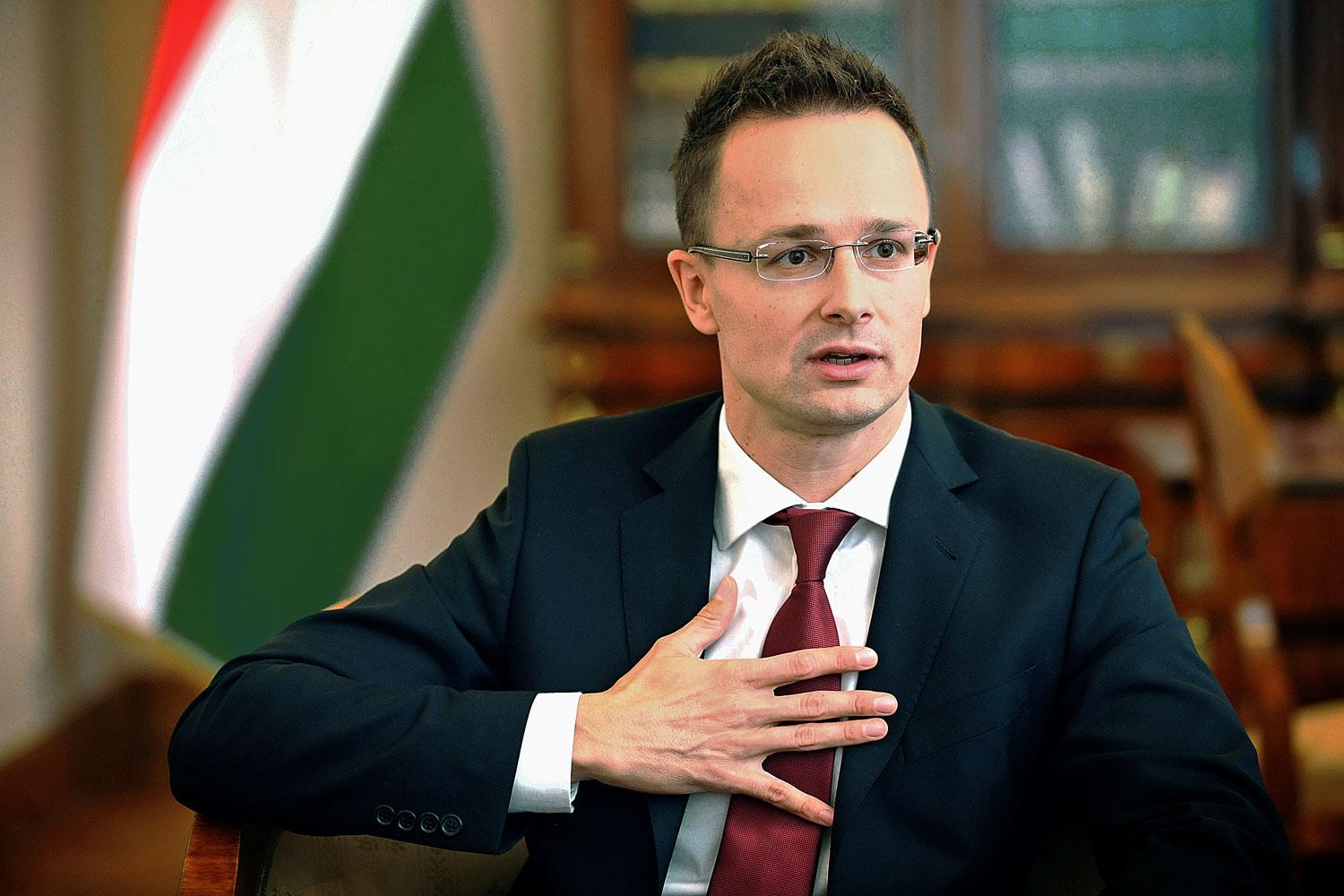
Hungarian Minister of Foreign Affairs Péter Szijjártó
As you may know, I am sympathetic with Hungary’s decision to close its borders to the prospect of uncontrolled mass migration. In doing so, it took a lot of heat from the European Community as well as the U.N. For some quixotic reason, Germany’s Angela Merkel has opened the doors wide to hundreds of thousands of immigrants from the Middle East and North Africa. (Whether the German people will be quite so welcoming remains to be seen.)
Martine and I watched an interview on BBC with Hungarian Minister of Foreign Affairs Péter Szijjártó, a young well-spoken diplomat. The interviewer, Stephen Sackur, kept trying to pillory the Hungarians for acting in a way reminiscent of the darkest days of World War II. (All the while, Britain is less than willing to accept the onslaught of migrants waiting in Calais to stream through the Chunnel.)
Szijjártó correctly sees mass disorganized migration as a violation of sovereignty. He doesn’t want to see his country trashed, its crops trampled down, and its law enforcement officials beaten up for trying to restore order. You can see the 20-minute interview by clicking here.
My own opinion is that the mass migration of 2015 will not end well, neither for the participants, nor the countries along the way, nor for the ultimate destination: Germanistan.




 Tarnmoor
You must be logged in to post a comment.