Sexy Woman

The Inca Ruins at Sacsayhuaman, Near Cuzco

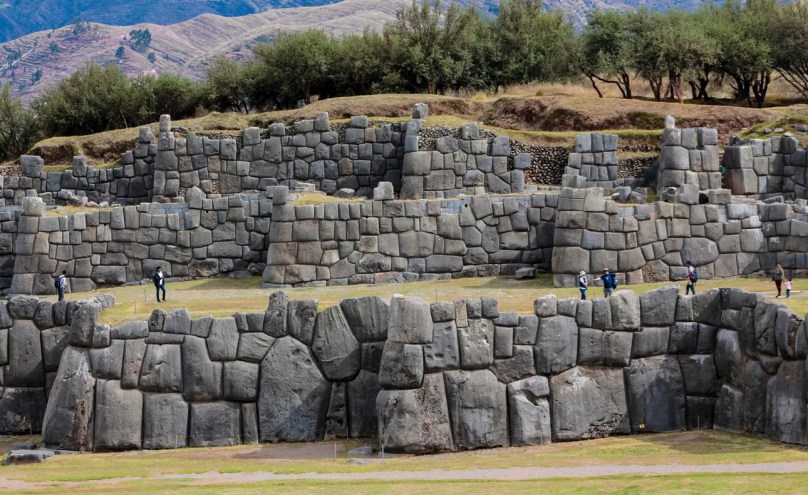
To a generation of Gringo tourists visiting Peru, the impressive ruins at Sacsayhuaman near Cuzco were as often as not pronounced “Sexy Woman.” This will probably persist as long as Americans refuse to learn the intricacies of the Quechua language. When I visited Peru in 2014, I never made it to Sacsayhuaman. I wish I had. I have just finished reading George Woodcock’s Incas and Other Men: Travels in the Andes about a six week trip he took in the Summer of 1956. In it, he had some interesting things to say on page 199 about Sacsayhuaman:

But in fact nothing less than the elaborate centralized organization of the Inca realm at its peak of power could have embarked on such a project [as Sacsayhuaman], and modern scholars are now agreed that the fortress represents the master work of the great public engineers of the fifteenth century. Victor von Hagen, who examined the evidence critically, suggests in his Realm of the Incas that it was started around 1440, not long after Pachacuti began his campaigns of conquest, and that construction took seventy years and employed about 30,000 men, recruited by the mita system of forced labour. The stones seem to have been dragged to the site by teams of men using wooden rollers (presumably brought from the montaña since few trees grew around Cuzco until the eucalyptus was introduced a few decades ago), and to have been placed into position by a complex system of levers and earth ramps. The final shaping and fitting, other archaeologists have suggested, may have been done, after a rough cutting to size, by rubbing the stones against each other, with sand and water between their edges. Again it is largely conjecture, but whatever the methods used to assemble these gigantic walls, their patterns of vast polygonal surfaces have an extraordinary beauty which, combined with the massiveness of the fortress as a whole, make Sacsayhuaman by far the most dramatic building in Peru.

Cajamarca

Back to the World of the Inca: Cajamarca, Peru

On my imaginary Northern Peru trip, I head inland from the coast to Cajamarca, which is 2,750 meters (9,022 feet) above sea level. It was near here at Francisco Pizarro and his Conquistadores captured Atahualpa, the Inca ruler, on November 15, 1532 while he was enjoying himself at the nearby Baños del Inca thermal baths.

At that time the Incas were engaged in a civil war, with Atahualpa ruling the north and Huascar the south. Atahualpa had just defeated Huascar at Cuzco when he decided to take his ill-advised spa treatment. Cajamarca is even today a major gold mining area, so Pizarro imprisoned Atahualpa and held him for ransom. And what was the ransom? A whole roomful of gold from floor to ceiling. Even though the Incas kept their side of the bargain, Pizarro had the Inca leader executed.

The building where Atahualpa was imprisoned still exists, though it is mistakenly called El Cuarto del Rescate (the Ransom Chamber).

From Trujillo, it is a seven hour bus ride to the heights of Cajamarca. From here, I have two choices:

  1. Return to Lima by air (or take a sixteen-hour bus ride).
  2. Take a dangerous bus route to Leimebamba, Chachapoyas, and the ruins of Kuelap, returning by bus to Chiclayo, from which I fly back to Lima.

In my next post, I will discuss this second option.

Earthquake-Proof

Inca Stonework on Calle Hatunrumiyoc in Cuzco, Peru

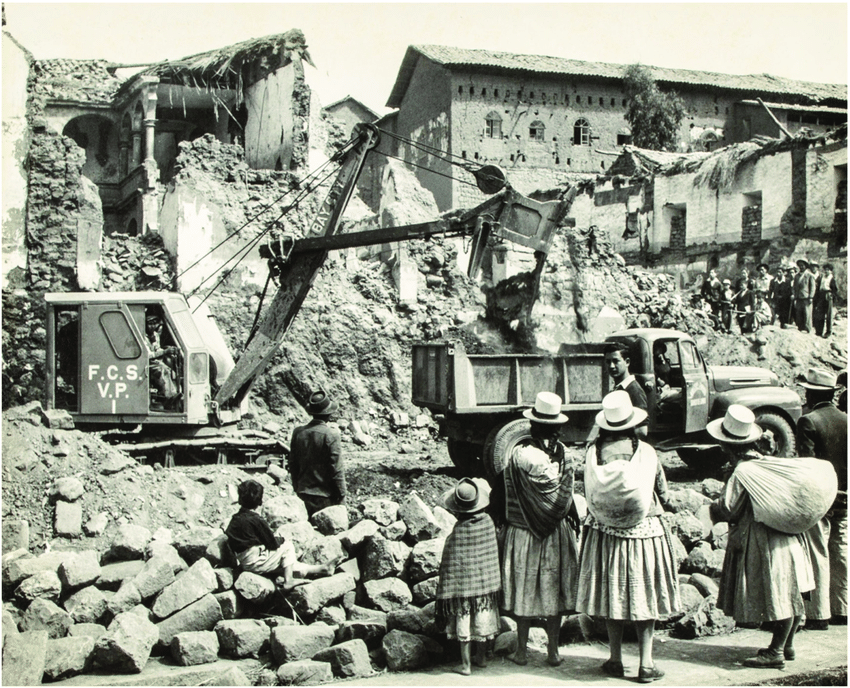
The Inca were, to my mind, most eminent for their stonework. Look at this wall in Cuzco. It was built almost 700 years ago, before a number of major earthquakes, particularly the ones of 1650 and 1950, shook most of the Spanish buildings to rubble. The remaining Inca walls did not budge. Interestingly, they were constructed without mortar, with each block trimmed to fit exactly atop the stones beneath it and to either side.

Best-known is the famous Twelve-Angle stone, not more than a few feet away from the above view:

The Famous Twelve Angle Stone

Now imagine trying to get a modern-day stonemason to do something like that. This stone is so revered that it is forbidden by law to even touch it. Yet it has withstood centuries of tremors and hard usage.

Today this wall forms part of the Archbishop’s Palace, which the Spanish wisely incorporated into the present structure.

Below is an image of some of the damage after the 1950 earthquake:

Cuzco After the 1950 Earthquake

As good as the Inca were at being stonemasons, it is amazing to think that:

  1. They had no system of writing, though they did have a system of saving numerical data using a system of knotted cords known as quipu.
  2. They did not have the wheel to help them move all those heavy stones. But then they had no draft animals that could pull heavy carts, either,

How Did They Know That?

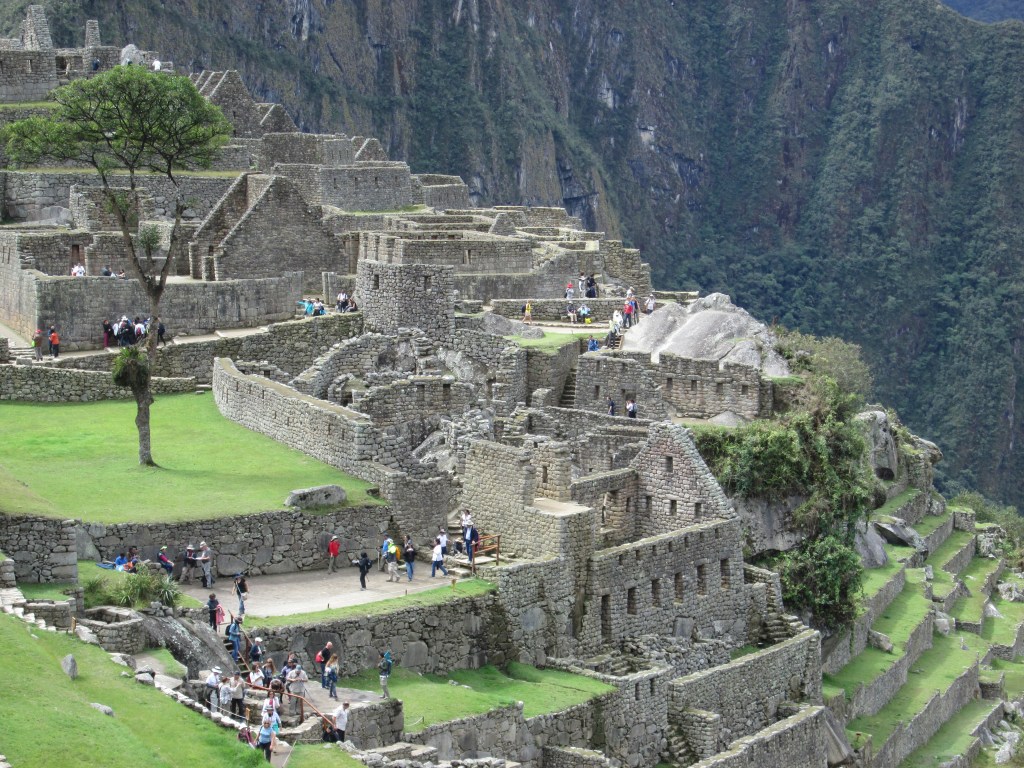
The Inca Ruins at Something Something Picchu

I was surprised to find out that, according to a professor of anthropology, Machu Picchu should be called Huayna Picchu instead. The reason I was surprised is that the Incas never had a written language like the Maya and the Aztecs. They were great engineers and stonemasons, but left no writings or even hieroglyphs. The only “communication” of any sorts we have from the Incas are in the form of quipu, knotted cords that were used to quantify taxes or inventories.

Quipu at the Museo Larco in Lima, Peru

You can read the story here at CNN Travel. It doesn’t much matter what the “official” name of the Inca ruins was. After all, most Meso-American ruins are probably misnamed. Either the Conquistadores or the archeologists just assigned a name for convenience. And, for good or ill, it stuck.

Chullpas

Funerary Tower (Chullpa) on the Shores of Peru’s Lake Umayo

In the lands around Lake Titicaca in Peru and Bolivia, the native cultures believed in building funerary towers called chullpas to house their dead. Even under Incan rule, the Aymara-speaking Colla people continued this practice.

In 2015, I visited Sillustani, which contained the most impressive collections of chullpas situated on a nearby hill. Unfortunately, one cannot always guarantee good weather on a vacation outing, and the weather at Sillustani was vile that day. Consequently, I not only took no pictures but decided not to climb the hill in the rain (and at 12,000 feet or 3,700 meters altitude). So I took none of the pictures shown on this page.

Funerary Towers at Sillustani

I paid dearly for my trip to Sillustani, which included sampling some quinoa soup at a local resident’s kitchen. The next day, I was struck with a horrible need to go to the bathroom while on a lancha plying Lake Titicaca. I must have looked green in the face as I soldiered on in search of some toilet somewhere. Finally, on Isla Taquile, I found one; though I can’t say I got much from that day’s journey other than incredible discomfort.

Some days just are like that.

An Incredible Richness

Altar in the Archbishop’s Palace in Lima, Peru

It was not until I visited Peru five years ago that I realized that the Inca were not the only game in town. In fact, I found the old Catholic churches with their ornate ornamentation was equally interesting. After all, the Inca had no written language and left no books until the Spanish taught them how to write. And yet the Catholic church in Peru was incredibly powerful. A visit to the great old churches of Lima led me to think that the Church in Peru was the recipient of as much gold and silver as the King of Spain.

In the south of Peru was San Luis Potosí, where there was an entire mountain of silver called to this day the Cerro Rico, the “Rich Hill.” The silver was sent to Lima, from where it was transshipped to Panama, where the conquistadores marched it across the isthmus to Colón, where it was loaded onto Spanish treasure ships and sent to Spain.

Altar at Lima’s Cathedral

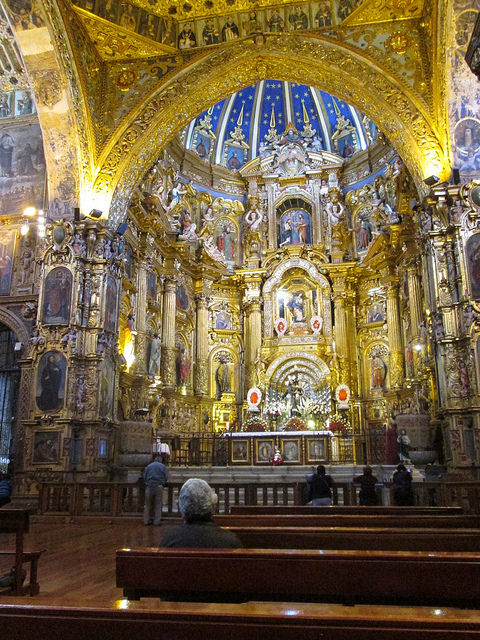
Of course, much of these Peruvian riches never made it to Spain, thanks to the ravages of pirates and storms at sea. Whatever was given to the church, however, went into the churches of Lima and the rest of the Hispano-America. I cannot count the number of times I would walk into a church and be struck by all the gold used in the altars and in gilding the statues and frames of the paintings on display. Look, for instance, at the picture below of the Company of Jesus Church in Quito, Ecuador:

PICQuitoCompanyOfJesus

The Main Altar of the Company of Jesus (Jesuit) Church in Quito, Ecuador

It was nice to see the Inca ruins, but the remnants of a once-triumphal Catholicism were far more impressive. Granted that the Inca were perhaps the world’s greatest stonemasons, but the Spanish civilization is far richer.

Not Quite Inca, Yet Very Inca-Like

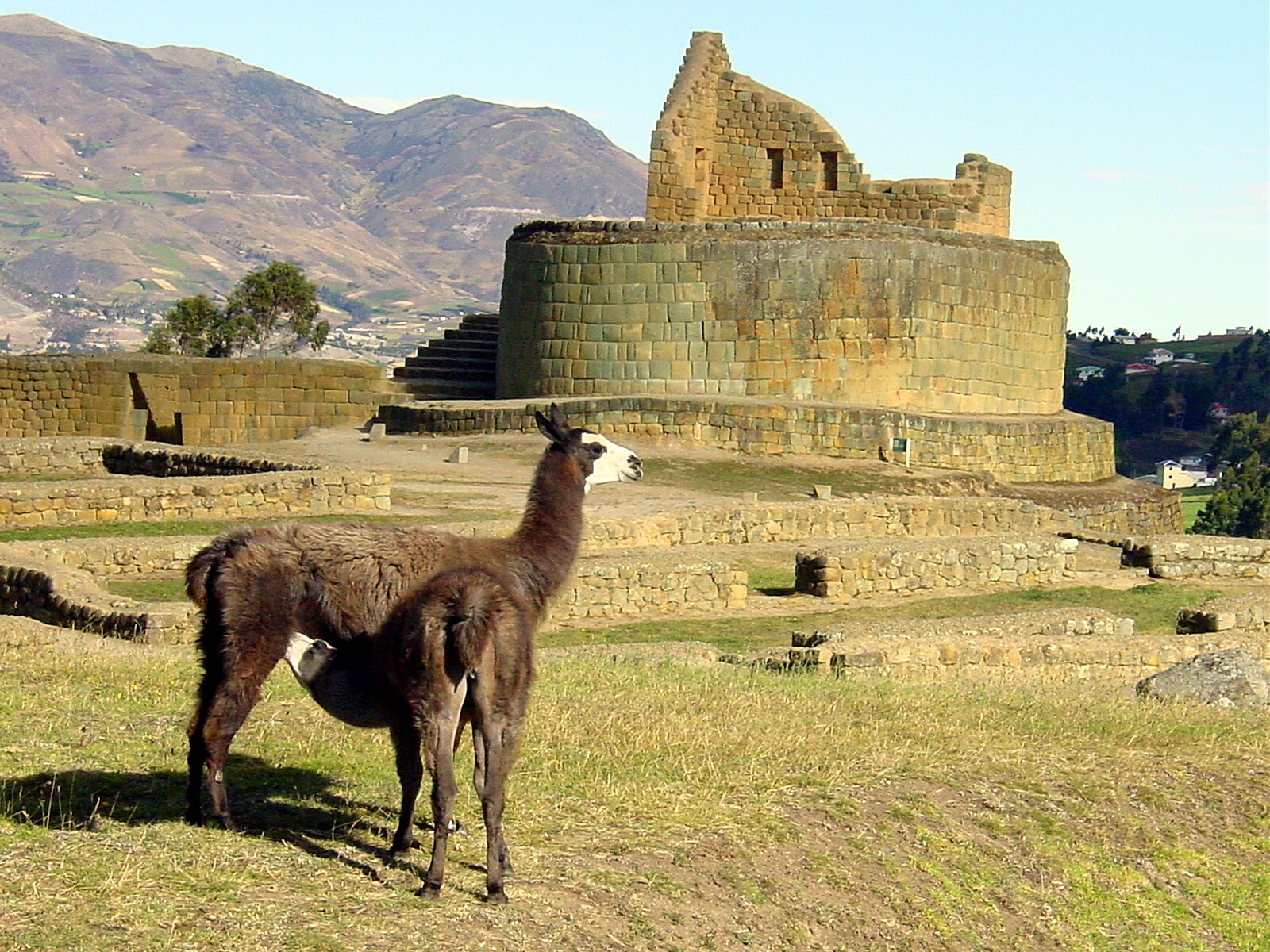
Inca Ruins at Ingapirca, Ecuador

Inca Ruins at Ingapirca, Ecuador

Are the indigenous peoples of Ecuador Incas? Well, yes and no.

Although the tale of Juan Pizarro’s conquest of the Incas is set partly in Ecuador—Atahualpa, “the” Inca ruled from Quito and was engaged in a civil war with Huáscar, his half brother in Cusco—the peoples of Ecuador were mostly conquered by the Incas.

According to historian and ethnologist Frank Salomon, the non-Inca peoples suffered a fate similar to the Incas, whereby they lost much of their identity:

From the Cañari side, the attack on Cañari ancestors [by way of grave robbing] may have set into motion a process that the Inca state would not have allowed even if Cañaris had desired it, namely, the retrospective grafting of Cañari genealogy onto Inca descent. In order to understand how it occurred, one must remember that in Quechua [the common linguistic group of both peoples] thinking a dead person is considered to be present and active so long as he or she has physical existence. When the Cañari dead were taken from their tombs and exposed, broken and impoverished, they ceased to be rich, honored, and potent ancestors, and became dishonored, defeated, and disinherited ones. Neglected pre-Columbian ancestor mummies (gentiles) today form a class of hungry ghosts who pervasively haunt Quechua folklore in various regions. When the Spanish vandalized the Cañari dead and disposed of their bodies as garbage, they created a new common condition for Inca and non-Inca peoples alike, that of descendants of destroyed persons.

So the Cañari and some other conquered Ecuadorian people share a common fate with their Inca conquerors. Both are descended from “discarded” ancestors, so they feel a bond of sympathy with the Incas, who were primarily Peruvian.

Ollantay

Inca Ruins at Ollantaytambo

Inca Ruins at Ollantaytambo

Built into a hillside, the ruins at Ollantaytambo was the site of the last Inca victory over the Spanish. Manco Inca defeated a force captained by Hernando (brother of Francisco) Pizarro by diverting the Urubamba River and flooding the battlefield. The thrill of victory didn’t last long, because Manco Inca withdrew his forces to Vilcabamba in the jungle of Espiritu Pampa, where it was lost until rediscovered in the 20th Century.

Most tourists don’t spend much time visiting the Incan sites in the Sacred Valley, preferring instead to either take the train to Machu Picchu or hike the 35 km of the Inca Trail without further delay. (When people asked if I was taking the Inca Trail, I always answered by saying that I was taking the Inca Train.)

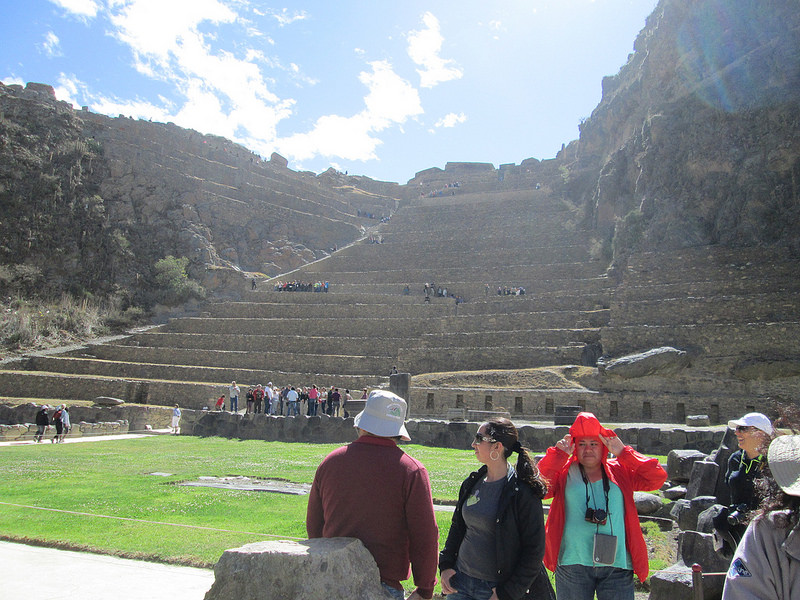
Other than Machu Picchu and the sites immediately around Cusco, the main tourist destinations in the valley are Pisac and Ollantaytambo. Pisac is known for its Sunday crafts market and “Ollantay,” as the starting point for most of the trains to Machu Picchu. The ruins at Ollantay are extensive, including temples, terraces for farming, and granaries several hundred feet up in the Andes.

At the ruins, I hired a guide named William who did a good job of explaining, albeit in broken English, the features of the site. In fact, I liked him so much, I hired him for an all-day tour of Moray, Maras, the Salineras, and Chinchero the next day. That trip (about which more later) proved to be one of the highlights of my trip to Peru.

Before the Incas

Yes, There Were Great Civilizations Before the Incas

Yes, There Were Great Civilizations Before the Incas—Witness This Moche Pot

We tend to think that the only advanced Pre-Columbian Civilizations were the latest. For Mexico and Central America, that would mean the Aztecs and Mayas; for Peru, the Incas.

As one who has traveled to Mexico many times to see archaeological sites, I can vouch for the fact that, long before the Aztecs left their mythical homeland of Aztlán, there were other civilizations in Mexico that they replaced, but which they did not necessarily improve upon. The peoples who built Teotihuacan north of Mexico City did it around a hundred years before the Christian era. Then there were the Toltecs, the Totonacs, the Olmecs, and the Huastecs. I have seen remains from these and other Meso-American civilizations over a thirty-year period.

The Mayans are slightly different: They were less a centralized political entity than a people who have been around for thousands of years and lived through both empires and more localized city states and leagues of city states. The last Mayans were conquered by the Spanish at Tayasal in 1697, representing a much thornier military target for the conquistadores than the Aztecs.

The Moche Civilization of Peru

The Moche Civilization of Peru (100-800 AD)

Like the Aztecs, the Incas were fairly late on the scene, first coming to notice around 1438 and being conquered (but not decisively) by Francisco Pizarro a hundred years later. In many ways they were not as advanced as the Aztecs and Mayans inasmuch as they did not have writing—though they appear to have been able to use a writing system of colored knotted cords called quipus for inventories and other business purposes. (In this regard, they were like the ancient Greeks who used Linear A in a similiar way.)

What the Incas had going for them were primarily two things:

  1. They built a great paved road system covering some 25,000 miles. (But since these roads included steps at times, they could be navigated by sure-footed llamas, but not by the Spaniards’ horses).
  2. They were great builders who, in a major earthquake zone, erected structures that are still standing.

Prior to the Incas, there were numerous Peruvian civilizations who bettered the Incas in many respects. The Moches or Mochica of the north were just one example: Their pottery is far more artistic (see above photo) than anything the Inca were able to create. Then, there were the Wari, the Nazca, the Chavin, Tiwanaku, Chincha, Chanka, and Chimu.

My upcoming trip to Peru will include some visits to non-Inca ruins, such as Huaca Pucllana of the indigenous Lima culture and Pachacamac of the Ichma people. If it weren’t for the fact that I’ve never been to Peru before—and I don’t know whether I can go again—I will concentrate mostly on the Inca sites of the Sacred Valley between Cusco and Machu Picchu.


Inti Raymi

Inca Warrior

Inca Warrior

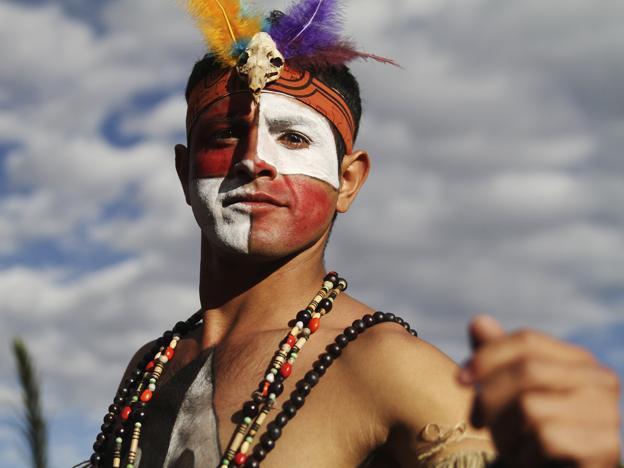
Before Francisco Pizarro upset the whole apple cart, Inti Raymi was one of four major Inca festivals celebrated in Cusco. It is still celebrated annually, except the venue has moved to the nearby ruins of Sacsayhuamán—usually pronounced by American tourists as “Sexy Woman.” The following description of the festival’s origin is from Wikipedia:

According to chronicler Garcilaso de la Vega, Sapa Inca Pachacuti created the Inti Raymi to celebrate the new year in the Andes of the Southern Hemisphere. The ceremony was also said to indicate the mythical origin of the Incas. It lasted for nine days and was filled with colorful dances and processions, as well as animal sacrifices to thank Pachamama and to ensure a good cropping season. The last Inti Raymi with the Inca Emperor’s presence was carried out in 1535, after which the Spanish and the Catholic priests banned it.

Since 1944, there has been a re-enactment of the Inti Raymi ceremonies on June 24 of each year. Although this re-enactment is mostly for the benefit of tourists, there are still real Inti Raymi ceremonies held by Quechuan peoples throughout the Andes.