Touring with Manuel

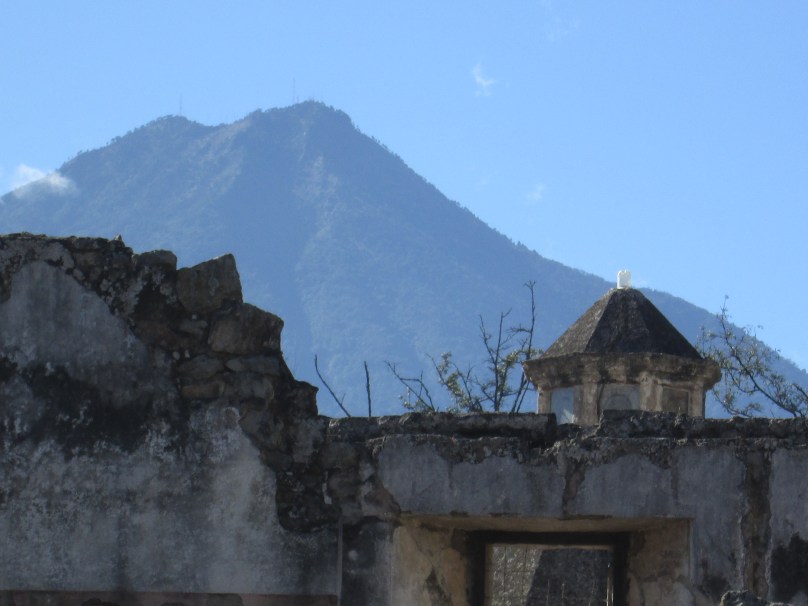
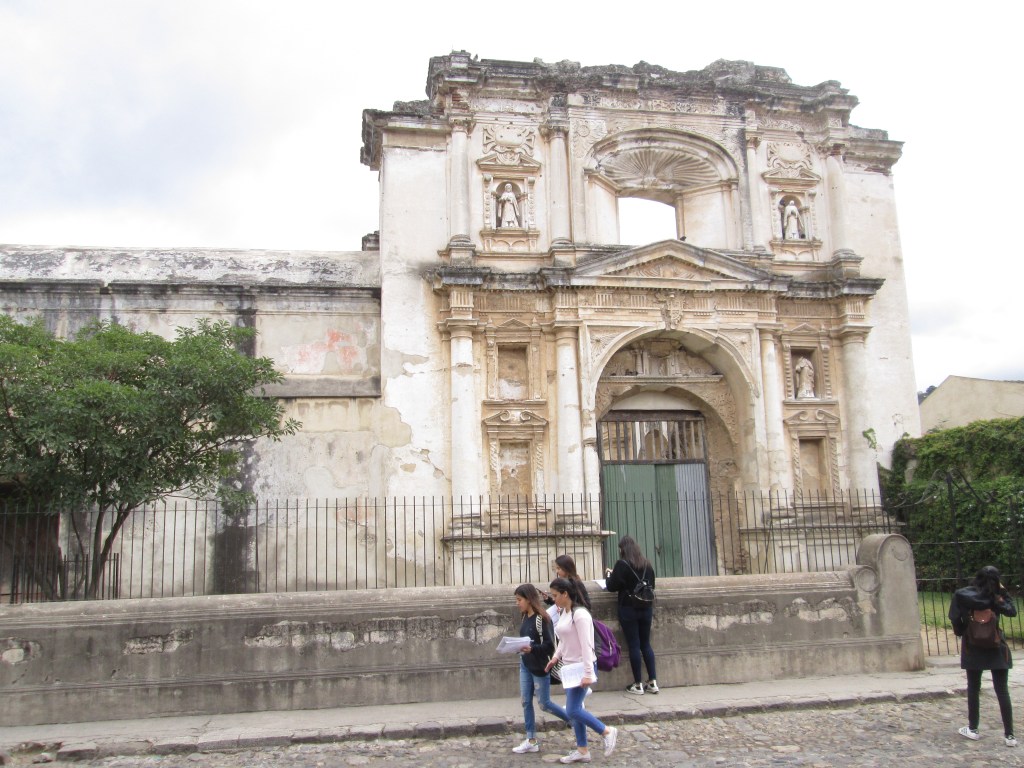
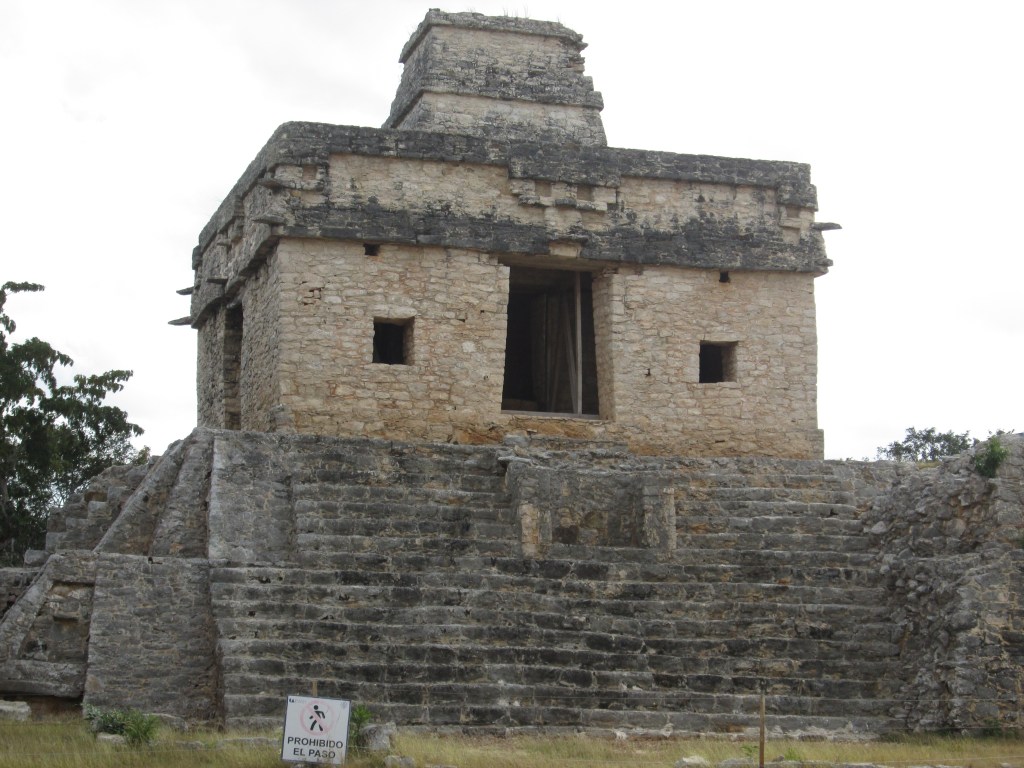
The Main Square of Acanceh, Yucatán … With Pyramid

During my magical first trip to Yucatán in November 1975, I decided to hire a guide. I could have gone to a fancier tour office, but I settled on Turistica Yucateca on a Mérida side street. I wish I could remember the name of the owner who didn’t speak a word of English, just as I didn’t speak a word of Spanish. No matter, if you want to communicate, you will; and you will be understood, more or less.

The señora at Turistics Yucateca set me up with an English-speaking guide named Manuel Quiñones Moreno who had access to a car for two days of travel. Instead of going at first to the big Maya sites such as Uxmal or Chichén Itzá, I decided to “start small” by spending some time at Dzibilchaltún on the first day and then going to Mayapan the next day.

After touring Dzibilchaltún, Manuel and I sat down at the entrance to the ruins and played chess. I lost two games in quick succession to Manuel and decided he was several levels better than me.

The next day we drove to Acanceh, where we ate lunch on the zócalo in view of the pretty church and a Mayan pyramid. Then we drove to the late Maya ruins at Mayapan, when much of the peninsula was under the control of a militaristic government which was still in existence when the Spanish arrived.

When I was last in Mérida, I inquired if Manuel Quiñones Moreno was still around. Apparently, he was; and he was still a tour guide a quarter of a century later, though now based in Uxmal. I tried to contact him there, but he was not available when I called.

Desert X 2025

Sculpture “The Living Pyramid” by Dénes Ágnes

I returned today from a long weekend visiting my brother Dan in the Coachella Valley. Saturday began on a dubious note: We visited an installation of the Desert X 2025 art show at Summerlands in Rancho Mirage. Since the artist was the Hungarian-born Dénes Ágnes, we expected great things, being self-professed Hungarians ourselves.

What we saw was a plywood pyramid painted white, planted with native desert plants, that is on view at Summerlands until May 11, 2025. Ah, well, I guess not all Hungarian art works are great.

I was reminded of Maya pyramids in Yucatán that were not rebuilt by archeologists, such as this pyramid I photographed at Sayil in the Puuc Highlands in January 2020:

Maya Pyramid at Sayil

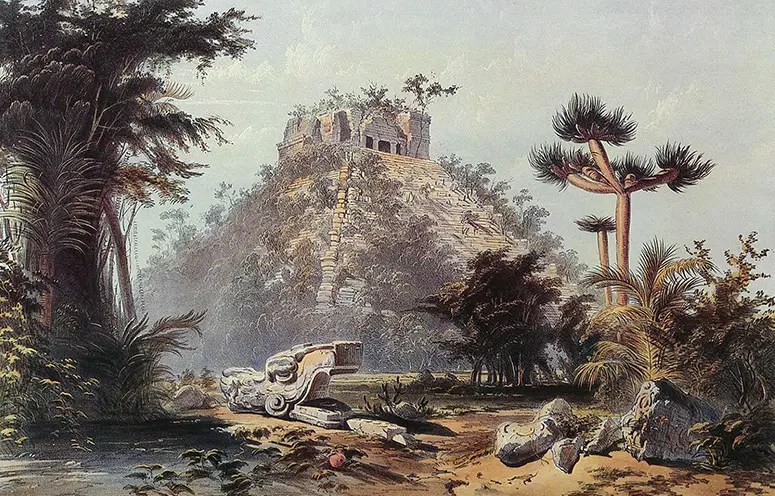
Another point of comparison is one of English artist Frederick Catherwood’s engravings in the 1841 classic by John Lloyd Stephens, Incidents of Travel in Central America, Chiapas and Yucatán:

The Castillo at Chichén Itzá Engraved by Frederick Catherwood

I guess I’m too much in love with the impressive Maya ruins in Mexico and Central America to accept Dénes’s “The Living Pyramid” with anything other than a shrug. Nice try, but no cigar.

“Prepare Yourselves”

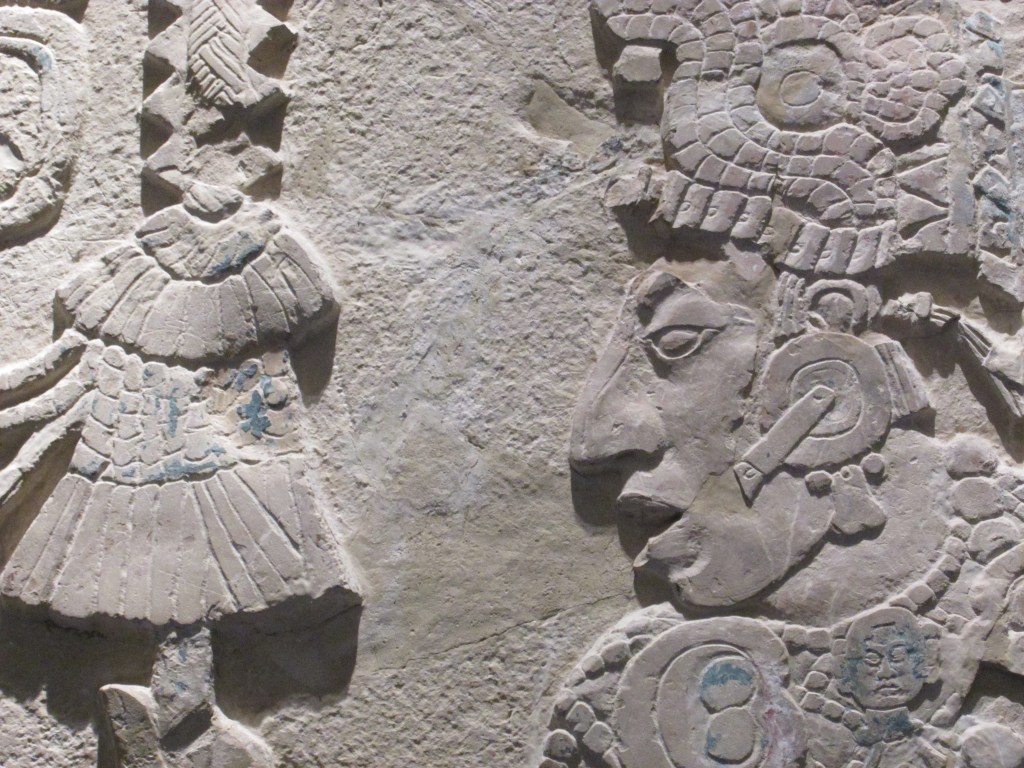
Maya King at Mérida’s Palacio Canton Museum

After being conquered by the Spanish, the Maya of Yucatán wrote a series of miscellanies in the 17th and 18th centuries referred to as Chilam Balam. Many of the entries are poetic and filled with foreboding. Poet Christopher Sawyer-Lauçanno translated a number of them in his The Destruction of the Jaguar: Poems from the Books of Chilam Balam. Here is one of them:

Napuctum Speaks

Burn, burn, burn
on earth we shall burn
become cinders in
the blowing wind
drift over the land
over the mountains
out to sea.

What has been written
will be fulfilled.
What has been spoken
will come to be.

Weep, weep, weep
but know,
know well:
Ash does not suffer.

An Experiment in AI

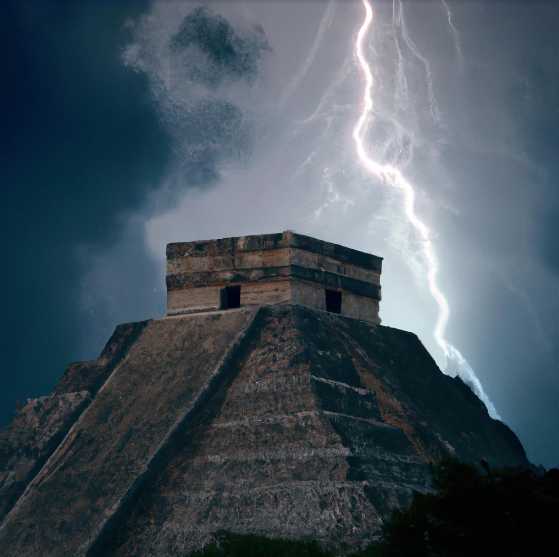
El Castillo at Chichén Itza Being Struck by Lightning

Except for this first paragraph and the photo caption above, this post was created by ChatGTP. I wanted to see what the program could do with a topic I proposed (“Discuss the many dialects of the Maya language”) accompanied by a picture of a Maya pyramid being struck by lightning. Let’s take the picture first: ChatGTP seems to think that the Castillo at Chichén Itza is the only Maya pyramid. Personally, I would have chosen the Temple of the Dwarf at Uxmal. In the AI discussion of Maya dialects below, ChatGPT starts with the patently false statement that Maya is also known as Yucatec Maya. Not so, Yucatec Maya is the most populous dialect of Maya, but the statement confuses a part with the whole. The rest is not objectionable, except that ChatGPT does not attempt to quantify the number of speakers of each dialect.

The Maya language, often referred to as Yucatec Maya, is a language spoken by the indigenous Maya people in Mexico, Belize, Guatemala, and Honduras. While Yucatec Maya is the most widely spoken and recognized dialect, there are actually many dialects within the Maya language family. These dialects exhibit variations in vocabulary, pronunciation, grammar, and even some differences in syntax.

Here are some notable dialects of the Maya language:

  • Yucatec Maya: This is the most prominent dialect and is primarily spoken in the Yucatán Peninsula of Mexico, including the states of Yucatán, Campeche, and Quintana Roo. Yucatec Maya has the largest number of speakers among the Maya languages.
  • K’iche’ Maya: K’iche’ is one of the largest Maya language groups, spoken mainly in Guatemala. It has several regional variations, and the dialect spoken in the city of Quetzaltenango (Xela) is considered the standard. K’iche’ Maya gained recognition for being the language of the Popol Vuh, a sacred book of the Maya.
  • Tzotzil Maya: Tzotzil is spoken in the Chiapas region of Mexico, primarily in the highlands. It is one of the most widely spoken indigenous languages in Mexico, and it has a significant number of speakers.
  • Tzeltal Maya: Another major Maya language of the Chiapas region in Mexico is Tzeltal. It is closely related to Tzotzil and shares some similarities. Tzeltal is spoken by a sizable population and has various dialectal variations.
  • Mam Maya: Mam is spoken in Guatemala and parts of Mexico. It is known for having a considerable number of speakers and is recognized as one of the major Maya languages.
  • Q’anjob’al Maya: Q’anjob’al is spoken in Guatemala, mainly in the western highlands. It has a significant number of speakers and is recognized as an official language in Guatemala.
  • Ch’ol Maya: Ch’ol is spoken in the state of Chiapas in Mexico. It has a substantial number of speakers and is considered a separate branch of the Maya language family.
  • Itzá Maya: Itzá is spoken by the Itza people in the Petén region of Guatemala. Itzá is considered a distinct dialect within the Yucatec Maya branch.

These are just a few examples of the diverse Maya language family, and there are many more dialects and variations within each branch. Each dialect has its own unique characteristics, influenced by regional differences and historical factors. The preservation and revitalization of these dialects are crucial for maintaining the rich cultural heritage and identity of the Maya people.

The Destruction of the Jaguar

After the Spanish conquistadores conquered the Maya peoples, they published one more work in Maya. It was called The Chilam Balam of Chumayel and consisted of a series of prophetic books looking pessimistically into the future. The poet Christopher Sawyer-Lauçanno in The Destruction of the Jaguar wrote a poetic retelling of these prophecies. Below is the prophecy of Ah Kauil Chel:

What has been written
will be fulfilled.
Though you may not comprehend it
though you may not understand it
he will come who knows
how the ages unfold
like the stone steps
on the palace of the governor.
For now
the priests, the prophets
will interpret
what is to be fulfilled,
shall herald with sorrow
the destruction of the jaguar.

Return to Uayeb Yet Again Part Deux

To date, I have written five posts about the Maya “month” of Uayeb or Wayeb, which consists of the last five days of the Haab Calendar of 365 days. The Haab calendar has twenty months of eighteen days each, which isn’t quite enough to make up the full complement, so the Maya added a short stub of a month containing the five “nameless days.”

There is also a Maya god named Uayeb, who is the god of misfortune. That sounds about right.

The Cartoonist Scott Stantis Has an Intuitive Understanding of Uayeb

Here is a link to my previous posts on the subject:

Below is the Maya glyph for the “month” of Uayeb, or Wayeb (kind of looks like a tiny-headed god flexing his muscles, doesn’t it?)

In his comments to last year’s post, my friend Mudpuddle noted that “the glyph looks like a surfer headed for muscle beach!”

I am amused by how well a Maya calendrical belief fits in so well with our civilization, in which the days between Christmas and New Year and almost universally considered as dead time.

So don’t make any big plans until the New Year. But you kind of knew that anyway, no?

Seven Dolls

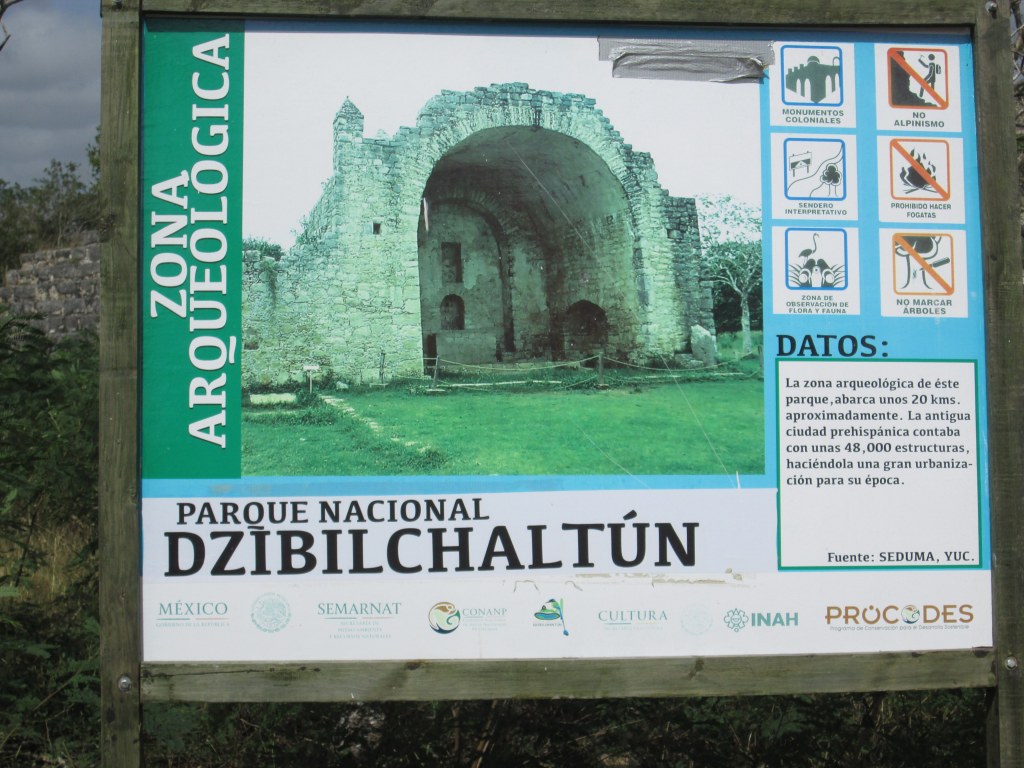
Sign at Entrance to the Ruins

There are untold thousands of Meso-American archeological sites scattered through Mexico, Guatemala, Belize, and Honduras. Sometimes, it’s fun to visit some of the lesser-known sites. I have particularly fond memories of Dzibilchaltún, which is about 10 miles (16 kilometers) north of Mérida. It was the first Maya ruin I visited back in 1975 with my guide Manuel Quiñones Moreno. We set on the steps of a temple and played several games of chess, which I lost handily.

So it was fun to visit it again in 2020. Now there was an entrance hall, an admission fee, and a rather nice museum. Plus, the cenote was filled with children diving into the limestone-cooled waters.

The Temple of the Seven Dolls

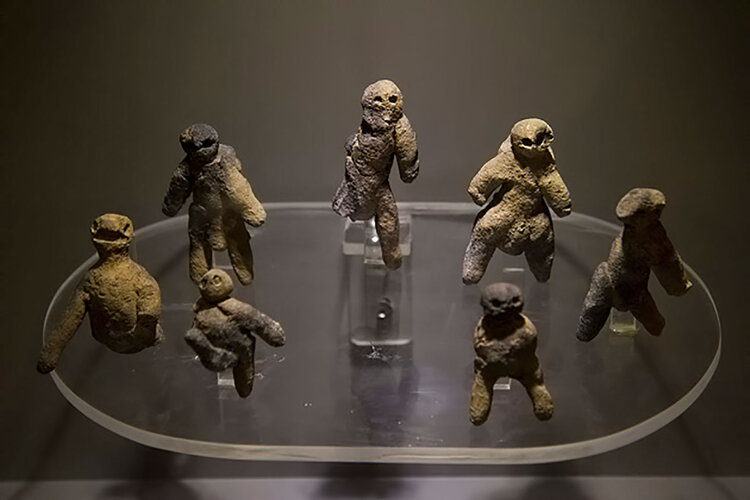
Above is the most famous structure at Dzibilchaltún, the Temple of the Seven Dolls, named after a number of figurines that were found by archeologists buried under one of the altars.

The Seven Dolls Buried in the Temple

Dzibilchaltún is not a world class beauty like Uxmal, Chichén Itza, Copán, or Tikál, but it helps fill in vital parts of the Maya story. Although it doesn’t have a lot of first-class structures, the city was inhabited for over a thousand years. It was close to the coastal salt flats that led to the one item most frequently used in the coastal trade with other peoples, namely: salt.

And I have happy memories because this is one of the places where I began my travels as a young man.

How Did They Know That?

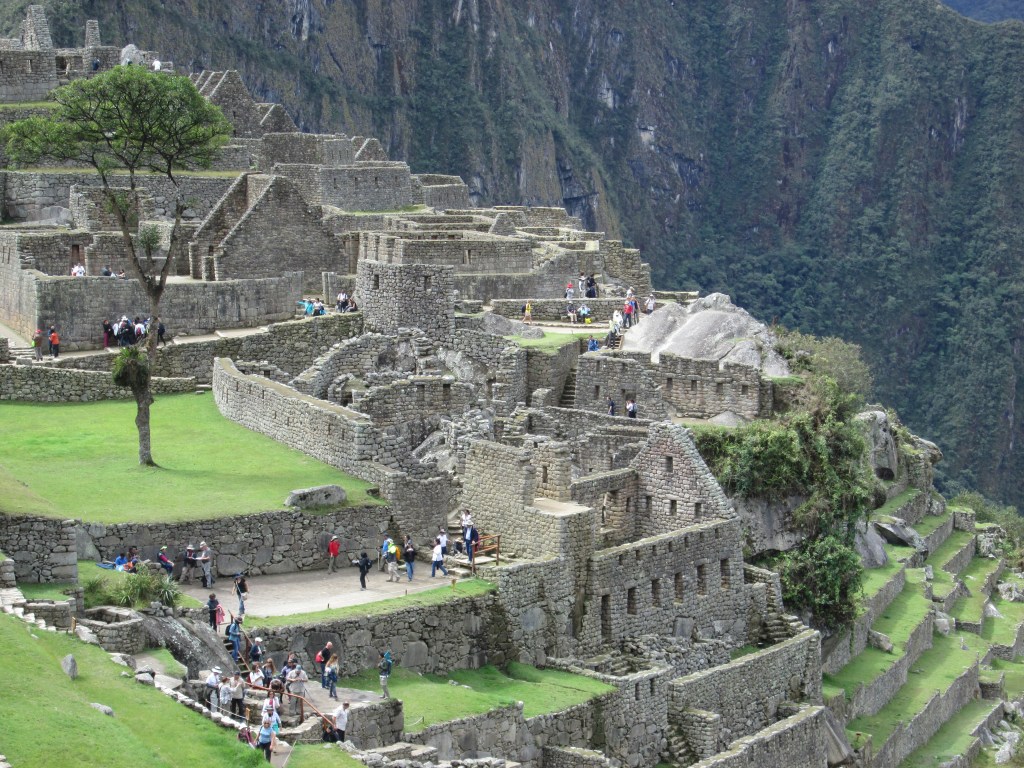
The Inca Ruins at Something Something Picchu

I was surprised to find out that, according to a professor of anthropology, Machu Picchu should be called Huayna Picchu instead. The reason I was surprised is that the Incas never had a written language like the Maya and the Aztecs. They were great engineers and stonemasons, but left no writings or even hieroglyphs. The only “communication” of any sorts we have from the Incas are in the form of quipu, knotted cords that were used to quantify taxes or inventories.

Quipu at the Museo Larco in Lima, Peru

You can read the story here at CNN Travel. It doesn’t much matter what the “official” name of the Inca ruins was. After all, most Meso-American ruins are probably misnamed. Either the Conquistadores or the archeologists just assigned a name for convenience. And, for good or ill, it stuck.

Rio Bec

The Ruins of Calakmul in the Rio Bec Region

What with all my visits to the Maya ruins in Yucatan, Chiapas, Guatemala, and Honduras, you would think I would be getting tired of the endless ruins. Well, not yet! One incredibly dense region of Maya ruins is in the southeast corner of the state of Campeche, known as the Rio Bec region. Included are such archeological sites as:

  • Calakmul, with Tikal in the Petén region of Guatemala, perhaps one of the largest Maya cities at its height 1,500 years ago
  • Xpuhil (pronounced shpoo-HEEL)
  • Balamku
  • Chicanna
  • El Hormiguero (“The Anthill”)
  • Rio Bec
  • Becán

And these are only the better known ones, and even some of these are difficult to get to because they are at the end of dirt tracks in the jungles of the region.

Maya Ruins at Chicanna

Unlike many of the better known ruins in the state of Yucatán, those of the Rio Bec region are in steaming monkey jungles. The only town of any size is Xpujil near the eponymous ruins, and it’s only a blip on the long road between Francisco Escarcéga and Chetumal. To visit any of these ruins requires reserving a chunk of time, from three days to a week. Public transportation is virtually nonexistent, and the only places to stay (and not a large selection at that) are clustered around Xpujil.

To do the Rio Bec area any justice, I would have to rent a four-wheel-drive vehicle. Still, I would love to go. I would have to pack a lot of insect repellent (like 100% DEET) and be prepared for some really dicey shit. Hey, if it’s on my travel bucket list, you can bet it’s no cakewalk.

On the Bewitched Staircase

If you want to see a happy post, don’t catch me between Christmas and New Year. It is no accident that all my posts this week are unusually dark. My lone adherence to the Maya religion is my belief in the Uayeb, the unlucky five days that follow the 360 day Haab calendar to bring the total up to 365. According to an interesting website about the Uayeb:

Despite the fact that these days share the calendar with 18 other periods lasting 20 days each, the Uayeb had a bad reputation among the Maya people. According to writings found during the colonial period, these days were considered black periods in which the universe had released dark forces and therefore they didn’t share in the blessings of time.

In the Songs of Dzibalche, a codex found in 1942, a series of allusions to the Uayeb were discovered. These expressed the discomfort the days caused the Maya people:

The days of weeping, the days of evil/ The devil is loose, hell is open/ There is no goodness, only evil… the month of nameless days has come/ Days of pain, days of evil, the black days.

Several theories describe how the Maya passed through such dark times. Some specialists maintain that during these periods they stayed in their homes and washed their hair. Others claim they undertook great processions in thanks for what they’d experienced during the year. One thing that’s certain is that the word Uayeb could be translated as “bewitched staircase.”

So let’s just say I am having a bad Uayeb.