Obscuridad Mexicana

Mexican Novelist Fernanda Melchor

In this case, obscuridad is translated not as obscurity, but darkness. I toyed with the idea of calling this post “Noir Mexicana,” but I didn’t want to mix the two languages. I hope you get the general idea.

Fernanda Melchor is a very dark writer indeed. I have in the last few months read all three of her novels that have been translated into English:

  • This Isn’t Miami (Aqui no es Miami)
  • Hurricane Season (Temporada de huracanes)
  • Paradais

All three novels are about wasted lives in the vicinity of the author’s home state of Veracruz. Although short in length, all three are crammed with violence, superstition, and fear. In the background—or sometimes in the foreground—there are the drug cartels, with scenes such as Milton in Paradais being commanded to shoot and kill a pathetic old taxi driver who is begging for his life.

Reading Melchor is like reading Louis-Ferdinand Céline or the Jim Thompson of The Killer Inside Me. One is reminded that, in Mexico, it is easier to see the skull beneath the skin.
Light, Dark and Noir

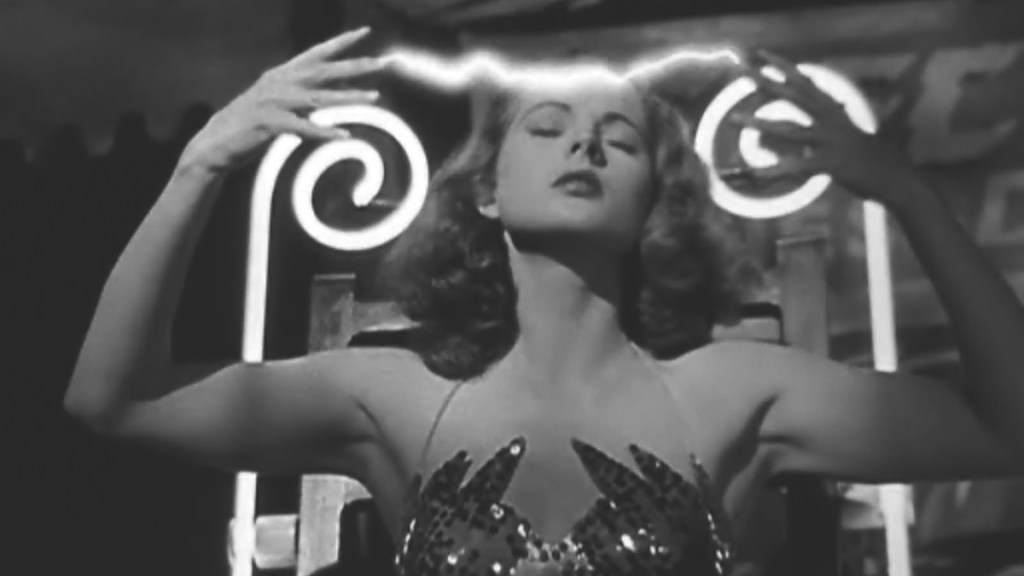
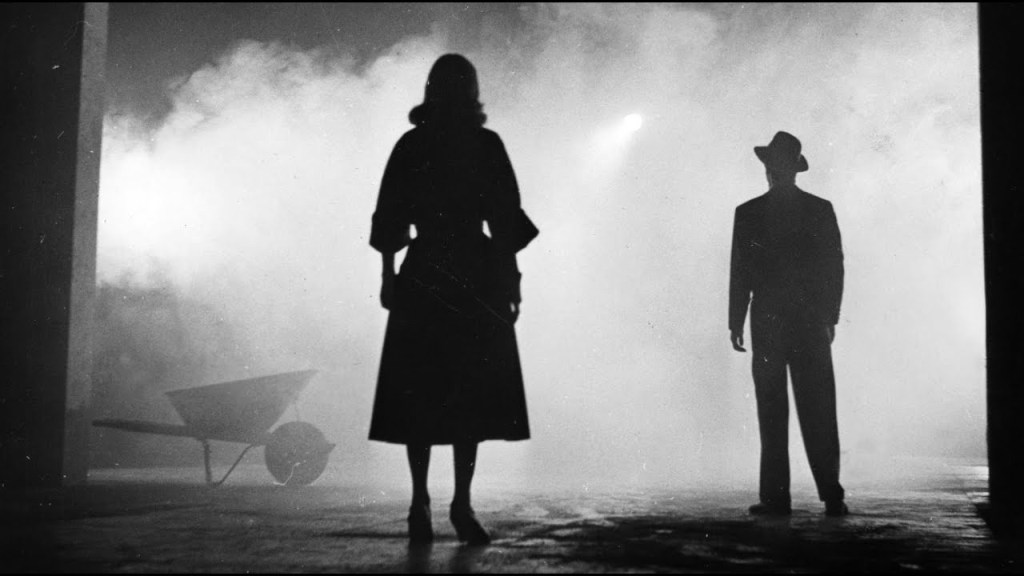
Still from Joseph H. Lewis’s The Big Combo (1955)

One of the great visual artists of the American film was John Alton (1901-1996), a cinematographer famous for the visual style of some of the best noir films. Born Johann Jacob Altmann in Sopron, Hungary, Alton was instrumental in creating a look across the films of different directors at different studios that became a quintessential characteristic of an entire American genre.

As he wrote in his book Painting with Light:

The director of photography visualizes the picture purely from a photographic point of view, as determined by lights and the moods of individual sequences and scenes. In other words, how to use angles, set-ups, lights, and camera as means to tell the story.

John Payne in Robert Florey’s The Crooked Way (1949)

In an otherwise unremarkable film I saw last night on Turner Classic Movies (TCM), Alton’s work lifted the film up to an entirely different level. United Artists’ The Crooked Way was a tale of a war hero amnesiac who, on investigating his pre-war life, finds he was a criminal. Alton’s images of Los Angeles, including a bail bond shop, a night club, and a war surplus warehouse made the film a feast for the eyes.

Still from Anthony Mann’s T-Men (1947)

Even in a movie shot for a poverty row studio like Eagle-Lion Pictures, Alton was superb. Of course, it helped that the director was Anthony Mann, whose noir credentials are impeccable.

To see a list of the noir films Alton photographed, check out this website and scroll halfway down for a list of eighteen of his noir masterpieces.

And just to demonstrate his versatility, Alton was also superb in working with color, such as in Allan Dwan’s Slightly Scarlet (1958) and Stanley Donen’s musicasl with Gene Kelly, An American in Paris (1951)

Byways in Noir Fiction

For Me, It All Started With Film Noir

My friends Alain Silver and Jim Ursini, whose many books on the subject are in my library, introduced me to the joys of film noir. In time, I decided to investigate the fiction from which these films were adapted. I was already familiar with the triumvirate of greats—Raymond Chandler, Dashiell Hammett, and James M. Cain—but I decided to dig further.

Of the novelists who wrote two or more books that I read were:

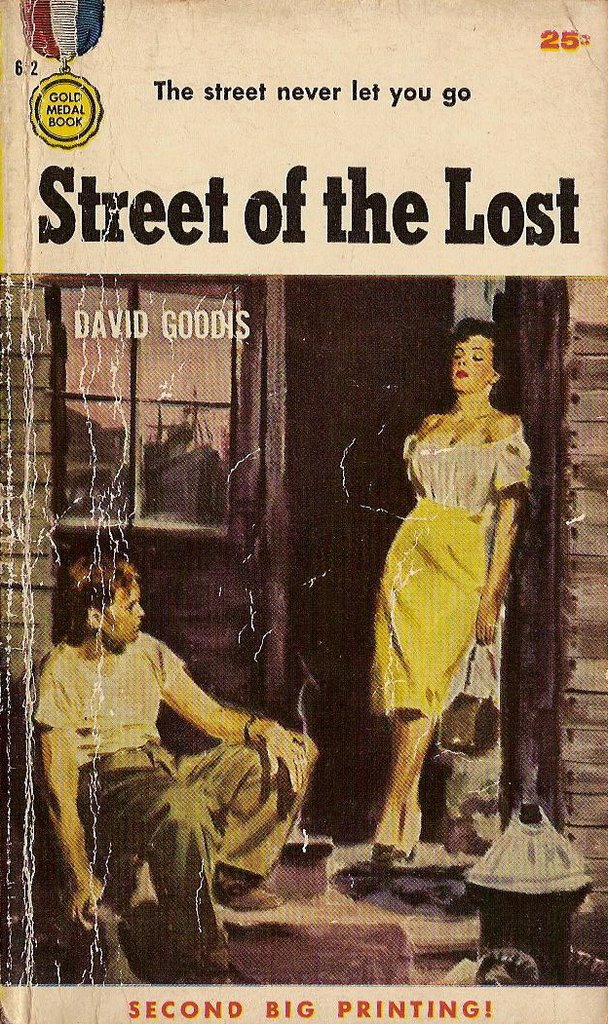
  • David Goodis: Black Friday, Down There (Shoot the Piano Player), Of Tender Sin, Dark Passage, The Moon in the Gutter, The Burglar, Nightfall, Cassidy’s Girl, and Street of No Return
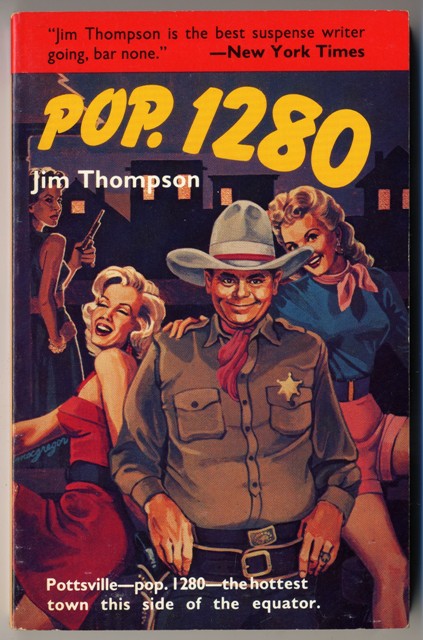
  • Jim Thompson: Numerous titles, the best being The Killer Inside Me, Pop. 1280, After Dark My Sweet, and A Swell Looking Babe
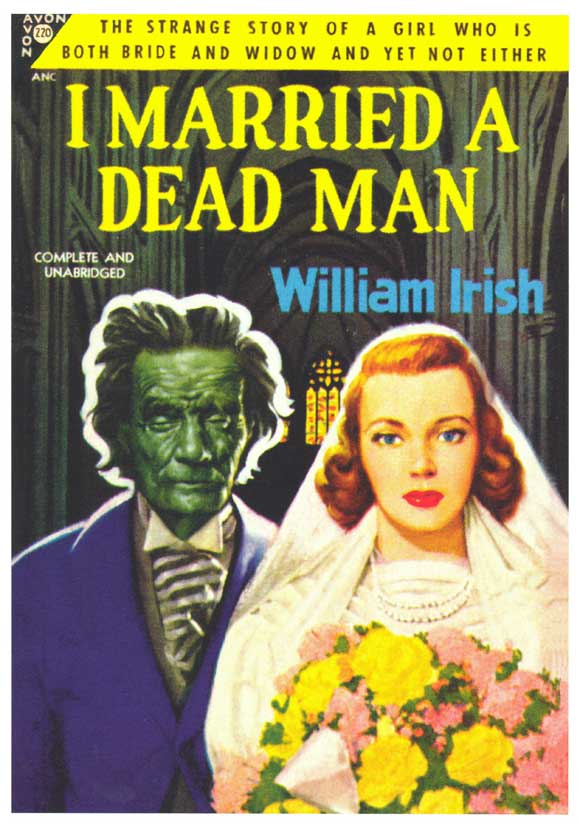
  • Cornell Woolrich (aka William Irish): I Married a Dead Man and The Bride Wore Black
  • Charles Willeford: Pick-Up, The High Priest of California, Understudy for Death, The Burnt Orange Heresy, and the four Hoke Moseley novels
  • Robert Edmond Alter: Carny Kill and Swamp Sister

Then there is the category which I refer to as Oddities and One-Shots, people who were either famous for a single work or, if they wrote more, I only read one of their books. They include, in no particular order: W. R. Burnett (High Sierra); Don Carpenter (Hard Rain Falling), Elliott Chaze (Black Wings Has My Angel); Horace McCoy (They Shoot Horses, Don’t They); Kenneth Fearing (The Big Clock); William Lindsay Gresham (Nightmare Alley); Patricia Highsmith (The Talented Mr. Ripley); and Chester Himes (The Real Cool Killers).

Reading these books, one becomes painfully conscious that the streets of America are not paved with gold. Life is not necessarily a walk through the park—unless it is night and the forces of evil are lurking in the shadows.

Nightmare Alley²

How do you feel about celebrating the holidays in a morass of darkness? That’s what I did today when I saw the 2021 remake of Nightmare Alley, directed by Guillermo del Toro and starring Bradley Cooper, Cate Blanchett, Toni Collette, Willem Dafoe, and Rooney Mara.

If there are any predictions possible from seeing a single film, I would have to say that we are entering a period of gloomy decadence. All the scenes take place either in heavy rain, a blizzard, and—just for a change—a modicum of dusty and hazy sunshine. Standing out from the dark edges are glittering reds, blues, greens, and browns.

Although the 2021 version followed the original 1947 film directed by Edmund Goulding and starring Tyrone Power as Stanton Carlisle, the del Toro film is ever more shady, especially with Cate Blanchett as the psychoanalyst Lilith Ritter. She not only robs Carlisle of his ill-gotten gains, but shoots his ear off with a 22 caliber pistol. Blanchett bids fair to become the neo-noir equivalent of such noir queens as Audrey Totter and Gloria Grahame.

Both film versions are worth seeing. In fact, I would also recommend reading the William Lindsay Gresham 1946 novel upon which they were based.

One side note: There is something unspeakably grimy and evil about the whole carny world as it is presented in books and films. If you are drawn in, you might also want to check out Robert Edmond Alter’s Carny Kill (1966). You might also want to dip into his Swamp Sister (1961). Neo-noir doesn’t get any better than this.

Summer Reading

During the Heat of Summer, My Mind Turns to India

Most people’s idea of summer reading is of some cheap paperback to be consumed on a beach towel or on a long plane, train, or bus ride. There are a large number of trashy novels written each year to satisfy this undemanding audience. My taste in reading material, however, is more of what you would describe as deep-dish.

When the temperature rises into the 80s F (30s Celsius), there are certain books that appeal to me. Looking back over July and August in the last several years, here is what appeals most to me during temperature spikes:

  • Books about India, such as those written by William Dalrymple, author of City of Djinns
  • The novels of William Faulkner set in Mississippi
  • The novels of Brazilian author Jorge Amado set in his native State of Bahia
  • The novels and short stories of Chilean author Roberto Bolaño
  • American and French noir novels
  • The Travis McGee novels of John D. MacDonald set in South Florida
  • Travel books such as those written by Freya Stark, who traveled extensively by herself in the Middle East

Sometimes, I go in the opposite direction: I recently read Chauncey C. Loomis’s Weird and Tragic Shores: The Story of Charles Francis Hall, about a failed trip to discover the North Pole.

I am currently rereading William Faulkner’s Go Down Moses and have Jorge Amado’s Home Is the Sailor in my TBR pile.

Drugstore Book Rack Literature

Archetypal American Noir Novel by a Noir Writer

Everybody by now knows about film noir. Where that comes from is a genre of drug store paperbacks focusing on tough guys, bad girls, and thugs. There are great mystery writers of the first rank such as Raymond Chandler, Dashiell Hammett, and Ross Macdonald. But beyond them is a whole pantheon of second-rank writers who have contributed to American literature (and to subjects for American films). Here is a list of some of my favorites, listed in alphabetical order followed by the name of one of their representative works:

  • Robert Edmond Alter: Swamp Sister
  • Barry Gifford: Perdita Durango
  • David Goodis: Shoot the Piano Player
  • Chester Himes: The Real Cool Killers
  • Dorothy B. Hughes: In a Lonely Place
  • Elmore Leonard: Get Shorty
  • Mickey Spillane: I, the Jury
  • Jim Thompson: Pop. 1280
  • Charles Willeford: Pick-Up
  • Cornell Woolrich: I Married a Dead Man

My Favorite Jim Thompson Novel

This list does not attempt to be definitive, as I am still making discoveries in this genre all the time. Fortunately, many of the novels are being regularly re-issued.

Interestingly, there are also several excellent European noir novelists, such as Britain’s James Hadley Chase, whose No Orchids for Miss Blandish is a classic. In France, there are Jean-Patrick Manchette (Fatale) and Boris Vian (I Spit on Your Grave).


French Noir? Obscurité Française?

Still from Jean-Pierre Melville’s Le Samouraï (1967)

It sounds a bit odd to talk about French noir literature and films, mainly because noir is a French word. Perhaps I should be talking about Obscurité Française. This afternoon, I watched a work of that master of French noir, Jean-Pierre Melville. His film Le Samouraï is a masterpiece, both in its spare visual style and its typical noir attributes. Alain Delon as Jef Costello, the hit man, is a pleasure to watch, as is François Périer, the police superintendent, who goes all out to arrest Jef based on his belief that his alibi would not hold up.

Melville has made other excellent noir films as well, including Bob le Flambeur (1956) and Le Doulos (1963). But Le Samouraï is his best by far.

In addition to noir films, the French are no strangers to noir fiction. Yesterday, I read Three to Kill (1976) by the late Jean-Patrick Manchette (1942-1995), who also wrote Fatale (1977) and Ivory Pearl (1996), the latter of which was unfinished. I am also interested in reading works by Boris Vian (1920-1959), author of I Spit On Your Graves (1946).

The United States has an embarrassment of riches in the genre, starting with Raymond Chandler and Dashiell Hammett, and continuing with David Goodis, Cornell Woolrich, James M. Cain, Mickey Spillane, Charles Willeford, Jim Thompson, Dorothy B. Hughes, Kenneth Fearing, W. R. Burnett, and a host of others. They are one of the joys of recent American literature which I have been taking advantage of during this long, hot summer.


Hard-Boiled

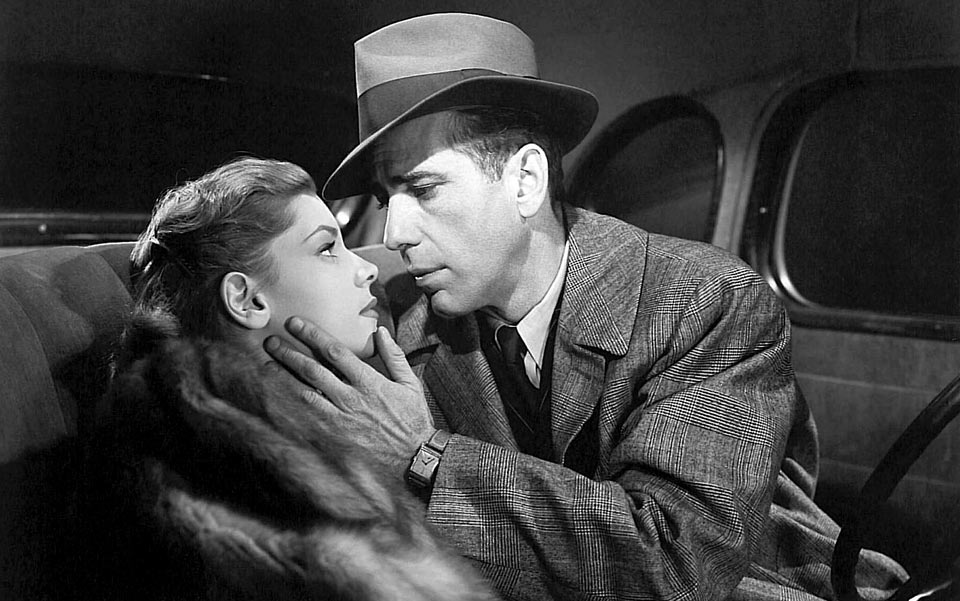
Lauren Bacall and Humphrey Bogart in Howard Hawks’s Masterpiece The Big Sleep (1946)

I’ve written before about American film noir, which includes many of my favorite films, such as The Big Sleep, High Sierra (1941), Double Indemnity (1944), and The Big Heat (1953)—not to mention several hundred other likely prospects.

Today I would like to say a few words about the literary genre that spawned these films. Although it was not until 1945 that the French publishing house Gallimard introduced its Serie Noir editions that gave birth the the genre’s name, noir novels had been written for years. There was even an early noir film by D. W. Griffith entitled The Musketeers of Pig Alley (1913).

What is it about the United States that produced this genre of hard-boiled urban crime fiction? It probably has something to do with our fascination with hard-boiled dicks, cigarettes, hard-luck losers, cheap booze, hot floozies, and guns. Here are just a few mileposts in the genre, alphabetically ordered:

  • W. R. Burnett: High Sierra (1941)
  • James M. Cain: The Postman Always Rings Twice (1934)
  • Raymond Chandler: The Long Goodbye (1953), probably my favorite of all the noir writers.
  • James Ellroy: L.A. Confidential (1990)
  • Kenneth Fearing: The Big Clock (1946)
  • David Goodis: The Moon in the Gutter (1953), which I’m reading now.
  • William Lindsay Gresham: Nightmare Alley (1946)
  • Dashiell Hammett: The Maltese Falcon (1930)
  • Patricia Highsmith: Strangers on a Train (1950)
  • Chester Himes: The Real Cool Killers (1959)
  • Dorothy B. Hughes: In a Lonely Place (1947)
  • Jim Thompson: The Killer Inside Me (1952)
  • Cornell Woolrich: Night Has a Thousand Eyes (1945)

I think I’ll stop at thirteen writers—a most appropriate number for this list. Not coincidentally, all have been made into classic films, both in the U.S. and France. Without straining my mind too much, I could probably double the size of the list. What’s interesting is that this list includes women (Highsmith and Hughes) and one African-American (Himes).

While none of the above names fit in with Beckett, Joyce, Faulkner, and the other literary heavyweights of the last hundred years, I would not be surprised if their works could be found on their night-stands.

Noir

"William Irish" Was a Pen Name Used by Cornell Woolrich

“William Irish” Was a Pen Name Used by Cornell Woolrich

Over the past several months, I have been reading the large Library of America omnibus volume entitled Crime Novels: American Noir of the 1930s and 40s. Included were the following titles:

  • James M. Cain’s The Postman Always Rings Twice (filmed by Tay Garnett starring John Garfield and Lana Turner)
  • Horace McCoy’s They Shoot Horses, Don’t They? (Sidney Pollack’s 1969 film of this starred Jane Fonda)
  • Edward Anderson’s Thieves Like Us (made into a great Nicholas Ray film called They Live by Night)
  • Kenneth Fearing’s The Big Clock (made into a great John Farrow film with Ray Milland and Charles Laughton)
  • William Lindsay Gresham’s Nightmare Alley (another great John Farrow film, this time with Tyrone Power)
  • Cornell Woolrich’s I Married a Dead Man (published under the pen name William Irish)

So many of the noir novels of the period were turned into classic films that I begin to think the whole genre is a mirror in which we as Americans see ourselves. Although the British are just as famous with their detective novels, it was an American who invented the genre with Edgar Allan Poe’s stories such as “The Gold Bug,” “The Purloined Letter,” and “The Murders in the Rue Morgue.” And while Arthur Conan Doyle, Agatha Christie, Josephine Tey, and countless others were practicing their craft in Britain, their American counterparts created works that were more urban, more mean, and more essentially American.

Frankly, I came to the novels by way of the films. I was a collaborator (though in a minor way) with my friends Alain J. Silver and James Ursini in their genre-defining book Film Noir: The Encyclopedia published by Overlook Press. Other great resources are the same authors’ The Noir Style (also Overlook) and the Taschen Book entitled Film Noir.

Both the novels and the films generally tend to be excellent and well worth your time.