El Gobernador de California

I am currently reading a book by Carlos Manuel Salomon entitled Pío Pico: The Last Governor of Mexican California. Already I’ve made some interesting discoveries. Apparently, at the founding of Los Angeles, the majority of its residents were Mexicans of mixed race, predominantly black.

Also, I knew that, toward the end of his life, Pico was cheated by a Yanqui swindler of his ranch in Whittier, which Martine and I visited in 2019. But, as Salomon states in his Introduction:

Anglo-American avarice and greed was not the underlying factor in Pico’s demise. He and his Californio counterparts were often fiercely independent and dictated their own fates.

The Pío Pico State Historical Park is a charming bastion of early California history in otherwise charmless Whittier. There is another associated location in Mission Hills, which was where Pío’s brother Andrés lived: The Andrés Pico Adobe. Finally, the place where Pío Pico is buried is the Workman & Temple Family Homestead Museum in the City of Industry.

All of these are places Martine and I have visited because of our interest in Southern California’s Passport 2 History program, which is run out of the Leonis Adobe in Calabasas. They publish a booklet about interesting historical sites in Los Angeles, Kern, Orange, San Diego, San Luis Obispo, Santa Barbara, and Ventura counties.

Now that the weather in L.A. has cooled down, I will try to visit (and write about) more of these sites.
The Last Mexican Governor of Alta California

Pio de Jesús Pico and Family

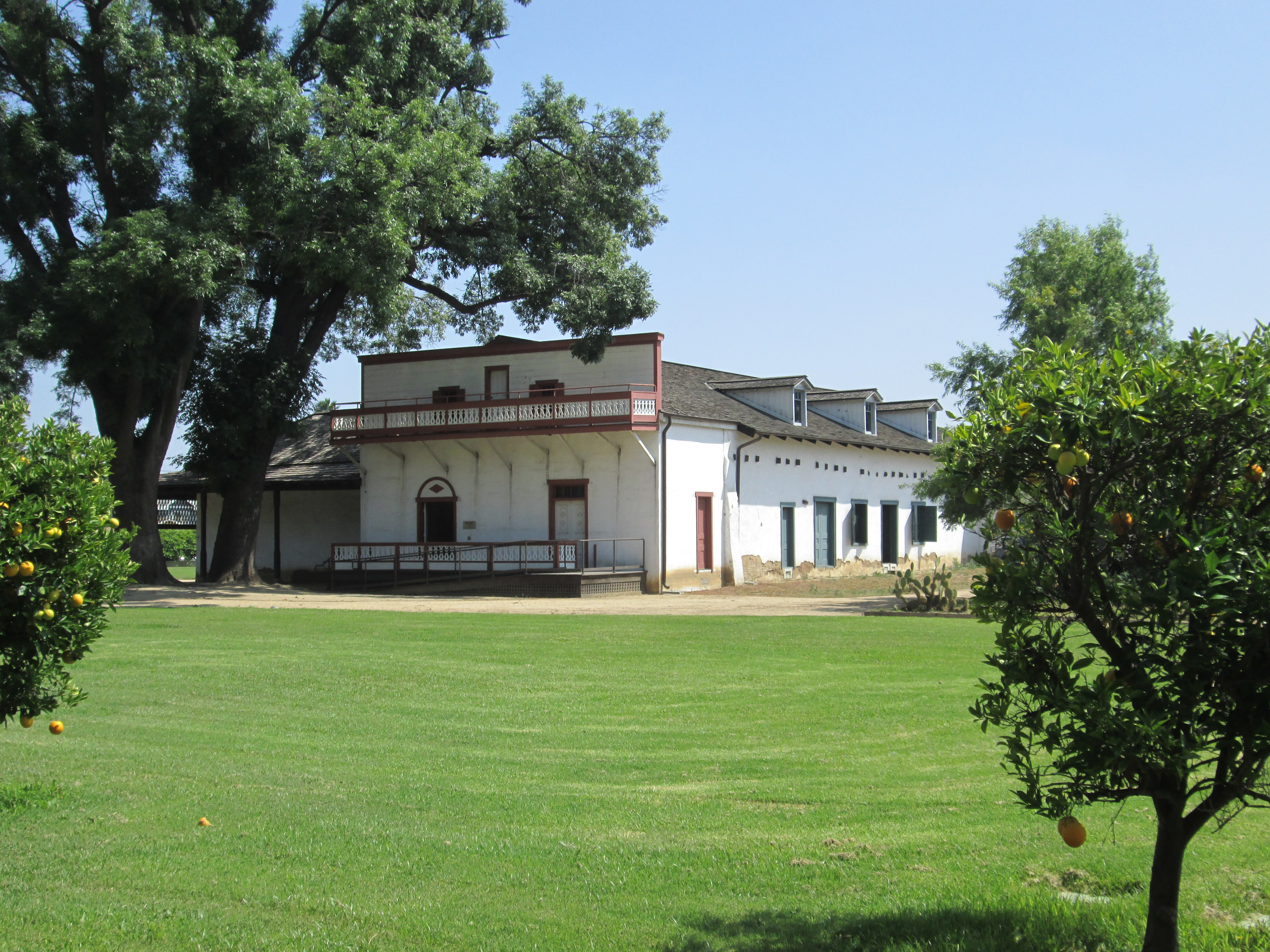
Today, Martine and i visited the Pio Pico State Historic Park in Whittier. Lately, we have spent several Saturdays and Sundays visiting locations that figured in the history of Southern California. And none has been more significant than El Ranchito, the home of the last Mexican governor of Alta California, Pio de Jesús Pico (1801-1894).

As it frequently did during that period, the United States essentially steamrollered the territory of Alta California and its environs. This happened in 1846, when a group of American settlers captured the Mexican army garrison at Sonoma. Within two years, gold was discovered at Sutter’s Mill, setting off a gigantic gold rush, and the United States signed the Treaty of Guadalupe-Hidalgo, ceding what is today the states of California, Arizona, New Mexico, Nevada, and pieces of Wyoming, Colorado, and Utah to the victorious Yanquis.

Pio Pico’s Home, El Ranchito

After the Americans moved in, Pico and his family fled to (what remained of) Mexico for a few years. He returned when the dust settled, as he and his family personally owned some quarter million acres. He was besieged by lawsuits, many of them fraudulent. He sold most of the San Fernando Valley in 1869 to finance the building of the Pico House Hotel in Downtown Los Angeles, which still stands today—although mostly empty.

Arbor with Grapevines at El Ranchito

Toward the end of his life, Pico had problems holding on to money, due largely to his gambling addiction. The last act of his life was a sad one. A criollo of Spanish and African descent, Pico never learned English, which put him at risk in his financial transactions. He decided to deed a half interest in his remaining lands to his brother-in-law, John Forster. A sharper if there ever was one, Forster actually deeded a 100% interest to himself, forcing the aging Pico to move in with one of his daughters.

Today, the Pio Pico State Historic Park is a lovely corner of Whittier. There were only a few other visitors while we were there, probably because most Angelenos have little or no notion of the history of the land on which they live.