The Ineluctability and Persistence of the Now

Maybe Not So Smart

Maybe Not So Smart After All

I have frequently written about the distractions of modern life, especially with regards to all those convenient little electronic devices created to suck away all your moments of quiet contemplation. Meditation? Hah! It is to laugh!

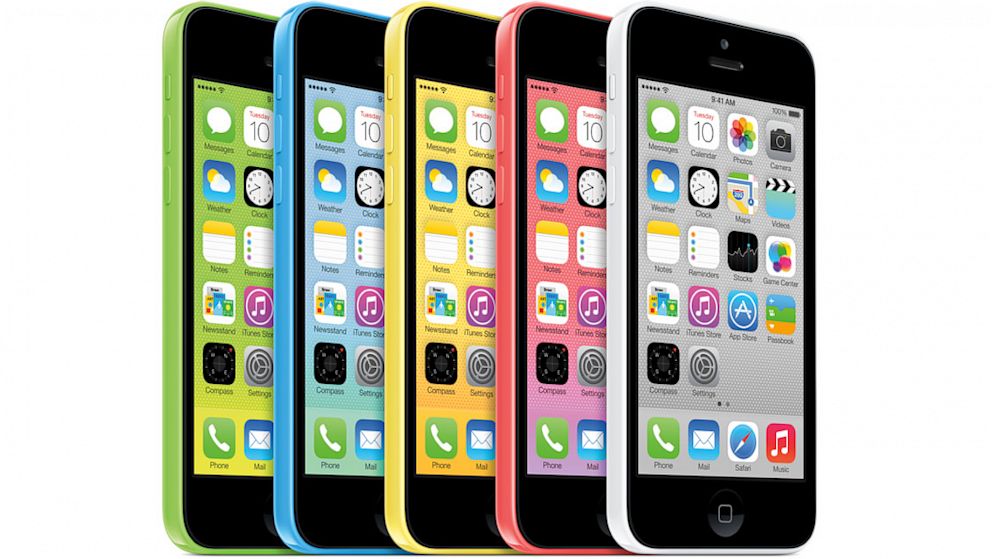
As one who has ripped out all those little electronic tendrils that seek to ensnare me into an ineluctable and persistent “now” consisting mostly of advertising and various types of cultural noise, I try to be immune. But there are always billboards, loud advertising messages from the TV that Martine is watching across the room when I am on my computer, newspaper ads, and so on. Although I have a cell phone, it is probably one of the last LG models that are non-Internet, non-Smart, and non-Kim-Kardashian-compatible. And I have resolved not to buy a Smart Phone unless there is absolutely no other cellular option available.

According to Malcolm McCullough, a professor of design and architecture at the University of Michigan:

A quiet life takes more notice of the world, and uses technology more for curiosity and less for conquest [though I would ask, Who is conquering whom?]. It finds comfort and restoration in unmediated perceptions. It increases the ability to discern among forms of environmentally encountered information. It values persistence and not just novelty. It stretches and extends the now, beyond the latest tweets, beyond the next business quarter, until the sense of the time period you inhabit exceeds the extent of your lifetime.

I do not think I could write these blogs unless I had a more directed thought process. In fact, I fear that the generation now in school could have done permanent damage to their ability to concentrate. If this tendency is irreversible, welcome to a whole new world of barbarism. Not a pretty thought.

Is all that we are capable of concentrating on is Miley Cyrus’s nude body as she swings on a wrecking ball? If so, we are already a new lost generation. Excuse me while I try to find a nice quiet place in the past to hide and shut out all the noise.

Lost in the Twitterverse

Johannes Gutenberg

Johannes Gutenberg (1399-1468)

It being the fiftieth anniversary of The New York Review of Books, I read a great article by Timothy Garton Ash entitled “From the Lighthouse: The World and the NYR After Fifty Years.” There is no one I would trust more to write such an article, as Garton Ash is the author of History of the Present: Essays, Sketches, and Dispatches from Europe in the 1990s. Shortly after the collapse of Russian Communism, he traveled across the continent interviewing all the major players and trying (rather successfully, I thought) to put it all into perspective.

Probably what I remember most from the NYR article is his term “Post-Gutenberg.” That hit me right between the eyes and brought a whole lot of images into mind. I was sitting down at Bibigo in Westwood  drinking a cup of hot barley tea when a young co-ed asked me a question. I was so startled that I couldn’t hear a word she said. She inhabited a different universe than I did, a universe defined by smart phones, Twitter, and various other digital accoutrements. I couldn’t imagine a person young enough to be my granddaughter even addressing me directly in the first place, unless she held a clipboard and was soliciting long-term donations for some charity. (Part of the problem was a combination of the restaurant’s noise level and partial hearing loss caused by Ménières Disease.)

Getting back to that term “Post-Gutenberg.” If anyone is a Gutenbergian, I am one. Even though I have read three books on a Kindle e-reader this month alone, I do most of my reading in print form. In the morning, I scan through the Los Angeles Times. During lunch, I read either The New Yorker or The New York Review of Books, with resulting damage to my shirtfronts as various sauces attach themselves to me. During the working day, I visit various news websites, such as those of CNN, NBC, The Raw Story, Salon.Com, and Truthdig.Com. Home from work, I cook or warm up our dinner; and, while Martine watches television, I read a good deep-dish book.

In other words, a rather substantial portion of my day is concerned with the written word: usually in print, but occasionally in digital format. I thought  briefly of signing up for Twitter, but then I realized that my congenital verborrhea prevents me from limiting myself to 140 characters. And, being the dinosaur that I am, I prefer to use complete sentences and unabbreviated terms. Hell, I’m even a nut about the exact diacritical marks when quoting foreign words and names. (Like Ménières Disease in the first paragraph.)

So here I am, a Gutenbergian in a Post-Gutenberg universe—a Twitterverse, as it were. You know what? I am not only a Gutenbergian, but an unregenerate one at that. If you want to change me, you’ll have to send me to a cultural re-education camp where I will be forced to finger-f*ck with a smartphone all my waking hours—like everybody else.