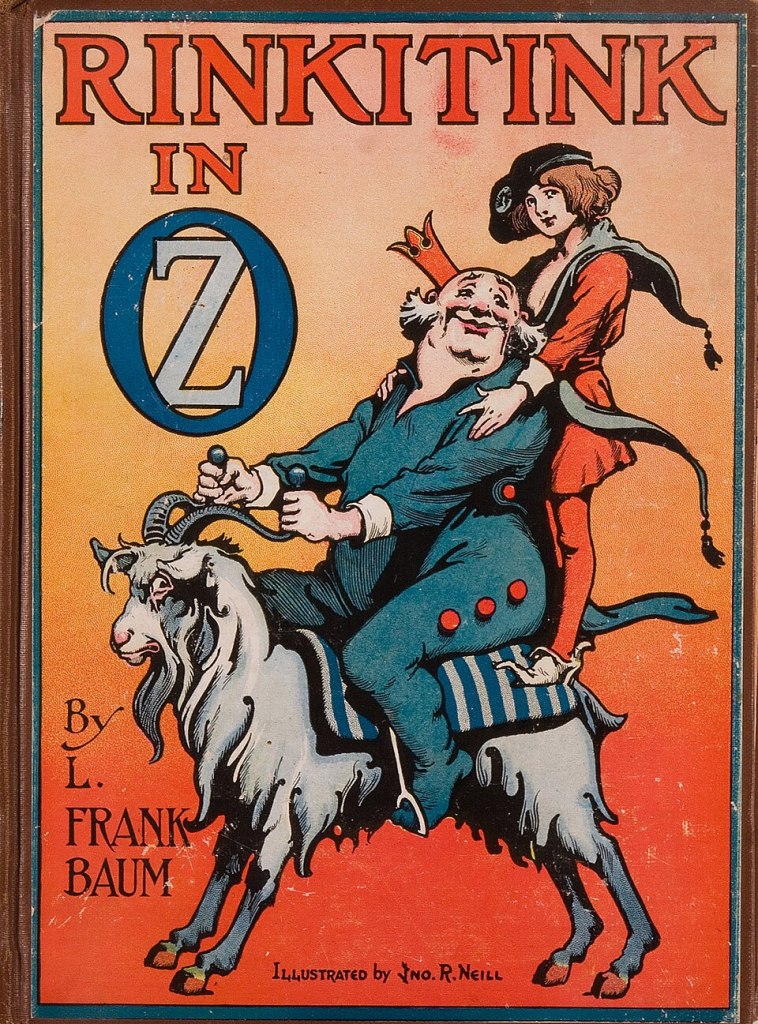
The Cover of L. Frank Baum’s 10th Volume in the Oz Saga
Wisdom can be found in the strangest places. Today I read L. Frank Baum’s Rinkitink in Oz, the tenth novel in the Oz series. Ostensibly, it is about a King named Rinkitink who flees from the cares of ruling his kingdom on the outskirts of Oz to the island of Pingaree, where he is feted by its king, Kitticut, until raiders from Regos and Coregos attack and enslave all on the island, except Prince Inga (heir to the throne of Pingaree), King Rinkitink (who had accidentally fallen into a well), and the talking goat Bilbil.
It is a peasant on Regos named Nikobob who understands Rinkitink’s defalcation when he refuses to be made king of Regos:
“What you call my wisdom,” said Nikobob, “is merely common sense. I have noticed that some men become rich, and are scorned by some and robbed by others. Other men become famous, and are mocked at and derided by their fellows. But the poor and humble man who lives unnoticed and unknown escapes all these troubles and is the only one who can appreciate the joy of living.”
This is one of my favorite Oz novels, though, curiously, it was written ten years earlier and only at the publication date grafted onto the whole Oz mythos. There are moments which catch the reader short, as when Baum notes: “This is the way to get ideas: never to let adverse circumstances discourage you, but to believe there is a way out of every difficulty, which may be found by earnest thought.”
And there is a moment of magic when he writes:
The beauty of life is its sudden changes. No one knows what is going to happen next, and so we are constantly being surprised and entertained. The many ups and downs should not discourage us, for if we are down, we know that a change is coming and we will go up again; while those who are up are almost certain to go down.
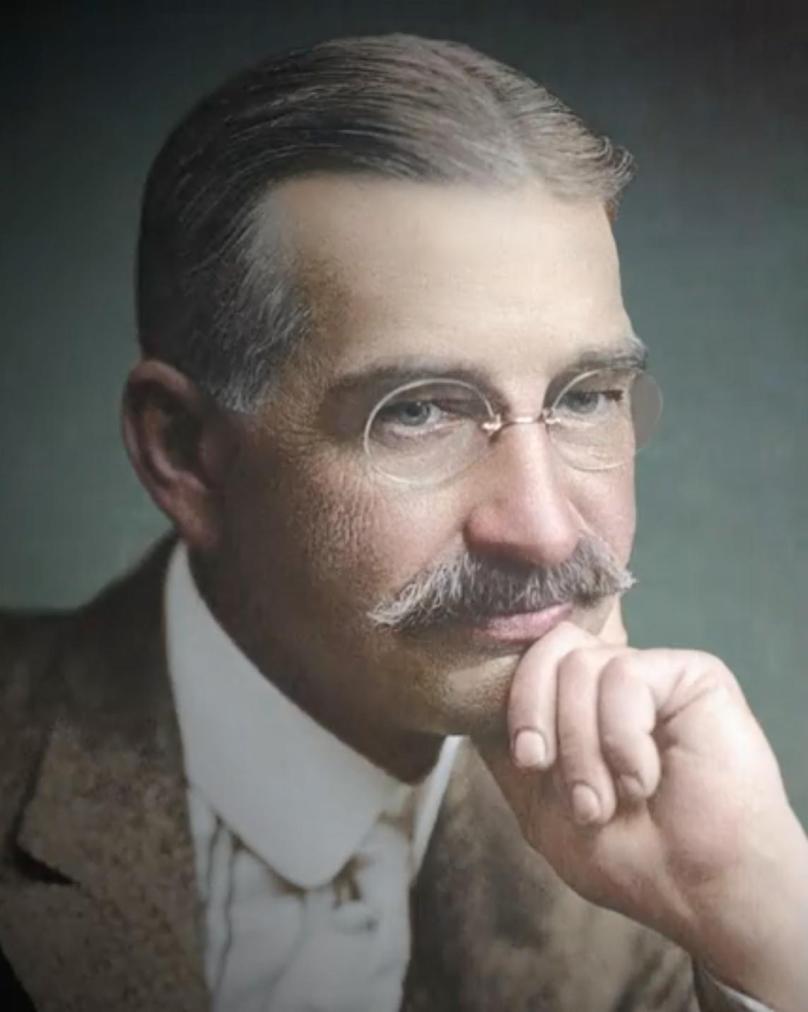
The real Wizard of Oz was Baum himself.


You must be logged in to post a comment.