Depredations of the Nome King

L. Frank Baum’s Nome King

Who would have thought that I would find in L. Frank Baum’s The Emerald City of Oz the most perfect villain of the Donald Trump variety. In an earlier Oz book (Ozma of Oz), the Nome King and his minions had been defeated by Dorothy Gale and Billina who exploit the Nome peoples’ fear of eggs and steal his magic belt.

In The Emerald City of Oz, the Nome King is up to his old tricks: “Therefore the King stormed and raved all by himself, walking up and down in his jewel-studded cavern and getting angrier all the time. Then he remembered that it was no fun being angry unless he had some one to frighten and make miserable, and he rushed to his big gong and made it clatter as loud as he could.”

Further on:

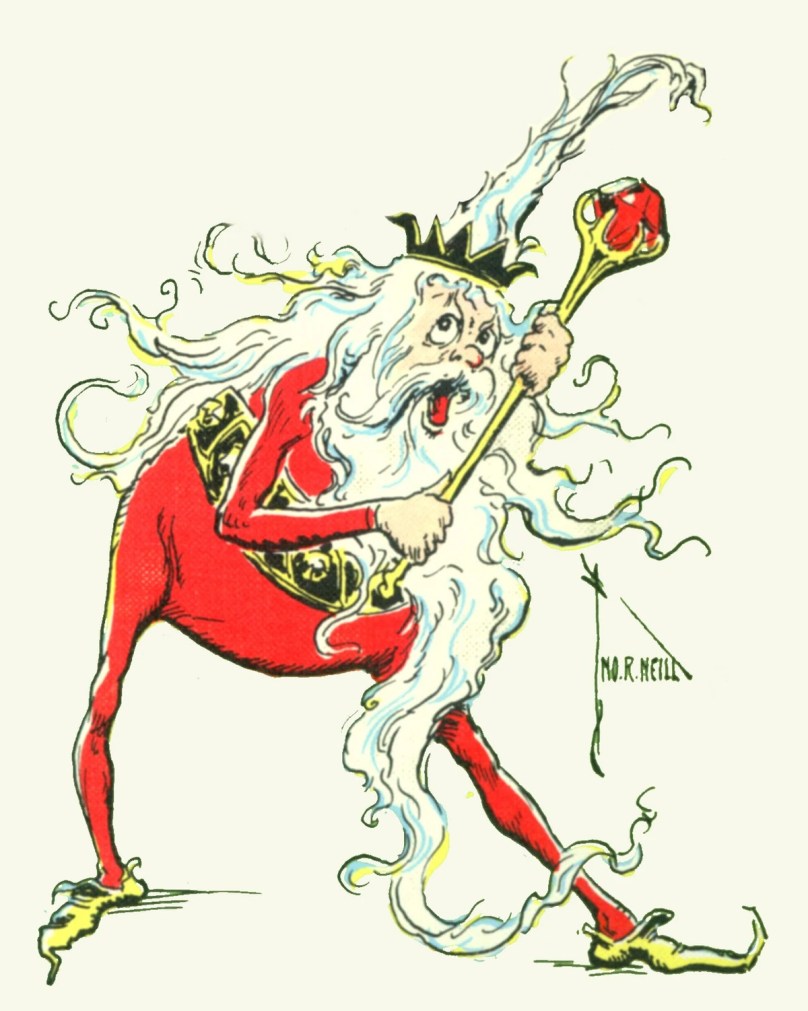
This Nome King was named Roquat the Red, and no one loved him. He was a bad man and a powerful monarch, and he had resolved to destroy the Land of Oz and its magnificent Emerald City, to enslave Princess Ozma and little Dorothy and all the Oz people, and recover his Magic Belt. This same Belt had once enabled Roquat the Red to carry out many wicked plans; but that was before Ozma and her people marched to the underground cavern and captured it. The Nome King could not forgive Dorothy or Princess Ozma, and he had determined to be revenged upon them.

So he calls for his general and when he doesn’t get the answer he wants, he “throws him away.” This consists of the following: “Please take General Crinkle to the torture chamber. There you will kindly slice him into thin slices. Afterward you may feed him to the seven-headed dogs.”

As we know, this is Donald Trump’s favorite way of handling subordinates, such as Kristi Noem, Tulsi Gabbard, Pam Bondi, and John Bolton. The seven-headed dogs are well fed by the orange-haired Nome King of Mar-a-Lardo.

Vacationing in Oz

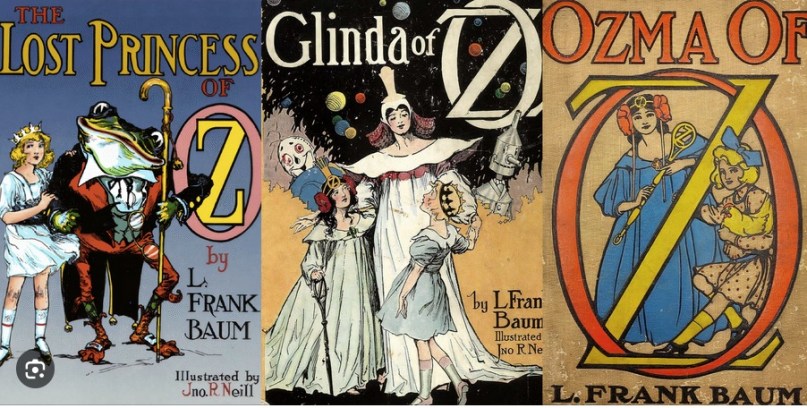
Original Covers of Three of L. Frank Baum’s Oz Books

It’s all well and good to read serious literature, but every once in a while it is good to return to the land of childhood. Why? It is a place where imagination rules, and we can all use a little childlike imagination to see us through the consequences of our bad decisions.

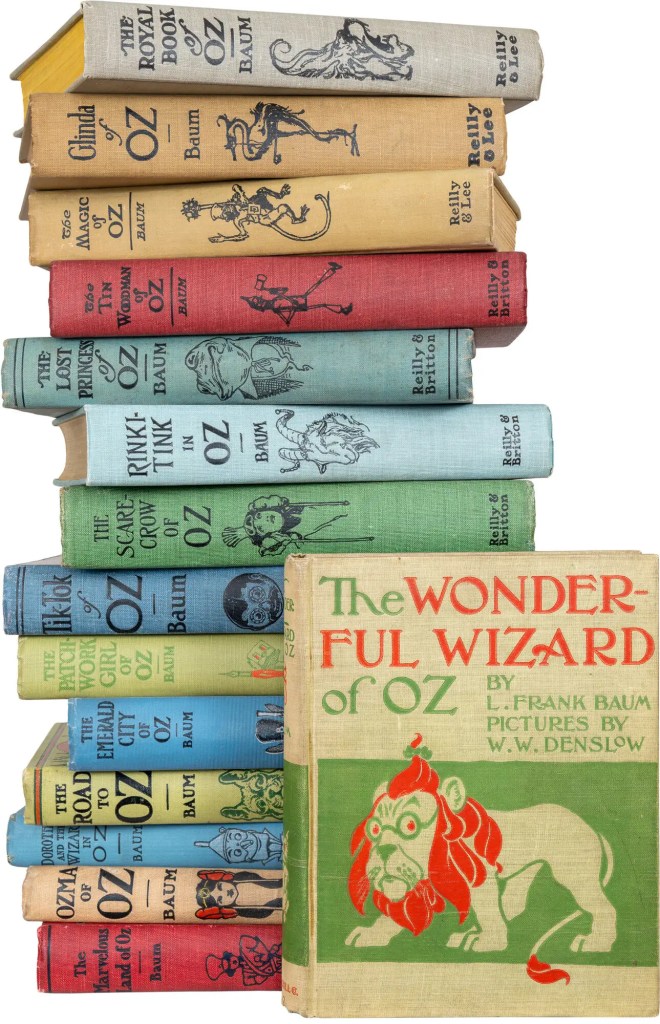
After reading a serious Russian novel (Eugene Vodolazkin’s The Aviator), I decided to read the sequel to L. Frank Baum’s The Wonderful Wizard of Oz, namely: The Marvelous Land of Oz. In all, Baum wrote some fourteen books set in the Land of Oz, and I intend to read all of them—even the ones I have read some decades ago.

In this second book of the series, there is no Wizard, no Dorothy, no Toto, and no Kansas. We do, however, encounter the Scarecrow and the Tin Woodsman and even the Good Witch Glinda. As Baum was no slave to precedent, he introduces several new characters: the boy Tip, Jack Pumpkinhead, an animated sawhorse, and others. There are in addition the moderately bad witch Mombi, the feminist General Jinjur, the Gump (an animated flying machine made of inanimate spare parts), and H. M. Woggle-Bug, T. E. (The H. M. is short for Highly Magnified, and T. E. refers to his being Thoroughly Educated.)

The closest thing to a villain is Mombi, who is allied with General Jinjur and his all-girl army to rule Oz after the Scarecrow and his friends are driven out. Jinjur’s army does not come across as much of a threat, as they are armed only with knitting needles.

I plan to read one Oz book per month until I have finished the series, which I have complete on my Kindle.