
No Words: Just Pictures!


No Words: Just Pictures!
Design on Turn of the Century Orchestrion
Yesterday’s visit to the Nethercutt Collection in Sylmar (q.v.) has convinced me that the Smart Phone has warped our aesthetic sensibilities. The automobiles and music machines collected by J. B. Nethercutt and his successors are large and, for the most part, beautifully designed. Now our new automobiles are much more boring—even the Mercedes-Benzes and BMWs don’t look much better than most standard-issue American and Korean cars. I get the feeling that the app-loaded Smart Phone is our new criterion of success. It is as if where we were evolving over the last hundred years is toward Dick Tracy’s wrist TV (see illustration below).

Is This All There Is?
If we want to listen to music, we download the music ourselves, either from a free or a pay website, and load it onto an iPod or MP3 player. Of course, since the music is now completely portable, we usually need earbuds or an earphone. The Mighty Wurlitzer and other orchestrions at the Nethercutt produced a big sound without any digital amplification. Most notable is the top-of-the-line player piano on which I listened to George Gershwin’s own recording of Rhapsody in Blue. Trust me, it was better than the best digital I ever heard.
Perhaps we have taken digital about as far as it can go. At some point, Moore’s Law will run into some natural barrier; and researchers will start to take another look at analog. I’m not saying we’ll return to records: Toward the end of the long-play record era, I had a hard time finding vinyl records that weren’t warped. What will probably happen is a combination of digital and analog in new media. The CD is almost out of date; the MP3 player will be next. Who can say what will be the next medium for conveying music?

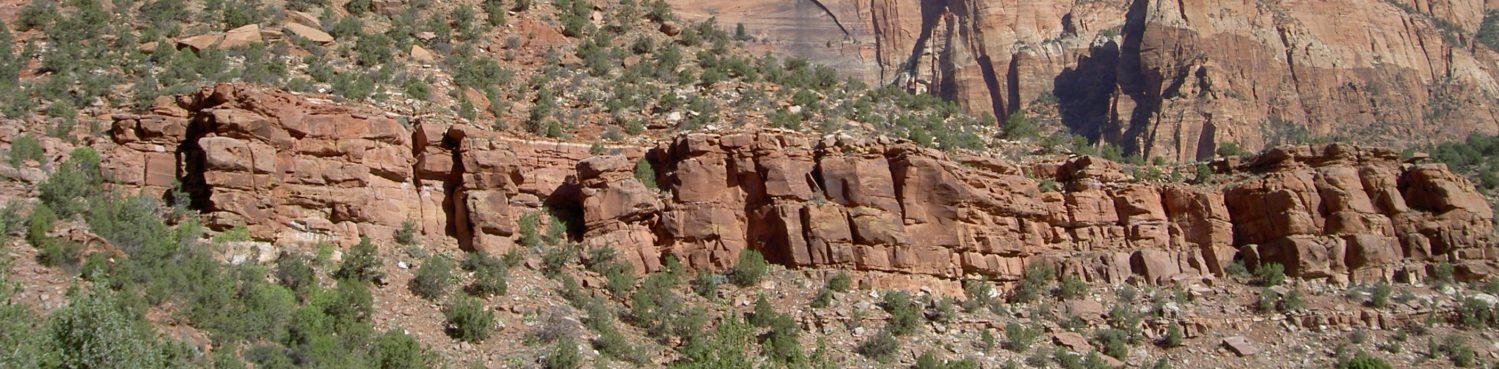
The Grand Salon of the Nethercutt Collection in Sylmar
One of the best places to visit in Southern California is the Nethercutt Collection in Sylmar. a world-class museum of rare automobiles and mechanical musical instruments, including the private railroad car of Clara Baldwin Stocker, millionaire heiress of tycoon “Lucky” Baldwin. Martine and I met up there with my best friend and his sons. We took the tour in the larger of the two buildings, and then saw the additional cars and music machines in the museum building.
On one hand, the cars and other objects on display are easily worth an admission price of ten dollars or more. But both the tour and the museum are free of charge, thanks to a foundation set up by J. B. Nethercutt of Merle Norman Cosmetics. There is one jaw-dropping moment when, on the tour, one enters the Grand Salon (illustrated above), where the Collection’s rarest and most beautiful cars are located. Perhaps the single most distinguished rarity is a silver Duesenberg shown near the center of the photograph.
Among the music machines, I was most impressed by a superb player piano that played a recording of Rhapsody in Blue played by the composer himself, George Gershwin. Mr. Gershwin’s interpretation of his work was nothing less than superb, and was a great accompaniment to viewing the cars in the Grand Salon.
Some of the best places to see in Los Angeles were the result of bequests from millionaires, including Descanso Gardens (Manchester Boddy), the Huntington Gardens and Museum (Henry E. Huntington), and the Getty Museum and Villa (J. Paul Getty). It somehow smoothes the rough edges on these otherwise rapacious tycoons, to enjoy the bounty of their collections.
This is the third or fourth time that Martine and I have visited the Nethercutt, and hopefully far from the last.
David Foster Wallace
I am now 33 years old, and it feels like much time has passed and is passing faster and faster every day. Day to day I have to make all sorts of choices about what is good and important and fun, and then I have to live with the forfeiture of all the other options those choices foreclose. And I’m starting to see how as time gains momentum my choices will narrow and their foreclosures multiply exponentially until I arrive at some point on some branch of all life’s sumptuous branching complexity at which I am finally locked in and stuck on one path and time speeds me through stages of stasis and atrophy and decay until I go down for the third time, all struggle for naught, drowned by time. It is dreadful. But since it’s my own choices that’ll lock me in, it seems unavoidable—if I want to be any kind of grownup, I have to make choices and regret foreclosures and try to live with them.—David Foster Wallace, A Supposedly Fun Thing I’ll Never Do Again

Spammers Want to Sell You Junk
I have deleted some 4,500 bogus comments which have attempted to use my WordPress website for selling counterfeit goods and dubious services. These range from fake Rolexes, to fake Louis Vuittons, to prom dresses (of course, all the major débutantes follow my posts with bated breath), to fake alternatives to dialysis, to fake NFL and World Soccer Cup jerseys.
All these comments make some bland generic comment about what I write (though even more are attached to the photographs I use), accompanied by links to where you can spend real money for fake goods. Many of these comments originate in Brazil and Eastern Europe.
I am fairly confident that I haven’t let any of these junksters through; though, if by mistake I do, please feel free to not buy the proffered merchandise. Please note that I am not selling anything except, perhaps, for some slightly moldy ideas and notions.

Rental Car Sandblasted by Storm in Southeast Iceland
We are now rapidly approaching the fall solstice. Curiously, tourists are still traveling around Iceland as if it were still summer. This last week, there was a fierce storm in East Iceland that led to tourists being stranded when wind, sand, and blowing rocks (yes!) broke windows and forced them to a halt. The following excerpt is from the Iceland Review website:
“We were approaching Skaftafell when the wind picked up,” Marie Storm, who had been traveling in the region with her boyfriend since Friday, told Fréttablaðið. Squalls reached 30 to 40 meters per second [that’s between 67 and 89 miles per hour].
Storm said they decided to stop the car after the sandstorm blocked visibility completely. They waited in the car for several minutes. “Suddenly a rock flew through the window, which exploded over us.”
Sand blew nonstop into the car and glass was shattered over them, cutting their hands. The couple therefore decided to leave the car and seek shelter on the side of the road. “We couldn’t see anything and sand and rocks rained over us. We couldn’t even open our eyes.”
The couple called the emergency hotline 112, who contacted search and rescue squad Kári in Öræfi, who were driving around the region in an armored car, picking up stranded commuters. They arrived a half an hour later.
Storm described the wait as unbearable. “It was a complete nightmare. We were in shock. We thought we would die.” Their eyes hurt after the ordeal and so they are planning to seek medical attention.
She maintained that they hadn’t seen any signs indicating that the road was closed.
The Icelandic Road Administration’s light sign had read ófært (‘impassable’) in Icelandic. The administration now intends to replace that word with ‘closed’ to catch the attention of foreign tourists.
I was in this area toward the end of June. It is a narrow ribbon of road between the giant Vatnajökull glacier and the black sand beaches facing the Atlantic. Until global warming forced the glacier back several hundred yards in the last eighty years, it was not even possible for there to be a road. The nearness of the glacier and of the Atlantic leads to some truly horrific storms.
Iceland is a stunningly beautiful country which just happens to have some terrible weather during most months of the year. One cannot just assume that, because the weather is fine in your country of origin, the cruel Norse gods will let you off scot-free.
One interesting sidelight: Icelandic auto rentals do not insure for conditions such as those described above. Not only did the tourists wind up fearing for their lives, they will also end up paying through the nose for their poor judgment.

The Volatility of the Stock Market Says a Lot About the Average American Investor
Today I will be wearing a slightly different hat. As part of my retirement plan, I maintain a pension account containing stocks and mutual funds. I am fascinated by the way the market goes up and down, with jagged swings indicating that “Yes, the sky is falling!” and, alternatively, “No, it isn’t!”
Last week, analyst Kevin Kaiser of Hedgeye Risk Management released a report promising juicy details about mismanagement by the partners of Kinder Morgan (KMI), a publicly traded energy pipeline partnership. The stock of KMI suddenly dropped by 6%. Then the report came out, and it was the Emperor’s New Clothes all over again. Kaiser’s big point was that the firm was stinting on capital expenditures for maintenance of the extensive pipeline network. When the industry had a chance to read the full report, the scorn started flowing. It turned out that KMI spent as much on pipeline maintenance as any of the other firms in the industry, and that therefore Hedgeye was full of pungent excrement. Still, the investors in the marketplace are so timid that the stock has not yet fully recovered from last week’s drop.
Another case in point: American Tower Corporation (AMT) was attacked by Muddy Waters Research (an appropriate name), which claimed that “American Tower is worth 40 percent less than its share price because it overstated the value of its acquisitions and has poor corporate governance.” Predictably, AMT stock slid by several percentage points, until Deutsche Bank came to the firm’s rescue by asserting that Muddy Waters was merely muddying the waters.
If weird hedge fund analysts could do so much damage, I would like to put in my own two cents worth, in the hopes that the stocks of the following companies would take a tumble:
Why am I in the stock market at all? With all its vagaries, it’s still better than the 0.0000001% interest offered by most banks.

Superman
The truth is that the heroism of your childhood entertainments was not true valor. It was theatre. The grand gesture, the moment of choice, the mortal danger, the external foe, the climactic battle whose outcome resolves all–all designed to appear heroic, to excite and gratify an audience. Gentlemen, welcome to the world of reality–there is no audience. No one to applaud, to admire. No one to see you. Do you understand? Here is the truth–actual heroism receives no ovation, entertains no one. No one queues up to see it. No one is interested.
…
True heroism is minutes, hours, weeks, year upon year of the quiet, precise, judicious exercise of probity and care — with no one there to see or cheer. This is the world.—David Foster Wallace, The Pale King
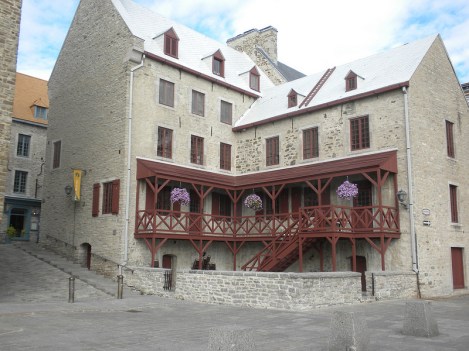
17th Century-Style Buildings by the Harbor in Quebec City
Today, Martine and I had dinner at a French Canadian restaurant in Westwood: Le Soleil on Westwood Boulevard. While I am dreaming of going to Peru, Martine would like to revisit the Province of Quebec and perhaps drive around a bit. It’s possible that I may yield to her: There is something about Quebec that draws out the Frenchwoman in her, and where else in North America can one feel so much like being in Europe?
What most people don’t know is that there is a part of Metropolitan France right off the south coast of Newfoundland. The islands of St. Pierre and Miquelon, a short ferry ride away from the town of Fortune, Newfoundland. The islands are all that remain of the extensive lands of New France lost to Britain in the French and Indian War. It is a little known fact that, during Prohibition, Chicago gangster Al Capone used the islands as a base for illegally importing wine and liquor into the United States. I don’t know if it’s feasible to include St. Pierre and Miquelon on a trip to Quebec, as they are many hundreds of miles apart; but perhaps some day….
I’m glad that Martine liked the Boeuf Bourguignon and Crême Brulée at Le Soleil. She tends to think that most French restaurants in L.A. are not sufficiently authentic, but this Quebecois restaurant seemed to have some of the real stuff.

Martine Feeding the Goats at the Oak Tree Village Petting Farm
Although she had not been feeling well the last couple of days, Martine insisted that today was a good day to drive the hundred miles to Oak Glen in the foothills around Mount San Gorgonio, not far from Palm Springs. For me, the main attraction were the Honeycrisp apples from Snow-Line Orchard. For Martine, it was a chance to have some of the best apple pie (and accompanying American comfort food) on this planet, and a chance to spend time at the little petting zoo in Oak Tree Village, feeding the goats, pigs, llamas, alpacas, zebus, emus, and other exotic and no-to-exotic animals. Except for the three hours of solid freeway driving, it was a win/win situation all round.
At the petting zoo, Martine returns to her childhood. She feeds the animals, admonishes the goats from butting into each other, urging the animals to pick up the corn kernels she is feeding them from the ground (she is afraid of putting her hands to their mouths). When she ran out of corn, she picked up pieces from the ground that other people—mostly children—had dropped, and tossing them into the cages for the animals to eat.
When she does this, I fade into the background, find a bench in the shade, and watch her enjoy herself—all the while imagining what she must have been like as a child. Martine has had a miserable year: Ever since January, she has been bedeviled by a combination of roaming muscular back aches and a lack of sleep. It has been variously diagnosed as chronic fatigue syndrome, fibromyalgia, or one of several related ailments. Her doctor is not quite sure what it is, and none of the medications prescribed have done much but result in a regular orgy of bad drug reactions. She was unable to go to Iceland with me in June, and is afraid of going anywhere where she has to sleep in a soft bed. At home, with have an extra firm mattress and an extra firm sofa in the living room.
So I like to indulge Martine whenever possible, and Oak Glen is close to being a plenary indulgence.
 Tarnmoor
You must be logged in to post a comment.