El Pueblo de Los Angeles

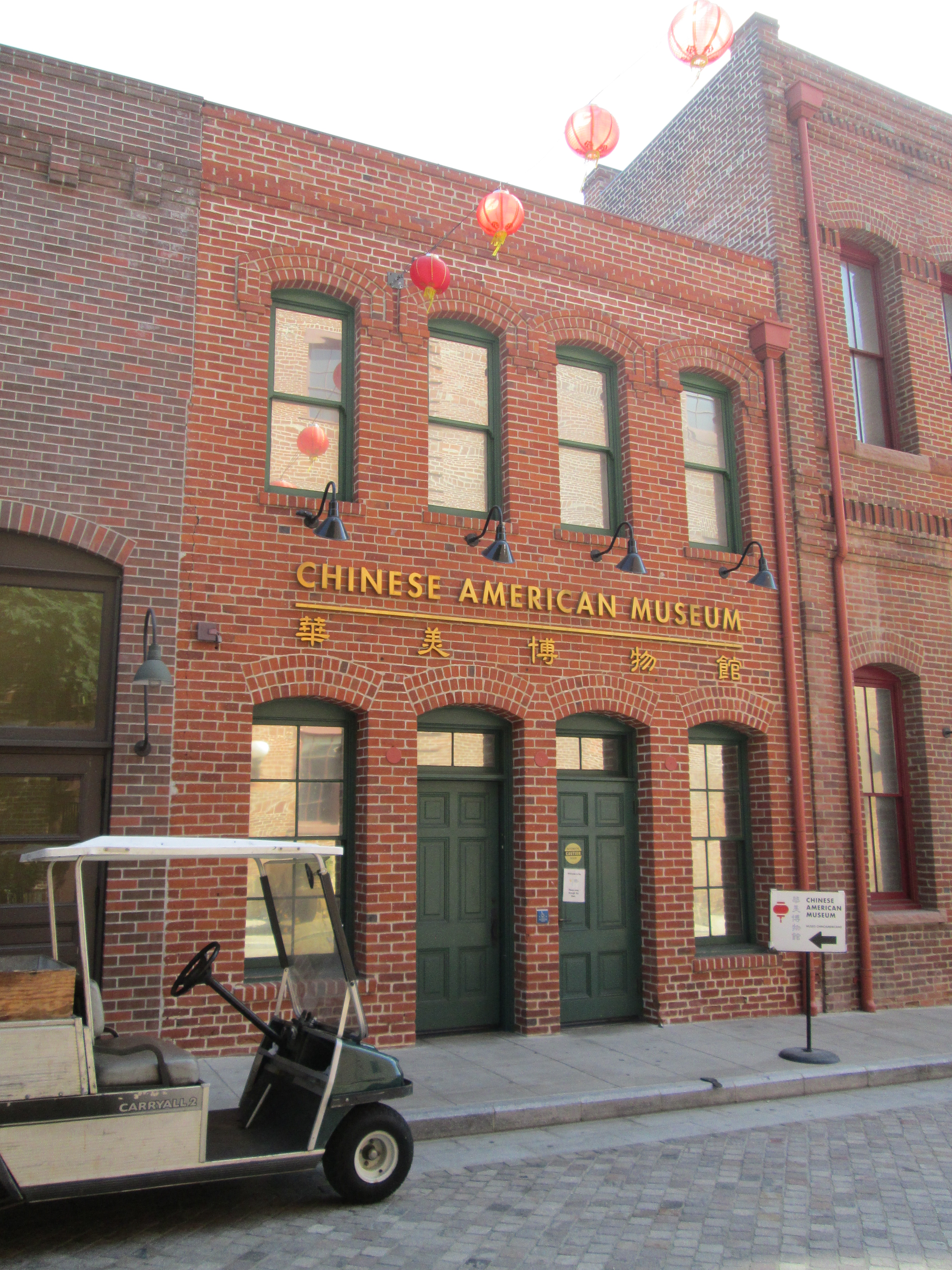
The Chinese American Museum on North Los Angeles Street

The Chinese American Museum on North Los Angeles Street

The City of Los Angeles got its start in a large block bordered on the north by Cesar E. Chavez Ave, on the east by Alameda Street, on the south by Arcadia Street, and on the west by North Main Street. The area is variously referred to as the Plaza de Los Angeles, Olvera Street, and sometimes as El Pueblo de Los Angeles. It is in this block that two of the city’s ethnic populations are commemorated, the Mexicans on Olvera Street, and the Chinese at the Chinese American Museum.

Martine hasn’t feeling too well lately, so I proposed we take a slightly low-energy visit to the Chinese American Museum. We started by eating at Las Anitas on Olvera Street, where Martine had a plain Pollo a la Plancha and a corn tortilla, while I had Chile Rellenos and Jamaica (a tasty hibiscus flower drink, pronounced hah-MYE-kah).

Then we strolled around the museum, which told of the Chinese struggle to find acceptance in a racist America. In addition to exclusionary laws forbidding more of them to immigrate, there were laws on the books forbidding them to own property or to marry with other races. This was rather difficult, as in 1852 there were 20,000 Chinese immigrants, of which only 17 were women.

Below is a photo of the replica of the Sun Wing Wo General Store and Herb Shop within the museum:
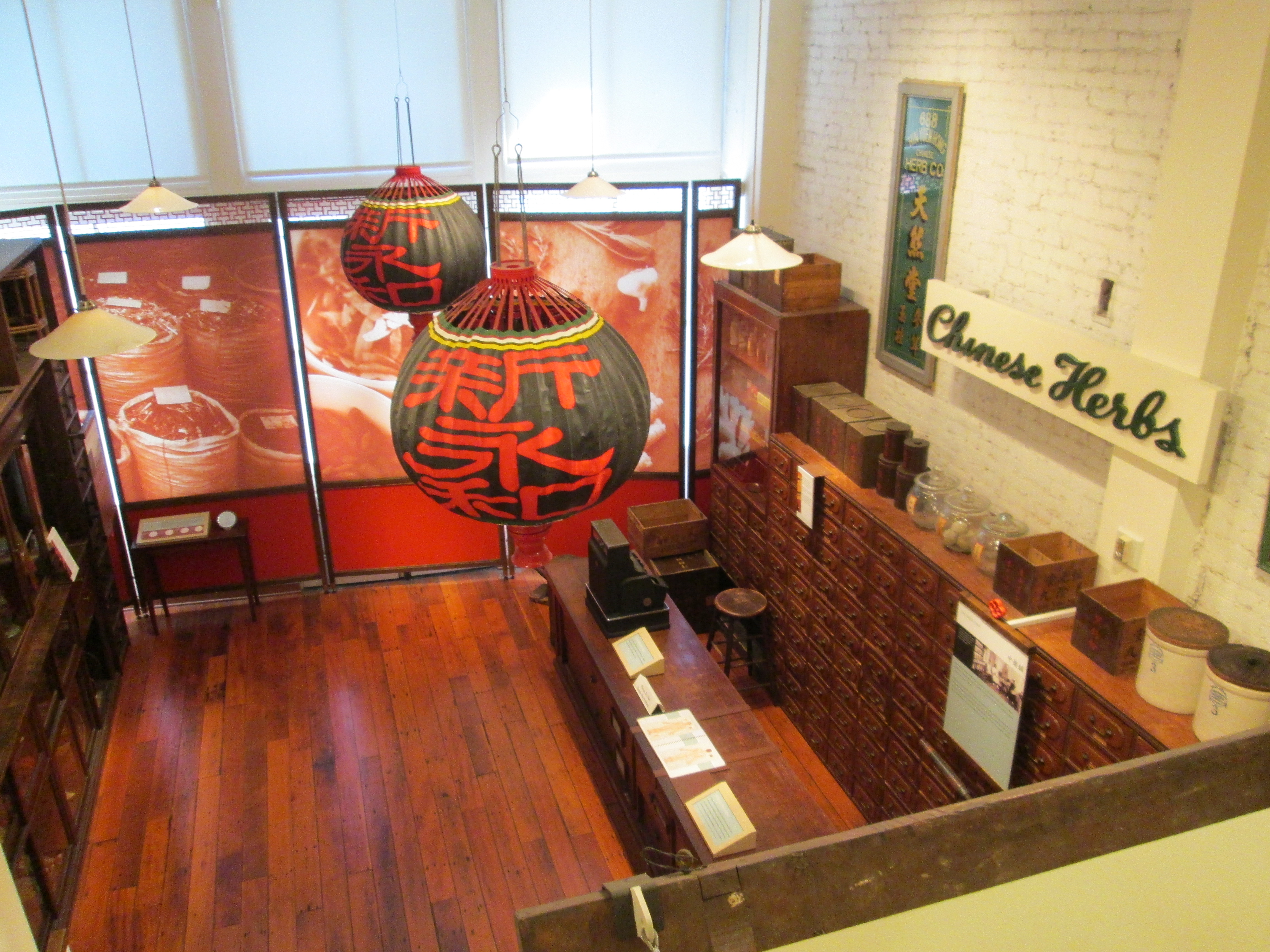
Sun Wing Wo General Store and Herb Shop

Sun Wing Wo General Store and Herb Shop


After visiting the museum, we also had time to see the 1884 Plaza Firehouse (the oldest in L.A.) and Union Station, where I arrived on the El Capitan from Chicago at the end of December 1966 to begin my sojourn in this city.

Jivaro Juice

Shrunken Heads from the Amazon

Shrunken Heads from the Amazon

I did not visit the Amazonian regions of Peru for two simple reasons:

  1. Mosquitoes and I do not get along well together
  2. I did not want to have my head shrunken like the two individuals above

Everything I know about shrunken heads—and many other subjects as well—come from a misspent youth reading Uncle Scrooge comics. In 1958’s “The Money Champ,” Scrooge McDuck is in competition with South African squajillionaire Flintheart Glomgold to see who has the most money. Unfortunately for the Duckburg millionaire, Flintheart has a supply of Jivaro Juice which he had obtained from head-hunting and -shrinking natives, and which he intends to use to shrink Scrooge’s money pile. In the following panel, Donald’s truck has been shrunk by the ruthless Glomgold:

What Jivaro Juice Did to Uncle Donald’s Truck

What Jivaro Juice Did to Uncle Donald’s Truck

The shrunken heads above come from Lima’s massive Museo Nacional de Arqueología, Antropología e Historia del Perú. Maybe next time I’ll visit the Amazon, but don’t count on it!


The Mysterious Convent

The Gateway to Santa Catalina Convent

The Gateway to Santa Catalina Convent

There are hundreds, perhaps thousands of colonial sights worth seeing in Peru. Probably the most fascinating of them all, however, is the Convent of Santa Catalina in Arequipa. It’s almost more of a citadel than a convent, though some nuns still live on the grounds. It is a gigantic place with stairways leading to nowhere—mainly because most of the second floor was destroyed by the many earthquakes that have hit the city.

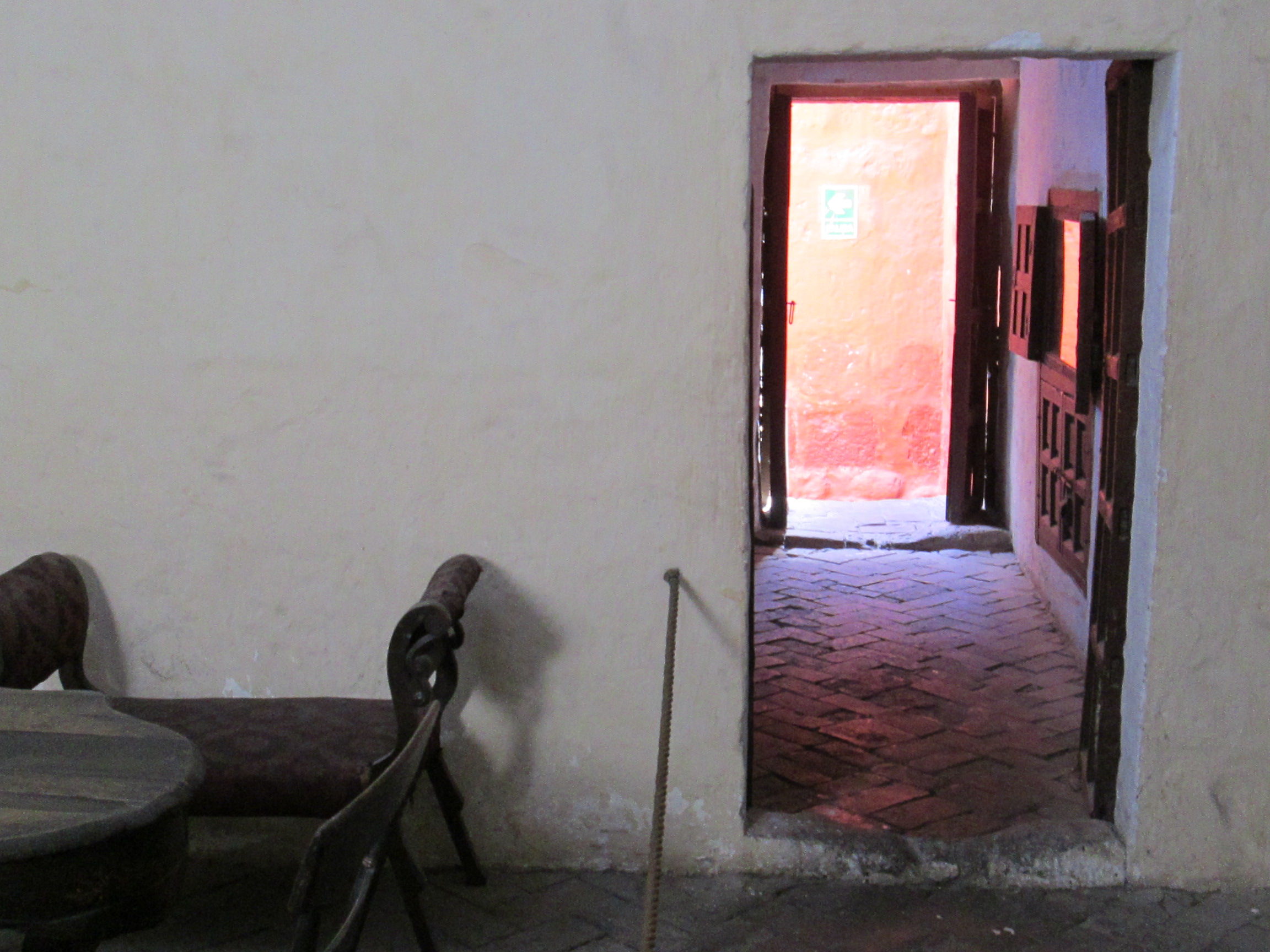
It is easy to spend all day wandering through the streets of the convent and in and out of the nun’s cells (such as the one illustrated below). More than anything else, it reminds me of the miniature cityscapes of the Anasazi ruins at Mesa Verde in Colorado, except the convent seems to go on forever.

Nun’s Quarters

Nun’s Quarters

I started seeing the convent with a tour guide. That served only to whet my appetite. After a long lunch break eating rocoto relleno at a second floor restaurant behind the cathedral, I returned to the convent and spent two more hours on my own.

It was endlessly amazing: passages that led off in every direction, walls painted red for public areas and blue for private (or at least previously private) areas. It was as if the convent were decorated by professional artists, with flowers and old furniture and cooking utensils available everywhere.

Oven and Stairway to Nowhere

Oven and Stairway to Nowhere

As I write these words, I find myself wanting to continue exploring the convent for endless hours, looking to turn that corner where I will find cloistered Dominican nuns (of the same order that taught me at Saint Henry’s School in Cleveland, Ohio) praying for my salvation.

Where Did the Other 80% Go?

The Altar of La Merced Church in Lima

The Altar of La Merced Church in Lima

According to John Hemming’s excellent history, The Conquest of the Incas, only 20% of the gold went to the King of Spain. Where did the rest go? Pizarro and the conquistadores probably got the lion’s share, but after visiting dozens of Peruvian churches, I am beginning to think that the Church came in for a huge windfall, if not sooner, then later. You can see it at the Cathedral and San Pedro in Lima, in addition to the Church of the Company in Arequipa and the massive Cathedral in Cusco.

The first church I visited in Lima was La Merced on Jirón de la Union, whose altar is shown above. As I visited more and more churches, I saw the tons of gold and silver lavishly displayed, so much so that many of them are victims of larceny, such as the church at Maca at Colca Canyon. (Although stripped of much of its gold, it still looks impressive to me.) In the nearby church at Coporaque, I discovered a motion detector that tracked my movements in the nave with an audible beep.

Nowhere have I ever seen such a display of wealth. It is no surprise that many of the churches, such as the Cathedral at Cusco, have security personnel to protect the churches’ wealth.

There was another side to the splendor of the great Peruvian churches.

The Birthplace and Chapel of St. Martin de Porres in Lima

The Birthplace and Chapel of St. Martin de Porres in Lima

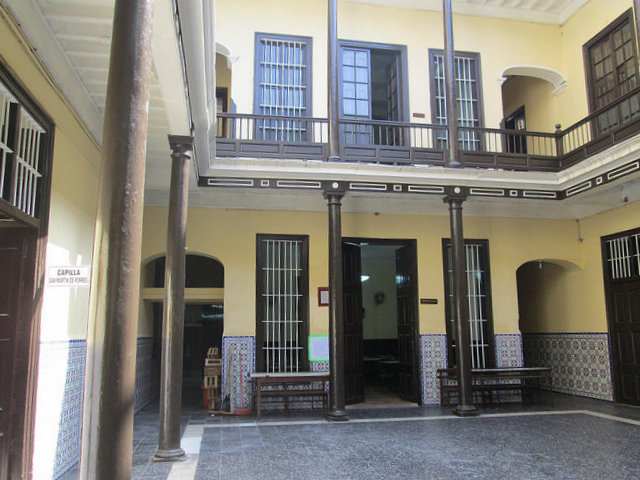
On Callao near the intersection with Tacna is the birthplace and chapel of St. Martin de Porres. The chapel is tiny (you can see the sign by the leftmost door) and contains only a prie dieu and a statue of the saint, along with a bin for prayer requests and another for contributions. The building also contains doctors’ offices and a cafeteria for the elderly poor of the neighborhood. In fact, when I was waiting for the building to open at 2:30 pm, I shared the doorway with one of the volunteers, a sweet lady who spoke little English, which added to my little Spanish, managed to allow us to communicate. Needless to say, I made a contribution.

I neglected to say that St. Martin de Porres was black and a descendent of slaves. The stories about his life have a certain sweetness to them, and he is much loved by the people of Lima.


Politics Is the Same All Over

Election Poster in Miraflores

Election Poster in Miraflores

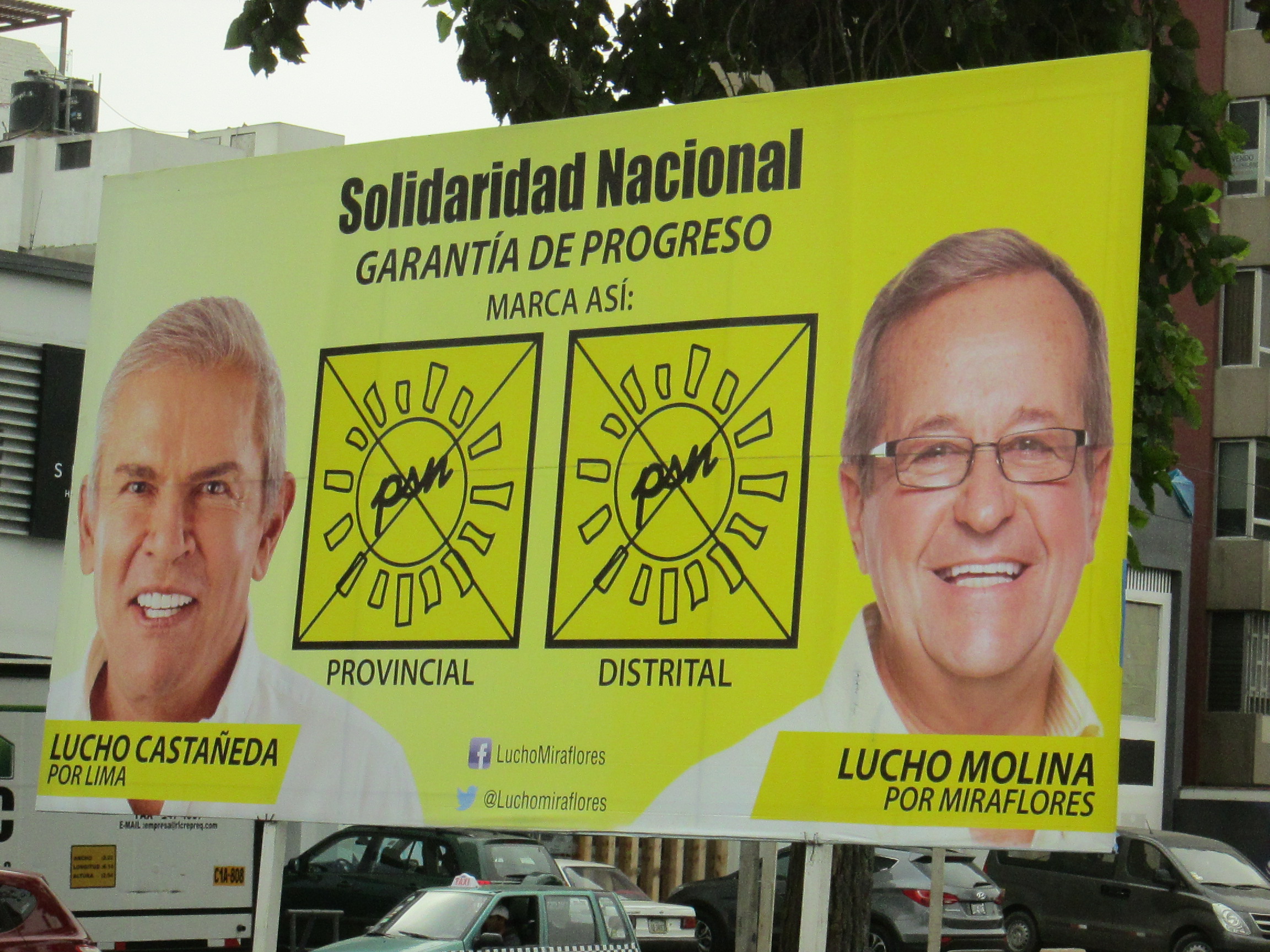
When I arrived in Lima, I was surprised to see election posters everywhere. In the Andes, it was even worse: whole sides of houses were whitewashed and covered with election propaganda. From main highways and trains, it looked like the whole countryside was covered with “Vote for” signs. I wonder if, when the election is over, someone comes and paints over the signs; but, somehow, I don’t think so.

The two Luchos above look like they could be running for my Congressional District. And, like all politicians, they are trying to look so pleasant that you just know that they’re holding poniards behind their backs and they have closets full of skeletons.

Interestingly, in Spanish the word lucho means “I fight” or “I struggle.” Very appropriate, don’t you think?

The Deal

Dancers from Karpatok

Dancers from Karpatok

The deal was made at some point before I was born. Because my father was a Roman Catholic Slovak and my mother was a Protestant adhering to the Calvinist Hungarian Reformed Church, my parents decided that any boys in the family were going to be Catholic and any girls, Protestant. As it happened, there were two boys born to Alex and Sophie Paris, my brother and I.

We were a religiously tolerant family: My father (occasionally) went to Mass, and my mother (occasionally) listened to the Reverend Csutoros’s weekly radio program and his sonorous sermons.

So what am I today? In Peru, I was a Catholic. Here in Los Angeles, I am evenly torn between the Hungarian Reformed Church—in honor of my mother—and the Greek Orthodox Church. Wherever I go, I find God.

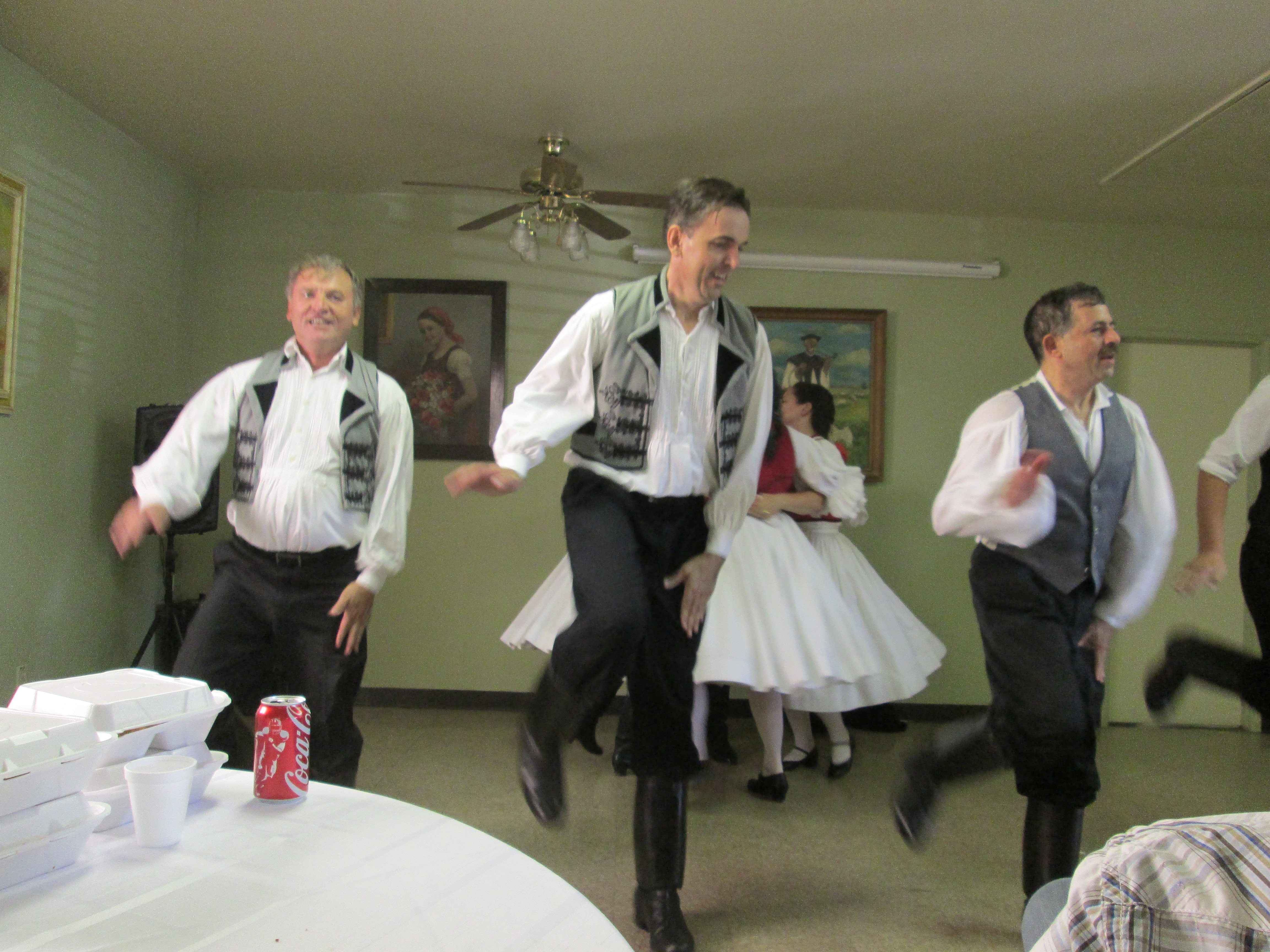
Today, Martine and I attended the church fall bazaar at the First Hungarian Reformed Church of Los Angeles in nearby Hawthorne. We had some good Magyar home cooking, renewed our friendship with several families active in the church, and listened to the usual excellent program of music and dance. Present were members of the Karpatok Hungarian Dance Ensemble (shown above) who put on the usual spirited performance.

It is good to be a Hungarian from time to time, to speak the language of my youth with some good people and share a few hours with them.


Take the Bus to Callao?


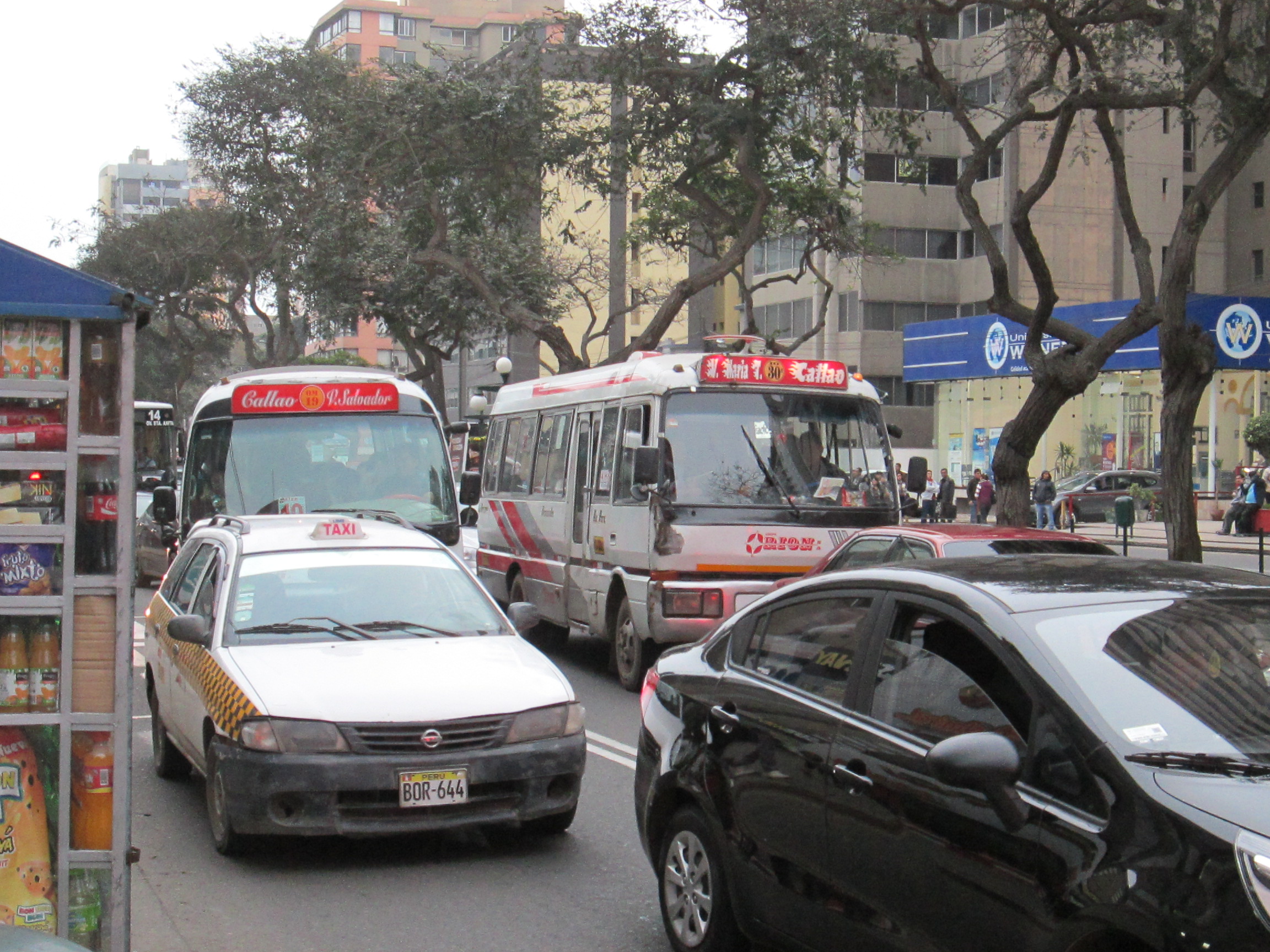
Which Bus? Going Where and When? And Taking Which Route?

Which Bus? Going Where and When? And Taking Which Route?

I enjoy taking public transportation in other countries, even in Argentina, which manages to make sense out of several hundred bus lines. But in Lima, you pretty much have to know in advance which bus to take. There is no handy-dandy website as in France or Iceland which makes you feel confident that you’ll get where you want to go.

The street above—Avenida Jose Pardo—is probably Lima’s most European-looking thoroughfare. Both of the above buses are going to Callao (pronounced Cah-YOW), Lima’s somewhat grungy seaport, and the location of its classy airport, but I could not find any body of information that helped me decide to take the bus.

Instead, I took cabs everywhere. Even an hour-long ride from the Plaza Major to Miraflores, where I was staying, in heinous rush hour traffic cost me only about 40 soles, or about $14-16. Although one has to be careful about taking an unregistered cab, one quickly becomes used to telling the difference. When approached by a tout, who wants to take you for a roundabout walk to his ramshackle vehicle, it is best to just say no and run like hell.

Most cabbies, however, were competent and friendly and drove newish cars. No one who takes pride in his vehicle is likely to “express kidnap” you and take you a series of ATMs, where you will be forced at gunpoint to drain your bank account(s). This practice is sometimes known as the “millionaires’ tour.” Trust me, this is one tour you don’t want to take.

In addition to taking cabs, I walked for miles in Lima, Cusco, Puno, and Arequipa. By evening, I was so tired that I had no trouble sleeping for nine or even ten hours.


Archangels of the Andes

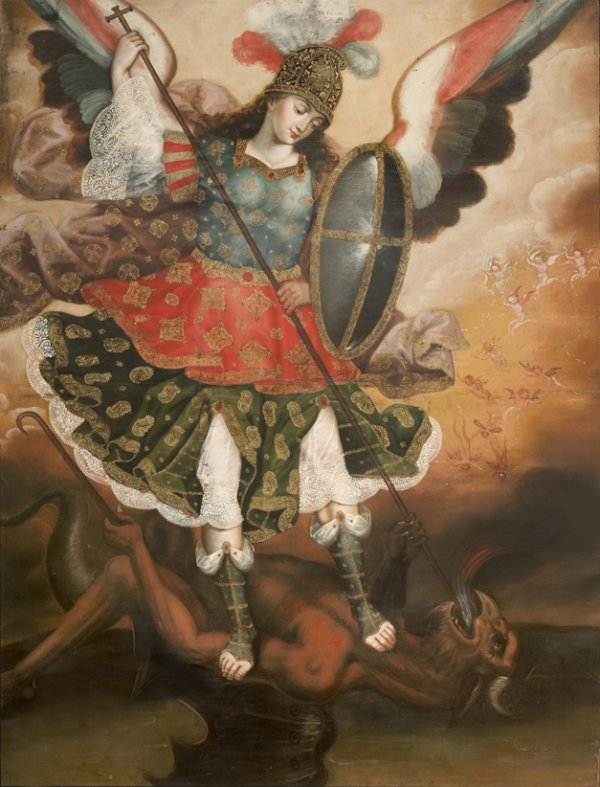
The Archangel Michael Vanquishing Satan

The Archangel Michael Vanquishing Satan

They are young, elegant, and handsome. Their wings are bi-colored, like the wings of mature condors. Yet they are all powerful and conquer their enemies with surpassing ease. They are the archangels depicted in paintings of the Cusco School of Art.

One has to imagine what it was like to be an Inca facing a compact phalanx of Spanish conquistadores mounted on horseback. At Cajamarca, many thousands were slaughtered by Pizarro and his hundred or so men. They barely even used their muskets, which were pretty useless in hand-to-hand combat in any case. No, it was Spanish steel and the strangeness of seeing warriors on horseback. Were they a single creature, man and horse? The Incas tried to kill the horses and display their corpses, thinking that now they would win with ease.

It was not to be so. The Incas were ultimately conquered, even though it took the better part of a century to complete the conquest. To the defeated, it didn’t look as if their gods were of much help to them. There must be something to this Christianity!

You can see it in the native painters’ depiction of angels, such as the one above. Michael defeats the demon without breaking a sweat or staining his doublet. He might just as easily be crocheting a doily or cleaning his nails. All throughout Peru, I saw hundreds of these archangels in the churches and archiepiscopal palaces, all with the same characteristics. The artists are usually indigenous Quechuans who painted multiple images of the same religious figures for distribution to churches all around the country.

When the Incans saw these angels, did they think of how easily they themselves were bested by the Spanish?


Ollantay

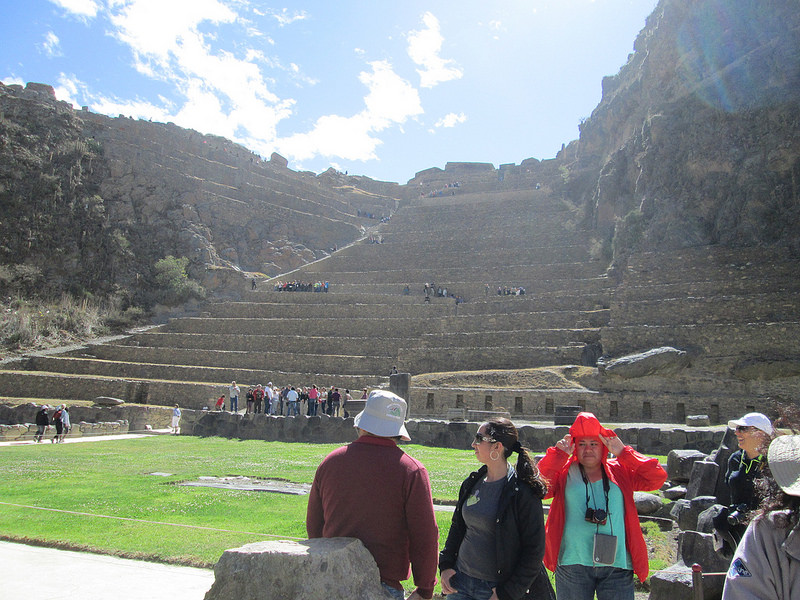
Inca Ruins at Ollantaytambo

Inca Ruins at Ollantaytambo

Built into a hillside, the ruins at Ollantaytambo was the site of the last Inca victory over the Spanish. Manco Inca defeated a force captained by Hernando (brother of Francisco) Pizarro by diverting the Urubamba River and flooding the battlefield. The thrill of victory didn’t last long, because Manco Inca withdrew his forces to Vilcabamba in the jungle of Espiritu Pampa, where it was lost until rediscovered in the 20th Century.

Most tourists don’t spend much time visiting the Incan sites in the Sacred Valley, preferring instead to either take the train to Machu Picchu or hike the 35 km of the Inca Trail without further delay. (When people asked if I was taking the Inca Trail, I always answered by saying that I was taking the Inca Train.)

Other than Machu Picchu and the sites immediately around Cusco, the main tourist destinations in the valley are Pisac and Ollantaytambo. Pisac is known for its Sunday crafts market and “Ollantay,” as the starting point for most of the trains to Machu Picchu. The ruins at Ollantay are extensive, including temples, terraces for farming, and granaries several hundred feet up in the Andes.

At the ruins, I hired a guide named William who did a good job of explaining, albeit in broken English, the features of the site. In fact, I liked him so much, I hired him for an all-day tour of Moray, Maras, the Salineras, and Chinchero the next day. That trip (about which more later) proved to be one of the highlights of my trip to Peru.

Who Was More Civilized?

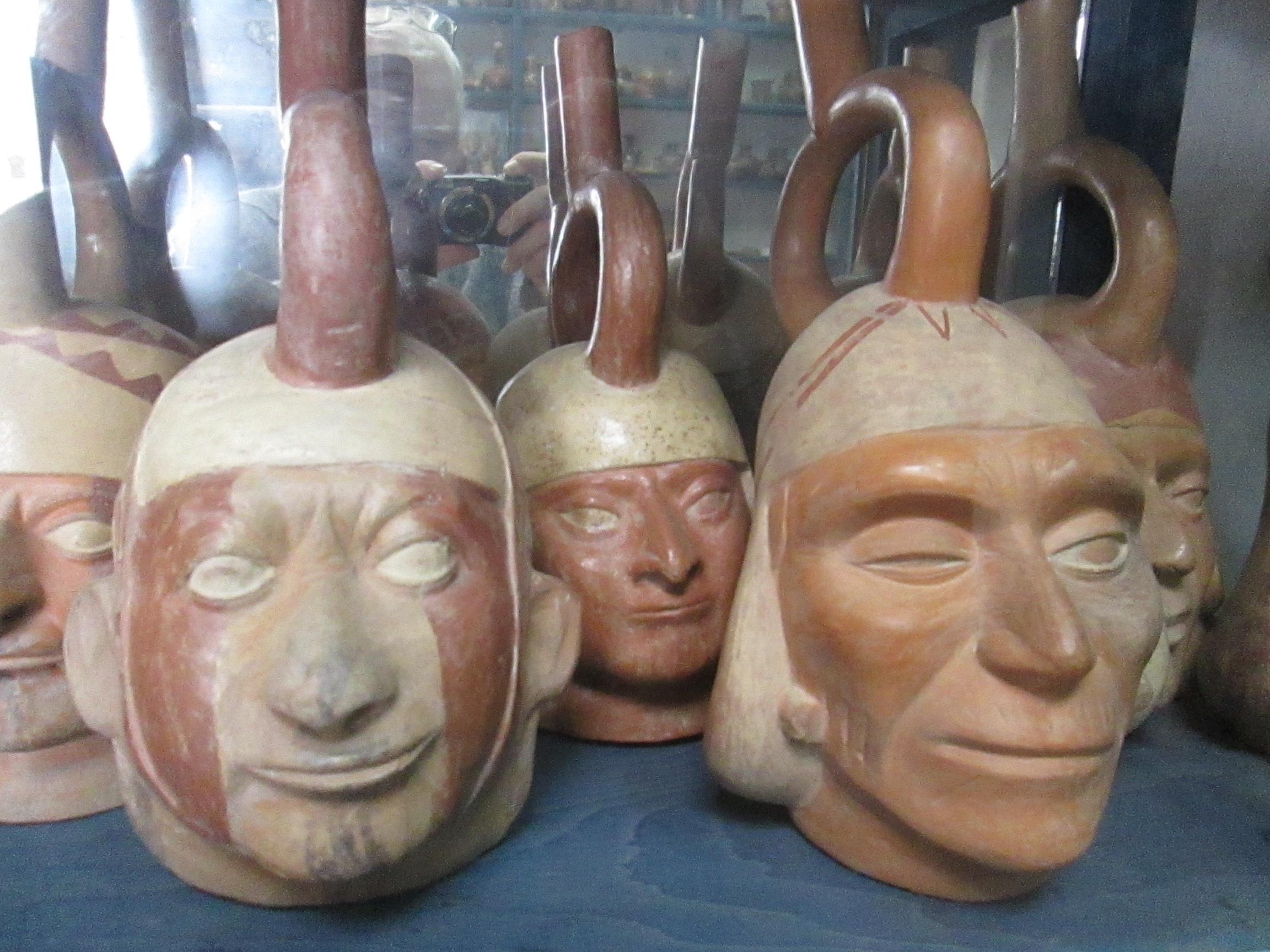
Moche Ceramics at Lima’s Museo Larco

Moche Ceramics at Lima’s Museo Larco

Who really was more highly civilized—the Incas or some of the peoples who preceded them? While it is unquestionable that the Incas were the greatest stonemasons and road builders, they could not hold a candle to the Moche in their artwork. Look at the faces above: They are remarkably individualized, especially the one to the right.

If you should find yourself in Lima, I would highly recommend a visit to the Museo Larco in Pueblo Libre. Dedicated primarily to Moche ceramics and metal-working, it is a phenomenal collection, originally put together by Rafael Larco Hoyle in Northern Peru. It is a delightful place to spend several hours, especially if one eats at the museum’s excellent restaurant. (Try the tiraditos.) After visiting the Museo Larco, you could follow the painted blue line on the sidewalk for some twenty minutes or so and end up at the Museo Nacional de Arqueología Antropología e Historia del Perú, with its excellent exhibition on the Paracas Culture.

The Incas were, in their time, an up-and-coming military power that conquered most of Peru, Bolivia, Ecuador, and parts of Chile. In the process they supplanted many talented peoples who were set to working raising crops and building roads and structures. Gone forever were the brilliant ceramics. Fortunately, enough was left to leave a brilliant picture of a culture that flourished from 100 to 800 AD, centuries before the Inca rose to power.