Long Ago and Far Away

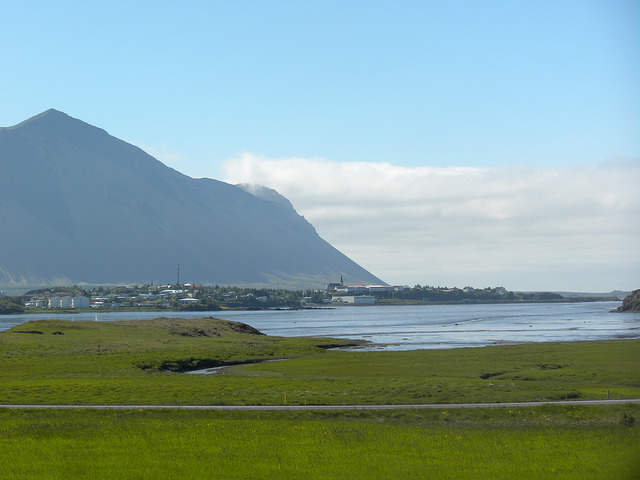
Borgarnes, Iceland, As Seen from Borg á Mýrum

Borgarnes, Iceland, As Seen from Borg á Mýrum

Today is the first day of Winter, and my mind goes back to that land I associate most closely with Winter, namely: Iceland. When I took this picture in 2013, I was at Borg á Mýrum, the historical farmstead of Egill Skallagrimsson, poet and hero of the 13th century Egill’s Saga, which was thought to be written by Snorri Sturlusson, perhaps the greatest writer of his time.

About Iceland, I will say about every place I’ve visited that I’ve loved deeply: I have unfinished business with the place. I still want to see the Northeast of Iceland, from Seyðisfjördur to Raufarhöfn, and the national parks around Þórsmörk and Skaftafell. And I hope to take Martine with me. My last two visits to Iceland were by myself, and I hope to share the places I love with the woman I love.

Alone or accompanied, I plan to return to Iceland—had I but world enough and time.

The Unrhymeables

Everyone Knows You Can’t Rhyme Anything with Orange ...

Everyone Knows You Can’t Rhyme Anything with Orange …

… but did you know that there are three major colors for which you can’t find rhymes? They are:

  1. orange
  2. purple
  3. silver

According to the Futility Closet website, there are four other common words which have no rhymes.  They are: chimney, depth, pint, and month.

There are probably at least a dozen other words which are less common which also are not part of the traditional poet’s lexicon.


Tunneling Through the Tar Pits

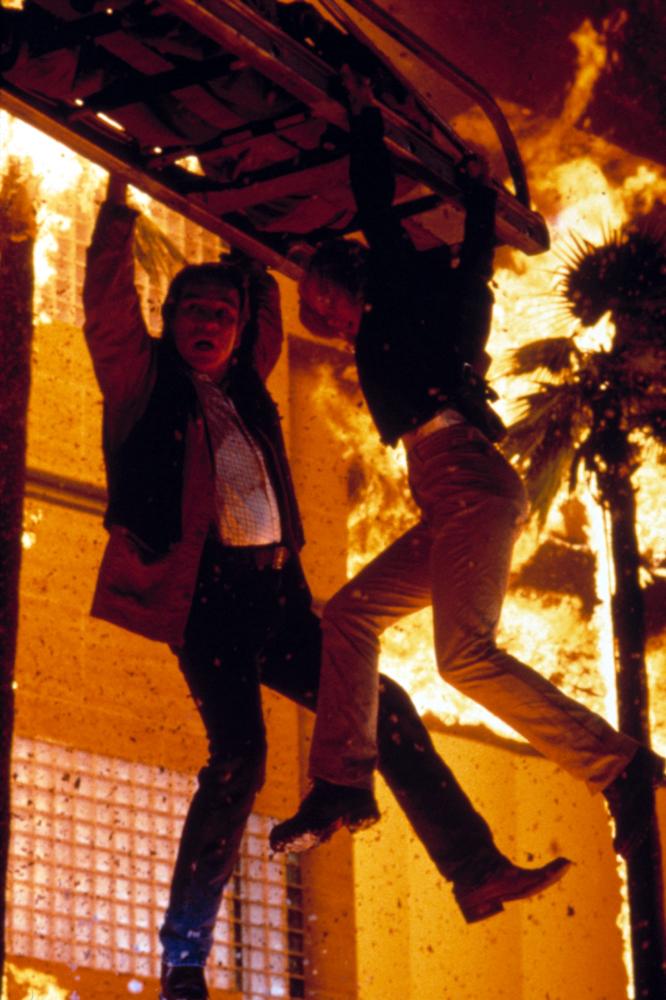
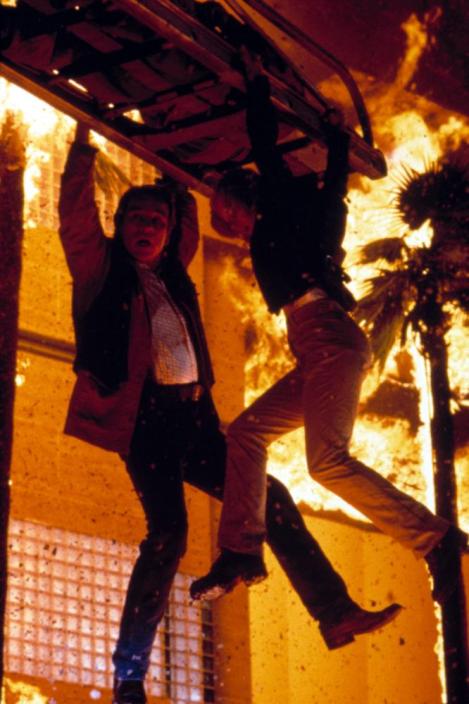
Still from Volcano (1997) with Tommy Lee Jones and Anne Heche

Still from Volcano (1997) with Tommy Lee Jones and Anne Heche

Although according to Mick Jackson’s Volcano (1997), the La Brea Tar Pits is home to a new volcano spewing lava all over the West Side, I see no evidence of that today. I don’t know how far fetched that movie is, but there is definitely something going on in the vicinity. Today’s Los Angeles Times contained an op-ed piece by David L. Ulin entitled “What Lies Beneath L.A.”:

For close to 20 years, my favorite landmark in Los Angeles was a pair of plastic sawhorses, each emblazoned with “City of Los Angeles Dept. of Public Works Street Services.” The sawhorses straddled a patch of pavement at the southwest corner of Wilshire and Curson, across from the La Brea Tar Pits, in front of the Craft & Folk Art Museum. They were there to warn pedestrians away from the small puddle of tar that continually seeped out of a seam in the sidewalk, a constant reminder of the instability of the ground on which this city is built.

Then the sawhorses disappeared. The seam had been repaved — a victory of human will over nature. But now, a year-and-a-half or so later, the sawhorses are back.

I don’t believe in victories of human will, especially in a landscape as elemental as Los Angeles’, which is, as we all know, riven by active faults, disfigured by tar seeps, reeking of gas leaks. In 1985, 23 people were injured when methane ignited and destroyed a Ross Dress for Less across from the Farmer’s Market, and just last year, another underground explosion blew open a manhole at this very intersection.

Today, Martine was in the area, visiting the Petersen Automotive Museum at Wilshire and Fairfax, a scant block or two from the Tar Pits. She was appalled by all the construction going on to extend the Purple Line from Wilshire and Western to (eventually) the Veterans Administration Hospital past Westwood.

Tar Bubbles at the La Brea Tar Pits

Tar Bubbles at the La Brea Tar Pits

One of the scariest scenes in Volcano was an MTA subway that meets up with a wall of lava. We are assured by the MTA that the tunneling they are doing in the area is completely safe:

Subway tunnels will be built through the use of closed-face, pressurized tunnel boring machines (TBMs). During construction, these pressure-face TBMs reduce gas exposure for workers and the public, while gassy soil and tar sands are treated and disposed of appropriately. Enhanced ventilation systems will be used where necessary to ensure tunnel and station safety and, if necessary, double gaskets for the tunnel lining or other measures may also be installed.

Where needed, tunnels and stations will be built to provide a redundant protection system against gas intrusion. This might include: physical barriers to keep gas out of the tunnels, high volume ventilation systems, gas detection systems with alarms, and emergency ventilation triggered by the gas detection systems.

During construction and operations, safety codes require rigorous and continuous gas monitoring, alarms, automatic equipment shut-off and additional personnel training.

The funny thing about assurances is that they rarely inspire much confidence. Along that line, Ulin concludes his article with a wry observation: “Standing at the corner of Wilshire and Curson, waiting for the light to change, I take solace in knowing I am in the middle of a city where the tar simply won’t stop bubbling, no matter what we do.”


Xmas Treacle

Some Things About Christmas I Could Definitely Do Without

Some Things About Christmas I Could Definitely Do Without

The following is from Patrick Smith’s excellent blog entitled Ask the Pilot. I don’t do this sort of thing very often, but I find myself in such substantial agreement with Patrick that I couldn’t have expressed it better myself:

I don’t much like Christmas, if you must know. The phoniness and thunderous commercialism of it all. Plus, I never get any presents. Typically I work over the holiday. Last year it was Paris. The year before that it was Ghana. This year I’ll be in Scotland. But while I can run, I can’t really hide. Nobody, not even a sourpuss likes me, escapes this grotesque juggernaut of make-believe goodwill and endless consumption. In some ways, maybe, this is for the better. Certainly an author and website curator….

Do not, ever, make the mistake that I once made and attempt to enjoy Christmas at a small hotel in Ghana called the Hans Cottage “Botel,” located on a lagoon just outside the city of Cape Coast. They love their Christmas music at the Hans Botel, and the compound is rigged end-to-end with speakers that blare it around the clock.

Although you can count among those people able to tolerate Christmas music — in moderation, in context, and so long as it isn’t Sufjan Stevens — there is one blood-curdling exception. That exception is the song, “Little Drummer Boy,” which is without argument the most cruelly awful piece of music ever written. [Italics mine] It was that way before Joan Jett or David Bowie got hold of it.

It’s a traumatic enough song in any rendition. And at the Hans Cottage Botel they have chosen to make it the only — only! — song on their Christmastime tape loop. Over and over it plays, ceaselessly, day and night. It’s there are breakfast, it’s there again at dinner, and at every moment between. I’m not sure who the artist is, but it’s an especially treacly version with lots of high notes to set one’s skull ringing.

“Ba-ruppa-pum-pum;ruppa-pum-pum…” as I hear it today and forever, that stammering chorus is like the thump-thump of chopper blades in the wounded mind of a Vietnam vet who Can’t Forget What He Saw. There I am, pinned down at the Botel bar, jittery and covered in sweat, my nails clattering against a bottle of Star lager while the infernal Drummer Boy warbles into the buggy air.

“Barkeep!” I grab Kwame by the wrist. “For the love of god, man, can’t somebody make it stop?”

Kwame just smiles. “So lovely, yes.”

The Incident in Semenovsky Square

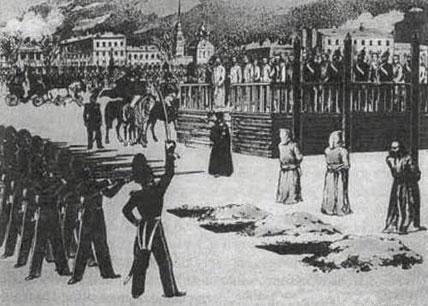
A Christmas Present from Tsar Nicholas I

A Christmas Present from Tsar Nicholas I

On the mrning of December 22, 1849, a number of prisoners were taken in closed carriages from their prison cells to St. Petersburg’s Semenovsky Square where there was a firing squad waiting for them. They were dressed in long white peasant blouses and nightcaps. Asked to bare their heads to receive their sentences: In every case, the verdict was “The Field Criminal Court has condemned all to death sentence before a firing squad, and on December 19 His Majesty the Emperor personally wrote, ‘Confirmed.’” As the first three were tied to stakes, the prisoners found out that Tsar Nicholas I had commuted all their sentences to prison terms in Siberia.

The most prominent of the prisoners was a young writer named Fyodor M. Dostoyevsky, who described what he felt twenty years later in the words of the main character of The Idiot, Prince Myshkin:

It seemed to him that, in those five minutes, he was going to lead such a great number of lives that there was no place to think of the last moment. So that he divided up the time that still remained for him to live:two minutes to say good-bye to his companions; two minutes for inward meditation one last time; and the remainder to look around him one final time. He remembered perfectly having fulfilled those dispositions just as he had calculated. He was going to die at twenty-seven [Dostoyevsky has just turned twenty-eight in 1849], full of health and vigor. He recalled that, at the moment of saying good-bye, he asked one of his companions a rather indifferent question, and he took a keen interest in the reply. After saying good-bye, he began the period of two minutes reserved for inward meditation. He knew in advance what he would think about: he wished to focus his intention firmly, and as clearly and rapidly as possible, on what was going to happen: right now, he was existing and living; in three minutes, something would occur; someone or something, but who, where? He thought to resolve these uncertainties during these two final minutes. Nearby rose a church whose golden cupola sparkled under a brilliant sun. He recalled having looked at that cupola and the rays it reflected with a terrible obstinacy; he could not take his eyes away; those rays seemed to him to be that new nature that was to be his own, and he imagined that in three minutes he would become part of them…. His uncertainty and his repulsion before the unknown, which was going to overtake him immediately, was terrible.

After spending four years at the forced labor camp of Omsk in Siberia, Dostoyevsky was released and—for the second part of his sentence—inducted into the army and made to serve as a private in the Siberian Army Corps of the Seventh Line Battalion. For a period of almost ten years, he was forbidden to publish any of his writings.

Before he was sentenced for belonging to the Petrashevsky Circle of suspected dissidents, Dostoyevsky had written a number of works which are not often read today. I read most of them and liked them, but they were nothing compared to novels like Crime and Punishment (1866), The Idiot (1869), The Devils (1872), and The Brothers Karamazov (1880) that were to follow his return to civilian life.

Could it be that the intensity of those masterpieces owed something to Dostoyevsky’s sufferings in Siberia?

“Epitaph for a Lover”

Another Great Argentinean Writer for Your Consideration

Silvina Ocampo

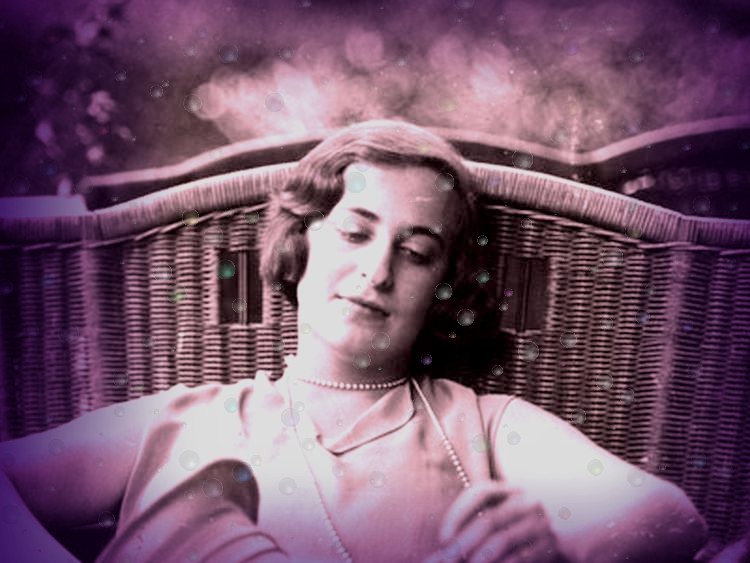
As I wrote in yesterday’s post, Silvina Ocampo (1903-1993) was a renowned Argentine poet and short story writer. She was married to Adolfo Bioy Casares and was the sister of publisher Victoria Ocampo. Here, for your consideration, is one of her poems, entitled “Epitaph for a Lover”:

I will pursue that world promised
by your ecstatic glance. In successive
lives, in countrysides or cities,
when the styles are different,
when entire breeds of animals and flowers
are being exterminated,
my constancy will find you: juniper
bushes likewise live waiting for the sun.

The translation is by Jason Weiss in his New York Review Books edition of Ocampo’s poetry.

The Magnificent Seven

Table for Two at La Biela: Statues of Jorge Luis Borges and Adolfo Bioy Casares

Table for Two at La Biela: Statues of Jorge Luis Borges and Adolfo Bioy Casares

At Recoleta’s busy La Biela Café, a table is permanently reserved for those two lions of Argentine literature: Jorge Luis Borges and Adolfo Bioy Casares. They naturally belong together, as they were lifelong friends and collaborated together on several books.

In my readings of the literature of Argentina, I have come upon seven writers whose works are equal (when they don’t actually surpass) the best of European and American literature. I will confine my comments only to those works written in the 20th century, as earlier works, such as Hernandez’s Martin Fierro and Guiraldes’s Don Segunda Sombra belong more to the Gaucho myth than to literature.

Here are the seven writers whose works I recommend:

JORGE LUIS BORGES is, to my mind, one of the giants of 20th century literature. Although he never wrote any novels, his poems, short stories, and essays are must reads. Start with his collections Ficciones, Labyrinths, and The Aleph.

ADOLFO BIOY CASARES is not only Borges’s friend and collaborator, but is the author of several novels including The Invention of Morel and The Adventures of a Photographer in La Plata. He was married to

SILVINA OCAMPO. Together, they were known as Los Bioy. Her Kafkaesque short stories are collected in a volume called Thus Were Their Faces. She is the sister of Victoria Ocampo, founder and editor of Sur, a magazine and a noted publishing house.

CÉSAR AIRA is a recent find for me. I have written several blog postings about him and his highly original narrative style (resembling a Roomba vacuum cleaner that always moves forward). I particularly liked The Hare and The Seamstress and the Wind (my favorite novel about Patagonia).

JULIO CORTÁZAR is known primarily for being the author of the short story which Michelangelo Antonioni adapted into his film Blow Up. I think his short stories are his best work.

THOMAS ELOY MARTÍNEZ has written novels about the Peróns. My favorite is about the long journey taken by the body of Evita Perón after her death by Cancer: Santa Evita. Today, Evita’s corpse is finally at rest at Recoleta Cemetery under her maiden name, Duarte.

JUAN JOSÉ SAER writes about El Litoral, the area along the River Paraná centered around Santa Fe. I think he may be up there with Borges and Bioy Casares. Currently, I am reading The Clouds. Another excellent title is The Witness.

If you feel your reading is in a rut, I highly recommend you turn your attention South—way South—and read one of these Argentinean classics.


Why I Hate Sonny Bono

Tombstone of Sonny Bono at Cathedral City’s Desert Memorial Park

Tombstone of Sonny Bono at Cathedral City’s Desert Memorial Park

My original plan was to empty my bladder on Sonny (“Watch Out for That Tree!”) Bono’s grave, but Martine prevented me. For many years, I had borne a grudge for the former singer and Congressman, as have all serious book collectors.

The reason is the Sonny Bono Copyright Term Extension Act of 1998. It is also referred to as the Mickey Mouse Protection Act, because the unspoken aim was to extend Walt Disney Studio’s copyright of Mickey Mouse. According to Sonny’s widow, Mary Bono, he had wished to extend the copyright forever. He was deterred when it was pointed out to him that what he wanted was unconstitutional.

Now one of my favorite writers is Marcel Proust. There recently was a new translation by various hands of In Search of Lost Time. My access to the last three volumes of the series—The Prisoner, The Fugitive, and Finding Time Again—was impaired by Bono’s legislation. Eventually, I got my hands on the paperback edition; but the hardbound will not be available to me unless I buy it in Europe or I live to a very, very ripe old age.

Of course, Sonny did not live to see his legislation become law. He died in a skiing accident when he hit a tree at the (aptly named) Heavenly Ski Resort near South Lake Tahoe, California.

Martine and I had been visiting the Desert Memorial Park in Cathedral City, where we also saw the graves of Frank Sinatra and Magda Gabor (sister of Zsa Zsa).

Pre-Christmas Break

Dan at the Parque del Condors in Otavalo

Dan at the Parque del Condors in Otavalo

I will be taking several days off from blogging. The whole Paris family is gathering at Dan’s place in Palm Desert this weekend, and Martine and I will also be there.

When we get back, I’ll have some interesting Coachella Valley material to post beginning on Monday. While we’re there, we’ll also celebrate Christmas.

Standing on the Equator

At the Mitad del Mundo

At the Mitad del Mundo

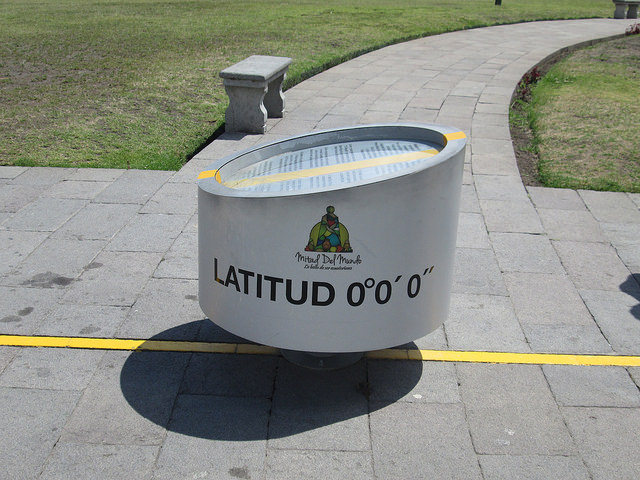
That yellow painted line is supposed to be the Equator. But actually, according to computer measurements, the actual Equator is about 240 meters north of the line. Not that it matters: That woman in the lower half of the picture who is straddling the yellow line thinks she is getting some of the Middle of the Earth mojo—but she probably isn’t. Dan and I didn’t bother pacing out the 240 meters to the real Equator, because we would have fallen into a volcanic crater to our deaths. And some things just are not worth sacrificing oneself for!

Ecuador created a nice museum and restaurant complex at what it calls the Mitad del Mundo, which takes the sting out of the slightly misplaced line. The only problem we had was getting there in our rental car. Fortunately, there is a Mitad del Mundo bus line. We just followed the buses until we actually met up with a helpful road sign, of which there are probably not more than a dozen in the whole country.

Close Enough for Government Work

Close Enough for Government Work

There is nothing in Ecuador to compare with the tourist éclat of Machu Picchu in Peru. So the Mitad del Mundo will have to do. Fortunately, it’s not half bad.