Defiance Is Everything

Wearing It Like a Badge of Honor

They Wear It Like a Badge of Honor

I know I said I would shy away from politics in this grim election season, but I could not avoid writing about what troubles me to the base of my soul. And that is the fact that people persist in backing Donald Trump despite the horrible behaviors that he is admittedly guilty of. At one point, he even said he could shoot some innocent down in the streets of New York without impacting his political base. Now I think that perhaps that is true.

The United States does not matter to these people. All that matters is expressing their defiance of all things relating to Obama, Hillary, liberalism, and political correctness. I keep thinking of Sly in Shakespeare’s The Taming of the Shrew:

Y’are a baggage, the Slys are no rogues. Look in the Chronicles—we came in with Richard [sic] Conqueror. Therefore, paucas pallabris: Let the world slide! Sessa!

Yes, but once one wakes up from a drunken stupor, one has to face a world that is irretrievably broken. What then? Another impeachment trial?

This is the first election in the history of this young nation in which a large number of voters just want to scuttle the ship and sink it, even if they themselves drown in the process.

I am so exercised by this state of affairs that I’m going to drive out to the L.A. County Clerk’s office in distant Norwalk to pick up my absentee ballot for fear that, in the normal course of events, I won’t have it until after I leave for Ecuador. I know that Californians will reject Trump, but now, more than ever, I feel that my vote is personally important.

Consider it my own act of defiance.
Peg Entwistle and the Hollywood Sign

Scene of Many Hollywood Legends

Scene of Many Hollywood Legends

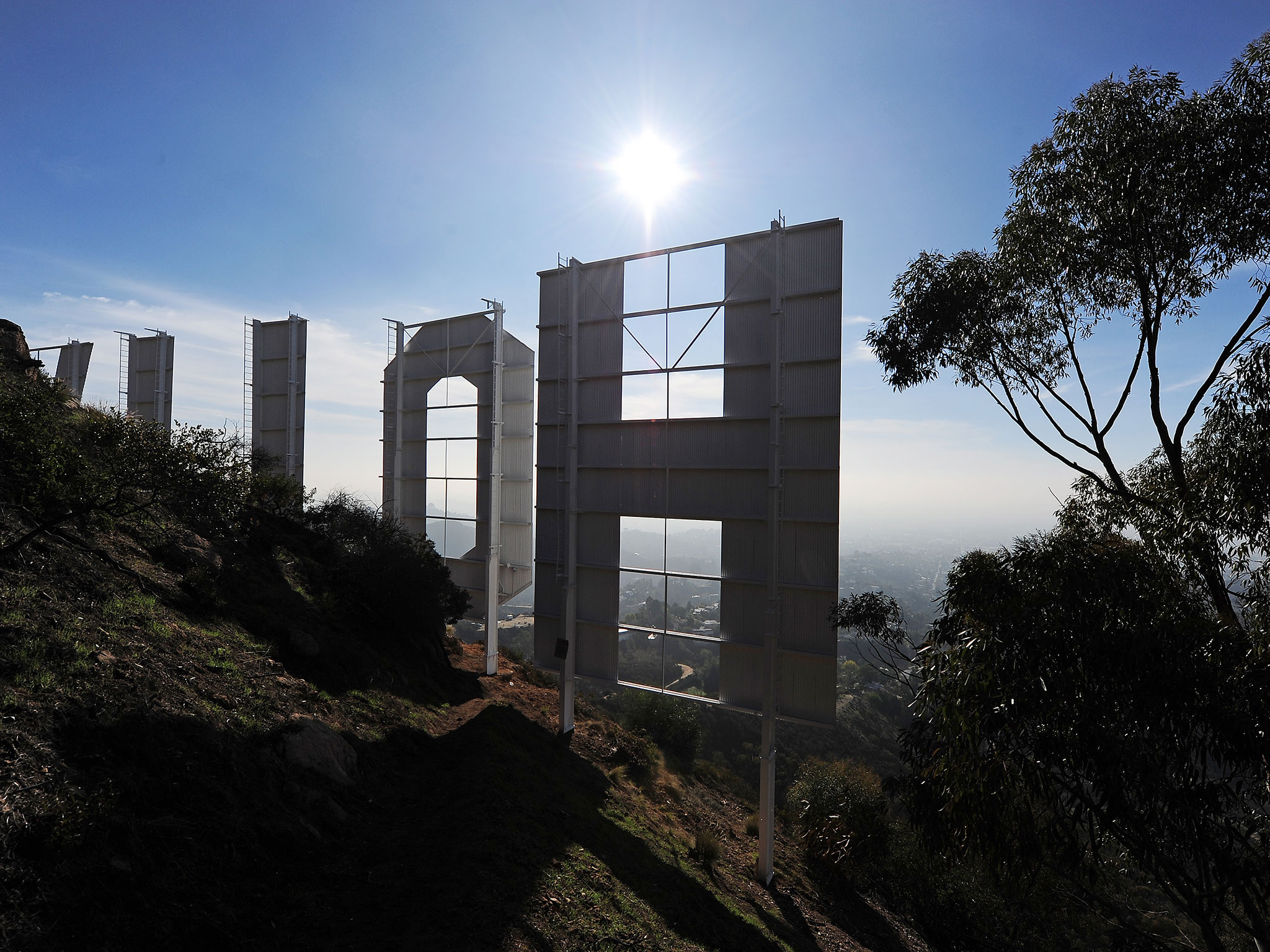
It stands near the top of Mount Lee in the Hollywood Hills. Originally, the sign read “Hollywoodland”—erected using telephone poles and tin to advertise the housing development below. Eventually, the sign was shortened to “Hollywood” and came to signify something altogether different.

I first heard about the story from Dory Previn, who wrote a song called “Mary C. Brown and the Hollywood Sign” way back in the 1970s. You can hear her singing it in this YouTube video.  It is about a movie starlet who grew disenchanted with the dream factory ending her life by jumping off the letter “H” of the Hollywood sign and dying on the slope below of multiple fractures of the pelvis. She died on September 18, 1932.

It really happened, but not to Mary C. Brown. I guess Millicent Lilian “Peg” Entwistle doesn’t scan as well in a song lyric. Peg was a cute blonde Welsh actress with blue eyes. While acting on the stage in New York, she married Robert Keith in 1927. For a short time, she was the stepmother of the man who grew up to be actor Brian Keith.

By coincidence, Brian Keith also committed suicide.

Starlet Peg Entwistle

Starlet Peg Entwistle

During her time in Hollywood, Peg acted in only one film that was ever released: Thirteen Women (1932). I would like to be able to say that it was a success, but it wasn’t, even though it starred Myrna Loy and Irene Dunne.


L.A. Writers: James Ellroy’s Dark Places

James Ellroy, Age 10, with His Murdered Mother

James Ellroy, Age 10, and His Murdered Mother

Given his childhood, it is no wonder that the vision of crime novelist James Ellroy is full of dark places. At the age of 10, he experienced being orphaned when his divorced mother, Jean, was raped and murdered. To this date, the crime has not been solved. But it has resonated through the work of its littlest victim.

To date, I have read seven of his novels, most of which are set in Los Angeles. You can believe me when I say that the author’s L.A., the sun doesn’t shine much. He is perhaps most famous for his L.A. Quartet, which consists of:

  • The Black Dahlia (1987)
  • The Big Nowhere (1988)
  • L.A. Confidential (1990)
  • White Jazz (1992)

As a reviewer for National Public Radio wrote, “His L.A. might not be a city of angels, but the devils he conjures up tell one hell of a tale.”

At times, Ellroy twists the English language into a strange rhythm, as if he were the American Louis Ferdinand Céline. Some of his books, such as White Jazz and American Tabloid, are sometimes difficult to read because of their driving, staccato style. But the energy keeps you moving along. When you are finished with one of his books, you need to relax a bit.

I just finished reading Blood on the Moon (1984), which is set on an axis from West Hollywood (“Boys’ Town”) to Silverlake, with occasional visits to the LAPD’s Parker Center downtown. The novel has a fine local feel that is the hallmark of a real L.A. writer. He may have set some stories elsewhere, but L.A. is somehow the real center of his oeuvre.

Below is a picture of the writer as he is today:

James Ellroy Today

James Ellroy Today

I met the author several years ago when he spoke at the Los Angeles Times Book Festival back when it was still being held at UCLA. I remember his strange description of how he spent his hours alone in the dark, carrying on imaginary conversations with women who were not in the room with him.

Dark. Strange. Indeed—but also brilliant.


On the Mean Streets of DTLA

The Dash B Bus to Chinatown

The Dash B Bus to Chinatown

Today, as usual, I took the Expo Line train to downtown L.A. (or DTLA), as it is being called colloquially. It was a strange ride: During the last half hour of the trip, a black passenger was loudly swearing at and berating the woman he was with, and cursing at everything and everyone else along the way. The other passengers just became ever more absorbed in their reading or their smart phones. They did not want to draw any irate loony-bird attention to themselves.

When we pulled into the 7th Street Metro terminal, I made a beeline for the Central Library. I returned all the books I had checked out and took the elevator to the third floor Literature and Fiction section, where I spent a couple hours reading James Ellroy’s Blood on the Moon, the first volume of an early trilogy featuring Detective Sergeant Lloyd Hopkins of LAPD Homicide.

Just before 12:30, I made my way to Conference Room A for my weekly Mindful Meditation class, taught by Giselle Jones of the Mindful Awareness Research Center at UCLA. I have become dependent on these weekly sessions to help keep my feet on the ground. Also, they give me a feeling of tranquillity which lasts for hours.

After the session, I grabbed the Dash B bus to 1st Street, where I was planning to transfer to the Dash A bus to Little Tokyo. Opposite me on the sideways bench seating was a slim young barefoot black woman who was stunningly beautiful. She seemed to be looking straight at me and talking, but I never could understand what she was trying to say; and she got off after a couple of stops.

In Little Tokyo, I made my way to Weller Court, where there were a number of Japanese restaurants. I had a bowl of spicy chashu ramen at the Hot Pot Galaxy and walked over to the Kinokuniya Bookstore, where I bought a book by the Dalai Lama.

From Little Tokyo, I made my way to the Santa Monica Rapid 10 bus stop opposite Union Station and waited the usual maximum time for the next bus to appear. I was dropped off at Bundy and Idaho, from where I walked back to my apartment.


Advancing the Schmilblick

Some Untranslatable French Expressions

Some Untranslatable French Expressions

I think we tend to seriously underestimate the French. (Oh, drat, I split another infinitive!) Here are a few expressions that you might find interesting.

Faire avancer le Schmilblick

That strange word means nothing more or less than “thing.” When having a conversation, comments not deemed to be helpful are described as not advancing the Schmilblick along. If you speak excellent French, here is a YouTube video describing the origin of the term.

C’est le petit Jésus en culotte de velours

You’ve just had an incredibly smooth wine. It was, in other words, “as smooth as Baby Jesus in velvet knickerbockers.” (You can’t say that about an American beer.)

Avoir le cul bordé de nouilles

You are incredibly lucky—such that your ass is surrounded by noodles.

Il pète plus haut que son cul (ou tête)

There are two variants to this one, both describing someone who is incredibly pretentious. The way Martine and her mother described it, “He tries to fart higher than his own head.” Others say  “higher than his own ass.” Perhaps Martine’s version is the way they say it in Normandy.

Serendipity: The Winds of Change

The Book Is the Same, Only the Reader Has Changed

The Book Is the Same, Only the Reader Has Changed

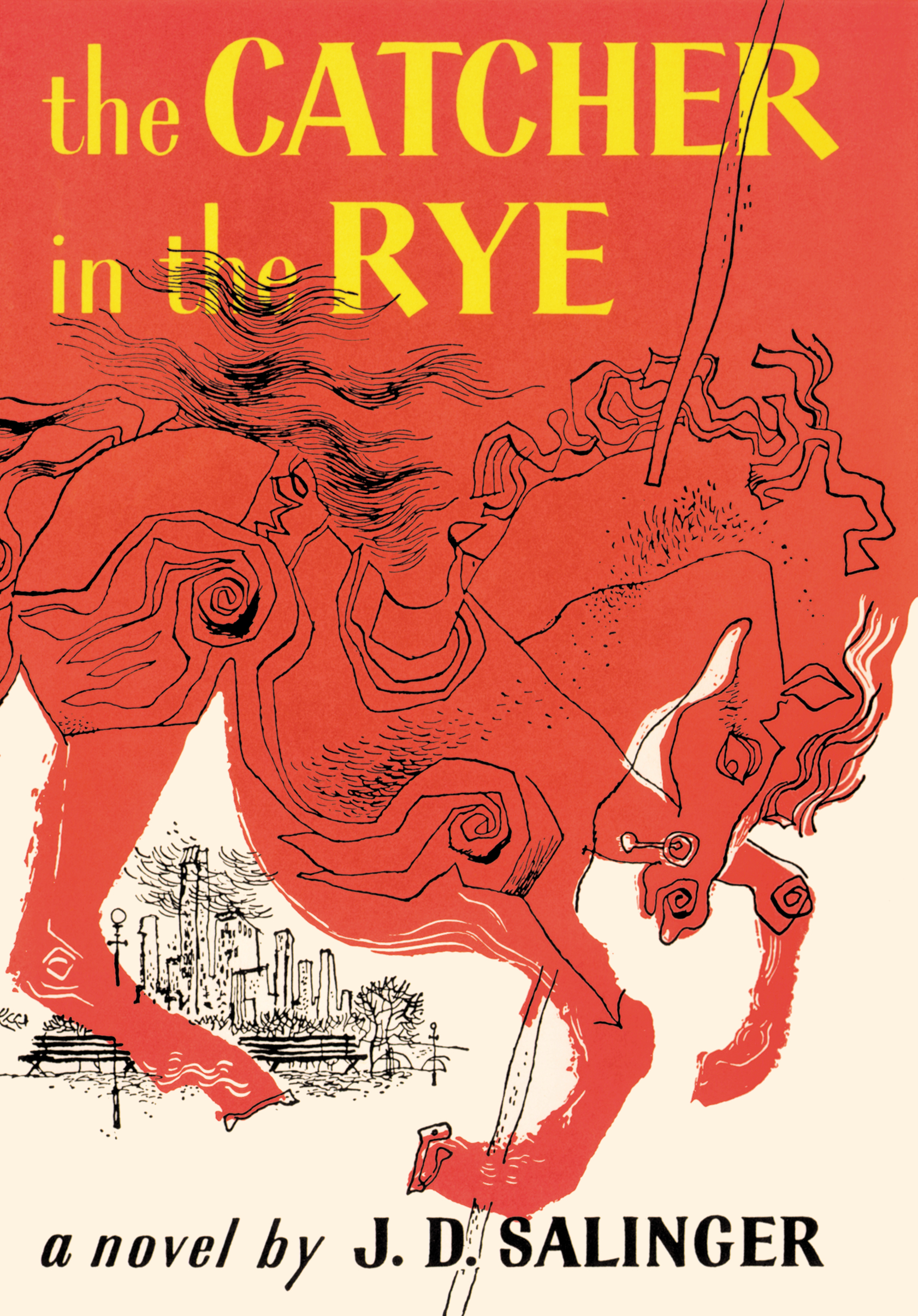
The thing about re-reading books you first encountered decades ago is to feel the winds of change in your life. When I first read J. D. Salinger’s The Catcher in the Rye, I was a high school student looking forward to leaving Cleveland to go to college. The book was a revelation to me, and re-reading it at this late stage in my life shows me sitting on the porch of our house at 3989 East 176th Street, turning the pages and marveling at a book written for kids like me. It’s a good feeling: I accept that 16-year-old kid. He was all right.

Following is a quote that pretty much describes my feeling at re-reading The Catcher in the Rye:

The best thing, though, in that museum was that everything always stayed right where it was. Nobody’d move. You could go there a hundred thousand times, and that Eskimo would still be just finished catching those two fish, the birds would still be on their way south, the deers would still be drinking out of that water hole, with their pretty antlers and their pretty, skinny legs, and that squaw with the naked bosom would still be weaving that same blanket. Nobody’d be different. The only thing that would be different would be you. Not that you’d be so much older or anything. It wouldn’t be that exactly. You’d just be different, that’s all. You’d have an overcoat on this time. Or that kid that was your partner in line last time had got scarlet fever and you’d have a new partner. Or you’d have a substitute taking the class, instead of Miss Aigletinger. Or you’d heard your mother and father having a terrific fight in the bathroom. Or you’d just passed by one of those puddles in the street with gasoline rainbows in them. I mean you’d be different in some way – I can’t explain what I mean. And even if I could, I’m not sure I’d feel like it.

Well, unlike Holden, I am in fact much older; but that’s okay. Better, in fact, than the alternative.


Costa, Sierra y Selva II

Physical Map of Ecuador

Physical Map of Ecuador

This is a kind of continuation of a blog I wrote a couple of years ago about Peru. In so many ways, Ecuador is a continuation of Peru—in terms of physical geography. Even a cursory glance at the above map shows that there are three distinctive zones vertically dividing the country:

  • Costa. This is the Pacific coast. While in Peru, much of the coast is a rainless desert, much of the Ecuadorian equivalent is a mangrove forest (I suspect perhaps mangrove swamp is a more appropriate term.). Guayaquil, the country’s largest city, is on the coast.
  • Sierra. The brown and purple zone occupying the center are the mountains and volcanoes of the Andes. This is where my brother and I will travel. The altitude ranges from 8,000 to 15,000 feet. The capital, Quito, is in this zone.
  • Selva. The pale green zone to the right of the Andes consists of jungle and a number of tributaries feeding the Amazon. Thanks the the mosquito population and the prevalence of Zika, I have no intention of seeing the Oriente region, as it is frequently called.

When I was in Peru, I spent a good part of the trip along or near the coast—especially since I fell in love with the raffish charms of Lima and the beauty of Arequipa and its volcanoes.


Ideo-Bursts and Promisoids

The Whole Medium Is IMHO Suspect

The Whole Medium Is IMHO Suspect

About a year ago, I signed up for Twitter. But then, when I found out I was supposed to “follow” three existing Twitter accounts, I suddenly lost interest, so I never finished my application. About once a week, Twitter e-mails me to finalize my application … but I never will.

Why? A certain Prezidenchul candidate has adopted Twitter as his preferred method of communicating with the world, and I suddenly saw what was wrong with the whole setup. Standing at the microphone (broken or not), Donald Trump thinks in limited bursts of thought that are compatible with the character limit on tweets. He jumps from one tweet-length position to another. This effectively prevents him for discussing such nasty things as details that may substantiate his short ideo-bursts.

On the other hand, these same tweets endear him to his fans, who are not into such mundane things as facts. They are, if anything, practitioners of identity politics: Trump re-connects with his base, and since they identify with him, that connection is all that counts.

When you go into details, you could wind up betraying your base. So, the idea is to just skip around, making short promisoids without pinning himself down on any one of them. Promisoids good, facts bad!

So I think I will never complete my Twitter application process. And here, in considerably more than 140 characters, is why.


Playhouse 90

Rod Serling with Playhouse 90 Logo

Rod Serling with Playhouse 90 Logo

Almost sixty years ago to the day—on October 4, 1956—CBS presented its first Playhouse 90. It was called “Forbidden Area,” written by Rod Serling, directed by John Frankenheimer, and starring the likes of Charlton Heston, Tab Hunter, Diana Lynn, Vincent Price, Victor Jory, and Charles Bickford.

As he did later with Twilight Zone, Serling takes us to the heart of the Cold War and a projected Christmas Eve nuclear attack by the Soviet Union on major cities across the United States. Charlton Heston is trying to discover why eight B-99s of the Strategic Air Command suddenly disappeared without a trace from radar screens.

Playhouse 90 was live television: There were no rehearsals. While American viewers were watching, the actors were acting. As difficult as it was, this was the Golden Age of Television. Now there are hundreds more channels, dozens of content providers, and tens of millions more viewers, what they are watching is nowhere near as good as during those heady days of the 1950s and the early 1960s.

I love television as it used to be. As it is today, I would rather leave the remote to Martine and go read a good book.

Tonight, the UCLA Film & Television Archive put on a double bill of Playhouse 90 episodes written by Serling. It was introduced by Matthew Weiner, creator of Mad Men, who gave an excellent speech about why those days were the artistic pinnacle of television as an art medium.

Borges, Milton, and the Rose

“A Rose and Milton”

“A Rose and Milton”

What do these writers have in common: Homer, John Fante, Benito Pérez Galdós, John Milton, and Jose Luis Borges? For at least part of their lives, all were blind. So when Argentinian poet Jorge Luis Borges honors Milton, it is by way of acknowledging a common fate. The name of this poem is “A Rose and Milton”:

A Rose and Milton

From the generations of roses
That are lost in the depths of time
I want one saved from oblivion,
One spotless rose, of all things
That ever were. Fate permits me
The gift of choosing for once
That silent flower, the last rose
That Milton held before him,
Unseen. O vermilion, or yellow
Or white rose of a ruined garden,
Your past still magically remains
Forever shines in these verses,
Gold, blood, ivory or shadow
As if in his hands, invisible rose.

Of course, Milton could not see the color of that last rose he beheld. He could not see whether that last rose was spotless and perfect. Whatever that rose was, it was unperceived by the great poet who held it in his hands; it might as well have been invisible, or, just as well, resplendent in its glory.

The poet talks about being allowed by Fate to handle that last rose that Milton held. I could just see the ironic smile playing on Borges’s face. Very Zen, in effect.