More Than You Ever Wanted to Know

But Don’t Let That Lull You into Passivity!

That little photo inset in the above picture are of Kevin McCarthy and Dana Wynter from Invasion of the Body Snatchers (1956). You remember that picture: It’s where pods from Outer Space are replacing the citizens of a sleepy Northern California town. How appropriate! It seems that the invasion is coming from the Evil Forces of Trumpfism and his Alt-Right followers.

The news cycle has become overcrowded with Tweets, Executive Orders, and the usual run of Republican Follies (such as the new unlamented American Health Care Act (AHCA). Where the presidency used to generate only two or three news stories each day, now we are confronted with a whole slew of attempts to deprive the citizens of this country of what they want and what they need. Our formerly good government is being replaced by an invasion of Right Wing Pod People with their alternative facts (lies), economic nationalism (isolationism), enemy of the people (friend of the people), fake news (truth), and America first (corporations and billionaires first).

There’s Always Plenty to Go Around!

There is an old Chinese curse: “May you live in interesting times!” It’s so easy to become dispirited and just give up. Even if you feel as if you’re being attacked by a hydra, I suggest you stay awake and defend your liberties. Get used to letting your two state senators and your congressman know what you want. Call or e-mail them on a regular basis. Let them know they can be replaced in 2018—and you know that’s just around the corner.

Why I’m REALLY Going to New Mexico

Hatch Chiles Roasting

After what I posted yesterday, I thought I’d say why I’m really going to New Mexico this summer. When you live in a particular climate zone for most of your life, you yearn for the foods of the region. As a not quite but almost native Californian, that means corn and chiles. And the best chiles in the world come from New Mexico. The joke is that there is a state question: “Red or green?” If you can’t make up your mind, there’s another answer: “Christmas” means a mixture of red and green. I will probably switch between red and green from meal to meal.

There is a nifty local restaurant site called Roadfood.Com. Take a look at the restaurants and dishes they recommend for New Mexico by clicking here. (Compare with what’s available in your state.)

Now poor Martine isn’t going to be able to eat any chiles, but she likes hamburgers and chicken and beans; so there’ll be plenty of generic American food to keep her happy.

The Frontier Restaurant Near the UNM Campus

Fortunately, there are some parts of the United States which have their own cuisine. Of particular interest to me are the shellfish of New England, the anything from Louisiana, the fried catfish and BBQ of the Southeast, and the chiles of New Mexico. All are American food at its best. Originally, I hailed from Ohio. Other than great home-cooked Hungarian food, I can’t say much good about the whole state.

What’s Happening to American Food?

Yeah, Well, I Mean Other Than That ….

In the big cities on the Right and Left Coasts, what we know of as American food is—I think, anyhow—starting to disappear. Not that American cuisine is necessarily the best in the world. Being Hungarian, I know it couldn’t hold a candle to a home-cooked Magyar meal. But there are some good American dishes of which I am quite fond. For someone who truly hates the Confederacy, I like Southern food: fried catfish, grits, collard greens, black-eyed peas—though I stop short at chicken. (Martine, on the other hand, is a big time poultry devotee.)

I think the problem is those guys with toques who like to think of themselves, standing in their kitchens, as masters of all they survey. The Food Channel has introduced us to a whole generation of soi-disant chefs who basically like to screw around with food, mix flavors like crazy, and build photogenic little towers on the plate. I think of these toque-n chefs the same way I think of those little kids who like to mix Coke with Mountain Dew with Root Beer at one of those automatic soda dispensers, thinking they’ll come up with something new and interesting. Of course, they never do.

Martine is unable to eat the range of food that I can. I would be perfectly content eating nothing but Asian food all my life, or Mexican, or Argentinean. She has irritable bowel syndrome and needs good plain food. We usually compromise when we go out: one meal to make me feel good, and maybe the next to make her feel good.

Today, for instance, we found that a restaurant chain we loved that had been out of business for over 10 years still had one branch in Sherman Oaks, near the intersection of Moorpark and Van Nuys Boulevard: It was Hamburger Hamlet. The food was not great—not like pigging out in New Orleans on a po’ boy or in Boston on scrod—but it is good; and the menu is large enough and interesting enough to make me feel better than dining at Denny’s or Norm’s.

In our lifetimes, I think the American coffee shops will disappear, at least in the big cities. I hate to think what the chefs of tomorrow will do to our stomachs.

L.A. Writers: Raymond Chandler

The Creator of Philip Marlowe

When I started writing this series of posts, I should have started it off with Raymond Chandler. He is, in so many ways, the quintessential L.A. writer. I did not because I mistakenly thought he was British. Look at that picture: Those eyeglasses, that pose—they partake of this prototypical English gentleman. In fact, Chandler was born in Chicago of an American father and an Irish mother. Although he spent many years in Britain, and even at one point became a naturalized British citizen, his writing career was pure Los Angeles.

I have just finished re-reading his fifth novel, The Little Sister (1949), and kept running into passages that screamed L.A. to me. When told he was in love with the beautiful actress Mavis Weld, Chandler replies:

That would be kind of silly. I could sit in the dark with her and hold hands, but for how long? In a little while she will drift off into a haze of glamour and expensive clothes and froth and unreality and muted sex. She won’t be a real person any more. Just a voice from a sound track, a face on a screen. I’d want more than that.

One of Chandler’s LAPD homicide detectives delivers this thoughtful description of the life of a cop in the city:

It’s like this with us, baby. We’re coppers and everybody hates our guts. And as if we didn’t have enough trouble, we have to have you. As if we didn’t get pushed around enough by the guys in the corner offices, the City Hall gang, the day chief, the night chief, the Chamber of Commerce, His Honor the Mayor in his paneled office four times as big as the three lousy rooms the whole homicide staff has to work out of. As if we didn’t have to handle one hundred and fourteen homicides last year out of three rooms that don’t have enough chairs for the whole duty squad to sit down in at once. We spend our lives turning over dirty underwear and sniffing rotten teeth. We go up dark stairways to get a gun punk with a skinful of hop and sometimes we don’t get all the way up, and our wives wait dinner that night and all the other nights. We don’t come home any more. And nights we do come home, we come home so goddam tired we can’t eat or sleep or even read the lies the papers print about us. So we lie awake in the dark in a cheap house on a cheap street and listen to the drunks down the block having fun. And just about the time we drop off the phone rings and we get up and start all over again. Nothing we do is right, not ever. Not once. If we get a confession, we beat it out of the guy, they say, and some shyster calls us Gestapo in court and sneers at us when we muddle our grammar. If we make a mistake they put us back in uniform on Skid Row and we spend the nice cool summer evenings picking drunks out of the gutter and being yelled at by whores and taking knives away from greaseballs in zoot suits. But all that ain’t enough to make us entirely happy. We got to have you.

The “you” of the quote is Philip Marlowe, whom the police accuse of withholding evidence on two icepick murders and waltzing scot-free because of his private investigator’s license.

Chandler’s descriptions of night in L.A. rise almost to the verge of poetry:

I drove east on Sunset but I didn’t go home. At La Brea I turned north and swung over to Highland, out over Cahuenga Pass and down on to Ventura Boulevard, past Studio City and Sherman Oaks and Encino. There was nothing lonely about the trip. There never is on that road. Fast boys in stripped-down Fords shot in and out of the traffic streams, missing fenders by a sixteenth of an inch, but somehow always missing them. Tired men in dusty coupés and sedans winced and tightened their grip on the wheel and ploughed on north and west towards home and dinner, an evening with the sports page, the blatting of the radio, the whining of their spoiled children and the gabble of their silly wives. I drove on past the gaudy neons and the false fronts behind them, the sleazy hamburger joints that look like palaces under the colors, the circular drive-ins as gay as circuses with the chipper hard-eyed carhops, the brilliant counters, and the sweaty greasy kitchens that would have poisoned a toad. Great double trucks rumbled down over Sepulveda from Wilmington and San Pedro and crossed towards the Ridge Route, starting up in low-low from the traffic lights with a growl of lions in the zoo.

Behind Encino an occasional light winked from the hills through thick trees. The homes of screen stars. Screen stars, phooey. The veterans of a thousand beds. Hold it, Marlowe, you’re not human tonight.

Not human? Hardly: No one is more human than Marlowe. He is like the knight in Albrecht Dürer’s “Knight, Death, and Devil,” as shown below:

Knight, Death, and the Devil

Poor Marlowe, he doesn’t even have the friendship of a dog as shown in the engraving above.

Devil’s Highway

They Were Bound to Change the Name

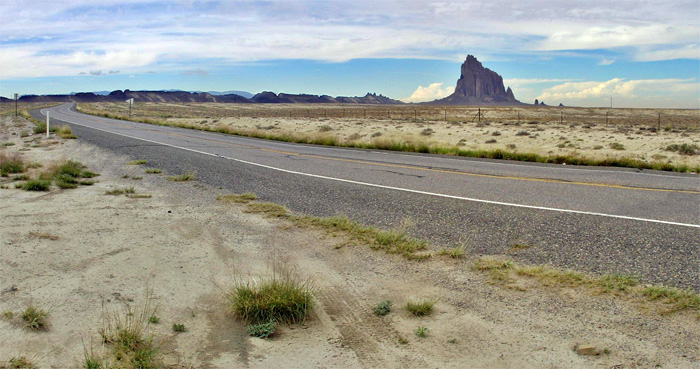
When Martine and I have finished taking the Durango & Silverton Narrow Gauge Railroad connecting Durango with Silverton, we will head down to Gallup, NM, perhaps stopping for a few hours at Window Rock, AZ, the capital of the Navajo Nation.The road connecting Farmington, NM with Gallup used to be called U.S. 666, aka “The Devil’s Highway.” A few years back, the highway changed its number to the less apocalyptic U.S. 491.

Even 491 has a curious Biblical resonance. When Peter asked Jesus how many times shall he forgive his brother who sins against him. According to Matthew 18:22, Jesus answered him, “ I say not unto thee, Until seven times: but, Until seventy times seven.” Let’s see, that multiplies out to 490. In the 1960s, Vilgot Sjoman came out with a Swedish film entitled 491, presumably referring to the end of someone’s patience at being excessively sinned against.

Highway 491 with Ship Rock in the Distance

When we take Highway 491 née 666, we will pass Ship Rock, sacred to the Navajos (see above photo). I’ve always wanted to take this route from Farmington to Gallup, but I usually traveled in the past via the Chaco Culture National Historical Park, which is my favorite destination in New Mexico. However, like many of the best places in New Mexico, I would not venture to take a rental car down the washboarded access road. That also goes for the Bisti Badlands and the De-Na-Zin Wilderness, all in the same general area.

Had I but world enough and time, however, ….

The Ruins of Pompeii

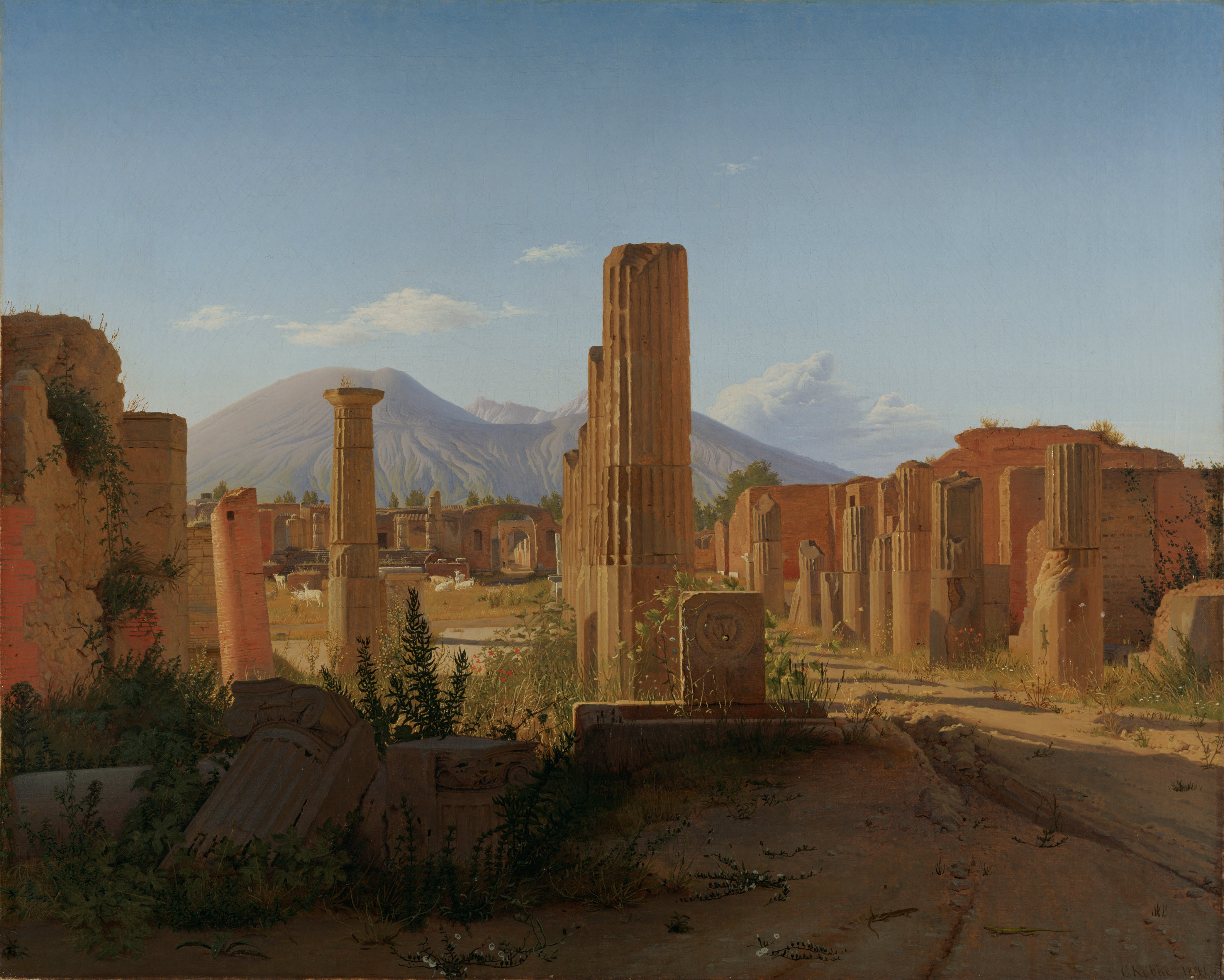
“The Forum, Pompeii, with Vesuvius in the Distance” (1841)

Last Sunday, I saw this Danish painting at the Getty Center and dreamed of visiting Pompeii. The artist of Christian Schjellerup Købke (1810-1848), who, like many 18th and 19th century artists did the Grand Tour. He returned to Denmark after a year or two of travel in sunnier climes—and promptly died at the age of 37 of pneumonia. I loved Købke’s painting, though I am saddened that he was cut off in his prime.

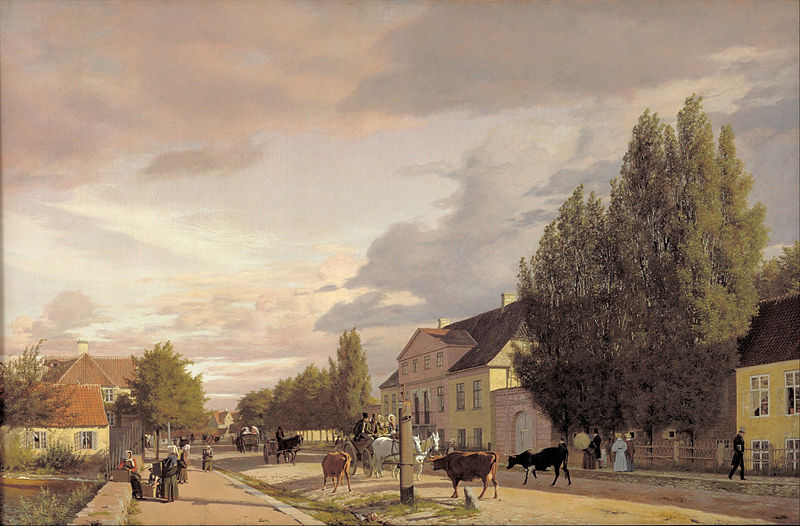
In earlier centuries, people were much more matter-of-fact about the suddenness of death—at any age. Although I would love to have seen Pompeii as Købke did, I am saddened that he did not have a longer career. Below is an earlier of his delicate landscapes:

“View of a Street in Østerbro Outside Copenhagen – Morning Light” (1836)

It’s not easy to paint a great landscape. Some painters had the knack, such as Theodore Rousseau, Jacob van Ruisdael, Claude Lorraine, Nicolas Poussin, and J.M.W. Turner. To that list, I would add Christen Købke.

“Nothing More Animal-Like”

Humor and Profundity All Mixed Together

The beginning of this year has introduced me to two great Eastern European poetesses. I think I will be reading a lot of their poems in the months to come. I have already written a couple of postings about Marina Tsvetaeva—and I am just getting started! Earlier, I posted a poem by Wisława Szymborska, but now I am starting to get serious about her as well, what with her curious mixture of humor and profundity. You can find an example of those two traits in this poem:

In Praise of Self-Deprecation

The buzzard has nothing to fault himself with.
Scruples are alien to the black panther.
Piranhas do not doubt the rightness of their actions.
The rattlesnake approves of himself without reservations.

The self-critical jackal does not exist.
The locust, alligator, trichina, horsefly
live as they live and are glad of it.

The killer-whale’s heart weighs one hundred kilos
but in other respects it is light.

There is nothing more animal-like
than a clear conscience
on the third planet of the Sun.

I am still working in the smug self-satisfaction of Republicans, but I am nowhere near Wisława in poetic ability, so I’ll just let her have her say. If you are interested in reading more of her poetry, I suggest you find a copy of Sounds, Feelings, Thoughts: Seventy Poems by Wisława Szymborska (Princeton: Princeton University Press, 1981). Szymborska won the Nobel Prize for Literature in 1996.


Butter Bread

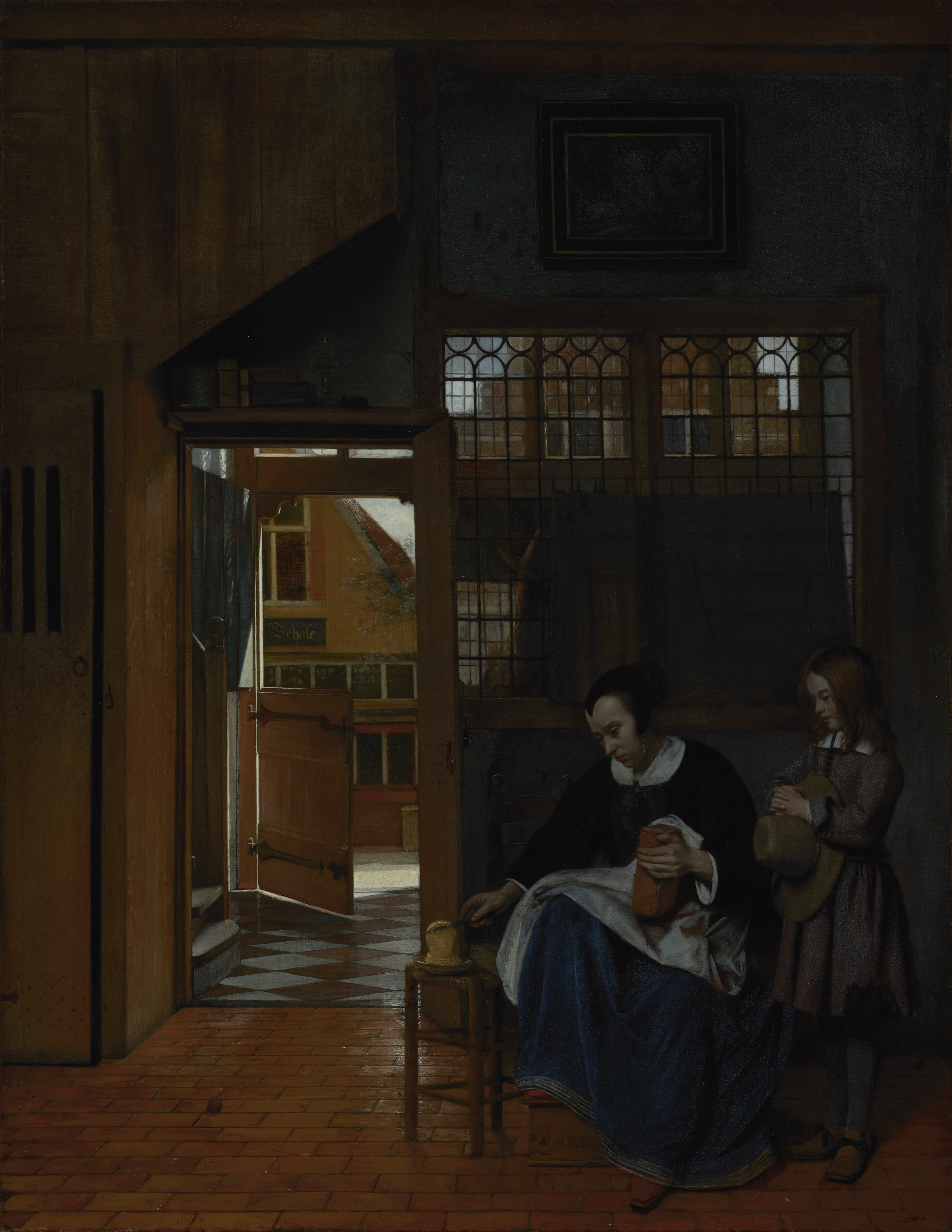
“A Woman Preparing Bread and Butter for a Boy” by Pieter de Hooch (early 1660s)

“A Woman Preparing Bread and Butter for a Boy” by Pieter de Hooch (early 1660s)

Tomorrow I begin working full time once again during a particularly stressful tax season. Yesterday, I prepared by going to see the flowers at Descanso Gardens. Today, on the other hand, I went with Martine to the Getty Center, a museum I could see from the front door of my apartment. Nothing could be more peaceful than this painting by Pieter de Hooch entitled “A Woman Preparing Bread and Butter for a Boy.” The view through the open Dutch doors is of a placid yard. What I get from this painting is a feeling of love and peacefulness. De Hooch finds much to say in a small compass, a talent that is central to the great Dutch painters of the Seventeenth Century.

It is very likely that I will be working on Saturdays beginning next week and Sundays as well beginning the week after. Natural beauty, great art and literature—all these will help see me through the next six weeks, and going forward thereafter.

According to Henry David Thoreau, “It’s not what you look at that matters, it’s what you see.” Going to a museum and looking long at paintings and sculptures helps one understand life better. Understanding helps one to survive tough times. The mobs of young fools with their smart phones and selfie sticks are not likely to understand anything. They were looking but not seeing.

What I saw at the Getty today will result in several more postings in the weeks to come. Every time I go to a great museum, I leave energized and eager to communicate what I have learned.

The Calm Before the Storm


Tulips at Descanso Gardens

Tulips at Descanso Gardens

Since the beginning of May, I have been semi-retired. Now, with the passing of our tax manager on Tuesday, I am being asked to come back full time—at least until the end of tax season. I had hoped to avoid another high-pressure tax season, but I pretty much had to agree to help out; else, I might have been forced to look for another job at my advanced age. So I can expect the next six weeks to be highly stressful. Life is like that sometimes.

But before I started in on the heavy-duty work, I decided to go to Descanso Gardens with Martine. The tulips were planted, and this was the first weekend of a two-=weekend Cherry Blossom Festival. Only some of the cherry trees were in flower, but the gardens were crowded, mostly with Japanese-Americans looking for an American equivalent of their own cherry blossom festivals. Fortunately, Descanso is large enough that one can easily escape the crowds and still find beauty.

The beauty of the tulips, and even of the lone lilac that came into bloom early, will help me in the weeks to come. Unfortunately, the tax deadline this year is Tuesday, April 18. That happens whenever April 15 falls on a Saturday or Sunday. This year it is on Saturday, and Monday is a holiday (Emancipation Day) in the District of Columbia; so, Tuesday is the tax deadline.

I’ve already filed my taxes, so at least I don’t have to worry about that.


Very Large Array

One of 27 Giant Radio Antennas at the VLA

One of 27 Giant Radio Antennas at the VLA

One of the places that Martine and I would like to see on our trip to New Mexico is the Karl G. Janski Very Large Array some 50 miles west of Socorro along U.S. Route 60. It is part of the U.S. National Radio Astronomy Observatory (NRAO). If you are of a sci-fi turn of mind, you might think its related to SETI, the Search for Extra Terrestrial Intelligence—but actually it’s for taking images of radio waves directed at the earth. For some of the images created by the VLA, click here.

The twenty-seven 230-ton radio antennas are in one of four Y-shaped configurations and can be moved into position along rails using a special locomotive. Tours are available (we plan to take one).

Although there are many observatories in the United States, many are adversely affected by air pollution. The data from the various VLA radio antennas can be combined to give the resolution of an antenna 22 miles across with the sensitivity of a dish 422 feet in diameter.

I expect to be swept off my feet.