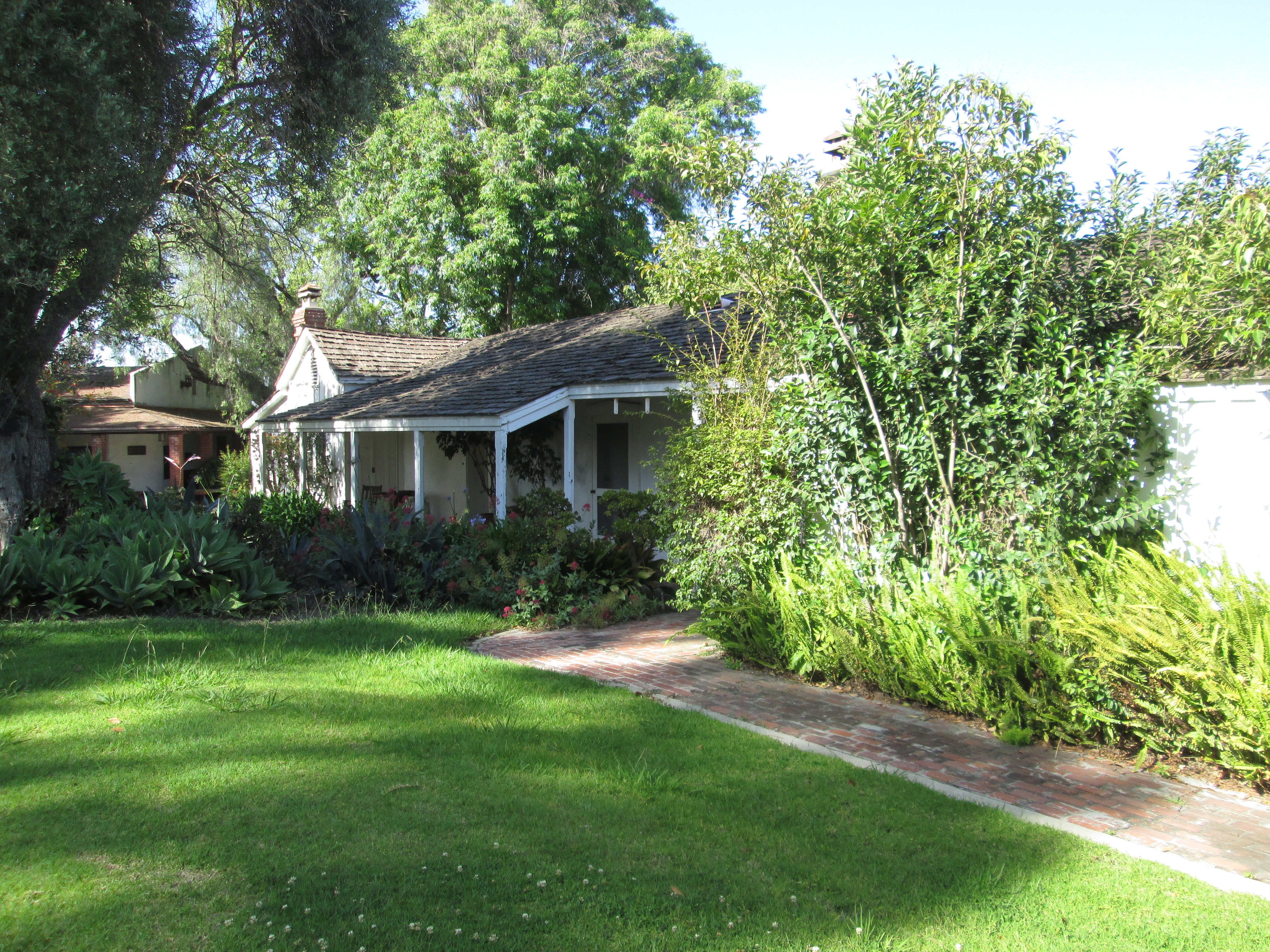
The Centinela Adobe

One of Los Angeles’s Original 19th Century Adobes

Just north of the Los Angeles Airport, adjacent to the southbound lanes of the San Diego Freeway (the I-405), is one of the 43 surviving adobes around Los Angeles. Sitting somewhat incongruously on a suburban street full of ticky-tack postwar single-family homes, the adobe is run by the Historical Society of Centinela Valley. The Centinela Adobe is the original structure of a huge Mexican land grant comprising some 25,000 acres of the Rancho Aguaje de la Centinela, including parts of the communities of Inglewood and Westchester.

Built in 1834, the adobe is generally open only on Sunday afternoons. Martine and I were there at opening time and had a great tour of the premises by one of the volunteers who was both knowledgeable and forthcoming on the many historical exhibits.

Looking at the above photograph, it looks as if the structure is a wood frame house. A kitchen extension built later is indeed built with wood, but the main part of the structure is built with mud bricks (such as the ones shown in the picture below), covered with stucco, and painted over with white paint. Originally, the roof consisted of tar taken from the La Brea Tar Pits. It lasted about a hundred years, until the 1930 Long Beach earthquake forced the Historical Society to install a modern roof.
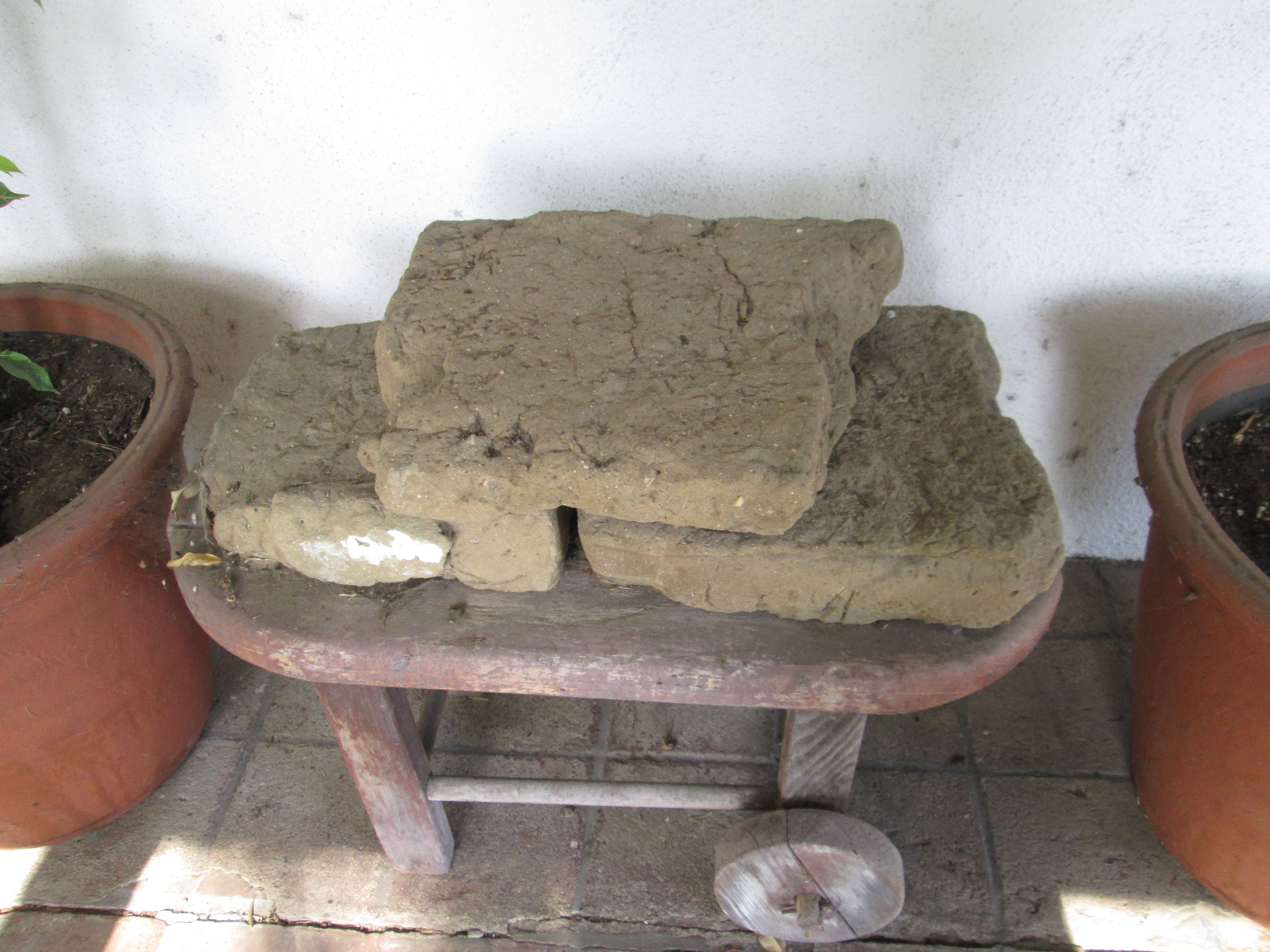
Adobe Mud Bricks of Which the Main Building Is Constructed

In September, there will be a big Mexican-style fiesta at the adobe which I plan to attend. Next weekend, there will be a barbecue, but as a diabetic, I tend to eschew the usually heavily sugared barbecue sauces.

People tend to think that California is a state without a history. In fact, Los Angeles goes back to the year 1781 and has flown the flags of Spain, Mexico, and the United States. Parts of the state were also under Russian control in the 1850s—but very briefly. I plan on visiting more of the adobes and ranchos that were the base that the second largest city in the United States was built.
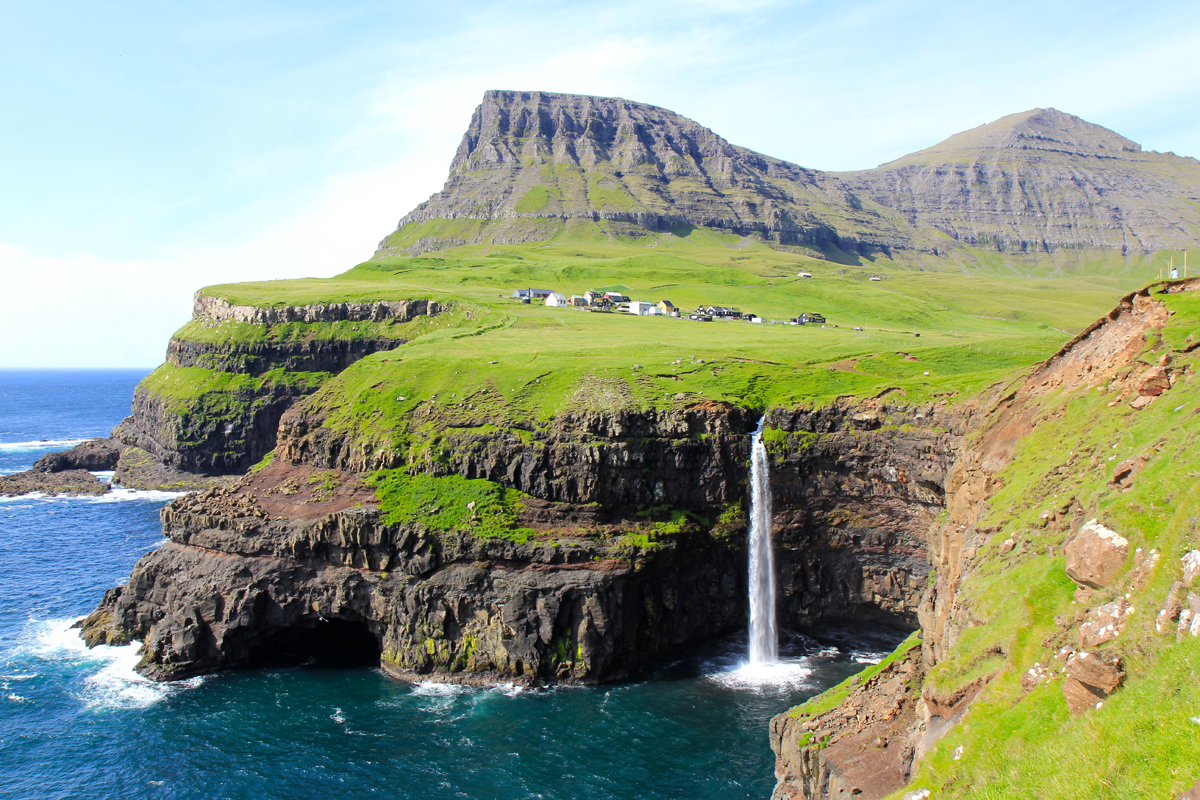

Føroyar

Waterfalls, Cliffs, Raging Seas, Desolation … Looks Perfect!

My brother makes fun of my choice of travel destinations. “You always pick these desolate places,” he says, “like Iceland or Patagonia or the dark side of the Moon.” He, on the other hand, vacations in Fiji or Tahiti or Kauai. I’d like to think it’s because he’s lived inland for most of his life; and—because he works so hard constructing beautiful homes—that beaches have a certain appeal for him.

In the meantime, I have discovered a new European destination that looks incredibly desolate: The Faroe Islands (Føroyar in Faroese), located midway between Norway and Iceland. A semi-independent archipelago, the Faroes is partly controlled by Denmark, especially as regards its economy and security. Some 50,000 people.

The Village of Gjógv (Try Repeating That 10 Times Quickly)

Like Iceland, the Faroes were originally inhabited by Irish monks, but then their rent was raised by Viking invaders. Right offhand, I would say that this archipelago is the most isolated part of the European continent. My interest was piqued by a BBC photo essay featuring postmasters of some particularly remote locales. I took one look and said to myself: I think that’ll be next—after my upcoming Guatemalan adventure.

Torshavn, Capital of the Faroes

The only thing I might not like about the Faroes is the diet of their inhabitants: pilot whales, puffins, and various odd bits from the sea. Oh, hell, who am I kidding? I’d probably love the stuff.


Pre-Columbian Writing

Detail from the Dresden Codex

At the time the Spanish landed in he New World, there was only one Pre-Columbian culture that had a written alphabet, and that was the Maya. Now I have heard that in earlier centuries, the Zapotecs and Mixtecs of Northern Mexico had a written alphabet, but stopped using it after a certain point. Curiously, the Aztecs and Inca did not have their own alphabet, however advanced they may have been in other respects.

Right now, the only instances we have of writing in Mayan are glyphs at various Maya ruins and four surviving codices that escaped the religious zeal of the Spanish missionaries in destroying what they perceived to be heretical. And since the subject matter related to Maya religion, it was heretical insofar as Christianity was concerned.

The most famous destroyer of Mayan codices was Diego de Landa, the Franciscan Bishop of Yucatán in the 16th century. In a famed book burning conducted in 1562, de Landa had 27 codices burned at Mani. He described the Maya as being disconsolate at the destruction of so much of their culture at one time. Curiously, it was the same de Landa who wrote the Relación de Las Cosas de Yucatán, which preserved an astonishing amount of the culture and language, such that it is still studied by Maya scholars. It is still available in a Dover Publications paperback.

Do you see the dots and dashes in the above detail from the Dresden Codex just above the four seated figures? They are, in order, the numbers 16, 4, 9, 13, zero (yes, the Maya had discovered zero), 5, 12, 2, and 1. As you can probably surmise from this, the dashes represented the number five or a multiple of fives; and a dot, a one or multiple of ones up to four. It was a vigesimal system, meaning to the base 20 rather than base 10 like ours. Very likely, the numbers in the illustration represent a “long count” calendar date fixing a particular event in time. You can read more about Maya mathematics here.

The other interesting thing about the Mayan alphabet is that some symbols were hieroglyphic and stood for an entire word and others phonetic, standing for syllables. This confused scholars for years.

At the time I started visiting the Maya world, only the calendrical symbols had been decoded (mostly thanks to the selfsame good/bad Diego de Landa). In the last forty years, we have discovered that the Maya have a history. We have learned names of rulers and translated descriptions of events commemorated by Maya rulers.


It’s Gone Way Beyond Taco Bowls

Sculpted Mariachi Band in Albuquerque’s Old Town

Whose America is it? Does it belong to those Scots-Irish who have lived in these United States for generations, or does it belong to the people who meet a different profile? There is no disputing the fact that our demographics are changing. And that seems to be causing a lot of pain among those who appear to be “left behind.”

Here’s a little summary from National Public Radio of what is happening to the racial composition of the U.S. as of 2017:

  • The Asian population grew by 3.0 percent to 21.4 million.
  • People who identified as being of two or more races grew by 3.0 percent to 8.5 million.
  • The Native Hawaiian and Other Pacific Islander population grew by 2.1 percent to 1.5 million.
  • The Hispanic population (including all races) grew by 2.0 percent to 57.5 million.
  • The American Indian and Alaska Native population grew by 1.4 percent to 6.7 million.
  • The black or African-American population grew by 1.2 percent to 46.8 million.
  • The white population grew by 0.5 percent to 256.0 million.
  • The non-Hispanic white alone population grew by 5,000 people, remaining at 198.0 million.

Just take a quick look at that last item again. The non-Hispanic white population has grown by only 5,000 to 198,000,000. That represents a 0.25% growth rate. We casually tend to treat Hispanics as a separate race. According to the Bureau of the Census, Hispanics can classify themselves as White, Black (Cubans for example), Asian (some Filipinos for example), and American Indian (some Navajo for example). Now compare that measly 0.25% growth rate to all the other growth rates in the above table.

“I Love Hispanics” Says the President-Elect While Praising His Taco Bowl (?!) from the Trump Tower Grill

While our Presidente claims to love Hispanics, he probably only loves Devin Nunes and a handful of other of his supporters who happen to be Hispanic. All the rest of them are rapists or worse. Doesn’t he know that he represents what once was a strapping majority and is on its way to becoming a minority? That’s already happened to Los Angeles. What is Herr Trumpf going to do? Deport Asians, Blacks, and—Heaven forfend!—American Indians?

My guess is that there is going to be a reckoning at some point. What is happening to the United States is a throwback to the Know-Nothings of the 1840s who were so violently opposed to Irish immigration. Eventually, the Irish won; and even Trumpf accepts them as sort of, kind of white. The Republicans are holding on to power by the skin of their teeth, and due largely to outrageous gerrymandering.

Does racism have a future in America? I don’t think so. We all have a part to play in carrying on the American Dream.

By the way, what in blue blazes is a taco bowl?

On Giving

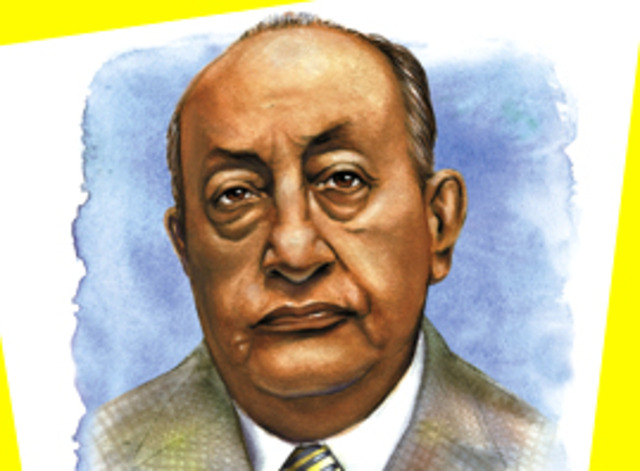
Guatemala’s Nobel Laureate in Literature, Miguel Ángel Asturias

Miguel Ángel Asturias (1899-1974) was the greatest writer that Guatemala ever produced. Although many of his owrks were translated into English, most are out of print now and hard to find. Here is a short poem by Asturias that I hope you’ll like. It’s called “Caudal (The Fortune)”:

To give is to love,
To give prodigiously:
For every drop of water
To return a torrent.

We were made that way,
Made to scatter
Seeds in the furrow
And stars in the ocean.

Woe to him, Lord,
who doesn’t exhaust his supply,
And, on returning, tells you:
“Like an empty satchel
Is my heart.”

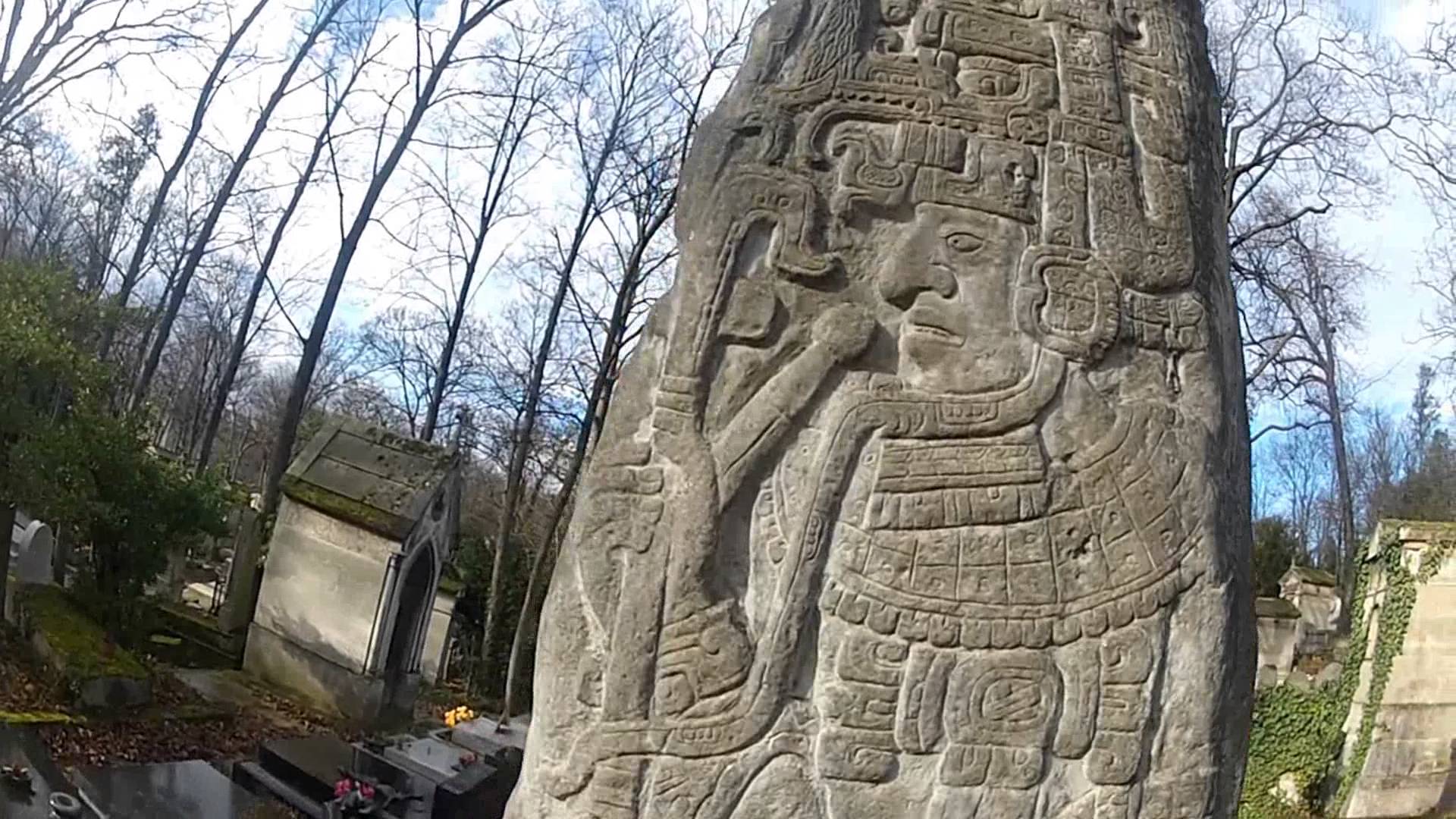
Mayan Stela at Père Lachaise Cemetery Commemorating Asturias

When Martine and I visited Paris’s Père Lachaise cemetery in 2000, we turned a corner and suddenly found a very Mayan stela commemorating the Guatemalan writer.


Two Old Friends

French Film Critic André Bazin

On Sunday, I was driving to San Pedro to see a friend; and I stopped at Michael R. Weinstein’s Collectible Books at Alpine Village. Sitting in the film section was a two-volume set of film criticism by André Bazin, the founder of Cahiers du Cinéma in 1951. I had owned hardbound copies of the set when I was a graduate student in the film department at UCLA. In fact, the two volumes of Qu’est-ce que le cinéma? (What Is Cinema?) had been translated into English by my favorite professor in the department, Hugh Gray.

Without any particular knowledge of the United States, Bazin was a marvelously intuitive critic who understood American film genres such as the Western almost as well as he did the French theatrical antecedents of his own country’s cinema. Re-reading his essays “The Western: Or the American Film Par Excellence” and “The Evolution of the Western,” I was taken back to my days as a film freak in the late 1960s and early 1970s. I was a devotee of Cahiers du Cinéma and of the politique des auteurs it espoused. And from there came my knowledge of and love for the American film, by way of France.

My classes with Hugh Gray were among the best I took at UCLA. The film department at UCLA had on its faculty both angels and demons, and Hugh was numbered among the angels.

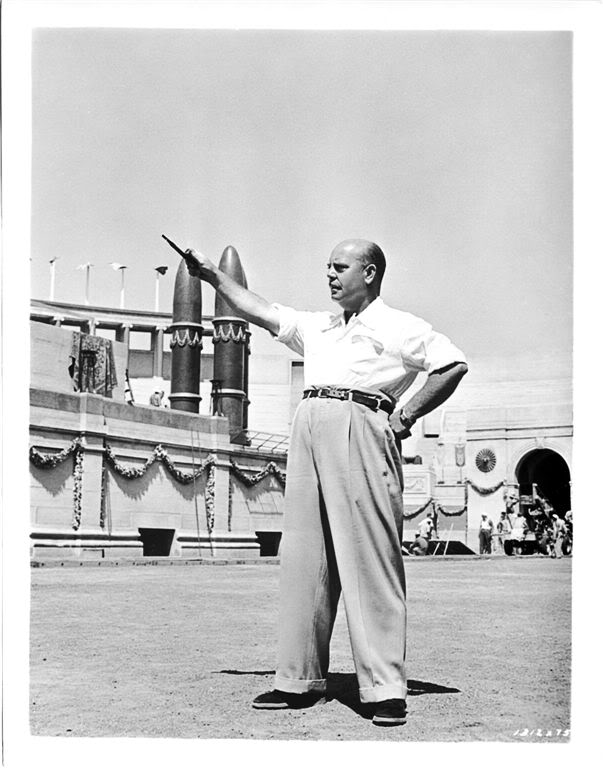
Hugh Gray as a Technical Specialist for Ancient Greek and Roman Film Subjects

Hugh had been an ordained Dominican priest earlier in life, but then left the order and got married. In Hollywood, he was the go-to man for films set in ancient Greece or Rome because of his wide knowledge of the subject. That wide knowledge, combined with his friendliness to his students, made him a superb professor.

I plan to re-read the Bazin essays in the months to come, thinking of the good times I had studying film at UCLA.

Fading Away

Little Girls in Greek Dance Costumes (2011)

In the time that Martine and I have been going to Greek church festivals in Los Angeles, we’ve noticed several trends:

  • The food is getting less authentic. Today, Martine ordered a spanakopita (spinach and cheese pie) that did not contain any cheese.
  • It seems that fewer of the parishioners speak Greek. Is it that the older generation is passing on?
  • The priests are less involved personally with the festivals, particularly in offering church tours to visitors.

This is less true of Saint Sophia Cathedral in downtown L.A. which draws crowds from a much larger area, and which is across the street from Papa Cristo’s, the most authentic Greek restaurant in town.

The same is true of the Hungarian festivals. At first, I felt abashed by my poor command of the Magyar language. Now my Hungarian seems to have gotten better, or again, are the old immigrants dying off and making my poor language skills look better by comparison?

I suppose this is a natural process. Many of the places we visit may not even be around in a few years. For instance, there do not seem to be any Hungarian restaurants left in our nation’s second largest city. Back when I first moved to L.A., there were a number of choices, especially the much lamented Hortobagy.

If you want a more authentic ethnic experience in Los Angeles, you have to look to Latin America and Asia. There is a bustling Thai and Korean scene; and numerous options involving Mexican, Central and South American culture. There are numerous places offering Oaxacan food. Culver City has an Indian restaurant offering the cuisine of Southern India’s State of Kerala.

As to the girls in the above photograph, I could have sworn that they were in a group of teenage girls who passed us on the way to our parked car. They were busy calling each other “chicken butt.”


The Narrow Road to the Deep North

Matsuo Bashō by Hokusai

Several times over the last thirty years, I have returned to the 17th century haiku and commentaries by Matsuo Bashō on the subject of travel:

Amid mountains of high summer,
I bowed respectfully before
The tall clogs of a statue,
Asking a blessing on my journey.

There is a quality to Bashō’s writing that makes me want to hit the road. As he wends his way through Shogunate Japan, stopping at temples along the way, I see him as the ideal traveling companion.

This grassy hermitage,
Hardly any more
Than five feet square,
I would gladly quit
But for the rain.

I think of his poem about a ruined castle:

A thicket of summer grass
Is all that remains
Of the dreams and ambitions
Of ancient warriors.

Bashō’s prose, too, has a certain quality that is worth remembering:

Go to the pine if you want to learn about the pine, or to the bamboo if you want to learn about the bamboo. And in doing so, you must leave your subjective preoccupation with yourself. Otherwise you impose yourself on the object and do not learn. Your poetry issues of its own accord when you and the object have become one—when you have plunged deep enough into the object to see something like a hidden glimmering there. However well phrased your poetry may be, if your feeling is not natural—if the object and yourself are separate—then your poetry is not true poetry but merely your subjective counterfeit.

How marvelous! This is what I seek from my travels—not that I write poetry—a “hidden glimmering” that makes itself manifest when I confront it with my entire being.

The name of this post, and of Bashō’s poetic journal, was also used by Australian novelist Thomas Kavanagh in his novel The Narrow Road to the Deep North, which tells of its physician hero’s imprisonment in World War Two Burma building the bridge on the River Kwai made famous by David Lean’s movie.


Filling In the Gaps

No One Considers This To Be One of Faulkner’s Best

If one has read a whole lot of books, as I have, one eventually gets to the point of filling in the minor works that are not highly regarded by the critics. In William Faulkner’s case, that includes his first two novels, Soldiers’ Pay (1926) and Mosquitoes (1927). It was only when he began setting his stories in his mythical Yoknapatawpha County that Faulkner’s reputation began its steady ascent. And even then, he was not frequently read until he received the Nobel Prize for Literature in 1949 that Americans decided to start reading his work. Since that point, his work has remained in print.

What is to be gained from reading an author’s minor works, especially at the beginning of his career? I enjoyed Soldiers’ Pay only because I love Faulkner. I better understand the steps he took to be able to write The Sound and the Fury (1929), As I Lay Dying (1930), Light in August (1932), Absalom! Absalom! (1936), The Hamlet (1940), and Go Down Moses (1942).

I will continue to “fill in the gaps” in my reading of Faulkner’s work. In the next year or so, I plan to read Mosquitoes, Pylon (1935), and A Fable (1954). At the same time, I’ll re-read one of the great novels just to remind myself what I am trying to do.

William Faulkner

I am doing the same thing with the opus of Fyodor Dostoyevsky, but in a slightly different way. I am midway through Joseph Frank’s five-volume biography of the writer and am reading or re-reading his work in tandem with the biography. I am about to re-read Notes from the Underground (1864).


So You Want To Be a Princess

Maybe It’s Not Such a Good Idea

I could not think of this last weekend’s Royal Wedding without thinking of Princess Diana. Although I do believe that she was not cut out for the Royal Family. To be a real princess, especially when married to someone like Prince Charles, one would have to be willing to forego most of one’s dreams and be impervious to all slights, of which there are many.

The image I have of that doomed wedding is of Princess Di, four months pregnant with Prince William, throwing herself down a flight of stairs to bring about a miscarriage. The source? Princess Di herself: It appears in her book Diana: Her True Story—In Her Own Words (1992). I sometimes wonder what Prince William thinks of his near escape.

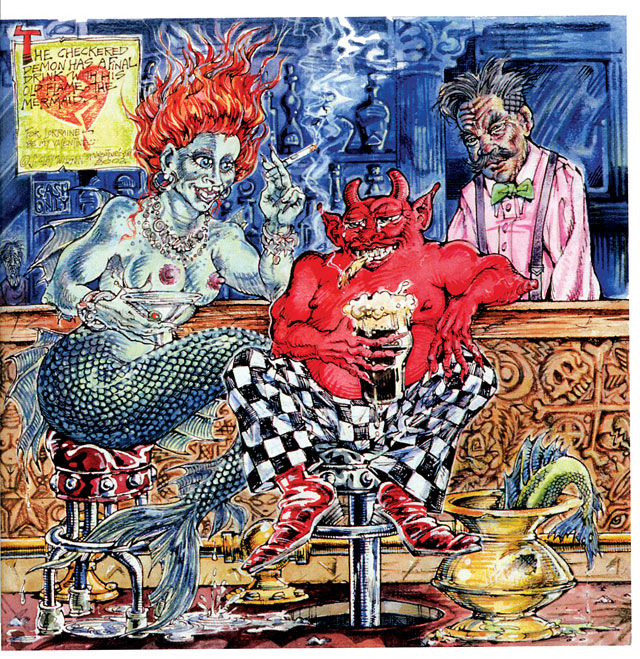
Little girls everywhere dream of being Walt Disney princesses. That’s all well and good, if we lived in a cartoon universe. But if we do, it is one created by S. Clay Wilson, the underground cartoonist, and not Walt Disney.

S. Clay Wilson Cartoon Featuring the Checkered Demon


Apparently, Princess Di wanted the whole princess package. What she got was a somewhat ghastly domestic tragedy, partly of her making, partly of Princes Charles’s making, and partly of the Queen’s making.