Desert Dreamers: Cabot Yerxa 1

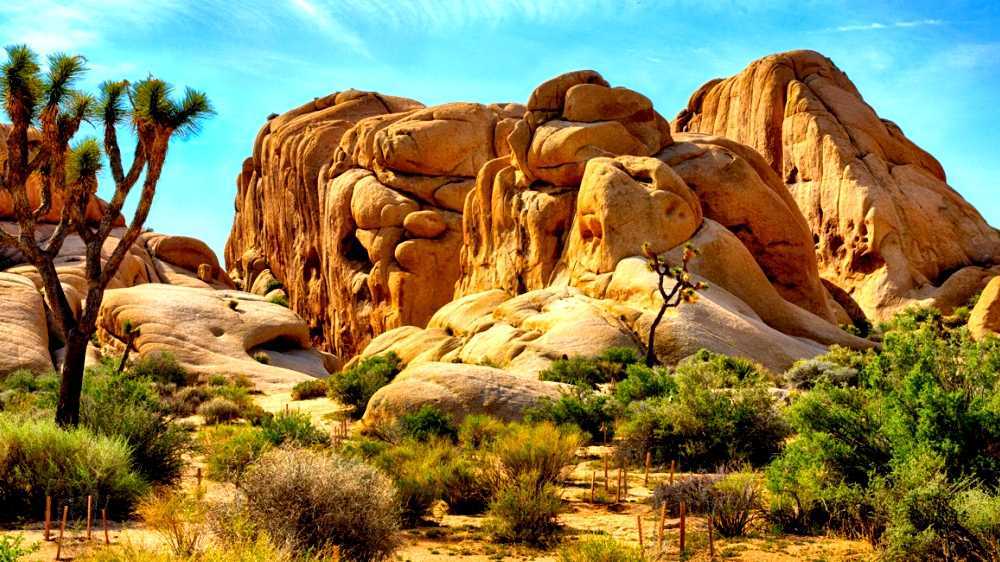
Scene from the Southern California Desert with Joshua Tree (L)

The deserts of Southern California are beautiful, but can be forbidding. I spent the weekend visiting my brother in Palm Desert. On Friday, I took a ride out to Desert Hot Springs to revisit Cabot Yerxa’s Old Indian Pueblo Museum. Simultaneously, I have been reading Yerxa’s collection of newspaper columns for The Desert Sentinel, written, with a few interruptions, between July 1951 and December 1957. They have been published in a book entitled On the Desert Since 1913 by Cabot’s Museum Foundation.

There, I find such gems as the following from December 11, 1952:

The cabin was swept and dusted, beds made up fresh, dishes put through a bath of soap and water. Then holes in the roof were repaired and firewood gathered. Boxes of groceries were opened, and it gave us a great sense of security to see packages of food on the shelf. We, very few of us, would see a store again for seven months, but we cared not. There was flower and yeast to make bread, sugar, salt, dry beans, cornmeal, canned milk, molasses, and a few other items to make many meals. But the greatest overall joy, with a thankful feeling of independence and satisfaction, was the fact that the land under our feet was ours! To no man must we pay rent or tribute for water, gas, electricity, phone, newspapers, or streetcar rides. We were free men in a new, clean, fascinating world.

Back in 1914, he had written:

Yesterday it rained for the first time in nine or ten months, and the desert was drenche. Just a steady, slow rain without any blustering wind. The sandy soil absorbed the welcome moisture completely and none ran off. The greasewood bushes opened their leaves, which are folded close together for protection during dry weather, and the damp air was full of their clean, haunting fragrance. All the sparse desert growh of bunch grass and small plants, usually quite brittle, were as limp and soft as though made of pretty colored rubber.

This post is the first in a series to be called Desert Dreamers. Tomorrow, I will write about his Pueblo Museum and what is to be found there. In future posts, I will write about other California Desert authors, most particularly Mary Austin.


Z

It Was the Best Movie Channel Ever

It lasted for fifteen years in all, from 1974 to 1989. The Z Channel really took off when Jerry Harvey was hired as program director in 1980. For the next nine years, Z was the best place to study the art of the cinema, from the silents to the present day. I watched it religiously and even created several hundred videotapes of programs that looked interesting. Even though I was no longer studying film history and criticism at UCLA, with the avowed intention of becoming a college professor, I was still—and am still—a lover of the great films.

In 1988, Jerry Harvey murdered his wife and shot himself. The new owners, SportsChannel, decided to add sports to the program. Almost overnight, movies started playing second fiddle to the Stanley Cup playoffs. Out of a fit of rage, I called the cable network to cancel what I called “the hockey channel.” Evidently, I was not the only one, because the representative who took my call knew exactly what I was talking about without my mentioning the name of the service I was canceling.

Last week, I saw a wonderful documentary directed by Xan Cassavetes, daughter of actor/director John Cassavetes. It was called Z Channel: A Magnificent Obsession (2004). It brought back to me that golden decade, the Eighties, when great films were regularly screened on cable.

Today, by way of contrast, the cable movie channels tend to concentrate on sequels, many of mediocre originals. When HBO or Showtime or Cinemax show a good film, it is an accident.

Jerry Harvey, the Genius Behind Z Channel’s Success

As I watched the Cassavetes documentary, I felt a keen sense of loss. Jerry Harvey had been a genius. Although Z Channel’s subscribers were concentrated in the West Los Angeles area, that is where the movers and shakers in the film industry are concentrated. And they were all, almost to a man, subscribers to Z. It is as if, when those hockey games started showing up on Z,  there were a massive disturbance in the Force. One that has never been reversed or even ameliorated. Years later, I still miss seeing the cinema classics that I have always loved on television.


A Budding Artist

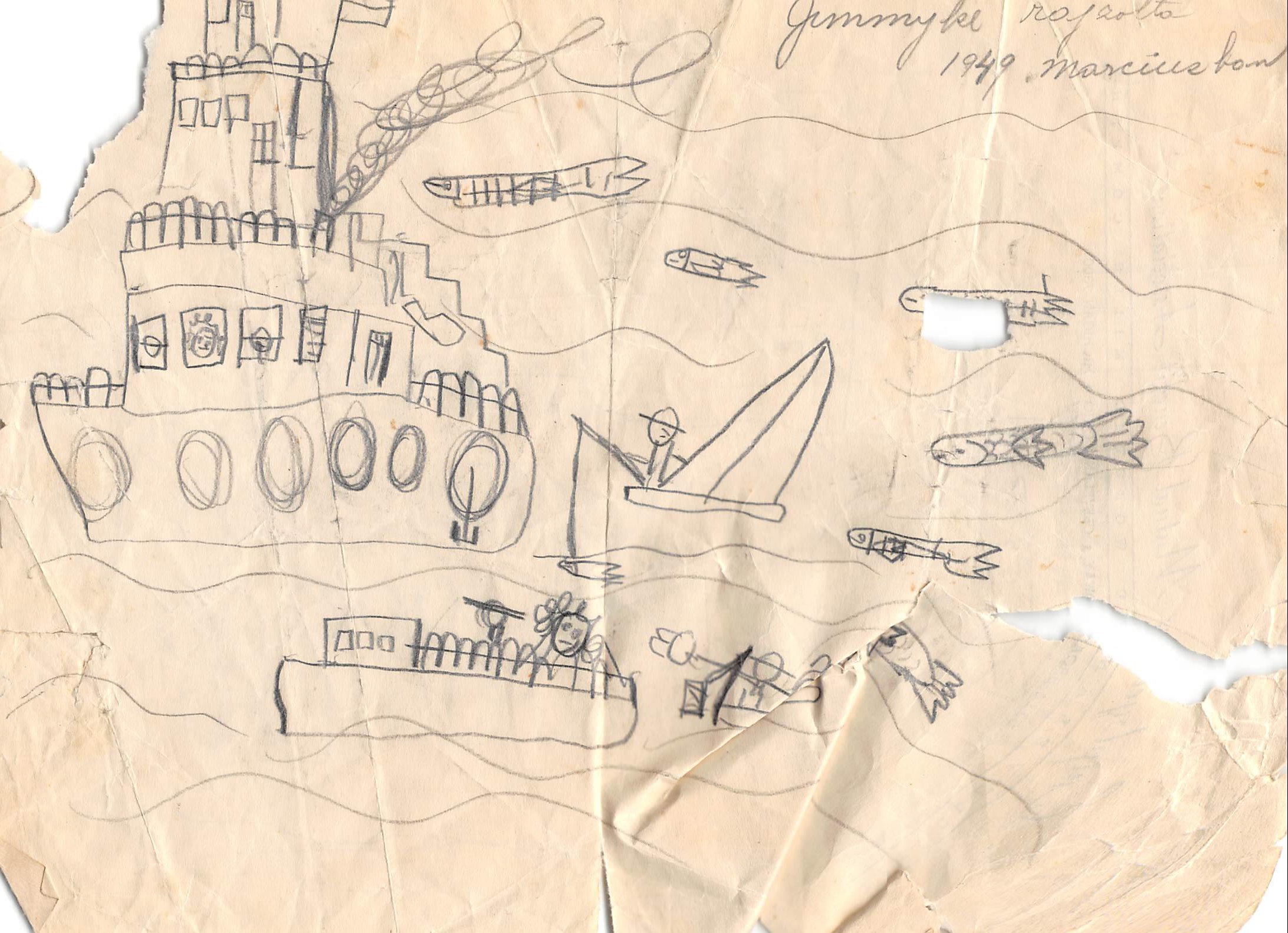
My Oldest Surviving Kid Drawing

The notation at the top right was written by my Mom in Hungarian: “Jimmy drew this 1949 March.” I was a little over four years old at the time. I had not yet entered school only to find that I was a retard who couldn’t speak English. (Of course, now I would prefer to think I was smart because I could speak a foreign language.) In fact, this ratty little pencil drawing is probably the oldest thing I have, and the only thing dating from my early years in the Hungarian neighborhood on Buckeye Road.

At the time, Mom liked to take me to the library on East 116th Street and pick a book to read to me. As the children’s books were all in English, she would pick something with nice illustrations and make up her own stories in Hungarian to fit the pictures, more or less. I have fond memories of that library. Was it perhaps because there was a great doughnut shop next door?

I just checked a map. Not only is the library no longer there; but Harvey Rice Elementary School, where I had my traumatic introduction to the American educational system, is likewise gone. They seem to have been replaced by healthcare facilities, which makes sense as St. Luke’s Medical Center is nearby. That’s where I was taken a year later because my parents thought I was too skinny. The doctors there told my parents, “Don’t worry: He’ll wind up eating you out of house and home.”

My memories of life at 2814 East 120th Street were for the most part good ones. I had good friends, like András and Joycey—Hungarians like me. We had not yet been introduced to television: That was to come a year later. And it was probably television that taught me English as much as anything else. I remember the TV station started broadcasting around 4 PM with the Kate Smith Hour, followed at 5 PM by the Howdy Doody Show, which I dearly loved.


Ancient History

My Sixth Grade Class at St. Henry School in Cleveland 1956

This evening I came across this picture of my Sixth Grade class at St. Henry School. Mrs. Joyce, our teacher, stands in the third row at the left. I can identify only three of my classmates—all boys. (By this time, my Fourth Grade sweetheart, Laura Sowinski, was no longer in my class.) The really tall kid in the last row center is my good friend Fred Nickel, with whom I used to play chess and devise explosives made from match heads. Two persons to the left of him is Anthony Braidic, not my friend but I just remember his face. The same goes for James Oliver, who is the boy in the third row three persons in from Mrs. Joyce.

And where am I? You’ll find me at the far right in the second row.

By the sixth grade, I was already a star pupil. It took me several years to overcome my Hungarian upbringing and become more conversant with the English language. In the second grade, Sister Francis Martin used to pull my ears and call me “cabbagehead.” I had finally gotten past the vegetable world.

The Cross of St. Henry Church, Behind Which Stood My School


Over the sixty-three intervening years, I have lost touch with all my Sixth Grade classmates. It seems a pity, because I spent a lot of time with these kids and had some good times. It is likely that the pituitary tumor that was finally operated on in September 1966 was already causing me excruciating frontal headaches. Being a little kid, I didn’t know how bad off I was.
 

Geographies: Real

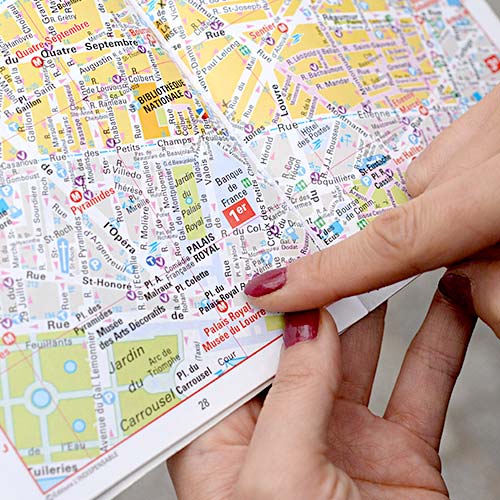
A More Recent Edition of This Invaluable City Atlas Than Mine

This is one of two posts by an inveterate map freak. I will start with real geographies that inspired some of my more fantastic fictional ones. I have read two novels this month which inspired me to dig up my copy of Paris Pratique Par Arrondissement Édition 2005. The first was Cara Black’s Murder in Clichy; and the second, Georges Simenon’s masterful Maigret and the Bum.

Ever since I was a grade school boy, I loved maps and atlases. It became even more pronounced when, at the same time, I collected stamps from such strange corners of the world as Tannu Touva, Bechuanaland, Liechtenstein, and Nejd. Naturally, I had to know where these geographic entities were, their principal cities, and some knowledge of their economies (if any).

No, I Don’t Wear Nail Polish

The best city street atlas I have ever seen is the abovementioned Paris Pratique Par Arrondissement. Each of the twenty arrondissements (districts) of the city gets either two facing pages, or, if required, two sets of two facing pages. In addition, there are maps of the metro, the RER (suburban rail routes), major bus lines, the Bois de Boulogne, the Bois de Vincennes, and La Défense. Throughout, it is organized so logically that I cannot imagine using any other map to follow the action in novels set in the City of Lights.

Absent from this handy atlas are the suburban banlieus which tourists are not likely to visit unless they are in the market for recreational drugs or a bit of the old ultra-violence. Unlike American cities, which tend to be hollowed-out at their core and liveable only in the outlying suburbs, Paris reserves the center for historical buildings and the wealthy, while the areas beyond the peripheral highway are strictly for slumming.


An Incredible Richness

Altar in the Archbishop’s Palace in Lima, Peru

It was not until I visited Peru five years ago that I realized that the Inca were not the only game in town. In fact, I found the old Catholic churches with their ornate ornamentation was equally interesting. After all, the Inca had no written language and left no books until the Spanish taught them how to write. And yet the Catholic church in Peru was incredibly powerful. A visit to the great old churches of Lima led me to think that the Church in Peru was the recipient of as much gold and silver as the King of Spain.

In the south of Peru was San Luis Potosí, where there was an entire mountain of silver called to this day the Cerro Rico, the “Rich Hill.” The silver was sent to Lima, from where it was transshipped to Panama, where the conquistadores marched it across the isthmus to Colón, where it was loaded onto Spanish treasure ships and sent to Spain.

Altar at Lima’s Cathedral

Of course, much of these Peruvian riches never made it to Spain, thanks to the ravages of pirates and storms at sea. Whatever was given to the church, however, went into the churches of Lima and the rest of the Hispano-America. I cannot count the number of times I would walk into a church and be struck by all the gold used in the altars and in gilding the statues and frames of the paintings on display. Look, for instance, at the picture below of the Company of Jesus Church in Quito, Ecuador:

PICQuitoCompanyOfJesus

The Main Altar of the Company of Jesus (Jesuit) Church in Quito, Ecuador

It was nice to see the Inca ruins, but the remnants of a once-triumphal Catholicism were far more impressive. Granted that the Inca were perhaps the world’s greatest stonemasons, but the Spanish civilization is far richer.

Padre Apla’s

The Room Where Father Stanley Francis Rother Was Murdered

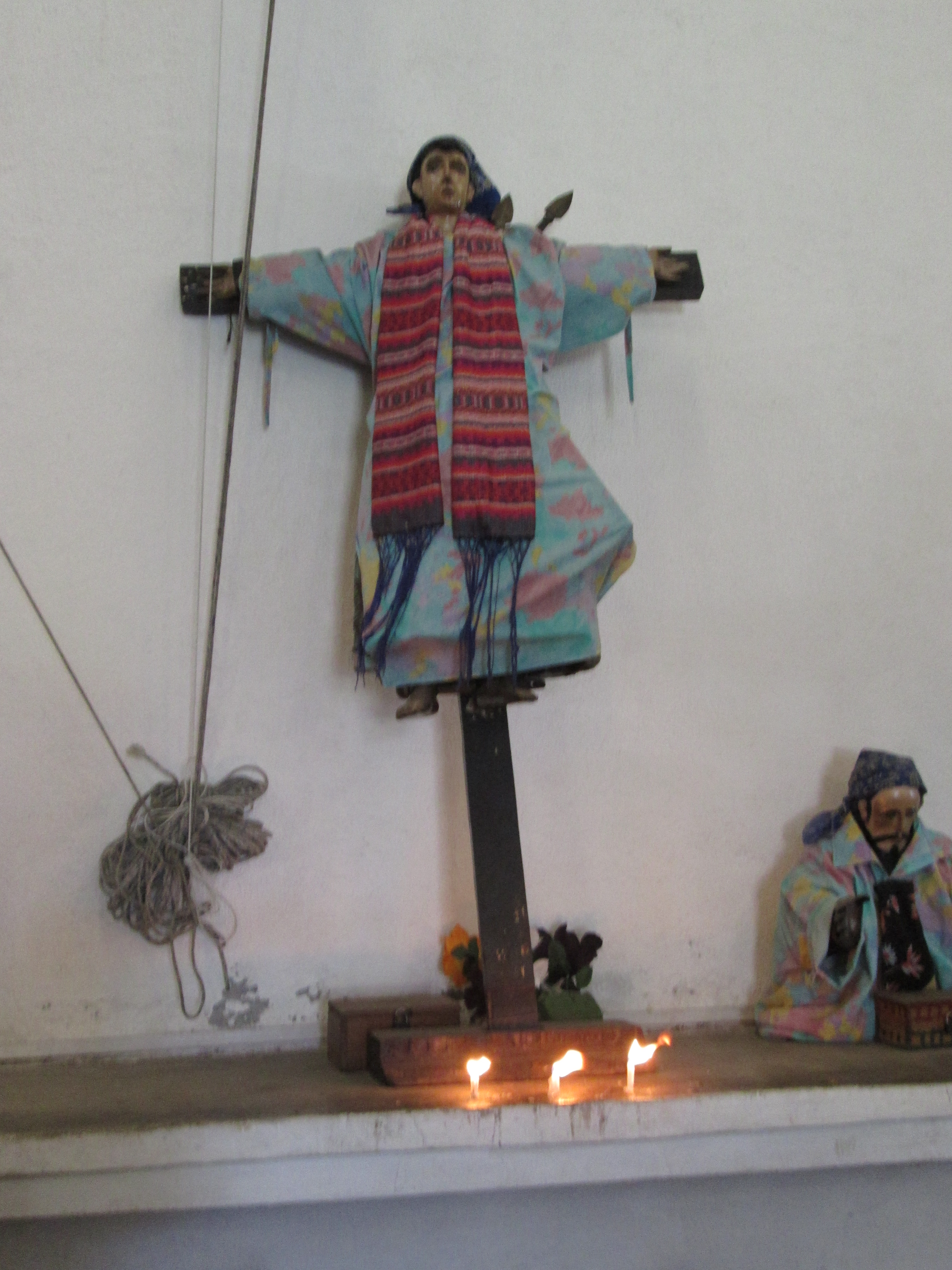
There are not many Americans who are idolized by the Maya people. One exception is a Catholic priest from Oklahoma called Father Stanley Francis Rother, who was appointed to run the church of Saint James the Apostle in Santiágo Atitlán from 1968. He learned Spanish and the local dialect of Tzu’utujil Mayan, and over the years became a beloved figure to his parishioners. Maya fabrics started working their way into his liturgical vestments, and the statues of saints in his church were lovingly dressed by the local people.

In August 1981, Padre Apla’s (Maya for “Francis”), as he was known, was threatened by right-wing death squads and ultimately murdered in his own bedroom. That bedroom, a few steps from his church, has been turned into a museum. Although most of his body is buried in Oklahoma, his heart was removed and is buried under the altar of his church.

Statue of Saint with Votive Candles

I visited the scene of his death on two consecutive days. Each time, it was filled with Maya who prayed and sang songs honoring the priest who had become one of them. I noticed that the Catholic church is considering him for sainthood and has designated him as Blessed Stanley Rother. At the same time, one wonders how he could simultaneously please the Maya people whom he loved and the conservative bishops to whom he reported.

Votive Figures Dressed in Maya Garb Lining the Church Walls

There are not many North Americans held in high regard by the Maya. In fact, it was John Foster Dulles and the CIA who, by deposing Jacobo Árbenz, President of Guatemala, in 1954, started the long civil war that finally ground to a halt in 1996. Even today, I deliberately avoided encountering the Guatemalan army, who seemed to be all over the place, and who have an unsavory reputation for massacring their enemies, the tribal Maya.


Ten Years Ago

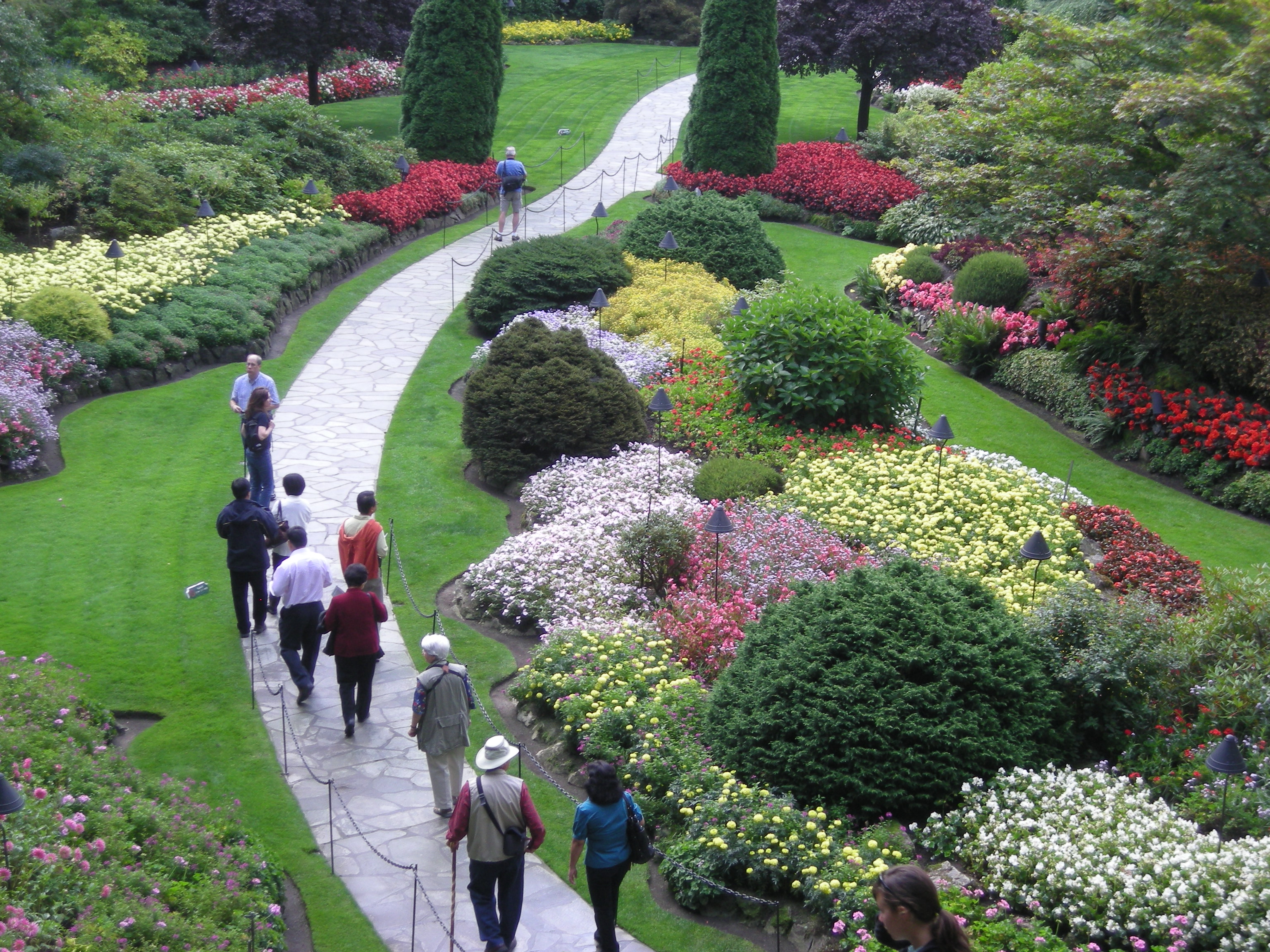
The Sunken Garden at Victoria, BC’s Butchart Gardens

I have over twenty thousand photographs stored in the cloud at Yahoo Flickr. Sometimes, when I don’t know what to write about, I just scan through some of my older pictures. This time I decided to look back ten years. My vacation that year was to Seattle and British Columbia. The pictures of me at that time showed me to be much heavier, probably close to 230-240 pounds. Now, thanks to diabetes, I am closing in on 200 pounds.

The pictures of Martine show her to be much happier. Ever since 2013, when she started complaining of back pain, she has been less willing to travel. The last good trip we took together had been in 2011, when we spent three weeks in Argentina and Uruguay. There was a period of several years recently when she has been depressed and made several attempts to live elsewhere on her own. Lately, she has been less depressed and even laughed on occasion. Still, she has let her passport expire and shows no interest in traveling abroad any more.

Probably Canada has been her favorite foreign destination, to Victoria, Vancouver, Ottawa, Montreal, Quebec, and particularly New Brunswick and Nova Scotia.

My favorite destination in the trip we took ten years ago was Butchart Gardens just north of Victoria. Both Martine and I love botanical gardens, and Butchart is a world-class place for people like us. My favorite part is the Sunken Garden, which used to be a quarry. It took nine years to convert the five acres of disused quarry into a faerie-like collection of beautiful flowers, trees, and shrubs. And, because we are much farther north, the nature of the plants is so different from what we have in Southern California’s Mediterranean climate.


Tikal At Long Last!

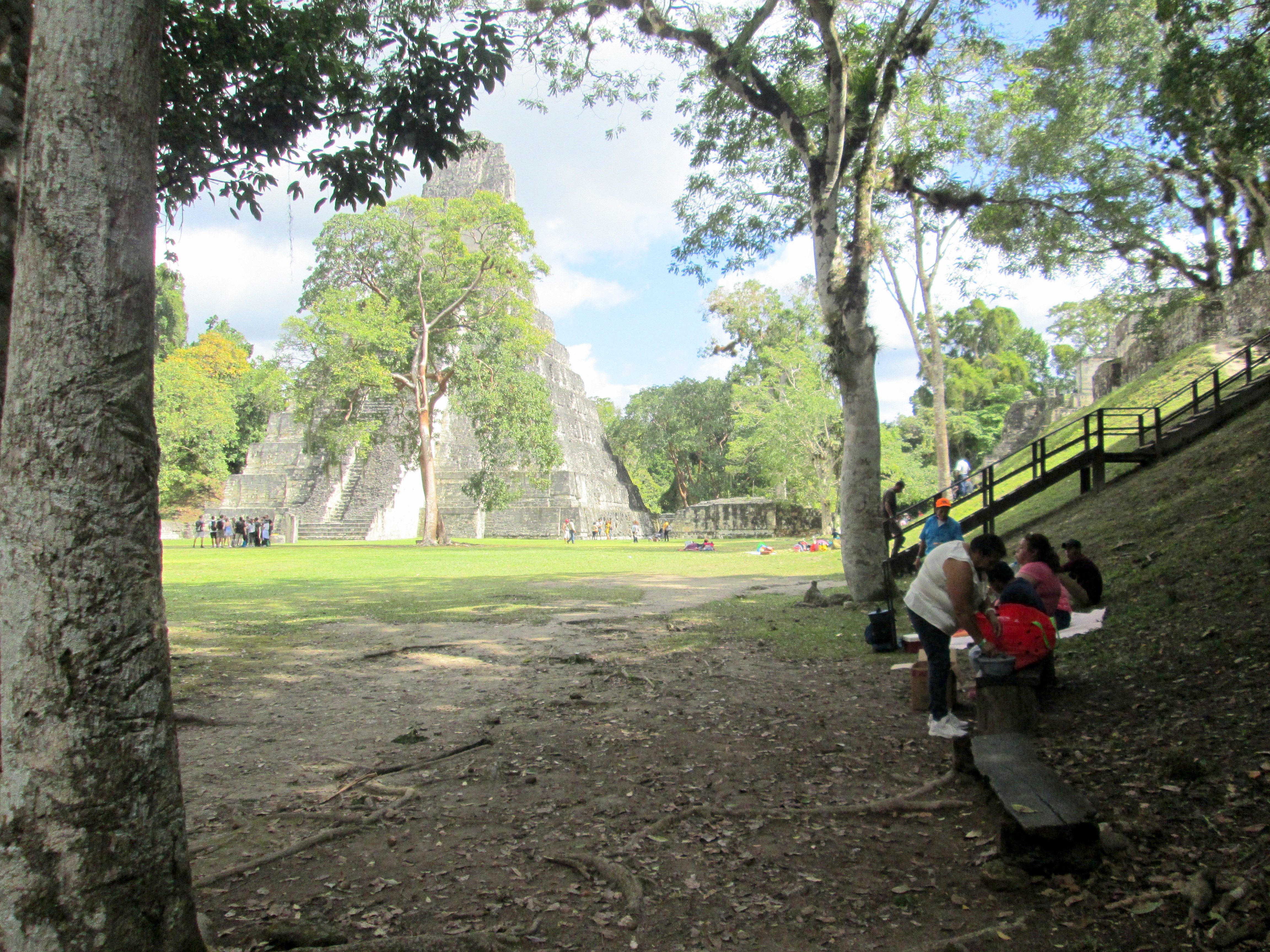
The Great Plaza at Tikal

Ever since I started reading about and visiting the Maya back in 1975, I had wanted to go to Tikal. There was a slight problem: Guatemala was in the middle of a Civil War between the Maya and the military that was to last until 1996. During that time, Guatemala was red-flagged by the U.S. Department of State as being dangerous for Americans to visit.

Finally, in January of this year, I spent two days visiting the ruins at Tikal. After all this time, I expected that the Petén region was a tropical hellhole and that I would be assailed by mosquitoes, high humidity, and torrid temperatures—none of which I actually had to face. The rainy season had ended in December, and my visit coincided with below-average temperatures and humidity. In fact, Tikal was downright pleasant.

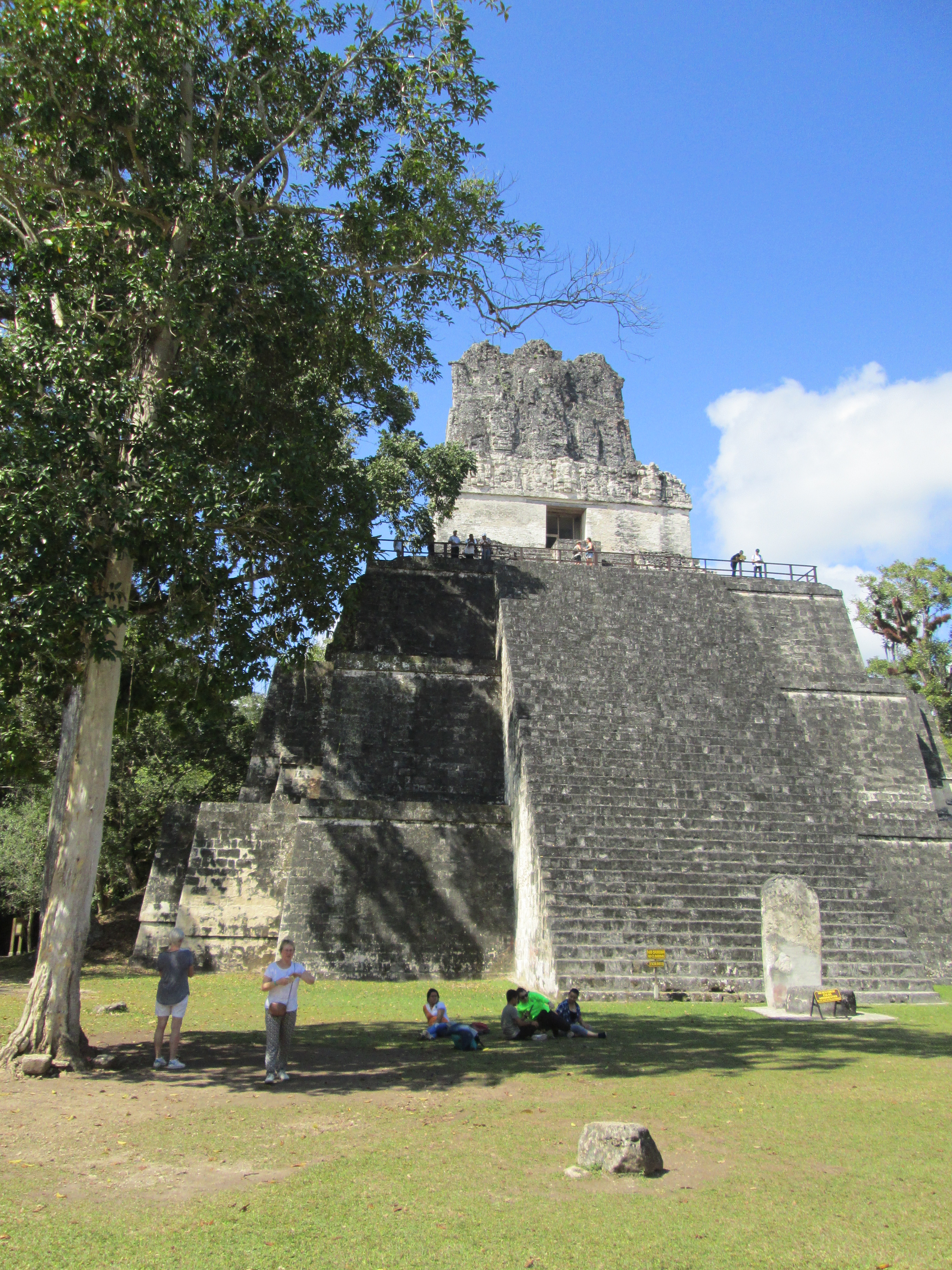
Temple II at Tikal

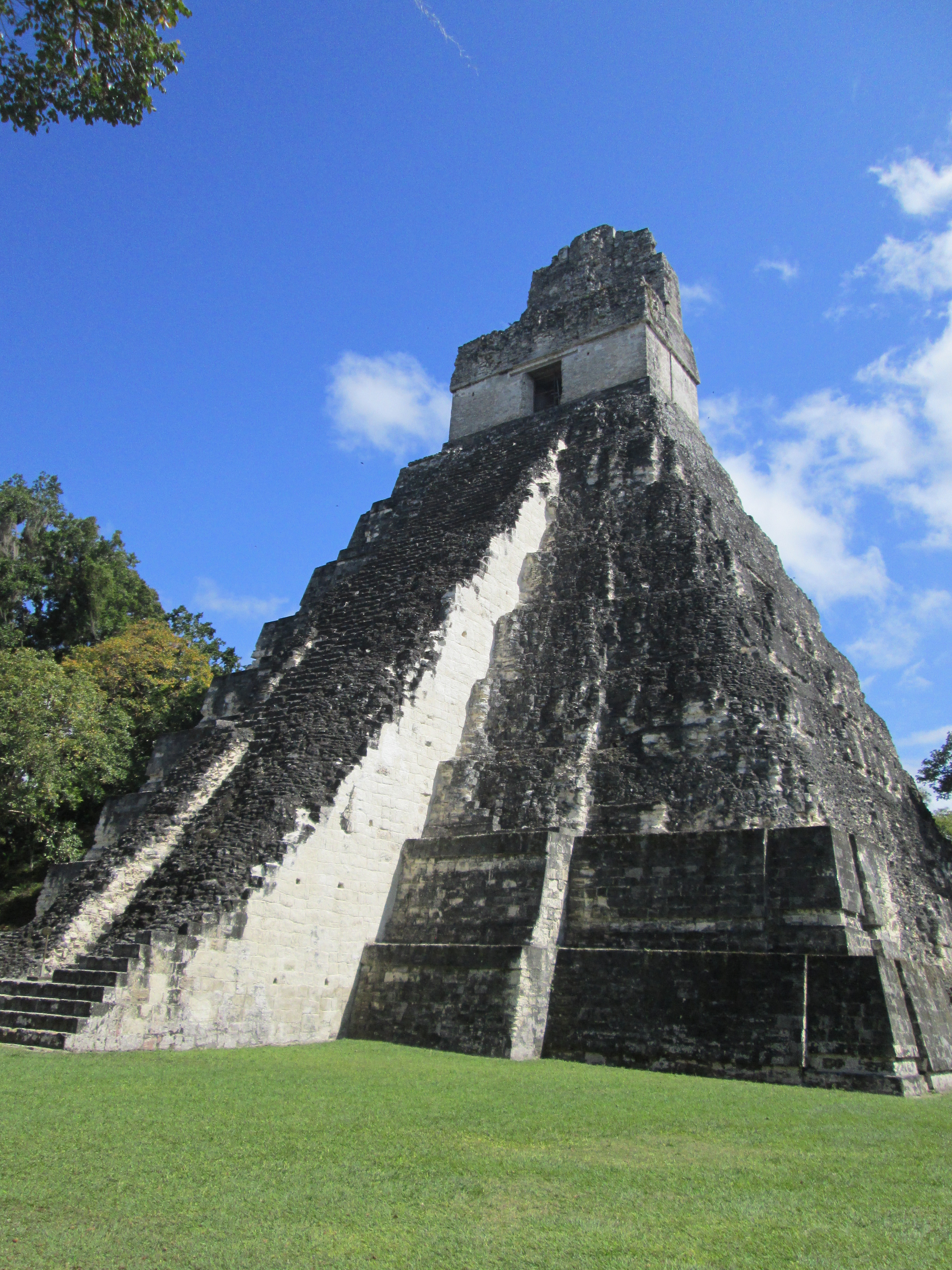
When I was visiting Mexico in the 1970s and 1980s, I had climbed all the major pyramids at Uxmal, Chichen Itza, El Tajin near Papantla, and Teotihuacan. In fact, I had lost my fear of heights by climbing pyramids. There was something about the structures at Tikal that was particularly forbidding: They rose quickly to precipitous heights. After losing a few tourists who pitched headfirst down the steep pyramid stairs, however, Guatemala and Mexico decided to close a number of the structures to climbing. The temple above can be climbed using a steel staircase with guard rails at the back. Compare that with Temple I, just a few hundred feet away.

Temple I: Closed to Climbers

Because Tikal was at the tail end of a particularly exhausting vacation, I did not climb any of the pyramids. My feet were aching, so I contented myself with taking pictures from the ground level.


Nobody’s Perfect

John Wayne (1907-1979)

In a 1971 interview appearing in Playboy magazine, John Wayne said a number of things that proved once and for all that he is no one’s idea of a Progressive. Here are a few snippets:

  • “I believe in white supremacy…. We can’t all of a sudden get down on our knees and turn everything over to the leadership of the blacks.”
  • He regarded Midnight Cowboy and Easy Rider as homosexual films.
  • “I don’t feel we did wrong in taking this great country away from [the Indians], if that’s what you’re asking. Our so-called stealing of this country from them was just a matter of survival. There were great numbers of people who needed new land, and the Indians were selfishly trying to keep it for themselves.”
  • On the subject of slavery, he said that he didn’t feel any guilt about the U.S. history.

So now the Professionally Outraged (who are permanently P.O.’d) want to do with the Duke what other protestors did to Confederate battle flags and statues of Robert E. Lee, namely, wipe their memory off the face of the earth.

While I cannot personally countenance what Wayne said, I think it is ridiculous to consider changing the name of the John Wayne Airport in Orange County to some more innocuous person who was never actually caught saying something unpopular in public. No doubt, such persons may exist. I myself have said and done a number of things which are equally reprehensible. After all, I was the son of a George C. Wallace supporter and (back in Czechoslovakia) a Jew-baiter. It was not until I divested myself of my Cleveland background that my thinking has been more politically correct.

As nasty as some of John Wayne’s beliefs were to me, I continue to enjoy his performances in Westerns by John Ford and Howard Hawks—even while I deplore some fave projects of his as Big Jim McLain (1952) in which he played an investigator for the House Un-American Activities Commitee (HUAC) and The Green Berets (1968) in which he was gung-ho on the Viet Nam War.

John Wayne was a man of his times. By the time of the Playboy interview, he was already ill and probably bitter about the direction the country was taking. I see no reason why we have to make him an unperson for some words he said half a century ago.