The Talking Stones of Yaxuna

The Mayan Glyph Stairway at Copán

The Maya believe that certain inanimate objects, such as stone glyphs and statues had souls. The following excerpt, entitled “The Talking Stones,” comes from Maya Cosmos: Three Thousand Years on the Shaman’s Path by archeologists David Freidel, Linda Schele, and Joy Parker:

When I read Paul Sullivan’s book [Unfinished Conversations: Mayas and Foreigners Between Two Wars] it helped me understand something I had witnessed among the village people of Yaxuna who worked with me on the nearby ancient city. When excavation first began, the villagers were deeply concerned that we might try to remove stones, especially carved stones, from the ruins. I had difficulty understanding their anxiety. I explained to them that sometimes artifacts had to be removed for analysis, but that they would be returned faithfully when safe storage could be built for them. The matter was of such importance to the villagers that finally Don Pablo, the local shaman, took it personally  upon himself to ensure that no carved stones be removed from the site. There were some strained moments when the archeologists of the Mexican government insisted that carved stones be taken to safekeeping and the Yaxuna people insisted that they stay; but the tensions were finally resolved. The stones of Yaxuna are still there, under the watchful eyes of the villagers, and now I know why the matter loomed so large: such stones are likely k’an che’, seats of supernaturals.

I had one other encounter with Don Pablo and talking stones. One day in the summer of 1989, after he had done some work on the camp kitchen, I found a clear glass marble in the area. Thinking it belonged to Don Pablo and was one of his saso’ob, the “lights” he used when focusing spiritual forces, I took it next door to him that evening. He took the marble and inspected it carefully.

“Yes,” he said finally, “this is a stone of light.”

Then he smiled, “However, it won’t speak until it has been soaked in maize gruel, sak-a’, and then it will speak only Maya.”

Pursuing the Uncool #2

Smart Phones: Bonus or Onus?

This post grew out of a conversation between my brother Dan and me. He noted that I tended to distance myself from anything that smacked of the popular and acceptable. Agreeing with him, I thought I would formulate my somewhat strange philosophy of life. Distilled down to its essence, it is to at all times avoid bragging rights—across the board—and avoid the endless search for prestige, wealth, and everything in their train.  This is the second part in a series.

Smart Phones

They’re everywhere. People are actually surprised when I tell them I don’t have one. All I have is a flip phone which I never answer because most calls I receive on it are robocalls in Mandarin Chinese. So my cell phone is always turned off and used only for emergencies. Being always available to receive phone calls makes me feel more like a slave than someone in control. I would rather be aware of my surroundings than checking my e-mail several hundred times a day. (In fact, more than 90% of the e-mail on my computer is trying to sell me stuff.)

Eating Take-Out All the Time Is Not My Idea of Fun

Food Delivery Services

Not showing up in person is now considered the height of cool. That applies to restaurants, but also to other food delivery services such as those sponsored by supermarket chains and recipe of the week services like Blue Apron. My former neighbors in the apartment below used to receive a Blue Apron box every Tuesday—and for the rest of the week, we smelled the same identical food smells.

At Ralph’s Supermarkets, where I do most of my grocery shopping, there are legions of young people employed in shopping for others. Would I trust a young person who doesn’t know how to cook to select my meat and produce for me? Not on your life! My mother was raised on a Hungarian farm. As the oldest child, I learned at her side how to shop, especially for produce. I know how to tell male from female eggplants, and I’m surprisingly good at picking sweet watermelons with thin rinds.


A Bookworm’s Day

The Westfield Culver City Mall

Today was a day devoted to books. This morning, I took a box of 20 trade paperbacks to the Los Angeles Public Library in Mar Vista as a donation. They are about to have a large book sale in a couple of weeks, and I thought these books would probably sell. After I dropped them off, I sat in one of their comfy chairs and finished reading The Best American Travel Writing 2013, edited by Elizabeth Gilbert. Travel literature is one of my favorite book categories, accounting for much of my reading during the summer months. (As well as being an actual traveler, I am also an armchair traveler.) On my way out, a picked up a free library discard copy of Fodor’s Brazil (2016).

The reason? I am toying with the idea of flying to the State of Bahia, to Salvador and Ilheus, and reading Jorge Amado’s novels which are set there.

Next, I drove to the Westfield Culver City mall, where I ate a light vegetarian lunch at the Vietnamese restaurant in their top floor food court. Afterwards, I bought some milk chocolate clusters with walnuts, peanuts, pecans, and almonds. I spent a couple of hours looking at the Fodor Brazil guide before heading home.

Max von Sydow and Liv Ullmann Arrive on the Island in Hour of the Wolf

By the time I got back, Martine was gone for a doctor’s appointment, so I watched Ingmar Bergman’s Hour of the Wolf (1968), the closest the Swedish director ever came to a gothic horror film, starring Max von Sydow and Liv Ullmann staying on an island of vampires.

After preparing dinner, consisting of Hungarian fasirt with buttered corn on the cob. Afterwords, I started reading Valentin Kataev’s 1927 novel Embezzlers. All in all, not a bad day.


Pursuing the Uncool #1

Do You Really Want a Trophy Wife?

This post grew out of a conversation between my brother Dan and me. He noted that I tended to distance myself from anything that smacked of the popular and acceptable. Agreeing with him, I thought I would formulate my somewhat strange philosophy of life. Distilled down to its essence, it is to at all times avoid bragging rights—across the board—and avoid the endless search for prestige, wealth, and everything in their train.  Consider this to be the first part in a series. Here goes:

Trophy Wives

Let us say that you want a slim blonde bed mate with whom to spend your life. That works only if your targeted spouse has no desire for bragging rights to a more desirable man than you can ever be. You might light up a party for a few minutes, but your life will be an endless misery if your desires conflict with hers, as they inevitably will. Marry someone you can live with. I find that Martine looks better all the time.

Cars

Hold off on that Tesla! Your car should be chosen for its ability to get you from Point A to Point B in comfort and safety. Once I had to move my boss’s BMW to a different parking space while he was on vacation. No sooner did I turn the key in the ignition than the computer started indicating numerous error conditions. It seems my boss never initialized the system properly. What fun can you have driving around when you are constantly being reminded what a fool you have been?

Do Your Shoes Look Like They’ve Been Stolen from a Smurf?

Fashion

You can choose to follow the latest fashions, but they are constantly changing. And what looks good to you today will probably look pretty lame tomorrow. In fact, they could look pretty lame today.

To Be Continued …

Visiting L.A. History

The Ranch House at Rancho Los Alamitos

Over the last year or so, Martine and I have been visiting many of the old adobes that were associated with the Spanish and Mexican land grants into which the arable land of Los Angeles had been subdivided. These have included:

  • Centinela Adobe in Westchester
  • Dominguez Rancho Adobe Museum in Rancho Dominguez
  • Leonis Adobe Museum in Calabasas
  • Los Encinos State Historic Park in Encino
  • Pio Pico State Historic Park in Whittier
  • Rancho Los Alamitos Historic Ranch and Gardens in Long Beach
  • Rancho Los Cerritos Historic Site in Long Beach

Of these, the most spectacular have been the Leonis Adobe and Rancho Los Alamitos, both of which have substantially larger budgets and more well-developed exhibits than the others.

When one has visited a number of these adobes, a pictures emerges of an agrarian life of herding sheep and cattle and of a few widely-separated ranches, mostly far from the Pueblo of Nuestra Señora la Reina de los Angeles de Porciuncula (a.k.a. downtown Los Angeles), which was founded in 1781. In the years that followed, the map of Southern California was broken into large land grants:

Spanish Land Grants in the San Gabriel Valley

Small wonder that there are so many Spanish place names in L.A.! The land that was not part of a Spanish or Mexican land grant was either a town site, mountains, or desert.

Rancho Los Alamitos, which Martine and I visited today was surrounded by lush gardens of carefully chosen trees, flowers, and succulents.On the grounds is a deep artesian well that helped the land stay productive for agriculture for well over a century and a half.

Part of the Los Alamitos Gardens

It is also by far the most liveable of the adobes we have visited. For one thing, the original 19th century adobe structure was substantially added to. Unlike most adobes which are sparsely furnished with miscellaneous items that were never meant to coexist in the same room, at Los Alamitos we have the original furniture, library, kitchen appliances, including some pieces actually crafted by carpenter John Bixby, one of the original inhabitants.

Rancho Los Alamitos is a place of beauty which we will visit again.


Bosko the Doughboy

Bosko the Doughboy (1931): Violence and Absurdity

Before the Hays Code was widely adopted around 1934, Hollywood produced a number of wild films that would be frowned upon even in today’s Quentin Tarantino environment. One of the wildest is a Bosko cartoon released by Warner Brothers in 1931 which shows the horrors of World War I in a graphic and yet insanely cheerful manner. Oddly, it was directed by Hugh Harman, whose Harman-Ising cartoon productions usually showed cute animals innocently singing and cavorting on farms and in the wilds.

In “Bosko the Doughboy,” one of the first shots is a brutal machine-gunner who turns his weapon to the camera and shoots the audience.

Machine-Gunning the Audience

I have seen numerous World War I films such as Stanley Kubrick’s Paths of Glory (1957) and the recent They Shall Not Grow Old (2018). Yet neither of these films can hold a candle to “Bosko the Doughboy,” whose experiences would shame the Good Soldier Schweik or Bertolt Brecht or Eugene Ionesco. This is a cartoon which remains on a manic and chirrupy plane even when many of its cute animal characters are shot to pieces by machine guns, cannon, or aerial bombardment. Nobody is sad, even when in articulo mortis.

You have to see this film to believe it. It’s only seven minutes long.

In the very last scene, a bomb explodes right by Bosko, turning him black. His response? He spreads his arms wide and shouts “Mammy!” a la Al Jolson.

More (Un)Real Estate for the Trumpster

Some Other Trump Prospects After Greenland

Our Presidente clearly wants to add to his real estate empire. If he buys Greenland, will it be called Trumpland? Without the ice, wouldn’t it be too barren for him. I have some other ideas for prospective purchases to be added to the burgeoning Trump Empire.

Oz’s Emerald City is a natural, but only if the Golden one can have gold plumbing fixtures installed. It’s a natural property for someone who likes to distract tin men, scarecrows, lions, and little girls by pretending to be something other than what he is, and more powerful.

Duckburg Would Be Even Better to Replenish Funds Lost in Bankruptcies

Scrooge McDuck’s Duckburg would be a much-needed acquisition to allow the Trump to dive in fresh and rather substantial cash reserves which, at present, he doesn’t have. He can replace Donald and his pesky nephews with Jared, Don Jr, and Eric. I’m sure he can find funny names for them. He’s rather good at that.

Pleasure Island from Pinocchio Would Be a Natural Acquisition

A man who likes to grab women by their lady parts would love Pleasure Island. All he has to do is add his name. What do you think of Trump Pleasure Island? It’s too bad that Jeffrey Epstein isn’t around any more to help him populate it with fun subservient underage girls who share his lack of moral compass.


Memories of Cleveland

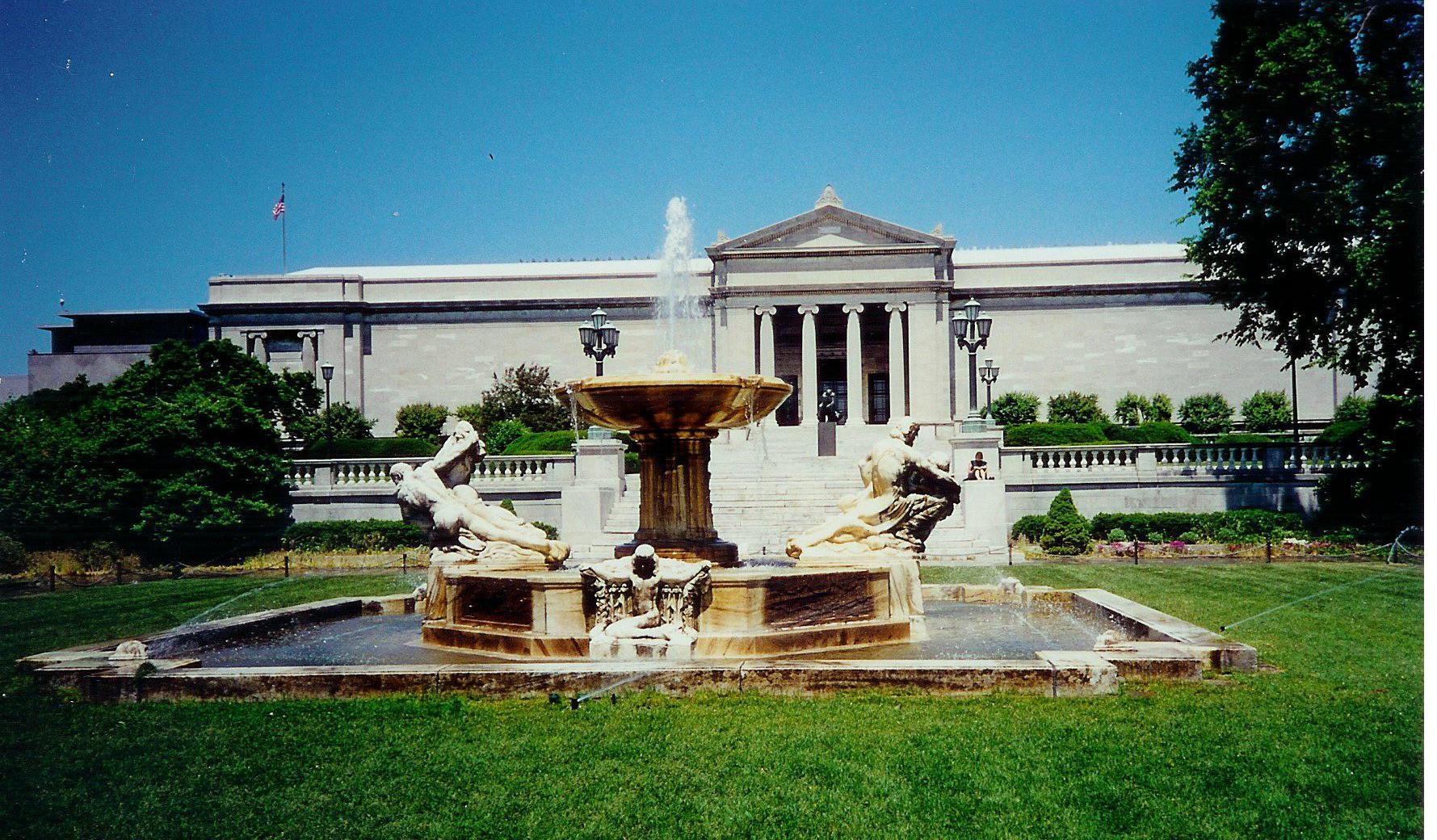
The Cleveland Museum of Art

When I was growing up on the East Side of Cleveland, there were some areas that I really grew to like. Probably I was most drawn to the area around the Cleveland Museum of Art and Case Western Reserve University. I used to take the 56-A bus from home to East 105th Street, where I transferred to another bus that took me to Euclid Avenue. There was a drugstore at the corner of 105th and Euclid that featured a drink at their soda fountain called a “fresh lime rickey.” I would eat lunch there and walk over to either the Cleveland Museum of Art or the Western Reserve campus (it had not yet merged with Case Institute of Technology).

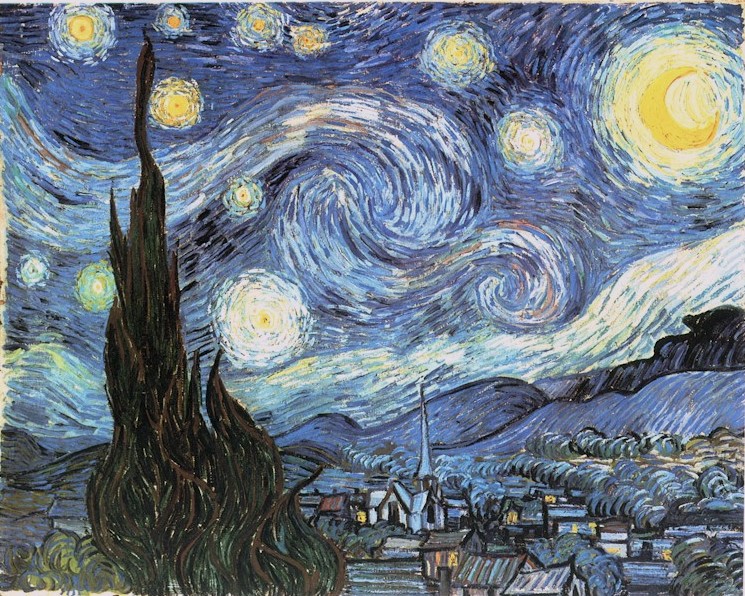
I would take art appreciation classes on Saturdays at the art museum, afterwards walking around the collections of medieval armor and 19th century art, including a Van Gogh that became my favorite painting: “The Starry Night.” I wonder if Cleveland still has that painting.

Van Gogh’s “Starry Night”

After I had started at Dartmouth College, I took a course on tragedy in literature at Western Reserve University by a professor named, as I recall, Tom MacDonald. At times, I would walk over to the Museum of Art after classes before getting on the buses home.

Other than the “University Circle” area that I frequented, I was not overly impressed by Cleveland. The Downtown area was rather grim. I had saxophone lessons near the center of town. The only places there I felt I could hang out were the Public Library on Superior and Schroeder’s Bookstore on Public Square. To the west were the Flats with their large factories, through which flowed the Cuyahoga River. It was this river which had made news once for being so polluted that it had caught fire.


Why Latin America?

There Is a Reason Why I Keep Going Back There

My first vacation on my own—at the age of thirty—was to Yucatán. In the intervening years, more than two-thirds of my international vacations have been to Mexico, Central or South America. Originally, my interest was in Pre-Columbian archeology. I still am, but I’ve added post-Columbian (i.e., Christian) archeology to my interests. The two exist side by side in fascinating ways.

Many Latin-American towns have museums of religious statuary and paintings that used to be in churches that are no longer in service. Lima, Peru, for instance has a fascinating museum in the former Archbishop’s palace adjoining the cathedral.

Sacramental Vessels from Lima’s Archbishop’s Palace

American tourists usually go in for all the pre-Columbian sites, but are totally uninterested in the ruins of Catholicism that are evident all over the place. In places like Buenos Aires; Cuenca, Ecuador; Mérida, Mexico; and Antigua, Guatemala there are old churches that are no longer in use, but there are thousands of items of religious art that are fascinating to me. One of the most incredible is the huge monastery of Santa Catalina in Arequipa, Peru, which is like a walled city in its own right.

The Monastery of Santa Catalina in Arequipa, Peru

In the morning that I visited Santa Catalina, I took the two-hour morning tour. Then I went to lunch and had some rocoto relleno (spicy stuffed Peruvian green pepper) in a restaurant behind the cathedral. Then I went back and spent the whole afternoon actually trying to get lost as I wandered through the narrow streets and saw the chapels, nuns’ cells, gardens, kitchens, laundries, and other services that made up the monastery.

Looking back, I think I’d rather see Santa Catalina again than Machu Picchu. In my mind, they are of equivalent interest, but Santa Catalina is much nicer.


Spilimbergo

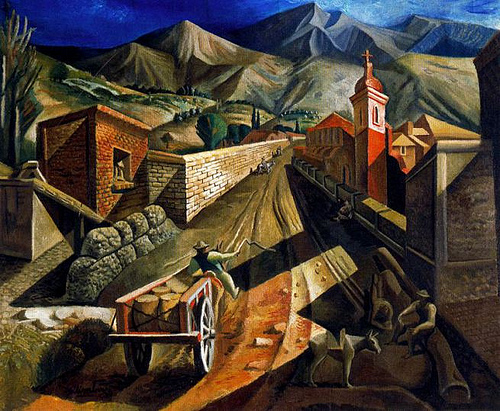
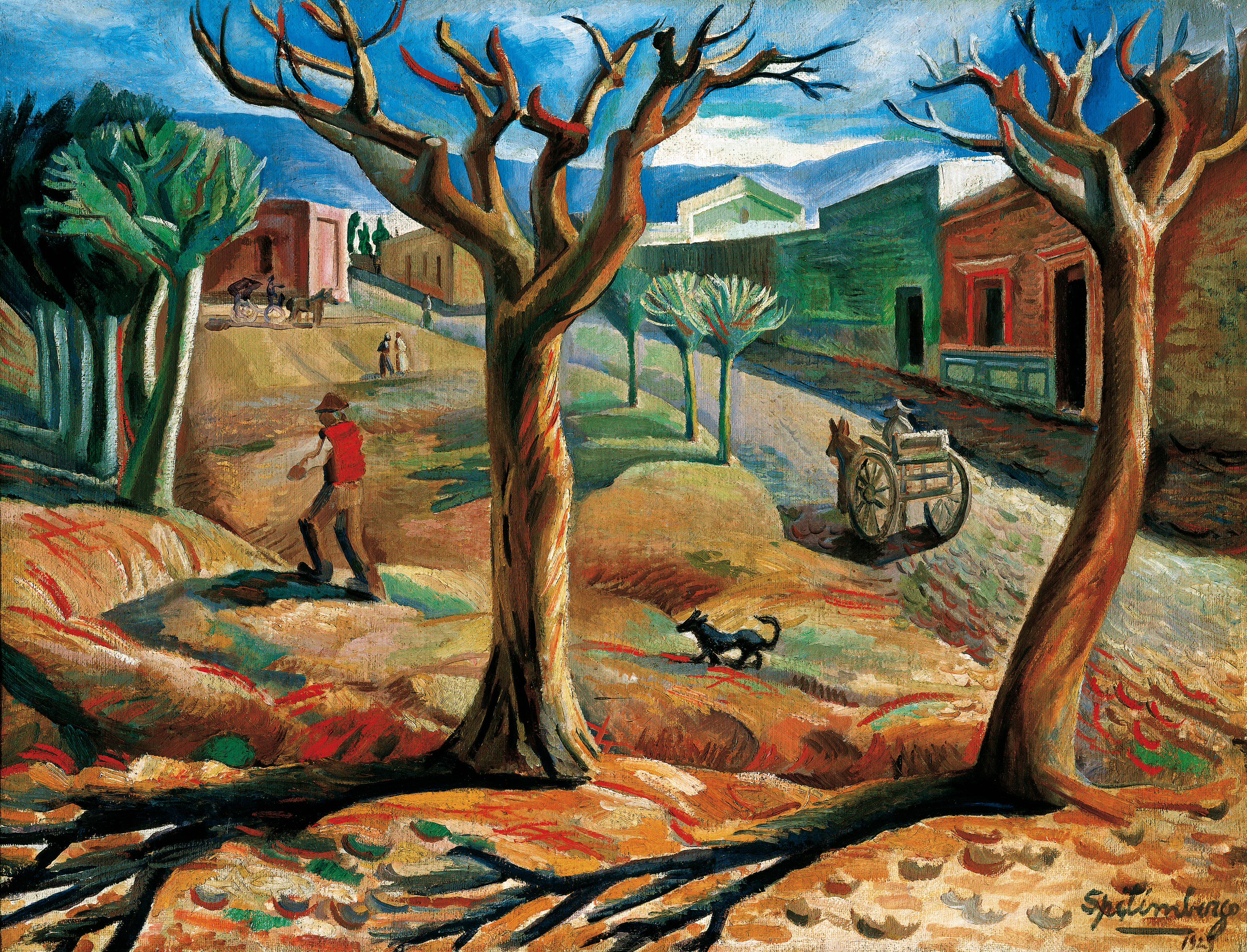
Landscape by Lino Enea Spilimbergo (1896-1964)

I have always thought that the world has never sufficiently appreciated the artists and writers of Argentina. Having paid three visits to that distant country, I have begun to appreciate the artistic vision of its people. This post honors the work of Lino Enea Spilimbergo, the son of Italian immigrants, who was born in the Palermo neighborhood of Buenos Aires, but for health reasons relocated to the drier province of San Juan in the center of the country.

“Pasaje de San Juan” by the Painter

What draws me to Spilimbergo’s work is that his eye seems to capture much of the wonder that is the Argentine landscape. Though the artists work was by no means limited to landscapes:

“Mujer Sobre Paisaje”

The above picture has both surrealistic and straight landscape elements, incorporating the jungles of northern Argentina with a female nude. Unfortunately, relatively little is written about Spilimbergo’s art on the Internet in English, though I think his work deserves serious study.