Incorrigible Bookworm

Picture of Me at the Last Bookstore, Downtown Los Angeles

Sometimes, I just have to sit up and take a good look at myself. Where in Blue Blazes did this Bookworm come from? There was no one like me in the family. I was looked at by my family with a combination of contempt and admiration. When I was doing well in high school (I was the valedictorian of my class), I was referred to as “the walking dictionary.” I was a person of whom prodigies were expected … in the normal course of events. People expected my help with their homework—even if I knew zilch about the subject.

In fact, books were for me an escape. I was a sickly child, stricken by numerous allergies and frequent and debilitating headaches. The latter turned out to be a brain tumor in my pituitary gland. When I came out of surgery in the fall of 1966, I kept asking myself, “Why me?” I went almost overnight from a devout Catholic to a lapsed Catholic. I continued to suffer various physical and mental after-effects because of the lifelong steroid therapy that ensued.

I was never any good at athletics. For exercise, I liked to walk a lot. I couldn’t even drive a car until I reached the age of forty, and I no longer had to take a blood pressure medication (Catapres) that caused me to fall asleep in moving vehicles.

And so, at an early age, I turned to books. Was it because my mother used to tell me fantastic stories about fairy princesses in the dark forest that she told me in Hungarian? I couldn’t really read English with any proficiency until the third or fourth grade.

I started to accumulate books at home, causing some friction with my parents. They didn’t like to see me spending money for books at Scroeder’s Bookstore on Cleveland’s Public Square. Once, when my cousin Emil saw me reading Tom Sawyer in the living room, he grabbed the book out of my hands and hurled it at the floor, causing it to bounce. “This is what I think of books!” he said while I wondered what was coming next.

Of course, I love books. Even though I have donated over a thousand books from my collection to the Mar Vista Branch of the Los Angeles Public Library, I still read as much as ever, if not more so.

 

How King Kong Almost Didn’t Get Made

King Kong (1933)

In an essay about Soviet writer Isaac Babel appearing in her book The Possessed: Adventures with Russian Books and the People Who Read Them, Elif Batuman describes a meeting between the writer and an American prisoner:

A shot-down American pilot, barefoot but elegant, neck like a column, dazzlingly white teeth, his uniform covered with oil and dirt. He asks me worriedly: Did I maybe commit a crime by fighting against Soviet Russia? Our position is strong. O the scent of Europe, coffee, civilization, strength, ancient culture, many thoughts. I watch him, can’t let him go. A letter from Major Fauntleroy: things in Poland are bad, there’s no constitution, the Bolsheviks are strong … An endless conversation with [Frank] Mosher, I sink into the past, they’ll shake you up, Mosher, ekh, Conan Doyle, letters to New York. Is Mosher fooling—he asks frantically what Bolshevism is. A sad, heart-warming impression.

It seems that Frank Mosher was none other than Captain Merian Caldwell Cooper, the future producer of King Kong in 1933. Their encounter took place in Galicia in 1920, when Cooper was a member of the Kosciuszko Air Squadron.

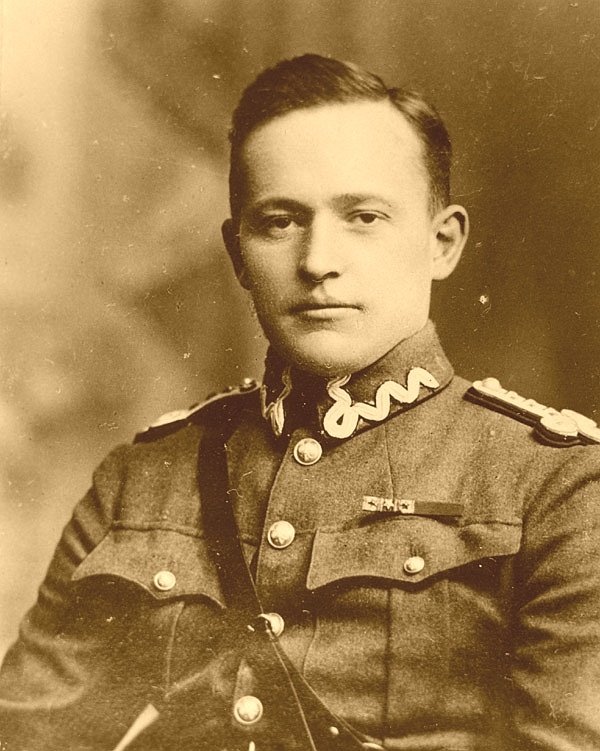
Captain Merian C. Cooper (Alias Frank Mosher)

Cooper was captured by horsemen attached to Budyonny’s Cossack Cavalry. He would have been killed on the spot had not an “unnamed English-speaking Bolshevik” saved his life. That Bolshevik was one of the greatest Russian writers of the 20th Century, Isaac Babel, who was served with the Bolshevik cavalry, collecting material for his great book of stories entitled Red Cavalry.

Somehow, Cooper made his way back to the U.S., along with a fellow flyer named Ernest  B. Schoedsack, whom he was to hire in later years to direct King Kong.


Computer Phobias

PICtouchscreen-thumb-others

I Have a Thing About Touch Screen Interfaces

As one who has been working with computers since around 1964, I have developed a number of phobias based on problems I have had.

One of my main computer phobias sharply separates me from the millennial generation: I distrust and in fact despise touch screen interfaces. My new Lexmark MC3224 has a touch screen panel for commands that is sheer torture to navigate, unless I had fingers the size of a newborn lemur’s.

The absolute worst is a touch-screen “keyboard” on a 2” x 3” touchscreen that makes it virtually impossible to avoid fat-fingering errors.

A corollary is that I refuse, for the time being, to buy a smart phone. My 74-year-old eyes are not up to deciphering a micro-screen, so I will not even try.

There are certain brands that I avoid because of run-ins, particularly printers. Some people love Epsons and Brothers, but I avoid them like the plague. I have stuck by Hewlett-Packard for many years, and it was unusual for me to buy a Lexmark. (By the way, it’s still working!)

The same logic applies to software. After hours of rage attempting to update Norton Anti-Virus, I have consigned that particular brand to the dumpster. I may soon add AVG because of their predatory marketing of slivers of their security products.

One product that has drawn my contempt over a period of many years is the old Word Perfect word processing system. I have stuck my Microsoft Word and Excel, even when they adopted their stupid ribbon interface a few years ago.

And don’t even let me start on Apple Macintoshes!


Printer Hell

PICLexmark

Lexmark MC3224

I have not posted quite so much of late because I have had problems with my computer. My old HP inkjet printer finally died after a new version of Windows 10 was installed. So I ordered a reasonably priced color laser printer and immediately ran into problems.

There are so many ways to connect the printer to the computer that I was nonplussed. I tried first to connect it via USB to the computer. That didn’t seem to work, plus the USB plug didn’t sit firmly enough at the rear of the printer. Then, with the help of my friend Mike Estrin of Network Connections LLC, I tried connecting the printer to the router using Lexmark’s software.

Finally, I bought a network cable and with Mike’s help, hooked the printer to the router using it.using it. Now it finally seems to work without losing the connection or shutting down for no apparent reason.

My fingers are still crossed. My Lexmark has been functioning normally for the last twenty-four hours. I hope it continues to. The printer does produce nice copies, has good color, and is probably cheaper to run than an inkjet with a voracious appetite for expensive ink.

Sandwich Excess

What Ever Happened to the Simple Sandwich?

The Carls Jr.  hamburger chain had a TV ad a few years ago that used as its motto: “If it doesn’t get all over the place, it doesn’t belong in your face.” It seems that what used to be a rather simple dish has grown out of all proportion.  I used to be a big fan of sandwiches; and I still am—if I make them myself!

Over the course of the last few years, what has happened to sandwiches is a microcosm of what has happened to American cooking. In a word, there is more of everything, until it is a major production including the beginnings of a salad and the obligatory glop, whether it is mayonnaise, mustard, Russian or Ranch dressing.

Under no circumstances would I make a sandwich if:

  • It wouldn’t fit in my mouth
  • Most of its contents would drip onto my shirt

My Father and my uncle used to make fun of me because I tended to make sandwiches out of all kinds of meat dishes, which they preferred to eat in splendid isolation from bread, raw and pickled vegetables, salad dressing, and cheese. In fact, my sandwiches were rather simple affairs, and they still are.

Go to Google Images and search for pictures of sandwiches, or click here. You won’t find anything but rather elaborate productions.


A Hint of Fall

Could Summer Really Be Over?

Our seasons in Los Angeles are very different than in other parts of the country. For the last few days, we’ve had a touch of autumn; but that doesn’t mean that there will be any consistency in the weather over the next six weeks or so. We might very well be in for a spell of hot, dry, windy weather—otherwise known as the Santa Ana winds. Or we could actually get some measurable (i.e., more than 1 centimeter) precipitation, though that is unlikely. It will probably get cooler in the evenings, or not.

One thing for sure: My left knee is aching, and I struggle slightly to rise from a sitting position. I’ve just taken some aspirin, which will probably help some. And I will probably get my flu shot sometime this week, because the flu season sets in fast whenever the weather gets cooler.

Although this has not been a particularly hot summer, it has been a humid one. Our humidity usually lasts only through July, but this year it has been virtually non-stop. We even got some slight drizzle yesterday and Friday. It would be nice if we had another wet winter, though the scientists who predict this sort of thing say that California will continue to have terrible droughts. This translates into terrible wildfires. Sigh!


The Last Refuge of the Scoundrel

American Flag Pin

Thanks to the current occupant of the White House, I am feeling less patriotic than ever. I have come to associate the ubiquitous flag pins that Republican politicians wear with the excesses of the Trump administration. As Dr. Samuel Johnson noted, “Patriotism is the last refuge of the scoundrel.” I don’t believe that for members of the older generation who have fought for our country, but for younger people, especially politicians, who use it to identify themselves as racists, white nationalists, saboteurs, and looters—in a word, Republicans. It is a symbol the course of being degraded beyond all recognition.

I am feeling out of touch with American voters. Can I trust them to actually love their country and send the Trump administration down to ignominious defeat? Not entirely, especially in certain parts of the country where politics is a form of resentment and regional hatred, especially against voters who live in large cities. It is the politics of Hooterville versus the politics of New York and California. (Though even New York and California have isolated pockets of atavistic tendencies.)

It has gotten to the point that I feel alienated from American politics, both Republicans and Democrats. (I now vote No Party Preference.) I don’t even classify myself as being Caucasian any more. As a Hungarian-American, I am Finno-Ugric, or “Other Race.” (Most of my rage is directed at White voters.)

I hope that this is only a phase I am going through until the politics of the United States returns to normal—that is, if it ever does.

The Philosophy Club

St Peter Chanel High School in Bedford, Ohio

When I was attending high school at St Peter Chanel in Bedford, Ohio, between 1958 and 1962, I started two extracurricular activities. One was a literary magazine called The Phoenix (our school teams were the Firebirds). I am actually a little embarrassed about the quality of our articles and illustrations. But more interestingly, I started a philosophy club which met evenings. Our moderator was a gaunt Marist missionary priest who had spent years attempting to convert the natives of New Guinea to Catholicism.

Imagine his discomfiture when a bunch of high school kids decided to argue about the existence of God. We had a couple of firebrands in the group—Ed Jaskiewicz and Rodger Harper—who set about demolishing two millennia of church dogma.

The “Angelic Doctor,” St Thomas Aquinas

As a good practicing Catholic (at the time), I introduced St. Thomas Aquinas’s five proofs for the existence of God. That didn’t sit too well with Jaskiewicz, who shot them down while Father Barrett, our moderator, turned a vivid shade of fuchsia. For my part, I started to stammer. It just wouldn’t do for Chanel’s star student to foment heresy.

Well, neither the philosophy club nor the literary magazine exist today. In fact, St. Peter Chanel High School is no more. The last I heard, the school was going to be torn down by he Bedford, Ohio, Board of Education. And I’m still a little skittish about philosophy. It’s not because I still believe in Aquinas’s five proofs, which are the bedrock of Catholic doctrine, but because I’ve always found philosophy so difficult. In no other field of endeavor do all the participants so anathemize one another.

I am currently reading Albert Camus’s The Myth of Sisyphus and actually liking his existential philosophy. It’s nice sometimes to undergo change after so many years.


Sherlock Holmes et al

A Book That Introduced Me to Some Great Writers

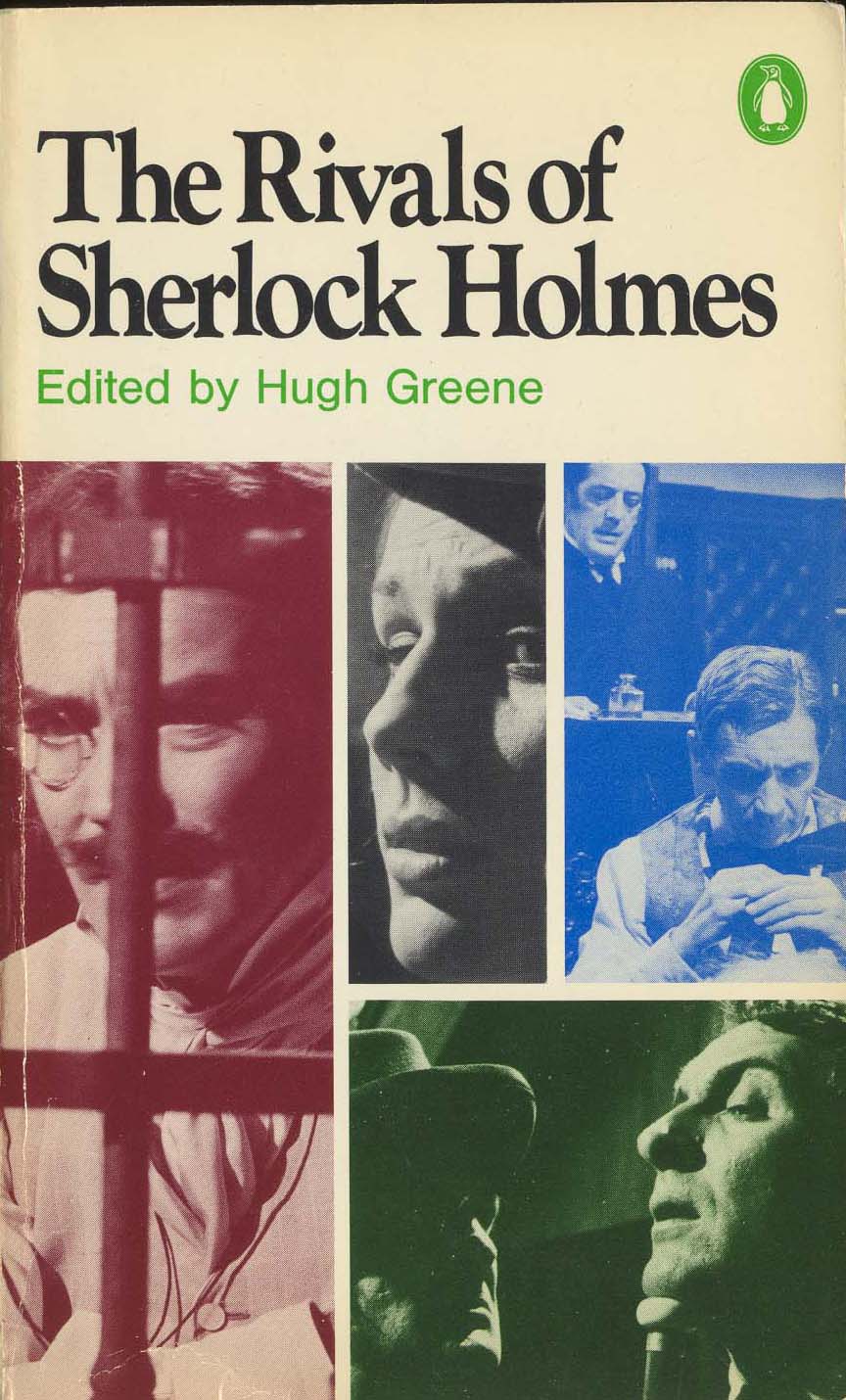
Sherlock Holmes was never the only game in town. Granted, he was easily the best of the Victorian and Edwardian detectives; but there were a number of others worth reading. When I came upon the above book years ago, I was introduced to a whole constellation of British crime-fighters. The book was edited by Sir Hugh Greene (1910-1987), brother of novelist Graham Greene and director-general of the BBC during the 1960s. In all, he produced four books honoring lesser-known British and American detectives:

  • The Rivals of Sherlock Holmes (1970)
  • Cosmopolitan Crimes: Foreign Rivals of Sherlock Holmes (1971)
  • The Further Rivals of Sherlock Holmes (1973)
  • The American Rivals of Sherlock Holmes (1979)

The original volume was by far the best of the series. The only author I followed from the three later volumes was Jacques Futrelle, creator of the Thinking Machine detective stories, who drowned in the Titanic disaster of 1912.

For a number of years, I sought collections of several authors recommended in The Rivals of Sherlock Holmes. The ones who interested me the most were:

  • Arthur Morrison, who, in addition to his Martin Hewitt stories wrote the very Dickensian The Hole in the Wall and the excellent Dorrington Deed Box
  • Clifford Ashdown, author of the Romney Pringle stories
  • Baroness Orczy, the Hungarian woman author who gave us The Scarlet Pimpernel also wrote a series about a lady journalist in London named Polly Burton (The Old Man in the Corner stories)
  • R. Austin Freeman’s Edwardian Doctor Thorndyke forensic investigation stories appeared in several volumes
  • William Hope Hodgson wrote a series of stories about a ghost investigator named Carnacki
  • Ernest Bramah, a tea merchant, gave us a blind detective named Max Carrados, who was actually able to read newspapers by feeling the ink on the newsprint

My favorites from the above list are Bramah and Morrison, with Orczy and Freeman not far behind. Unfortunately, most of their books are devilishly hard to find.


The White City

Mérida at Night

There are a handful of cities with which I have fallen in love over the years. They include Edinburgh, Scotland; Paris, France; Budapest, Hungary; Lima, Peru; and Mérida, Yucatán in Mexico. Mérida is widely known as the White City for the whitewashed look of its buildings. I don’t know if they have any “glass box” high-rises that have been built since 1992 (when I was there last), but I am willing to bet there are none.

I vividly remember arriving there for the first time in November 1975. The taxi ride from Manuel Crescencio Rejón Airport to the Hotel Mérida on Calle 60 was an entirely new experience for me. We passed a huge Coca Cola bottling plant on the road to the airport and a large number of single-story homes that seemed to be open to the street. I saw families sitting at their dinner table as if there were no fourth wall.

It was warm and humid: We were in the tropics. Everything looked so different. Then as we passed the Zócalo, I saw the scruffy looking old cathedral of San Ildefonso, and the large central square with its confidenciales (S-shaped love seat benches).

Confidenciales: Love Seat Benches in Mérida’s Parks

The next few days were an education for me. I decided to take a few tours, but I was up to the challenge of trying my Spanish. I went through a Spanish-only travel agency called Turistica Yucateca and spent two days traveling to such obscure Maya sites as Acanceh, Dzibilchaltún, and Mayapan with an English speaking guide named Manuel Quinones Moreno, who had his own automobile. I played chess with him at the ruins of Dzibilchaltún, losing all my games. We even visited an old henequén hacienda where rope was manufactured. You may recall that there used to be a kind of rope called sisal, named after the Port of Sisal in Yucatán from where the rope was shipped across the world.

I have nothing but happy memories of Mérida, and I look forward to renewing my acquaintance with the White City.