Mexican Folk Art: Alebrijes

Magical Realism—Zapotec Style

At the Casa de Montejo in Mérida, I stumbled onto a special exhibit of Mexican folk art by Jacobo and María Ángeles and their collaborators from the Zapotec town of San Martín Tilcajete in the State of Oaxaca. In general, I think that Mexican folk art is magical, but Jacobo and María are something else. They are known for their sculpted figured known as alebrijes in a series called “Tonas and Nahuales.” According to Wikipedia, “Alebrijes are brightly colored Mexican folk art sculptures of fantastical creatures.”

These particular sculptures are carved from the wood of the copal tree, which is sacred to many Meso-American peoples because it is the source of incense for worship. They are meticulously painted, and various other objects are frequently attached.

Magical Monkey

This was the first of several visits I made to see Mexican folk art in both Mérida and Valladolid. In every case, I was enthralled.

The Ángeles art group has an excellent website which can be accessed here. Of particular interest is a four-minute video in Spanish with English subtitles explaining their method of creating these alebrijes as well as a quick survey of their other activities:

Future posts will describe other works of Mexican folk art that caught my eye.

Progreso

The Beach at Progreso, Complete with 4-Mile-Long Pier

Although I’m not much of a beach person, I decided to end my vacation in Mexico with three days at the Gulf port of Progreso, essentially doing nothing. Well, that’s not exactly true, because on one of those days I hired a taxi to take me to the Maya ruins at Dzibilchaltún (about which more in a later post). I spent my days looking for a nice shady place to read while escaping the heat, and my evenings relaxing in air-conditioned comfort at the Playa Linda Hotel, which was right on the beach.

Progreso is an odd town. When a cruise ship docks at the 4-mile-long pier, the town is overrun with retired American passengers looking for places to eat and things to do. On days when no cruise ship is socked, many places choose not to open at all: Only a few restaurants right near the centralized Calle 80 can be depended upon to welcome diners. There are no museums in Progreso, no really old churches; but there is a nice market with some interesting cheap dining places.

Good Cheap Eats at the Local Market

I had been to Progreso twice before, but only on day trips from nearby Mérida (about 25 miles south, or 43 km). What I remember most vividly were the fish dinners I had there. Now, on my third—and longer—visit, I can say that the fish is indeed wonderful. I remember a place of ceviche de pulpo, raw octopus marinated in lime juice and served with onions, tomatoes, and cilantro. The lime juice in effect “cooks” the octopus. On my last day in Yucatán, I had a ceviche de pescado (with fish this time) at the Marlin Azul in Mérida.

From the Beach Looking Down Calle 80 (with Lighthouse)

One final note: Why is the local pier 4 miles long? Apparently, the Gulf of Mexico is too shallow for shipping at lesser distances. If I were a more of a beach person, I would have waded out into the water to check it out—but alas, I never even so much as got my feet wet.


World Enough and Time

The Codz Pop at Kabah

Back in June, I had a very exaggerated picture of the ruins I would be visiting. Because I wanted to see everything, I imagined that it was feasible to criss-cross four Mexican states to see Maya sites that were hundreds of miles apart. Although theoretically it was possible, I quickly realized that there were too many long bus rides and tours that required more than several participants (or else pay a steep price for guides and transportation for a single paying customer). Here is what I wrote in June:

I have been to Yucatán four times in all, the last time with Martine in November 1992. During my visits between 1975 and 1992, I have visited about a dozen Maya archeological sights. Since then, scores more have been developed, including one of the largest at Calakmul in the State of Campeche. In addition, I hope to visit Cobá in Quintana Roo, Ek Balam and Kinich Kakmó in Yucatán, Edzna and several Rio Bec sites to be decided later in Campeche, and Yaxchilan and Bonampak in Chiapas. In addition, I plan to revisit some of the sites I have already seen such as Chichen Itza, Uxmal, and Palenque.

In the end, these were the ruins I visited (the ones I saw for the first time are marked with an asterisk):

  • Kinich Kakmó *
  • Kabah
  • Sayil
  • Xlapak
  • Labna
  • Uxmal
  • Edzna *
  • Chichen Itza
  • Ek’ Balam *
  • Dzibilchaltún

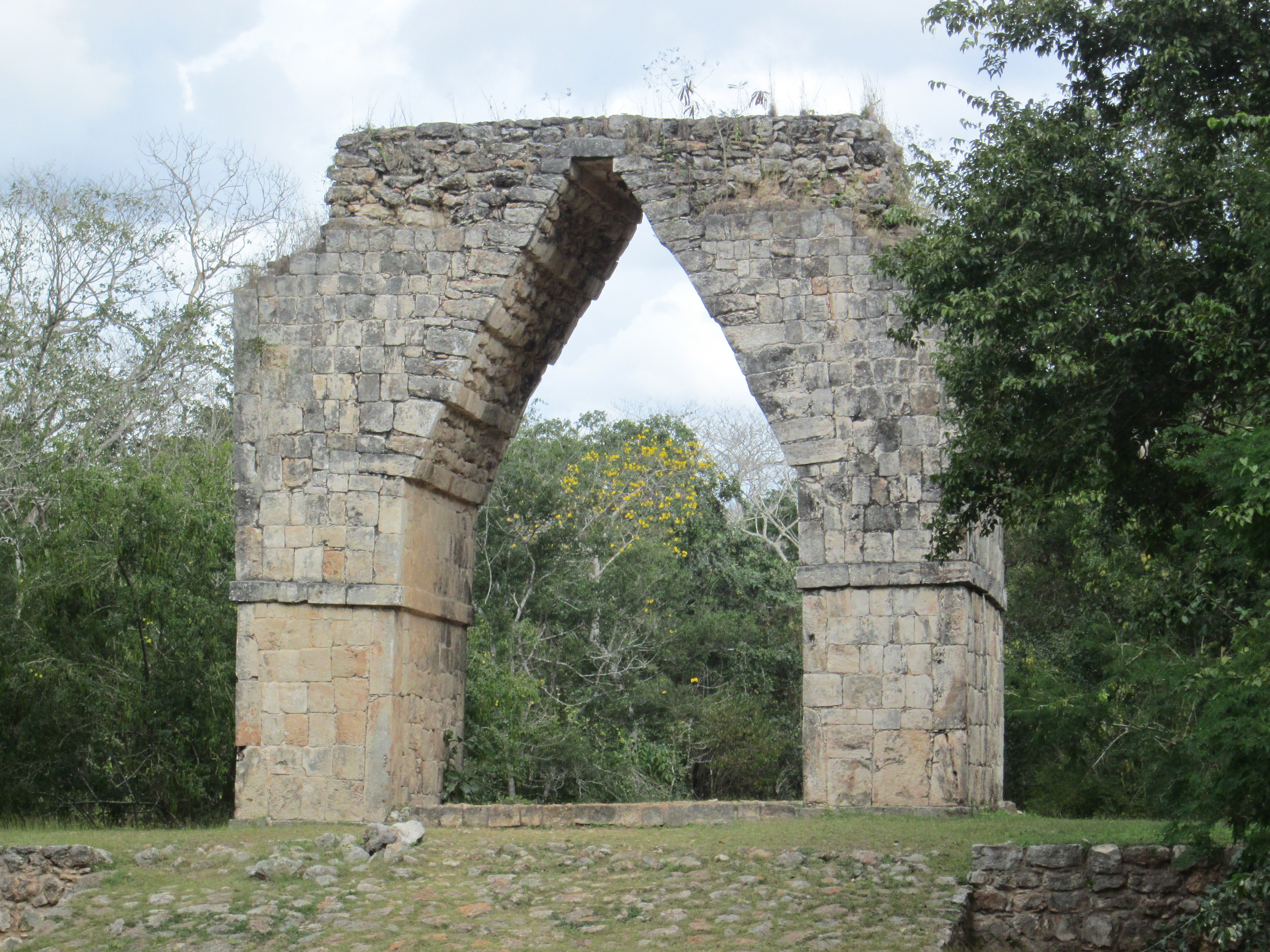
The Korbel Arch at Kabah

Because I never made it to Chiapas, that meant that Palenque, Bonampak, and Chiapas were out of the question. Calakmul and the Rio Bec sites in the State of Campeche were too expensive for a single-person tour, and ditto for Cobá in Quintana Roo. I did not originally plan on seeing Dzibilchaltún again, which was the first Mayan ruins I visited in 1975, but I had some time on my hands in Progreso, so I hired a taxi to take me there.

In the end, if I had seen everything I originally planned for, I would have been gilding the lily. As it was, I was delighted with what I did see—and I have a motivation for returning to the Yucatán Peninsula for more.


Fish Frenzy

The Perfect  Place for Filete de Pescado a la Veracruzana in Champotón

As I get older, I begin increasingly to tend toward being a vegetarian. Except where fish is concerned.

In my recent trip to Mexico, I visited three fishing ports: Campeche, Champotón, and Progreso. In each of them, at least one meal a day was dedicated to seafood, mostly filete de pescado a la Veracruzana, which consists of a filet of fish with a sauce of tomatoes, onions, and green olives. The best were at a place called something Tortuga something at Champotón, the Marganzo in Campeche, and Shark in Progreso.

I do not usually eat a lot of shellfish, though I had some excellent ceviche de pulpo (octopus) in Campeche and Progreso. Typically, I do not eat shrimp because of some bad experiences with symptoms resembling a sudden onslaught of strep throat. I usually tell everybody that is because of the mercury levels in coastal waters by large cities. In fact, I don’t know the real reason; but I do know I can eat shrimp caught in northern waters or in the Caribbean—though I usually just don’t. I have had similar experiences with lobster.

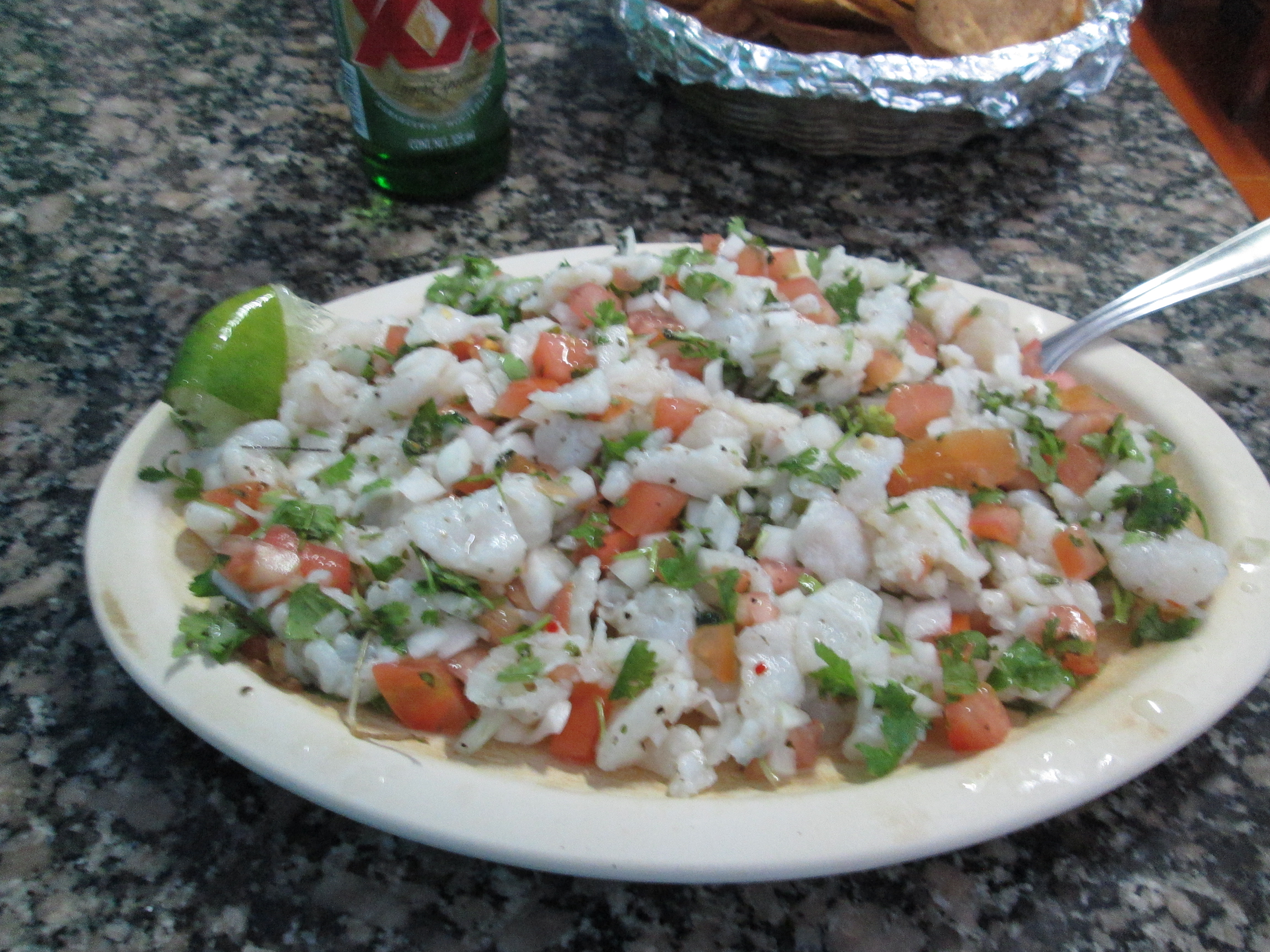
Ceviche de Pescado at Mérida’s Marlin Azul

Ceviche is one of my favorite dishes. It consists of raw fish or other seafood “cooked” by marinating in lime juice and served with chopped onions, tomatoes, chiles, and cilantro, as in the photo above. The fish actually tastes cooked, though it is always served cold. I grew to love the dish when I visited Lima, Peru, where it is the lunch dish of choice, but is rarely served at dinner time.

The only other place in the world when I went crazy over the fish was Iceland. Rarely did I eat at restaurants there which were not practically in view of the local fishing fleet. And the types of fish were radically different from what I was used to.


The Tourist Axis

Mérida Is One of My Favorite Cities in the World

When I got off the plane at Manuel Crescencio Rejón Airport in Mérida (aka MID) on January 14, my spirits lifted. I had had a rough flight from LAX to Guadalajara and from thence to Mérida—all after a sleepless night—but my spirits lifted as soon as I found myself once more in “The White City.” The city’s tourist axis runs from the bus station north through the Plaza de Independencia (pictured above) and Calle 60, taking a slight jog eastward and continuing northward along the Paseo Montejo several miles to the Gran Museo del Mundo Maya.

Along this axis are numerous sixteenth century churches, hotels, museums, restaurants, and shops aimed at the tourist trade. No sooner did I dump my bags at the Hotel La Piazetta at the Parque de la Mejorada than I hoofed it to the Plaza Independencia and had a world class shoeshine. In past visits, I wore a set of custom-made hiking boots of chrome leather which the shoeshining fraternity stationed at the plaza polished to a gorgeous sheen. Then, as it was hot (90º F or 33º C) and humid, I went out for a  beer. My old favorite—Carta Clara from the Cervecería Yucateca—was no more, but Mexico still has good beers that make Budweiser and Coors taste like horse piss.

The Palacio Cantón Contains a Great Museum of Maya Antiquities

On my first full day in Mérida, I hiked to the Palacio Cantón on the Paseo Montejo, home to the Regional Museum of Anthropology. In it are primo examples of Maya sculpture, stelae, and glyphs—the best of the best! They are housed in a century-old mansion belonging to a former army general, who was also a millionaire.

Maya Stela

It is unlikely you will find better examples of Maya carvings anywhere else in Mexico. Even in the Gran Museo del Mundo Maya, several miles north, there is a slight drop-off in quality compared to the Palacio Cantón.


Phooey on the Oscars

I Continue My Decades-Long Boycott of the Oscars

Hollywood used to make great films. Sometimes they received awards from the Academy of Motion Picture Arts and Sciences. More frequently, they didn’t. The awards probably represented more than anything else the current state of film industry politics.

Every February, the Turner Classic Movies (TCM) channel presents its “31 Days of Oscar” series. Curiously, I find that TCM movies during this period are not as good or interesting as the usual offerings at other times. In fact, I am downright angry that the “Noir Alley” series hosted by Eddie Muller will not return until after the 31-day Oscar orgy takes place.

I am not even talking about the smarmy annual show where the awards are presented. Neither Martine nor I watch the show, which is understandable inasmuch as we do not bother to see the majority of films in contention.

So once again, we are on the outs as far as popular culture is concerned. No problem there!


Back to Yucatán After 28 Years

I Began My Travels There 45 Years Ago

Yucatán is where I began my travels (in 1975), and I had returned three times because I couldn’t get enough of it (the last time in 1992). You know what: I still can’t. The busy streets of Mérida, the classical Maya ruins of Uxmal, a steaming hot bowl of sopa de lima, and an ice cold Dos Equis cerveza after a sweaty day visiting the ruins—no, I’m still not tired of the place.

Today Martine asked me if I wouldn’t really rather live in Mexico. I told her no, but I don’t mind going there again. And again. And again..

I returned yesterday afternoon after a long two-leg journey that took me from Mérida to Guadalajara, and from Guadalajara to LAX. I was exhausted, as I woke up at 1:30 am Pacific time and didn’t hit the sack until 9:30 pm, at which point I was barely able to pour myself between the sheets. At Martine’s request, I bought her two guayabera shirts and the makings for some great hot chocolate from ki’XOCOLATL in Mérida’s Santa Lucia Park.

Some things I missed from previous trips: Jugos California was apparently no more, as was Calle 60’s Restaurant Express. But I loved Chaya Maya on Calle 55. Passenger railroad service from Mexico DF to Mérida was no more, but bus service was vastly improved. The ratty old second class buses from the Unión de Camioneros de Yucatán were replaced by shiny new air-conditioned vehicles bearing the logos of Oriente, Mayab, ATS, and Sur—and their windows weren’t cracked and broken either!

One thing that hasn’t changed: The Mexican people were great hosts. It broke my heart that I didn’t have the Spanish to carry on a fluent conversation with the men and women I met, but I had no great difficulty communicating with them on a basic level. Plus: Over the years of traveling in Latin America, my Spanish had improved by leaps and bounds.

Okay, I’m ready to go back….