Born in Cleveland

Sci-Fi Writer Harlan Ellison (1934-2018)

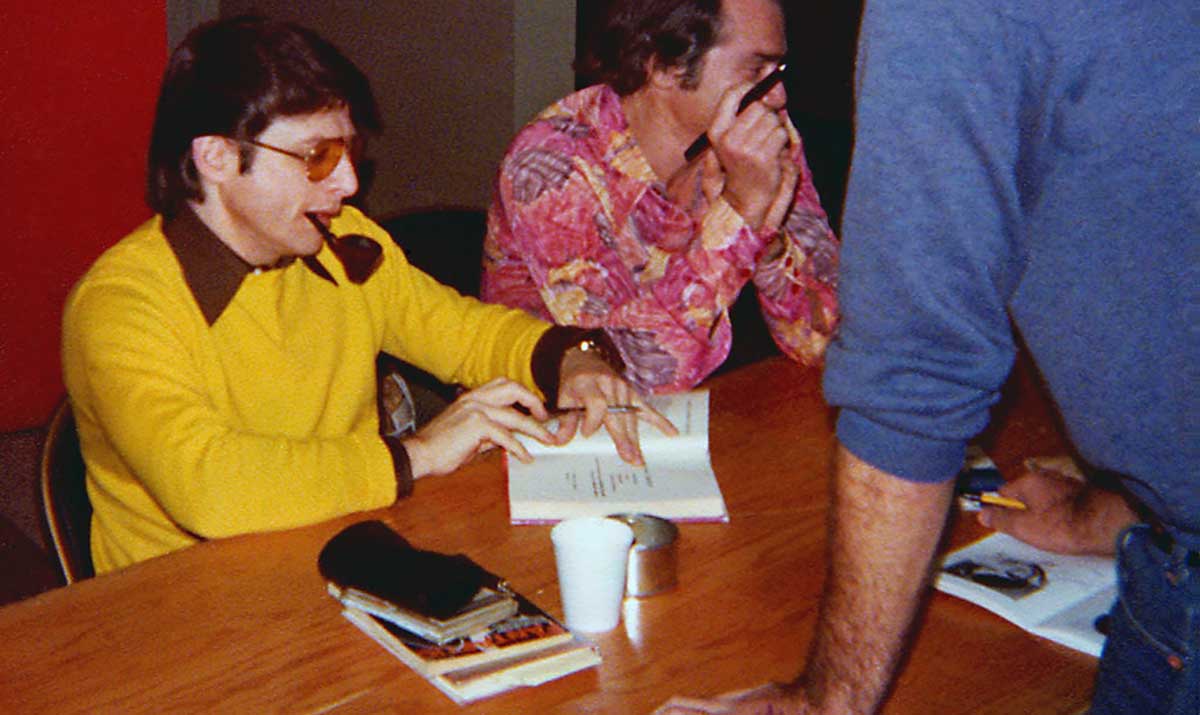
The city of my birth—Cleveland, Ohio—has given birth to few celebrities. Among actresses, there were the meltingly lovely Halle Berry and Dorothy Dandridge. Among literary figures, there was only one: Science Fiction author Harlan Ellison. During his career, Ellison has won eight Hugo Awards, four Nebula Awards, five Bram Stoker Awards, and two Edgar Awards.

More to the point, he has written some of the most striking and memorable stories in the sci-fi, horror, and mystery genres. These include “’Repent, Harlequin!“ Said the Tick-Tock Man” (1965) and “I Have No Mouth, and I Must Scream” (1968). He edited two famous sci-fi collections of stories in Dangerous Visions (1967) and Again, Dangerous Visions (1972). And he wrote what was probably the most remembered episode of the original “Star Trek” series entitled “The City on the Edge of Forever” (1967).

Most of his oeuvre consists of short stories which are as eye-popping today as when they first came out. I am slowly working my way through these stories.

This afternoon, I saw a 2007 film by Erik Nelson about the writer entitled Harlan Ellison: Dreams with Sharp Teeth, which includes multiple instances of the author’s abrasive style. During his heyday, that abrasiveness won him many enemies. In the end, however, what will be remembered are his stories.

It’s good to know that at least one great writer came from my home town.


The Disunited States of America

The Fracture Lines Are Becoming More Evident

At some point in the last few decades, it appeared that the people of the United States of America could not agree on much of anything. Does water flow uphill? Is a fetus worth more than an actual human being? Did the Confederacy actually win the Civil War? Did the moon landing really take place? Can we fight the coronavirus by injecting bleach into our veins? Does the Hollywood QAnon child sex ring exist? Is the Earth flat?

All these questions which to me represent the pinnacle of stupidity seem to have large numbers of adherents—people who are angry with Liberals who have ignored them as inhabitants of “Flyover Country,” made fun of their strange religious practices, and insisted that they conform to scientific principles that are somehow unfriendly to them. These people are seriously pissed off, to the extent that they will stridently and repeatedly deny home truths believed by their adversaries.

Will the USA eventually fragment itself into agglomerations of states such as the map shown below?

One of Many Possible Variations

I was discussing the matter with my friend Bill Korn this evening. We both agreed that we were mistaken in thinking that a real existential crisis would bring us together. Well, coronavirus is nothing if not an existential crisis, and we are finding millions of people who are saying, “F—k it! Let’s go back to normal and ride it out!” Them’s brave words, but I would not trade my life for a chance to go to a bar or patiently listen to an unmasked person ranting in my general direction.

Perhaps I am timorous because I am:

  • Diabetic
  • Overweight
  • Asthmatic
  • Blood Type A

That makes me a four-time loser if I get the ’Rona. Thanks, but I’ll watch all you fine folks self-destruct from the sidelines.


Catholic School

Dominican Sisters Wearing Traditional Habits

When we lived in the Buckeye Road Hungarian neighborhood, I didn’t do well in school. It started in Kindergarten when my friend András and I started kicking our teacher in class for being angry with us because we didn’t speak English. What in blue blazes was this English? Everyone on Buckeye Road spoke the Magyar tongue, and Harvey Rice Elementary School was in the middle of Buckeye Road. Was our teacher stupid or something?

My mother and father understood the problem. My little brother Daniel had just been born when they decided we would have to move to a white bread Anglo neighborhood, which we did in the summer of 1951. Being born in January, I had just finished the first half of first grade when—poof!—I started second grade in September at a new Catholic school, Saint Henry, where I was taught by Dominican sisters (and some lay teachers). Fortunately, by this time I had some notion of the English language, but was still thought of as being a tad slow. My teacher, Sister Frances Martin, would sneak up behind me in class, pull my ears, and call me “cabbagehead.”

In fact I was just an average student, and a bit of a disciplinary problem, until I reached fifth grade. By then, I started getting the hang of things. Unfortunately, that’s also the time my pituitary tumor started bothering me with frequent severe frontal headaches. I was now a whiz kid, but looked very young for my age.

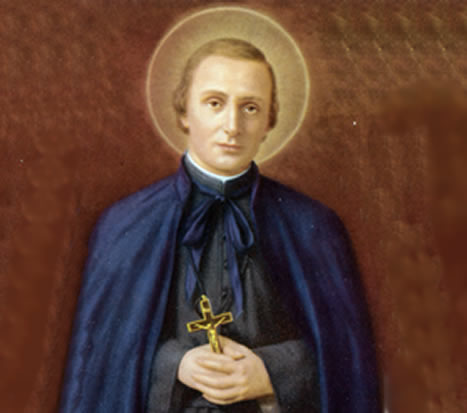
Saint Peter Chanel

After eighth grade, I got a tuition-free scholarship to attend Chanel High School in nearby Bedford, Ohio. The school was named after a missionary from the Marist order of priests who taught me, one St. Peter Chanel, who was martyred for his faith in Polynesia. (Coco Chanel came from the same family.) I got the idea from somewhere, though I’ve never been able to confirm it, that St. Peter Chanel was cooked and eaten by the savages he was trying to convert.

Anyhow, I was considered a whiz kid at Chanel and was always on top of the honor roll. I graduated as class valedictorian and received the Mr. Chanel award for being the best all-round student at the school, despite the fact that I was too sickly for sports. I lettered in band and academic achievement, which made me the natural enemy of those students who toiled for the letters on the sports field. So it goes.

Although I am no longer a practicing Catholic, I have nothing but respect for the sisters, priests, and lay teachers who taught me. I was never an abused altar boy: In fact, I was never even an altar boy. The idea of getting up at 5 am to serve Mass was not my cup of tea, though my brother did it for several years.


Construction/Destruction

Why Is There So Much Construction Going On in L.A.?

What with the plague raging in the streets, I continue to be surprised how much commercial and residential construction is going on. It is as if, when the coronavirus finally goes away (if it ever really goes away), there will be people to fill those new offices, apartments, and condominiums for whatever top dollar figure the owners intend to charge. There will be talk of the city insisting on affordable units, but we all know that no one wants to build affordable units. My fearless prediction is that there will be a large number of vacancies and —given that the homeless population is growing by leaps and bounds—there will be a big problem with squatters.

Mayor Gil Garcetti of Los Angeles is being either naive, or is selling out to real-estate interests—a time-honored Southern California practice. In West Los Angeles, I see scores of new buildings going up, side by side with scores of old buildings that have been red-tagged and scheduled for the wrecking ball, and, in the meantime, occupied by bums.

Another interesting point: I do not see any corresponding effort to accommodate the increased traffic flow that will result if the new building space is occupied. My feeling is that the mayor feels that the construction of the Expo Light Rail Line will solve all problems. I don’t mind taking public transportation, but I am very clearly in the minority. Most people I know think that terrible things happen on those trains. Even Martine is hesitant to ride them. Me, I have no problems.

Also, Garcetti thinks that the thousands of homeless will be delighted with the housing the city will supposedly furnish for them (by reconverting old motels, hotels, etc.). But most of the homeless are not interested in following any rules such as not drinking, taking drugs, or smearing shit all over the walls.

Interesting times lie ahead.


Putting Myself Down

I Have Always Underestimated Myself…

When I was young, I was always one of the shortest kids in my class—and one of the sickest. The result was that I habitually underestimated myself. Everyone else looked taller, happier, and more accomplished than me. And that even after I was the valedictorian of my class at Chanel High School in Bedford, Ohio. In fact, it was not until I reached the age of forty that I realized what I had been doing to myself. That was the age at which I was finally able to drive. Before that, I was on a medication (Catapres) that made me fall asleep whenever I got into a moving vehicle.

Within weeks after I got off Catapres, I took driving lessons and passed with flying colors. But then something happened to my picture of other people: The moment I saw drivers who committed moving violations at the rate of once every hundred feet or so, I began to revise my impressions of the rest of the human race.

Politics also stepped in to lower my estimation of my fellow Americans. I first became aware of political conservatism during the 1964 election, when Barry Goldwater was trounced by Lyndon Johnson. Conservatism was to become my bête noire during the following decades, where now I regard most Republicans and Trump followers to be mental defectives. Now that so many of these so many of these Trumpists are advocating a return to normalcy during a dreadful epidemic, I now look at people such as the individuals in the above photograph as suicidal fools who would think nothing of infecting their friends, neighbors, and families with a potentially fatal disease.

Do I have any regrets for being so hard on myself all those years? Not a bit. I think that I am happier than most people and less likely to be played like a marionette out of baseless fears.


A Ghost Town in the Mountains

Martine in Bodie, California, by Old Gas Pumps

During this awful quarantine year (soon to become the awful quarantine decade), I keep thinking back to the places I’ve been. Just to maintain social distancing, most of my favorite destinations in the U.S. and Latin America are severely curtailed. One of my favorite places along U.S. 395 is the ghost town of Bodie, California midway between Mono Lake and the Mono County Seat of Bridgeport.

There is nothing Disneyfied about Bodie. It was abandoned over a period of years, during which people just left their stuff behind them because it was just too difficult to cart away. That includes coffins, hearses, dishes, furniture, and all manner of things.

Horse-Drawn Hearse Left Behind

Unlike many other ghost towns, Bodie is run as a park in which the buildings and mining equipment are in a state of “arrested decay,” in which repairs ae made to prevent roofs and walls from falling in. The exception is for several houses which are kept up for State Park rangers and their families who stay year-round to protect the premises.

The cemetery at Bodie is one of my favorite features of the town. Life in Bodie could be nasty, brutish, and short, as attested by the tombstones.

One Little Girl Who Died Young

Part of the reason for the high mortality rate among the residents were the horrible winters. The altitude of Bodie is 8,375 feet (2,553 meters). It is some twenty-odd miles from the main highway and is susceptible to blizzards and high winds. And that’s besides the usual Old West killers as alcohol, gunfights, and mining accidents.


The Truest Grit

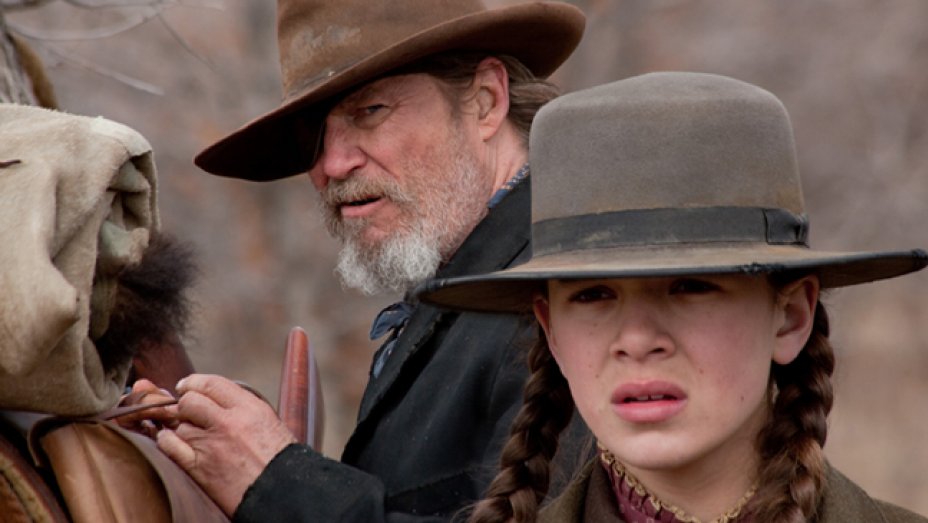
Jeff Bridges and Hailee Steinfeld in the 2010 Version of True Grit

It is generally considered a truism that a film remake is nowhere near as good as the original. Most of the time, that’s true. One case where it is not is the 2010 version of True Grit directed by Joel and Ethan Coen. I liked the John Wayne version with Kim Darby well enough, though I did not like Kim Darby near so much as I liked Hailee Steinfeld as the redoubtable Mattie Ross.

So today I decided to read Charles Portis’s 1968 novel. Earlier this year, I had read Dog of the South and Gringos and found in Portis a novelist very much to my liking. True Grit was even better. So good that I read straight through it, reveling in its language, which reminded me of the best of Mark Twain.

Novelist Charles Portis (1933-2020) with John Wayne as Rooster Cogburn in the Background

One of the things that struck me about Portis was how true he was to the idiom and the culture of his native Arkansas, even when he was setting his fiction in Mexico. Portis was not only authentic, but he was often funny and wildly entertaining. The ides of a 14-year-old-girl hiring a U.S. marshal to go after the killer of her father is by itself promising, but Portis made Mattie Ross into one of the most beloved girl characters in all of American fiction—all just by being fanatically true to her place and time.


The Prisoner [of Coronavirus]

The 1960s British Television Series That Epitomizes Our World

On one hand I am imprisoned by the dread ’Rona; on the other, I am liberated by it. I have been binge-watching the 1967 British television series The Prisoner, starring (an co-created by) Patrick McGoohan. Thanks to my being a member of Amazon Prime, I have access to a wealth of movies and television shows streaming at little or no cost to me. So far, I have seen all but the last five episodes of the series, which I have found to be a liberating experience.

If you are not familiar with The Prisoner, it is about an unnamed spy for British intelligence who resigns suddenly and is carried off to a prison community referred to as “The Village,” in which everyone is known by a number. Our hero is Number 6. The village is headed by by a mysterious Number 1, whom thus far I have not seen, but is managed by a Number 2, who changes from one episode to the next—sometimes even within a single episode. Number 6 wants more than anything else to escape the village.

Number 6 Being Stalked by an “Enforcer Balloon”

One of the strange things about the village is that both the prisoners and the warders look alike, wearing overly cheery British resort wear, including multicolored capes and twirling multicolored umbrellas. It gives the prisoners a kind of manic appearance, as if most of them are enjoying their captivity.

When the series first came out in the U.S., it was too difficult for me to tune in at the same time on days it was broadcast. Now, as prisoner of the coronavirus, I can enjoy the series. (The same goes for Deep Space Nine, which I am binge-watching in parallel.)

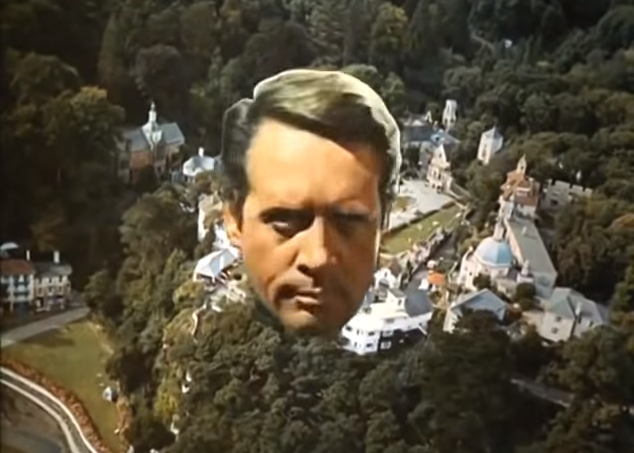
The Image of Number 6 Superimposed Over “The Village”

ddly, “The Village” is a real place: Portmeirion in Wales. You can stay there and dine in its restaurant without being answerable to Number 2.


Serendipity: A Plea from the Pagans

Winged Victory (Nike) bronze statue against background of Trajan’s Column and dome of Santa Maria di Loreto church. Rome, Italy.

I have always been fascinated by the period of transition from the Paganism of Ancient Rome to the Christianity of the last days of the Western Roman Empire. It was in AD 313 when Constantine declared Christianity to be the official religion of the empire with his Edict of Milan; and it was in AD 476 when the Western empire fell.

Naturally, the transition was not sudden. In AD 375, the Emperor Gratian had the Altar of Victory removed from the Roman Senate, this despite the fact that most of the members of the Senate were still Pagans. On that occasion, Quintus Aurelius Symmachus complained to the emperor: “Grant, I implore you, that we who are old men may leave to posterity that which we received as boys.” He goes on:

All things … are full of God, and no place is safe for perjurers, but the fear of transgression is greatly spurred by the consciousness of the very presence of deity. That altar contains in itself the harmony of the members of our order and the good faith of each of them individually. Nor does anything so much contribute to the authority of the Senate’s decrees, as the fact that one body, sworn to the same oath, has resolved them. Greco-Roman Paganism is to us a ridiculous body of myths, but to the Roman Senators, making sacrifices to the Altar of Victory was not only patriotic but an act of piety.

Symmachus continues:

Let me use my ancestral ceremonies, she says, for I do not repent me of them. Let me live after my own way; for I am free. This was the cult that drove Hannibal from the walls of Rome and the Gauls from the Capitolium. Am I kept for this, to be chastised in my old age?… I do but ask peace for the gods of our fathers, the native gods of Rome. It is right that what all adore should be deemed one. We all look up at the same stars. We have a common sky. A common firmament encompasses us. What matters it by what kind of learned theory each man looketh for the truth? There is no one way that will take us to so mighty a secret. All this is matter of discussion for men of leisure. We offer your majesties not a debate but a plea.

This plea did not sit well with the new Christian orthodoxy of the empire. St. Ambrose wrote the official response, which was essentially that Christianity was replacing the old order of things.

Interestingly, it is now Christianity that seems to be on the defensive … to be replaced by—whatever.


The Best Laid Plans…

Chace Park Seen from the Air

In my post of July 3 entitled “Plotting a Holiday Picnic,” I wrote about my plans for a 4th of July weekend picnic for two (Martine and me). It’s sometimes laughable how circumstances can change. I decided to choose today, Sunday, July 5, for the picnic—because I suspected that there would be too many people with too many fireworks on Saturday.

Martine wanted to go to Chace Park in the Marina because, regardless how hot the weather was near us, it always had a comfortable sea breeze. Originally, I thought of getting a picnic lunch at Chick-Fil-A, but I forgot that the restaurant is closed on Sundays. So we headed to Bay Cities Italian Deli in Santa Monica, but saw a humongous line waiting to get in. Ditto for Trader Joe’s in Marina Del Rey. So on Martine’s suggestion, we got our lunches in the deli and produce sections of a nearby Ralph’s Supermarket.

The only real negative about going to Chace Park was that parking cost ten dollars on this holiday weekend. No matter, I paid the fee and resolved to make myself comfortable with the peninsula’s sea breezes. There were no seals in evidence today, but we were able to eat our lunch and take a walk around the peninsula.

There were a lot of young males who flouted the social distancing rule, but we managed to keep our distance from them as they attempted their abortive “herd immunity” practices. I kept thinking back to my days working with U.S. Census data. In the United States, there are 21 males born to every 20 females; but, by around the age of 18, the number of females exceeds the number of males. Why? Because young American males find their way to an early grave through sheer stupidity.