On Panic Buying

Actually, Stupidity Renders One Particularly Susceptible

Yesterday as I went food shopping at Ralph’s Supermarket, I noticed several shopping carts with multiple packs of toilet tissue. Typically, I could not resist commenting aloud, “I didn’t know there were so many asswipes in Santa Monica!” (Strictly speaking, that isn’t true: I consider the City of Santa Monica to be densely populated with asswipes, but that’s another story altogether.)

Actually, the panicked grocery shoppers of Santa Monica are part of a confusing global trend. Some of the funniest toilet paper memes are from Australia and other countries.

Please explain to me why toilet paper is effective in preventing COVID-19. Unless, perhaps it is used in this way:

The Curse of the Mummies?

And it’s not just toilet paper. There’s a run on liquid soaps and hand cleaning solutions. That must mean that I’m particularly susceptible: I don’t like washing my hands with liquids, preferring instead a good bar of soap. And yet, there doesn’t seem to be a run on soap bars. Curiouser and curiouser.

Well, It Is Sort of Ring-Shaped


Rintrah Roars

Cover of William Blake’s “The Marriage of Heaven and Hell”

I find myself coming back to it again and again. Ever since I was a student in college, I regarded William Blake’s “The Marriage of Heaven and Hell” one of the greatest poems in the English language. Following is the opening of it, or “The Argument”—very appropriate as we wait for a rare thunderstorm to arrive around midnight.

The Argument

Rintrah roars and shakes his fires in the burdened air;
Hungry clouds swag on the deep.

Once meek, and in a perilous path,
The just man kept his course along
The vale of death.
Roses are planted where thorns grow,
And on the barren heath
Sing the honey bees.

Then the perilous path was planted:
And a river and a spring
On every cliff and tomb;
And on the bleached bones
Red clay brought forth.

Till the villain left the paths of ease,
To walk in perilous paths, and drive
The just man into barren climes.

Now the sneaking serpent walks
In mild humility,
And the just man rages in the wilds
Where lions roam.

Rintrah roars and shakes his fires in the burdened air;
Hungry clouds swag on the deep.

I love the second last stanza about the just man raging in the wilds. As I despondently view the condition of the Republic under Trump as his brigands, the following quote from the second part of the poem gives me hope:

Without Contraries is no progression. Attraction and Repulsion, Reason and Energy, Love and Hate, are necessary to Human existence.

From these contraries spring what the religious call Good and Evil. Good is the passive that obeys Reason. Evil is the active springing from Energy.

Good is Heaven. Evil is Hell.

All we could do is grasp the hide of the Tiger that is History and try not to fall off.


Yucatán Yummies

La Chaya Maya in Mérida

One of the best parts of my recent trip to Mexico was the general high quality of the meals I ate. Following is a brief survey of some of the highlights:

Mérida. My favorite restaurant in Mérida was La Chaya Maya on Calle 55 near Parque Santa Lucia. In all, I ate there five times. The specialty there is Yucatec Maya food, such as papadzules, salbutes, panuchos, and the excellent sopa de lima. It was there that I discovered chaya, or tree spinach, which when mixed with fruit juice makes an incredibly refreshing drink.

Martine vividly remembers sopa de lima from her trip with me to Yucatán in 1992. La Chaya Maya’s sopa de lima was the best, with its shredded chicken and tart local limes.

Honorable mention goes to Marlin Azul on Calle 62, where I had a memorable ceviche de pescado for just a few dollars.

Santa Elena is a small town between the ruins of Uxmal and Kabah. The Pickled Onion is a B&B run by a British and Canadian expat by the name of Valerie Pickles. Although she no longer does the cooking, the breakfasts at her place were memorable, but the poc chuc (a Maya pork dish) I had one evening was superb. I treated my Maya guide to the Puuc Hill ruins to a meal there, and he was so enthusiastic that he wanted to bring his family there.

A Few Miles South of Champotón is a restaurant on the Gulf of Mexico shore where I had the best seafood lunch of my life: It was a filete de pescado a la Veracruzána (filet of fish with a sauce of tomatoes, onions, and olives) at a restaurant whose name had the word Tortuga in it. I only wish I remembered the exact name. I liked my lunch there so much that I kept ordering the same dish elsewhere, but it never was quite so good elsewhere.

Campeche. I ate twice at Marganzo near the Plaza Independencia in Campeche. The seafood was great, particularly a botana (freebie extra dish) of octopus ceviche, which was incredibly fresh and tender.

The only bad meal I had in Mexico was also in Campeche, at a Chinese steam table buffet called the Restaurante Shanghai where all the dishes were tepid.


Mexican Folk Art: Museo de Arte Popular

A Delightful Museum of Mexican Popular Art

I began my vacation staying at the Hotel La Piazetta at Parque de La Mejorada. At first, it didn’t seem there was very much to see in the immediate area—at first glance. Then I noticed a museum at the corner of Calle 50A and Calle 57 dedicated to Mexican folk art. So one morning, I started by visiting the Church of La Mejorada, which was right across the square. Then I waited for the museum to open at 10 am.

Masked Skeleton

On the ground floor was an exhibit of colorful textiles. They were nice, but I was was after something less abstract. My wish was fulfilled by the galleries on the second floor. There they were: all the Posadaesque skeletons, religious themes, and indigenous designs.

You cannot go far in Mexico without running into artesanias created, in many cases, by common people and readily available to yanqui tourists. Sometimes the work is so fine that it takes your breath away.  You can find something like this in parts of the United States, but most of the energy seems to go into antiques.

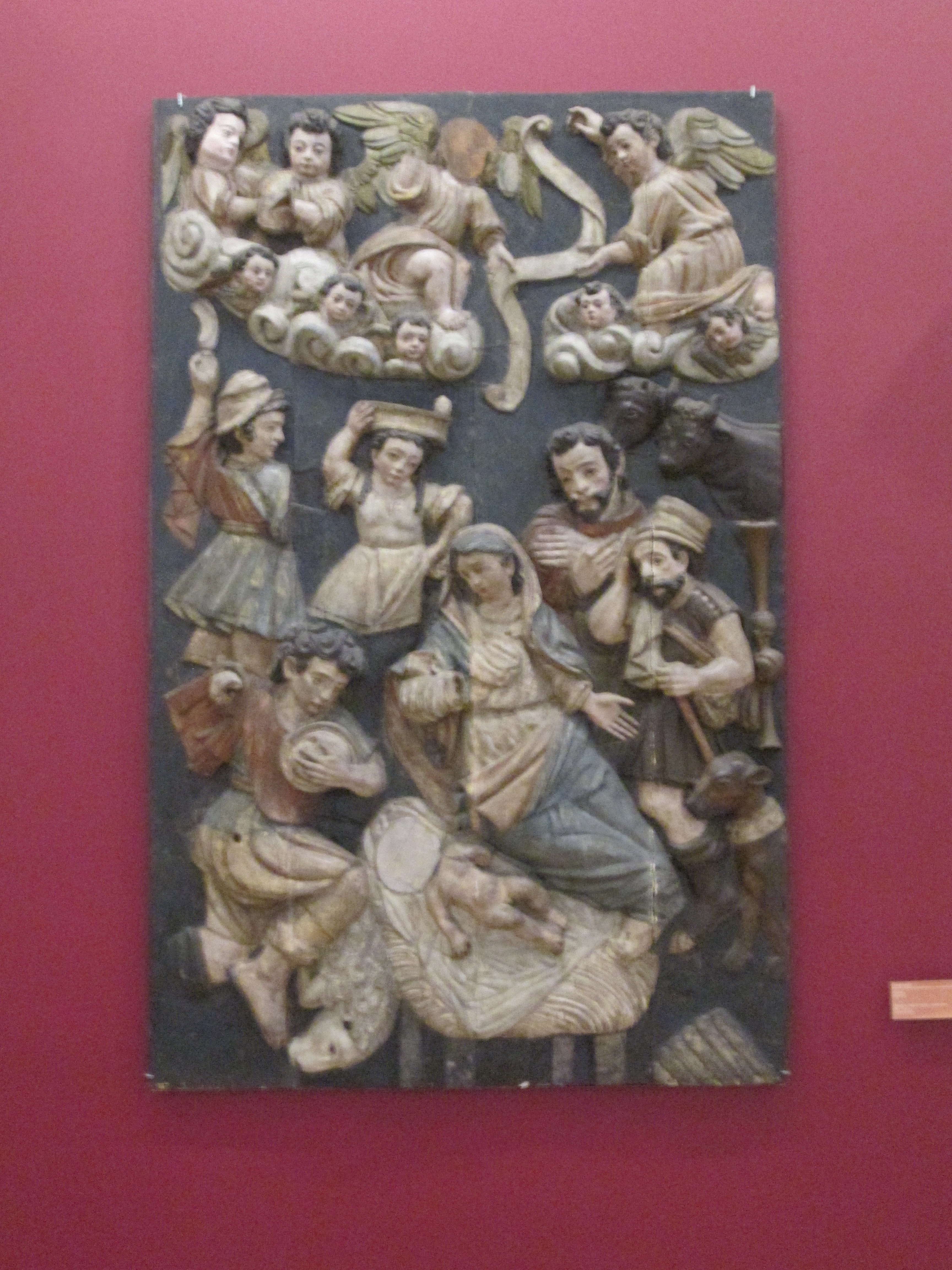
The Birth of Christ with Shepherds, Angels, and the Magi

It seems that wherever I have traveled in Mexico, I have run into what I regard as clearly identifiable Mexican folk art. Much of the folk art in Yucatán isn’t even particularly Maya: It seems to be more of a pan-Mexican thing.


“The Poet Remembers”

Polish Poet Czesław Miłosz (1911-2004)

Sometimes, I like to look at what is happening in this country with the eyes of an Eastern European. I dedicate this poem to our president.

You Who Wronged

You who wronged a simple man
Bursting into laughter at the crime,
And kept a pack of fools around you
To mix good and evil, to blur the line,

Though everyone bowed down before you,
Saying virtue and wisdom lit your way,
Striking gold medals in your honor,
Glad to have survived another day.

Do not feel safe. The poet remembers.
You can kill one, but another is born.
The words are written down, the deed, the date.

And you’d have done better with a winter dawn,
A rope, and a branch bowed beneath your weight.


Dégueulasse

I Don’t Recall Ever Being Satisfied by an Election

I remember being invited out to a homecooked French dinner at my friend Alain’s apartment. I fancied myself as as a proficient speaker of French, so when asked for my opinion of the scrumptious meal, I merely said it was dégueulasse. Oops! Apparently that means “repulsive” or “disgusting.” I was able to talk my way out of that mess, though I did get a few stony looks.

Well, I could say that my opinion of the Super Tuesday election results is a heartfelt dégueulasse. But then, I have never been satisfied when the voters finally speak. This goes back to my first election, in 1968, when rather than vote for Hubert Humphrey after the debacle at the Democratic convention in Chicago, I wrote in the name of Otto Schlumpf, a Franciscan priest who shared my then-Progressive political ideology.

Do I really like any of the four remaining contestants? Probably I like Elizabeth Warren the most, but she is not likely to get nominated. Biden’s problems with speech remind me of either the onset of Alzheimers or a pre-stroke condition known as a Transient Ischemic Attack (TIA). I got a TIA myself once when I suddenly found myself babbling incoherently to a co-worker. (I immediately asked the secretary to call an ambulance.) Curiously, Trump has the same problem; only, his supporters will forgive him anything short of raping and murdering an underage girl on the steps of the Capitol Building.

Although I like Bernie Sanders and find he has a sharp mind, I fear that the American voter is too conservative to select either him or Elizabeth Warren.

What is more, all four candidates are in their seventies. I myself am 75. If the final Democratic nominee does not pick a younger vice president, we are doomed to a gerontocracy.


Serendipity: “A Contract of Mutual Deceit”

Finding Truth in a Mystery Novel

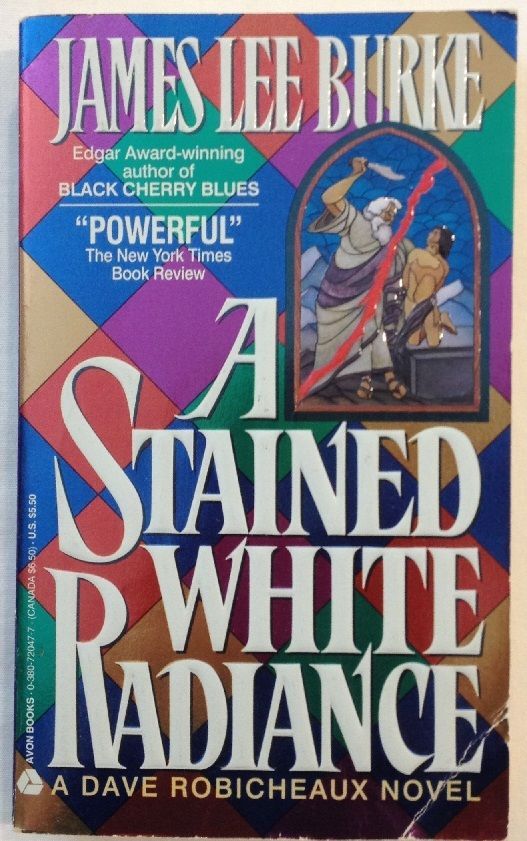
Toward the end of James Lee Burke’s excellent A Stained White Radiance, written in 1992, I suddenly came upon this passage, in which Detective Dave Robicheaux of the New Iberia, Louisiana, police force ponders the existence of ex-KKK, ex-Nazi politico Bobby Earl. I suddenly found myself thinking about Donald Trump.

I had been determined to prove that Bobby Earl was fronting points for Joey Gouza [a New Orleans mobster], or that he was connected with arms and dope trafficking in the tropics. I was guilty of that age-old presumption that the origins of social evil can be traced to villainous individuals, that we just need to identify them, lock them in cages, or even march them to the executioner’s wall, and this time, yes, this time, we’ll catch a fresh breeze in our sails and set ourselves on a true course.

But Bobby Earl is out there by consent. He has his thumb on a dark pulse, and like all confidence men, he knows that his audience wishes to be conned. He learned long ago to listen, and he knows that if he listens carefully they’ll tell him what they need to hear. It’s a contract of mutual deceit by which they open up their flak vests and take it right through the breastbone.

If it were not he, it would be someone like him—misanthropic, beguiling, educated, someone who, as an ex-president’s wife once said, allows the rest of us to feel comfortable with our prejudices.

I think the end for Bobby Earl will come in the same fashion as it does for all his kind. Unlike the members of The Pool [Burke’s term for the mob] and that great army of villainous buffoons trying to sneak through life on side streets, Bobby Earl’s ilk want power so badly that at some point in their lives they make a conscious choice to embrace evil. It’s not a gradual seduction. They do it without reservation, and that’s when they leave the rest of us. You know when it happens, too. No amount of cosmetic surgery can mask the psychological deformity in their eyes.


House of the Turtle

The House of the Turtle at Uxmal

I have always had a special feeling about turtles. That comes from having lived at the edge of a desert for the last half century suffering from a chronic lack of rain. I strongly suspect that the Maya of the Puuc Hills (redundant: Hill Hills the way that Torpenhow Hill in England means Hillhillhill Hill) felt the same way. One of the simplest, most classical and beautiful structures at Uxmal if the House of the Turtle.

It is named after the row of carved turtles that appear along the top edge:

Detail of Carved Turtle

As I have mentioned previously, the hills of the Puuc are separated from the underground rivers of the Yucatán Peninsula by several hundred feet of impenetrable limestone. The Maya of the Puuc had to dig cisterns (called chultunes) which they hoped would fill with water during the rainy season. In good years, they did. But when a series of dry years came in the Ninth Century A.D., the Maya just walked away from Uxmal. Why obey the local god/king and get a hernia hauling stones to build new structures when they might easily die of hunger or thirst?

All the stones of Uxmal—and, for that matter, all the Maya sites—were hauled by human labor. There were no wheeled conveyances because there were no wheels, and what would be the point anyway when there were no draft animals to pull them over roads which they would have to build of other heavy rocks in the first place?

Looking Through the Two Doorways of the House of the Turtle at the Nunnery Quadrangle

When you think of it that way, you can understand why the Maya just walked away from their ceremonial centers and changed their way of government. It was a miracle that they allowed themselves to be used for so many hundreds of years hauling rocks and putting them into place—even creating such magnificent sites as Uxmal—for little reward in their hardscrabble lives.

The Maya who built Uxmal are still in the neighborhood: It’s just that they are not quite so much involved in major engineering projects. And their homes, if built of stone (or, more likely, cinder blocks) use trucks to do the heavy hauling.


Splashing Out at Uxmal

My Guide, Jorge Mex, at the Governor’s Palace

At the key Maya ruins I visited, I hired a guide all to myself. It only cost a few hundred pesos for an hour or two, and it was worth it for the quality of information conveyed.  At Uxmal, I sought out and hired Jorge Mex (pronounced Mesh), who had been recommended to me by Valerie Pickles, a hotelier at Santa Elena. I could have joined a group tour with a large crowd of ignoramuses who didn’t know the first thing about the Maya, but to have the time of someone who worked with the archeologists at digging and restoring the ruins is worth the extra cost.

As I said before, this was my fourth visit to Uxmal, but it has always ranked first with me; so it was worth the extra effort. At Chichen Itza, I was my own guide: Although Chichen is a spectacular site in many ways, I was less interested.

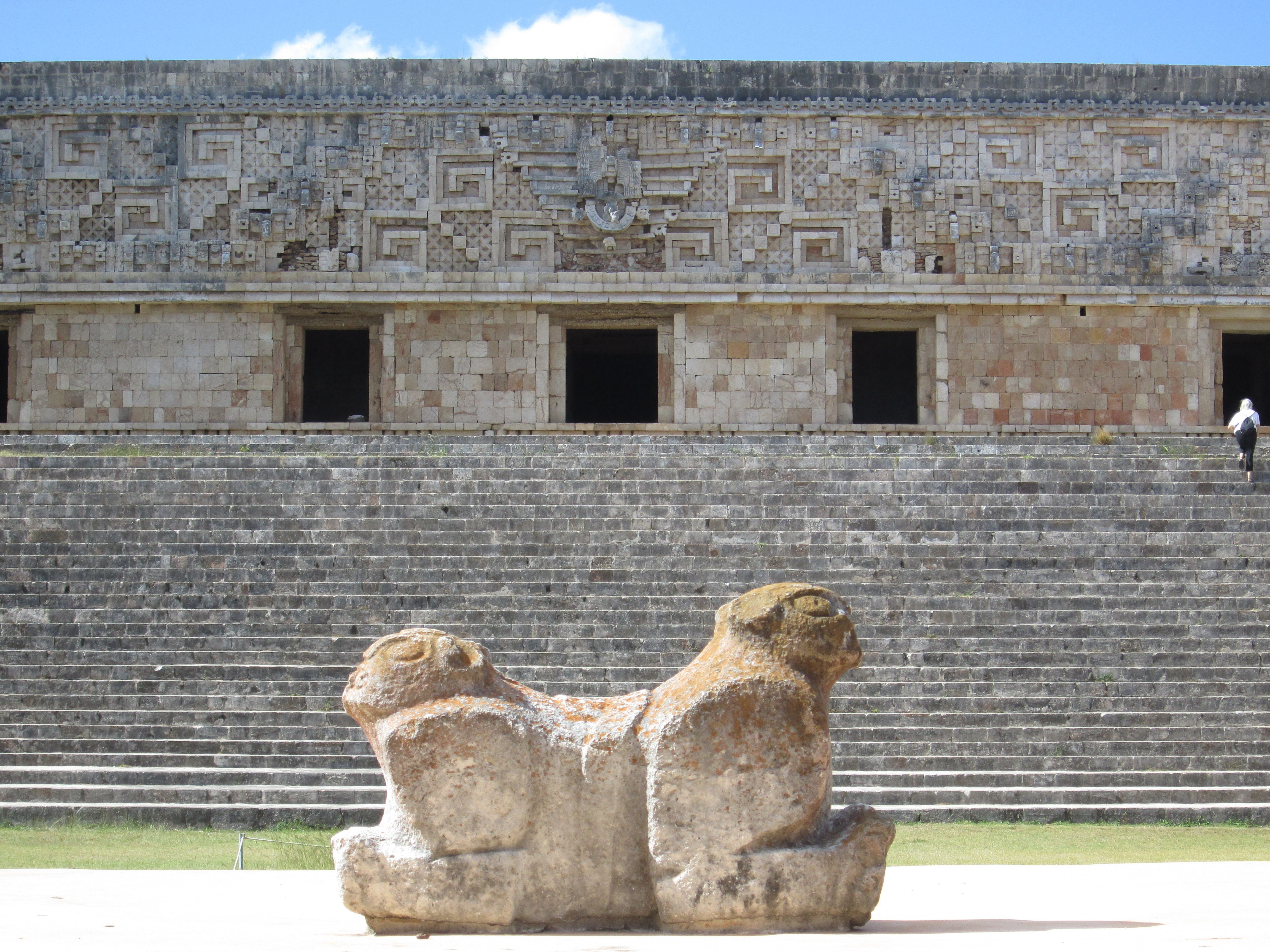
Double-Headed Jaguar Throne at the Governor’s Palace

Although there was a structure at Uxmal called the Governor’s Palace, there was no governor. There was, however, a king who ruled at the time the Palace was built: His name was Chan Chak K’ak’nal Ajaw. Curiously, none of the other god/kings of Uxmal are known by name, according to Robert J. Sharer and Loa P. Traxler’s authoritative The Ancient Maya (Sixth Edition). Unfortunately, the glyphs at Uxmal have been badly weathered.

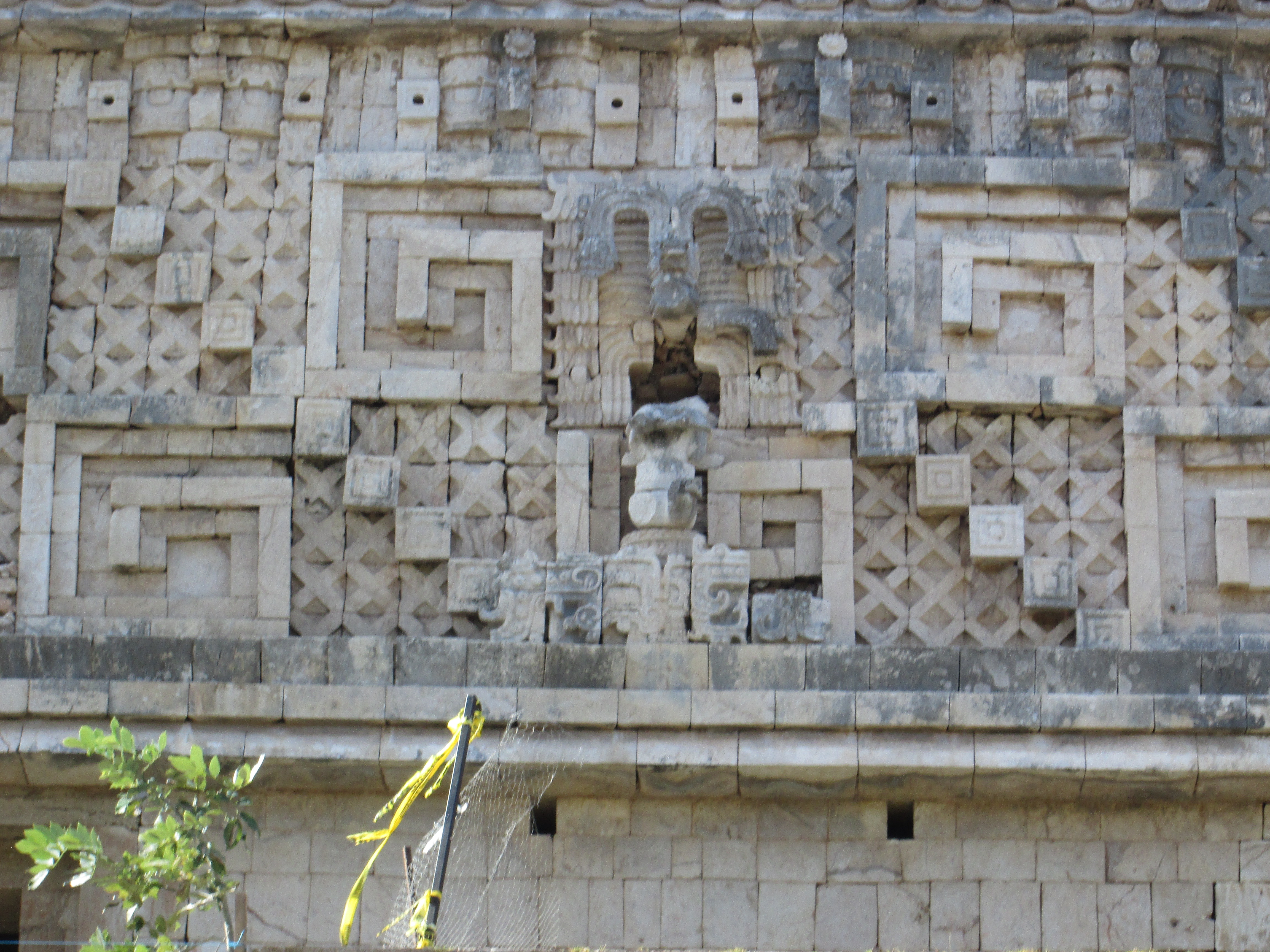
Details of Carved Stones on the Governor’s Palace

Notice the square stones at the bottom of the above photo. They are characteristic of the Puuc (pronounced Pook) style of architecture. The word puuc in Maya means “hill.” The Puuc region included some five or six sites that were in the hill country in the south of the State of Yucatán, ranging up to six hundred feet (183 meters) above sea level. This made access to water for drinking and growing crops a bit of a problem, as the underground river system of the peninsula was too deep, and there were no nearby cenotes (sinkholes) allowing access to the water.


Maya Nuns?

Detail of the “Nunnery Quadrangle” by Frederick Catherwood

The names ascribed to Maya archeological structures has almost nothing to do with their real function, which is mostly unknown to us. The names were assigned by the Spanish or local Maya who were in many cases a thousand years from having inhabited the ruins. Most of the great Maya cities were abandoned around the Ninth Century A.D., and Uxmal was no exception.

By the time John Lloyd Stephens and Frederick Catherwood visited in 1839, the various names were already in use, such as the Templo del Adivino or Pyramid of the Magician, the Nunnery Quadrangle, the Palace of the Governor, and so on.

One of the Buildings of the Quadrangle Today

So if you think there were a bunch of Maya nuns running around in the quadrangle of buildings that bears their name, you can forget about it. I am sure that some twelve hundred years ago, the local residents knew exactly what function every public building served. But we will likely never know.

The buildings have various themes carved in the area above the doors, including snakes, masks of the rain god Chaak, geometrical designs, and even a typical residential Maya hut of recent vintage. There are even a few very worn hieroglyphs which commemorate various dynastic events about which we know very little.

Chaak Masks at the Edge of the Structures (and Note the Maya Hut at the Upper Right)

As I wrote in my previous post entitled “The Crown Jewel,” I regard Uxmal as the greatest of the Yucatec Maya sites because of the excellence of the architecture and the care with which the structures have been restored using the mostly original stones. I remember on my earlier visits seeing piles of carved stones which the archeologists of that time had not yet decided how to use. Now there are fewer of those piles lying around.

Next: The Palace of the Governor