For the last ten days or so, my Internet connection has been nonexistent. I called up Spectrum Cable (my Internet Service Provider) and scheduled a visit. Wouldn’t you know it? “Because of Covid-19” they weren’t able to send anyone out until this morning. Fortunately, the two techs who came out were extremely competent (the older one was mentoring the younger one), and my connection was quickly restored after a kink in the line was discovered. In the process, I got a new router and modem—which is all to the good as the old Arris unit was outdated.
You know the colloquial expression for it: Work, work, work! (and several variants thereof). But the French have a more picturesque phrase to describe the thankless boredom of life under the Coronavirus outbreak:
Métro, Boulot, Dodo
According to the Thought.Co website from 2019, the term is explained as follows:
The informal French expression métro, boulot, dodo (pronounced [may tro boo lo do do]) is a wonderfully succinct way of saying you live to work. Métro refers to a subway commute, boulot is an informal word for work, and dodo is baby talk for sleeping.
The English equivalents—the rat race, the same old routine, work work work—don’t quite capture the same sense of constant movement, and a more literal English translation, “commute, work, sleep,” isn’t as poetic as the French.
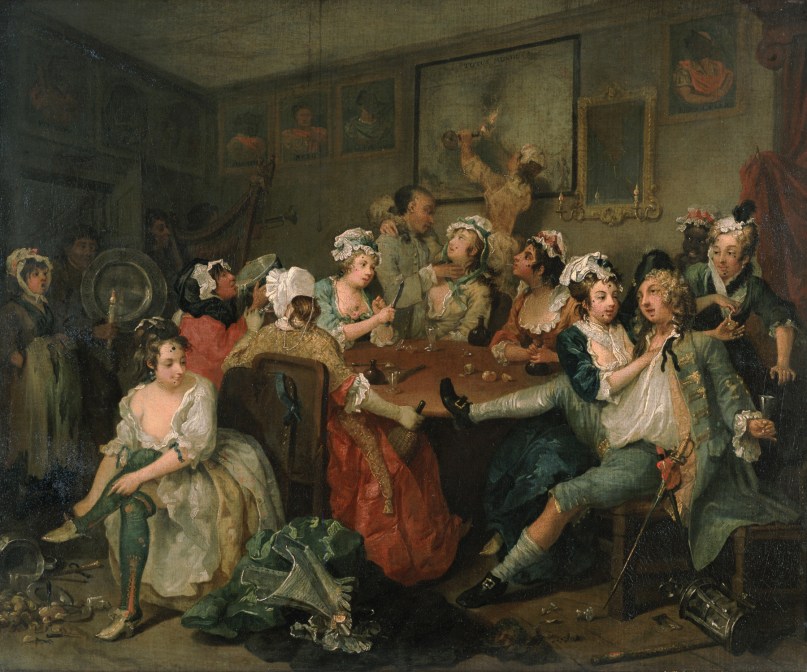
A Scene from William Hogarth’s The Rake’s Progress
I have been reading James Boswell’s London Journal 1762-1763. Inasmuch as I thought Boswell’s Life of Samuel Johnson LLD was one of the greatest books ever written, I thought it a shame that I had not read more of the great biographer.
At the time, Boswell was in his early twenties. His father, Lord Auchinlech (pronounced Affleck), had insisted that his son become a lawyer or merchant. Instead, James wanted to become an officer of the Guards, stationed in London. I am currently halfway through the book. Boswell spent many an anxious hour trying to win the patronage of powerful Scottish lords of the King’s party currying favor to this end. But, alas, no one went out of his way to help him.
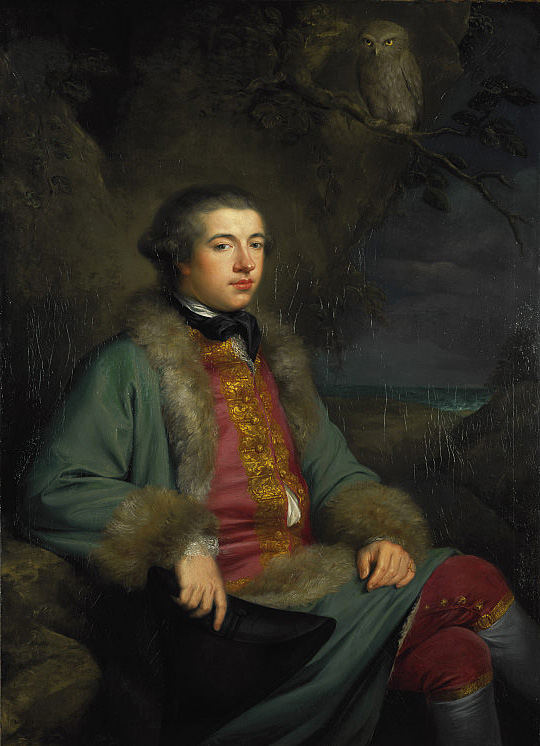
James Boswell (1740-1795)
What the young Scot found was a stubborn case of gonorrhea contracted from a pretty young actress whom he code-named Louisa. He built up to the affair with many weeks of visitations and gifts, only to come down with the clap for the third time in his life.
When he discovered he had been infected, Boswell mused about the effect his cure would have on his daily journal:
What will now become of my journal for some time? It must be a barren desert, a mere blank. To relate gravely that I rose, made water, took drugs, sat quiet, read a book, saw a friend or two day after day, must be exceedingly poor and tedious. My journal must therefore, like the newspapers, yield to the times.
Sounds like the coronavirus quarantine, doesn’t it?
Boswell’s journal makes for excellent reading. It shows its author to be an ambitious and randy young man who delights in conversation, especially with his fellow Scots. I can see myself making several more posts based on or inspired by this excellent book.
Kate Harris and Melissa Yule Atop India’s Nun-Kun Massif
I was a good boy during the month of January: I read all of the books I had planned to read during this year’s Januarius Project and then some. Here is the final list, in the order I read them with a short evaluation for each:
George Washington Cable, The Grandissimes. A pleasant surprise. ****
Ivy Compton-Burnett, Bullivant and the Lambs. Abandoned. Couldn’t abide it. *
Fredrik Backman, A Man Called Öve. Delightful Swedish novel. ****
Georges Lefebvre, The Coming of the French Revolution. Scholarly and interesting. ****
Trygve Gulbranssen, Beyond Sing the Woods. Interesting Norwegian tale. ****
Robert Goolrick, A Reliable Wife. Married life in Wisconsin in the 1800s. ****
Anne Brontë, Agnes Grey. Children are not always nice. ****
Kate Harris, Lands of Lost Borders: A Silk Road Journey. Great travel book. ****
Su Tong, Rice. A nasty character in 1930s China. ****
E R Eddison, The Worm Ourobouros. A fantasy novel that I abandoned, too wormy. *
Dzongsar Jamyang Khyentse, What Makes You NOT a Buddhist. A great intro. ****
Rachel Kushner, The Flamethrowers. The 1970s in New York and Italy. *****
Olga Grushin, The Dream Life of Sukhanov. Life is tough as the USSR comes unglued. *****
Ma Jian, Red Dust. A dissident travels around China in the 1980s. Great. *****
Chinese Dissident Ma Jian
That’s 15 books in all, not including F E Sillanpää’s Meek Heritage, which I finished on the last day of December 2020 ****.
With the exception of the two turkeys I abandoned (by Eddison and Compton-Burnett), I would have to say that this year’s Januarius Project was a smashing success. So successful, in fact, that I am planning a similar project for March, namely: reading only women authors. More about this as the month progresses.





 Tarnmoor
You must be logged in to post a comment.