“Big Daddy Tito’s Will”

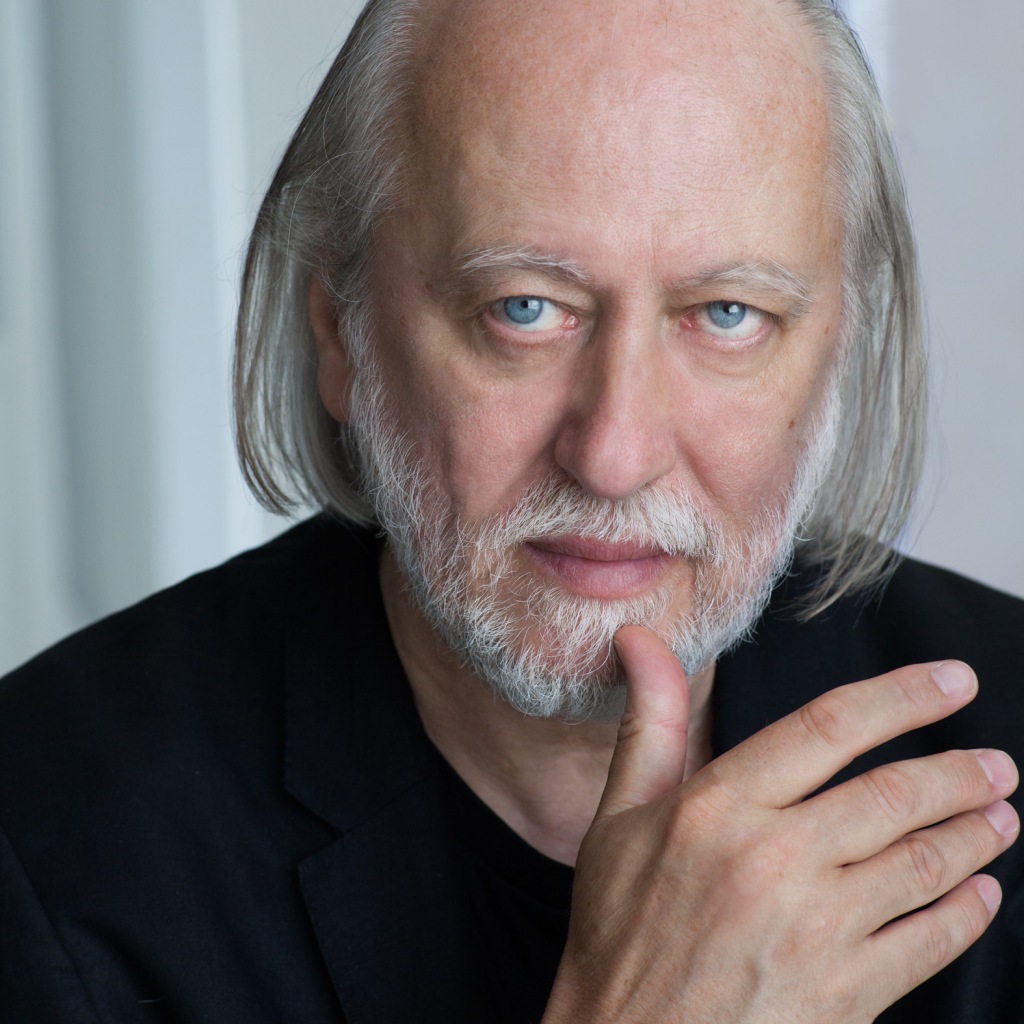
Yousuf Karsh’s Portrait of Josip Broz Tito

One day after writing about the Yugoslav Wars of the 1990s, I came on a short, pithy, and intuitive summary written by John Le Carré in his last novel, Silverview (2021):

Six tiny nations squabbling over Big Daddy Tito’s Will. All fighting for God, all wanting to be top dog, and nobody to like.

In case you missed that lovely era, Josip Broz “Big Daddy” Tito was the leader of Yugoslavia from the end of World War Two to his death in 1980.

Doesn’t he look remarkably like Field Marshal Hermann Goering?

Stupid in Their Straightforwardness

Scene During the Siege of Sarajevo, Bosnia

Ethnic hatreds have in the last hundred years led to some of the most barbarous episodes in European history. I have just finished reading Brian Hall’s account of the beginning of the fragmentation of Yugoslavia into independent republics, The Impossible Country: A Journey Through the Last Days of Yugoslavia. Again and again, he is brought up short by the mutual hatred of Croats, Serbs, Muslims, and the other peoples of that sad Balkan land. Toward the end of his book, the author muses:

It had now become a truism among journalists, including veterans of Vietnam, Angola, Cambodia, and the Gulf War, that Yugoslavia was the most dangerous assignment any of them ever had, the principal reason being that the Serbs seemed to be deliberately targeting them. Croats and Albanians had a history of getting what they wanted by ingratiating themselves, sometimes shamelessly. with one or another of the great powers, and so, by extension, their natural inclination was to seduce journalists. But the Serbs, used to relying on themselves, felt such calculation was beneath them, so at first they had simply shut western journalists out, while Croats and Albanians had taken them to dinner…. Then, when the Serbs perceived in western newspaper reports what any fool could have predicted, namely a Croatian and Albanian point of view, they could only conclude that journalists were enemy agents, and the only response they could think of was to start shooting. In short, of all the elements of the Serbs’ self-serving self-image, the truest was that they were stunningly stupid in their straightforwardness.

The weird thing was that Croats and Serbs spoke the same language—Serbo-Croatian—though they insisted that Serbian and Croatian were separate languages. Croatians were mostly Catholic, and Serbians were mostly Orthodox. The Croatians used the Roman alphabet, while the Serbians used the Cyrillic alphabet.

Frank Gorshin in the “Let That Be Your Last Battle” Episode of Star Trek

I am reminded of the famous “Let That Be Your Last Battle” episode of the original Star Trek, in which space aliens whose faces were black and white were in a life and death struggle with those whose faces were white and black.

The Serbs were ultimately the biggest losers in the Yugoslav breakup because they constantly whined that other people did not understand them; at the same time they acted in such a way that nobody could side with them. The defining moment of their history is their loss to the Turks at the battle of Kossovo in 1389 AD—very much like many Southerners see their defining moment as their Civil War loss to the Union.

So beware of ethnic, racial, religious, and cultural prejudices. When they continue unchecked, violence is the inevitable result.

Waterless Tuesday

I woke up this morning to bad news. A notice was taped to our front door indicating that our water would be shut off on Tuesday between 8 am and 4 pm. That meant I would have to camp out for several hours where I would have access to a lavatory. What came to mind was the Westfield Shopping Center in Culver City, perhaps after I took my car in for an inspection of hoses, belts, fluids, and tires for next week’s trip to Las Vegas.

The apartment building management stated that the water shut-off was for “maintenance repairs,” never specifying the exact nature of the maintenance repairs.

Today meant even more bad news for the homeless encampment across the street. The police showed up with several trucks and disposed of a number of (but not all) the tents, and most of the associated piles of rubbish that accompanied them.

I have tried to avoid interacting with these campers, though I had a run-in when I returned from the desert two weeks ago. Tired from a 130-mile (201 km) drive from Palm Desert, I pulled into my parking spot only to find it occupied by a bicycle bum sitting on the pavement and eating a bowl of cereal. He was incensed that I asked him to move and urged me to go f—k myself. I returned the favor, and he left in a surly mood. When next I returned to my parking spot, I saw that my vehicle was decorated with spilled milk and some kind of multi-colored fruity cereal. Naturally, I had to get my car washed that afternoon.

“Nothing Is Easy”

Bengals QB Joe Burrow Grimaces in Pain

I am not known as a big football fan, but nonetheless I decided to watch today’s Superbowl LVI between the Cincinnati Bengals and the Los Angeles Rams. After all, the game was being held in L.A. and featured the home team.

While it was nice that the Rams won, I was very conscious of the physical pain that is an inevitable part of the game. In the Second Quarter, Rams receiver Odell Beckham Jr had a non-contact misstep which injured his left knee and sidelined him for the rest of the game—leading to additional defensive coverage on Cooper Kupp that made things rough on QB Matthew Stafford until the fourth quarter.

What particularly caught my eye was the sacking of Bengals QB Joe Burrow by Rams linebacker Von Miller early in the Fourth Quarter (above). For several seconds, Burrow lay on the field with his face contorted in pain. Fortunately for his team, he was able to recover, though I felt there will be something to pay for that takedown.

There was a lot of meaningless commentary by all the sports pundits, but only once did the truth come out when one of them said, “Nothing is easy.” No truer words were ever spoken in sport.

Chiloe: A Near Miss

Palafitos on the Shore of Castro on Chiloé

In 2014, I was within a mile of the ferry from Puerto Montt, Chile, to Ancud on the island of Chiloé. Chiloé is one of two places in South America that lay claim to the first cultivation of potatoes, the other being Peru. Why didn’t I go? Because of a 1963 documentary by Joris Ivens entitled À Valparaíso, I was dead set on spending several days in the port of Valparaíso before returning to Los Angeles via Santiago. You can see this documentary by clicking here. Even though it has a French soundtrack with Spanish subtitles, you can see why I wanted to see the city.

And so, Chiloé is one of those places I almost but not quite visited. The island is famous for its palafitos, brightly colored buildings clinging to the shore on wooden stilts, and also for its wooden churches, built without benefit of nails and frequently covered with wooden shingles. The climate is a humid, cool temperate climate; and the island is covered with rare temperate rain forests.

Church of San Francisco in Castro

Back in 2000, the wooden churches of Chiloé were collectively named as a UNESCO World Heritage Site.

Chilotes have a unique stew called curanto, which includes seafood, meat, potatoes, and vegetables. The dish is buried in a deep hole filled with hot coals and covered with stones.

I would love to spend a week in Chiloé sometime, “Had we but world enough and time.”

Zzyzx

On the road to Las Vegas, straight through the heart of the Mojave Desert, are strange turnoffs leading to even stranger places. Just before Baker is Exit 239, Zzyzx (pronounced ZYE-zix) Road, which supposedly leads to a former clinic run by a sharpster named Curtis Howe Springer. Then there’s Kelbaker Road, which runs south from the I-15 to Kelso, where there is an old Union Pacific railroad station and railway workers’ dormitory, near the Kelso Dunes. It continues south to Amboy, one of the most hellacious towns in the California desert.

Another route from Baker takes you 100 miles north to Death Valley on Highway 127, past Death Valley Junction with its Amargosa Opera House, where Marta Becker used to give regular performances.

In that vast agglomeration of dry lakes, mountains, Joshua Trees, and creosote bushes there are strange little gems waiting to be discovered. I wish I could live long enough to take the time and discover them.

Viva Las Vegas

A Christmas tree is shown on Fremont Street in downtown Las Vegas on Dec. 12, 2017. CREDIT: Bill Hughes/Las Vegas News Bureau

In a little more than a week, Martine and I are going to Las Vegas for a few days. We have no intention of gambling, as we both feel that is tantamount to throwing money down the drain. For me, what Las Vegas stands for is a kind of Petri dish of American Culture, emphasizing what Americans find pleasurable. In fact, I see it as the American equivalent of Pleasure Island from Pinocchio, where little boys go to be turned into jackasses.

Think about it: food, gambling, sex, sports, lavish entertainment—all the things that float the boats of typical Americans. It is probably one of the best places in this country for people watching. Just take the Heart Attack Grill, for example:

The Heart Attack Grill on Fremont Street in Downtown Las Vegas is a truly unique restaurant, where gluttony and obesity reigns supreme. Where else can you go to eat a 9,982 calorie burger, served by a buxom waitress dressed as a nurse, listen to karaoke, and wash it back with a shot of liquor served in a prescription bottle?

As the sign says, diners weighing in over 350 pounds (159 kilograms) eat for free.

I doubt that even Imperial Rome had nothing that could compare with that. I can see myself looking for an unobtrusive place to sit down and wait for things to happen so that I can photograph them.

On previous visits, Martine and I confined ourselves to the Strip on Las Vegas Boulevard. This time, we’ll be in downtown Las Vegas, near the center of the action on Fremont Street. Needless to say, I’m looking forward to the trip.

Manageable Chaos

A Hindu devotee shows his painted back with a message stating “GST (Global Service Tax) – A new boon or a lasting burden?” ahead of the rollout of the new tax in India, during the annual Rath Yatra, or chariot procession, in Ahmedabad, India 2017. REUTERS/Amit Dave

According to sociologist Ashis Nandy, writing in 1990:

In India the choice could never be between chaos and stability, but between manageable and unmanageable chaos, between humane and inhuman anarchy, and between tolerable and intolerable disorder.

I am currently reading V. S. Naipaul’s book India: A Million Mutinies Now (1991). It is the last of the late author’s three books on India. The others are An Area of Darkness (1964) and India: A Wounded Civilization (1977). Born in Trinidad of Indian ancestry, Vidia Naipaul was a British citizen who kept trying to understand the land of his forebears.

India is a land of multiple languages, multiple religions, multiple political factions, multiple ethnicities. In a word it is a land of multiple multiplicities. And it is becoming ever more centrifugal as time goes on. Hardly a day passes without news of massacres, rapes, terrorism, and murders directed at the other guy.

V S Naipaul (1932-2018)

In trying to understand India, Naipaul has helped all of us see more clearly what is an increasingly shattered society, yet one that manages to soldier on despite everything. I, who am so despairing of the split between the Trumpists and everyone else in the United States, am truly amazed that India is able to manage its own chaos so well. For now, anyway.

Paper Tiger?

Soldiers of People’s Liberation Army (PLA) march in formation during the military parade marking the 70th founding anniversary of People’s Republic of China, on its National Day in Beijing, China October 1, 2019. REUTERS/Thomas Peter

It is fashionable in the United States to overestimate the Chinese as an international aggressor. Since its involvement in Korea some seventy years ago, China’s Peoples’ Liberation Army (PLA) has not acquitted itself particularly well:

  1. In 1962, there was a border dispute with India which did not involve air or naval forces, in which the three PLA regiments occupied an area in the Himalayas known as Aksai Chin.
  2. In 1967, China attempted to invade Sikkim, just east of Nepal, but were driven back by Indian troops.
  3. In 1979, China invaded North Viet Nam (which was allied with Russia) and lost heavily to battle-hardened Viet troops under Võ Nguyên Giáp.
  4. Recently, China has occupied various uninhabited rocks in the South China Sea, which are in danger of being inundated by tsunamis common in the area due to volcanic activity.

It has been much more common for the PLA to be involved in the suppression of minority populations in south and western China.

So although the PLA on paper is powerful, it has no real history of success in battle. Although I am not in favor of pooh-poohing them as a threat, I think we tend to go too far in the opposite direction.

I must admit, however, that the PLA wins hands down on the parade ground.

Strawberry Fields Forever

At a certain point in autumn, many fruits suddenly become unavailable—unless they are flown in from Latin America or grown in greenhouses. Apples and pears still abound, and there are always oranges and grapefruits, though initially, these are not at their best.

One characteristic of my own diet is that I must eat fresh fruit every day. Sometimes, I’ll eat figs or dates or other dried fruit, but nothing quite matches the experience of biting into a piece of fruit at its best. Fortunately, February has great oranges and tangerines, and you can start getting really good strawberries from Ventura County.

From now until November, a new fresh fruit season has begun. It will reach its height in June, when cherries and apricots are at their height. And later in summer, the freestone peaches and plums are there, at least until September. Then, I must wait for the Fuyu Persimmons to come into season. And after the persimmons, I am back to apples, pears, and dried fruit.

I suspect I became addicted to fresh fruit because, In Parma Heights, Ohio, we had about twenty fruit trees in our back yard. They were great eating, though a misery when it came to mowing the lawn around all the fallen fruit. If my health can be said to be good, I owe it largely to eating habits developed when I was very young.