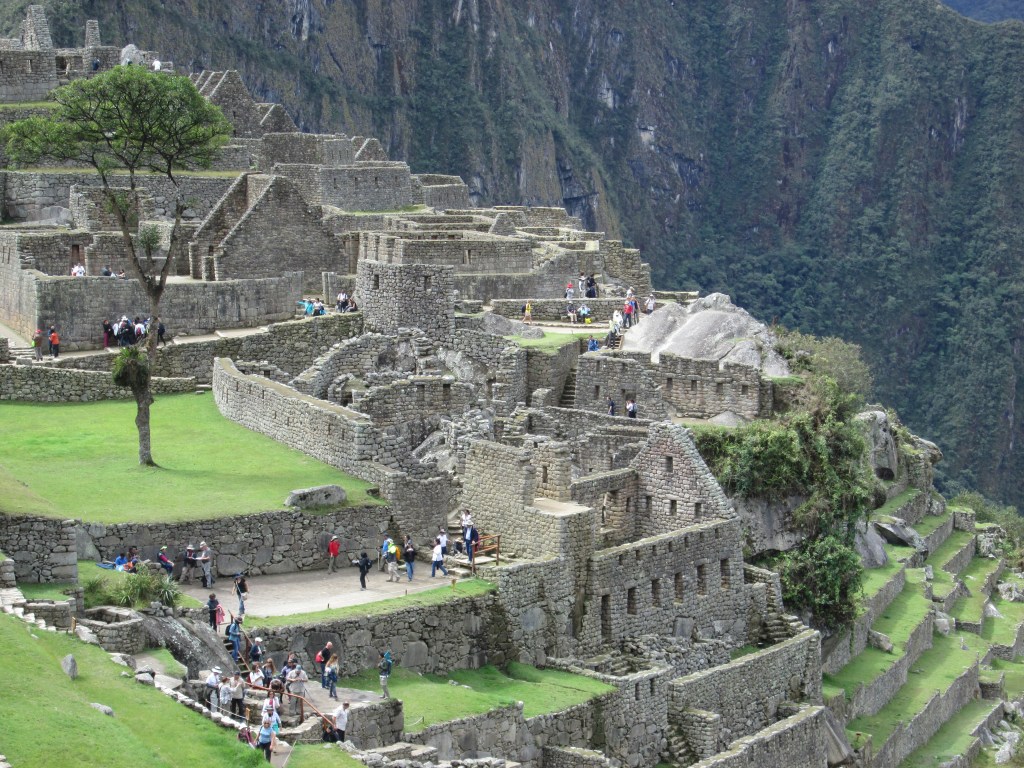
I was surprised to find out that, according to a professor of anthropology, Machu Picchu should be called Huayna Picchu instead. The reason I was surprised is that the Incas never had a written language like the Maya and the Aztecs. They were great engineers and stonemasons, but left no writings or even hieroglyphs. The only “communication” of any sorts we have from the Incas are in the form of quipu, knotted cords that were used to quantify taxes or inventories.
Quipu at the Museo Larco in Lima, Peru
You can read the story here at CNN Travel. It doesn’t much matter what the “official” name of the Inca ruins was. After all, most Meso-American ruins are probably misnamed. Either the Conquistadores or the archeologists just assigned a name for convenience. And, for good or ill, it stuck.
The war in Ukraine just escalated. Two Ukrainian helicopter gunships flew 25 miles (40 km) into Russia and blew up a Russian fuel dump. It was yet another embarrassing moment for the Russian military, which neither detected nor prevented the incursion.
I only hope that none of the helicopters were of American manufacture, which would give Putin the opportunity he needed to say that the Ukrainians were just acting as a proxy for NATO. Of course, he could say that even if the helicopter attack had never happened. It’s one of those irksome imponderables involving the thinking processes of Vladimir Putin.
Ukrainian President Volodymyr Zelensky keeps saying that, if peace negotiations with Russia do not take place, it will be the beginning of World War Three. It is a sobering thought: If that happens, millions will die, myself included. I happen to live in one of the prime nuclear target areas, namely, Los Angeles.
Pundits keep referring to the search for an “offramp” from the war. Given Putin’s stubbornness and bloody-mindedness, I cannot see how the war would end. Or rather, all the options I see are rather grim.
I’m not going to get involved in the Will Smith/Chris Rock imbroglio at the Oscars, except to say that there is a time and place for everything. Perhaps the Academy should send Will Smith to Moscow to slap the Bejeezus out of Vladimir Putin for his savage war against the people of Ukraine.
Drag Queen RuPaul
Perhaps it would be even better to send RuPaul to slap Putin, given Putin’s aversion to any sort of gender bending.
Anyhow, somebody’s got to get to that man before he makes the world unlivable.
I have always loved the prose and poetry of George Mackay Brown, whom I met in 1976 in Stromness on the Orkney Mainland. (They call it the Mainland, even though it’s an island.) I have visited there twice, both times in bad weather, which I think is the only kind of weather prevailing there.
The Finished House
In the finished house a flame is brought to the hearth.
Then a table, between door and window
Where a stranger will eat before the men of the house.
A bed is laid in a secret corner
For the three agonies – love, birth, death –
That are made beautiful with ceremony.
The neighbours come with gifts –
A set of cups, a calendar, some chairs.
A fiddle is hung at the wall.
A girl puts lucky salt in a dish.
The cupboard will have its loaf and bottle, come winter.
On the seventh morning
One spills water of blessing over the threshold.
Dealing with Type 2 Diabetes can be onerous. Even worse than the insulin shots (which I need to do four times daily) are the finger-stick glucose tests. I know I can always give myself an insulin shot anywhere without arousing too much attention, but finger sticks are a different matter entirely.
The problem arises when you have difficulty getting your blood to bead on your finger so that you can apply the test strip and get a glucose reading. Sometimes, I have to stick myself several times, usually painfully, on some of my fingers. My right forefinger is already nerve damaged, so that I have to be very careful about avoiding the nerves on it. On my thumbs and little fingers, I need a thicker lancet to draw blood, currently a 30 gauge. On my other fingers, a narrower 33 gauge lancet is sufficient.
Can you imagine me at a restaurant sticking myself several times with a needle, with a loud “Ouch” from time to time? So when I go out to eat, I don’t usually test myself.
My doctor wants me to test my glucose three times a day, before each meal. Just before each appointment with her, I produce a spreadsheet with the before-meal glucose readings for each day since my last appointment.
Type 2 Diabetes requires considerable attention to detail. This can be rough if you are going out to eat, busy cooking a dinner, or taking a trip. When Martine and I went to Las Vegas last month, for example, I skipped doing the tests
I am currently reading Tracy Daugherty’s biography of Joan Didion entitled The Last Love Song. Halfway through the book, I feel as if I had relived the 1960s and the 1970s. I had never realized what a key literary figure that Joan Didion (as well as her friend Eve Babitz) were in my life. While Eve represented to me the world of L.A. celebrities, Joan’s wide screen writings took in the whole local and even international picture.
If one lives in the West L.A. area over a number of years, one finds oneself on the fringes of history. On June 5, 2004, for instance, Martine and I were turned away from the Ronald Reagan Presidential Library in the Simi Valley because the ex-president had just died. The funeral home that handled his body was within walking distance of my apartment, at 26th Street and Arizona in Santa Monica.
The scene of the crime when O. J. Simpson killed his wife and Ron Goldman was only five blocks north of me on Bundy Drive. (It building got so many visitors that they demolished the building.)
On June 25, 2009, I had difficulty getting home from work because thousands of people had showed up at the UCLA Hospital when they heard that Michael Jackson had died.
One of our clients at the accounting firm where I worked was the actor Richard Anderson, who lived at 10130 Cielo Drive, right next door to the house in which Sharon Tate and her friends were slaughtered by the Manson Family.
Joan Didion
While I never met Joan Didion, I always felt a curious parallelism between her works and my life. Not because I was a successful writer or filmmaker, but because she tracked life in Southern California the way I did. For the most part, what interested her interested me. I suspect that if I had met her, she and I would not have seen eye to eye: I am not interested in the kind of active social life she lived, or in heavy drinking, or raising a child (at which she self-admittedly failed).
The fact remains that, in following her works, especially in the 1960s and 1970s, I feel as if I am reliving my life during the formative years of my early adulthood. So much so that it is almost eerie at times.
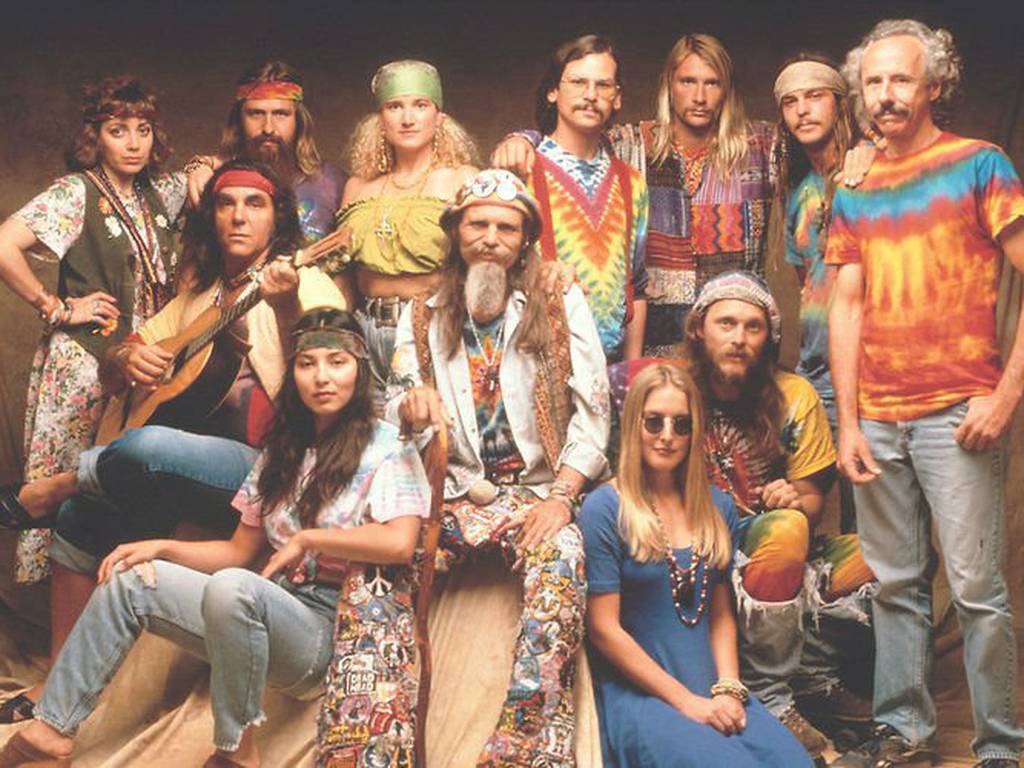
Although I arrived in Southern California right around the time the Hippies sprang into existence, I was never one myself. I had just undergone brain surgery in Cleveland, and my worries were too basic for me to work on being cool. I was, in a word, decidedly uncool. I didn’t have a beard, though in 1968 I started to grow a mustache, not because it was fashionable, but because it reminded me of my Hungarian Huszár (Hussar) ancestors.
All around me, people were wearing tie-dyed shirts and blouses, headbands, and other regalia suggestive of Native Americans and Asians, the only Hippie trait I adopted was long hair. I had always disliked the crew cuts and flattops that my parents liked, so I let my hair grow when I came to the Coast. As for beards, I tried but it was way too itchy.
Some of my friends were Hippies, and by and large I got along well with many of them. I tended, however, to avoid kids who took their stance too seriously. I smoked grass from time to time, but I was probably more likely to get an asthma attack than to get high. As for more serious drugs, like LSD, mescaline, and psilocybin, I didn’t mess with them.I had no way of knowing how long I would live without a pituitary gland, so I didn’t want to experiment too much. I was into surviving.
And so, more than half a century later, I am still infesting the Earth—with perhaps the prospect of continuing a few years longer. My continued survival came as a pleasant surprise to me.
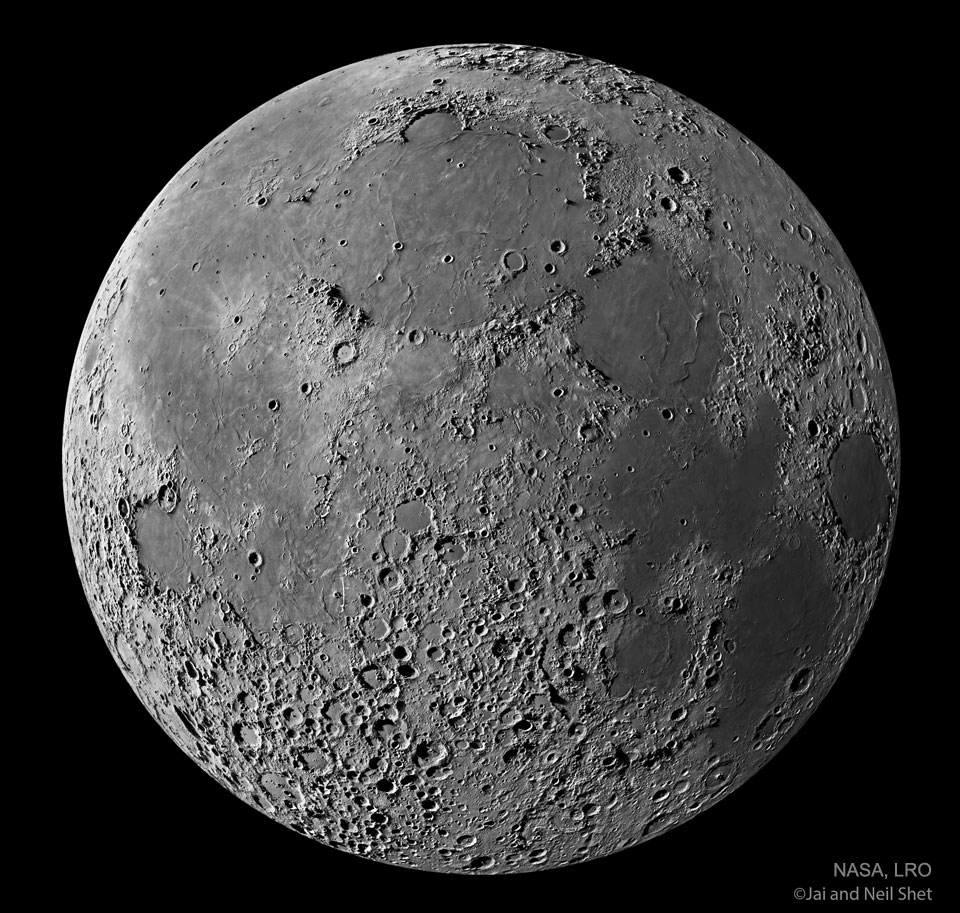
What’s different about this Moon? It’s the terminators. In the featured image, you can’t directly see any terminator — the line that divides the light of day from the dark of night. That’s because the image is a digital composite of 29 near-terminator lunar strips. Terminator regions show the longest and most prominent shadows — shadows which, by their contrast and length, allow a flat photograph to appear three-dimensional. The original images and data were taken near the Moon by NASA’s Lunar Reconnaissance Orbiter. Many of the Moon’s craters stand out because of the shadows they all cast to the right. The image shows in graphic detail that the darker regions known as maria are not just darker than the rest of the Moon — they are flatter.
Photo Taken by New York Times Photographer Tyler Hicks
If you were to fight in one of America’s wars and happened to die, your next of kin would be informed; and your body would be flown back to the U.S. for burial. Apparently, if you are one of the 15,000 Russian dead in Ukraine, the existence of your body is an embarrassment to Vladimir Putin, who would just as soon say to the parents and family that their Ivan or Dmitri is “missing” and leave it at that.
That way Russians who believe the lies that Putin is slinging would not be surprised at the large number of dead bodies filling trucks and trains heading to cities and towns across the Motherland. The Russian dead serve only to make Putin look as bad as he really is.
Now imagine how that makes the Russian troops invading Ukraine feel. They know it’s a war. They know that Putin is lying through his teeth. The morale of the Russian Army must be at low ebb, such that I would not be surprised there isn’t some sort of mutiny like the one that occurred on the front lines during World War One while the Russian Revolution of 1917 was taking place.
Yes, I know that Putin is evil. But to that I will also add that he is stupid and is likely to be overthrown.
By the way, the Ukrainians are collecting bodies of the Russian dead and using facial recognition software to identify them and notify the families themselves. I saw this news item on BBC’s website today. Oh oh.
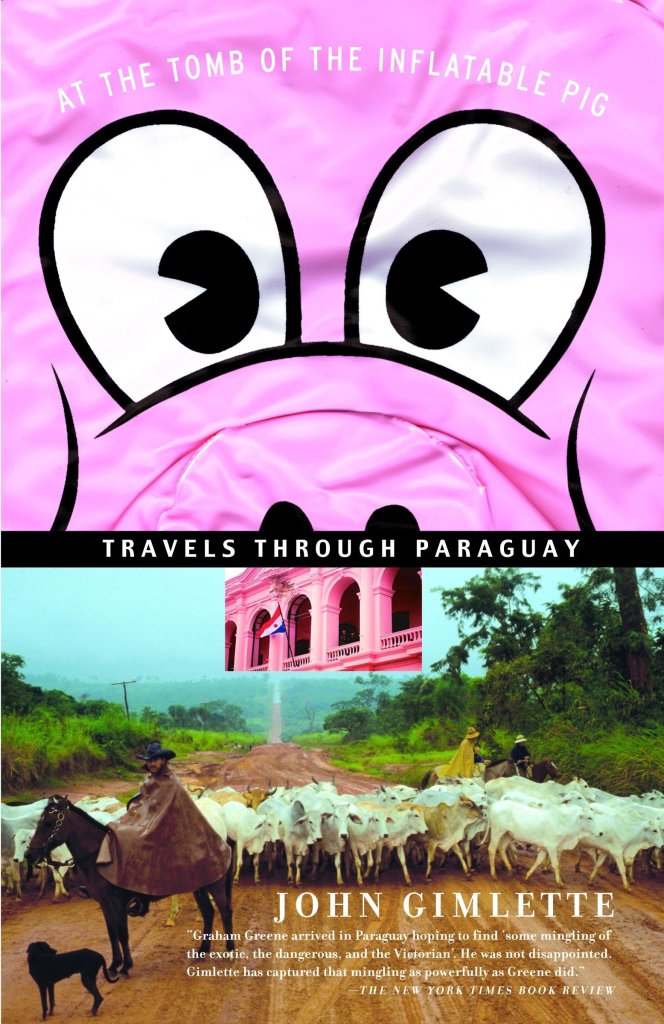
Definitely on my travel bucket list is one of South America’s two landlocked countries (the other one is Bolivia, which had a seaport on the Pacific until they lost it in an 1870s war with Chile). I am speaking, of course, of Paraguay, which is surrounded by Argentina, Brazil, and Bolivia. I personally know no one who has been to Paraguay, yet I am yearning to visit it.
What piqued my interest was John Gimlette’s At the Tomb of the Inflatable Pig, which captures the insane history of this little known country, which is known for:
The Paraguayan War (1864-1870) against, simultaneously, Argentina, Brazil, and Uruguay, in which 50% of the population lost their lives.
The Chaco War (1930s) against Bolivia, in which two armies confronted each other in a waterless desert and which, surprisingly, Paraguay won despite horrendous casualty rates.
The dictatorship of Alfredo Stroessner (1954-1989) in which the country welcomes fleeing Nazis.
While it is theoretically possible to fly into the capital, Asunción, I would rather enter by bus from Argentina. When I visited Iguazu Falls in 2015, I was only a few miles from Ciudad del Este, which is a known hangout of smugglers and Hezbollah terrorists—but I chose not to visit it at that time. (Actually, probably never would suit me.)
If I went to Paraguay, I would be interested in visiting the old Jesuit missions that were destroyed by the Brazilians. At one time, in the 18th century, Paraguay was controlled by the Jesuits and was considered a paradise on earth. To corroborate, read Voltaire’s Candide and see Roland Joffe’s 1986 film The Mission with Robert De Niro and Jeremy Irons. But after the missions were destroyed, things went bad.
And I would like to stay in Asunción sipping Tereré, a cold preparation made with Yerba Mate. If I had time, I would like to see a little bit (a very little bit) of the Chaco region in the northwest.









You must be logged in to post a comment.