Mexican Folk Art: La Casa de los Venados

What It Feels Like to Stay at Home All the Time

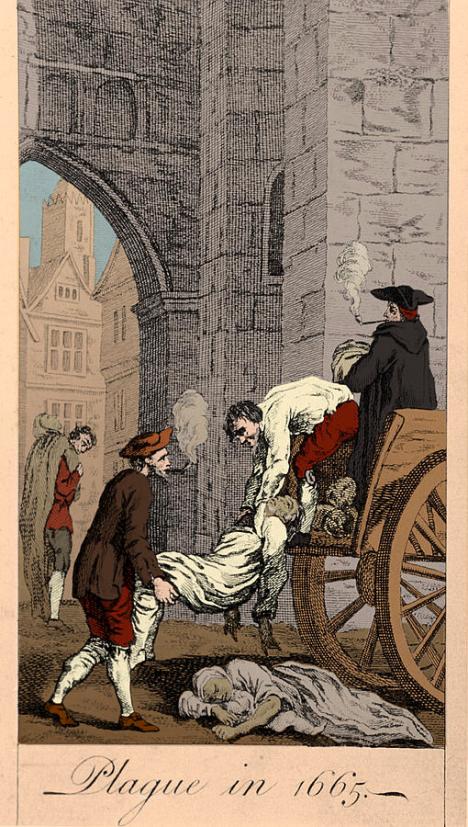
I am about to take a break from my “Plague Diary” posts to remind myself that, somewhere, something like a normal life still exists. Toward the end of my vacation in Yucatán, I spent several days in Valladolid, home of one of the country’s best private collections of folk art at the Casa de los Venados. I loved the exhibits I saw throughout my trip of folk art. The combination of humor and brilliant color had me won over. Now that I am sitting out the plague in my apartment, sans restaurants, sans libraries, sans movie theaters, sans any humor or brilliant color. (Especially as it has rained all week.)

Dog Cart

Sometimes I feel as if North American culture is deficient, especially in the visual arts. It wasn’t always thus, but somehow I feel that abstract expressionism took all the fun out of painting. Seeing the collection at the Casa de los Venados, on the other hand, made me laugh out loud.

Mermaid


The amazing thing about Mexican folk art is that there is so much of it about and at such reasonable prices. Over several decades, you can have a great collection that might even rival the Casa de los Venados—and have loads of fun doing it.

Plague Diary 3: Making Adjustments

Small World Books in Better Days

No one knows how long the current plague restrictions will be in place. I have to assume it will be for several weeks. During that time, I cannot go to the movies or dine at a restaurant or visit a museum. For lunch, I visited Bay Cities Imports, Santa Monica’s primo Italian import grocery, and bought one of their Spaniard sandwiches. Based on a review at the Food GPS site:

The Spaniard isn’t made to order; you’ll find them wrapped in white butcher paper on the deli counter, along with other grab-and-go sandwiches, meaning they may sit for awhile. Still, my experience with The Spaniard still worked out well. The small-ish sandwich was stacked with jamon serrano, coppa seca, honey ham, Pamplona chorizo, Gruyere cheese, oregano, parsley, roasted tomatoes, olive oil, black pepper, and rosemary on a chewy baguette. Next time, I’ll probably beg to go back to The Godmother like some kind of guilt-ridden sandwich adulterer, but I enjoyed my brief fling with The Spaniard.

Since I could not eat lunch at the store, I took my lunch with me and drove to Venice, stopping at a parking meter and munching away while a parking enforcement officer kept circling my car seeing if she could ticket me. I waved my sandwich at her by way of greeting.

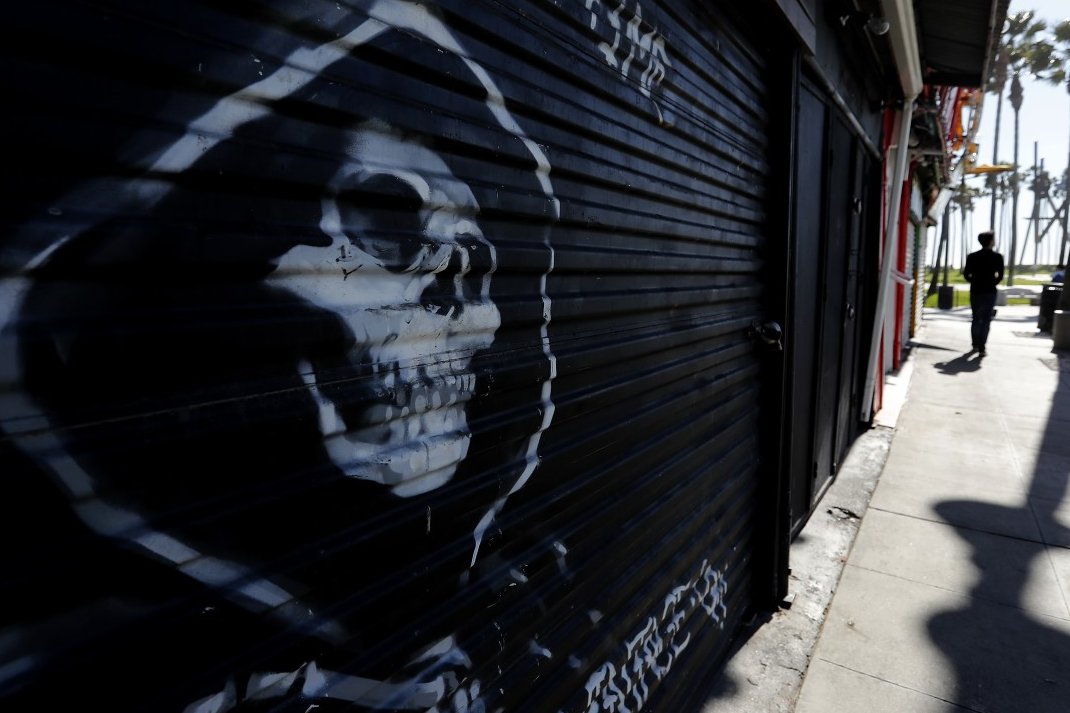
After I finished, I popped some quarters in the meter and walked to Small World Books. As you can see in the above photo, the bookstore is in the same building as the Sidewalk Cafe. As the bookstore is run by the wife of the cafe owner, it was not altogether surprising that it, too, is closed for the duration.

So I headed home and watched a DVD version of Krzysztof Kieslowski’s Blue (1993), which I loved. I plan to see the other two films in the trilogy—White and Red (both 1994)—within the next few months. After dinner, I read another hundred pages of Jan Neruda’s Prague Tales.


Plague Diary 2: Empty Shelves

It’s Bad All Over: The Above Picture Is From the UK

Last night I called my friend Bill Korn, who warned me that the supermarket shelves are likely to be all picked over by hoarders. As I do my main food shopping on Monday, I started the day with apprehension. I woke at 7 am to get to Ralphs Supermarket (owned by Kroger) by the 9 am opening time. When I arrived, I had trouble finding parking, could not get my hands on a shopping cart (except the one they always have on hand with square wheels), and found very little of what I was looking for.

Fortunately, I was able to find some ground turkey—seconds before the hoarders descended on it. Then I joined the checkout line that wound up and down the store aisles.

Later, I stopped at Trader Joe’s on Olympic Boulevard and found a similar situation, though the well paid staff was much better at restocking the shelves.

The dish I prepared was a non-spicy keema consisting of the ground turkey, various Indian spices, and a selection of frozen vegetables from my freezer. If this situation prevails over however many weeks the plague restrictions are in effect, I will have to be highly creative in my cooking. It’s already difficult to cook for Martine and myself because there are relatively few dishes we can agree on. It’s like the Mother Goose nursery rhyme:

Jack Sprat could eat no fat.
His wife could eat no lean.
But, together both,
They licked the platter clean.

Rather than fight with Martine about what I cook, I will gladly arrange for her to have any take-out meals she desires. She is considerate enough not to over-abuse this privilege.

Other than food shopping, I viewed a classic psychological horror film from 1943, Val Lewton’s The Seventh Victim. And I read about a third of Jan Neruda’s excellent 19th century Prague Tales. Jan is not to be confused with Pablo Neruda, who hi-jacked the Czech writer’s last name as his nom de plume.

Plague Diary 1: Kárpátok

I Violate the Plague Laws Prescribing Social Distance

In the new environment of worldwide plague, I must carefully pick and choose what I can and cannot do. I started out with a major violation by attending a folk dance performance given by the Kárpátok Hungarian Folk Dance Ensemble. It was well attended with several hundred audience members, many of whom within the six-foot danger zone of contagion.

Martine particularly loves the performances by Kárpátok, and so do I because I like to revel in my Hungarian background. Of late, I have used the Magyar language primarily to damn to hell cruise ship passengers in Mexico who try to use me as an information resource. At the United Magyar Ház in Los Angeles, where the concert was held, virtually everybody present could cuss me out more correctly and picturesquely than I can do. So I am on my best behavior.

The Kárpátok Hungarian Folk Dance Ensemble is one of the best things about Los Angeles. Martine and I have been attending their events for upwards of ten years.

It is unlikely that there will be other plague law violations in the weeks to come, mostly because just about everything is being closed down. The supermarket shelves are being emptied by hoarders of food, hand sanitizers, and toilet paper. When I go shopping tomorrow, I will have to be careful about confronting hoarders: Particularly in Southern California, people who are the most guilty are also the most aggressively defensive about their deeds.

My postings here in the next few weeks will discuss how my life has changed as a result of living in a plague zone. I anticipate that my life will change in many ways over the next few weeks. I remain hopeful, however, because of the following reasons:

  • I have a personal library of several thousand volumes, including all the classics
  • My cable television configuration includes about a dozen movie channels
  • Plus I have hundreds of DVDs
  • One of my hobbies is cooking—useful when many restaurants are closing or cutting back
  • I make a point of maintaining frequent telephone contact with my old friends

Strange New World

Who Could Have Expected This?

When I returned from Mexico on February 7, it was to a vastly different reality—one that grew increasingly strange with each passing day. With the cancellation of music festivals, sporting events, live audiences, and even schools and libraries, it is a strange and unexpected new world in which I find myself.

Tomorrow night, Martine and I are attending an event given by the Kárpátok Hungarian Dance Ensemble, which we both love. It is not a large event, and Martine and I plan not to stay for the socializing after the folk dances. Even a week ago, I would not have been so conscious of the danger of contracting Covid-19. Now, alas, I am: I am a walking encyclopedia of pre-existing medical conditions, including panhypopituitarism, type II diabetes, hypertension, asthma, and a few others not so prominent. If I caught the virus, I would likely be at risk not to survive it.

It has been a particularly strange week, partly because of the draconian measures to minimize casual social contact, and partly because of a rare week-long “Pineapple Express” rain event which is leaving us with a certain degree of cabin fever.

At present, an average of 350 people per day are officially identified as having come down with Covid-19. I suspect the number is actually much larger because of the nationwide shortage of test kits. Supposedly, something is being done about this—but then I don’t usually expect competence or any degree of helpfulness from the Trump administration.

The only good news about the coronavirus is that it has all but chased the 2020 presidential election from the news. But it has not replaced it with anything more palatable.


Zeppelin Orgy

Book Based on the Movie

No one could say that it’s a good movie, but it certainly is an outrageous one. Cecil B. DeMille’s Madam Satan (1930) starts out as a fairly standard bedroom farce and ends with an hour-long orgy aboard a zeppelin that starts out being tethered at a New York airport, and ends up being destroyed in a sudden electrical storm. Oh, and by the way, it’s a musical.

I first saw the film when it was screened by the Dartmouth Film Society in the mid 1960s. More than half a century later, I was still amazed by the film, which was screened tonight by Turner Classic Movies (TCM).

The zeppelin sequence begins with a song and dance number which, no doubt, was considered very advanced for the time:

An “Electrical” Song and Dance Number Aboard the Zeppelin

Cecil B. DeMille was famous for, on one hand publicly adhering to Puritan morality, and on the other pushing the “sin” routines for all they’re worth. The film was released well before the Motion Picture Code was adopted in 1934. Between the advent of sound and the censorship of the Hays Office, Hollywood produced some pretty racy films such as Red Dust (1932) with Jean Harlow, Baby Face (1933) with Barbara Stanwyck, and King Kong (1933) with Fay Wray.

I remember seeing a racy outtakes reel from the latter film in which Kong exposes Fay Wray’s breasts and crushes a black native underfoot as if he were a cockroach.

The pre-code talkies produced by Hollywood tried to walk a straight and narrow path of Protestant morality, but had a little hypocritical fun doing it. The result is at times curiously sexy.


On Panic Buying

Actually, Stupidity Renders One Particularly Susceptible

Yesterday as I went food shopping at Ralph’s Supermarket, I noticed several shopping carts with multiple packs of toilet tissue. Typically, I could not resist commenting aloud, “I didn’t know there were so many asswipes in Santa Monica!” (Strictly speaking, that isn’t true: I consider the City of Santa Monica to be densely populated with asswipes, but that’s another story altogether.)

Actually, the panicked grocery shoppers of Santa Monica are part of a confusing global trend. Some of the funniest toilet paper memes are from Australia and other countries.

Please explain to me why toilet paper is effective in preventing COVID-19. Unless, perhaps it is used in this way:

The Curse of the Mummies?

And it’s not just toilet paper. There’s a run on liquid soaps and hand cleaning solutions. That must mean that I’m particularly susceptible: I don’t like washing my hands with liquids, preferring instead a good bar of soap. And yet, there doesn’t seem to be a run on soap bars. Curiouser and curiouser.

Well, It Is Sort of Ring-Shaped


Rintrah Roars

Cover of William Blake’s “The Marriage of Heaven and Hell”

I find myself coming back to it again and again. Ever since I was a student in college, I regarded William Blake’s “The Marriage of Heaven and Hell” one of the greatest poems in the English language. Following is the opening of it, or “The Argument”—very appropriate as we wait for a rare thunderstorm to arrive around midnight.

The Argument

Rintrah roars and shakes his fires in the burdened air;
Hungry clouds swag on the deep.

Once meek, and in a perilous path,
The just man kept his course along
The vale of death.
Roses are planted where thorns grow,
And on the barren heath
Sing the honey bees.

Then the perilous path was planted:
And a river and a spring
On every cliff and tomb;
And on the bleached bones
Red clay brought forth.

Till the villain left the paths of ease,
To walk in perilous paths, and drive
The just man into barren climes.

Now the sneaking serpent walks
In mild humility,
And the just man rages in the wilds
Where lions roam.

Rintrah roars and shakes his fires in the burdened air;
Hungry clouds swag on the deep.

I love the second last stanza about the just man raging in the wilds. As I despondently view the condition of the Republic under Trump as his brigands, the following quote from the second part of the poem gives me hope:

Without Contraries is no progression. Attraction and Repulsion, Reason and Energy, Love and Hate, are necessary to Human existence.

From these contraries spring what the religious call Good and Evil. Good is the passive that obeys Reason. Evil is the active springing from Energy.

Good is Heaven. Evil is Hell.

All we could do is grasp the hide of the Tiger that is History and try not to fall off.


Yucatán Yummies

La Chaya Maya in Mérida

One of the best parts of my recent trip to Mexico was the general high quality of the meals I ate. Following is a brief survey of some of the highlights:

Mérida. My favorite restaurant in Mérida was La Chaya Maya on Calle 55 near Parque Santa Lucia. In all, I ate there five times. The specialty there is Yucatec Maya food, such as papadzules, salbutes, panuchos, and the excellent sopa de lima. It was there that I discovered chaya, or tree spinach, which when mixed with fruit juice makes an incredibly refreshing drink.

Martine vividly remembers sopa de lima from her trip with me to Yucatán in 1992. La Chaya Maya’s sopa de lima was the best, with its shredded chicken and tart local limes.

Honorable mention goes to Marlin Azul on Calle 62, where I had a memorable ceviche de pescado for just a few dollars.

Santa Elena is a small town between the ruins of Uxmal and Kabah. The Pickled Onion is a B&B run by a British and Canadian expat by the name of Valerie Pickles. Although she no longer does the cooking, the breakfasts at her place were memorable, but the poc chuc (a Maya pork dish) I had one evening was superb. I treated my Maya guide to the Puuc Hill ruins to a meal there, and he was so enthusiastic that he wanted to bring his family there.

A Few Miles South of Champotón is a restaurant on the Gulf of Mexico shore where I had the best seafood lunch of my life: It was a filete de pescado a la Veracruzána (filet of fish with a sauce of tomatoes, onions, and olives) at a restaurant whose name had the word Tortuga in it. I only wish I remembered the exact name. I liked my lunch there so much that I kept ordering the same dish elsewhere, but it never was quite so good elsewhere.

Campeche. I ate twice at Marganzo near the Plaza Independencia in Campeche. The seafood was great, particularly a botana (freebie extra dish) of octopus ceviche, which was incredibly fresh and tender.

The only bad meal I had in Mexico was also in Campeche, at a Chinese steam table buffet called the Restaurante Shanghai where all the dishes were tepid.


Mexican Folk Art: Museo de Arte Popular

A Delightful Museum of Mexican Popular Art

I began my vacation staying at the Hotel La Piazetta at Parque de La Mejorada. At first, it didn’t seem there was very much to see in the immediate area—at first glance. Then I noticed a museum at the corner of Calle 50A and Calle 57 dedicated to Mexican folk art. So one morning, I started by visiting the Church of La Mejorada, which was right across the square. Then I waited for the museum to open at 10 am.

Masked Skeleton

On the ground floor was an exhibit of colorful textiles. They were nice, but I was was after something less abstract. My wish was fulfilled by the galleries on the second floor. There they were: all the Posadaesque skeletons, religious themes, and indigenous designs.

You cannot go far in Mexico without running into artesanias created, in many cases, by common people and readily available to yanqui tourists. Sometimes the work is so fine that it takes your breath away.  You can find something like this in parts of the United States, but most of the energy seems to go into antiques.

The Birth of Christ with Shepherds, Angels, and the Magi

It seems that wherever I have traveled in Mexico, I have run into what I regard as clearly identifiable Mexican folk art. Much of the folk art in Yucatán isn’t even particularly Maya: It seems to be more of a pan-Mexican thing.